
Silicon Motion Q2 Earnings Preview: SSD Controllers, AI DPU Orders, and Revenue-Doubling Expectations




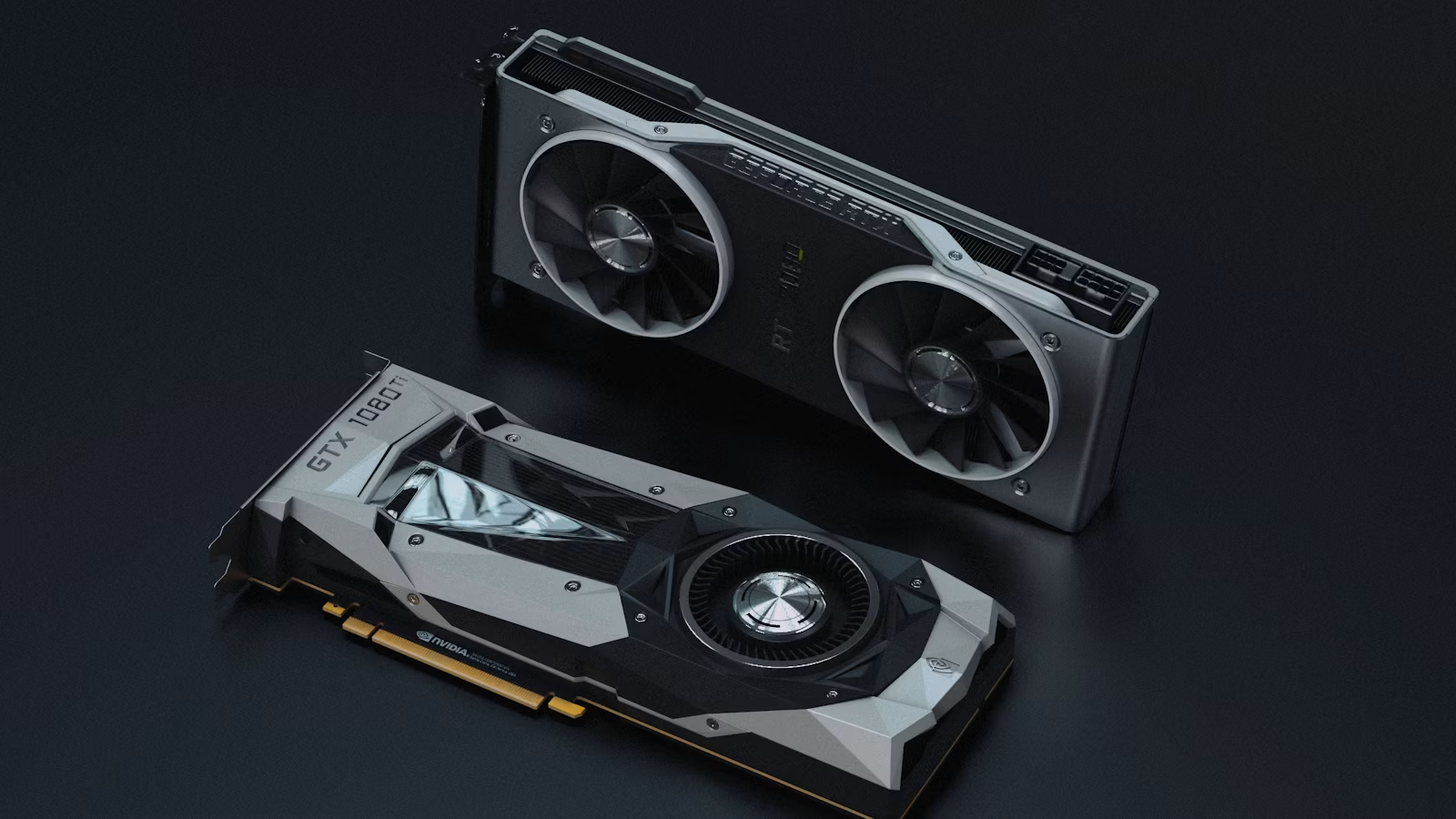
The biggest question in Silicon Motion's Q2 earnings is whether the company can turn "revenue nearly doubling" expectations into more reliable second-half growth visibility. As a NAND flash controller supplier, Silicon Motion's core business remains client SSD, eMMC/UFS, Ferri embedded storage, and boot drives. But in 2026, the market is paying more attention to AI infrastructure opportunities around enterprise SSD controllers, MonTitan, DPU boot drives, switch boot storage, and GPU/CPU platform qualification.
The AI DPU order phrase in the headline needs a clear boundary. Silicon Motion is not directly selling AI DPU chips. Its opportunity is in the boot drives and SSD controllers needed by AI servers, DPUs, Ethernet switches, NVLink switches, and enterprise platforms. This position is less visible than GPUs, but if AI server and networking-system shipments keep expanding, stable, low-latency, high-endurance boot storage and enterprise NAND controllers become an essential part of the infrastructure chain.
Key Takeaways
- Silicon Motion will report Q2 earnings after the U.S. market close on July 29, 2026, with the conference call held at 8:00 a.m. Eastern Time on July 30.
- The company guided Q2 revenue to $393 million to $411 million, up 98% to 107% year over year, essentially implying revenue-doubling expectations.
- Zacks recently cited Q2 consensus revenue of $403.6 million and EPS of $2.13, so the market bar has already moved higher.
- Q1 SSD controller sales fell 5% to 10% sequentially but rose 40% to 45% year over year, so Q2 needs to show whether PCIe Gen5 and AI PC controllers can restore sequential growth.
- The AI DPU opportunity is more accurately a boot drive / enterprise storage opportunity inside DPU, switch, and AI server platforms.
- MonTitan entering Q2 volume production ahead of schedule, with five tier-one CSP ramps expected in the second half, is a more important medium-term signal than one quarter of revenue doubling.
When Will Q2 Earnings Be Released: How High Are the Revenue-Doubling, EPS, and Margin Bars?

Silicon Motion has announced that it will report Q2 earnings after the U.S. market closes on July 29, 2026, followed by a conference call at 8:00 a.m. Eastern Time on July 30. Because the company's Q2 guidance is already very strong, the post-earnings stock reaction may depend less on whether revenue grows sharply and more on whether that growth has already been priced in, and whether second-half orders continue to support the story.
According to the company's Q1 2026 earnings report and Q2 guidance, management expects Q2 revenue of $393 million to $411 million, up 15% to 20% sequentially and 98% to 107% year over year. The midpoint is about $402 million, essentially a year-over-year doubling. Therefore, simply landing in the middle of guidance would already make the headline look strong; a true beat would likely need revenue closer to the upper end, or above $411 million.
Market expectations are also elevated. A Zacks pre-earnings article on July 27 cited Q2 sales consensus of $403.6 million and EPS of $2.13, while noting that 2026 and 2027 earnings estimates had recently continued to move higher. This means investors have already priced in part of the SSD controller recovery, AI infrastructure demand, enterprise SSD shipments, and PCIe Gen5 adoption.
| Metric | Q2 Guidance or Expectation | Trading Meaning |
|---|---|---|
| Revenue | $393 million to $411 million | Below the midpoint may not be strong enough |
| Year-over-year growth | 98% to 107% | The market already expects roughly doubled revenue |
| Zacks revenue consensus | $403.6 million | Above $411 million would look more like a strong beat |
| Zacks EPS consensus | $2.13 | Must be read with margin and expense quality |
| GAAP gross margin | 48.5% to 49.5% | Below the range would weaken the product-mix signal |
| Non-GAAP operating margin | 21.0% to 22.0% | Near the upper end would show stronger operating leverage |
The margin bar is just as important. In Q2 guidance, both GAAP and non-GAAP gross margin are 48.5% to 49.5%; GAAP operating margin is 19.8% to 21.1%, and non-GAAP operating margin is 21.0% to 22.0%. Q1 non-GAAP operating margin was 18.2%, so meaningful improvement in Q2 would show that revenue growth is translating into operating leverage rather than being absorbed by pricing, R&D, or customer qualification costs.
Therefore, the first layer of Q2 analysis is whether revenue approaches the $411 million upper end. The second is whether EPS exceeds $2.13. The third is whether gross margin and operating margin improve together. If all three happen at once, the market will treat revenue doubling as high-quality growth. If revenue is strong but margins disappoint, investors will ask harder questions about product mix, pricing, and ramp costs.
Summary: Silicon Motion's Q2 bar is already high. The market is not only waiting for year-over-year revenue to nearly double, but also watching whether the company can improve margins and second-half visibility under that growth.
Can SSD Controllers Reaccelerate: How Should Investors Read PCIe Gen5, AI PCs, and ASP?

SSD controllers remain Silicon Motion's core business. In Q1, the company disclosed that SSD controller sales fell 5% to 10% sequentially but rose 40% to 45% year over year. The sequential decline suggests consumer and client SSD demand was still affected by seasonality, customer shipment timing, or inventory adjustments. The strong year-over-year growth shows that a low prior-year base, PCIe Gen5 adoption, customer share gains, and new product ramps have already begun contributing to revenue.
What matters in Q2 is not simply whether SSD controllers "recover," but the quality of that recovery. If growth mainly comes from low-end DRAMless controllers or customer restocking, margin improvement may be limited. If growth comes from PCIe Gen5, AI PCs, edge SSDs, and higher-ASP products, the quality of revenue doubling is higher. Silicon Motion's advantage is that it covers client, edge, embedded, and enterprise controllers, making the product mix more diversified than a pure consumer SSD controller business.
The company's May launch of the SM2524XT PCIe Gen5 DRAMless SSD controller is an important post-Q2 signal. The company said the product targets AI inference and KV Cache-intensive workloads, supports PCIe Gen5 x4, offers sequential read speeds of up to 14 GB/s, and random performance of up to 2.5M IOPS. For AI PCs and edge AI, local storage is no longer just for the operating system and applications; it can also affect model caching, response latency, and multitasking experience.
| SSD Controller Signal | Positive Signal | Risk to Watch |
|---|---|---|
| PCIe Gen5 controllers | ASP and performance demand rise | Price competition compresses gross margin |
| AI PC SSDs | KV Cache and edge inference create new demand | AI PC replacement cycle disappoints |
| DRAMless controllers | Cost-efficient and suited for the mainstream market | High-end differentiation is limited |
| Client SSDs | Shipment recovery supports the base | Consumer electronics demand fluctuates |
| Edge SSDs | Industrial, edge AI, and physical AI expand use cases | Project ramp cycles are longer |
| NAND pricing | Better customer procurement behavior | NAND price increases may pressure end demand |
The commercial value of PCIe Gen5 is not only higher speed, but also higher ASP and more complex firmware capability. AI PCs, edge AI, and local inference increase random read/write, low-latency access, and cache-oriented workloads, putting higher demands on controller performance-per-watt, error correction, thermal management, and stability. If Silicon Motion can gain share in these scenarios, investors will be more willing to see growth as more than a one-time cyclical rebound.
The Q2 call should also be watched for customer mix. If SSD controller growth is driven by only a few customers, revenue visibility is weaker. If multiple module makers, PC OEMs, NAND partners, and edge-device customers ramp together, full-year growth quality is better. Whether AI PC and edge SSD demand has moved from demos and design wins into actual orders is especially important for judging second-half durability.
Summary: SSD controllers are Silicon Motion's foundation. If Q2 proves that PCIe Gen5 controllers are not only recovering year over year but also lifting ASP and product mix, the quality of revenue doubling will be higher.
What Should Investors Watch in AI DPU Orders: Boot Drives, GPU Customers, and Next-Generation Platforms
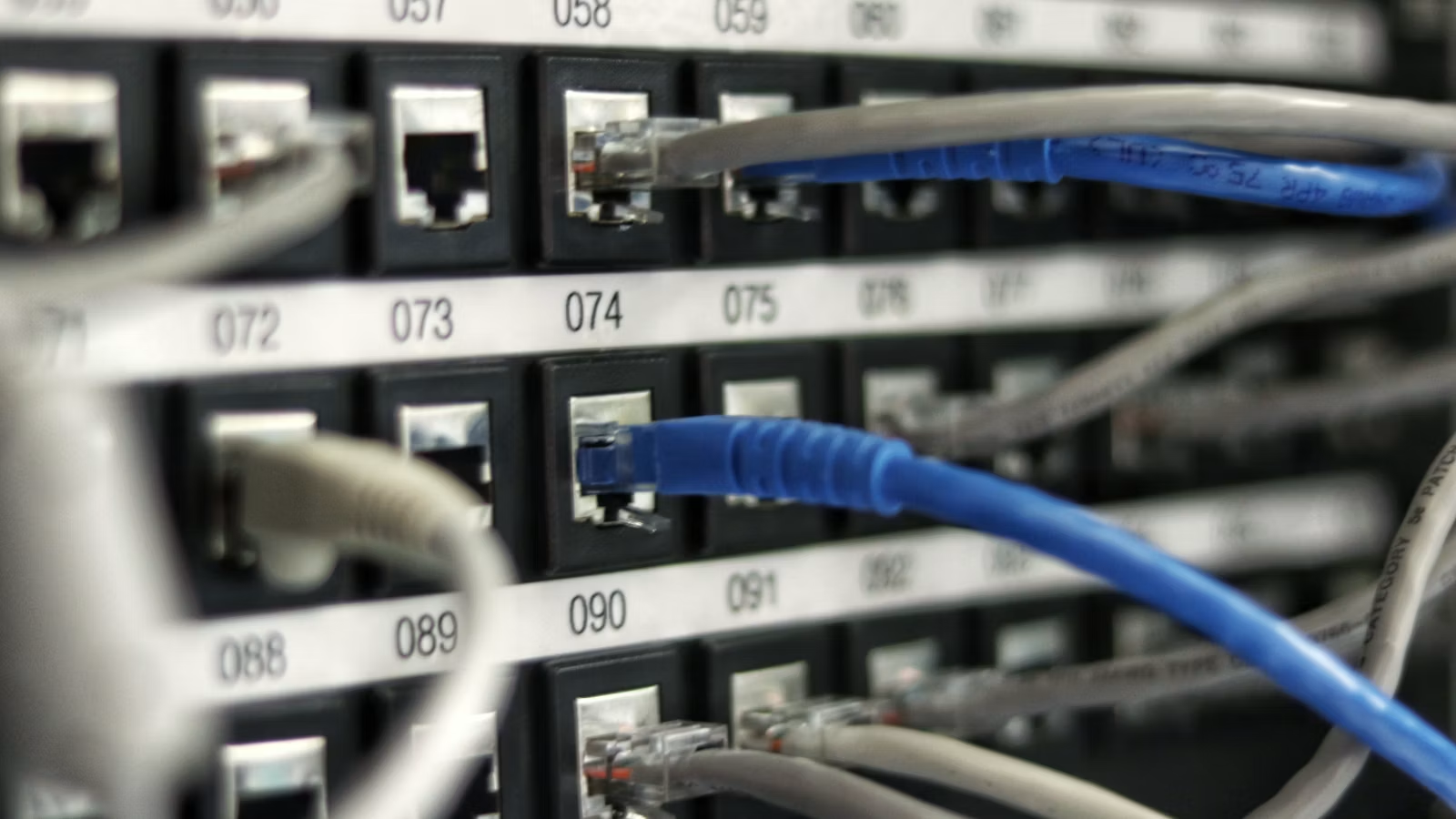
Market discussions of Silicon Motion's AI DPU orders require care. Silicon Motion does not sell DPU silicon. Its opportunity is in boot drives, enterprise PCIe NVMe BGA SSDs, the SM8008 boot drive controller, and SSD controllers used in AI infrastructure. DPUs, GPU servers, Ethernet switches, NVLink switches, and CPU/GPU platforms all need stable boot, firmware loading, telemetry, and log writing. That is where Silicon Motion can enter.
In its NVIDIA GTC 2026-related announcement, the company emphasized that as AI model size grows, inference architecture is extending from HBM and system DRAM into high-performance NAND storage tiers. NAND-based storage must provide deterministic latency, sustained bandwidth, and QoS differentiation. This explains why boot storage and enterprise SSD controllers are no longer just minor server components; they can affect the reliability and serviceability of AI infrastructure.
The more important Q1 call detail is order generation. The company said it was already shipping boot drives in volume for the current DPU product of a leading AI GPU manufacturer, and was validating designs related to next-generation DPUs, Ethernet switches, NVLink switches, and new GPU/CPU platforms. If those validations move into volume production, Silicon Motion's footprint could expand from a single DPU boot drive into broader AI networking and compute platform storage.
| AI Infrastructure Platform | Possible Silicon Motion Value | What to Listen for in Earnings |
|---|---|---|
| Current DPU product | Boot drives already shipping in volume | Whether shipment scale continues to expand |
| Next-generation DPU | New platform design validation | Whether it enters the production timeline |
| Ethernet switch | Switch boot storage | Whether more networking equipment is added |
| NVLink switch | High-speed interconnect platform boot storage | Whether it is tied to next-generation GPU systems |
| GPU/CPU platform | System boot and telemetry storage | Whether content value per customer expands |
| AI server | Enterprise BGA SSD / controller | Whether more OEM/CSP customers are added |
The value of these orders lies in platform continuity. If Silicon Motion's boot drive is adopted by an AI GPU or DPU platform, it may continue scaling through the platform shipment cycle and expand content value through next-generation platform validation. Compared with one-off consumer SSD orders, AI server platform orders emphasize reliability, long-term supply, firmware stability, data integrity, and customer qualification. Once a supplier enters the chain, stickiness is usually stronger.
The risks are qualification cycles and customer concentration. AI infrastructure customers usually do not change boot storage solutions casually, but design-in timing, platform delays, and procurement cadence can all affect revenue recognition. If Q2 only confirms strong current DPU shipments while next-generation DPU, switch, and GPU/CPU platform commentary is cautious, the market may treat AI DPU orders as a short-term highlight. If management confirms multi-platform ramps, the opportunity looks more like a medium-term growth curve.
Summary: Silicon Motion's AI DPU opportunity is not about directly selling DPU chips. It is about occupying a key boot-storage position in AI infrastructure. If DPU, switch, and GPU/CPU platforms ramp together, this line could become a continuing growth source after revenue doubling.
MonTitan and Enterprise SSD Controllers: Can Five Tier-One CSPs Create a Second Growth Curve?
MonTitan is the key product line for Silicon Motion's move from client and embedded controllers into enterprise AI storage. On the Q1 call, the company said MonTitan would enter commercial volume production ahead of schedule in Q2, and that customers expected to ramp five tier-one CSPs in the second half, including three in Asia and two in the United States. If the Q2 call reconfirms this timing, the market will likely view it as a more important medium-term catalyst than one quarter of doubled revenue.
From a product-positioning perspective, MonTitan is not an ordinary consumer SSD controller. It targets enterprise SSDs, AI storage, near-GPU storage, nearline storage, and AI Factory architecture. In its COMPUTEX 2026 announcement, Silicon Motion showcased five product lines, including edge SSD controllers, embedded UFS/eMMC, enterprise SSD controllers, Ferri embedded storage, and boot drive solutions. Its enterprise SSD controller portfolio includes the PCIe Gen6 SM8466, PCIe Gen5 SM8366, and SM8388 for high-capacity nearline SSDs.
AI training and inference require more than GPUs. As model context, agent workflows, RAG, KV Cache, logs, checkpoints, hot data, and nearline data increase, the storage layer must provide low latency, stable QoS, sustained bandwidth, and high reliability. Silicon Motion's opportunity lies in using controllers, firmware, and reference design kits to turn NAND into a more predictable and easier-to-integrate enterprise storage layer.
| MonTitan / Enterprise SSD Signal | Importance | Q2 Call Focus |
|---|---|---|
| Q2 early volume production | Product moves from validation to revenue | Whether commercial shipments have started |
| Five tier-one CSPs | High-quality customer base | Whether second-half ramps remain on plan |
| SM8466 / SM8366 | Covers PCIe Gen6 / Gen5 | Which platforms ramp first |
| SM8388 | Nearline / warm data storage | Whether AI data-storage demand is strong |
| NVIDIA ICMS-related demand | NAND enters the AI memory hierarchy | Whether more ecosystem cooperation appears |
| RDK / firmware | Lowers customer integration barriers | Whether qualification cycles shorten |
If MonTitan ramps successfully, it could change Silicon Motion's valuation narrative. Historically, the company has often been viewed as a NAND controller cycle and consumer electronics cycle stock. Enterprise AI storage could bring higher ASP, longer design cycles, stronger customer stickiness, and more complex software/firmware barriers. The market will watch whether this can shift the story from "SSD controller recovery" to "AI storage infrastructure beneficiary."
Still, investors should not become too optimistic too early. Enterprise SSD controller customer qualification cycles are longer, and CSP ramps can be affected by NAND supply, server platform delays, data center construction, and customer inventory strategies. If five CSPs only begin small-scale ramps in the second half, near-term revenue contribution may be limited. If orders expand and visibility improves, 2027 revenue and margin expectations may continue to move higher.
Summary: MonTitan is Silicon Motion's key step from consumer and embedded controllers into enterprise AI storage. If the five CSP ramps in the second half are confirmed, the market will view it as a more important medium-term catalyst than one quarter of revenue doubling.
Why eMMC/UFS and Ferri Should Not Be Ignored: Phones, Autos, and Embedded Storage Still Contribute Growth
Although Silicon Motion's Q2 highlights are concentrated in AI infrastructure, eMMC/UFS, Ferri, and boot drives should not be ignored. In Q1, eMMC + UFS controller sales rose 30% to 35% sequentially and 140% to 145% year over year. Ferri & Boot Drive solutions sales rose 205% to 210% sequentially and 755% to 760% year over year. These growth rates show that the company is not being driven by a single AI customer, but by improving trends across mobile, IoT, automotive, industrial, and data center boot storage.
The importance of eMMC/UFS lies in edge and mobile devices. The company said growth came from recent market share gains, though it also noted that smartphones were affected by rising memory and storage costs. If NAND and DRAM costs keep rising, smartphone OEMs may lower storage configurations or delay procurement, affecting eMMC/UFS controller shipment cadence. But if Silicon Motion keeps gaining share, it can maintain solid year-over-year growth even if the end market is only stable.
Ferri is more about automotive, industrial, and embedded reliability. In its Embedded World 2026 announcement, Silicon Motion emphasized FerriSSD for boot and initialization in industrial and AI-driven data center platforms, highlighting stable power behavior, deterministic performance, and strong data integrity. Automotive and industrial projects usually ramp more slowly, but once they enter a platform, their life cycles are often longer.
| Non-AI Core Business | Q1 Performance | What to Watch in Q2 |
|---|---|---|
| eMMC / UFS | Up 30% to 35% sequentially | Whether phone and edge AI customers keep ordering |
| Mobile controller | Strong year-over-year growth | Whether NAND costs affect end demand |
| Ferri | Up 205% to 210% sequentially | Automotive and industrial project ramps |
| Boot drive | Up 755% to 760% year over year | AI server and data center platform continuity |
| Automotive | New projects entering production | Whether ISO 26262 capability brings incremental demand |
| Embedded storage | IoT, industrial, edge AI | Whether long-cycle customers expand share |
These businesses also affect margins. Consumer SSD controllers can face stronger price competition, while automotive, industrial, enterprise boot drive, and embedded storage products usually emphasize reliability, long-term supply, and qualification, potentially giving them better pricing flexibility. If Q2 gross margin approaches the 49.5% upper end, investors will be more willing to believe the revenue mix is improving, rather than simply seeing more low-margin shipments.
The main risks are uneven smartphone recovery, NAND price volatility, and customer inventory adjustments. If memory and storage price increases push up terminal BOM costs, phone and PC customers may adjust procurement in the second half. Therefore, the Q2 call should be listened to for management's view on second-half order visibility in eMMC/UFS, Ferri, and boot drives.
Summary: Although AI infrastructure is the Q2 highlight for Silicon Motion, eMMC/UFS and Ferri remain important foundations for revenue doubling. If these businesses ramp together, the growth structure will be more stable than relying on a single AI order.
What to Watch When Trading SIMO Stock After Earnings
Trading SIMO stock after earnings should not focus only on the phrase "revenue doubling." A more complete framework should include whether revenue exceeds $411 million, whether EPS is above $2.13, whether gross margin approaches 49.5%, whether non-GAAP operating margin is near 22%, whether five MonTitan CSP ramps are confirmed, and whether DPU / switch / GPU platform boot drive orders expand. If these signals all lean positive, the stock is more likely to absorb high expectations.
If revenue only lands around the middle of the guidance range but second-half order commentary is strong, the market reaction may still be positive. If revenue beats expectations but management sounds cautious on MonTitan, AI boot drives, or second-half eMMC/UFS demand, the stock may instead face a "sell the news" reaction. For growth-oriented semiconductor stocks, the second reaction after earnings often comes from order visibility and next-quarter guidance, not just current-quarter revenue.
For users with U.S. stock trading needs, BiyaPay can be used to follow SIMO, NVIDIA, Broadcom, Marvell, Micron, Western Digital, and other AI storage and data center-related U.S. stock names, while combining earnings timing, order types, and personal risk tolerance into a plan. BiyaPay supports multi-asset trading across U.S. stocks, Hong Kong stocks, and cryptocurrencies. Users can also view tradable names through the U.S. stock list, or use mobile services through the app download page.
On fees, BiyaPay's U.S. stock commission is $0. Platform fees, external institution fees, FX costs, order prices, and other applicable fees should be based on the BiyaPay pricing page, order-page display, and platform rules. SIMO is an ADR, so post-earnings trading also requires attention to after-hours liquidity, bid-ask spreads, the difference between limit orders and market orders, applicable rules across different accounts and regions, and the maximum drawdown an investor can tolerate.
| Post-Earnings Signal | Positive Combination | Cautious Combination |
|---|---|---|
| Revenue | Above $411 million | Only around the middle of guidance |
| EPS | Above $2.13 | Revenue strong but EPS weak |
| Gross margin | Near the 49.5% upper end | Below 48.5% |
| Operating margin | Close to 22% | Expenses and ramp costs drag margins |
| MonTitan | Five CSP ramps confirmed | Cautious tone or timing delays |
| AI boot drive | DPU, switch, GPU/CPU platforms expand | Only current shipments continue, with few new platforms |
A more disciplined trading sequence is to first check whether headline revenue and EPS beat consensus, then examine gross margin and operating margin, then listen for second-half ramp clues around MonTitan, DPU boot drives, switch boot storage, eMMC/UFS, and Ferri, and finally choose order types based on after-hours or next-day liquidity. The biggest risk on earnings day is not missing the first move, but treating the already-expected "revenue doubling" as a new surprise.
Summary: The post-earnings focus for SIMO is not only whether revenue doubles, but whether that doubled revenue is supported by AI infrastructure orders, MonTitan CSP ramps, and margin expansion together.
FAQ
When Will Silicon Motion Report Q2 Earnings?
Silicon Motion will report Q2 earnings after the U.S. market close on July 29, 2026, with the conference call held at 8:00 a.m. Eastern Time on July 30, 2026.
What Is Silicon Motion's Q2 Revenue-Doubling Expectation?
The company guided Q2 revenue to $393 million to $411 million, up 98% to 107% year over year. Zacks recently cited market expectations of about $403.6 million in revenue and EPS of $2.13.
Does Silicon Motion Make AI DPU Chips?
No. More accurately, Silicon Motion provides enterprise boot drives, PCIe NVMe BGA SSDs, and SSD controller-related storage solutions used in DPU, switch, AI server, and similar AI infrastructure platforms.
Why Is MonTitan Important?
MonTitan is Silicon Motion's enterprise and AI data center SSD controller product line. The company previously said MonTitan would enter commercial volume production ahead of schedule in Q2, with five tier-one CSP ramps expected in the second half, making it an important signal for entry into enterprise AI storage.
What Should Investors Watch in SSD Controllers in Q2?
Investors should watch whether PCIe Gen5 controllers, AI PC SSDs, edge SSDs, enterprise SSD controllers, and customer share gains can drive sequential recovery and ASP improvement. If SSD controller growth is driven only by low-end restocking, the quality would be weaker than growth led by higher-ASP products.
*This article is provided for general information purposes and does not constitute legal, tax or other professional advice from BiyaPay or its subsidiaries and its affiliates, and it is not intended as a substitute for obtaining advice from a financial advisor or any other professional.
We make no representations, warranties or warranties, express or implied, as to the accuracy, completeness or timeliness of the contents of this publication.
Related Blogs of

Choosing a Stock Trading App: Beginner Checklist


Crypto Trading Bots: Types, Costs, and Security Risks

Crypto-Related Stocks vs Digital Assets: What Investors Actually Own


Wire Transfer Requirements: Sender and Beneficiary Details Checklist
Choose Country or Region to Read Local Blog
 Australia
 Austria
 Belgium
 Canada
 Cyprus
 Czech Republic
 Denmark
 Estonia
 Finland
 France
 Germany
 Greece
 Hong Kong
 India
 Indonesia
 Ireland
 Italy
 Japan
 Latvia
 Lithuania
 Luxembourg
 Malaysia
 Malta
 Morocco
 Nepal
 Netherlands
 New Zealand
 Norway
 Pakistan
 Philippines
 Poland
 Portugal
 Romania
 Singapore
 Slovakia
 Slovenia
 South Africa
 South Korea
 Spain
 Sweden
 Thailand
 United States
 Turkey
 United Arab Emirates
 United Kingdom
 Vietnam