
What Are the Risks of PYPL Acquisition Arbitrage? Deal Failure, Regulatory Review, and Funding Cost Explained




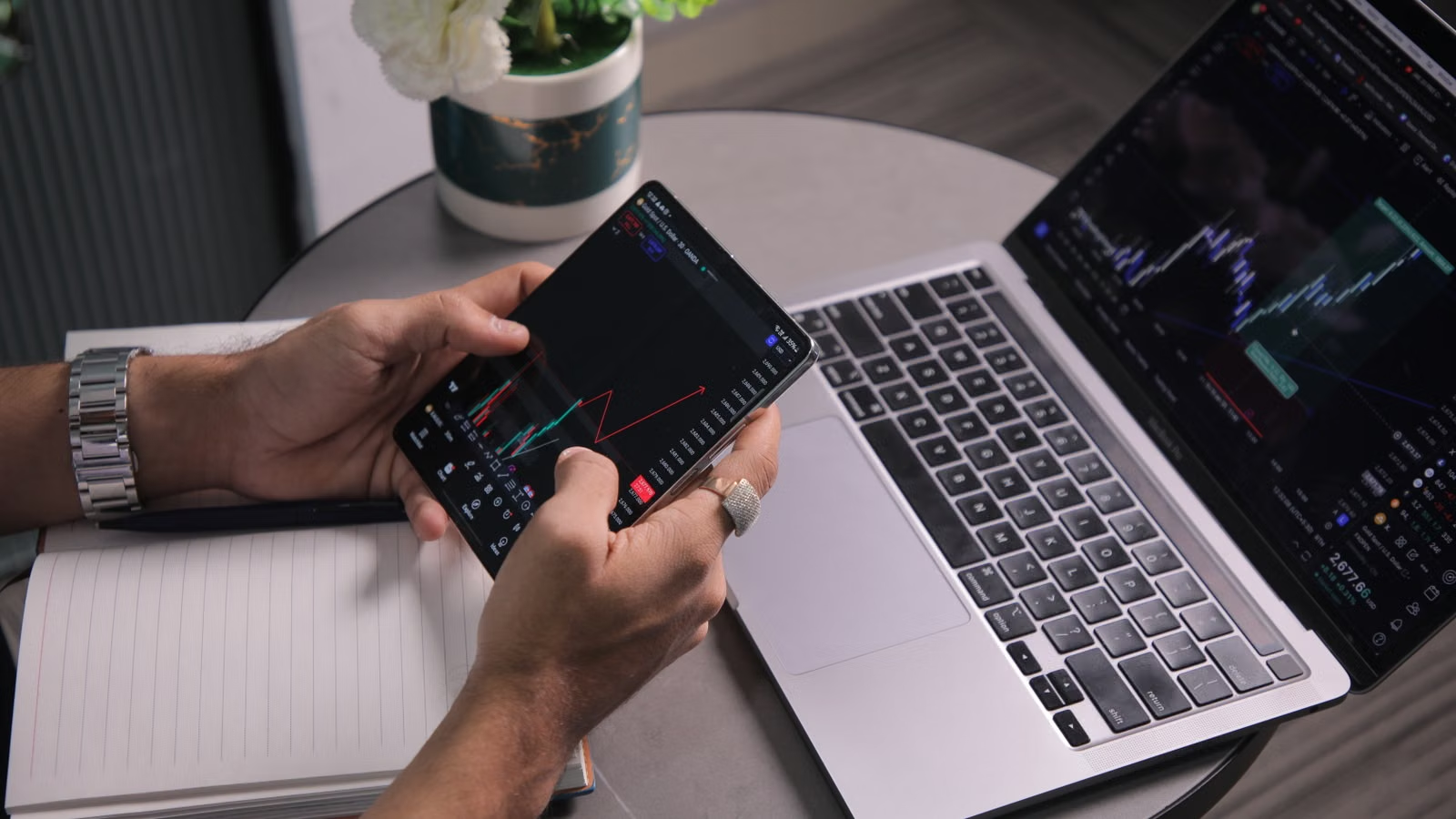
The key risk in PYPL acquisition arbitrage is not simply “the offer price is above the stock price, so why not buy?” The real question is whether the offer can become a definitive agreement, pass regulatory review, and close within a reasonable time frame. Stripe and Advent’s potential acquisition proposal for PayPal has pushed PYPL into event-driven trading territory, but the situation is better assessed through probability-weighted returns rather than treating $60.50 as a guaranteed payout price. If you are watching PayPal’s share price, merger arbitrage, funding costs, and regulatory approval risk, this analysis breaks down each layer of uncertainty.
Key Takeaways
- PYPL currently looks more like an event-driven trade than a signed merger arbitrage deal.
- The acquisition spread reflects deal failure probability, waiting time, and financing cost.
- Regulatory review may cover merchant payments, wallets, data, and platform effects.
- The longer the holding period, the more funding costs can dilute the nominal spread.
- Post-failure downside should be recalculated based on PayPal’s standalone valuation.
- Position sizing should be based on maximum tolerable loss, not headline upside.
Has PYPL Really Entered a True Acquisition Arbitrage Phase?

PYPL is currently closer to an “event-driven trade” than a traditional signed merger arbitrage situation. The reason is straightforward: the market is reacting to an acquisition proposal from Stripe and Advent for PayPal, not to a final merger agreement that has already been approved by PayPal’s board, signed by both sides, and backed by clear closing conditions. In other words, $60.50 can serve as a valuation anchor, but it should not be treated as a guaranteed cash payout.
According to market reports, Stripe and Advent made a proposal of $60.50 per share, valuing the transaction at more than $53 billion, with roughly $50 billion of bank financing behind the proposal. The price represented a meaningful premium to the pre-rumor share price, which triggered a rapid repricing in PYPL. Yet the market price remains below the offer, which means investors are discounting the possibility of failed negotiations, regulatory delays, financing changes, or revised terms.
From an arbitrage perspective, the most important issue is not the offer itself, but the status of the event. A signed merger arbitrage deal usually has several defining features: board approval, a definitive merger agreement, a shareholder vote process, a regulatory filing path, termination fees, reverse termination fees, and an expected closing window. PYPL currently lacks most of these confirmed details, so the spread should not be interpreted simply as “buy now and wait for closing.”
| Assessment Factor | Current PYPL Status | Meaning for Arbitrage Risk |
|---|---|---|
| Board approval | Acceptance not confirmed | The deal may fail to enter the definitive stage |
| Final transaction price | Still in the offer and negotiation phase | Price may increase, or the offer may lapse |
| Financing commitment | Heavily reported, but final agreement not set | Buyer’s ability to close still needs confirmation |
| Regulatory path | Full public process has not clearly started | Timing and remedies remain uncertain |
| Termination fee arrangement | Not yet clear | Failure cost and exit constraints are hard to judge |
| Expected closing date | No reliable window yet | Annualized return cannot be calculated precisely |
If PYPL trades at $56.82 and the offer price is $60.50, the nominal spread is about 6.48%. That looks meaningful, but it is only the gross spread. It does not deduct trading fees, margin interest, FX costs, taxes, or the time discount. More importantly, it does not include the potential loss if the transaction fails and PYPL falls back toward a standalone valuation.
For ordinary investors, the first step is not calculating “how much can I make at most,” but identifying the nature of the trade. If you treat it as a short-term news trade, the focus is sentiment, volume, and news catalysts. If you treat it as merger arbitrage, the focus is deal terms, regulatory progress, and failure downside. If you treat it as value investing, you need to return to PayPal’s free cash flow, competitive position, and standalone valuation.
Summary: PYPL’s current arbitrage opportunity comes from a potential acquisition offer, not from a locked-in cash transaction. You can use $60.50 as the success price in a scenario model, but you should not treat it as a guaranteed payout. As long as PayPal has not formally accepted the offer, the trade remains highly uncertain. The real risk is not that the spread is too small, but that investors use a signed-deal arbitrage framework to trade an event that is still in negotiation. At this stage, the more reasonable approach is to first judge whether the deal can be signed, then assess whether regulatory risk, financing risk, and holding cost are worth taking.
Where Does PYPL Deal Failure Risk Mainly Come From?

The first source of PYPL deal failure risk is whether PayPal’s board accepts the offer. Regulatory approval, financing, and shareholder procedures come later. If the board believes the offer undervalues the company, a definitive agreement may never be signed. If the buyer is unwilling to raise the offer meaningfully, negotiations could also break down. At this stage, the largest uncertainty is not failure to close, but whether the proposal can become a formal agreement at all.
Market reports indicate that PayPal’s board views the current proposal as undervaluing the company and is also concerned about regulatory and financing obstacles. That matters because the board’s primary responsibility is to assess long-term shareholder value, not just a short-term premium. If the board believes management’s turnaround, cost discipline, Venmo monetization, and branded checkout recovery can generate greater value, it may push for a higher price.
Deal failure risk can be divided into four layers:
- Price risk: PayPal may view $60.50 as insufficient, while the buyer may be unwilling to increase the offer significantly.
- Term risk: A definitive agreement may include financing conditions, regulatory exit rights, or material adverse change clauses.
- Earnings risk: Stronger results could improve the board’s negotiating power; weaker results could give the buyer leverage to lower the price.
- Competing-bidder risk: If there is no second serious bidder, PayPal’s negotiating leverage may be lower than the market assumes.
PayPal’s standalone fundamentals also influence post-failure downside. PayPal’s Q1 2026 results showed quarterly revenue of about $8.353 billion, up 7% year over year; total payment volume of about $463.955 billion, up 11%; but GAAP net income declined 14%, and GAAP operating margin fell from 19.6% to 17.8%. These figures show that PayPal still has scale and cash flow, but growth quality, margins, and turnaround speed remain areas of debate.
| Future Development | Impact on PayPal’s Board | Impact on PYPL Share Price | Impact on Arbitrage Trade |
|---|---|---|---|
| Buyer raises the offer | Deal negotiations become easier | Stock may move closer to the new offer | Success scenario moves higher |
| Board rejects the offer outright | Standalone turnaround becomes the main story | Acquisition premium may unwind | Failure risk is released |
| Earnings beat expectations | Negotiating power improves | Standalone valuation support strengthens | Failure downside may shrink |
| Earnings miss expectations | Negotiating pressure rises | Share price floor weakens | Spread may not be sufficient |
| New bidder appears | Competitive premium increases | Stock may rise above the original offer | Volatility increases sharply |
You also need to watch SEC filings. If PayPal truly enters a signed transaction phase, it would typically disclose a material definitive agreement through Form 8-K Item 1.01, followed by shareholder voting materials or other transaction documents. Before such filings appear, media reports should be treated as deal signals, not substitutes for final terms.
Summary: PYPL’s failure risk is not a single-point risk. It is the combined result of the board’s stance, offer price, deal terms, earnings, and buyer financing. At the current stage, one major mistake is to assume that a stock price below the offer price automatically means the deal will close. In reality, rejecting a low offer may protect long-term shareholders, but it may also expose short-term arbitrage investors to downside. You need to model both “higher offer” and “deal break” scenarios instead of betting only on the most optimistic outcome.
Why Could a Stripe Acquisition of PayPal Face a Lengthy Regulatory Review?
The core regulatory risk is not just how much market share Stripe and PayPal have in payment processing. The bigger question is how their combination would affect merchants, consumers, wallets, payment data, and checkout access. PayPal is a large global two-sided payments network, while Stripe is a major payments infrastructure provider for merchants and developers. If the two combine, regulators may reassess the broader digital payments ecosystem through the lens of multi-sided platform competition.
In PayPal’s 2025 Form 10-K, the company disclosed that it had 439 million active accounts at the end of 2025 and operated across roughly 200 markets. This scale means a potential acquisition would not be an ordinary transaction between two U.S. companies. It could involve global payments markets, licenses, merchant access, and cross-border business arrangements.
In the United States, large transactions usually need to go through HSR Act merger notification and waiting period requirements. The FTC states that qualifying transactions cannot close before the waiting period expires or is terminated early. If regulators need more information, they may issue a Second Request requiring additional documents and data. This can significantly lengthen the timeline and increase legal, advisory, and management communication costs.
More importantly, digital payments are a classic platform business. The DOJ and FTC’s multi-sided platform merger guidance emphasizes that platform mergers may affect competition between platforms, competition within platforms, and the ability of alternative platforms to enter. Applied to Stripe and PayPal, regulatory questions may include:
| Review Dimension | What Regulators May Examine | Impact on the Deal |
|---|---|---|
| Merchant payment processing | Whether Stripe and Braintree overlap | Asset divestitures may be required |
| Consumer wallets | Whether PayPal, Venmo, and checkout access increase control | Behavioral commitments may be required |
| Data advantage | Whether transaction data and risk models create barriers | Review depth may increase |
| Developer ecosystem | Whether payment APIs and merchant tools exclude rivals | Conditional approval may become more likely |
| Cross-border markets | Different licensing and competition structures by region | Closing timing becomes more uncertain |
European review also matters. Under EU merger procedures, Phase I usually allows 25 working days for an initial assessment; if the deal moves to Phase II, the review can extend to 90 working days and may involve remedies or further extensions. For cross-border payment platforms, review timelines across jurisdictions are unlikely to move perfectly in sync. A delay in one important region could slow the overall closing.
Market reports also noted that the buyers had considered separating Braintree or other assets to reduce antitrust concerns. This idea has logic because Braintree may be more clearly viewed as overlapping with Stripe’s merchant payment processing business. But remedies may not solve every issue. If regulators believe the problem is not just one asset, but platform access, data scale, and network effects, a single divestiture may not be enough.
Summary: Regulatory review of a Stripe-PayPal combination could be far more complex than a typical fintech acquisition. The key question is not only whether market share is too high, but also how the deal affects merchant choice, consumer wallets, payment data, platform network effects, and the ability of potential competitors to enter. For PYPL acquisition arbitrage, regulatory risk appears in two ways: the deal could be blocked, or it could eventually be approved but only after a much longer wait, higher remedy costs, and possible changes to deal terms. As long as the regulatory path remains unclear, the spread must compensate investors for both time and uncertainty.
How Can Funding Costs Erode PYPL Acquisition Arbitrage Returns?
PYPL’s nominal spread is attractive only if the deal closes within a relatively short period. If negotiations, regulatory review, and closing preparations last 6 to 12 months, margin interest, opportunity cost, FX cost, and trading expenses can all erode returns. Therefore, PYPL acquisition arbitrage should not be judged only by “$60.50 minus the current share price.” The more important question is whether the net annualized return after costs still compensates for deal failure risk.
Using PYPL at $56.82 and an offer price of $60.50, the gross spread is about 6.48%. If the deal closes in 3 months, the gross annualized return looks high. If it takes 9 months or even 12 months, the annualized return falls sharply. More importantly, this is still only a gross return and does not deduct any costs.
The basic formulas are:
Gross spread = (Acquisition price ÷ Purchase price − 1) × 100%
Annualized return = (Acquisition price ÷ Purchase price)^(12 ÷ Holding months) − 1
| Assumed Holding Period | Nominal Gross Spread | Annualized Appeal | Main Return Erosion Factors |
|---|---|---|---|
| 3 months | About 6.48% | Higher | Deal signing uncertainty |
| 6 months | About 6.48% | Moderate | Margin interest and opportunity cost |
| 9 months | About 6.48% | Clearly lower | Regulatory delay and FX cost |
| 12 months or longer | About 6.48% | Potentially insufficient | Time value continuously erodes returns |
In real trading, brokerage fees and funding paths also matter. Investors using margin accounts face interest costs that are not one-time expenses; they accumulate over time. Non-dollar investors also need to consider FX spreads, exchange-rate movements, and capital transfer timing. If investors use options to hedge downside risk, they must pay option premiums. If they use short-dated options to bet on deal progress, they also face expiration and implied-volatility risk.
This is what makes PYPL-style event trades different from ordinary equity trades. You are not simply judging whether the company is good or bad. You are buying an event outcome with time limits and conditional constraints. The slower the event, the lower the net return. The more conditions there are, the higher the failure probability. If the stock price has already reflected most of the good news, the remaining spread may not be enough to compensate for these costs.
If you follow U.S. stock event trades, you also need to calculate order-level costs, not just the direction of PayPal’s share price. Biya charges $0 commission for U.S. stock trading, while platform fees, external institutional fees, and other charges are subject to the Biya U.S. stock trading fee schedule and the order screen. For PYPL-style trades with limited spreads, fees, slippage, and holding period directly affect final net returns and should not be treated as minor details.
| Cost Item | Why It Matters | How to Check |
|---|---|---|
| Platform and regulatory fees | Directly reduce spread return | Review order estimates and account statements |
| Margin interest | Higher the longer the holding period | Check margin rate and interest rules |
| FX cost | Amplified for non-dollar funding | Check executed FX rate and spread |
| Opportunity cost | Capital is locked in an event trade | Compare with money-market funds or other assets |
| Option hedge cost | Reduces tail risk but compresses return | Check premium and expiration date |
| Tax treatment | Affects final after-tax return | Follow local tax rules |
Summary: PYPL’s visible acquisition spread is not the same as real return. You need to put the offer price, purchase price, holding period, financing cost, trading fees, FX cost, and tax impact into the same calculation. If the deal signs and closes quickly, a spread of about 6% may still be attractive. If regulatory review stretches close to a year, the net annualized return could fall meaningfully. More importantly, most costs are certain or highly likely, while deal success remains uncertain. That is why arbitrage trades require conservative modeling.
How Should Investors Build a PYPL Acquisition Arbitrage Scenario Model and Risk Framework?
PYPL acquisition arbitrage is better assessed through scenario modeling than through a single-point forecast. You need to estimate four outcomes separately: a higher-price deal, a deal near the original price, a long delay, and a deal break. Each scenario needs a price, a timeline, and a probability. Only when the probability-weighted expected return exceeds the potential loss and funding cost does the trade potentially make sense.
Start with the success scenarios. If Stripe and Advent raise the offer, PYPL may continue to move higher. If PayPal accepts a proposal near $60.50, the stock may trade around the deal price and expected closing timeline. If a second buyer emerges, the market may reprice a competitive bidding premium. But these are optimistic paths and should be grounded in formal disclosures, not just market rumors.
Then look at the failure scenario. The post-failure price should not simply be set equal to the pre-rumor closing price, because PayPal’s fundamentals, market conditions, and strategic value may have changed. You need to combine PayPal’s business revaluation and turnaround pressure, Q1 financial performance, peer valuations, and market risk appetite to estimate a reasonable failure-price range.
| Scenario | Price Assumption | Time Assumption | Core Signal | Risk Control Focus |
|---|---|---|---|---|
| Meaningful higher offer | Above $60.50 | Closing period recalculated | New offer, board stance changes | Avoid chasing if terms fail |
| Deal near original price | Near $60.50 | 6–12 months or longer | Definitive agreement, financing documents | Calculate net annualized return |
| Long delay | Trades below offer price | Review period extends | Second Request, remedies | Control financing cost |
| Deal failure | Reverts toward standalone valuation | Rapid repricing | Buyer exits, board rejects | Control maximum loss |
| Lower revised terms | Below original offer | Depends on new agreement | Earnings deterioration, financing change | Reassess whether to exit |
A simple implied success probability formula is useful:
Current share price = Success probability × Deal price + (1 − Success probability) × Failure price
If you assume a success price of $60.50, a failure price of $48, and a current price of $56.82, the implied probability of success embedded in the market price is already fairly high. If you believe the failure price is lower, the implied success probability rises further. If you believe the final deal price could be raised, the implied success probability falls. The value of this model is not that it gives a precise answer, but that it forces you to confront the asymmetry: limited upside if the deal succeeds, potentially larger downside if it fails.
In risk management, the better question is not “Will PYPL be acquired?” but “How much can I lose if the acquisition fails?” A more disciplined process includes:
- Set the maximum tolerable loss for a single trade first;
- Use the failure price to back into acceptable position size;
- Avoid using leverage to amplify an uncertain event;
- Do not treat short-dated options as if they matched an uncertain closing timeline;
- Rebuild the model whenever formal filings, earnings, or regulatory developments emerge;
- If the stock approaches the offer price while terms remain unclear, consider reducing risk exposure.
If you need to track PYPL and other U.S. stocks, you can use Biya U.S. stock search to review basic stock information, then combine it with company announcements, SEC filings, and news developments to update your model. Event-driven trades should not be managed only by looking at one-day price moves. They are better reviewed through four variables: price, probability, time, and cost.
Summary: The key to PYPL acquisition arbitrage is not predicting the next headline, but quantifying uncertainty. You need to list the success price, failure price, expected closing timeline, and funding cost, then calculate the probability-weighted expected return. If the upside in the success case is only around 6% while the failure downside could be in the double digits, position sizing must be driven by maximum loss, not headline premium. A definitive agreement, regulatory review, earnings changes, or buyer financing updates can all change the model. Any major change in one key variable should trigger a fresh assessment of whether to continue holding.
For investors watching PYPL acquisition arbitrage, the most important step is to turn news momentum into an executable trading framework: confirm the deal stage first, calculate the real spread second, and use the failure scenario to size the position third. Biya is a global multi-asset trading wallet that supports U.S. stocks, Hong Kong stocks, and digital asset trading. Subject to local laws and regulations, identity verification, and platform rules, you can use Biya to follow U.S. stock trading opportunities and check fee structure through the order display. If you need to track PayPal, Stripe, and Advent-related market developments on mobile, you can also use the Biya App. This content only introduces publicly available market information, trading rules, and fee structures. It does not constitute investment advice. Service availability depends on the user’s location, verification status, platform rules, and applicable laws and regulations.
FAQ
Does PayPal’s $60.50 Per-Share Offer Guarantee That PYPL Will Rise to That Price?
No. The $60.50 price should currently be understood as the price anchor in an acquisition proposal, not a locked-in cash payout. Price certainty would improve only if PayPal’s board accepts the proposal, both sides sign a definitive agreement, and the shareholder, financing, and regulatory processes are completed.
Why Is PYPL Trading Below PayPal’s Offer Price Not a Risk-Free Arbitrage?
Because the spread reflects the market’s discount for deal failure probability, waiting time, and funding cost. If the deal is not signed, regulatory review is delayed, or the buyer revises the offer, PYPL may fall back toward a standalone valuation range. Actual return must also deduct platform fees, margin interest, taxes, and FX costs.
How Can Ordinary Investors Estimate PayPal’s Downside If the Acquisition Fails?
Investors can compare the pre-rumor share price, latest earnings, free cash flow, peer valuation, and market risk appetite. The post-failure price does not have to return to one fixed historical level, because acquisition interest itself may change how the market values PayPal’s strategic position.
What Additional Costs Come With Using Margin to Buy PYPL for Acquisition Arbitrage?
A margin account adds ongoing interest cost, and the impact becomes larger the longer the holding period. Investors should also consider platform fees, regulatory fees, FX cost, tax treatment, and opportunity cost. Relevant costs should be checked against brokerage statements, order screens, and local rules.
What Antitrust Issues Could a Stripe Acquisition of PayPal Face?
Key issues may include online payment processing, merchant checkout access, consumer wallets, overlap between Braintree and Stripe, transaction data, and platform network effects. U.S., EU, and other market reviews may move at different speeds, and delays in any major jurisdiction could affect the overall closing timeline.
Is PYPL Acquisition Arbitrage Better Suited to Stock or Options?
Stock avoids option expiration risk, but it still carries downside if the deal fails. Options can limit part of the capital at risk, but they introduce time decay, implied-volatility risk, and liquidity cost. The right instrument depends on the expected event timeline and maximum tolerable loss.
*This article is provided for general information purposes and does not constitute legal, tax or other professional advice from BiyaPay or its subsidiaries and its affiliates, and it is not intended as a substitute for obtaining advice from a financial advisor or any other professional.
We make no representations, warranties or warranties, express or implied, as to the accuracy, completeness or timeliness of the contents of this publication.
Related Blogs of

Chase Wire Transfer Routing Number: Domestic Wires and International SWIFT Codes

Currency Exchange Spread Explained: Buy and Sell Rates, Markups, and Costs





Choose Country or Region to Read Local Blog
 Australia
 Austria
 Belgium
 Canada
 Cyprus
 Czech Republic
 Denmark
 Estonia
 Finland
 France
 Germany
 Greece
 Hong Kong
 India
 Indonesia
 Ireland
 Italy
 Japan
 Latvia
 Lithuania
 Luxembourg
 Malaysia
 Malta
 Morocco
 Nepal
 Netherlands
 New Zealand
 Norway
 Pakistan
 Philippines
 Poland
 Portugal
 Romania
 Singapore
 Slovakia
 Slovenia
 South Africa
 South Korea
 Spain
 Sweden
 Thailand
 United States
 Turkey
 United Arab Emirates
 United Kingdom
 Vietnam