
How Long Can the Server and Storage Boom Last? Using Microsoft, Amazon, and Meta CapEx to Validate AI Hardware Demand




The server and storage boom has not shown a clear near-term end signal, but it is shifting from the early phase of “securing capacity and components” into a middle stage focused on delivery, utilization, and return on investment. CapEx guidance from Microsoft, Amazon, and Meta shows that AI data centers are still absorbing large amounts of GPUs, CPUs, HBM, enterprise SSDs, networking equipment, and power resources. For investors, the key is not simply asking how long AI hardware can keep rising, but whether demand is still supported by real cloud revenue, enterprise AI deployment, and long-term customer commitments.
Key Takeaways
- AI hardware demand remains supported, but growth may shift from acceleration to divergence.
- Microsoft, Amazon, and Meta CapEx still validates ongoing data center expansion.
- CapEx does not equal server revenue; buildings, power, and leases also matter.
- Enterprise IT budgets are prioritizing compute, storage, memory, networking, and security.
- To judge a cycle peak, track cloud revenue, utilization, component prices, and free cash flow.
- The server and storage boom may last into 2027 before becoming more structurally selective.
How Long Can the Server and Storage Boom Last?
The server and storage boom is likely to last into 2027, but it may not continue at the same steep pace seen during 2024–2026. A more realistic view is that 2026 remains a year of AI data center construction, component locking, and high-end server delivery; 2027 may become the stage where capacity comes online, inference workloads expand, and utilization is tested. After that, demand is more likely to shift from broad-based expansion to structural growth.
2026 Remains a Phase of Capacity Expansion and Supply Lock-In
AI infrastructure is not just a single server purchase. It is a full data center engineering cycle. Cloud providers need to secure GPUs, CPUs, HBM, DRAM, NAND, switches, optical modules, power supplies, liquid cooling systems, and data center space in advance. In Microsoft’s FY2026 Q3 earnings call, the company noted that Azure demand remained above available capacity, while a meaningful portion of quarterly CapEx was allocated to short-lived assets such as GPUs and CPUs. This suggests hardware supply has still not fully caught up with cloud AI demand.
At this stage, enterprises and cloud providers tend to place orders early because of shortages, expected price increases, and longer delivery cycles. IBM’s recent customer behavior reinforces this point: customers shifted quarterly CapEx toward servers, storage, and memory purchases to secure infrastructure under tight supply conditions. This signal should not be interpreted simply as disappearing software demand. It means AI infrastructure is moving higher in enterprise budget priority.
2027 May Become the Capacity Monetization Stage
2027 is more likely to become the dividing line. Many data center investments made in 2026 will not immediately convert into server revenue or cloud revenue in the same quarter. Land, power connections, construction, cooling systems, server deployment, and customer migration all take time. In Amazon’s 2025 shareholder letter, the company emphasized that roughly $200 billion in CapEx was not based on guesswork, but on AWS demand, AI chips, and long-term cloud opportunities. Reuters also noted that part of Amazon’s 2026 investment is expected to be monetized in 2027–2028.
Even if training demand slows, AI inference, enterprise agents, code generation, advertising recommendation, search reconstruction, and enterprise knowledge-base applications could expand. Server demand would not fall to zero; it would shift from large-scale training clusters to broader inference and data-processing environments. For storage, this could create a more persistent capacity expansion cycle, because enterprise inference requires business data, context data, logs, vector indexes, and backup systems.
| Stage | Main Driver | Key Hardware | Core Validation Metrics |
|---|---|---|---|
| 2026 | Capacity lock-in, component inflation, data center buildout | GPUs, CPUs, HBM, AI servers, networking equipment | CapEx, lead times, shortage severity |
| 2027 | Capacity online, inference expansion, enterprise AI deployment | Inference servers, enterprise SSDs, networking, cooling | Cloud revenue, utilization, AI revenue |
| 2028 and beyond | ROI and equipment refresh | Energy-efficient chips, storage expansion, server replacement | ROIC, depreciation, free cash flow |
Summary: The server and storage boom is more likely to extend into 2027, but the next phase may shift from “everything rising together” to more selective growth across high-end compute, storage, networking, and power resources. If new cloud capacity is quickly absorbed, AI inference usage continues to grow, and enterprise data infrastructure spending keeps expanding, server and storage demand should remain supported. If component supply loosens, cancellations rise, and cloud revenue fails to match CapEx, cycle pressure will become more visible.
What Are Microsoft, Amazon, and Meta CapEx Signaling?
The shared signal from Microsoft, Amazon, and Meta is that AI infrastructure investment remains elevated. However, CapEx means different things at each company. Microsoft’s disclosure is more directly tied to cloud computing equipment and AI compute. Amazon’s spending includes AWS, logistics, and other businesses. Meta’s spending is more focused on advertising recommendation, generative AI, and internal model capacity. You should not simply add the three companies’ CapEx numbers and treat the total as server orders.
Microsoft: High Exposure to Short-Lived Compute Assets
Microsoft is one of the clearest windows into AI server demand. In FY2026 Q3, Microsoft reported 40% growth in Azure and other cloud services revenue, and its earnings discussion indicated that customer demand remained above available capacity. This suggests that a large part of Microsoft’s spending is linked to compute assets and cloud capacity, not only land or data center buildings.
More importantly, Microsoft is not expanding blindly in a weak-demand environment. The company disclosed that Microsoft Cloud gross margin percentage decreased to 66%, reflecting the impact of AI infrastructure depreciation, GPU procurement, and cloud capacity expansion. In other words, Microsoft CapEx sends two signals at the same time: demand remains strong, but investors will increasingly focus on whether AI spending can generate sufficiently high cash returns.
Amazon: AWS Demand and Customer Commitments Provide Visibility
Amazon’s CapEx guidance is large, but it requires careful interpretation. Amazon is not only a cloud company; it also operates e-commerce fulfillment, logistics, advertising, satellite internet, and device businesses. Still, AWS is the most important variable. In its Q4 results, Amazon guided for roughly $200 billion in capital expenditures, with investment opportunities spanning AI, chips, robotics, and low-Earth-orbit satellites.
By Q1 2026, Amazon reported 28% year-over-year AWS revenue growth, while its chip business had surpassed a $20 billion annualized revenue run rate. Custom chips such as Trainium, Graviton, and Nitro could reshape cloud server configurations and supply-chain value distribution. Some value may shift from general-purpose GPUs toward custom chips, full-system design, networking, and storage, but that does not necessarily reduce total data center demand.
Meta: A Heavy AI Infrastructure Operator
Meta’s CapEx signal is more internally focused. In Q1 2026, Meta raised its full-year capital expenditure guidance to $125 billion–$145 billion, citing AI infrastructure, component prices, and data center costs. Unlike AWS or Azure, Meta’s AI investment mainly supports advertising recommendation, content distribution, generative AI assistants, model training, and potential future cloud capabilities.
The key question for this model is not external cloud customer orders, but advertising efficiency, user engagement, model capability, and internal compute utilization. If Meta can convert AI infrastructure into higher ad conversion rates, stronger recommendation systems, and new product revenue, CapEx pressure can be justified by growth. If revenue contribution remains unclear, the market will focus more heavily on depreciation and free cash flow pressure.
| Company | 2026 CapEx Signal | Main Hardware Demand | Key Interpretation |
|---|---|---|---|
| Microsoft | Around $190 billion in market expectations | GPUs, CPUs, cloud servers, storage | High compute-asset exposure; demand still capacity constrained |
| Amazon | Around $200 billion | AWS servers, custom chips, networking, power | Must separate cloud spending from logistics and other businesses |
| Meta | $125 billion–$145 billion | AI clusters, storage, components, data centers | Mainly validates internal AI commercialization returns |
Summary: Microsoft, Amazon, and Meta CapEx all show that AI infrastructure construction is not over, but each company validates the cycle from a different angle. Microsoft best reflects tight demand for GPUs, CPUs, and cloud servers. Amazon reflects long-cycle AWS customer demand and custom-chip expansion. Meta shows an advertising platform becoming a heavy AI infrastructure operator. The real question is not how large CapEx is, but whether these investments can be absorbed by cloud revenue, advertising efficiency, and AI usage.
How Does Massive CapEx Turn Into Server, Storage, and Memory Demand?
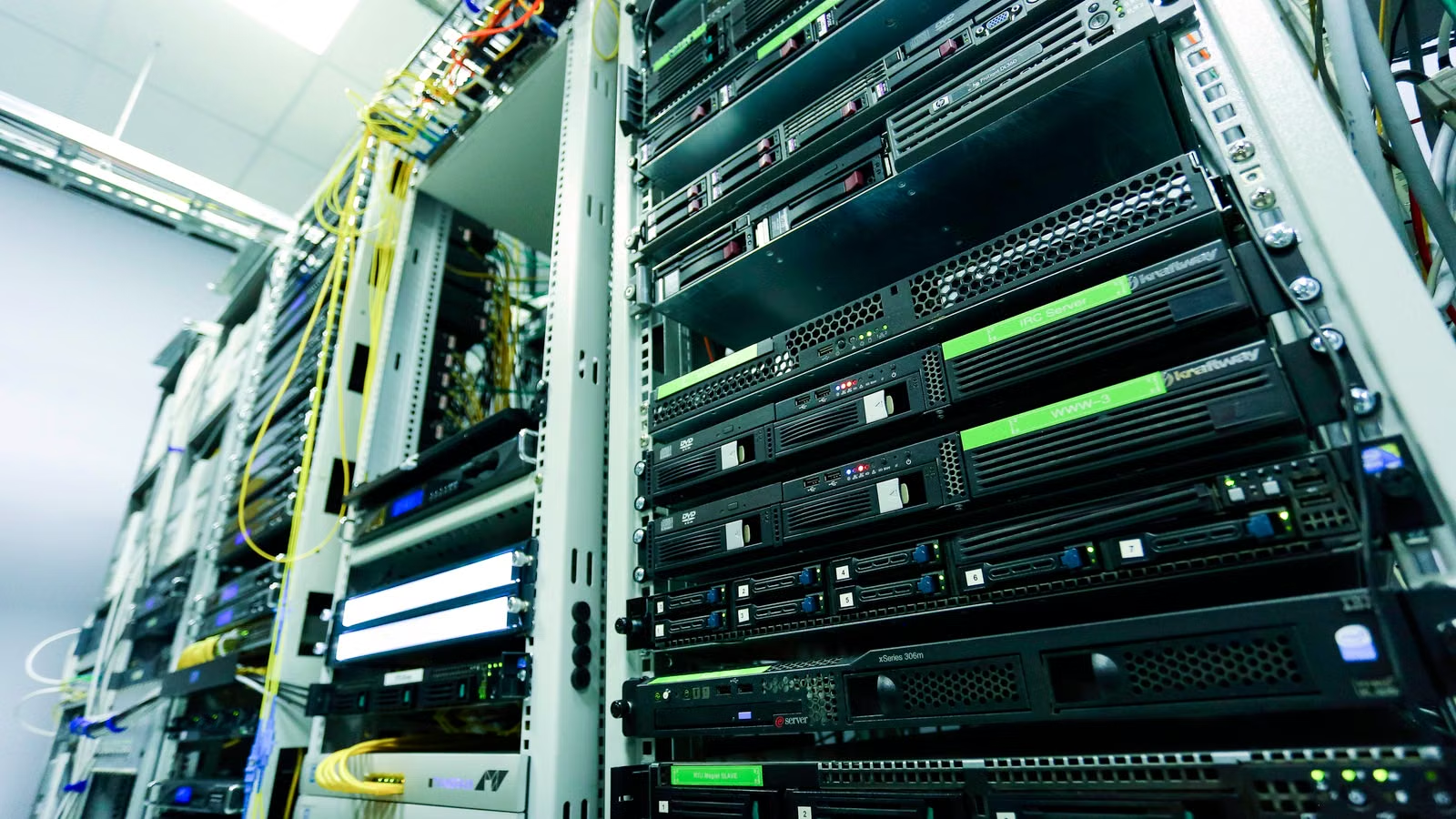
Massive CapEx first flows into AI accelerators, CPUs, servers, and networking equipment, then gradually drives demand for enterprise SSDs, memory, object storage, backup systems, power, and cooling. The timing differs by category: GPU and server revenue can be recognized relatively quickly, while land, power, and data center construction move more slowly. Storage demand may be released later as training data, inference logs, and enterprise data connections expand.
A complete AI data center hardware chain usually includes:
- AI accelerators, CPUs, HBM, DRAM, and NAND;
- high-density servers, racks, power supplies, and liquid cooling systems;
- switches, optical modules, network interface cards, and interconnect equipment;
- enterprise SSDs, object storage, backup, and archival systems;
- data center buildings, power connections, UPS, and cooling facilities;
- operations software, security systems, and cloud cost management tools.
Gartner expects global IT spending to reach $6.31 trillion, with data center system spending expected to exceed $788 billion. This means nominal CapEx growth includes both “more units” and “higher prices.” Rising server vendor revenue does not necessarily mean shipments are increasing at the same rate. It may also reflect higher configurations per machine, larger memory capacity, and higher average selling prices.
Training and inference also drive storage demand differently. Training requires massive datasets, model checkpoints, and high-throughput storage. Inference depends more on enterprise data, vector databases, user context, log caches, and compliance retention. Gartner’s view of AI infrastructure also highlights AI-optimized IaaS, AI servers, and AI network fabric as core components of future AI spending.
| CapEx Category | Corresponding Products | Demand Release Timing | Metrics to Watch |
|---|---|---|---|
| Short-lived compute assets | GPUs, CPUs, servers, HBM | Relatively fast | Shipments, delivery lead times, ASP |
| Networking and storage | Switches, optical modules, SSDs, storage systems | Same period or slightly delayed | Port speed, capacity, orders |
| Long-cycle infrastructure | Land, buildings, power, cooling | Invested ahead of use | Capacity under construction, power approvals |
| Replacement and upgrades | New-generation servers, lower-power components | 3–6 years later | Depreciation cycle, energy efficiency gains |
If you track the AI hardware supply chain in public markets, you need to look beyond chip companies. Server OEMs, storage vendors, networking equipment suppliers, optical module companies, power suppliers, liquid cooling firms, and data center REITs also matter. Dell is a useful example: Reuters reported that Dell expected AI server revenue in FY2027 to rise to about $60 billion, above its prior expectation of about $50 billion. When using Biya to monitor related U.S. stock price movements, it is better to compare CapEx guidance, earnings calls, backlog, and gross margin together instead of relying only on one quarter of revenue growth.
Summary: AI CapEx has the most direct impact on server demand, but it does not move through a single channel. The front end is GPUs, CPUs, HBM, and high-density servers; the middle layer includes networking, optical modules, and enterprise storage; the back end includes power, liquid cooling, data center buildings, and long-term operations. As AI shifts from training toward inference and enterprise applications, storage, networking, and data management demand may peak later than GPUs, making the hardware cycle more likely to rotate by layer rather than begin and end all at once.
Why Are Enterprise IT Budgets Shifting From Software to AI Infrastructure?
Enterprise IT budgets are not abandoning software altogether. They are prioritizing AI infrastructure under limited budgets. Compute, storage, memory, networking, security, and data governance are prerequisites for enterprise AI deployment. If the foundational resources are insufficient, new software licenses, lower-priority system upgrades, and traditional consulting projects become easier to delay. This is better understood as budget reprioritization, not a broad software downturn.
For AI projects to move into production, enterprises usually need to solve four issues first: whether compute capacity is sufficient, whether data is usable, whether security is controllable, and whether costs are predictable. In McKinsey’s research on technology budgets in the AI era, CIOs are described as needing to rebalance run expenditure, which keeps systems operating, and change expenditure, which funds new capabilities. AI is not just a one-off innovation project; it can turn cloud costs, data governance, inference calls, and security operations into long-term budget items.
Software is therefore becoming more divided. Areas likely to face pressure include deferrable major upgrades, underused licenses, duplicate-function tools, and experimental products with unclear ROI. Areas that may still grow include AI model platforms, data governance, cybersecurity, cloud cost optimization, observability tools, and applications deeply integrated with core business workflows. Gartner’s forecast for AI-optimized servers also shows that AI infrastructure remains a key spending priority for enterprises and cloud providers.
| Budget Category | Current Priority | Main Reason | Potential Impact |
|---|---|---|---|
| AI servers and cloud compute | Rising | Capacity constrained; workloads need to run first | Squeezes deferrable projects |
| Storage and data platforms | Rising | AI depends on enterprise data and retrieval | Supports long-term expansion |
| Cybersecurity | Rising | AI increases data and access risks | More resilient budget |
| Traditional software upgrades | Diverging | ROI and urgency differ | Longer sales cycles |
| Consulting and implementation | Structurally changing | Funding moves toward AI deployment | AI projects benefit; traditional work pressured |
For investors, this budget shift can affect sector valuations. Software companies may face valuation pressure if they cannot show that their products improve AI productivity, reduce cloud costs, or drive business outcomes. Hardware companies also carry risk if they benefit only from price increases without real shipments. Reuters has observed that some investors are starting to focus on the risk of slower hyperscaler spending growth, suggesting the market is moving from “only looking at AI demand” toward “looking at investment returns as well.”
Summary: Enterprise IT budgets are prioritizing AI infrastructure, but that does not mean software budgets are disappearing forever. The more accurate shift is that infrastructure, data, security, and cloud capacity receive funding first, while traditional software and lower-priority projects are delayed. Once the foundational capabilities are built, spending may return to software applications that can prove productivity gains, cost savings, or revenue contribution. To judge whether the hardware boom can continue, you also need to watch whether enterprises remain willing to pay for AI applications.
How Can You Tell Whether the AI Hardware Boom Is Continuing or Peaking?
Whether the AI hardware boom continues cannot be judged only by whether CapEx is raised again. A more effective framework combines demand, supply, and financial returns: whether cloud revenue keeps accelerating, whether new capacity is quickly used, whether component prices remain firm, whether free cash flow can absorb the spending, and whether depreciation pressure starts to erode profitability. Looking at only one metric can easily mistake a construction cycle for permanent demand.
You can group the monitoring signals into three categories.
Demand Indicators
- Azure, AWS, and Google Cloud revenue growth;
- remaining performance obligations, long-term cloud contracts, and customer prepayments;
- AI service revenue, inference call volume, and the share of enterprise projects in production;
- how quickly newly launched data center capacity is used;
- whether enterprises keep expanding AI budgets instead of only running pilots.
Supply Indicators
- GPU, HBM, DRAM, NAND, and enterprise SSD prices;
- delivery lead times for servers, optical modules, and switches;
- data center power access, approvals, and construction progress;
- signs of duplicate ordering or order cancellations in the supply chain;
- whether high-end component shortages spread into standard servers.
Financial Indicators
- CapEx as a percentage of revenue;
- free cash flow and operating cash flow;
- depreciation growth;
- cloud gross margin;
- return on invested capital;
- whether management starts emphasizing cost control, finance leases, or capacity optimization.
| Signal | Boom Continuing | Approaching Peak |
|---|---|---|
| Cloud capacity | Demand still above available supply | Capacity sufficient, utilization falling |
| CapEx | Remains high or is raised again | New projects are repeatedly cut |
| Component prices | Long lead times, firm pricing | Inventory rises, prices fall |
| AI revenue | Inference and enterprise applications grow | Commercialization falls short |
| Free cash flow | Near-term pressure, but operating cash flow remains strong | Cash flow and profits keep deteriorating |
| Customer contracts | Long-term commitments increase | Customers delay, reduce, or cancel commitments |
Trading costs also matter in the middle of this analysis. When you track Microsoft, Amazon, Meta, or AI hardware supply-chain stocks, price volatility is only one dimension. Actual transaction costs can also affect position management and rebalancing. U.S. stock trading costs usually include more than commissions; they may also include platform fees, external agency fees, trading activity fees, and other charges. Biya charges $0 commission for U.S. stock trading, while platform fees, external agency fees, and other charges are subject to the U.S. stock trading fees and the order page. Service availability depends on the user’s location, identity verification result, platform rules, and applicable laws and regulations.
Summary: Whether the AI hardware cycle can continue ultimately depends on whether CapEx turns into real revenue and high utilization. As long as cloud demand remains above capacity, enterprise AI projects continue moving into production, and long-term contracts keep increasing, server and storage demand remains supported. If component prices fall, cancellations rise, free cash flow pressure widens, and cloud revenue cannot match spending, the market will reassess the pace of AI infrastructure expansion. A more disciplined approach is to monitor CapEx, cloud revenue, component prices, and cash flow together rather than chasing only one hardware segment.
If you track AI servers, enterprise storage, memory, cloud computing, and mega-cap technology stocks over the long term, the most important step is to build a repeatable monitoring framework: first check whether Microsoft, Amazon, and Meta CapEx guidance continues to rise; then examine whether Azure, AWS, and Meta’s advertising business can absorb those investments; finally compare pricing and order changes across the server, storage, memory, and networking supply chains. You can use U.S. stock information to follow related company prices, valuations, and market performance, and use Biya to monitor multi-asset moves across U.S. stocks, Hong Kong stocks, and digital assets. For hot sectors, it is not advisable to make trading decisions based only on one-day price moves; public filings, cost structure, order types, and personal risk tolerance should all be considered. The above discussion is for public market information, industry analysis, and fee-structure education only, and does not constitute investment advice.
FAQ
Does AI Server Demand Automatically Lift Enterprise Storage Revenue?
Not automatically, but it often creates a delayed pull-through effect. AI training first drives high-performance storage and large-scale data reads and writes, while inference increases demand for enterprise data, logs, vector indexes, and backups. Whether storage revenue rises at the same time depends on customer data scale, deployment architecture, SSD pricing, and cloud-provider procurement timing.
How Do HBM and NAND Price Increases Affect AI Hardware Differently?
HBM has a more direct impact on AI accelerator performance, server configuration, and per-server cost, while NAND mainly affects enterprise SSDs, data storage, and archival costs. Rising HBM prices can push up high-end AI server prices, while NAND increases may pressure storage expansion budgets. The actual impact depends on contract pricing and product mix.
Will Cloud Providers’ Custom AI Chips Reduce Server Supplier Demand?
Custom AI chips can change server configurations and supplier shares, but they do not necessarily reduce total server demand. Amazon’s Trainium, Graviton, and similar chips may lower unit compute costs while creating demand for customized servers, networking, and storage. The bigger impact is how value is redistributed across systems and components.
How Can Retail Investors Identify Duplicate Ordering Risk in the AI Hardware Supply Chain?
Retail investors should cross-check end-cloud demand, supplier orders, inventories, prepayments, cancellation terms, and delivery lead times. Backlog alone can be misleading because shortage periods may encourage customers to order early or place orders with multiple suppliers. If cloud revenue slows while inventory rises, duplicate ordering risk increases.
Do Data Center Power Constraints Extend or Shorten the AI Server Cycle?
Data center power constraints can delay server installation and revenue recognition in the short term, while extending the buildout cycle and keeping equipment supply tight over a longer period. If projects secure power and approvals, hardware delivery may simply roll forward. If power access or operating cost issues persist, some orders may be delayed, reduced, or canceled.
Why Can AI Hardware CapEx Growth Reduce Technology Companies’ Free Cash Flow?
AI hardware CapEx consumes significant cash before revenue fully materializes because data centers, chips, servers, and power infrastructure must be funded upfront. Depreciation, energy, and operating costs also rise later. To judge whether the pressure is manageable, investors should compare operating cash flow, cloud revenue growth, utilization, and long-term returns instead of focusing only on one quarter of free cash flow.
*This article is provided for general information purposes and does not constitute legal, tax or other professional advice from BiyaPay or its subsidiaries and its affiliates, and it is not intended as a substitute for obtaining advice from a financial advisor or any other professional.
We make no representations, warranties or warranties, express or implied, as to the accuracy, completeness or timeliness of the contents of this publication.
Related Blogs of

Wire Transfer Requirements: Sender and Beneficiary Details Checklist


US to Portugal Online Money Transfer Limits: Per-Transaction Caps Explained


International Money Transfer Limits: Per-Transfer, Daily, and Monthly Caps Explained


Crypto Off-Ramp Services vs. Exchanges: Fees, Payouts, and Trade-Offs

Choose Country or Region to Read Local Blog
 Australia
 Austria
 Belgium
 Canada
 Cyprus
 Czech Republic
 Denmark
 Estonia
 Finland
 France
 Germany
 Greece
 Hong Kong
 India
 Indonesia
 Ireland
 Italy
 Japan
 Latvia
 Lithuania
 Luxembourg
 Malaysia
 Malta
 Morocco
 Nepal
 Netherlands
 New Zealand
 Norway
 Pakistan
 Philippines
 Poland
 Portugal
 Romania
 Singapore
 Slovakia
 Slovenia
 South Africa
 South Korea
 Spain
 Sweden
 Thailand
 United States
 Turkey
 United Arab Emirates
 United Kingdom
 Vietnam