
How Would Stripe Integrate Venmo, Braintree, and Stablecoins After Acquiring PayPal?





If Stripe and Advent ultimately complete an acquisition of PayPal, the integration would not simply mean “folding PayPal into Stripe.” A more likely path would be layered integration: Venmo would remain a U.S. youth and social-payment entry point, Braintree would be restructured or partly divested to reduce business overlap, and PYUSD would be connected with Bridge, Privy, and Stripe’s merchant network as part of stablecoin payment and cross-border settlement infrastructure. What matters is not the acquisition headline itself, but whether each asset can improve merchant conversion, user frequency, settlement efficiency, and profit quality.
Key Takeaways
- Stripe is more likely to integrate PayPal by layers, rather than immediately unifying every brand.
- Venmo should retain its U.S. consumer-entry-point role to avoid disrupting social-payment habits.
- Braintree is both a synergy asset and a business most likely to trigger antitrust remedies.
- PYUSD could complement Bridge and Privy across stablecoin issuance, wallets, and settlement.
- Integration success depends on regulation, merchant retention, brand roles, and margin improvement.
- Investors should track formal bids, asset treatment, earnings data, and regulatory progress.
What Logic Would Stripe Use to Integrate PayPal Instead of Simply Combining Every Business?

If the deal closes, Stripe’s most reasonable integration approach would not be to put PayPal, Venmo, Braintree, and PYUSD under one single brand. Instead, it would likely separate them into consumer entry points, merchant processing, checkout experience, fund settlement, and risk compliance. This would preserve PayPal and Venmo’s user recognition while allowing Stripe to gradually unify payment routing, fraud controls, stablecoins, and merchant tools in the back end.
At this stage, the transaction remains hypothetical. Media reports said Stripe and Advent International made an offer of $60.50 per share, valuing PayPal at more than $53 billion, with reportedly around $50 billion in financing support. Later reports said PayPal’s board viewed the $53 billion acquisition offer as undervaluing the company while also facing regulatory and financing obstacles. Therefore, any integration analysis must be based on the assumption of “if the deal is completed,” rather than treating the acquisition as already done.
From Stripe’s perspective, PayPal is not a single asset package. It is a collection of four types of capabilities: consumer wallets, merchant payments, a P2P network, and stablecoin distribution. If Stripe forced all products into one unified brand, it might reduce management complexity in the short term, but it could also destroy the brand trust that PayPal and Venmo have built over time. A more practical approach would be to keep familiar user-facing brands in place while gradually integrating payment routing, fraud detection, identity recognition, settlement, and merchant services in the back end.
The potential integration can be divided into the following layers:
| Integration Layer | Main Assets | Likely Stripe Action | Key Question |
|---|---|---|---|
| Consumer entry points | PayPal, Venmo, Link | Keep multi-brand segmentation | Avoid user migration loss |
| Merchant processing | Stripe Payments, Braintree | Integrate routing and fraud controls | Improve profit quality |
| Checkout experience | PayPal Checkout, Stripe Checkout | Unify merchant back-end capabilities | Improve payment conversion |
| Stablecoin settlement | PYUSD, Bridge, Privy | Connect wallets with merchant acceptance | Expand digital-dollar use cases |
| Risk and compliance | Stripe Radar, PayPal risk systems | Unify data and rule governance | Reduce fraud and regulatory risk |
This layered structure fits the nature of the payments industry. The closer a function is to back-end technology and merchant infrastructure, the faster it can be integrated. The closer it is to consumer wallets and brand perception, the more carefully it should be preserved. PayPal Wallet, Venmo, and Link all involve user habits, so merging them abruptly could confuse users. By contrast, payment routing, fraud models, merchant reporting, stablecoin settlement, and global payout capabilities are better suited for gradual back-end unification.
Stripe also has to deal with a practical tension: its strength is developer-friendly financial infrastructure, while PayPal’s strength is large-scale consumer trust. If Stripe overemphasizes technical unification, it may damage PayPal’s consumer-side value. If it keeps too many legacy systems intact, it may reduce synergy efficiency. The most likely route is therefore “multiple front-end brands, one back-end platform, and unified risk and settlement infrastructure at the base layer.”
Summary: The core of Stripe’s potential PayPal integration is not brand consolidation, but payment-network restructuring. PayPal, Venmo, and Link should each play distinct roles: global wallet, U.S. social payments, and fast checkout. Stripe Payments, Braintree, and PayPal Checkout need to be redefined in the merchant back end. PYUSD, Bridge, and Privy should be placed within the stablecoin settlement and wallet-infrastructure layer. When judging the value of this deal, you should not only ask whether PayPal gets acquired. You should ask whether Stripe can unify duplicate systems, fraud data, payment routing, and settlement capabilities without damaging consumer habits.
How Would Stripe Integrate Venmo: Keep It Independent or Fold It Into PayPal and Link?
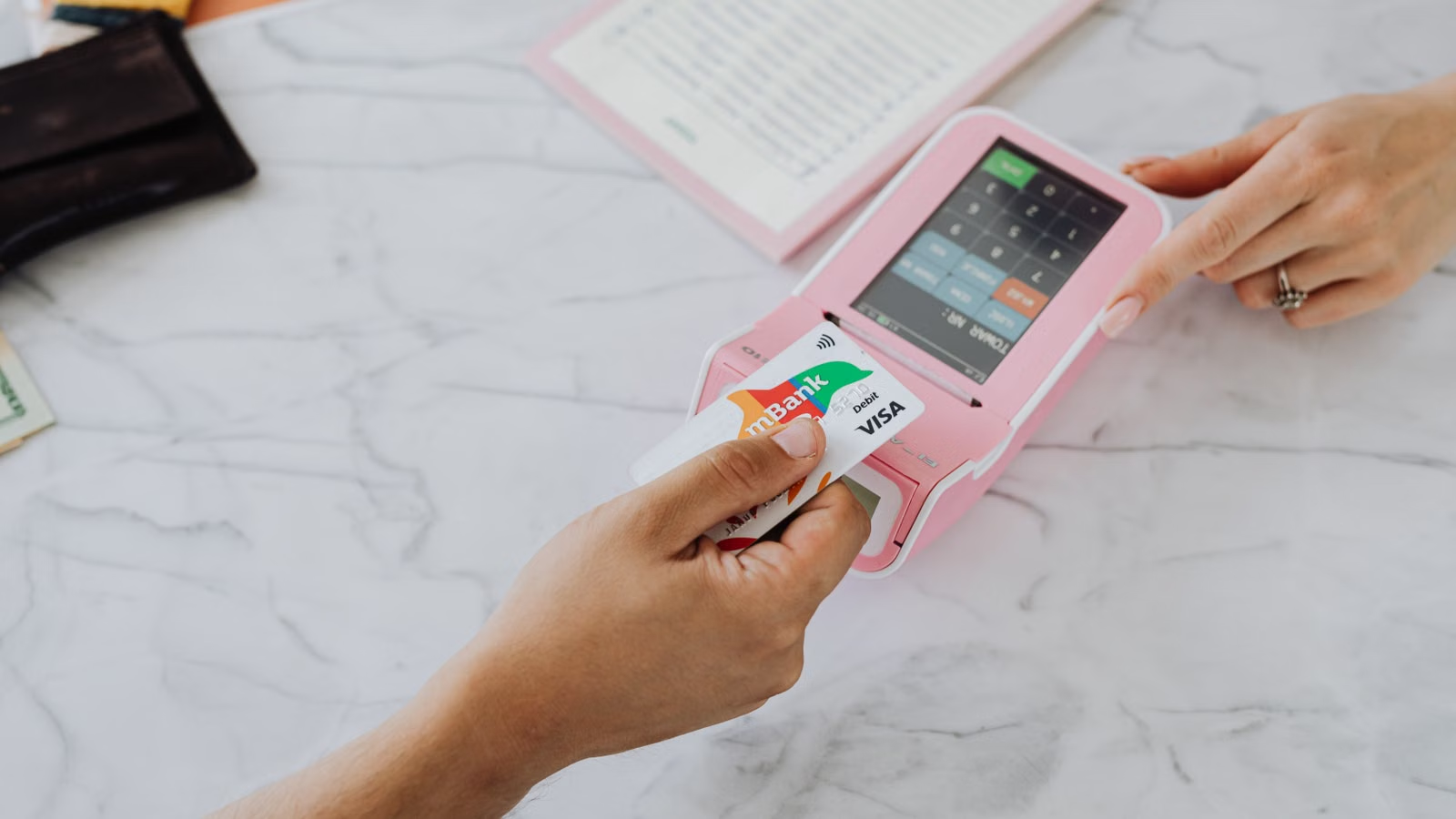
Venmo would most likely remain an independent brand rather than being immediately folded into PayPal or Link. The reason is straightforward: Venmo’s value lies in U.S. young users, friend-to-friend transfers, local consumption, and social-payment habits. If Stripe forced Venmo to become an ordinary checkout button, it could weaken Venmo’s differentiation. A more reasonable approach would be to keep Venmo as a U.S. consumer entry point while connecting it to more Stripe merchants.
In its merchant-facing materials, PayPal says merchants that accept Venmo can reach 95 million active Venmo accounts, with 68% of users being millennials or Gen Z. More importantly, the same material shows that only 54% of active Venmo users also have an active PayPal account. This means Venmo is not merely a PayPal Wallet add-on, but a relatively independent U.S. consumer network.
Venmo’s integration value has three layers. The first is high-frequency P2P transfers, where users split meals, rent, travel expenses, small services, and social-event costs. The second is merchant payments, where users pay in apps, websites, or local merchants that support Venmo. The third is financial services and monetization, including instant cash-out, debit cards, credit cards, business profiles, brand offers, and advertising. If Stripe took over Venmo, the most valuable move would not be renaming it, but using Stripe’s merchant network to scale those use cases.
| Integration Option | Possible Approach | Advantage | Risk |
|---|---|---|---|
| Keep Venmo independent | Continue focusing on U.S. P2P and young users | Preserves user habits | Monetization may remain gradual |
| Merge into PayPal | Unify the wallet entry point | Easier brand management | Dilutes Venmo’s social identity |
| Merge into Link | Strengthen Stripe fast checkout | More unified technical path | Weaker consumer recognition |
| Multi-brand segmentation | PayPal for global wallets, Venmo for U.S. social payments, Link for fast checkout | Best fit for asset characteristics | Higher operating complexity |
Venmo’s best role is as a U.S. local-consumption entry point. It can serve mobile checkout, subscription bills, creator payments, local services, event tickets, and offline small merchants. Stripe Connect, Billing, Issuing, and Radar could support these scenarios in the background, such as helping creator platforms manage collections and payouts, helping subscription merchants accept Venmo payments, and helping small merchants improve fraud detection and payment success rates.
However, Venmo is not suited to being the global wallet master brand. Its market is mainly concentrated in the United States, and user perception is built around social transfers and local consumption. PayPal is better suited for global e-commerce checkout and cross-border user relationships. Link is better suited for fast checkout within Stripe’s merchant ecosystem. The three are not replacements for one another; they serve different use cases.
Venmo also has monetization limits. High P2P usage does not equal high profitability. Younger users are sensitive to free features, and excessive fees could reduce activity. Using social-payment data for advertising, credit, or recommendations also requires clear privacy, authorization, and consumer-protection boundaries. If Stripe wants to grow Venmo revenue, it should prioritize merchant payments, instant cash-out, card products, and merchant offers instead of simply increasing user transfer costs.
Summary: Venmo should be integrated as an independent U.S. consumer entry point, not treated as a generic transfer app or quickly folded into PayPal or Link. Its real value lies in young users, social relationships, high-frequency P2P scenarios, and local-consumption habits. Stripe can use its merchant network, subscription tools, platform payouts, and fraud controls to improve Venmo monetization, but it must avoid undermining Venmo’s lightweight, familiar, and social identity. For investors, the key is not whether Venmo gets renamed, but whether merchant-payment share, instant cash-out revenue, card-product activity, and user retention improve.
Would Braintree Be Kept, Restructured, or Divested to Advent?

Braintree is one of the most sensitive assets Stripe would inherit from PayPal. It can add large merchants, unbranded payment processing, and enterprise payment experience, but it also overlaps heavily with Stripe Payments, Connect, and payment orchestration. As a result, Stripe may not fully absorb Braintree. Instead, it may keep high-quality customers and key technologies while restructuring, migrating, or divesting parts of the business to reduce antitrust pressure.
Braintree’s synergy value is clear. In its 2025 Form 10-K, PayPal disclosed that its platform includes branded and unbranded payment processing, and lists Braintree, Venmo, Xoom, and Hyperwallet among its key brands. The same filing shows that PayPal processed $1.79 trillion in TPV, had 439 million active accounts, and handled 25.4 billion payment transactions in 2025. As an unbranded processing business, Braintree could help Stripe expand large-enterprise merchant coverage and add experience in payment routing, authorization optimization, and platform customers.
If Stripe can keep Braintree’s high-quality merchants, potential synergies include:
- Migrating major Braintree merchants into a more unified Stripe back end.
- Using Stripe Radar, payment routing, and authorization optimization to improve processing efficiency.
- Cross-selling Billing, Tax, Connect, Issuing, and other Stripe tools to Braintree merchants.
- Bringing PayPal, Venmo, and Pay Later into more Stripe merchant checkouts.
- Using a larger transaction-data base to train fraud, risk, and authorization models.
The problem is that Braintree is also one of the areas most likely to attract regulatory scrutiny. Stripe and Braintree both serve online payment processing and large merchants. After a merger, regulators may ask whether merchants still have enough choice among payment processors. Reuters’ reporting on PayPal’s board response also noted that the potential Stripe-Advent transaction could face regulatory and financing obstacles, and the deal structure would affect how PayPal assets are handled. Payment processing is a platform business. Once merchant relationships, data, routing, and fraud controls become too concentrated, regulators will examine whether market competition is harmed.
Braintree could be handled in roughly four ways:
| Braintree Treatment | What Stripe Gets | Regulatory Impact | Merchant Impact | Overall Assessment |
|---|---|---|---|---|
| Full retention | Maximum merchant scale and processing capability | Highest review pressure | Lower short-term migration pressure | High synergy, high risk |
| Partial integration | High-quality customers and fraud capabilities | Medium review pressure | Gradual migration required | Most likely compromise |
| Divestiture to Advent | Lower antitrust risk | Higher chance of approval | Merchant relationships may fragment | Lower synergy value |
| Long-term dual-brand operation | Avoids short-term disruption | Still requires regulatory explanation | Stable merchant experience | Higher cost and complexity |
The most realistic path may be “partial integration plus phased migration.” Stripe does not necessarily need to keep every part of Braintree, especially segments with lower margins, higher system complexity, or obvious regulatory overlap. It is more likely to keep high-quality merchant relationships, payment-routing experience, and fraud data, then gradually migrate back-end capabilities into Stripe’s architecture. For assets that may trigger scrutiny, Stripe and Advent may use business separation, divestiture, or independent operation to reduce deal resistance.
For merchants, Braintree integration may not immediately change the payment experience. Large enterprises often have complex payment agreements, regional coverage, local payment methods, fraud rules, and settlement arrangements. If Stripe forces a rapid migration, it may cause lower authorization rates, accounting confusion, or customer loss. Larger merchants are therefore likely to receive longer transition periods. Stripe’s goal should be to let merchants feel higher payment success rates, stronger fraud controls, and more payment methods before they feel system-migration costs.
Summary: Braintree is the PayPal asset Stripe would most want to use and also the one it would need to handle most carefully. It can add large-merchant processing scale and enterprise payment experience, but it overlaps significantly with Stripe’s core payment business and may become a focus of regulatory review and asset-divestiture demands. Full retention would maximize synergy but raise antitrust pressure. A full divestiture would lower regulatory risk but reduce deal value. The more likely route is to keep high-quality customers and key capabilities, gradually integrate back-end systems, and isolate, restructure, or divest highly overlapping businesses where necessary.
How Would Stripe Integrate PYUSD, Bridge, Privy, and Stablecoin Payments?
Stripe would most likely place PYUSD inside its broader stablecoin infrastructure rather than treating it merely as PayPal’s crypto product. Bridge could handle stablecoin issuance, orchestration, and fund movement. Privy could provide wallet infrastructure. Stripe could connect merchants, while PayPal and Venmo would provide consumer distribution. The goal would be to move stablecoins beyond on-chain transfers and into merchant acceptance, cross-border settlement, and wallet payments.
Stripe already has the technical layer for stablecoins. Stripe’s 2025 update showed that merchants on its platform generated $1.9 trillion in total payment volume. It also noted that stablecoin payment volume reached around $400 billion, with about 60% estimated to come from B2B payments, and that Bridge transaction volume grew more than fourfold year over year. Stripe also announced that it had completed its acquisition of Bridge, bringing stablecoin infrastructure into its money-movement system. Later, Stripe’s crypto solutions described how Stripe, Bridge, and Privy can work together for stablecoin payments, global orchestration, wallet infrastructure, and merchant access.
PayPal’s PYUSD fills the consumer-distribution gap. PayPal says PYUSD is a stablecoin redeemable 1:1 for U.S. dollars. It can be transferred across PayPal, Venmo, external wallets, exchanges, and multiple blockchains, and U.S. merchants can accept it in PayPal Checkout where available. Venmo’s PYUSD material also states that PYUSD is backed by U.S. dollar deposits, U.S. Treasuries, and similar cash equivalents, while transfers to wallet addresses outside Venmo or PayPal may incur network fees.
Putting these assets together, the stablecoin integration path becomes clearer:
| Stablecoin Layer | Stripe, Bridge, and Privy Role | PayPal, PYUSD, and Venmo Role | Integration Value |
|---|---|---|---|
| Issuance | Bridge, Open Issuance | PYUSD issuance and operating experience | Supports enterprise-grade digital dollars |
| Wallets | Privy, Link | PayPal Wallet, Venmo | Connects consumer entry points |
| Merchant acceptance | Stripe Payments | PayPal Checkout | Expands acceptance network |
| Cross-border settlement | Bridge, stablecoin rails | Xoom, PayPal user network | Reduces some cross-border friction |
| Risk and compliance | Stripe risk controls, KYC | PayPal accounts and compliance experience | Supports large-scale operations |
Bridge’s Open Issuance also shows that companies can issue custom stablecoins and expand adoption through Bridge, Privy, and Stripe onramps, offramps, wallets, and cards. If Stripe acquired PayPal, PYUSD could become a more mature consumer-side example. PayPal and Venmo provide user relationships, Bridge handles issuance and orchestration, Privy handles embedded wallets, and Stripe brings stablecoins into the merchant back end.
But stablecoin integration cannot be evaluated only from a technical perspective. Compliance is just as important, including reserve assets, redemption mechanisms, anti-money laundering, sanctions screening, consumer protection, tax treatment, and local digital-asset regulation across different jurisdictions. User experience also matters: should consumers hold PYUSD directly? Should merchants keep PYUSD or automatically settle into fiat? How should refunds, disputes, mistaken transactions, and cross-chain transfers be handled? Without clear rules, stablecoins will struggle to enter mainstream payments.
If you follow PayPal, Stripe-related M&A, and stablecoin payment trends, you should look not only at the industrial logic but also at trading costs. U.S. stock trading costs may include not only commissions, but also platform fees, external institutional fees, transaction activity fees, and other charges. Biya charges $0 commission for U.S. stock trades, while platform fees, external institutional fees, and other charges are subject to the Biya U.S. stock fee schedule and the order page. Service availability depends on the user’s location, identity-verification results, platform rules, and applicable laws and regulations. Public market information and fee-structure discussion do not constitute investment advice.
Summary: Stablecoins may be one of the long-term strategic endpoints of Stripe’s PayPal integration. Stripe already has Bridge, Privy, and merchant infrastructure for issuance, wallets, onramps, offramps, and merchant access. PayPal brings PYUSD, PayPal Wallet, Venmo, and consumer trust. The goal of the combined system would not be to keep stablecoins limited to crypto users, but to bring them into merchant payments, cross-border settlement, and wallet payments. However, this path must also resolve reserve transparency, redemption rules, AML controls, consumer protection, refund disputes, and local regulatory requirements. Technical feasibility should not be mistaken for mainstream adoption.
How Would Regulation, Data, and Brand Conflict Affect the Integration Timeline?
The integration timeline after a Stripe acquisition of PayPal would likely be constrained by regulatory review, data separation, brand positioning, and merchant migration. Payments are not ordinary software M&A. They involve two-sided platforms, consumer funds, merchant routing, anti-fraud data, and digital-asset compliance. Even if Stripe wants to move quickly, it would more likely unify back-end capabilities first and handle PayPal, Venmo, and Link’s consumer brands more carefully.
The U.S. DOJ and FTC merger guidelines provide a clear review framework for multi-sided platforms. Under the section on mergers involving multi-sided platforms, regulators examine competition between platforms, within platforms, and from substitute platforms. A Stripe-PayPal combination fits this framework. On the merchant side, it would include Stripe Payments, Braintree, and PayPal Checkout. On the consumer side, it would include PayPal Wallet, Venmo, and Link. On the settlement side, it would include PYUSD, Bridge, and stablecoin payments. On the data side, it would involve transactions, identity, devices, fraud controls, and dispute handling.
Regulators may focus on several questions: whether large internet merchants would still have enough alternative payment processors; whether Stripe might bundle PayPal, Venmo, Link, and other payment-processing services; whether Braintree would reduce competition in enterprise payment processing; whether payment, wallet, and stablecoin data would become too concentrated; and whether third-party wallets and other payment methods could still access the ecosystem fairly.
| Integration Stage | Main Task | Parts That Can Move Faster | Parts That Need Caution |
|---|---|---|---|
| Initial post-closing stage | Maintain business stability | Merchant communication, compliance review | Wallet brand changes |
| 6–18 months | Back-end capability integration | Risk controls, payment routing, merchant tools | Braintree customer migration |
| After 18 months | New-business synergies | Stablecoin settlement, AI payments | Consumer-account unification |
| Long-term stage | Network-effect expansion | Data models, cross-border settlement | Regulatory commitments and privacy boundaries |
Brand conflict will also shape the integration timeline. PayPal is suited to remaining a global consumer wallet and branded checkout product. Venmo fits U.S. young users and social payments. Link fits fast checkout and low-friction payments within Stripe’s merchant network. PYUSD is better positioned as a digital-dollar settlement asset. Stripe should remain the merchant-infrastructure and risk-control back end. If these roles are unclear, merchants will face more complex integration choices, and consumers may not know whether to use PayPal, Venmo, or Link.
Data governance cannot be ignored either. Stripe and PayPal both hold large amounts of payment, device, identity, and dispute data. This data can improve fraud detection and authorization optimization, but it can also raise privacy, competition, and consumer-protection concerns. This becomes especially sensitive when payment processing, digital wallets, and stablecoin settlement sit inside the same group. Whether data is shared, how authorization is obtained, and whether data can be used for advertising or credit decisions will all become central issues for regulators and user trust.
Therefore, Stripe is more likely to choose gradual integration. In the first stage, it would stabilize merchants and users to avoid disrupting accounts, balances, transaction disputes, and settlements. In the second stage, it would unify back-end routing, fraud controls, merchant reporting, and developer interfaces. In the third stage, it would move deeper into stablecoins, cross-border settlement, AI agent payments, and wallet integration. The closer a function is to consumer funds and brand perception, the longer and more carefully it must be handled.
Summary: Stripe’s real challenge would not be technical connection, but slow integration and layered governance. Payment platforms connect merchants, consumers, wallets, data, and money movement at the same time. Any rushed merger could bring regulatory scrutiny, brand confusion, user migration issues, and merchant loss. A more feasible path would be to keep PayPal, Venmo, and Link stable in the front end while gradually unifying back-end fraud controls, payment routing, merchant tools, and stablecoin settlement. For investors, the key signals are whether regulators require asset divestitures, whether data needs to be isolated, whether Braintree is restructured, and whether consumer brands keep clear roles.
How Should Investors Judge Whether Stripe’s PayPal Integration Is Working?
Investors should not judge the success of Stripe’s PayPal integration only by whether the deal is announced or completed. They should keep watching Venmo monetization, Braintree deduplication, PYUSD use cases, merchant retention, regulatory remedies, and margin changes. The acquisition itself would only be the starting point. The real value depends on whether the integrated payment network improves user frequency, merchant conversion, and settlement efficiency.
The most important signals are business metrics, not takeover rumors. For Venmo, you should watch active accounts, merchant-payment share, instant cash-out revenue, debit and credit card contribution, and advertising or offers growth. For Braintree, you should track large-merchant retention, TPV and transaction margin, authorization rates, customer migration progress, and whether the business is divested or restructured. For stablecoins, you should watch PYUSD circulation, usage inside PayPal and Venmo, merchant acceptance, cross-border payment volume, reserve disclosures, and regulatory progress.
| Observation Area | Positive Signal | Negative Signal | Why It Matters |
|---|---|---|---|
| Venmo | Merchant-payment share rises | Remains mostly low-margin P2P | Measures consumer-entry-point value |
| Braintree | High-quality customers stay and margins improve | Large customers leave or assets are forced into divestiture | Measures merchant-synergy value |
| PYUSD | Wallet and merchant scenarios expand | Remains limited to crypto-native users | Measures stablecoin strategy |
| Regulation | Remedies remain manageable | Divestitures are too broad | Measures deal-completion probability |
| Financials | Margins and cash flow improve | Financing costs pressure returns | Measures whether the acquisition adds value |
Several common mistakes should be avoided. First, do not treat media acquisition reports as a final transaction. Formal announcements, board position, financing commitments, and regulatory progress matter more. Second, do not equate larger TPV with higher profit. Low-margin volume may actually weigh on integration. Third, do not assume that a large Venmo user base automatically means monetization success; the key is whether users generate revenue through merchants, card products, and financial services. Fourth, do not equate stablecoin technical capability with mainstream adoption; wallet experience, compliance, and merchant acceptance matter just as much. Fifth, do not overlook the possibility that regulatory divestitures could reduce synergy value.
For PayPal shareholders, the core issue is the gap between standalone operating value and the acquisition price. If PayPal can improve branded checkout, Venmo revenue, Braintree margins, and PYUSD use cases, its board will have a stronger reason to demand a higher offer. If standalone growth remains weak, an acquisition proposal becomes more attractive. For Stripe, the deal only makes sense if it improves long-term profit quality after integration, not merely because it creates a larger company.
If you follow payment-industry names such as PayPal, Block, Visa, Mastercard, and Adyen, you can use Biya to monitor U.S. and Hong Kong market activity, and use U.S. stock search to review relevant company information. When tracking U.S. dollar assets across borders, exchange-rate changes can also affect actual returns and costs, so real-time exchange rates can help you assess currency-conversion impact. Public market information is for research only and does not constitute investment advice. Actual trading and service availability depend on user location, identity-verification results, platform rules, and applicable laws and regulations.
Summary: The success of Stripe’s PayPal integration depends on business metrics, not the acquisition headline. Venmo needs to prove that social payments can turn into merchant payments and financial-services revenue. Braintree needs to prove that large merchants and unbranded processing can improve profit quality, not just add low-margin volume. PYUSD needs to prove that stablecoins can enter wallet, merchant, and cross-border settlement scenarios. On the regulatory side, the smaller the required remedies, the more intact the synergy value. The higher the financing cost, the greater the pressure on returns. You should track the deal through five dimensions: price, regulation, integration, margins, and user behavior.
If you follow fintech events such as Stripe’s potential acquisition of PayPal, it is better to understand them within the broader payment value chain: merchant acquiring, digital wallets, P2P transfers, cross-border payments, stablecoin settlement, and U.S. stock valuations can all change at the same time. Biya is a global multi-asset trading wallet that supports U.S. stocks, Hong Kong stocks, and digital-asset trading. It also supports converting USDT into major fiat currencies such as U.S. dollars and Hong Kong dollars, and covers payments in more than 40 local currencies across over 190 countries and regions. You can use Biya to track prices and company information for payment-industry stocks, while combining that with public filings, regulatory documents, platform fees, and your own risk tolerance. Related market information is for research only and does not constitute investment advice. Specific service availability depends on user location, identity-verification results, platform rules, and applicable laws and regulations.
FAQ
Would Venmo Be Discontinued After Stripe Acquires PayPal?
Venmo would be unlikely to be discontinued lightly. It would more likely remain a U.S. youth and social-payment entry point, because canceling it or forcing it into PayPal or Link could disrupt user habits. The real metrics to watch are Venmo’s merchant-payment share, instant cash-out revenue, card-product activity, and user retention.
Why Might Stripe Divest Braintree?
Braintree could be divested because it overlaps with Stripe in enterprise payment processing and large-merchant services, making it a potential focus of antitrust review. Whether it is divested would depend on regulatory requirements, merchant retention, synergy value, and Advent’s role in the transaction structure.
Would PYUSD Become Stripe’s Main Stablecoin?
PYUSD could become an important option within Stripe’s stablecoin system, but it may not be the only stablecoin Stripe supports. Stripe could continue supporting multiple stablecoins and settlement assets to meet different merchant, regional, and compliance needs. PYUSD’s value lies in PayPal and Venmo wallet distribution, not in replacing all stablecoins.
Would Stripe’s Integration of PayPal Affect Merchant Fees?
Stripe’s integration of PayPal would not necessarily cause merchant fees to rise or fall. Final fees would depend on contract terms, payment methods, regions, processing volume, platform policies, and the regulatory environment. Merchants should rely on actual bills, merchant agreements, and published platform fee schedules rather than judging costs only by acquisition news.
What Risks Could PayPal Users Face If Migrated Into Stripe’s System?
PayPal users could face risks such as changes in account experience, dispute-resolution rules, payment-method options, data-use boundaries, and balance-management workflows. Large payment platforms usually migrate in phases to avoid disrupting user balances, transaction security, refunds, disputes, and merchant settlement.
How Can Investors Track Stripe’s PayPal Integration Progress?
Investors should track formal announcements, regulatory review, Braintree treatment, Venmo monetization, PYUSD use cases, and PayPal earnings metrics. They should not judge deal value only through acquisition rumors or short-term stock-price moves. Public filings, fee costs, and personal risk tolerance should also be considered.
*This article is provided for general information purposes and does not constitute legal, tax or other professional advice from BiyaPay or its subsidiaries and its affiliates, and it is not intended as a substitute for obtaining advice from a financial advisor or any other professional.
We make no representations, warranties or warranties, express or implied, as to the accuracy, completeness or timeliness of the contents of this publication.
Related Blogs of

Choosing a Stock Trading App: Beginner Checklist


Crypto Trading Bots: Types, Costs, and Security Risks

Crypto-Related Stocks vs Digital Assets: What Investors Actually Own

International Wire Transfer Time: What Affects Delivery?

Choose Country or Region to Read Local Blog
 Australia
 Austria
 Belgium
 Canada
 Cyprus
 Czech Republic
 Denmark
 Estonia
 Finland
 France
 Germany
 Greece
 Hong Kong
 India
 Indonesia
 Ireland
 Italy
 Japan
 Latvia
 Lithuania
 Luxembourg
 Malaysia
 Malta
 Morocco
 Nepal
 Netherlands
 New Zealand
 Norway
 Pakistan
 Philippines
 Poland
 Portugal
 Romania
 Singapore
 Slovakia
 Slovenia
 South Africa
 South Korea
 Spain
 Sweden
 Thailand
 United States
 Turkey
 United Arab Emirates
 United Kingdom
 Vietnam