
Is Lucid Really Going Bankrupt? Official Response, Confirmed Facts, and Remaining Risks





As of now, publicly available information does not support the claim that Lucid is preparing to file for Chapter 11 bankruptcy. The company has denied the rumor in a Form 8-K and stated that AlixPartners’ role is to help improve execution and operations. However, that does not mean Lucid’s risks have disappeared. The company still faces heavy cash burn, negative gross margins, rising inventory, and ongoing dependence on external financing. A more accurate conclusion is: near-term bankruptcy is not a confirmed fact, but medium-term financial risk remains elevated.
Key Takeaways
- Lucid has denied that it is considering Chapter 11 or a take-private transaction.
- AlixPartners said it was not asked to advise on bankruptcy or privatization.
- Pro forma liquidity reduces near-term pressure but does not fix profitability.
- Negative gross margins, rising inventory, and cash burn remain key risks.
- PIF support lowers funding risk but may also bring dilution.
- Investors should watch deliveries, margins, cash flow, and financing terms.
Where Did the Lucid Bankruptcy Rumor Come From? What Did the Company Actually Say?

The core issue with the Lucid bankruptcy rumor is not whether the market is worried, but whether there is verifiable evidence. The evidence currently available shows that the rumor originated from a report citing anonymous sources and was quickly amplified by the market. Lucid denied the claim through a regulatory filing, and AlixPartners separately confirmed that it had not advised the company on bankruptcy or a take-private deal. Therefore, at this stage, hiring an adviser should not be treated as the same thing as preparing for bankruptcy.
Why the Rumor Spread So Quickly
The rumor spread quickly because Lucid was already in a sensitive position: its share price had been weak, losses remained large, management was changing, layoffs had been announced, and inventory was rising. In that context, any mention of a “restructuring adviser” can easily be interpreted by the market as a warning sign about capital structure risk. According to Reuters’ report on the intraday volatility, LCID fell sharply during the session and was halted several times for volatility, showing that the market was not digesting an ordinary rumor but repricing liquidity risk.
Still, you need to distinguish between four types of information: anonymous claims, media summaries, company statements, and regulatory filings. Anonymous sources may point to a possible risk, but they do not prove that the board has launched a Chapter 11 process, a take-private review, or a debt restructuring plan. For a listed company, the most important evidence remains SEC filings, investor relations announcements, court records, and named statements from management or advisers.
What Exactly Did Lucid Deny?
In its July 14, 2026 8-K filing, Lucid made three key points: the rumor was false; the company had not formed a special committee of the board to explore the scenarios described in the report; and AlixPartners was engaged to help improve execution, strengthen operations, and unlock the potential of Lucid’s technology and products. Later, the AlixPartners statement further confirmed that it had not provided, and had not been asked to provide, advice on a bankruptcy filing or take-private transaction.
This means that, based on public filings, “Lucid is preparing for Chapter 11” is not a confirmed fact. If you are trying to judge whether LCID’s share price is being overly discounted because of bankruptcy fears, you should separate the authenticity of the rumor from the company’s real operating pressure.
| Claim to Verify | Current Public Evidence | Assessment |
|---|---|---|
| Lucid is preparing for Chapter 11 | The company explicitly denied it | Not confirmed |
| The board formed a special committee | The company explicitly denied it | Not confirmed |
| AlixPartners advised on bankruptcy | AlixPartners denied it | Not confirmed |
| Lucid hired an adviser to improve operations | Confirmed by the company and adviser | Confirmed |
| Lucid faces financial pressure | Visible in financial statements | Confirmed |
Summary: Lucid’s bankruptcy rumor is not supported by regulatory filings, court records, or company announcements. It is better understood as an extreme-risk narrative attached to a high-cash-burn company, rather than a bankruptcy process that has already begun. However, the official denial only tells you that the company does not currently confirm such a plan. It does not automatically remove future financial pressure. The most reliable way to assess Lucid is to verify the facts first, then analyze cash flow, debt, inventory, and financing capacity.
Looking at Liquidity and Debt, Is Lucid Close to Bankruptcy in the Short Term?

From a short-term solvency perspective, Lucid does not look like a company on the immediate edge of bankruptcy. From a long-term self-funding perspective, the risk remains obvious. The key difference is this: Lucid still has external financing and credit facilities, but its core business is still burning cash. In other words, near-term liquidity does not mean the business model has entered a safe zone.
How to Interpret Lucid’s Liquidity Numbers
In its first-quarter 2026 financial results, Lucid disclosed total liquidity of about $3.2 billion at quarter-end. After including April capital raises and the expanded delayed-draw loan facility, pro forma liquidity was about $4.7 billion. This figure is important evidence against the claim that the company is about to go bankrupt immediately, because it shows that Lucid still has a funding runway.
However, pro forma liquidity is not the same as free cash sitting in a bank account. In its first-quarter 2026 10-Q, Lucid reported about $700 million in cash and cash equivalents as of March 31, with no short-term investments. Total liquidity may include undrawn facilities, financing arrangements, and other available sources of capital. That means you should look at both “available funding” and “cash burn rate.”
Cash Burn Remains the Core Problem
Lucid generated about $282 million in first-quarter revenue, but its cost structure remained heavy. According to the same quarterly operating data, the company posted a net loss of about $1.028 billion and a net loss attributable to common stockholders of about $1.134 billion. Net cash used in operating activities was about $1.186 billion. If production, sales, and cost structure do not improve meaningfully, external financing will remain essential to keeping the business running.
Gross margin is even more important. In the first quarter, Lucid generated about $282 million of revenue while cost of revenue was about $594 million. On a simplified basis, the automotive business remained deeply negative on gross margin. Negative gross margin means that each additional vehicle sold may still come with heavy manufacturing, depreciation, inventory, and warranty-related pressure.
| Metric | Latest Public Data | What It Means for Bankruptcy Risk |
|---|---|---|
| Cash and cash equivalents | About $700 million | Direct cash buffer is limited |
| Total liquidity | About $3.2 billion | Short-term funding pressure is reduced |
| Pro forma liquidity | About $4.7 billion | Includes later financing and loans |
| Q1 operating cash flow | About $1.186 billion outflow | Internal cash generation remains weak |
| Q1 net loss | About $1.028 billion | Profitability path remains unclear |
| Total liabilities | About $5.445 billion | Capital structure pressure is significant |
If you follow high-volatility U.S. stocks such as LCID, you need to evaluate not only bankruptcy risk but also actual trading costs. U.S. stock trading costs usually include more than commissions; they may also include platform fees, external agency fees, transaction activity fees, and other charges. For example, Biya U.S. stock trading fees show that U.S. stock commission is $0, while platform fees, external agency fees, and other charges are subject to the fee center and the order page. Availability of related services depends on the user’s location, identity verification results, platform rules, and applicable laws and regulations.
Summary: Lucid’s short-term bankruptcy risk and long-term investment risk should not be confused. Pro forma liquidity of $4.7 billion makes an immediate Chapter 11 scenario difficult to support with current public evidence, but large operating cash outflows, negative gross margins, and significant liabilities show that the company still needs to improve operations or continue raising capital. For ordinary investors, the key question is not whether Lucid has cash today, but whether cash burn declines, deliveries convert into revenue, and margins gradually recover over the next several quarters.
Why the Rumor Triggered Panic: Lucid’s Operating Risks Are Real
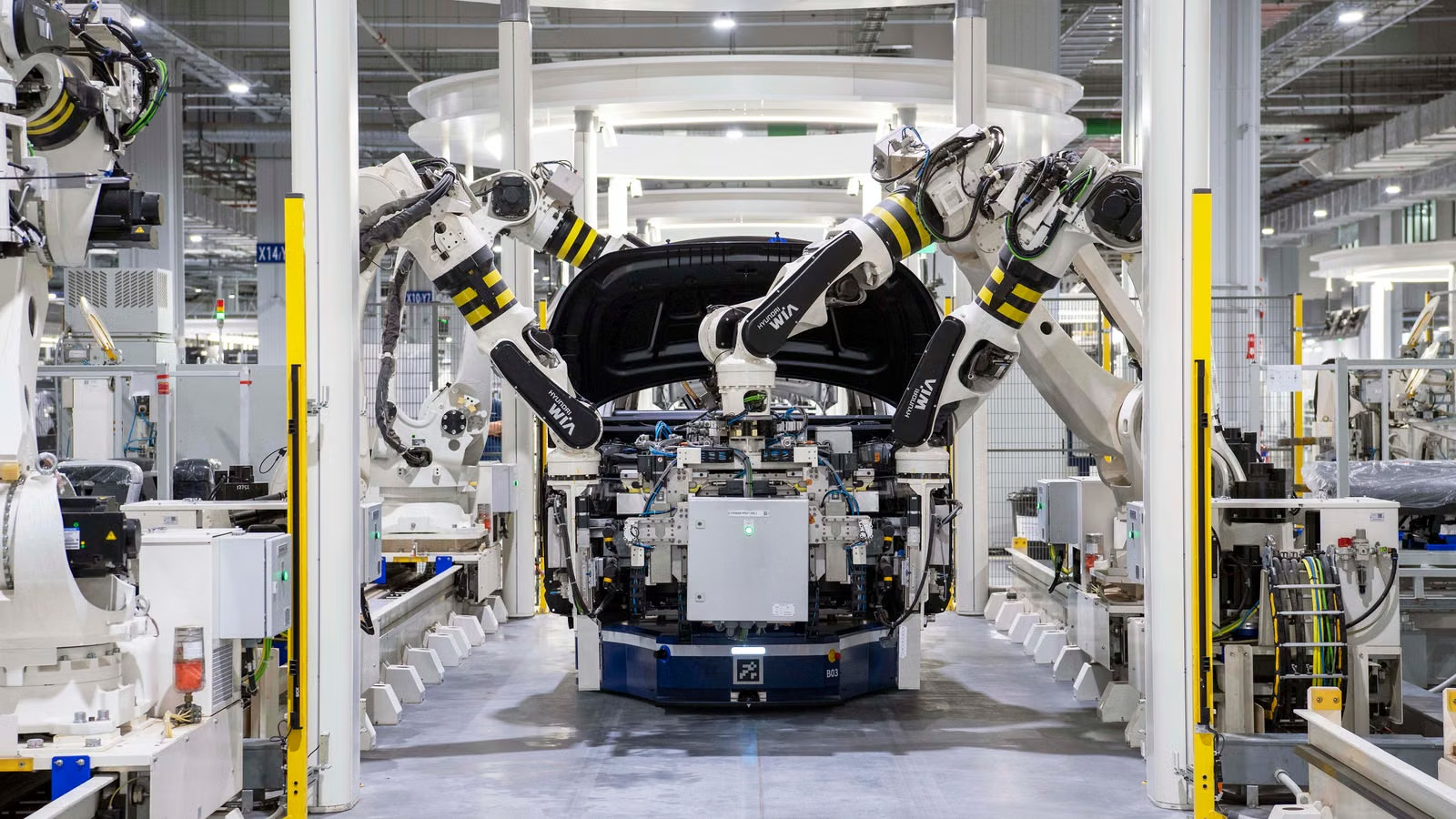
The market was willing to believe the Lucid bankruptcy rumor not because the rumor itself was strong, but because the company does face real operating pressure. Production and deliveries are not fully aligned, inventory has increased, gross margins remain negative, layoffs have been announced, and management has changed. All of these signals make investors worry that the financing window could narrow. The rumor may be false, but the risks are not imaginary.
Higher Production Has Not Fully Converted into Deliveries
Lucid produced 5,500 vehicles and delivered 3,093 vehicles in the first quarter. In the second quarter, it produced 4,774 vehicles and delivered 3,953 vehicles. The improvement in second-quarter deliveries is a positive signal, but production exceeded deliveries in both quarters, which means you still need to monitor inventory, logistics, demand, and supply chain timing.
This does not automatically mean Lucid cannot sell its cars. EV deliveries can be affected by shipping schedules, suppliers, model transitions, international markets, and customer allocation. But if production remains above deliveries for a prolonged period, inventory absorbs cash, and price promotions may pressure margins.
Inventory and Impairment Are More Sensitive Than Sales Growth
Lucid’s first-quarter inventory was about $1.469 billion, up from about $1.110 billion at the end of 2025. The company also recorded inventory and purchase commitment write-downs during the quarter. Rising inventory by itself is not evidence of bankruptcy, but it affects cash conversion, gross margin, and the risk of future discounting.
| Operating Signal | Confirmed Fact | What It Does Not Prove | What to Watch Next |
|---|---|---|---|
| Production above deliveries | Gap existed in Q1 and Q2 | It does not prove demand has collapsed | Delivery rate, inventory turnover |
| Rising inventory | Q1 inventory increased sharply | It does not mean all vehicles are unsellable | Impairment and discounting |
| Negative gross margin | Cost of revenue exceeded revenue | It does not mean margins can never improve | Capacity utilization and unit cost |
| Management changes | CFO change and organizational simplification | It does not equal bankruptcy restructuring | Execution stability |
| Layoffs and shift reduction | U.S. workforce cut by about 18% | It does not mean operations are stopping | Savings realization and production changes |
In June, Lucid disclosed an 18% reduction in its U.S. workforce and eliminated the second production shift at its AMP-1 factory. The company expects annualized savings of about $158 million. This can be read as proactive cost control, but it also signals that the previous cost structure and production pace needed adjustment. Both interpretations can be true at the same time: cost cuts may extend the cash runway, while also reflecting a reset of growth expectations.
Summary: What makes the market nervous about Lucid is not one rumor, but a group of operating indicators under pressure at the same time. The production-delivery gap, rising inventory, negative gross margins, and layoffs all show that Lucid has not yet entered a stable expansion phase. You should avoid two extremes: treating the rumor as fact, or treating the official denial as proof that all risk has disappeared. A more balanced view is that Lucid still has funding and product assets, but it must prove that deliveries, costs, inventory, and cash flow can improve together.
Can PIF Support Prevent Lucid Bankruptcy? Funding Cushion and Dilution Cost
PIF support is Lucid’s most important near-term safety cushion, but it is not an unconditional shield for common shareholders. Financing from a major shareholder and related parties can reduce the risk of a funding break, but it may also change the economic rights of existing shareholders through preferred stock, convertible securities, loans, or common stock issuance. For LCID common shareholders, “the company survives” and “per-share value rises” are not the same thing.
Lucid disclosed that in April it completed about $1.05 billion of capital raises, including $550 million of convertible preferred stock purchased by PIF affiliate Ayar, about $300 million from a public common stock offering, and a $200 million common stock investment from Uber. In addition, PIF’s delayed-draw term loan was expanded by $500 million, and the company retained about $2 billion of undrawn capacity. These arrangements supported the company’s statement that pro forma total liquidity was about $4.7 billion.
But different financing tools affect common shareholders differently:
| Financing Method | Benefit to the Company | Potential Impact on Common Shareholders |
|---|---|---|
| Convertible preferred stock | Provides long-term capital | May dilute shareholders upon conversion |
| Common stock issuance | Adds cash without fixed repayment | Directly dilutes per-share ownership |
| Related-party loans | Provides backup liquidity | Adds debt and interest burden |
| Strategic equity investment | Strengthens partnership and funding base | Execution risk remains |
You also need to understand PIF’s role. Lucid has long disclosed in SEC filings that PIF and its affiliates have significant influence over the company, and the market widely views PIF as Lucid’s key financial backer. The issue is that a major shareholder’s willingness to support the company does not mean it has promised to protect common shareholders at any price. In an extreme scenario, continued financing, privatization, debt exchange, or asset restructuring could allow the company to keep operating while still putting pressure on common equity value.
If you use U.S. stock information lookup to follow individual names such as LCID, you should not only watch price moves. Announcements, financing terms, share count changes, and financial statements are equally important. Popular stocks often become more volatile during rumor-driven periods, so investors should understand order types, fee structures, and their own risk tolerance before trading.
Summary: PIF support significantly lowers the chance of a near-term funding break at Lucid, but it should not be viewed as a guarantee for common shareholders. Lucid still needs delivery growth, cost reduction, and margin improvement to prove that the business model works. Until then, additional financing may remain necessary, and financing often comes with dilution, increased senior claims, or higher debt burden. For ordinary investors, whether PIF continues to support Lucid matters, but the form of that support matters just as much.
How to Judge Whether Lucid’s Risk Is Rising Over the Next 6 to 12 Months
Over the next 6 to 12 months, the right way to judge Lucid’s risk is not to focus on social media rumors or one-day stock moves. The more reliable approach is to track cash, margins, deliveries, inventory, financing, and debt-related language in filings. Chapter 11 or formal restructuring risk would rise meaningfully only if several indicators deteriorate at the same time, such as a rapid cash decline, tightening financing conditions, weaker supplier terms, or debt-default language.
You can frame Lucid’s possible path in three scenarios:
| Scenario | Trigger Conditions | Risk Implication |
|---|---|---|
| Continued operation with cost cuts | Deliveries improve, cash burn falls, PIF facilities remain available | High risk but still manageable |
| Another large financing round | Cash flow does not improve and margins remain negative | Dilution or debt pressure rises |
| Formal restructuring pressure | Financing is blocked, debt default appears, supply chain tightens | Bankruptcy risk rises materially |
In practice, you can monitor eight indicators:
- Whether cash and available credit facilities continue to decline.
- Whether net cash used in operating activities narrows meaningfully.
- Whether vehicle deliveries move closer to, or exceed, production.
- Whether inventory and inventory write-downs continue to increase.
- Whether gross margin improves quarter by quarter.
- Whether annual production guidance is restored and credible.
- Whether PIF, Uber, and other partners continue to commit resources.
- Whether risk factors include stronger warnings on financing, repayment, or going-concern issues.
The next major information point is Lucid’s second-quarter financial results. At that time, cash balance, operating cash flow, gross margin, inventory changes, and management’s comments on liquidity runway will matter more than production volume alone. If those metrics improve, the bankruptcy rumor will lose explanatory power. If cash burn does not narrow, the market may continue to trade around the cycle of financing, dilution, and restructuring fears.
For ordinary investors, the worst approach is to make a concentrated decision based on a single rumor. A more disciplined approach is to build an event checklist: start with SEC filings, then review company financial results, then read named media reports, and finally compare price action and trading volume. When tracking U.S. stocks through a multi-asset trading tool such as Biya, it is also important to separate information verification from trade execution, so that short-term volatility is not mistaken for certainty.
Summary: Current public evidence does not confirm that Lucid is preparing for bankruptcy, but risk monitoring should not stop. Over the next few quarters, what matters most for LCID’s risk pricing is not whether the company denies the rumor again, but whether cash flow improves, deliveries recover, inventory declines, margins repair, and major-shareholder financing terms remain favorable. At this stage, the more accurate view is: Lucid has a near-term funding cushion, but it remains in a high-risk transition window.
When major rumors appear, you should verify regulatory filings, company announcements, financial statements, and actual trading costs at the same time, rather than relying only on social media conclusions. Biya can be used to follow price moves and market information for popular U.S. stocks such as LCID, RIVN, and TSLA. If related services are available in your location and you meet the applicable requirements, you can also use download App to review account, market data, and trading features. Biya charges $0 commission for U.S. stock trades, while platform fees, external agency fees, and other charges are subject to the fee center and order page. Public market information, trading rules, and fee structures can help you make a more complete assessment, but they do not constitute investment advice. Any trading decision should be based on your own risk tolerance, the latest company disclosures, and applicable local regulations.
FAQ
Could Lucid Still File for Chapter 11 After Denying Bankruptcy Rumors?
Yes, it could, but there is currently no confirmed Chapter 11 filing or special board committee. Whether Lucid eventually moves toward bankruptcy depends on cash flow, debt, financing capacity, and operating improvement. If future filings show default, going-concern warnings, or court records, the risk assessment would need to change.
What Is the Difference Between a PIF Take-Private Deal and Lucid Bankruptcy Restructuring?
A PIF take-private deal would change Lucid’s ownership and listing status, while bankruptcy restructuring would involve court-supervised changes to debt and operations. A take-private transaction does not necessarily mean insolvency. Bankruptcy restructuring usually signals serious pressure on repayment or capital structure. The impact on common shareholders depends on price, terms, and priority.
Would Lucid’s Financial Trouble Affect Warranty and Service for Existing Owners?
Financial trouble does not automatically terminate warranties, but service network capacity, parts supply, and after-sales support could be affected. Owners should rely on their purchase contracts, local consumer protection rules, company notices, and service center arrangements. If the company entered formal restructuring, after-sales obligations would need to be assessed under the restructuring plan.
Does Lucid’s Refinancing Mean the Company Is Close to Bankruptcy?
No, refinancing does not necessarily mean Lucid is close to bankruptcy, but it does show that the company still needs external capital. High-growth manufacturers often raise money during production ramp-up. However, repeated common stock issuance, convertible preferred stock, or related-party loans can create dilution and debt pressure. The key question is whether cash burn falls after the financing.
*This article is provided for general information purposes and does not constitute legal, tax or other professional advice from BiyaPay or its subsidiaries and its affiliates, and it is not intended as a substitute for obtaining advice from a financial advisor or any other professional.
We make no representations, warranties or warranties, express or implied, as to the accuracy, completeness or timeliness of the contents of this publication.
Related Blogs of

International Money Transfer Limits: Per-Transfer, Daily, and Monthly Caps Explained


Crypto Off-Ramp Services vs. Exchanges: Fees, Payouts, and Trade-Offs


Chase Wire Transfer Routing Number: Domestic Wires and International SWIFT Codes


Wire Transfer Requirements: Sender and Beneficiary Details Checklist

Choose Country or Region to Read Local Blog
 Australia
 Austria
 Belgium
 Canada
 Cyprus
 Czech Republic
 Denmark
 Estonia
 Finland
 France
 Germany
 Greece
 Hong Kong
 India
 Indonesia
 Ireland
 Italy
 Japan
 Latvia
 Lithuania
 Luxembourg
 Malaysia
 Malta
 Morocco
 Nepal
 Netherlands
 New Zealand
 Norway
 Pakistan
 Philippines
 Poland
 Portugal
 Romania
 Singapore
 Slovakia
 Slovenia
 South Africa
 South Korea
 Spain
 Sweden
 Thailand
 United States
 Turkey
 United Arab Emirates
 United Kingdom
 Vietnam