How to Transfer Money to Another Country? A Guide to Safe and Quick International Remittances




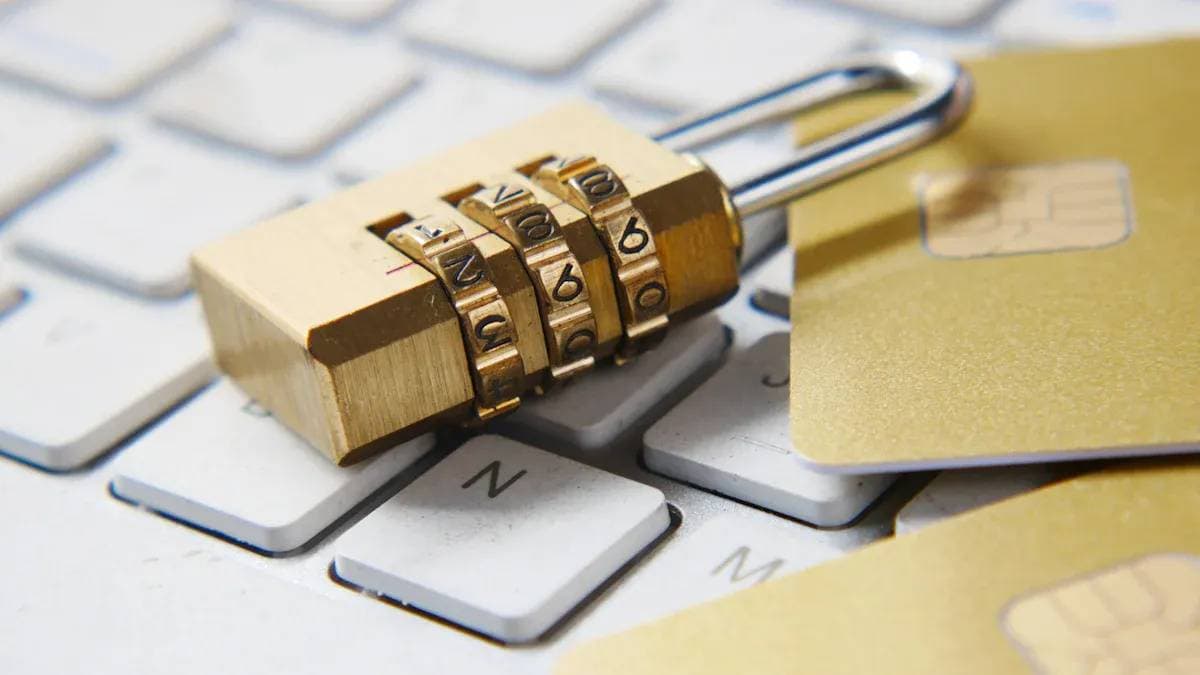
Image Source: pexels
To send funds overseas, you have three main options: traditional bank wire transfers, online remittance platforms, or cash agent services. With the global digital remittance market reaching approximately $25 billion in 2024, online services have become a mainstream choice.
Key Note: For most individual users, online platforms are often the top choice due to their combined advantages in speed, cost, and convenience.
This international transfer guide aims to help you clearly understand these options to make the most suitable decision.
In practice, you can keep “quote → FX → payout” in one streamlined flow. BiyaPay is a multi-asset wallet supporting multi-currency funding and conversion, helping you plan budgets and cash needs before sending.
When you initiate a transfer, BiyaPay’s remittance flow shows estimated fees, routes and delivery times, and validates beneficiary/SWIFT details to reduce returns caused by incorrect information.
Before sending, use the free exchange-rate comparison tool to gauge real-time rates and total costs. BiyaPay operates under multi-jurisdiction registrations (e.g., U.S. MSB, New Zealand FSP), supporting predictable and compliant cross-border payments.
Key Points
- There are three main ways to send money abroad: online platforms, traditional banks, and cash agents. Online platforms are typically the fastest and cheapest.
- The total cost of a transfer includes direct handling fees and hidden exchange rate margins. Compare services based on the final amount received by the recipient.
- Before transferring, prepare complete recipient information, including name, address, and bank codes. Verifying this information carefully is critical.
- When choosing a transfer service, ensure the platform is legitimate and regulated by financial authorities. Avoid operating in insecure network environments.
- Beware of common transfer scams, such as fake friend emergencies or false prize winnings. Protect your money.
Comparison and Selection of Transfer Methods
Image Source: unsplash
When choosing a transfer method, you need to balance speed, cost, and convenience. Below, we break down the three main methods to help you find the best fit.
Online Remittance Platforms
Online remittance platforms are fintech services designed for international transfers. For most daily small to medium transfer needs, these are typically the most efficient and cost-effective options.
- Advantages: Fast, transparent fees, better rates, user-friendly.
- Disadvantages: Some platforms have limits on single or large transfers; recipients need a bank account or e-wallet.
- Use Cases: Paying overseas bills, sending living expenses to family or friends, small business payments.
How They Work? You can complete all operations via a website or mobile app. These platforms typically offer rates close to the mid-market rate and clearly list all fees, letting you know the exact amount received before sending.
Platforms like Wise, Remitly, and Paysend offer flexible transfer speeds. Some transfers can complete in minutes, especially with card payments. Others may take a few business days, depending on payment method, destination, and bank processing speed. For example, Wise’s transfer speed is affected by four factors: sending country, payment method, transfer time (bank business days), and necessary security checks.
While ideal for small to medium transfers, these platforms also support significant limits, especially after identity verification.
Wise Personal Account USD Transfer Limit Example
| Transaction Type | Single/Daily Limit |
|---|---|
| Card Payment | 2,000 USD |
| ACH Bank Transfer | 50,000 USD |
| From Wise Balance | 6,000,000 USD |
| Wire Transfer | 1,000,000 USD |
Traditional Bank Wire Transfers
Bank wire transfers use the bank system, particularly the SWIFT network, to move funds between bank accounts. This is the most traditional and authoritative transfer channel.
- Advantages: High security, large single transfer limits, wide global bank network coverage.
- Disadvantages: Slow, expensive, non-transparent fees, poor rates.
- Use Cases: Buying overseas property, paying large tuition fees, investments, or other significant fund transfers.
Bank wire transfers’ security stems from the mature SWIFT system, which ensures safety through:
- Standardized Messaging: Uses uniform message formats for clear transaction details.
- Advanced Encryption: Employs end-to-end encryption to protect data.
- Strict Compliance: Adheres to anti-money laundering (AML) and Know Your Customer (KYC) regulations to reduce fraud risks.
However, this security comes at a cost. An international wire transfer typically takes 1 to 5 business days. Fees are high, with multiple charges:
- Sending Bank Fee: Averages ~44 USD.
- Intermediary Bank Fees: 10-30 USD per bank, with multiple possible intermediaries.
- Receiving Bank Fee: Usually 15 USD or higher.
- Rate Markup: Banks add profit to market rates, a hidden cost.
Select U.S. Bank International Wire Fees
| Bank Name | International Outgoing Wire Fee (USD) |
|---|---|
| Industry Average | $44 |
| Bank of America | $0 - $45 |
| Chase | $0 - $50 |
| Citibank | $0 - $35 |
| Fidelity | $0 |
| Huntington | $75 |
| TD Bank | $50 |
| Wells Fargo | $0 - $40 |
Cash Agent Services
Cash agents like Western Union focus on cash-to-cash transfers, ideal for emergencies or recipients without bank accounts.
- Advantages: No bank account needed for recipients, widespread locations, very fast (as quick as minutes).
- Disadvantages: Typically highest fees, worst rates, strict transfer limits.
- Use Cases: Urgent family assistance, travel cash needs, sending to individuals without bank accounts.
Their biggest strength is their vast physical network. Western Union has over 500,000 agent locations globally, covering nearly every corner of the world. You deposit cash at an agent in one country, and minutes later, the recipient can collect cash at another agent with ID and a pickup code.
Despite the convenience, costs are high. Beyond steep fees, rates include significant markups. Transfer limits are also restrictive, with international transfers via agents typically capped at 10,000 USD.
MoneyGram Transfer Limit Example (USD)
| Service Type | Single Transfer Limit |
|---|---|
| Online Transfers (Most Countries) | 10,000 USD |
| Domestic U.S. Transfers | 15,000 USD |
| International Agent Transfers | 10,000 USD |
| Domestic Agent Transfers | 15,000 USD |
Comprehensive Cost Analysis for Transfers
When comparing transfer services, it’s easy to be swayed by “zero fee” or “low fee” ads. However, the total cost of international transfers goes beyond direct fees. The true cost comprises direct fees and hidden rate margins. Understanding both helps you make the most economical choice.
Hidden Fees: Exchange Rate Margins
Exchange rate margins are the most common hidden cost. To understand this, you first need to know the Mid-Market Rate.
What is the Mid-Market Rate? Simply put, it’s the “wholesale” rate banks and large institutions use for currency trades. It’s the midpoint between the buy and sell prices, free of profit or extra fees—the most “true” and “fair” price.
However, when you exchange currency with banks or most services, they don’t offer this mid-market rate. They add a profit margin (called a “markup” or “spread”) to create their retail rate. This difference is your hidden cost.
How to Check Real-Time Mid-Market Rates?
Before transferring, use independent third-party tools to check real-time rates for clarity. Reliable sources include:
- Xe.com: Offers real-time mid-market rates for all currency pairs, with up to 10 years of historical charts.
- OANDA: Provides real-time rate data via its converter and API.
- Wise: Its rate tracker uses real-time mid-market data from independent sources, applied to its transfers.
Even small rate differences can add up significantly for large transfers.
Direct Fees: Fixed Handling Fees
Direct fees are the explicit costs you pay for using a service, varying widely by service type and provider.
1. Online Platforms and Cash Agents
These modern services have more flexible and transparent fees:
- Fixed Fees: A set fee regardless of amount. For example, transferring over 500 USD from the US to India may incur a fixed 1,000 INR (~12 USD) fee.
- Percentage Fees: Based on a percentage of the transfer amount.
- Hybrid Fees: Combine fixed and percentage fees.
- Promotional Offers: Some platforms offer limited-time deals, like Western Union’s past offer of unlimited $0 fee transfers for new users within a set period.
Tip: Many platforms provide price calculators. Before deciding, use these to enter your transfer amount and destination to see all fees, including rates.
2. Traditional Bank Wires (SWIFT)
Bank wire fees are the most complex, involving multiple parties. A single transfer may incur fees at several stages:
- Sending Bank Fee: Typically 25-50 USD.
- Intermediary Bank Fees: 15-50 USD per bank, with multiple possible intermediaries.
- Receiving Bank Fee: Usually 10-25 USD.
Since intermediary bank networks vary by destination, total wire fees differ significantly.
| Wire Transfer Fee Type | Typical Fee (USD) | Who Pays? |
|---|---|---|
| Sending Bank Fee | $25 – $50 | Sender |
| Intermediary Bank Fees | $15 – $50 (per bank) | Deducted from transfer amount |
| Receiving Bank Fee | $10 – $25 | Recipient or deducted from amount |
How to Handle Intermediary Fees? When filling out a SWIFT wire form, you may see
OUR,BEN, orSHAoptions:
OUR: You pay all fees, ensuring the recipient gets the full amount.BEN: The beneficiary pays all fees, deducted from the received amount.SHA: You and the recipient share fees. You pay the sending fee, while intermediary and receiving fees are deducted from the recipient. This is the most common option.
How to Calculate Total Cost
Now that you understand potential fees, calculate the true transfer cost with this formula:
Total Cost = All Direct Fees + Exchange Rate Margin Loss
The “rate margin loss” is calculated as:
Rate Margin Loss = (Provider Rate - Mid-Market Rate) x Amount to Exchange
Example:
Suppose you’re sending 1,000 USD from the US to the UK.
- Current mid-market rate: 1 USD = 0.80 GBP.
- Option A (Bank): Fee of 40 USD, offered rate of 1 USD = 0.78 GBP.
- Option B (Online Platform): Fee of 5 USD, offered rate of 1 USD = 0.798 GBP.
Calculate the total costs:
Option A (Bank):
- Direct Fee: 40 USD
- Rate Margin Loss: (0.80 - 0.78) x 1,000 USD = 20 USD
- Total Cost: 40 USD + 20 USD = 60 USD
- Recipient Receives: (1,000 USD - 40 USD) x 0.78 = 748.80 GBP (excluding potential intermediary/receiving fees)
Option B (Online Platform):
- Direct Fee: 5 USD
- Rate Margin Loss: (0.80 - 0.798) x 1,000 USD = 2 USD
- Total Cost: 5 USD + 2 USD = 7 USD
- Recipient Receives: (1,000 USD - 5 USD) x 0.798 = 794.01 GBP
This simple calculation shows that, despite banks’ fees appearing only slightly higher, the total cost gap is huge when including rate margins.
Key Takeaway: Don’t focus only on fees. Always compare the “recipient’s final received amount” before deciding. This is the only true measure of a transfer’s cost-effectiveness.
International Transfer Guide and Safety Tips
Image Source: unsplash
Ready to start your transfer? Follow this detailed international transfer guide to ensure every step is clear and secure. Begin with gathering necessary information.
Gather Necessary Information
Accurate information is the first step to a successful transfer. Before starting, prepare:
- Your Information: Full name, address, contact details, and bank account or card details for payment.
- Recipient Information:
- Full name (must match the bank account exactly)
- Address and contact phone number
- Receiving bank’s name and address
Depending on the destination country, you may need specific bank codes. A single incorrect digit can lead to fund loss, so double-checking is critical.
| Code Type | Purpose | Format Example | Main Regions |
|---|---|---|---|
| SWIFT/BIC | Identifies banks globally | 8 or 11 alphanumeric (e.g., NWBKGB2L) | Global international transfers |
| IBAN | Identifies specific bank accounts | Up to 34 alphanumeric (e.g., GB29NWBK60…) | 89 countries, including Europe, Middle East |
| Sort Code | Identifies UK banks and branches | 6 digits (e.g., 20-30-40) | UK only |
What are IBAN and SWIFT?
- IBAN (International Bank Account Number) is a global standard for identifying bank accounts in cross-border transactions, common in Europe. The US, Canada, and Australia don’t use IBAN.
- SWIFT/BIC (Bank Identifier Code) is a global bank “ID,” ensuring funds reach the correct bank. You can find it on the recipient’s bank statement or online banking.
Step-by-Step Process
Using an online platform as an example, completing an international transfer typically involves four simple steps:
- Create an Account: Visit the platform’s website or app and register with your email.
- Complete Identity Verification (KYC): Per regulations, provide ID documents (e.g., passport or driver’s license) to verify identity, ensuring fund safety.
- Create Transfer Order: Enter the amount to send and all recipient details. The platform displays the rate, fees, and final received amount.
- Pay and Send: Choose a payment method (e.g., bank transfer or card) to fund the transfer. Once paid, the platform processes it.
Key Safety Tips
Safety is paramount. This guide’s final section offers three key safety tips.
Beware of Common Transfer Scams! Scammers exploit goodwill and urgency. Watch for:
- “Relative” Emergency Scams: Claims from “friends” or “family” needing urgent funds abroad.
- Fake Prize Scams: Notifications of winning a prize requiring “processing” or “tax” fees.
- Romance Scams: Online relationships leading to requests for money (e.g., medical or travel costs).
1. Double-Check Recipient Information The most critical step. Funds sent to the wrong account are hard to recover. Before clicking “Send,” verify the name, account number, and SWIFT/BIC code with the recipient.
2. Ensure Platform Compliance A reliable platform must be regulated. In the US, platforms should be registered with FinCEN; in the UK, authorized by the Financial Conduct Authority (FCA). Check regulatory details and license numbers in the platform’s website footer.
3. Use Secure Networks Avoid transferring on public Wi-Fi. Use trusted, password-protected networks to prevent theft of personal and financial data.
Choosing an international transfer method requires balancing speed, cost, and safety. For daily small to medium transfers, reputable online platforms are the most efficient. Data shows digital remittance averages 4.6% in costs, far below banks’ 7%.
Action Checklist 💡 This guide’s final advice:
- Compare Final Amounts: Always compare the “recipient’s final received amount” across services before deciding.
- Verify Information: Double-check recipient name and account details to ensure fund safety.
FAQ
What’s the fastest transfer method?
Cash agents are typically the fastest, with funds available for pickup in minutes. Some online platforms with card payments also offer near-instant delivery, far quicker than bank wires, which take days.
What if I enter the wrong transfer information?
Contact your transfer provider immediately. If funds haven’t been sent, they may cancel the transaction. If sent to the wrong account, recovery is complex and may be impossible.
Why do I need to provide ID documents?
This is a global anti-money laundering (AML) and Know Your Customer (KYC) regulatory requirement. Verifying your identity helps platforms prevent financial crime, ensuring your funds’ safety. It’s a standard compliance step.
*This article is provided for general information purposes and does not constitute legal, tax or other professional advice from BiyaPay or its subsidiaries and its affiliates, and it is not intended as a substitute for obtaining advice from a financial advisor or any other professional.
We make no representations, warranties or warranties, express or implied, as to the accuracy, completeness or timeliness of the contents of this publication.
Related Blogs of

The Wisdom of Capital Sedimentation: After Winning U, Don’t Rush to Convert to RMB – Earn High USD Interest in a Multi-Asset Wallet


Overseas Payment Challenges and Solutions for OpenClaw Plugin Developers

Midjourney/Suno & Other AI Tools Aggregated Subscription Management: Handle It All with One Virtual Card

Don't Want to Expose Your Real Credit Card Information? 5 Privacy Payment Tips in the AI Era
Choose Country or Region to Read Local Blog
 Australia
 Austria
 Belgium
 Canada
 Cyprus
 Czech Republic
 Denmark
 Estonia
 Finland
 France
 Germany
 Greece
 Hong Kong
 India
India Indonesia
 Ireland
 Italy
Italy Japan
Japan Latvia
 Lithuania
 Luxembourg
 Malaysia
 Malta
Malta Morocco
 Nepal
Nepal Netherlands
 New Zealand
 Norway
 Pakistan
 Philippines
 Poland
 Portugal
 Romania
 Singapore
 Slovakia
 Slovenia
 South Africa
 South Korea
 Spain
Spain Sweden
 Thailand
 The United States
 Turkey
 United Arab Emirates
 United Kingdom
 Vietnam
Contact Us




BIYA GLOBAL LLC is registered with the Financial Crimes Enforcement Network (FinCEN), an agency under the U.S. Department of the Treasury, as a Money Services Business (MSB), with registration number 31000218637349, and regulated by the Financial Crimes Enforcement Network (FinCEN).
BIYA GLOBAL LIMITED is a registered Financial Service Provider (FSP) in New Zealand, with registration number FSP1007221, and is also a registered member of the Financial Services Complaints Limited (FSCL), an independent dispute resolution scheme in New Zealand.