How to Remit Money from the United States to Ghana? An Analysis of the Safest and Most Efficient Ways




Image Source: unsplash
When you need to send money from the US to Ghana through remittance, choosing the right method is crucial. Faced with numerous options, you might feel confused. In fact, for most people, the answer is quite clear.
Regulated online remittance platforms offer the best balance of safety, speed, and cost.
This article aims to help you understand the key points of how to send money, ensuring every cent reaches its destination safely and efficiently.
Key Points
- Online remittance platforms are the best choice. They are secure, fast, and have lower fees.
- Compare fees and exchange rates when sending money. Exchange rate margins are hidden costs.
- Identity verification is required before sending money. This protects your funds’ safety.
- Carefully enter recipient information. A single error could lead to a failed transfer.
- Using a debit card for payment is the fastest. You can use it to send money to mobile wallets.
Comparison of Methods to Send Money from the US to Ghana
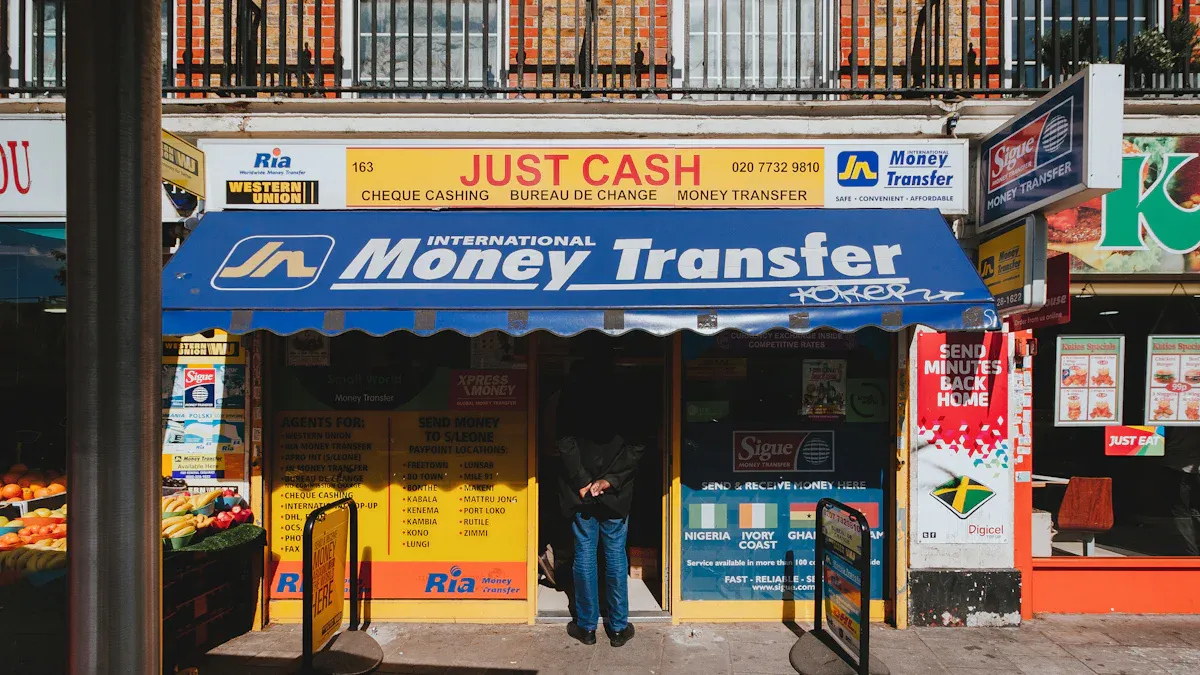
Image Source: unsplash
Choosing the right remittance method is key to ensuring funds arrive safely and quickly. Below, we compare three mainstream remittance channels—online platforms, traditional bank wire transfers, and offline remittance agencies—in terms of fees, speed, and security.
Online Remittance Platforms
Online remittance platforms are the modern go-to for international transfers. They typically offer better exchange rates, lower fees, and highly convenient operations.
When evaluating online options, you may also consider an integrated cross-border tool like BiyaPay. Positioned as a multi-asset wallet, it lets you manage U.S.–to–Ghana international remittances, balance management, and access to trading in one app—reducing the friction of switching between multiple providers.
Practically, start with the free exchange-rate comparison tool to check live USD/GHS pricing and the total cost before you send. If banks or recipients require full payment details, BiyaPay offers convenient SWIFT lookup and IBAN lookup to help validate beneficiary information and lower the chance of returns due to field errors.
From a trust and safety perspective, BiyaPay operates under multiple regulatory registrations (including U.S. MSB and New Zealand FSP), combined with KYC, transaction monitoring, and encrypted transmission. Using the comparison approach outlined in this article, place BiyaPay alongside other providers’ instant quotes and total fees to select a reliable path that fits your amount, speed, and documentation needs.
- Fees: These platforms generally have more transparent and lower fee structures than banks.
- Wise: Known for its transparent mid-market exchange rates, it’s particularly cost-effective for large transfers. The fees you pay are clear and upfront.
- Remitly: Very friendly for new users. If you’re a first-time user sending over $500, you may enjoy a zero-fee promotion.
- Paysend: Offers fixed low fees, sometimes starting at just $1.99. It also supports direct transfers to digital wallets in Ghana, which is very convenient.
- WorldRemit, XE, PayPal: These platforms also provide competitive services, but you should compare their real-time exchange rates and fees before choosing.
- Delivery Time: Speed is a major advantage.
Most transfers via online platforms (like Paysend) are nearly instant, typically reaching the recipient’s account within minutes. While platforms send funds immediately, the final delivery time may depend on the recipient bank’s processing speed, with rare cases taking up to 3 business days.
- Security: These platforms are subject to strict financial regulations and use advanced technology to protect your funds.
- Data Encryption: Your personal and transaction data is encrypted during transmission using technologies like SSL to prevent theft.
- Identity Verification: Platforms commonly use multi-factor authentication (MFA), ensuring account protection even if a password is compromised.
- Fraud Detection: Platforms leverage artificial intelligence (AI) and machine learning to monitor transactions in real-time. Systems analyze your behavior (e.g., typing patterns, mouse movements) to identify and block abnormal fraudulent activities.
Traditional Bank Wire Transfers
Using your bank (e.g., Bank of America, JPMorgan Chase) for international wire transfers is a very traditional method. While it feels “official,” it is typically the most expensive and slowest option.
- Fees: Bank fee structures are complex, comprising handling fees and exchange rate markups.
- Handling Fees: Bank wire transfer fees are usually high. For example, sending USD from the US may cost between $40 and $50.
Bank USD Outbound Transfer Foreign Currency Outbound Transfer Bank of America $45 $35 JPMorgan Chase $50 (online: $40) $50 (online: $40) Wells Fargo $40 $40 - Exchange Rate Markup: Banks typically include a markup in their exchange rates, meaning you receive fewer Ghanaian Cedis than the market rate. Even if some banks advertise “fee-free” foreign currency transfers, their profit is hidden in unfavorable exchange rates.
- Handling Fees: Bank wire transfer fees are usually high. For example, sending USD from the US may cost between $40 and $50.
- Delivery Time: Bank wire transfers lack speed advantages, typically taking 1 to 5 business days to reach the recipient’s account in Ghana.
- Security: Banks offer unquestionable security, backed by top-tier financial regulations. However, the process is relatively cumbersome, requiring extensive information to complete a transfer, such as:
- Recipient’s full name, address, and account number
- Recipient bank’s name, address, and SWIFT/BIC code
- Your photo ID information
Offline Remittance Agencies
For users who want the recipient to collect cash directly, agencies like Western Union and MoneyGram are common choices.
- Fees: Fees and exchange rates are dynamic. You need to check real-time rates on their websites or at agent locations when using the service. Typically, their exchange rates are less competitive than online platforms.
- Delivery Time: Cash pickup services are usually very fast, with funds available for collection at an agent location in Ghana within minutes of the transfer.
- Security and Convenience: The strength of these agencies lies in their extensive physical networks.
- Western Union has over 2,500 agent locations in Ghana, spread across major cities like Accra and Kumasi, making cash pickup highly convenient.
- Recipients need to provide the following information to collect funds:
- A valid government-issued photo ID (e.g., passport).
- The Money Transfer Control Number (MTCN).
Overall, after understanding the different ways to send money to Ghana, you’ll find that online platforms offer the best overall experience in most cases.
Detailed Breakdown of Key Remittance Elements
Having explored the various remittance methods, you also need to understand several key elements. These directly impact your total costs and the smoothness of the transaction.
Fee Structure: Handling Fees and Exchange Rates
The total fees you pay consist of two parts: explicit handling fees and hidden exchange rate margins.
- Handling Fees: These can be fixed or percentage-based.
- Fixed Fees: Some providers (e.g., WorldRemit) charge a flat fee per transaction, as low as $1.99. This is more advantageous for larger transfers.
- Percentage Fees: Other providers (e.g., Wise) charge a percentage of the transfer amount (e.g., 0.5% to 2%). This may be more cost-effective for smaller transfers.
- Exchange Rate Margin: This is the most easily overlooked hidden cost. Many providers add a markup to the mid-market exchange rate.
The mid-market exchange rate is the midpoint between the global buy and sell prices of a currency, representing the “most accurate” rate. For example, according to Bloomberg data, the mid-market rate for USD to Ghanaian Cedi (USD/GHS) might be 10.8015. The closer your received rate is to this value, the more cost-effective your transfer.
Transfer Limits and Regulations
To ensure fund safety and comply with anti-money laundering regulations, all legitimate platforms impose transfer limits and require identity verification.
First, you need to complete “Know Your Customer” (KYC) verification. This typically requires providing a valid government-issued ID.
- Proof of Identity: For example, your passport or driver’s license.
- Proof of Address: Sometimes, a utility bill or bank statement is required.
Second, Ghana’s financial regulations also affect fund receipt. The Bank of Ghana requires all remittances to be processed through licensed operators and paid to recipients in the local currency (Ghanaian Cedi). Choosing a regulated platform ensures compliance and prevents funds from being frozen.
Personal Remittance Tax Implications
Personal remittances from the US to Ghana are typically considered gifts. When considering how to send money, you also need to understand the relevant tax regulations.
The good news is that most people don’t need to pay taxes on this. According to IRS regulations, the annual gift tax exclusion for 2025 is $19,000 per person. This means that as long as your total remittances to a single recipient in a year do not exceed $19,000, you don’t need to report or pay taxes.
Only when your annual gift amount to a single recipient exceeds this limit do you need to file IRS Form 709 to report it.
Step-by-Step Guide: How to Send Money from the US to Ghana?
Image Source: unsplash
Now that you’ve learned the pros and cons of various remittance methods, it’s time to dive into the practical steps. This step-by-step guide will clearly explain how to send money, ensuring your funds reach friends or family in Ghana smoothly.
Step 1: Compare and Choose a Platform
Choosing the right platform is the first and most critical step to a successful transfer. A good choice can save you significant money.
Before deciding, you need to evaluate the following criteria:
- Security: Is the platform regulated by financial authorities? Does it offer data encryption and two-factor authentication to protect your account?
- Cost-Effectiveness: What is the total cost? This includes explicit fees and markups hidden in exchange rates.
- Speed: How long does it take for funds to arrive? Does the platform support instant or fast transfers?
- Transfer Limits: Are there restrictions on single or daily transfer amounts? Can you increase limits through identity verification?
- Customer Reviews: What are other users’ experiences with the platform? Checking reviews can help gauge reliability.
Pro Tip: Don’t be swayed by ads claiming “zero fees.” The real cost is often hidden in the exchange rate. Use online comparison tools to check real-time data.
- Wise offers quotes based on the real mid-market exchange rate and allows direct comparison of fees across providers.
- XTransfer and similar tools provide real-time exchange rate queries, including historical trends and AI analysis, helping you make smarter decisions.
Spending a few minutes comparing options will help you find the platform best suited to your current needs.
Step 2: Register and Verify Identity
After selecting a platform, you need to create an account. This process is usually simple, requiring only your email address and a password.
Next is identity verification, known as the “Know Your Customer” (KYC) process. This is a legal requirement for all regulated platforms to prevent money laundering and financial fraud. You need to prepare the following documents:
- Proof of Identity: This is typically a government-issued photo ID.
- Passport (photo page)
- Photo driver’s license
- National ID card
- Proof of Address (required by some platforms): For example, a recent utility bill or bank statement.
On platforms like Remitly or Wise, you simply follow instructions to upload clear photos of the documents.
How long does verification take? It depends on the platform and when you submit your documents.
Many platforms use advanced biometric technology, completing verification in as little as a few seconds. However, if manual review is required or verification is requested after initiating your first transfer, the process may take 5 to 14 business days. The platform will notify you of the verification results via email.
Step 3: Enter Transfer and Recipient Information
Once your account is verified, you can start creating a transfer. You need to accurately provide information in two areas.
1. Transfer Information:
- Transfer Amount: Enter the USD amount you wish to send or the Ghanaian Cedi (GHS) amount you want the recipient to receive. The platform will automatically calculate the other amount.
- Receipt Method: Choose how the recipient prefers to receive the funds.
2. Recipient Information: This is the most error-prone step, so double-check carefully. The required information varies depending on the receipt method. - If Sending to a Bank Account:
- Recipient’s full name (must match the bank account name exactly)
- Bank name (e.g., Ecobank, Ghana Commercial Bank GCB Bank)
- Bank account number
- If Sending to a Mobile Wallet (Mobile Money):
- Recipient’s full name (must match the mobile wallet registered name)
- Mobile wallet provider (e.g., MTN Mobile Money, Vodafone Cash, AirtelTigo Money)
- Mobile number (typically 9 digits, excluding the country code, verify repeatedly)
After entering, review all information again. A minor spelling error could cause the transfer to fail or be delayed.
Step 4: Pay and Confirm the Transaction
The final step is to fund your transfer. Most platforms support multiple flexible payment methods.
You can choose from the following payment options:
- Bank Debit Card
- Credit Card
- Bank Account Direct Transfer (ACH)
Typically, payments via debit or credit cards are the fastest, with funds processed immediately. Bank account transfers may take 1-2 business days to clear but may have lower fees.
Practical Tip: If you’re sending a large international transfer (e.g., over a few thousand dollars) for the first time, contact your bank in advance. Inform them you’ll be making an international transfer to avoid the transaction being flagged and blocked by the bank’s fraud detection system.
After payment, the platform will provide a transaction summary, including the exchange rate, fees, estimated delivery time, and a unique transaction tracking number. Keep this information safe so you and the recipient can track the progress of the transfer.
Now you know how to send money. For most people, online remittance platforms offer the best combination of security, cost, and efficiency, making them the preferred choice.
Remember, spending a few minutes comparing real-time exchange rates and fees before each transfer is key to maximizing the value of your funds.
Ultimately, the best choice depends on your specific needs. Consider the transfer amount, urgency, and recipient convenience to make the most informed decision.
FAQ
Which remittance method is the fastest?
The fastest method is using an online platform. You pay with a debit card and send funds directly to the recipient’s mobile wallet (Mobile Money). Transactions typically complete within minutes.
What if my transfer fails?
You should immediately contact the customer service of the remittance platform you used. Have your transaction tracking number ready. They can help you check the transfer status and identify the issue.
Does the recipient need a bank account?
Not necessarily. You can choose various receipt methods. Besides bank accounts, you can send funds to the recipient’s mobile wallet or have them collect cash directly at agencies like Western Union.
How can I get the best exchange rate?
The best approach is to spend a few minutes before sending. Use online comparison tools to check real-time exchange rates and total fees across platforms to choose the most cost-effective option.
*This article is provided for general information purposes and does not constitute legal, tax or other professional advice from BiyaPay or its subsidiaries and its affiliates, and it is not intended as a substitute for obtaining advice from a financial advisor or any other professional.
We make no representations, warranties or warranties, express or implied, as to the accuracy, completeness or timeliness of the contents of this publication.
Related Blogs of

Logic of Money Laundering Conviction: How Ordinary People Ensure Their Crypto Asset Cash-Out Activities Never Cross the Red Line

Panda Remit Transfer Failed and Returned? In-Depth Comparison of Risk Control Strictness and Channel Stability Across Different Cross-Border Remittance Apps


Funds Frozen for Half a Year? Administrative Reconsideration After 'Involved Account' and Cross-Border Multi-Currency Account Backup Solutions


Never Trust Any 'Acquaintance Currency Exchange': Real Cases of Crypto Assets Stolen via Acquaintance Scams During the World Cup

Choose Country or Region to Read Local Blog
 Australia
 Austria
 Belgium
 Canada
 Cyprus
 Czech Republic
 Denmark
 Estonia
 Finland
 France
 Germany
 Greece
 Hong Kong
 India
India Indonesia
 Ireland
 Italy
Italy Japan
Japan Latvia
 Lithuania
 Luxembourg
 Malaysia
 Malta
Malta Morocco
 Nepal
Nepal Netherlands
 New Zealand
 Norway
 Pakistan
 Philippines
 Poland
 Portugal
 Romania
 Singapore
 Slovakia
 Slovenia
 South Africa
 South Korea
 Spain
Spain Sweden
 Thailand
 The United States
 Turkey
 United Arab Emirates
 United Kingdom
 Vietnam
Contact Us




BIYA GLOBAL LLC is registered with the Financial Crimes Enforcement Network (FinCEN), an agency under the U.S. Department of the Treasury, as a Money Services Business (MSB), with registration number 31000218637349, and regulated by the Financial Crimes Enforcement Network (FinCEN).
BIYA GLOBAL LIMITED is a registered Financial Service Provider (FSP) in New Zealand, with registration number FSP1007221, and is also a registered member of the Financial Services Complaints Limited (FSCL), an independent dispute resolution scheme in New Zealand.