Mexico Currency Exchange Commissions What to Expect in 2025




Image Source: unsplash
When traveling to Mexico, you want to get the most value from your money. A common concern is the currency exchange commission, but this is rarely a separate charge. Instead, most vendors build their profit into the exchange rate they offer for Mexican pesos. This hidden cost, known as the “spread,” means the fees can range from a low 1% to over 10%. Understanding this system is the first step to avoiding excessive fees on your currency exchange.
Key Takeaways
- Most places in Mexico do not charge a separate fee for currency exchange. They include their profit in the exchange rate they offer you.
- Always pay in Mexican pesos (MXN) when using your credit card. This helps you avoid extra hidden fees.
- ATMs usually offer the best exchange rates for cash. Make fewer, larger withdrawals to save money on fees.
- Avoid exchanging money at airports, hotels, or small shops. They often have the worst exchange rates and highest hidden costs.
Understanding Mexico’s Currency Exchange Commission
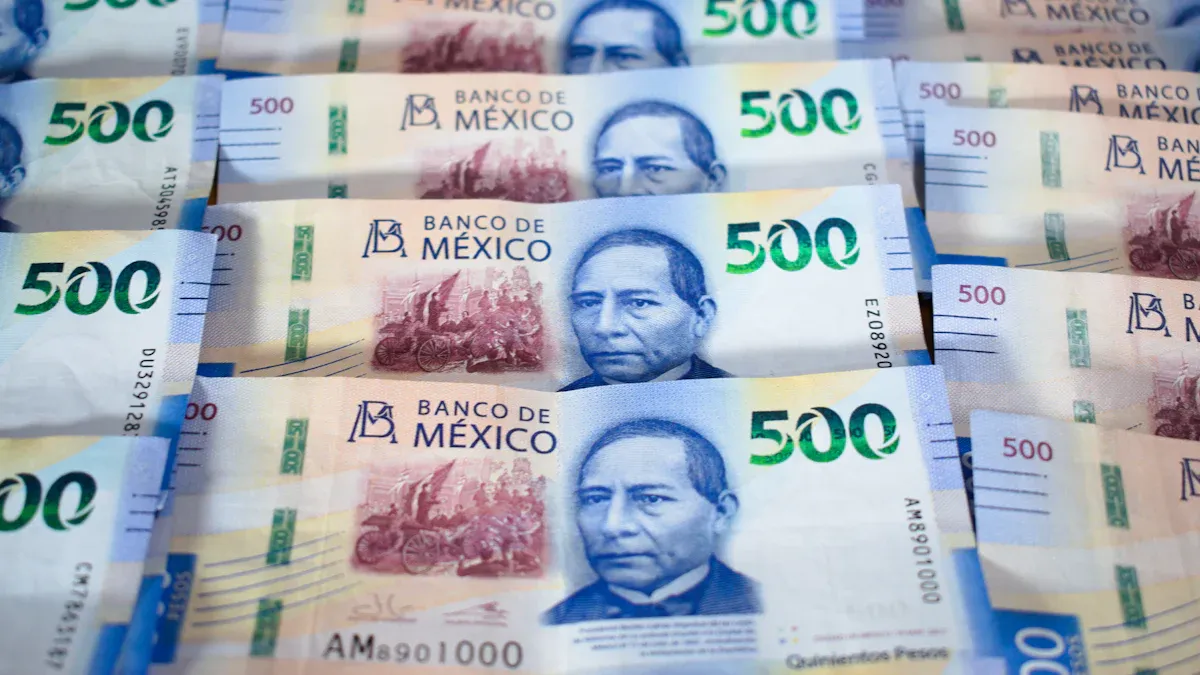
Image Source: pexels
First, you should know that the official “Foreign Exchange Commission” in Mexico is a government body. It sets financial policies. It is not a fee you pay. Most banks and exchange houses do not charge a separate, itemized currency exchange commission. Instead, they build their profit directly into the rate they offer you for Mexican pesos. This is where understanding the system saves you from hidden fees.
The Official Rate vs. The Tourist Rate
You will encounter two different rates. The “official” or “mid-market” rate is the true value of a currency. The Banco de México publishes this daily as the “FIX exchange rate.” This is the rate banks and large financial institutions use. The “tourist rate” is what you get at a currency exchange booth or bank. This rate is always less favorable. The difference between these two rates is called the “spread.”
What is the Spread? The spread is the gap between the price a vendor buys your currency and the price they sell you Mexican pesos. This difference is their profit. It functions as an invisible mark-up, a hidden cost embedded in the exchange rate. This is how vendors make money on the transaction without charging obvious fees.
How “No Commission” Can Be Misleading
You will often see signs that say “No Commission.” This claim can be very misleading. While they may not charge a separate service fee, they make their money through a wide spread. A vendor offering “no commission” might give you a very poor exchange rate for your Mexican pesos. This results in higher effective fees than a place that charges a small, transparent fee but offers a better rate. Always compare the final amount of Mexican pesos you will receive. This is the only way to know the true cost and avoid excessive fees.
Comparing Money Exchange Locations
Image Source: unsplash
You have several options for exchanging your money in Mexico. Each location offers different rates and convenience levels. Knowing where to go can save you a significant amount of money. Here is a comparison to help you make the best choice.
Major Mexican Banks
- Hidden Fee Range: 1% - 3%
Major national banks like Banorte, BBVA, and Citibanamex often provide some of the most competitive exchange rates. They are a reliable and secure option for your currency exchange. You will find their branches in most cities and towns. However, there is a key detail to consider. Many banks will only exchange money for their own account holders. If you do not have an account, they may turn you away. This makes banks a great option for residents or long-term visitors but less convenient for short-term tourists.
Exchange Bureaus
- Hidden Fee Range: 2% - 5%
You will see exchange bureaus, or exchange bureaus, everywhere in tourist areas. These are private businesses dedicated to money exchange. They are incredibly convenient and have long operating hours. The process is usually fast, and you will need to show your passport for the transaction.
While convenient, the rates at exchange bureaus are less favorable than at major banks. The spread is wider, meaning their hidden fees are higher. It is a good idea to compare the rates at a few different exchange bureaus if they are close to each other. A little walking can often find you a better deal for your Mexican pesos. These bureaus are a balanced choice between convenience and cost.
Airport Currency Exchange
- Hidden Fee Range: 5% - 12%+
Airport exchange kiosks are your first and most convenient option upon arrival. They are also almost always your most expensive one. These vendors target travelers who need Mexican pesos immediately. They profit from this urgency by offering very poor exchange rates.
A Note on “No Fee” Claims You might see signs at airports, like in Cancun, claiming they charge no currency exchange commission. This is technically true because they do not add a separate service charge. Instead, they build massive fees into the exchange rate. Always check their offered rate against the official mid-market rate online. You will see the real cost is very high. Avoid airport exchanges unless it is an absolute emergency and you only need a small amount.
ATMs (Automatic Teller Machines)
- Hidden Fee Range: 1% - 4% (plus fixed fees)
Using an ATM is often the best way to get cash. You receive a rate close to the official mid-market rate. However, you must be aware of the associated fees. You will likely face two separate charges:
- Local ATM Fee: The Mexican bank that owns the ATM will charge a fixed fee for the service. This fee is displayed on the screen before you finalize the transaction and can range from $1 USD to over $5 USD.
- Your Home Bank’s Fees: Your own bank will add its own charges. These can include a foreign transaction fee and a non-partner ATM fee.
When you use a foreign card at a Mexican ATM, your bank also applies an exchange rate spread, which can add 2% to 5% to the transaction value. These combined atm fees can add up, so it is wise to make fewer, larger withdrawals to minimize the impact of fixed charges.
Smart ATM Strategy: Use Alliances You can reduce or eliminate some atm fees by using partner banks. Scotiabank is part of the Global ATM Alliance. If you bank with a partner like Bank of America in the US, you can use Scotiabank ATMs in Mexico with reduced fees. Additionally, some Mexican banks have formed a local ‘Multired network’ (including HSBC, Scotiabank, and Banregio) that allows fee-free withdrawals among their own customers.
Hotels and Local Shops
- Hidden Fee Range: 7% - 15%+
Your hotel front desk or a local souvenir shop might offer to exchange your money. This service is purely for convenience. They are not financial institutions and offer the worst exchange rates you will find. They are essentially selling foreign currency as a side business with a very high markup. You should only use this option as a last resort for a very small amount of cash. You will pay a high price for the convenience.
Calculating Your Real Exchange Rate Fees
Knowing the real cost of exchanging your money empowers you to make smarter choices. You can avoid excessive exchange rate fees by using a simple, three-step calculation. This process reveals the hidden fees a vendor is charging.
Step 1: Find the Official Mid-Market Rate
Before you exchange any money, you need a baseline. This is the official mid-market rate. You have two easy ways to find this:
- Official Source: The Banco de México determines the official “FIX exchange rate” daily. It publishes this rate in the Diario Oficial de la Federación (the official government journal) on the following business day.
- Online Tools: For a real-time check, use a reliable online currency converter like Google Finance or XE.com. These platforms get their data from global currency markets and providers like Morningstar, showing you the same wholesale rates that banks use for large transactions.
In practice, travelers often notice that exchange rates shown on different platforms are updated at different times or sourced differently, which can make it harder to judge whether a quoted rate includes an excessive spread. Using a single reference point for comparison can make this process clearer. For example, the BiyaPay website offers a free currency converter and comparison tool that allows you to check real-time mid-market rates for major currencies against the Mexican peso, and then compare them directly with the rates offered by banks or exchange bureaus.
From a broader perspective, BiyaPay positions itself as a multi-asset wallet rather than just a conversion tool. Exchange rate checks, cross-border transfers, and general fund management are connected within the same ecosystem, making it easier to evaluate costs before traveling and, if needed, explore options such as its international remittance service or updates shared through the event center. While this does not change local exchange practices in Mexico, it helps users approach currency decisions with clearer benchmarks and fewer hidden surprises.
Step 2: Get the Vendor’s Offered Rate
Next, go to the bank, ATM, or casa de cambio. Ask them for their “buy” rate for your currency. For example, ask, “How many Mexican pesos will you give me for one US dollar today?” Make sure you are looking at the rate they are offering to you, not the rate at which they sell foreign currency. This is the number you will use to calculate their fees.
Step 3: Calculate the Hidden Fee
Now you can find the hidden cost. The difference between the official rate and the offered rate is the vendor’s profit. This percentage is your hidden currency exchange commission.
You can use this simple formula to calculate the percentage of the fees:
((Official Rate - Offered Rate) / Official Rate) * 100 = Hidden Fee %
Example Calculation for 2025 Let’s say the official mid-market rate is 18.50 Mexican pesos for 1 USD. A casa de cambio offers you a rate of 17.75 Mexican pesos for 1 USD.
- Subtract the offered rate from the official rate:
18.50 - 17.75 = 0.75- Divide the result by the official rate:
0.75 / 18.50 = 0.0405- Multiply by 100 to get the percentage:
0.0405 * 100 = 4.05%In this case, the hidden fees are 4.05%.
Actionable Tips to Minimize Fees
You can actively reduce your currency exchange costs with a few smart strategies. Knowing how to pay and where to get cash will help you keep more money for your vacation. These actionable tips will help you avoid unnecessary fees and get the most value from your Mexican pesos.
Always Pay in Local Currency (MXN)
When you use your credit card in Mexico, the payment terminal may ask if you want to pay in your home currency (e.g., USD) or the local currency (Mexican pesos). Always choose to pay in Mexican pesos (MXN).
If you choose your home currency, the merchant is using a service called Dynamic Currency Conversion (DCC). This service allows them to set their own exchange rate, which is never in your favor. The markup for DCC can be as high as 18%, adding significant hidden fees to your purchase. Merchants might present this with misleading terms like a “GUARANTEED RATE,” but it is a costly convenience. Declining DCC ensures your bank handles the conversion at a much more reasonable rate.
Use No-Foreign-Fee Credit Cards
Using the right credit card is one of the best ways to save money. Many credit cards charge a foreign transaction fee, typically 1% to 3% of every purchase you make abroad. These fees can add up quickly.
Before your trip, look for a credit card that advertises no foreign transaction fees. Many major issuers, like Bank of America, offer cards designed for international travel. Using one of these cards for your purchases means you only have to worry about the exchange rate itself, not extra percentage-based fees from your bank. This is a simple way to eliminate a common travel cost.
Make Fewer, Larger ATM Withdrawals
While ATMs offer good exchange rates, the associated atm fees can be costly. You often face two charges: a fixed fee from the local Mexican bank and another set of fees from your own bank. To minimize the impact of these fixed charges, plan your cash needs.
Instead of making many small withdrawals, make one or two larger ones. Mexican ATMs typically have withdrawal limits between $4,000 and $11,000 MXN per transaction. By taking out more Mexican pesos at once, you pay the fixed atm fees less often. This simple strategy significantly reduces the total cost of getting cash. Be aware of your daily withdrawal limit set by your home bank.
Compare Rates Before You Exchange
Never accept the first exchange rate you see. A few minutes of comparison can save you a surprising amount of money. Before you exchange cash, use a mobile app like Wise or XE to check the current mid-market rate. These apps provide real-time data and can even send you alerts.
Quick Comparison Guide
- Check the live mid-market rate on an app.
- Ask a casa de cambio or bank for their “buy” rate.
- Calculate the hidden fee to see the real cost.
A small difference in the rate can mean a big difference in the amount of Mexican pesos you receive. Taking a moment to compare is always worth the effort.
Here is your quick guide to currency exchange. Your best options offer the lowest fees.
- For Purchases: Use a credit card with no foreign transaction fees. Always choose to pay in Mexican Pesos (MXN).
- For Cash: Make fewer, larger withdrawals from a major bank’s ATM to minimize fixed fees.
Warning: High-Cost Traps Avoid airport kiosks, hotels, and local shops. They have the highest hidden fees, even if they claim to have no service fees.
Making smart financial choices helps you avoid unnecessary fees. You will maximize your vacation budget when traveling to mexico.
FAQ
Should I exchange money before I travel to Mexico?
You should avoid exchanging large amounts of money at home. Your local bank will likely offer a poor exchange rate with high fees. It is better to get a small amount of pesos for immediate needs. You can get better rates from ATMs in Mexico.
Is it safe to use my debit card at Mexican ATMs?
Yes, it is generally safe. You should use ATMs located inside major banks or large stores. These locations are more secure than standalone street ATMs. Always cover the keypad when you enter your PIN. Be aware of your surroundings to avoid potential fees and theft.
What is the best way to pay for things in Mexico?
You can use a no-foreign-fee credit card for most purchases. This method offers excellent exchange rates and avoids extra fees. For smaller vendors or taxis, you will need cash. Withdrawing pesos from a bank ATM is the best way to get cash and minimize fees.
Can I use US dollars in Mexico?
Many tourist areas accept US dollars. However, you will get a very poor exchange rate. This results in hidden fees on every transaction. You always save money by paying in Mexican pesos. Paying in local currency helps you avoid these unnecessary fees.
Pro Tip: Always check your bank’s daily withdrawal limit before your trip. This helps you plan your cash withdrawals and reduce total ATM fees.
*This article is provided for general information purposes and does not constitute legal, tax or other professional advice from BiyaPay or its subsidiaries and its affiliates, and it is not intended as a substitute for obtaining advice from a financial advisor or any other professional.
We make no representations, warranties or warranties, express or implied, as to the accuracy, completeness or timeliness of the contents of this publication.
Related Blogs of
Panda Remit Transfer Failed and Returned? In-Depth Comparison of Risk Control Strictness and Channel Stability Across Different Cross-Border Remittance Apps

Funds Frozen for Half a Year? Administrative Reconsideration After 'Involved Account' and Cross-Border Multi-Currency Account Backup Solutions


Cross-Border Charity and International Rescue: How Digital Assets Enable Point-to-Point Ultra-Fast Fund Delivery in Major Global Events?
Logic of Money Laundering Conviction: How Ordinary People Ensure Their Crypto Asset Cash-Out Activities Never Cross the Red Line

Choose Country or Region to Read Local Blog
 Australia
 Austria
 Belgium
 Canada
 Cyprus
 Czech Republic
 Denmark
 Estonia
 Finland
 France
 Germany
 Greece
 Hong Kong
 India
India Indonesia
 Ireland
 Italy
Italy Japan
Japan Latvia
 Lithuania
 Luxembourg
 Malaysia
 Malta
Malta Morocco
 Nepal
Nepal Netherlands
 New Zealand
 Norway
 Pakistan
 Philippines
 Poland
 Portugal
 Romania
 Singapore
 Slovakia
 Slovenia
 South Africa
 South Korea
 Spain
Spain Sweden
 Thailand
 The United States
 Turkey
 United Arab Emirates
 United Kingdom
 Vietnam
Contact Us




BIYA GLOBAL LLC is registered with the Financial Crimes Enforcement Network (FinCEN), an agency under the U.S. Department of the Treasury, as a Money Services Business (MSB), with registration number 31000218637349, and regulated by the Financial Crimes Enforcement Network (FinCEN).
BIYA GLOBAL LIMITED is a registered Financial Service Provider (FSP) in New Zealand, with registration number FSP1007221, and is also a registered member of the Financial Services Complaints Limited (FSCL), an independent dispute resolution scheme in New Zealand.