2025 Latest Guide: Starting from Zero to Read Foreign News Websites



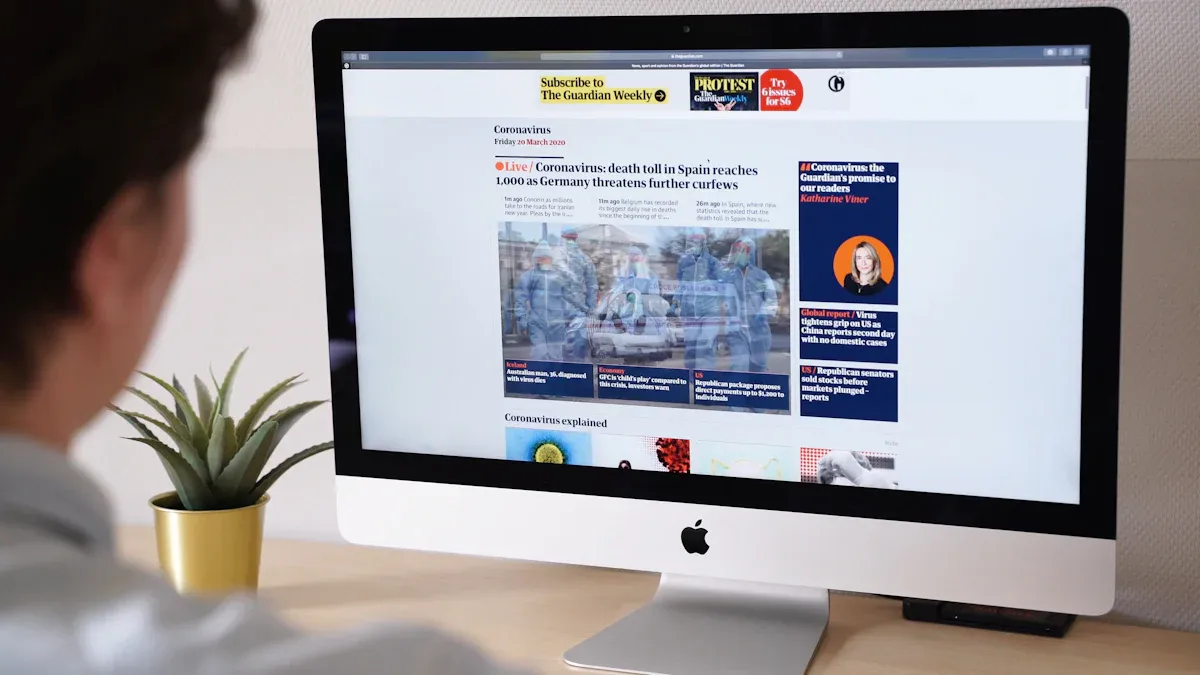
Image Source: pexels
Do you feel that reading foreign news websites is out of reach? In fact, it is much simpler than you imagine. The key lies in finding the right beginner websites and methods.
Direct Advice for Beginners: No need to hesitate anymore! You can directly start with BBC News and AP News. Their comprehensive coverage, standardized language, and user-friendly interfaces make them excellent starting points for beginners.
Imagine being able to directly access firsthand information and see a more diverse world. This guide will lead you to take the first step easily.
Key Points
- Beginners can start reading with BBC News and AP News, as their language is standardized and content is comprehensive.
- When reading, understand the media’s stance—AllSides and Ad Fontes Media can help you evaluate news bias and reliability.
- Use the “three-step reading method”: First look at headlines and images, then read the lead and opening/closing paragraphs, and finally selectively read in depth—this allows efficient understanding of articles.
- Using translation plugins, authoritative dictionaries, and news aggregator apps can make reading foreign news easier.
- Reading ability needs gradual progress—start with short news, gradually challenge long reports, and persist in reading daily.
How to Choose Suitable Foreign News Websites
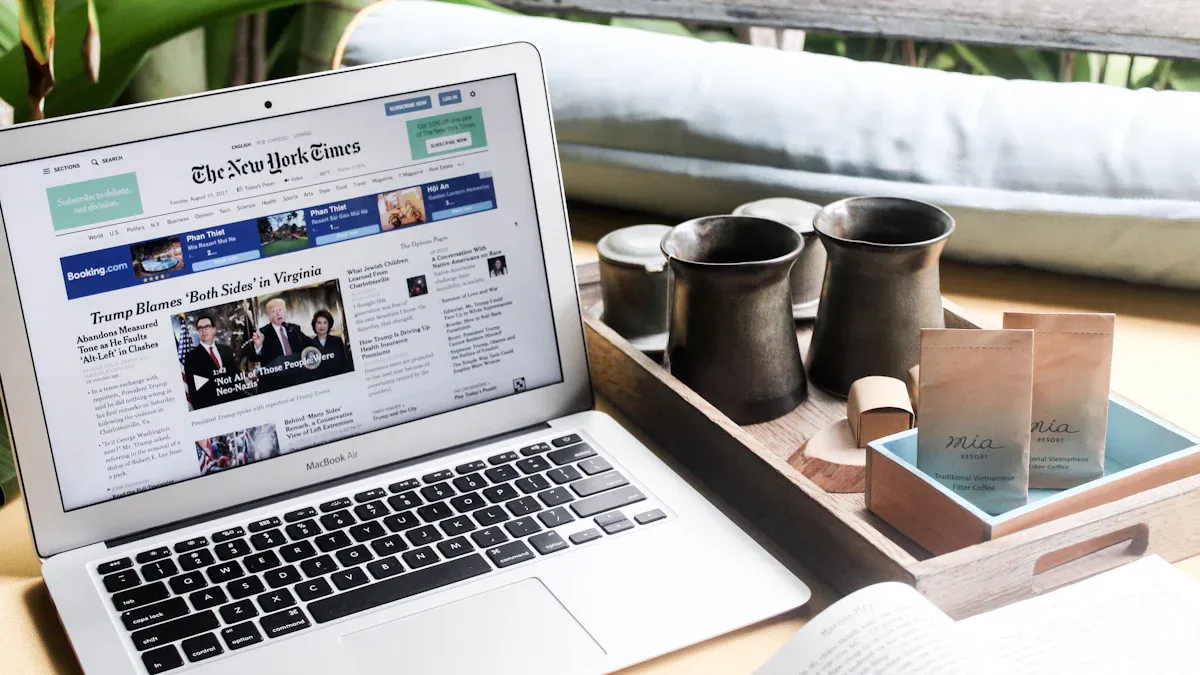
Image Source: pexels
Facing a vast number of foreign news websites, you may feel overwhelmed. Don’t worry—the secret to choosing lies in starting from your current level and interests. This section will lay out a clear path from beginner to familiar, helping you find the websites most suitable for you.
Beginner Level: Build Reading Foundation
Before you start reading, establishing an important awareness is crucial: there is no absolutely neutral media. Every media has its perspective and stance. Learning to distinguish this information is the first step in cultivating critical thinking.
Beginner Tip: Understand Media Bias Ratings You can use some professional tools to understand media stances.
- AllSides: This website mainly focuses on political bias, clearly dividing news sources into five categories: “left-leaning,” “lean left,” “center,” “lean right,” and “right-leaning.” Its ratings combine blind reader tests, multi-party editorial reviews, and independent research, making it very intuitive.
- Ad Fontes Media: It not only evaluates political bias but also assesses the reliability of news sources. Analysts review article fact accuracy, distinction between opinion and fact, etc., providing you with a more comprehensive judgment basis.
After understanding this background, you can choose beginner websites with more confidence. The following three websites, due to their standardized language, broad content coverage, and relatively neutral stance, are ideal choices for beginners.
BBC News: British English and Global Perspective
BBC News - British Broadcasting Corporation, providing rigorous British English and truly global reporting.
If you want to encounter standard British English, BBC News is undoubtedly the top choice. As a globally renowned public broadcasting institution, it has correspondent stations worldwide, ensuring the breadth and depth of its news.
Its reporting covers every corner of the world. Whether ongoing major international events or dynamics in specific regions, you can find detailed coverage.
- Global Hotspots: For example, Israel-Gaza war, Ukraine war, etc.
- Regional News: Comprehensive coverage of America & Canada, UK, Africa, Asia, Australia, Europe, Latin America, and Middle East.
Recently, you can read world news like “US new security strategy aligns with Russia’s vision, Moscow says” on its website, as well as in-depth local reports like “Benin in coup attempt thwarted by loyal troops, president tells nation”. This allows you to truly “see all directions and hear all sides.”
Associated Press News: Objective and Concise American Dispatches
AP News - Associated Press, renowned for its fast, objective, and concise American English news.
If you prefer American English or hope to read the purest factual reporting, AP News is your best choice.
AP’s objectivity has deep historical roots.
- Founding Background: It was established in 1846, an independent cooperative formed by multiple U.S. newspapers. To serve all members, it must provide unbiased, fact-only dispatches.
- Core Values: For nearly two centuries, AP has always regarded accuracy, non-partisanship, and fact-based reporting as its cornerstone.
- Style Influence: The emergence of the telegraph drove AP’s birth and gave rise to the famous "inverted pyramid" writing style—placing the most important information at the beginning of the article. This efficient style remains the gold standard in news writing today.
Additionally, the Associated Press Stylebook published by AP is a widely adopted writing guide in American journalism, defining standards for grammar, spelling, and reporting. Reading AP News exposes you to the most authentic and standardized American news language.
Reuters: Neutral Business and International News
Reuters - Reuters, an influential neutral wire service in business, finance, and international news.
Like the Associated Press, Reuters is one of the world’s top wire services, known for neutrality and speed. However, its reporting in business and finance is particularly strong, closely related to its parent company Thomson Reuters’ business background.
For beginners, understanding its differences from AP can help you choose better.
| Feature | Associated Press (AP) | Reuters |
|---|---|---|
| Ownership | Non-profit cooperative owned by newspaper members | Part of international professional financial information company Thomson Reuters |
| Reporting Strengths | In-depth U.S. state-level and election coverage, outstanding photography | Strong global financial markets, business, and international breaking news coverage |
| Cost | Relatively higher subscription fees (in USD) | Higher cost-effectiveness, usually lower fees than AP (in USD) |
Overall, if you are more interested in business and financial dynamics, Reuters is an excellent foreign news website. Its language is equally rigorous and objective, very suitable as beginner reading material.
Advanced Level: Explore Depth and Diverse Views
When you have adapted to the rhythm and language of beginner-level websites, you can start challenging media with more depth and diverse views. The goal of this stage is to shift from “understanding what happened” to “understanding why it happened,” and begin encountering different voices to exercise your critical thinking.
The New York Times: Authoritative In-Depth Reporting
The New York Times - The benchmark of global journalism, renowned for its in-depth investigations and high-quality writing.
If you are ready to read longer and more complex articles, The New York Times is a must-read. It not only reports news but delves behind events, with works frequently winning Pulitzer Prizes.
- In-Depth Investigations: For example, it once exposed Walmart’s commercial bribery in Mexico through a series of reports.
- Global Perspective: Its coverage of the African Ebola outbreak included over 400 articles, demonstrating astonishing reporting depth.
- Business Analysis: It has also deeply examined global business practices of tech companies like Apple.
Reading The New York Times exposes you to top-level news writing, excellent material for understanding complex issues.
The Guardian: Unique Progressive Perspective
The Guardian - Britain’s leading left-leaning media, known for its progressive stance and open reader support model.
The Guardian offers a perspective different from mainstream voices. Its uniqueness lies in its ownership structure and funding sources, ensuring editorial independence. It has no paywall, committed to making information freely accessible to all.
As its editor-in-chief said, readers support The Guardian because they want progressive journalism to have the widest impact, ensuring more people get more information. This reader-funded model allows it to focus more on serious reporting that requires time and effort to hold those in power accountable.
If you want to understand Western progressive views or are particularly interested in social, environmental, and human rights issues, this foreign news website is your ideal choice.
The Economist: Elite Perspective on Politics and Economics Analysis
The Economist - An elite publication providing in-depth global political and business analysis.
The Economist is not purely a news media but a weekly magazine known for opinions and analysis. Its articles are usually published anonymously, representing the publication’s overall stance. Its language is precise, logically rigorous, sometimes with a touch of British humor. Reading it requires some background knowledge, but the reward is profound insights into global trends.
TIME Magazine: Classic Weekly In-Depth Features
TIME - Recording era changes with iconic covers and in-depth features.
TIME is renowned for its “Person of the Year” and highly impactful cover designs. It excels at condensing complex events into engaging feature stories. Reading TIME not only informs you about news but lets you feel the pulse of an era. Its classic covers are slices of history themselves, for example:
- 2017: Person of the Year “The Silence Breakers,” recording the start of the #MeToo movement.
- 2001: Black-bordered cover after the 9/11 terrorist attacks, becoming a collective memory for a generation.
- 1980: Naming Iranian leader Khomeini Person of the Year, sparking huge controversy and demonstrating its influence.
Interest-Driven: Dive into Your Vertical Fields
When you have a basic feel for reading news, you can explore based on your interests. Diving into fields you love makes learning language and acquiring information more enjoyable.
Tech Frontier: Tech Blog TechCrunch and Tech Media The Verge
If you are passionate about technology, TechCrunch and The Verge are two must-visit websites. They both cover tech but with different focuses. You can choose based on the table below.
| Feature/Website | TechCrunch | The Verge |
|---|---|---|
| Core Goal | Focus on tech industry business dynamics, such as company funding and development | Introduce new cool tech that changes life and explore its impact on people |
| Coverage Areas | Startups, venture capital, AI, fintech, and other industry news | Consumer electronics, smartphones, apps, online culture, etc. |
| Content Features | Fast breaking news, in-depth industry analysis, significant impact on startups | Comprehensive product reviews, rich video content, high interaction with tech enthusiasts |
Simply put, if you want to understand tech industry business insiders, choose TechCrunch. If you care more about the latest electronics and how they affect life, The Verge suits you better.
Business and Finance: Bloomberg and The Wall Street Journal
For those focused on business and finance, Bloomberg and The Wall Street Journal are top information sources.
Bloomberg’s strength lies in deeply combining data and news. Its reporting is backed by professional Bloomberg Terminal data and analysis support. This makes its financial news extremely precise and in-depth.
When managing global assets, understanding this information is crucial. For example, when handling assets in different markets, modern financial services like Biyapay can help you conveniently manage USD and other assets. The Wall Street Journal is renowned for its in-depth reporting on business, economy, and U.S. markets, another important window for understanding the business world.
Culture and Arts: The New Yorker and Artsy
If you love culture and arts, The New Yorker will immerse you.
- In-Depth Long-Form: It is renowned for long-form non-fiction reporting with very strict fact-checking processes.
- Cultural Commentary: You can read wonderful reviews on pop culture, books, and arts.
- Iconic Style: Its beautiful covers and unique single-panel cartoons are art in themselves.
Reading The New Yorker challenges your reading patience, but the reward is unparalleled depth and inspiration. If you are particularly interested in visual arts, Artsy is more focused, aggregating global galleries, artworks, and exhibitions—an art lover’s treasure trove.
Efficient Reading Methods and Techniques
After mastering website selection, the next step is improving reading efficiency. Language barriers are real, but they can be completely overcome with correct methods and techniques. This chapter introduces some immediately effective practical techniques to turn you from “unable to read” to “able to read and read fast.”
Three-Step Reading Method: From Overview to In-Depth
Facing an unfamiliar English article, do not rush to read from the first word to the last. This easily traps you in unknown words, losing confidence. Try the efficient “three-step reading method”—it helps you quickly grasp the main idea and selectively read in depth.
We use a real news example to see how to apply this method.
News Example: AP News
- Headline: US stocks climb to records as the market’s fever over AI carries Wall Street higher
- Image: A photo showing traders working at the New York Stock Exchange.
- Lede: Wall Street’s frenzy around artificial-intelligence technology is pushing the stock market higher, and the S&P 500 set another record on Thursday.
Step One: Look at Headline and Image (15 seconds)
- Quick Scan: Only look at the headline and image.
- Acquire Information: From the headline, the article is about U.S. stocks, keywords “AI” and “records” (record highs). The image is NYSE, confirming it’s about Wall Street and stocks.
- Build Expectation: You now know the article is about how AI frenzy pushes U.S. stocks to new highs.
Step Two: Read Lede and Opening/Closing Paragraphs (1 minute)
- Read Lede: The lede is usually the essence of the article. This lede clearly states AI frenzy is the reason for stock rise, and S&P 500 hit another record on Thursday.
- Read First Sentences of Each Paragraph and Closing Paragraph: Quickly browse the first sentence of each paragraph to understand themes. Then jump to the last paragraph for conclusions or latest developments.
- Form Framework: After this step, you have grasped 80% of the article’s core information and basic structure.
Step Three: Selective In-Depth Reading (3-5 minutes)
- Read with Questions: Now, read in depth based on your interests. You may want to know:
- Which company’s AI technology is leading the market?
- Besides AI, what other factors affected stocks?
- What are analysts’ predictions for the future?
- Find Answers: Return to the body to seek these answers. For unknown words or details not affecting understanding, temporarily skip.
Through these three steps, you firmly hold reading initiative, no longer passively led by the article.
Grasp the Core: Make Good Use of Headlines and Lede
News writing has its unique “formula.” Headlines and ledes are where authors spend the most effort and your shortcuts to core information. Understanding how they work makes you twice as effective.
The lede is the first paragraph of news, aiming to attract attention and tell the most important things in the most concise language. Professional journalists think about these questions when writing ledes:
- What is most important in this story? The event itself or its impact?
- Which entry point is most attractive? A key figure or a shocking scene?
- How to immediately make the story vivid?
Ledes usually answer several core elements of news, commonly known as 5W1H:
- Who: Who are the participants in the event?
- What: What happened?
- Where: Where did it happen?
- When: When did it happen?
- Why: Why did it happen?
- How: How did the event occur?
Understanding lede types helps you identify information faster.
| Lede Type | Features and Role |
|---|---|
| Summary Lede | Most common type. Directly summarizes the most important points in the first paragraph, letting you immediately understand core content. |
| Analytical Lede | When basic facts are widely known, this lede provides deeper explanation, background, and impact analysis. |
| Narrative Lede | Unfolds the story by introducing a key figure or scene, more story-like, common in features and in-depth reports. |
At the same time, learn to avoid “ineffective lede” traps that interfere with information acquisition. For example, starting with an ordinary quote or reporting something that did not happen—these are not efficient information delivery.
Vocabulary Accumulation: Build Your Active Vocabulary
When reading news, unknown words are one of the biggest obstacles. But your goal should not be to recognize every word but to build your own active vocabulary.
What are active and passive vocabulary?
- Passive Vocabulary: Words you understand when seeing or hearing but cannot recall when speaking or writing.
- Active Vocabulary: Words you not only recognize but can proficiently and accurately use in speaking and writing.
| Aspect | Active Vocabulary | Passive Vocabulary |
|---|---|---|
| Definition | Words you actively use in speaking or writing. | Words you understand but usually do not actively use. |
| Usage | Actively used to express your thoughts. | Passively recognized in reading or listening. |
| Scope | Relatively small, but all mastered proficiently. | Broader scope, including many words only recognized. |
Starting from zero, your strategy should be to efficiently convert passive vocabulary to active.
How to do it?
- Select Vocabulary: Do not try to remember all unknown words. When reading, only pick those that repeatedly appear and affect core understanding. For example, in election reports, words like
poll,candidate,ballotare worth mastering. - Learn in Context: Do not memorize words in isolation. Record unknown words with their sentences. Understand real usage in context.
- Use Modern Tools: Many tools can help now. You can use vocabulary apps supporting AI and gamified learning—they arrange reviews based on your forgetting curve, making the process more fun. Some tools even let you learn through interactive charts, deepening visual memory.
- Active Creation: After learning a new word, try making a sentence with it, preferably related to your life or views. This “creation” action is key to converting it to active vocabulary.
Gradual Progress: From Short News to Long Reports
Finally, remember that reading ability improvement requires a process. Set a reasonable, gradual plan for yourself.
- Start with Short News: Choose briefs on AP News or Reuters. These articles usually have only a few hundred words, clear structure, and concise language—perfect for building confidence.
- Gradually Increase Length: When adapted to short news rhythm, try regular reports (500-800 words) on BBC or The New York Times.
- Challenge In-Depth Long Articles: Finally, challenge features on The New Yorker or The Economist. Reading these articles is enjoyable in itself, bringing profound thinking and insights.
This process is like fitness—you won’t lift the heaviest barbell on day one. Start with weights you can handle easily, steadily improve, and you will eventually be surprised by your progress.
Make Good Use of Tools and Apps to Make Reading Easier
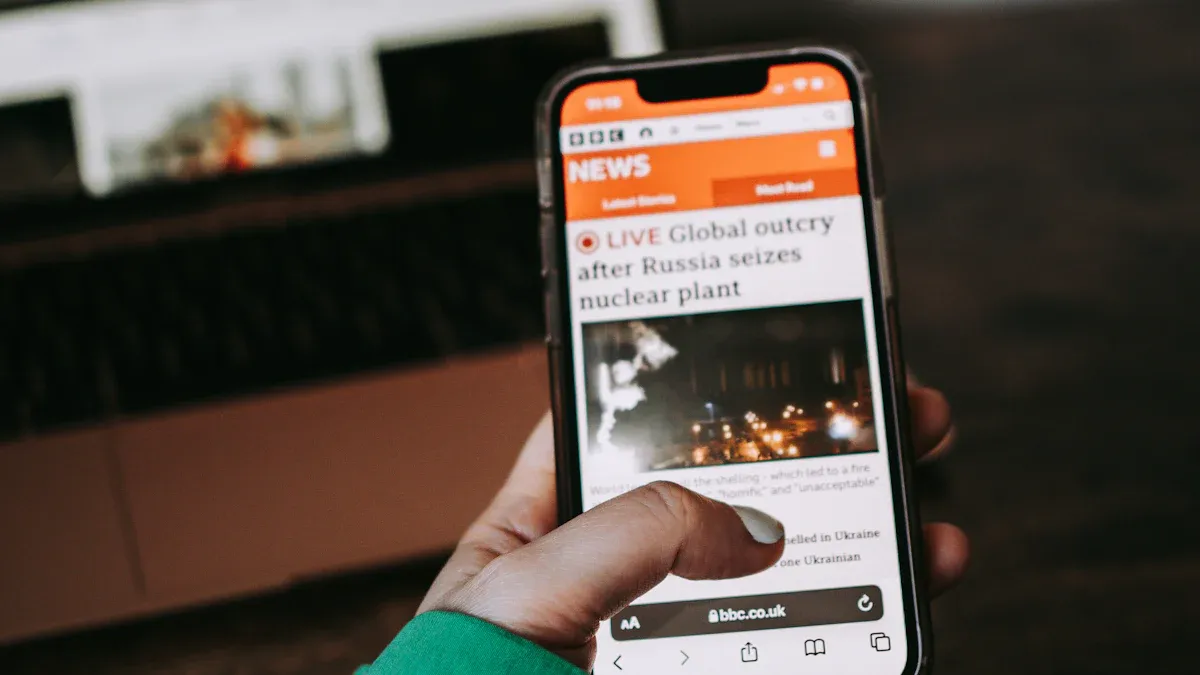
Image Source: pexels
Suitable tools can make your reading journey twice as effective with half the effort. You do not have to face language barriers alone—modern technology provides many powerful assistants. Use them well, and you can enjoy reading more easily.
Translation Plugins: DeepL and Google Translate
When encountering incomprehensible sentences, translation plugins are your first aid kit. DeepL and Google Translate are both excellent choices.
Beginner Tip: Use Translation Tools Smartly DeepL is renowned for its extremely high translation accuracy and natural fluent translations because it excels at understanding context. But for beginners, over-reliance may cause you to ignore original sentence structures, not benefiting language learning. Suggest using it to understand difficult points, not full translation.
DeepL’s free version provides a certain number of free translation characters monthly, with fees beyond that (in USD). You can treat it as an aid for key sentences, not a crutch.
Authoritative Dictionaries: Merriam-Webster and Oxford Learner’s Dictionaries
When ready to shift from passive understanding to active learning, a good learner’s dictionary is crucial.
- Merriam-Webster Learner’s Dictionary: This dictionary is designed specifically for English learners. It includes a “core vocabulary” section to help you focus on mastering the most important 3,000 English words.
- Oxford Learner’s Dictionaries: Its strength is providing massive usage examples. You can see a word’s real usage in different contexts—this is much more effective than simply remembering Chinese meanings.
Using these dictionaries, you can truly understand words, not just recognize them.
News Aggregator Apps: Flipboard and Google News
You do not need to visit dozens of websites daily. News aggregator apps deliver content to you based on your interests.
If you often end up checking “FX rates, travel budgets, or overseas spending” while reading foreign news, it helps to keep a lightweight toolkit: use an aggregator to filter sources, and use BiyaPay’s official site when you need to verify numbers. For example, when an article quotes prices in different currencies or mixes fee conventions, you can quickly confirm real-time conversions with the FX converter & comparison tool and then return to the story to judge whether the figures make sense. If you want a stable setup for ongoing tracking, you can also use the registration page to create an account and pin the functions you use most. Since it works best here as a “conversion and cross-check tool” to reduce misreads and app-hopping.
Flipboard is like your personal magazine. It uses AI algorithms to categorize articles, such as “artificial intelligence” or more specific “generative AI.” You can follow over 30,000 different topics, creating a completely personalized information flow. Google News combines your search history and preferences to recommend potentially interesting news.
Official Apps: Immersive Reading Anytime Anywhere
Many news organizations have launched their own official apps. Compared to mobile browsers, app reading experience is much better.
- Faster Speed: App content is partially preloaded on the phone, loading significantly faster than webpages, and usually supports offline reading.
- Better Experience: App interfaces are designed for mobile screens, with clean layouts and smooth operations.
- More Features: You can use push notifications for major news first and enjoy a more immersive reading experience.
Download your favorite media apps and make reading part of your daily life.
You have now mastered a clear path from starting with BBC and AP to challenging The New York Times. Combining the three-step reading method and practical tools, you can completely overcome language barriers. Linguist Steve Kaufmann mastered 20 languages through reading, believing it is an excellent way to deeply understand culture and gain a sense of power. Reading foreign news websites not only improves language but broadens your international perspective.
Now, open a website and start your first article!
FAQ
What if I encounter a paywall?
You can first make full use of free websites like BBC and AP News. Many paid websites also provide several free articles monthly. This is enough for getting started. Persist in reading, and you will find free resources very abundant.
Too many unknown words—I can’t read at all. What to do?
Please do not look up every unknown word. You can first use the “three-step reading method” to grasp the main idea.
Core Technique: Only focus on keywords affecting main idea understanding. Understanding the article framework is more important than recognizing every word.
How much time should I spend reading daily?
Persistence matters more than duration. You can start with 15 minutes daily:
- 5 minutes: Quickly browse 1-2 short news headlines and ledes.
- 10 minutes: Select the most interesting one for in-depth reading.
Building the habit is the first step.
*This article is provided for general information purposes and does not constitute legal, tax or other professional advice from BiyaPay or its subsidiaries and its affiliates, and it is not intended as a substitute for obtaining advice from a financial advisor or any other professional.
We make no representations, warranties or warranties, express or implied, as to the accuracy, completeness or timeliness of the contents of this publication.
Related Blogs of

SoFi Checking and Savings A Deep Dive Review


The Easiest Way to Find the Code for Calling France


Tap and Go A Beginner's Guide to Cardless ATM Withdrawals

What Are the Daily Limits for Chase Accounts?

Choose Country or Region to Read Local Blog
 Australia
 Austria
 Belgium
 Canada
 Cyprus
 Czech Republic
 Denmark
 Estonia
 Finland
 France
 Germany
 Greece
 Hong Kong
 India
India Indonesia
 Ireland
 Italy
Italy Japan
Japan Latvia
 Lithuania
 Luxembourg
 Malaysia
 Malta
Malta Morocco
 Nepal
Nepal Netherlands
 New Zealand
 Norway
 Pakistan
 Philippines
 Poland
 Portugal
 Romania
 Singapore
 Slovakia
 Slovenia
 South Africa
 South Korea
 Spain
Spain Sweden
 Thailand
 The United States
 Turkey
 United Arab Emirates
 United Kingdom
 Vietnam
Contact Us




BIYA GLOBAL LLC is a licensed entity registered with the U.S. Securities and Exchange Commission (SEC No.: 802-127417); a certified member of the Financial Industry Regulatory Authority (FINRA) (Central Registration Depository CRD No.: 325027); regulated by the Financial Industry Regulatory Authority (FINRA) and the U.S. Securities and Exchange Commission (SEC).
BIYA GLOBAL LLC is registered with the Financial Crimes Enforcement Network (FinCEN), an agency under the U.S. Department of the Treasury, as a Money Services Business (MSB), with registration number 31000218637349, and regulated by the Financial Crimes Enforcement Network (FinCEN).
BIYA GLOBAL LIMITED is a registered Financial Service Provider (FSP) in New Zealand, with registration number FSP1007221, and is also a registered member of the Financial Services Complaints Limited (FSCL), an independent dispute resolution scheme in New Zealand.