2025 Hong Kong Stock Market Opening Hours Full Guide: Essential Trading Handbook for Beginners



Image Source: unsplash
Welcome, beginner investor! Understanding Hong Kong stock opening hours is the first step in your investment journey. We will directly reveal the core answer for you:
In 2025, the core trading sessions for Hong Kong stocks are:
- Morning: 9:30 AM - 12:00 PM
- Afternoon: 1:00 PM - 4:00 PM
This article is more than just a timetable. We will act like an experienced friend, guiding you through the entire trading day process, helping you understand those “mysterious” auction sessions before opening and after closing.
Key Points
- The core trading hours for Hong Kong stocks are 9:30 AM to 12:00 PM in the morning and 1:00 PM to 4:00 PM in the afternoon.
- Hong Kong stock trading days include special sessions like opening auction, closing auction, and midday break—you need to understand their rules.
- Half-day trading and severe weather will change Hong Kong stock trading hours—you need to follow official announcements.
- Hong Kong stocks implement T+0 trading with no price limits, and the trading unit is “lot”—these differ from A-shares.
- You can preset orders during the midday break, but Hong Kong stocks do not trade on weekends or holidays.
Detailed Explanation of Regular Hong Kong Stock Opening Hours
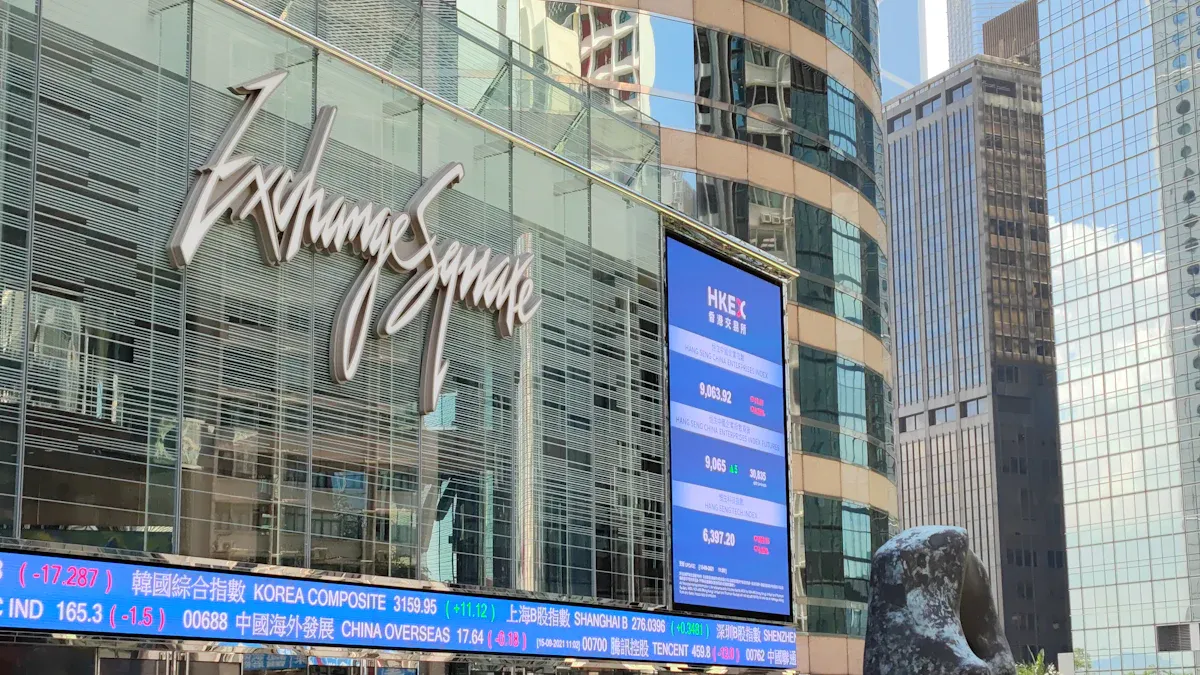
Image Source: unsplash
After learning the core hours, let’s explore the full picture of a complete trading day in depth. A regular Hong Kong stock trading day is not simply opening and closing—it is carefully divided into several segments with different functions. Mastering the rules of these segments allows you to make trading decisions more calmly.
Core Trading Sessions
This is your main battlefield for buying and selling operations, also known as the continuous trading session. In 2024, the average daily trading volume of the Hong Kong stock market reached about $330 billion, with the vast majority occurring in this session.
This session is divided into morning and afternoon parts:
| Session Name | Time | Main Functions and Rules |
|---|---|---|
| Morning Session | 9:30 AM – 12:00 PM | You can freely buy and sell stocks. The trading system matches orders based on “price priority, time priority.” |
| Afternoon Session | 1:00 PM – 4:00 PM | Trading rules are identical to the morning session, serving as your main operating time in the afternoon. |
Simply put, “price priority” means higher bids (buy) or lower asks (sell) get matched first. “Time priority” means, at the same price, the earlier order gets priority.
Once you’ve memorized the sessions, the practical next step is connecting “check—verify—place orders” into one flow. For daily planning, you can use BiyaPay’s Stock Info Lookup to quickly confirm key stock data and price moves, then enter execution through the same-domain Trading Entry. If you don’t have an account yet, you can start from the Sign-up page so you’re not rushing right before the open.
If your plan involves HKD/USD conversions, BiyaPay also provides a free FX Rate Converter & Comparison tool to estimate real-time rates and exchange costs. As a multi-asset trading wallet covering cross-border payments, investing, trading, and fund management, BiyaPay operates with compliance credentials in multiple regions (including U.S. MSB and New Zealand FSP). You can review updates via the official site and the Events Center.
Pre-Open Auction Session
Before the official Hong Kong stock opening time (9:30 AM), there is a very critical “warm-up” phase known as the pre-open auction session, lasting from 9:00 AM to around 9:22 AM.
Its core role is to collect all buy and sell intentions to determine the opening price for each stock on that day. This session is especially important for beginners because it determines the starting price for your first trade. You can understand it as two key steps:
First Phase: Free Order Entry (9:00 - 9:15 AM)
- During these 15 minutes, you can submit “at-auction” or “at-auction limit” orders based on your judgment.
- Key Point: You have maximum flexibility here—you can place orders, modify prices or quantities, or even cancel orders at any time according to guidelines.
Second Phase: Cooling-Off (9:15 - 9:20 AM)
- The market enters the “no-cancellation” phase.
- Key Point: You can still submit new orders, but existing orders cannot be modified or canceled. This design prevents drastic fluctuations near opening, stabilizing prices.
After 9:20 AM, the system performs random matching, finally calculating opening prices for each stock around 9:22 AM.
Closing Auction Session
Corresponding to the opening auction, there is also a special session at closing known as the Closing Auction Session (CAS), roughly from 4:00 PM to 4:10 PM.
This mechanism is common in many global markets, aiming to determine a fair, unified closing price for stocks. All orders during this period will be executed at the final calculated closing price.
Beginner Tip: Not all Hong Kong stocks participate in the closing auction. Typically, this includes major index constituents and highly liquid large-cap stocks. You can check the specific list on the Hong Kong Exchange’s official website.
Midday Break
The Hong Kong stock market has a unique “lunch break” from 12:00 PM to 1:00 PM.
During this hour, the exchange system pauses matching, and you cannot conduct any buy or sell transactions. This is time for the market to digest morning information and for investors to rest and adjust strategies. Interestingly, to better align with mainland China markets, the Hong Kong Exchange has discussed shortening the lunch break multiple times, but it currently remains one hour.
Although trading is not possible, many brokers allow you to preset afternoon buy/sell orders during this time. These orders will be automatically submitted to the exchange by the broker system after the 1:00 PM reopening. This feature is very practical, allowing you to plan afternoon trades in advance. Clearly understanding the full Hong Kong stock opening hours is an important part of your investment planning.
Special Trading Days and Weather Impacts
You have now mastered the complete process of a regular trading day. However, the Hong Kong stock market does not always follow routine. You need to understand two special situations: half-day trading and severe weather. These directly change Hong Kong stock opening hours—preparing in advance helps avoid unnecessary trading confusion.
Half-Day Trading Arrangements
On the eve of certain holidays, the Hong Kong stock market only opens for half a day, known as half-day trading. This is usually to allow market participants to prepare for holidays early.
What is Half-Day Trading? Simply put, half-day trading only has the morning session, with no afternoon session.
Specific trading time arrangements are as follows:
- Core Trading Session: 9:30 AM – 12:00 PM
- Closing Auction Session: 12:00 PM – approximately 12:10 PM
Note that even on half-day trading, the closing auction mechanism still exists. It starts immediately after 12:00 PM and randomly closes between 12:08 and 12:10 PM to determine the final closing price.
According to the calendar published by the Hong Kong Exchange, there are the following half-day trading days in 2025:
| Date | Holiday Eve | Trading Arrangement |
|---|---|---|
| January 28, 2025 | Lunar New Year Eve | Morning session only, afternoon closed |
| December 24, 2025 | Christmas Eve | Morning session only, afternoon closed |
| December 31, 2025 | New Year’s Eve | Morning session only, afternoon closed |
For investors trading southbound via Stock Connect, note that on December 24 and 31, 2025, these half-day trading afternoons will suspend southbound trading.
Severe Weather Response Guide
Hong Kong is subtropical and often affected by typhoons or black rainstorms in summer. To ensure participant safety, the Hong Kong Exchange has a mature response mechanism. Since 2018, severe weather has caused Hong Kong stock market closures over 10 times, with 4 in 2023 alone—so you must be familiar with these rules.
Trading arrangements depend entirely on the issuance and cancellation times of Typhoon Signal 8 or above or Black Rainstorm Warning.
Core Judgment Standard The signal status at 12:00 PM is the key divider for whether trading occurs all day. If Typhoon Signal 8 or above remains in effect at 12:00 PM, the market will close for the full day.
To help you understand clearly, we have compiled a table for signal cancellations before opening:
| Signal Cancellation Time (Before Opening) | Trading Arrangement |
|---|---|
| Before 9:00 AM | Trading proceeds as normal. |
| Between 9:00 AM and 11:00 AM | Morning session canceled. Afternoon session starts two hours after signal cancellation on the hour or half-hour, earliest at 1:00 PM. |
| Between 11:00 AM and 11:30 AM | Morning session canceled. Afternoon session starts at 1:30 PM. |
| Between 11:30 AM and 12:00 PM | Morning session canceled. Afternoon session starts at 2:00 PM. |
| After 12:00 PM | Full day closure. |
Beginner Tip: You do not need to memorize all time points. Just develop a habit: during typhoon or rainstorm weather, closely follow official announcements from the Hong Kong Exchange. All broker software will also push relevant trading arrangement notifications immediately.
Core Trading Rules Beginners Must Know
Image Source: pexels
After mastering trading hours, the next step is to familiarize yourself with the core trading rules of Hong Kong stocks. These rules differ greatly from mainland China’s A-share market, directly affecting your trading strategies and risk management. Let’s look at three key points you must understand.
T+0 Trading Mode
The Hong Kong stock market implements a T+0 trading system, which is a very flexible rule. It means you can buy and sell the same stock multiple times within the same trading day. If you buy a stock in the morning and the price rises in the afternoon, you can sell it immediately for profit without waiting until the next day.
Beginner Must-Read: T+0 Trading vs. T+2 Settlement
You need to distinguish between “trading” and “settlement.” Hong Kong stocks are T+0 for trading but follow a T+2 system for fund and stock clearing.
- T+0 Trading: Gives you the right to buy and sell on the same day, improving fund efficiency.
- T+2 Settlement: Means after the trade date (T day), formal transfer of funds and stocks occurs on the second business day (T+2 day).
Simply put, after selling a stock, funds appear immediately in your trading account for buying other stocks. But if you want to withdraw to your Hong Kong licensed bank account, you must wait until T+2 day.
“Lot” as Trading Unit
In the Hong Kong stock market, the trading unit for stocks is “lot” (Board Lot). When placing orders, quantities must be one lot or multiples thereof. The number of shares per lot is decided by the listed company, commonly 100, 500, or 1,000 shares.
If your holdings are not integer multiples of a lot—for example, 50 extra shares from a company bonus—these are called “odd lots.” Odd lot trading rules are special:
| Item | Rule Explanation |
|---|---|
| What is an Odd Lot | Shares less than one lot. |
| How to Trade | Can only sell, not actively buy. Trading occurs through a dedicated “odd lot market,” with prices usually lower than the regular lot market. |
| Trading Fees | Selling odd lots may incur additional offline processing fees, such as a minimum of about $15. |
No Daily Price Limits
This is one of the most significant differences from the A-share market. Similar to the U.S. market, the Hong Kong stock market has no 10% daily price limit.
This means a stock’s price can theoretically rise several times or fall over 50% in one day. This mechanism brings higher potential returns but also huge risks. Although there are no hard price limits, the Hong Kong Exchange has rules like the “Volatility Control Mechanism” to prevent systemic risks from extreme fluctuations. As a beginner, you must fully recognize this high volatility and manage positions well.
Congratulations! You have completed the first step to successful Hong Kong stock investing: mastering trading hours.
Remember these key time points:
- Core Sessions: 9:30-12:00, 13:00-16:00
- Opening Auction: Starts at 9:00
- Closing Auction: Starts at 16:00
Pay special attention to how half-day trading and severe weather affect Hong Kong stock opening hours. You can add the closure calendar to your schedule to avoid missing important information. Some websites provide convenient calendar services:
- You can find the Hong Kong Exchange trading holidays on the CalendarLabs website.
- It offers iCal calendar service, convenient for importing into your personal calendar app.
Wish you smooth trading in the Hong Kong stock market and a great start to your investment journey!
FAQ
We have compiled some questions most concerning beginners to help clear your final doubts.
Can I place orders during the midday break?
You can preset buy/sell orders during the midday break (12:00-13:00). Your broker system will save the instructions and automatically submit them to the exchange after the 1:00 PM reopening. This allows you to plan afternoon trading strategies in advance.
Can I trade Hong Kong stocks on weekends or holidays?
No. The Hong Kong stock market is closed on weekends and Hong Kong public holidays. You can only trade on days published by the Hong Kong Exchange. Be sure to follow the official trading calendar and plan your activities in advance.
Why can’t I sell my odd lots?
Odd lot execution speed and prices are usually not as good as full lots. This is because odd lots trade in a separate market with fewer buyers.
| Reason | Explanation |
|---|---|
| Separate Market | Odd lot trading system is separate from full lots, with fewer buyers. |
| Price Difference | Execution prices are usually slightly lower than full lot market prices. |
| Additional Fees | Some brokers may charge extra fees for handling odd lot orders, such as a minimum of about $15. |
*This article is provided for general information purposes and does not constitute legal, tax or other professional advice from BiyaPay or its subsidiaries and its affiliates, and it is not intended as a substitute for obtaining advice from a financial advisor or any other professional.
We make no representations, warranties or warranties, express or implied, as to the accuracy, completeness or timeliness of the contents of this publication.
Related Blogs of
Tap and Go A Beginner's Guide to Cardless ATM Withdrawals

Zelle Wire Transfer or ACH? Clearing Up the Confusion

The 18 Best Apps to Earn Real Cash This Year


The Easiest Way to Find the Code for Calling France
Choose Country or Region to Read Local Blog
 Australia
 Austria
 Belgium
 Canada
 Cyprus
 Czech Republic
 Denmark
 Estonia
 Finland
 France
 Germany
 Greece
 Hong Kong
 India
India Indonesia
 Ireland
 Italy
Italy Japan
Japan Latvia
 Lithuania
 Luxembourg
 Malaysia
 Malta
Malta Morocco
 Nepal
Nepal Netherlands
 New Zealand
 Norway
 Pakistan
 Philippines
 Poland
 Portugal
 Romania
 Singapore
 Slovakia
 Slovenia
 South Africa
 South Korea
 Spain
Spain Sweden
 Thailand
 The United States
 Turkey
 United Arab Emirates
 United Kingdom
 Vietnam
Contact Us




BIYA GLOBAL LLC is a licensed entity registered with the U.S. Securities and Exchange Commission (SEC No.: 802-127417); a certified member of the Financial Industry Regulatory Authority (FINRA) (Central Registration Depository CRD No.: 325027); regulated by the Financial Industry Regulatory Authority (FINRA) and the U.S. Securities and Exchange Commission (SEC).
BIYA GLOBAL LLC is registered with the Financial Crimes Enforcement Network (FinCEN), an agency under the U.S. Department of the Treasury, as a Money Services Business (MSB), with registration number 31000218637349, and regulated by the Financial Crimes Enforcement Network (FinCEN).
BIYA GLOBAL LIMITED is a registered Financial Service Provider (FSP) in New Zealand, with registration number FSP1007221, and is also a registered member of the Financial Services Complaints Limited (FSCL), an independent dispute resolution scheme in New Zealand.