AI Wave and Geopolitics: Two Major Variables Shaping the 2026 Global Economy




Image Source: pexels
Looking ahead to 2026, two major variables are reshaping the global economic landscape: the AI technological revolution and the geopolitical landscape. This is not a simple story of growth or decline, but a complex interplay between an AI-driven “productivity revolution” and geopolitics-induced “economic fragmentation.”
Although the International Monetary Fund (IMF) predicts a slowdown in global economic growth, the greatest uncertainty behind it stems precisely from AI’s immense potential and the risks continuously triggered by international hotspots.
How should businesses and investors identify structural opportunities and avoid systemic risks amid the pull of these two forces?
A practical way to think about it is to manage the “growth variable” and the “risk variable” separately: AI tends to expand efficiency and create new demand, while geopolitics tends to raise costs and uncertainty. Start by turning what you care about into a simple watchlist (e.g., major U.S. indices, AI infrastructure, energy, and supply-chain-sensitive names), and track them with a consistent data baseline: watch whether risk appetite is improving via major stock benchmarks, and translate cross-border funding friction into your decision math using an FX converter so returns aren’t quietly diluted by hidden costs.
If you want a smoother “information → funding readiness → execution” workflow, pin your key links on BiyaPay’s official site: use the market & stock lookup for a consistent quote/insight entry point, double-check rules and risk disclosures via the announcements hub, and then pace funding and trading within your own risk framework. The advantage is speed and clarity: when headlines escalate, you switch fewer tools, act faster, and can later audit exactly why a decision was made.
Key Points
- AI technology is driving global economic growth, transforming manufacturing and services while improving productivity.
- Geopolitical risks are reshaping global supply chains, requiring companies to prioritize supply chain stability and security.
- AI development demands massive computing infrastructure and energy, creating new investment opportunities.
- Future work will require human-AI collaboration, with people needing to learn new skills such as analytical and creative thinking.
- Businesses and investors must manage both AI-driven opportunities and geopolitical risks to achieve growth.
AI-Driven New Cycle: Hedging Against Growth Slowdown
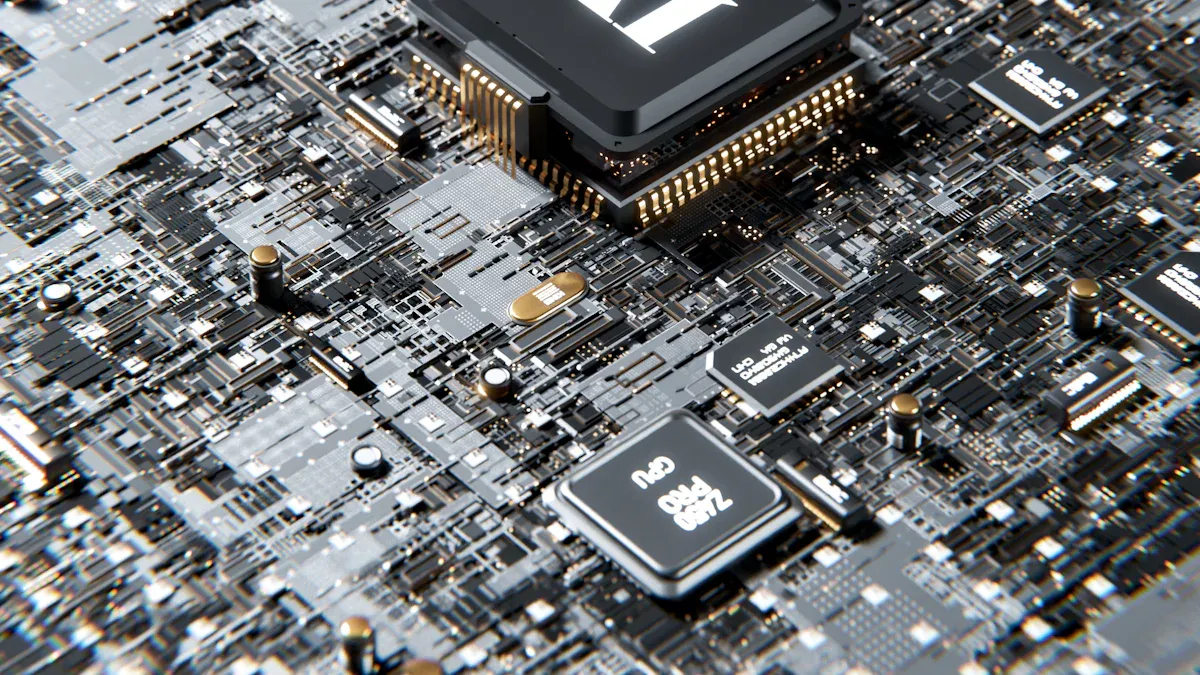
Image Source: unsplash
Against the backdrop of generally weakening global economic growth momentum, artificial intelligence (AI) is serving as a key long-term positive factor, playing a core role in hedging downward pressures. It is not merely technological iteration but the engine of “Industry 4.0,” poised to usher in a new economic growth cycle. Unlike previous technological waves, this round of AI investment cycle demonstrates stronger resilience and clearer commercial prospects, accelerating the transition from old to new growth drivers in the global economy.
AI Empowerment: Productivity Leap in Manufacturing and Services
By 2026, AI applications will no longer be limited to a few tech giants but will widely penetrate traditional industries, reshaping productivity boundaries.
- Manufacturing Upgrade: AI technology is accelerating development in industrial robots, humanoid robots, and drone industries. Companies deploying AI visual inspection systems can detect defects on production lines with precision and speed surpassing human eyes. Intelligent scheduling algorithms optimize complex supply chain networks, significantly reducing logistics costs and inventory risks.
- Services Transformation: The transformation in services is particularly profound. AI is replacing repetitive cognitive labor, freeing professionals to focus on higher-value creative work.
For example, in healthcare, AI algorithms analyze electronic health records to identify high-risk patients in advance, effectively reducing readmission rates. Machine learning systems assist doctors in medical imaging analysis, shortening some diagnosis times from days to hours.
The financial services sector is also at the forefront of AI applications. JPMorgan Chase’s COiN platform uses AI to review thousands of legal contracts in seconds, significantly reducing human errors. Some banks holding Hong Kong licenses are actively exploring AI-driven systems to scan transactions in real time and flag suspicious behavior, thereby substantially reducing fraud losses. For companies handling global operations, payment solutions like Biyapay integrate AI technology to optimize cross-border payment paths and exchange rate management, effectively lowering transaction costs and improving capital flow efficiency.
New Investment Tracks: Computing Infrastructure and Vertical Large Models
The rise of AI is sparking a capital-intensive infrastructure construction boom. Barclays’ outlook clearly states that massive spending on AI infrastructure is buffering the U.S. economy, becoming its most important growth driver.
BlackRock’s analysis also shows that AI capital expenditure’s contribution to U.S. economic growth is expected to reach three times the historical average. This investment wave primarily flows into three areas:
- Computing Infrastructure: Including high-performance chips, servers, and data centers. By 2026, computing power for AI inference is expected to account for two-thirds of total computing power.
- Energy Supply: AI’s enormous computing demands bring staggering energy consumption. The International Energy Agency (IEA) predicts that by 2026, AI-driven data centers alone will consume an additional 90 terawatt-hours (TWh) of electricity. This drives massive investment in new energy sources and grid upgrades.
- Vertical Large Models and AI Agents: Beyond general large models, vertical large models tailored to specific industries (such as law, healthcare, finance) show enormous commercial potential. Meanwhile, the autonomous AI agent market is expected to reach $8.5 billion by 2026, becoming a new growth point.
Many investors worry whether this boom will repeat the early 2000s internet bubble. However, there are essential differences between the two.
| Feature | AI Investment Cycle | Internet Bubble Period |
|---|---|---|
| Company Profitability | Leading companies (e.g., NVIDIA) have extremely strong profitability | Many companies lacked clear profitability models |
| Capital Expenditure | Concentrated in large tech companies with stable funding sources | Speculative IPOs rampant, some driven by fraud |
| Valuation Drivers | Driven by real earnings growth in companies | Pure P/E expansion, valuations severely detached from fundamentals |
| Technological Foundation | Built on mature internet and cloud platforms | Infrastructure itself still in early construction |
| Potential Risks | More from external factors (e.g., geopolitics, macroeconomy) | Primarily internal (e.g., companies running out of cash, failed business models) |
Skills Reshaping: Human-Machine Collaboration and Future Work Models
The AI wave inevitably raises concerns about future jobs, but history shows that technological progress ultimately creates new positions rather than simply replacing humans. The core of the 2026 workplace will be human-machine collaboration, where humans use AI as a powerful tool to amplify their own intelligence and creativity.
To adapt to this new model, both workers and companies must focus on skills reshaping. The World Economic Forum identifies several key skills for the future labor market, collectively pointing to the ability to efficiently collaborate with intelligent machines.
Five Key Skills for Future Work
- Analytical Thinking: Ability to ask the right questions and critically evaluate AI-provided answers.
- Creative Thinking: Original thinking and conceptual innovation in areas beyond AI’s reach.
- AI and Big Data: Understanding AI fundamentals and using related tools for data analysis.
- Technological Literacy: Ability to quickly learn and apply new technologies.
- Resilience, Flexibility, and Agility: Maintaining adaptability and psychological resilience in rapidly changing environments.
For business decision-makers, this means increasing investment in employee retraining. Providing opportunities to learn new skills is not only fulfilling social responsibility but also investing in the company’s future core competitiveness.
Geopolitical Risks: Intensifying Division and Barriers
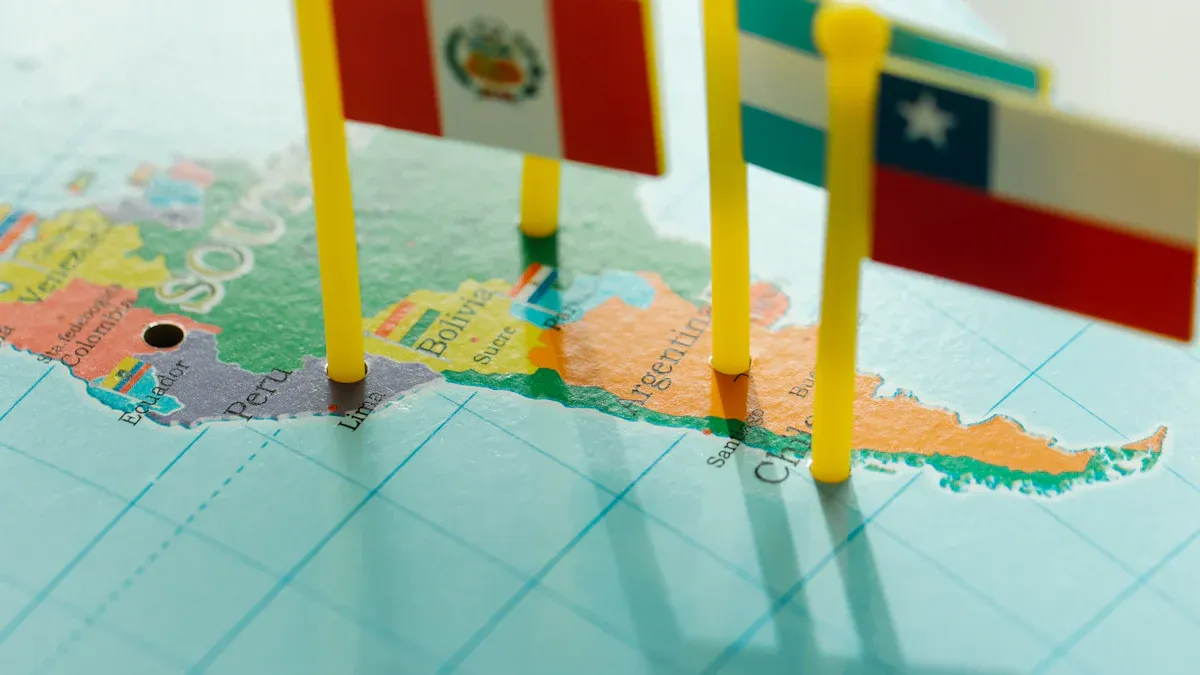
Image Source: pexels
If AI is the “accelerator” driving the global economy, then geopolitics is the “brake” that could be applied at any moment. Great power rivalry, regional conflicts, and rising protectionism collectively form the greatest source of uncertainty for the 2026 global economy. These risks not only suppress growth expectations but also reshape the basic rules of global trade, investment, and technological development.
World Trade Organization (WTO) data clearly reflects this trend. Although goods trade grew strongly in the first half of 2025, ongoing trade policy uncertainty is expected to suppress growth in the second half. The WTO predicts approximately 2.4% growth in trade volume for 2025, warning that trade restrictive measures are a key downside risk. This foreshadows a more fragmented and uncertain global business environment.
Supply Chain Restructuring: From Efficiency-First to Resilience-First
Over the past decades, global supply chains followed an “efficiency-first” principle, with companies seeking the lowest-cost production solutions worldwide. However, geopolitical tensions have completely changed this logic. By 2026, “resilience-first” will become the core of corporate supply chain strategies.
This shift means companies will no longer solely pursue cost minimization but prioritize supply chain stability and security. Many are adopting “China+1” or “nearshoring” strategies, dispersing production bases across multiple countries to reduce over-reliance on a single region.
Geopolitical confrontations have disrupted circulation channels for critical resources. For example, some semiconductor companies experienced capacity declines due to shortages of key chemicals (such as photoresist). This validates a simple theory: the weakest link in a supply chain determines the strength of the entire chain.
Meanwhile, non-tariff measures (NTMs) are becoming more influential than traditional tariffs. These barriers take diverse forms, including:
- Environmental Regulations: The EU’s Carbon Border Adjustment Mechanism (CBAM) is a typical example. It requires importers to pay for their products’ carbon emissions, posing challenges to producers in countries with laxer environmental rules.
- National Security Reviews: Governments increasingly review or block foreign mergers and technology cooperation on national security grounds.
- Export Controls: Bans on exports of specific technologies or products, such as China’s controls on graphite exports, directly impacting global battery and electric vehicle supply chains.
Technology Barriers: CHIPS Act and Export Controls Impact
The technology sector, especially semiconductors, has become the central battlefield in great power competition. Governments are using massive subsidies and strict export controls to seize dominance in this critical technology.
The U.S. CHIPS and Science Act is a landmark event in this technological race. The act commits approximately $280 billion to revitalize domestic U.S. chip manufacturing.
- Government Investment: The U.S. Department of Commerce has approved over $32 billion in subsidies and nearly $29 billion in loans.
- Private Investment: These government funds have leveraged nearly $400 billion in private investment.
- Strategic Goal: Aim to produce nearly 30% of the world’s advanced chips in the U.S. by 2032.
In response, other major economies have launched similar plans. The EU’s European Chips Act commits 43 billion euros, and South Korea has pledged $19 billion to support its domestic chip industry. This government-led “subsidy race” is reshaping the global semiconductor landscape but may also lead to overcapacity and market distortions.
Meanwhile, export controls have become direct weapons to restrict rivals’ technological development.
For example, Dutch company ASML is the world’s only producer of advanced EUV lithography machines. Under U.S. pressure, the Dutch government restricted exports of such equipment to China. This directly limits top Chinese chip manufacturers’ access to advanced manufacturing tools.
For companies like NVIDIA, the impact is more complex. On one hand, export controls reduce sales in the Chinese market; on the other, they slow Chinese competitors’ progress in high-end AI chips.
International Hotspots: Geopolitical Conflicts and Policy Uncertainty
Emerging international hotspots are a norm that business decision-makers must face in 2026. From great power tariff wars to regional military conflicts, each hotspot can trigger severe market volatility.
| Geopolitical Hotspot | Direct Impact on Global Economy |
|---|---|
| U.S.-China Tensions | Ongoing tariffs and technology barriers force companies to reassess procurement, production, and investment layouts. |
| Russia-Ukraine War | Severely affects global energy and food supplies, causing price surges and sustained pressure on the European economy. |
| Middle East Conflicts | As a major global oil-producing region, any instability quickly transmits to global oil prices, increasing corporate operating costs. |
| Taiwan Strait Situation | Any deterioration in diplomatic relations could threaten global supply chains for key high-tech products like semiconductors. |
These international hotspots not only directly impact supply chains but also bring enormous policy uncertainty. In recent global business confidence surveys, CEOs commonly expressed concerns about:
- Changing tariff environments increasing costs and making demand unpredictable.
- Interest rate policy swings in major economies (e.g., the Federal Reserve).
- Lack of clear, consistent long-term economic direction from governments.
This highly uncertain environment makes companies exceptionally cautious in long-term investments and strategic planning. Many choose to delay major capital expenditures and hold more cash to cope with potential external shocks. Escalating international hotspots have become the “Sword of Damocles” hanging over global economic recovery.
Looking to 2026, AI is the accelerator driving growth, while geopolitics is the brake applied at any time. The two are not isolated; great power technological competition is conversely accelerating global investment in AI infrastructure.
This tug-of-war will intensify the global economy’s "K-shaped" divergence. Economies and industries that embrace artificial intelligence and manage geopolitical risks (such as AI infrastructure and energy transition) will achieve excess growth, while others may fall into stagnation.
For businesses, this means integrating artificial intelligence as core competitiveness, building resilient global supply chains, and increasing employee retraining investments to withstand ongoing international hotspot impacts.
History proves, technological change itself holds immense potential to solve problems. Despite numerous challenges, human adaptability and innovation will be key to navigating the cycle.
FAQ
What is the relationship between the AI wave and geopolitical risks?
The two interact. Geopolitical competition accelerates countries’ investments in artificial intelligence, acting as a “catalyst.” At the same time, technology blockades and trade barriers create “resistance” to AI’s global applications. Companies need to manage both forces simultaneously.
How should individuals prepare for an AI-driven future of work?
Individuals should proactively reshape skills. Focus on cultivating abilities AI cannot replace, such as analytical thinking and creative thinking. Simultaneously, learning to use AI tools and mastering human-machine collaboration work models will be key to maintaining competitiveness.
In the current environment, which investment areas are worth attention?
Investors should focus on areas benefiting from both trends.
- AI Infrastructure: Including high-performance chips, data centers, and related energy supplies.
- Vertical AI Applications: Specialized AI solutions for industries like finance and healthcare.
- Supply Chain Diversification: Industries serving corporate “resilience-first” strategies.
Will this AI boom be another internet bubble?
The current artificial intelligence investment cycle fundamentally differs from the early 21st-century internet bubble. Leading companies (e.g., NVIDIA) have strong profitability and cash flows, with valuations driven by actual earnings growth rather than pure speculation.
*This article is provided for general information purposes and does not constitute legal, tax or other professional advice from BiyaPay or its subsidiaries and its affiliates, and it is not intended as a substitute for obtaining advice from a financial advisor or any other professional.
We make no representations, warranties or warranties, express or implied, as to the accuracy, completeness or timeliness of the contents of this publication.
Related Blogs of

SoFi Checking and Savings A Deep Dive Review


Why Is Canada's Country Code 1


How Safe Is Your Money With Ally Bank in 2026?


The Easiest Way to Find the Code for Calling France

Choose Country or Region to Read Local Blog
 Australia
 Austria
 Belgium
 Canada
 Cyprus
 Czech Republic
 Denmark
 Estonia
 Finland
 France
 Germany
 Greece
 Hong Kong
 India
India Indonesia
 Ireland
 Italy
Italy Japan
Japan Latvia
 Lithuania
 Luxembourg
 Malaysia
 Malta
Malta Morocco
 Nepal
Nepal Netherlands
 New Zealand
 Norway
 Pakistan
 Philippines
 Poland
 Portugal
 Romania
 Singapore
 Slovakia
 Slovenia
 South Africa
 South Korea
 Spain
Spain Sweden
 Thailand
 The United States
 Turkey
 United Arab Emirates
 United Kingdom
 Vietnam
Contact Us




BIYA GLOBAL LLC is a licensed entity registered with the U.S. Securities and Exchange Commission (SEC No.: 802-127417); a certified member of the Financial Industry Regulatory Authority (FINRA) (Central Registration Depository CRD No.: 325027); regulated by the Financial Industry Regulatory Authority (FINRA) and the U.S. Securities and Exchange Commission (SEC).
BIYA GLOBAL LLC is registered with the Financial Crimes Enforcement Network (FinCEN), an agency under the U.S. Department of the Treasury, as a Money Services Business (MSB), with registration number 31000218637349, and regulated by the Financial Crimes Enforcement Network (FinCEN).
BIYA GLOBAL LIMITED is a registered Financial Service Provider (FSP) in New Zealand, with registration number FSP1007221, and is also a registered member of the Financial Services Complaints Limited (FSCL), an independent dispute resolution scheme in New Zealand.