Is NVDA Stock Worth Buying Now? A Comprehensive Analysis of Its Pros and Cons




Image Source: pexels
NVDA is one of the core assets in the era of artificial intelligence. Its astonishing stock price growth has attracted global investors’ attention, sparking widespread discussions about its future value.
| Period | Performance |
|---|---|
| Year-to-Date (YTD) | +48.12 (+35.83%) |
| 5 Years | +169.40 (+1,301.73%) |
Notably, NVIDIA currently holds about 25% of the data center market share and is expected to maintain its leading position.
This strong performance gives NVDA long-term appeal, but it also brings extremely high expectations for future growth and potential short-term volatility risks.
Key Takeaways
- NVIDIA leads in artificial intelligence and GPUs, with its powerful software ecosystem as a major advantage.
- NVIDIA’s financial performance is extremely strong, with rapid revenue and profit growth and high gross margins.
- NVIDIA is actively developing new markets, such as the Blackwell platform, networking business, metaverse, and automotive sectors.
- Investing in NVIDIA carries risks, including overvaluation, macroeconomic uncertainty, geopolitical tensions, and intensifying market competition.
- Investors should consider long-term holding or use hedging tools to manage risk based on their risk tolerance.
Major Reasons to Invest in NVDA (Advantages)
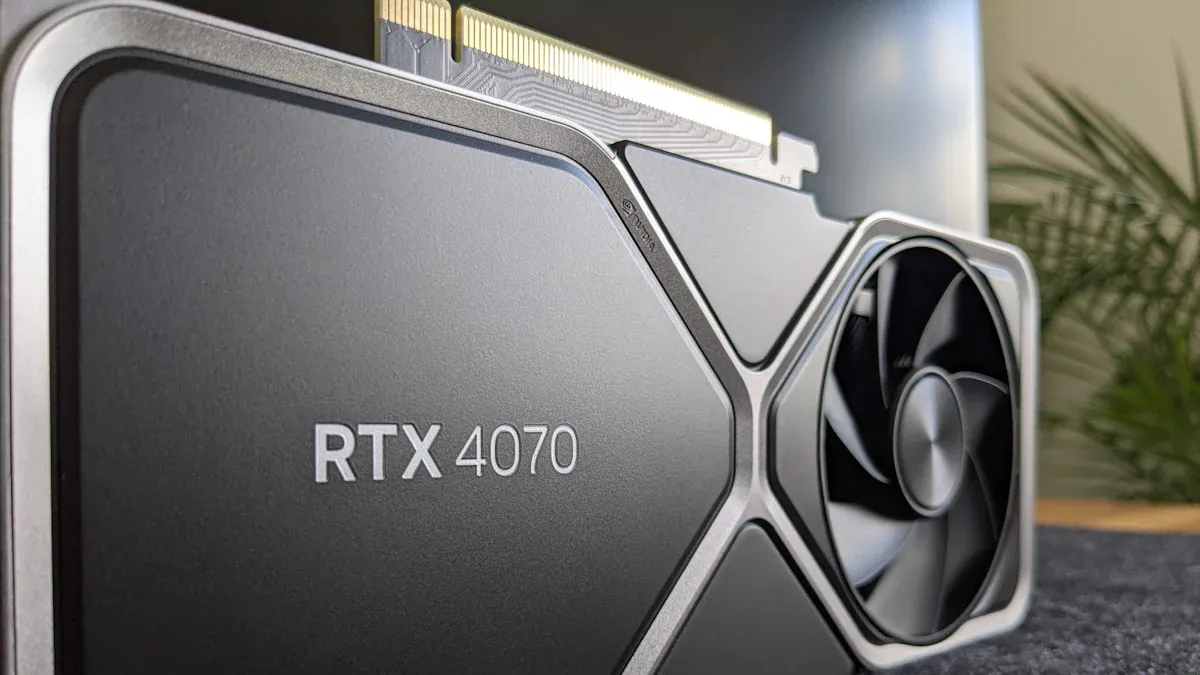
Image Source: unsplash
Although NVDA’s stock price is already at a high level, the momentum supporting its continued growth remains strong. Investors are optimistic about its future primarily based on the following core advantages.
Absolute Leadership in AI and GPUs
NVIDIA holds an undisputed leadership position in artificial intelligence (AI) and graphics processing units (GPUs). This advantage is not only reflected in hardware performance but also in its powerful software ecosystem.
First, NVIDIA dominates the hardware market with a near-monopoly share. Data shows that in the discrete GPU market for AI model training and data centers, NVIDIA’s market share reaches 80% to 95%. This dominant position gives it significant pricing power and economies of scale.
Market research firm Jon Peddie Research noted that in Q2 2025, NVIDIA’s share in the discrete GPU sector reached an astonishing 94%.
Its latest GPU products also continue to lead competitors in performance.
| GPU Model | Memory Bandwidth (GB/s) | 1080P Gaming Performance (Relative %) | 4K Scaling (Relative %) |
|---|---|---|---|
| NVIDIA RTX 5060Ti | 448.0 | 137% | 130% |
| AMD 9060XT | 322.3 | 128% | 122% |
| Intel Arc B580 | 456.0 | 100% | 100% |
Second, NVIDIA’s true moat is its CUDA (Compute Unified Device Architecture) software platform. CUDA provides developers with a complete software stack to leverage GPUs for general-purpose computing. Semiconductor analyst Linley Gwennap believes that “software remains the stumbling block for all companies hoping to challenge NVIDIA’s leadership in AI.”
The CUDA ecosystem has formed strong network effects.
- Deep Industry Integration: Professional software such as Adobe Creative Cloud, Autodesk Maya, MATLAB utilizes CUDA acceleration, covering creative, engineering, and scientific research fields.
- Developer Ecosystem: Over 1,600 generative AI companies choose to develop on NVIDIA’s platform. Developers are accustomed to CUDA’s programming environment, and migrating to other platforms is costly.
- Historical Foundation: Starting from 2012 when AlexNet used NVIDIA GPUs to kick off the deep learning revolution, CUDA became the default standard in AI.
This deep “hardware + software” integration builds an insurmountable competitive barrier for NVDA.
Strong and Stable Financial Performance
NVIDIA’s leadership directly translates into astonishing financial data. The company not only has rapid revenue growth but also outstanding profitability.
Observing recent quarterly financial reports clearly shows its growth trajectory.
| Metric | Q4 FY25 | Q3 FY25 | Q4 FY24 |
|---|---|---|---|
| Revenue (million USD) | 39,331 | 35,082 | 22,103 |
| Net Profit (million USD) | 22,091 | 19,309 | 12,285 |
| Diluted EPS (USD) | 0.89 | 0.78 | 0.49 |
Even more noteworthy is its extremely high gross margin. In the most recent fiscal quarter, NVIDIA’s non-GAAP gross margin reached 73.6%. This figure far exceeds most hardware companies, reflecting its strong pricing power and technological added value in the market.
Despite the high stock price, from a valuation perspective, NVDA may be more attractive than imagined. Recently, multiple analysis firms like Citibank have issued “buy” ratings. Compared to other semiconductor giants, its valuation also has relative advantages.
| Company Name | Forward P/E Ratio |
|---|---|
| Advanced Micro Devices (AMD) | 74.2 |
| Broadcom | 53 |
| NVIDIA | 39 |
The lower forward P/E indicates that the market expects very rapid future earnings growth, potentially digesting the current high valuation.
Emerging Markets and Future Growth Drivers
NVIDIA’s growth story is far from over. The company is actively expanding into multiple emerging markets, which are expected to provide new growth momentum in the coming years.
1. Blackwell New Platform and AI Inference Market
In March 2024, NVIDIA released the next-generation Blackwell platform, aimed at consolidating its advantages in AI training and aggressively entering the AI inference market.
- Performance Leap: The Blackwell architecture delivers up to 30x performance improvement in large language model (LLM) inference workloads compared to the previous H100 generation, while reducing energy consumption and costs by up to 25x.
- Technological Innovation: Features 208 billion transistors and includes a second-generation Transformer Engine and fifth-generation NVLink high-speed interconnect.
The AI inference market is projected to reach $253.75 billion by 2030. With the Blackwell platform’s powerful performance, NVIDIA is poised to dominate this massive market.
2. Synergistic Growth in Networking Business
Growth in the data center business is not limited to GPUs. Through the acquisition of Mellanox, NVIDIA has successfully integrated high-speed networking solutions (such as InfiniBand and Spectrum-X Ethernet) deeply with its GPU products. The latest earnings show its data center networking business achieved quarterly revenue of $7.25 billion, up 97.7% year-over-year, demonstrating strong cross-selling capabilities.
3. Metaverse (Omniverse) and Automotive Business
NVIDIA is leveraging its expertise in graphics and simulation to expand into the metaverse and automotive markets.
- Omniverse Platform: This is a collaborative platform for creating and operating “digital twins.” For example, BMW Group has adopted Omniverse to design and optimize its factory manufacturing processes.
- Automotive Business: Through the NVIDIA DRIVE platform, the company provides full-stack solutions from chips to software for autonomous vehicles and uses Omniverse for virtual testing and validation.
Although these emerging businesses currently account for a small portion of total revenue, they represent enormous long-term growth potential, ensuring the company has new stories to tell after the AI wave.
Potential Risks of Investing in NVDA (Disadvantages)

Image Source: pexels
Although NVIDIA has a bright outlook, any investment decision must carefully evaluate its potential risks. For NVDA, behind its astonishing gains lie challenges that cannot be ignored. Investors need to focus on the following aspects.
Overvaluation and Market Expectation Pressure
NVIDIA’s current high stock price has already priced in extremely high growth expectations for the coming years. This double-edged sword means the company must continuously deliver performance far above market averages; otherwise, the stock price is highly susceptible to sharp corrections.
High Valuation Warning: NVIDIA’s forward price-to-earnings ratio (forward P/E) is currently around 35.9x, significantly higher than the semiconductor industry average of 26.47. This indicates a very high premium relative to earnings capacity.
The market has near-demanding growth expectations for the company. Analysts generally predict astonishing growth rates in the coming years.
| Fiscal Year | Revenue Growth Expectation | Earnings Growth Expectation |
|---|---|---|
| 2027 | 48% | 59% |
This expectation places enormous performance pressure on the company. Any quarterly revenue or profit growth that slightly slows, or even just “meets” rather than “exceeds” expectations, can be interpreted by the market as negative, triggering violent stock price fluctuations.
Macroeconomic and Geopolitical Tensions
As a global tech giant, NVIDIA’s business is deeply affected by the macroeconomic environment and complex geopolitical situations.
- Macroeconomic Uncertainty: The Federal Reserve’s interest rate policy is a key variable affecting tech stock valuations. Lower interest rate environments typically favor growth stocks like NVIDIA. However, if inflation data fluctuates, causing the Fed to delay rate cuts or unexpectedly hike rates, it will pressure the entire market, especially high-valuation stocks. Traders’ changing expectations for Fed rate cuts directly influence market sentiment and stock performance.
- Geopolitical and Export Controls: U.S.-China trade frictions pose direct operational risks to NVIDIA. U.S. government export controls on advanced AI chips have severely impacted NVIDIA’s sales in mainland China. For example, sales of the company’s customized H20 chip for the Chinese market have been hindered. At the same time, decisions on whether to allow sales of next-generation downgraded chips (such as B30A) to China are full of uncertainty, directly affecting a significant potential revenue source.
- Antitrust Regulatory Scrutiny: As the company’s market position strengthens, it faces stricter scrutiny from global regulators. The U.S. Department of Justice launched an antitrust investigation into NVIDIA in 2024, examining its business practices. Although the European Commission previously approved some acquisitions, any future potential antitrust lawsuits could consume substantial company resources and challenge its business model.
Intensifying Market Competition and Over-Reliance
NVIDIA’s dominant position in AI chips is not unassailable. Competition is quietly intensifying from two dimensions.
1. Direct Competition from Peers
Major competitor AMD is catching up aggressively, with its new products already capable of rivaling or surpassing NVIDIA in specific performance metrics.
| Feature/GPU | AMD Instinct MI355X | NVIDIA B200 |
|---|---|---|
| Memory Size | 288 GB HBM (60% more than B200) | 192 GB HBM |
| FP64 Throughput | Approx. 790 TFLOPS (twice B200) | Approx. 37-40 TFLOPS |
| Pricing Strategy | Expected lower price, higher “tokens per dollar” | Maintains high pricing with mature ecosystem |
AMD is actively capturing market share by offering competitive pricing and performance advantages in specific workloads (such as ultra-large model inference). Although NVIDIA’s CUDA ecosystem remains a strong moat, AMD’s hardware advancements cannot be underestimated.
2. “In-House Development” Trend from Major Customers
Another major risk for NVIDIA comes from its largest customers—cloud giants like Google, Amazon, and Microsoft. These companies are heavily investing in developing their own AI chips to reduce costs and improve efficiency in specific scenarios.
Amazon claims that using its in-house Inferentia chip for AI inference can save up to 50% in costs compared to GPUs. Google’s TPU and Microsoft’s Maia chips are also designed to provide more cost-effective and energy-efficient solutions for their cloud platforms.
This trend means NVIDIA may face reduced demand from its largest customer base in the future. Although these companies will still purchase large quantities of NVIDIA GPUs in the short term, in the long run, this over-reliance on a few major customers poses potential instability.
Historical Cyclical Volatility in Gaming Business
Before the data center business shone brightly, gaming was NVIDIA’s pillar. Although its revenue share has declined, it remains an important part of the company, with inherent cyclical volatility introducing uncertainty to overall revenue.
Historical data shows that the gaming hardware market is influenced by multiple factors such as new game releases, console cycles, and macroeconomic consumption power, exhibiting clear fluctuations. For example, the company’s gaming revenue peaked at $3.62 billion in May 2022 before rapidly falling to $1.574 billion in October of the same year.
Although the PC gaming hardware market is optimistic long-term, projected to reach $85.03 billion by 2035, emerging trends like cloud gaming may also change the market landscape, reducing players’ demand for expensive local hardware. This cyclicality and structural change add variables to the stability of this business segment.
In summary, NVIDIA is undoubtedly a core asset in the AI era with broad long-term prospects. However, its high valuation and macroeconomic uncertainties also bring significant short-term volatility risks. Different strategies can be considered for different investors:
- Long-Term Investors: Focus on the long-term growth potential of the AI market and consider using dollar-cost averaging for phased entry.
- Existing Holders: Research using protective put options or collar strategies to hedge downside risk.
Tip: Investors can execute related operations through platforms like [Biyapay]
(https://www.biyapay.com/en).
Tip: If your focus is keeping the workflow “verify info → translate funding cost → execute” clean, you can start with BiyaPay’s Stock Info Search to check NVDA’s basic details and price context, then use the FX Rate Converter to translate your funding currency into an estimated USD cost—useful when planning staged entries or DCA sizing. Once your cadence is set, you can Register and go via the Trading Entry to execute the plan.
BiyaPay positions itself as a multi-asset wallet across payments, investing, trading, and cash management, supporting conversions between multiple fiat currencies and digital assets; when the article touches on trust and compliance considerations, you can also reference its regulatory footprints such as U.S. MSB registration and New Zealand FSP registration, and optionally check the Event Center for any product guidance entries so tooling doesn’t become another moving part.
Ultimately, any investment decision regarding NVDA must be based on individual independent judgment and risk tolerance.
FAQ
Is It Too Late to Buy NVIDIA Now?
NVIDIA’s stock price has already reflected extremely high growth expectations, with significant short-term volatility risk. Long-term investors can focus on its long-term value but must carefully assess personal risk tolerance. Chasing highs directly may face correction pressure.
Will AMD and Cloud Providers’ In-House Chips Threaten NVIDIA’s Position?
Competition is indeed intensifying. AMD is catching up in hardware performance, and major customers’ in-house chips aim to reduce costs. However, NVIDIA’s powerful CUDA software ecosystem forms an insurmountable moat, and its leadership remains solid in the short term.
Why Is the CUDA Ecosystem So Important?
CUDA is the software bridge connecting hardware and developers. It has a massive user base and mature development tools. The high cost of migrating developers to other platforms strengthens NVIDIA’s market dominance through strong network effects.
How to Invest in NVIDIA Stock?
Investors can open an account through a compliant securities brokerage platform. After completing account opening and funding, trade during U.S. stock hours using the ticker NVDA.
*This article is provided for general information purposes and does not constitute legal, tax or other professional advice from BiyaPay or its subsidiaries and its affiliates, and it is not intended as a substitute for obtaining advice from a financial advisor or any other professional.
We make no representations, warranties or warranties, express or implied, as to the accuracy, completeness or timeliness of the contents of this publication.
Related Blogs of

Enterprise Overseas Payroll Compliance and Tax Planning: How to Use Multi-Asset Payroll Platforms to Reduce Cross-Border Employment Costs?


Virtual Card Binding to AWS/GCP for AI Agent Deployment Frequently Flagged by Risk Control? Compliance Card Opening Guide to Avoid Pitfalls


Capital Preparation in Early Stages of Cross-Border M&A: How Enterprises Safely Transfer Millions in USD Deposits to Overseas Trust Escrow Accounts?


Patreon/OnlyFans and Other Overseas Creator Platforms Payout: Ultimate Tricks to Bypass Domestic Bank Forex Review for Withdrawal

Choose Country or Region to Read Local Blog
 Australia
 Austria
 Belgium
 Canada
 Cyprus
 Czech Republic
 Denmark
 Estonia
 Finland
 France
 Germany
 Greece
 Hong Kong
 India
India Indonesia
 Ireland
 Italy
Italy Japan
Japan Latvia
 Lithuania
 Luxembourg
 Malaysia
 Malta
Malta Morocco
 Nepal
Nepal Netherlands
 New Zealand
 Norway
 Pakistan
 Philippines
 Poland
 Portugal
 Romania
 Singapore
 Slovakia
 Slovenia
 South Africa
 South Korea
 Spain
Spain Sweden
 Thailand
 The United States
 Turkey
 United Arab Emirates
 United Kingdom
 Vietnam
Contact Us




BIYA GLOBAL LLC is registered with the Financial Crimes Enforcement Network (FinCEN), an agency under the U.S. Department of the Treasury, as a Money Services Business (MSB), with registration number 31000218637349, and regulated by the Financial Crimes Enforcement Network (FinCEN).
BIYA GLOBAL LIMITED is a registered Financial Service Provider (FSP) in New Zealand, with registration number FSP1007221, and is also a registered member of the Financial Services Complaints Limited (FSCL), an independent dispute resolution scheme in New Zealand.