5 Essential Tax Reporting Tips for Transferring Money from China to the US



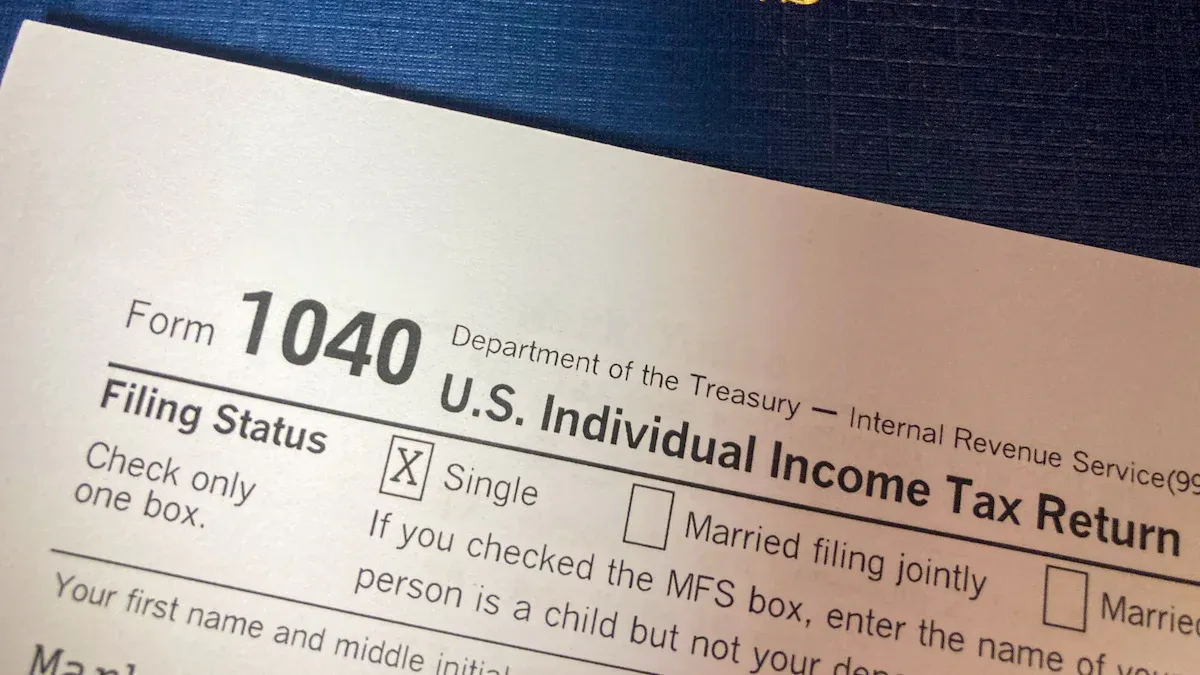
Image Source: pexels
When handling a transfer of funds from China remittance to the US, the good news is that this gift is generally not subject to income tax. However, the real key lies in the reporting obligation. Once the amount exceeds a specific threshold, you must report it to the Internal Revenue Service (IRS).
Please note: Reporting does not mean paying tax, but forgetting to report can lead to unexpected penalties. Mastering the correct compliance techniques is the first step to protecting the safety of your funds.
Key Takeaways
- Clearly identify the funds as a “gift” rather than “income” — this is very important. You need to prepare supporting documents, such as a gift letter and transfer records.
- If gifts received from the same person exceed $100,000 in a single year, you must report them to the IRS. Reporting does not mean paying tax.
- Do not split large amounts into small remittances — this is called “structuring.” Doing so is illegal and can result in severe penalties.
- Keep all key documents related to the gift, preferably permanently. These documents can help you handle IRS audits.
- For complex tax issues, consult a professional Certified Public Accountant (CPA) promptly. They can help you avoid mistakes and penalties.
If you’re planning a cross-border transfer, it helps to document not only whether a filing threshold is triggered, but also the FX rate and transfer costs tied to each step—then store those records together with your gift letter and bank receipts. In practice, you can use BiyaPay’s free FX rate converter & comparison tool to capture reference rates at the time of the transfer, and cross-check fees and delivery methods via the Send Money page, so the “amount, timing, and path” remain consistent in your records.
BiyaPay is positioned as a multi-asset wallet for cross-border payments, investing, trading, and fund management, supporting conversions between multiple fiat currencies and digital currencies. When trust and compliance are part of your due diligence, you can also review its licensing disclosures (including US MSB and New Zealand FSP) on the official website and keep an eye on updates through the Event Center.
Tip 1: Clearly Define the Gift Nature to Avoid Income Misclassification
When handling funds transferred from China to the US, the primary task is to clearly define the nature of the money. The IRS strictly distinguishes between “gifts” and “income.” If funds are classified as income, you need to pay tax on them; if correctly categorized as gifts, the recipient generally does not need to pay income tax.
What is a Foreign Gift
According to IRS rules, a foreign gift refers to funds or property given to you by a non-US person (such as parents living in China) out of generosity with no expectation of any return. If the money is compensation for services or goods you provided, it will be treated as taxable income rather than a gift.
Common Misconception Reminder You need to understand that the definition of foreign gifts is broader than many people think:
- Non-cash assets also count as gifts: Gifts are not limited to cash. Foreign real estate or company shares are also included in the gift amount.
- Funds do not need to enter the US: Even if the gifted funds remain in an overseas bank account and are not transferred to the US, as long as you are a US tax resident, you still have a reporting obligation.
- Reporting does not mean paying tax: Receiving foreign gifts generally does not generate tax liability, but forgetting to report (such as filing Form 3520) can result in substantial penalties.
How to Prepare Gift Proof
To prove to the IRS that the funds are a gift, you should prepare a complete set of supporting documents in advance. This not only allows you to respond calmly to IRS inquiries but is also key to ensuring fund safety. Here is a checklist of essential documents:
- Gift Letter A written statement signed by the donor. The letter should clearly state the donor’s name and address, your name, the gift amount, the gift date, and explicitly declare that the funds are a gratuitous gift with no expectation of return.
- Fund Transfer Records Keep complete bank transfer vouchers. These records should clearly show the funds being transferred out from the donor’s account (such as a bank account in Hong Kong) and ultimately into your account, forming a complete fund chain.
- Communication Records Save communication records with the donor regarding this gift, such as email or instant messaging (like WeChat) screenshots. These everyday conversations can serve as supporting evidence to prove the true intent of the gift.
Preparing these documents establishes a solid “non-income” proof for the gifted funds you receive.
Tip 2: For Transfers from China to the US, Watch the $100,000 Reporting Threshold

Image Source: unsplash
When you receive a gift from China, one key figure determines whether you need to take action with the IRS: $100,000. Once the total gifts from the same person exceed this threshold in a tax year, you must proactively file an information return with the IRS. This is done by submitting a form called Form 3520.
Form 3520 Reporting Threshold
You need to clearly understand the specific conditions that trigger Form 3520 reporting. When you receive total gifts from a non-US person (such as parents living in China) exceeding $100,000 in a tax year, the reporting obligation arises.
Please note the following points:
- Source: The gift must come from a “non-US tax resident” individual or estate.
- Amount: The reporting threshold is “exceeding” $100,000.
- Cumulative Calculation: This limit is cumulative for the year. Even if received in multiple installments, as long as the total gifts from the same person exceed $100,000 in one year, you need to report. For example, receiving three $40,000 remittances in a year (totaling $120,000) requires reporting.
When handling transfers from China to the US, closely watching this reporting threshold is the first step to compliance.
Understanding Form 3520: Reporting Does Not Mean Paying Tax
Many people feel nervous upon hearing “report to the IRS,” worrying about having to pay tax. This is a common misconception. Form 3520 is an information return, and its primary purpose is to disclose to the IRS the fact that you received a large foreign gift — it does not directly generate tax.
Core Concept: Reporting ≠ Paying Tax Filing Form 3520 is simply fulfilling the disclosure obligation to maintain transparency between you and the IRS. As long as you can prove the funds are a gift, you generally do not need to pay income tax on the money.
However, never ignore reporting just because no tax is due. The consequences of failing to report on time are very serious. The IRS imposes substantial penalties for unreported gifts, up to 25% of the unreported gift amount, with a minimum penalty of $10,000. This means an unreported $120,000 gift could result in a $30,000 penalty.
Filing Form 3520 on time and accurately is the best way to protect yourself from massive penalties.
Tip 3: Beware of “Splitting Up,” Avoid Structuring
To avoid bank and government scrutiny, some people think of a “clever” method: splitting a large sum into multiple small remittances. This practice is called “structuring” and is strictly targeted by the IRS and the US financial system. Even if your funds are completely legitimate, this action itself can land you in serious legal trouble.
Bank’s $10,000 Reporting Rule
You need to know that under the US Bank Secrecy Act, any financial institution handling cash transactions exceeding $10,000 in a single day must submit a document called a “Currency Transaction Report” to the Financial Crimes Enforcement Network (FinCEN).
The purpose of this rule is to help the government track large fund flows to combat money laundering, terrorist financing, and other illegal activities. Although the report is submitted by the bank, it puts you and your transactions under scrutiny. Modern banks’ anti-money laundering (AML) systems are highly advanced — they not only monitor single transactions but also use artificial intelligence (AI) for pattern analysis and track cumulative transactions across accounts over time to identify multiple related deposits.
Severe Consequences of “Structuring”
“Structuring” refers to deliberately splitting a large transaction into multiple small ones to avoid the $10,000 reporting threshold. For example, if you plan to receive a $50,000 gift, you have your family in China send five remittances of $9,900 each. This is a typical case of structuring.
Serious Warning: Intent is Key Even if the funds transferred from China to the US are legitimate gifts, as long as your intent in splitting the remittances is to avoid the bank filing a CTR report, the action itself constitutes a federal crime. The legality of the funds is irrelevant.
The consequences of this action are far more severe than you might imagine. Once identified as structuring, you may face:
- Substantial Civil Penalties: Penalties can reach up to the total amount you attempted to structure. That is, a $50,000 structured transaction could lead to a $50,000 penalty.
- Criminal Charges: In serious cases, structuring can be treated as a criminal offense, potentially resulting in imprisonment and higher penalties.
- Asset Freezing and Forfeiture: Banks or the government have the right to freeze or even seize funds suspected of structuring.
Instead of taking huge risks to “split up” the funds, it is far safer and simpler to receive the money in one lump sum and file Form 3520 as required. Compliant reporting is much safer and easier than trying to evade rules.
Tip 4: Prepare Key Documents to Handle IRS Audits
Image Source: pexels
The IRS audit system is highly sophisticated, and unreported foreign bank accounts or large fund transfers are common audit triggers. Therefore, you cannot simply be satisfied with filing the form — you must prepare a complete set of supporting documents to handle any potential inquiries. Proactive preparation is far better than passive response.
Essential Document Checklist
When the IRS questions your Form 3520, they will require you to provide evidence proving the funds are indeed a gift. You need to prepare the following documents in advance to form a complete chain of evidence:
- Gift Letter or Affidavit of Gift (Gift Letter or Affidavit of Gift): This is the core document. It should be signed by the donor and detail the relationship between both parties, the gift amount, the date, and explicitly state that this is a gratuitous gift with no expectation of return.
- Complete Fund Chain Proof: You need to provide clear bank statements. These documents should show the full process of funds being transferred from the donor’s overseas account (such as a bank account in Hong Kong) and ultimately deposited into your US account.
- Donor’s Proof of Funds Source: To increase credibility, prepare documents proving the donor’s ability to make this gift, such as income statements, property sale documents, or business records. This can effectively counter IRS suspicions that the funds are your unreported income.
- Valuation Documents for Non-Cash Assets: If the gift received is non-cash assets like real estate or stocks, you need a professional valuation report issued by a qualified appraiser.
Please remember: In a tax audit, the burden of proof is on you. Failure to provide sufficient documents to support your filing can lead to penalties and deeper scrutiny.
Document Retention Period
How long do these documents need to be kept? The answer may be longer than you think. While the IRS audit period for ordinary tax records is usually 3 years, the rules for Form 3520 are much stricter.
The key is that the statute of limitations starts depending on whether you filed a complete and accurate form.
- If filed correctly: The IRS has 3 years to audit your form.
- If not filed or seriously incomplete: The statute of limitations never starts. This means the IRS can audit and impose penalties 10, 20, or even more years later.
Most Critical Warning For unfiled Form 3520, the statute of limitations is permanent. The 3-year countdown only begins once you file a complete and accurate form.
Therefore, the safest practice is to permanently retain all documents related to large foreign gifts. Digitizing and securely storing all files is the strongest tax safety barrier you can build for yourself.
Tip 5: Seek Professional Help to Build a Tax Safety Net
Although you have mastered the first four tips, the complexity of tax compliance when handling large cross-border funds should not be underestimated. Doing it yourself may save some costs, but the price of mistakes will be huge. Therefore, the final and most critical step in building a tax safety net is to seek professional help.
When to Consult a CPA
You do not need to wait for an IRS letter to seek a Certified Public Accountant (CPA). Proactive consultation is far wiser than passive remediation. You should immediately contact a professional tax advisor in the following situations:
- Before receiving the first large gift: Consulting a CPA before the first transfer exceeding $100,000 can help you plan the entire process.
- When annual cumulative amount approaches the threshold: If you receive multiple gifts in a year nearing $100,000 total, a CPA can ensure compliant reporting.
- Involving non-cash assets: If you receive real estate, stocks, or other non-cash assets, you need a CPA to handle complex valuation and reporting issues.
- If violations have already occurred: If you have forgotten to file Form 3520 or engaged in structuring, do not delay. Seeking professional help immediately is the best way to mitigate penalties.
The Core Value of a CPA
An excellent CPA provides value far beyond filling out a form. They are your tax strategist and protector.
First, they help you get it right from the start. When choosing a CPA, you can assess their expertise by asking questions:
- “What forms do I need to file for foreign gifts I receive?”
- “If I forget to file Form 3520, what are the consequences? How will you help me apply for penalty abatement?”
- “What support can you provide during an IRS audit?”
Second, if problems arise, the core value of a CPA becomes immediately apparent. If you face penalties for failing to file Form 3520, an experienced CPA can prepare a strong “reasonable cause statement” for you and represent you in communications and appeals with the IRS. They will analyze your specific situation, develop the best remediation strategy, potentially avoiding or substantially reducing penalties. Throughout the audit process, the CPA will handle all IRS communications and paperwork, saving you time and money while reducing enormous psychological stress.
When transferring money from China to the US, the key is compliant reporting, not paying tax. Remember, gifts exceeding $100,000 must be reported via information return Form 3520. Forgetting to report or late filing can result in penalties up to 25% of the gift amount.
Your Best Strategy Compliance is your best strategy. You need to:
- Clearly prove the gift nature
- File reports on time
- Permanently retain documents
- Avoid “splitting up”
Before handling large funds, be sure to consult a professional tax advisor to lock in your financial safety. If you found this article helpful, please share it with friends who need it.
FAQ
If the gift I receive is $99,000, do I need to report it?
If the annual total does not exceed $100,000, you do not need to file Form 3520. However, note that this threshold is cumulative for the year. If the total gifts from the same person exceed the amount, reporting is required.
If the gift comes from a company in China, are the rules the same?
The rules are different. Gifts from foreign companies have a lower reporting threshold ($18,567 in 2023). You also need to report via Form 3520. Consult a professional tax advisor before handling such gifts.
I forgot to file Form 3520 — what should I do now?
Act immediately, do not delay. You should contact a professional CPA right away to start the late filing process. With reasonable cause, you may apply for penalty abatement. Proactive remediation is the best strategy to reduce penalties.
Does the donor in China need to pay tax on this remittance?
US gift tax generally does not apply to non-US tax residents. Whether your donor in China needs to pay tax depends on Chinese tax laws. It is recommended they consult a local tax expert for accurate information.
*This article is provided for general information purposes and does not constitute legal, tax or other professional advice from BiyaPay or its subsidiaries and its affiliates, and it is not intended as a substitute for obtaining advice from a financial advisor or any other professional.
We make no representations, warranties or warranties, express or implied, as to the accuracy, completeness or timeliness of the contents of this publication.
Related Blogs of

Zelle Wire Transfer or ACH? Clearing Up the Confusion

What Are the Daily Limits for Chase Accounts?

Tap and Go A Beginner's Guide to Cardless ATM Withdrawals


How to Fill Out a CVS Money Order A 2026 Guide

Choose Country or Region to Read Local Blog
 Australia
 Austria
 Belgium
 Canada
 Cyprus
 Czech Republic
 Denmark
 Estonia
 Finland
 France
 Germany
 Greece
 Hong Kong
 India
India Indonesia
 Ireland
 Italy
Italy Japan
Japan Latvia
 Lithuania
 Luxembourg
 Malaysia
 Malta
Malta Morocco
 Nepal
Nepal Netherlands
 New Zealand
 Norway
 Pakistan
 Philippines
 Poland
 Portugal
 Romania
 Singapore
 Slovakia
 Slovenia
 South Africa
 South Korea
 Spain
Spain Sweden
 Thailand
 The United States
 Turkey
 United Arab Emirates
 United Kingdom
 Vietnam
Contact Us




BIYA GLOBAL LLC is a licensed entity registered with the U.S. Securities and Exchange Commission (SEC No.: 802-127417); a certified member of the Financial Industry Regulatory Authority (FINRA) (Central Registration Depository CRD No.: 325027); regulated by the Financial Industry Regulatory Authority (FINRA) and the U.S. Securities and Exchange Commission (SEC).
BIYA GLOBAL LLC is registered with the Financial Crimes Enforcement Network (FinCEN), an agency under the U.S. Department of the Treasury, as a Money Services Business (MSB), with registration number 31000218637349, and regulated by the Financial Crimes Enforcement Network (FinCEN).
BIYA GLOBAL LIMITED is a registered Financial Service Provider (FSP) in New Zealand, with registration number FSP1007221, and is also a registered member of the Financial Services Complaints Limited (FSCL), an independent dispute resolution scheme in New Zealand.