Your First Guide to Understanding the NYSE in 2025



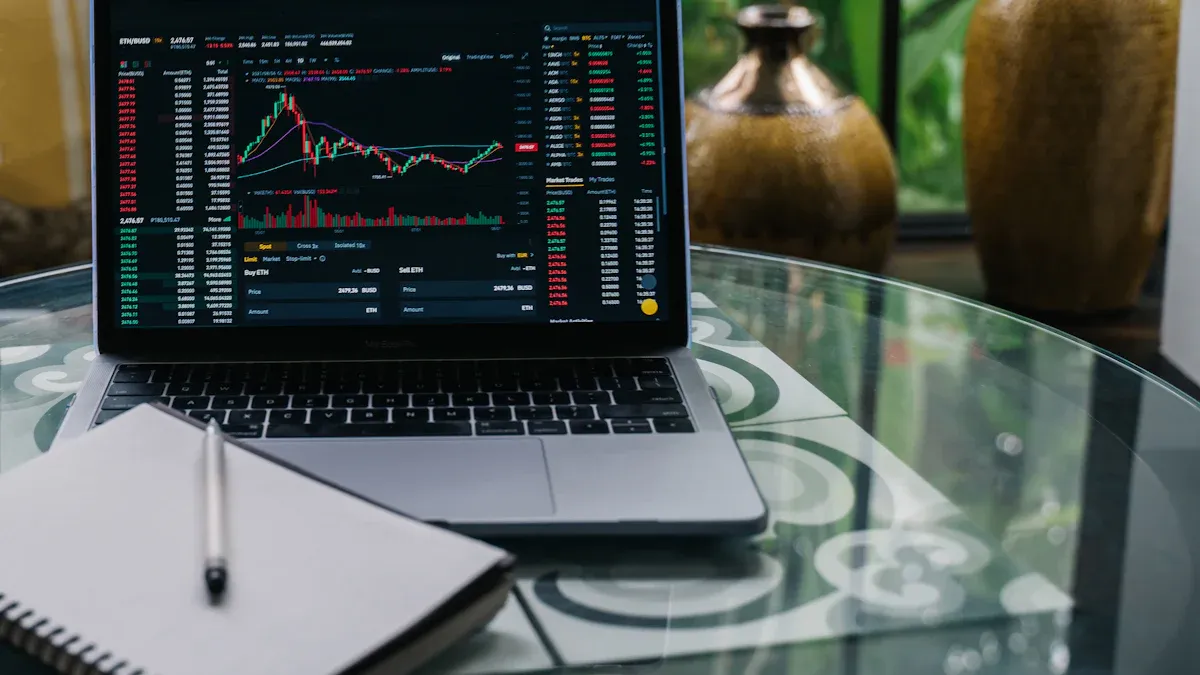
Image Source: pexels
Let’s define NYSE. The New York Stock Exchange is a primary global market where you can buy and sell stocks, which are small ownership pieces of a company. With over 2,400 companies listed, its total market value is more than $30 trillion.
Think of it like a giant, organized market. Instead of fruits or vegetables, people trade company stock.
Today, the NYSE is a hybrid market. It combines its famous physical trading floor with powerful electronic systems. This guide will show you how the stock market works. You can learn to invest and start your investing journey to build wealth. You can invest in stocks to grow your money.
Before you go deeper, it helps to build a simple “NYSE first-aid kit” for beginners: one place to look up a stock, one place to understand the quote, and one place to act only when you’re ready. Start by browsing real NYSE-listed names and their tickers through BiyaPay’s Stock Market page—pick a familiar company and notice how the quote changes during the trading session. If you’re still getting used to the numbers (bid/ask, spread, P/E, volume), keep a glossary open as your decoder; this Stock Quotation Terms glossary makes the quote feel less intimidating and helps you understand what you’re actually seeing.
Once you can read a quote calmly, you’ll make fewer impulsive decisions. And when you’re ready to explore execution across markets (stocks, spot, futures, etc.), you can review BiyaPay’s multi-asset setup on the BiyaPay website so you understand where each product sits in the broader account structure. The goal isn’t to trade more—it’s to see clearer, decide slower, and build a repeatable investing routine.
Key Takeaways
- The NYSE is a global market where you can buy and sell parts of companies. It uses both human traders and electronic systems.
- You can start investing by opening a brokerage account, adding money, and researching stocks. You can choose between market orders and limit orders.
- Smart investing means using strategies like dollar-cost averaging and diversification. This helps manage risk and grow your money over time.
- The NYSE helps companies get money to grow and create new things. It also helps you track the economy through stock indexes.
- Beginners should avoid emotional decisions like panic selling. Instead, focus on a long-term plan to build wealth for your future.
What Is the NYSE and How Does It Work?
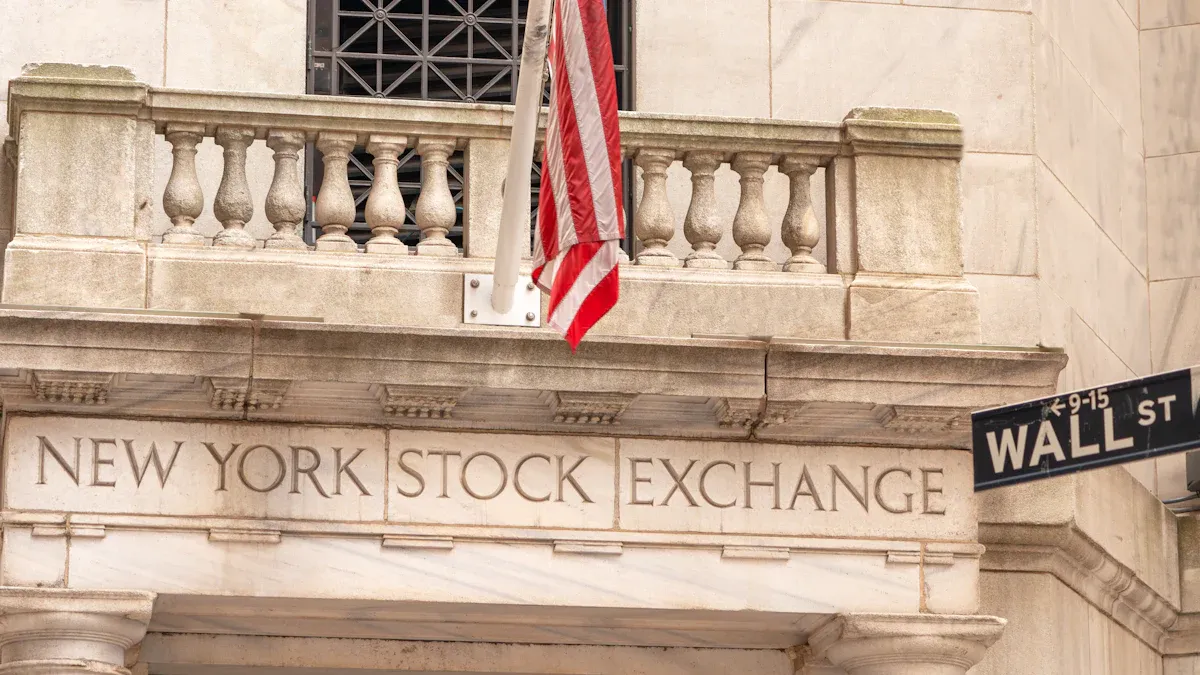
Image Source: unsplash
You now know the New York Stock Exchange is a place to buy and sell stocks. But how does it all come together? Let’s define NYSE operations and the key people who make the stock market function every day. Understanding this system is the next step in your journey.
Define NYSE: Marketplace for Global Companies
The NYSE is not just for American companies. It is a truly global market. Businesses from around the world list their stock here to attract investors like you. This diversity gives you a wide range of investment options. To define NYSE’s reach, look at some of the international companies available.
| Company Name | Country of Origin |
|---|---|
| Accenture plc | Ireland |
| Adecoagro S.A. | Argentina |
| Aluminum Corporation of China Ltd | China |
| Ambev S.A. | Brazil |
| ABB LTD. | Switzerland |
| Advantage Oil & Gas Ltd. | Canada |
The Hybrid Market: Floor vs. Electronic Trading
In 2025, the NYSE uses a “hybrid” system. It combines the famous trading floor at 11 Wall Street with a powerful electronic platform called NYSE Arca.
- On the Floor: Human experts called Designated Market Makers (DMMs) manage the trading of specific stocks. They have a duty to keep the market fair and orderly. A DMM provides liquidity, meaning they are always ready to buy or sell a particular stock. This ensures you can complete your trade smoothly.
- Electronic Trading: Most of the trading volume happens electronically. NYSE Arca is a massive, fast system that matches buy and sell orders in fractions of a second.
These two parts work together. The DMMs step in during complex situations or large trades, adding a human touch to the high-speed electronic market.
A Day of Trading: The Opening and Closing Bells
A trading day on the stock market has a clear start and finish.
The NYSE’s standard trading hours are from 9:30 a.m. to 4:00 p.m. Eastern Time.
The famous Opening Bell at 9:30 a.m. kicks off the day. The Closing Bell at 4:00 p.m. signals the end. This tradition started over a century ago with a gavel. Today, ringing the bell is an honor for company leaders and public figures.
Key Players: Investors, Brokers, and DMMs
Several groups work together in the stock market. To define NYSE’s ecosystem, you must know these players.
- Listed Companies: These are the businesses whose stocks you can buy.
- Retail Investors: This is you! An individual investing their own money for personal goals.
- Institutional Investors: These are large organizations, like pension funds or banks, that invest huge sums of money for their clients.
- Brokers: Your link to the stock market. When you want to buy a stock, your broker takes your order and finds the best place to execute it. They have a duty to get you the best possible price for your trade.
Getting Started With Stock Investing

Image Source: unsplash
Now you understand the structure of the NYSE. The next step is learning how you can participate. This section covers the investing basics. You will learn how to invest in stocks and take your first steps toward building wealth. This knowledge is your foundation for making smart financial decisions.
Understanding Stocks, Tickers, and Spreads
A stock is a share of ownership in a public company. When you buy a company’s stock, you become a part-owner. To trade stocks on the stock market, you need to know their unique code.
A ticker symbol is a short code of letters used to identify a company on a stock exchange. For example, the ticker for Microsoft Corporation is
MSFT.
Ticker symbols were created to make trading faster. In the past, they saved space on the paper ticker tape that printed stock prices. Today, these short codes help computer systems process millions of trades quickly. They also prevent confusion between companies with similar names. Some companies even have multiple tickers for different classes of stock. For example, Berkshire Hathaway has Class A (BRK.A) and Class B (BRK.B) stocks.
When you look up a stock, you will see two prices: a bid price and an ask price. The difference between them is the bid-ask spread.
- Bid Price: The highest price a buyer is willing to pay for a stock.
- Ask Price: The lowest price a seller is willing to accept for that same stock.
The spread is a small transaction cost built into every trade. A smaller spread usually means the stock is traded very actively.
Market Orders vs. Limit Orders
When you decide to buy or sell a stock, you must place an order. For a beginner, the two most common types are market orders and limit orders. Understanding how to invest in stocks requires knowing which order to use.
| Order Type | Execution (When it happens) | Pricing (What you pay) |
|---|---|---|
| Market Order | Immediately | At the current best available market price. |
| Limit Order | Only if your price is met | At your specified price or better. |
A market order is best when you want your trade to happen right away and are less concerned about the exact price. A limit order gives you control over the price but does not guarantee the trade will happen. This is a key part of how to invest in stocks effectively.
How to Invest in Stocks: A Step-by-Step Guide
You are ready to learn how to invest in stocks. The process is more straightforward than you might think. Here is a simple guide to help you place your first trade.
- Choose and Open an Account. Your first step is to open a brokerage account. This is your personal account for buying and selling investments. We will cover how to choose one in the next section.
- Fund Your Account. After you open a brokerage account, you need to add money. You can fund your account by linking your bank account and transferring cash. This money will be used to buy stocks.
- Research Your First Investment. With your account funded, you can decide what to invest in. You might have a company in mind, or you can use your broker’s tools to find the best stocks to buy. You can also invest in an Exchange-Traded Fund (ETF) or a mutual fund. An ETF or mutual fund holds many different stocks, which provides instant diversification and is often less risky than buying a single stock.
- Place Your Order. This is the final step in how to invest in stocks. Find the stock, ETF, or mutual fund you want using its ticker symbol. Decide how much you want to invest. Then, select your order type (a market order is simplest for a beginner) and confirm your purchase.
Congratulations! You now know how to invest in stocks and have a plan to make your first investment.
Choosing a Broker or Robo-Advisor
Your broker is your gateway to the stock market. For beginner investors in 2025, choosing the right platform is important. Here are key factors to consider:
- Low Fees: Look for brokers with zero commission fees for stock trades.
- Mobile App Quality: A good app makes it easy to manage your investments from anywhere.
- Fractional Shares: This feature lets you buy a piece of a stock for as little as $1, even if one share costs hundreds of dollars. This is a great way for a beginner to start.
- Research Tools: Access to educational content and data helps you make informed decisions.
Platforms like Fidelity, Charles Schwab, and Robinhood are known for being beginner-friendly.
You also have another option: a robo-advisor. This is an automated service that builds and manages a portfolio for you based on your goals. This is a great hands-off approach to investing.
| Feature | Traditional Broker | Robo-Advisor |
|---|---|---|
| Human Involvement | You make the decisions and place trades. | An algorithm manages your portfolio automatically. |
| Investment Choices | You can buy individual stocks, ETFs, and more. | You typically invest in a pre-selected list of ETFs. |
| Management | You are in full control of your investments. | A hands-off approach to investing. |
| Best For | A beginner who wants to learn and be active. | A beginner who wants a simple, automated way to invest. |
Ultimately, the right choice depends on how you want to invest. Whether you choose a broker or a robo-advisor, the most important thing is to start your investing journey. Knowing how to invest in stocks is a skill that will serve you for life.
Building Wealth for Retirement and Beyond
Understanding the NYSE is your first step. Now, you can focus on using it for long-term goals like retirement. Smart financial planning helps you build wealth over time. This section shows you how to invest for your retirement.
Smart Investing Strategies for Beginners
A successful investing journey starts with a clear strategy. You do not need to be an expert to make good choices for your retirement. A great strategy for a beginner is dollar-cost averaging. This means you invest a fixed amount of money regularly. This approach can lower your risk over time, especially when the market is down. Your retirement savings can grow steadily with this method.
You can also choose a stock based on its characteristics.
| Differentiator | Value Stock | Growth Stock |
|---|---|---|
| Price | Priced below its perceived value | Priced above its perceived value |
| Dividends | More likely to pay dividends | Usually does not pay dividends |
| Risk | Lower relative risk | Higher relative risk |
A value stock comes from a stable company and may be a good choice for retirement planning. A growth stock has higher growth potential but also more risk. Your financial planning should consider which type of stock fits your goals.
The Power of Compounding
Compounding is how your money makes more money. Your earnings are reinvested to generate their own earnings. Benjamin Franklin demonstrated this power. He left a small fund to two cities that grew into millions over 200 years. This shows how a small investment can become a large retirement fund.
You can estimate compounding with the Rule of 72. Divide 72 by your expected annual return rate. The result is the number of years it will take for your money to double. For example, an investment with an 8% return will double in about 9 years (72 / 8 = 9).
Basic Risk Management and Diversification
Smart investing involves managing risk. Diversification is a key part of this. It means spreading your money across different investments. This helps protect your retirement savings if one stock or sector performs poorly. The goal is to own a mix of assets so a loss in one area can be balanced by gains in another. This is essential for any beginner.
You can diversify your retirement fund across several asset classes:
- Stocks
- Bonds
- Real estate
- A mutual fund or ETF
Avoiding Common Beginner Mistakes
Your emotions can be your biggest enemy in investing. A common beginner mistake is panic selling when the market drops. Another is herd behavior, which is following the crowd without doing your own research. This can lead you to buy a popular stock at its peak.
Chasing “hot tips” is also very risky. These trends are often driven by hype, not solid financial data. This makes the stock very volatile. A beginner should focus on a long-term plan to invest for retirement. Good financial planning helps you avoid these traps and protect your retirement savings. A beginner who stays disciplined can build a strong retirement fund.
The NYSE’s Role in the Global Economy
The New York Stock Exchange is more than just a place to trade. It plays a vital role in the global economy. You can see its influence on economic news and company growth. Understanding this connection helps you see the bigger picture of the stock market.
A Barometer of Economic Health
You often hear news reports about the stock market’s performance. The stock market can act as a barometer for the economy. When the market is doing well, it often signals economic strength. When the market is down, it can suggest economic trouble. However, the stock market and the economy are not the same thing. An index like the S&P 500 tracks the stock performance of 500 large companies. It gives you a snapshot of a key part of the economy.
The table below shows how the S&P 500 and the U.S. economy differ. This helps you understand what the stock market truly represents.
| Feature | U.S. Economy | S&P 500 |
|---|---|---|
| Composition | Includes all U.S. businesses, large and small. | Composed of 500 large U.S. companies. |
| Revenue Sources | Primarily domestic activity and spending. | About 40% of revenue comes from outside the U.S. |
| Valuation Drivers | Driven by GDP growth and employment rates. | Driven by corporate earnings and investor sentiment. |
Fueling Innovation and Company Growth
The NYSE helps companies raise money to grow and innovate. When a private company wants to raise a large fund, it can go public through an Initial Public Offering (IPO). An IPO allows the company to sell its first stock to the public. This process provides a huge injection of cash to fund new projects.
A company can use this new fund for many purposes:
- It gains cheaper access to capital.
- It creates multiple financing opportunities.
- It can issue additional common shares later to fund growth without taking on debt.
Many famous companies used the stock market to fund their expansion. Businesses like Uber and Spotify held IPOs to get the capital they needed to become global leaders. Each new stock listing can bring fresh innovation to the market.
Tracking Performance With Stock Indexes
You can track the performance of the stock market using a stock index. An index is a collection of stocks that represents a section of the market. The Dow Jones Industrial Average (DJIA) and the S&P 500 are two famous indexes. They bundle the prices of many different stocks into one number.
When you hear that the market is “up,” it means the value of a major index has increased. These indexes make it easy to see the overall direction of the stock market. They are an essential tool for every investor. You can even invest in a fund that tracks an index, giving you instant diversification for each stock you own.
You now see the NYSE is an accessible market. Understanding its basics helps you invest for your retirement. A long-term strategy helps anyone invest for their retirement. Your financial goals for retirement are achievable. Your retirement planning starts now. This is key for your retirement. A secure retirement is a great financial goal. Plan your retirement. Your retirement is important. A happy retirement is the goal. Your financial future includes retirement. You can build confidence before you invest real money for your financial future.
Take the Next Step: Explore a “paper trading” account to practice without financial risk. Many brokers offer this feature.
- E*TRADE
- Charles Schwab
- Interactive Brokers
- Webull
FAQ
How much money do I need to start investing?
You can start with a small amount. Many brokers offer fractional shares. This feature lets you buy a piece of a stock for as little as $1. You do not need hundreds of dollars to begin your investment journey.
What is the difference between the NYSE and Nasdaq?
The NYSE uses a hybrid model with human traders and electronic systems. Nasdaq is a fully electronic exchange. The NYSE often lists older, more established companies. Nasdaq is known for listing many technology companies. Both are major U.S. stock exchanges.
What does it mean if a stock is “delisted”?
A delisted stock is removed from the exchange. A company might be delisted if it no longer meets the NYSE’s rules, such as having a very low stock price. This makes the stock much harder to trade.
Is investing in the stock market safe?
All investments carry some risk. Stock prices can go up or down. However, you can manage this risk with smart strategies like diversification. Over the long term, the stock market has historically provided strong growth for patient investors.
*This article is provided for general information purposes and does not constitute legal, tax or other professional advice from BiyaPay or its subsidiaries and its affiliates, and it is not intended as a substitute for obtaining advice from a financial advisor or any other professional.
We make no representations, warranties or warranties, express or implied, as to the accuracy, completeness or timeliness of the contents of this publication.
Related Blogs of

What Are the Daily Limits for Chase Accounts?


Why Is Canada's Country Code 1


The 18 Best Apps to Earn Real Cash This Year

Zelle Wire Transfer or ACH? Clearing Up the Confusion
Choose Country or Region to Read Local Blog
 Australia
 Austria
 Belgium
 Canada
 Cyprus
 Czech Republic
 Denmark
 Estonia
 Finland
 France
 Germany
 Greece
 Hong Kong
 India
India Indonesia
 Ireland
 Italy
Italy Japan
Japan Latvia
 Lithuania
 Luxembourg
 Malaysia
 Malta
Malta Morocco
 Nepal
Nepal Netherlands
 New Zealand
 Norway
 Pakistan
 Philippines
 Poland
 Portugal
 Romania
 Singapore
 Slovakia
 Slovenia
 South Africa
 South Korea
 Spain
Spain Sweden
 Thailand
 The United States
 Turkey
 United Arab Emirates
 United Kingdom
 Vietnam
Contact Us




BIYA GLOBAL LLC is a licensed entity registered with the U.S. Securities and Exchange Commission (SEC No.: 802-127417); a certified member of the Financial Industry Regulatory Authority (FINRA) (Central Registration Depository CRD No.: 325027); regulated by the Financial Industry Regulatory Authority (FINRA) and the U.S. Securities and Exchange Commission (SEC).
BIYA GLOBAL LLC is registered with the Financial Crimes Enforcement Network (FinCEN), an agency under the U.S. Department of the Treasury, as a Money Services Business (MSB), with registration number 31000218637349, and regulated by the Financial Crimes Enforcement Network (FinCEN).
BIYA GLOBAL LIMITED is a registered Financial Service Provider (FSP) in New Zealand, with registration number FSP1007221, and is also a registered member of the Financial Services Complaints Limited (FSCL), an independent dispute resolution scheme in New Zealand.