Taiwan Stock Market Keeps Hitting Record Highs — Are Retail Investors Only Chasing Tops and Panic-Selling Bottoms? Experts Teach You to Replace Fear with Trend



Image Source: pexels
Led by AI champion TSMC, the Taiwan Weighted Index has repeatedly shattered records and officially broken through the 28,000-point milestone. Watching this breathtaking rally, are you also torn between two emotions?
On one hand you suffer from FOMO (fear of missing out) on this once-in-a-lifetime bull run; on the other hand you’re terrified that entering now will trap you at the peak and turn you into the “leek” harvested by the market.
Actually, investment success is never about perfectly timing the absolute top. What you really need is a clear system that makes the trend your friend instead of letting fear drive your decisions.
Key Takeaways
- New all-time highs in the Taiwan market are normal — they signal momentum, not an imminent crash.
- Invest with the trend, especially in a strong market led by quality companies.
- Build a core position using broad-market-cap ETFs to capture long-term growth.
- Use disciplined dollar-cost averaging and buying dips to reduce risk.
- Add defensive assets (high-dividend ETFs or bond ETFs) to stabilize the portfolio.
Record Highs in the Taiwan Market — Crisis or Opportunity?
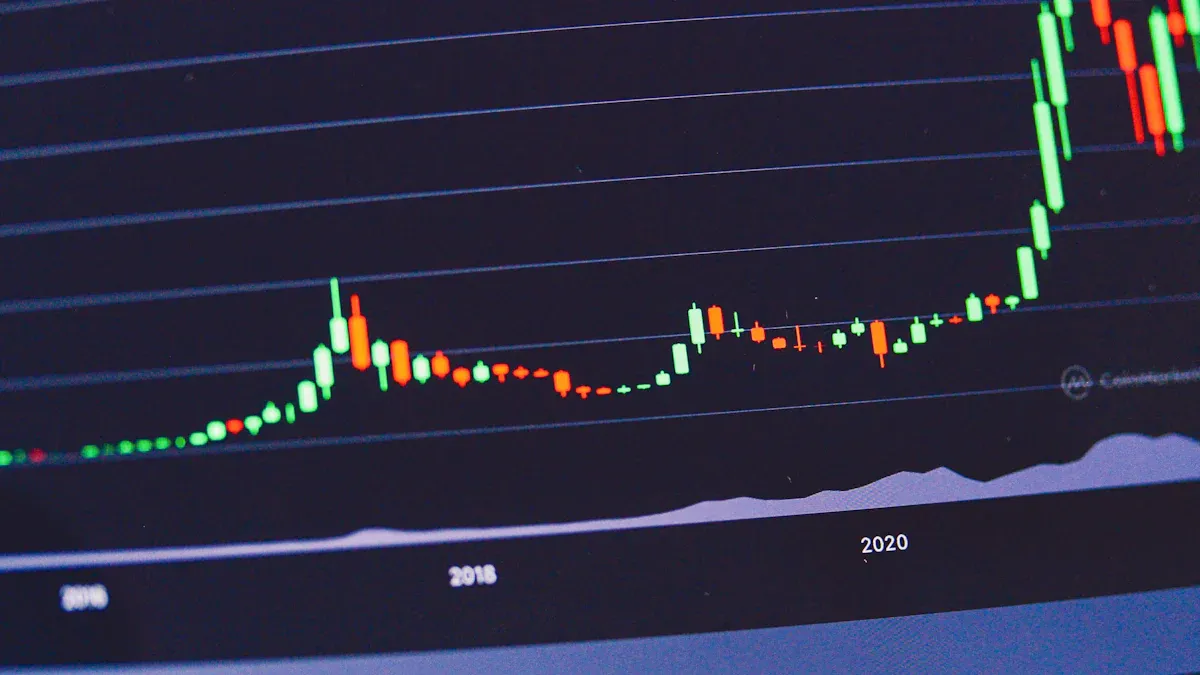
Image Source: unsplash
When the index keeps challenging your imagination every day, it’s perfectly normal to wonder, “It’s already so high — can I still buy?” Many investors sit on the sidelines out of fear and end up missing even bigger gains. In reality, new highs are not necessarily a crisis — once you understand the logic behind them, they become your opportunity.
Let’s first shatter two myths that trap most retail investors:
Myth 1: All-Time High = Ceiling?
Many people instinctively think a new “all-time high” means the market has reached its peak and will only fall from here. But zoom out and you’ll discover an astonishing truth.
Quick knowledge: Understand the “Total Return Index”
The regular Taiwan Weighted Index only reflects price changes, while the Total Return Index reinvests cash dividends — it more accurately shows the real long-term return for investors.
Looking at Taiwan’s Total Return Index, you’ll see an almost relentlessly upward curve. What does this mean?
- Today’s high is tomorrow’s low — the “sky-high” prices you feared ten years ago are now bargain-basement levels.
- New highs are the norm, not the end — in a healthy bull market, the index constantly making new highs is standard operating procedure, not a sell signal.
So stop treating “all-time high” as a stop sign. Treat it as proof the trend is still alive.
Myth 2: Entering now is definitely chasing the top?
“Buy high, sell low” is the cardinal sin — that part is true. But we need to redefine what real “chasing” is. There are two completely different behaviors:
- Dangerous chasing (gambling):
- Buying speculative or weak stocks that skyrocketed on hype with no fundamentals.
- Mindset: “Get in quick, get out richer quick.”
- Risk: Extremely high — once the hype dies, the price can collapse.
- Strategic trend-following:
- Investing in a strong market like the Taiwan index that is led by quality heavyweights and keeps breaking out.
- Mindset: Accept the long-term upward trend and participate gradually.
- Risk: Relatively low — you’re betting on the growth of the entire economy, not one company’s short-term moves.
Expert reminder: The real danger is not buying at a “high,” but fighting the trend by buying falling knives. Riding a strong market that keeps making new highs is like standing on the shoulders of giants (TSMC and other heavyweights) and letting momentum carry you.
Instead of worrying “Am I chasing?” ask yourself: “Is my investment in a long-term uptrend?” If the answer is yes, staying invested is far more important than perfect timing.
Expert Strategy: Three Steps to Beat Fear and Build a Solid Position

Image Source: pexels
After debunking the myths, you don’t need a crystal ball — you need a system that lets you hold with confidence. The core philosophy: Don’t fight the market — join it.
Here are the three expert steps to build a solid system and end the chase-high-cut-low anxiety cycle.
Step 1: Identify the Long-Term Trend → Build Your Core Position
Smart investors ignore short-term noise and focus on the primary trend. You don’t need complicated indicators — one simple tool is enough.
Trend judgment tip: Watch the 200-day moving average (year line)
When the index stays comfortably above its 200-day MA, the market is in a clear long-term uptrend. Think of it as driving on the highway — as long as you’re going the right direction, a few bumps don’t matter.
Once you confirm a long-term bull market, your first job is to establish a core position designed for long-term growth, not short-term trading.
With this investment strategy, if you wish to expand your investment horizon, BiyaPay’s US and Hong Kong stock trading, stock information query services can help you diversify your portfolio and easily engage in stock market trading. Using BiyaPay stock query tools, you can track real-time market trends to make informed investment decisions, further strengthening your long-term investment strategy. You can also take part in investment-related activities through BiyaPay to enhance your market knowledge.
The best vehicle: market-cap-weighted ETFs.
- Why market-cap ETFs? One purchase gives you the largest, most representative basket of Taiwanese companies — you own Taiwan’s economic growth in one click.
- Recommended tickers: Yuanta Taiwan Top 50 (0050) and Fubon Taiwan 50 (006208) — the classic choices tracking Taiwan’s top 50 companies.
Long-term data speaks
From inception to September 2025, 0050’s total-return annualized return is approximately 11.9%.
Simply riding the market with discipline delivers powerful compounding.
Step 2: Disciplined Incremental Investing — Average Cost & Reduce Risk
Even with a great core holding, the biggest fear remains: “What if today is the peak for the next decade?”
The antidote is discipline.
A systematic plan removes timing anxiety. When you follow fixed rules instead of guessing tops and bottoms, emotions stop controlling you.
Expert-recommended deployment tactics
- Dollar-cost averaging as the foundation — Invest a fixed amount on a fixed day every month or week no matter the price level. You buy fewer units when prices are high, more when low — averaging cost beautifully over time.
- Add on dips — Set a rule like “when the index falls >10% from its recent high, deploy an extra lump sum.” Turn corrections into opportunities to buy cheaper.
This turns decision-making from “guessing” into “executing” and dramatically lowers both psychological and financial risk.
Step 3: Add Defensive Assets — Steady Progress
A healthy portfolio needs both offense and defense. Defensive assets serve two critical roles during volatility:
- Psychological buffer — they fall less (or even rise) when stocks crash, stabilizing total portfolio value and preventing panic selling.
- Cash flow generation — regular dividends give you dry powder to buy low and turn crises into opportunities.
Popular defensive ETFs:
| Type | Ticker | Name | Feature |
|---|---|---|---|
| High Dividend | 00713 | Yuanta Taiwan High Dividend Low Vol | High yield + low volatility |
| High Dividend | 00918 | Cathay Taiwan Select High Fill | Focus on strong dividend-fill stocks |
| Bond | 00710B | Fuh Hwa 1-5Y High Yield Bond | Short duration → lower interest-rate risk |
Allocate 10–30% to these defensive assets — it’s like buying insurance for your portfolio. You may not grow the fastest, but you’ll go the farthest.
Facing a Taiwan market that keeps hitting new highs, remember these three mantras:
- Core position — use market-cap ETFs to ride the long-term trend
- ⏳ Disciplined deployment — average cost and reduce anxiety
- Defensive allocation — add stability so you can hold comfortably
Investment success has never been about catching the exact top or bottom — it’s about following your system and staying invested.
“The stock market is a device for transferring money from the impatient to the patient.” — Warren Buffett
Let go of peak-fear, take action today! Build your own system and let time become your strongest ally as you steadily grow wealth. ?
FAQ
I’m a small investor with limited capital — can I still participate?
Absolutely! Many brokers offer dollar-cost averaging plans — you can start investing in 0050 with as little as NT$1,000–3,000 per month. The key is to take the first step and let small money compound over time.
What if the market crashes right after I invest?
That’s exactly why we use incremental investing. When prices fall, your fixed amount buys more units, lowering your average cost. Trust the system, don’t panic-sell — the long-term trend is still up.
I’m already profitable — should I sell some?
Our strategy is long-term holding to capture market growth, not short-term trading. Frequent trading often makes you miss the biggest up days. Focus on disciplined buying instead of guessing sell points.
0050 vs 006208 — which should I choose?
They track the same index with nearly identical holdings. The main difference is 006208 has a slightly lower expense ratio. For long-term holders the difference is minor — just pick one and start executing your plan.
*This article is provided for general information purposes and does not constitute legal, tax or other professional advice from BiyaPay or its subsidiaries and its affiliates, and it is not intended as a substitute for obtaining advice from a financial advisor or any other professional.
We make no representations, warranties or warranties, express or implied, as to the accuracy, completeness or timeliness of the contents of this publication.
Related Blogs of

Why Is Canada's Country Code 1


SoFi Checking and Savings A Deep Dive Review


The Easiest Way to Find the Code for Calling France


The 18 Best Apps to Earn Real Cash This Year
Choose Country or Region to Read Local Blog
 Australia
 Austria
 Belgium
 Canada
 Cyprus
 Czech Republic
 Denmark
 Estonia
 Finland
 France
 Germany
 Greece
 Hong Kong
 India
India Indonesia
 Ireland
 Italy
Italy Japan
Japan Latvia
 Lithuania
 Luxembourg
 Malaysia
 Malta
Malta Morocco
 Nepal
Nepal Netherlands
 New Zealand
 Norway
 Pakistan
 Philippines
 Poland
 Portugal
 Romania
 Singapore
 Slovakia
 Slovenia
 South Africa
 South Korea
 Spain
Spain Sweden
 Thailand
 The United States
 Turkey
 United Arab Emirates
 United Kingdom
 Vietnam
Contact Us




BIYA GLOBAL LLC is a licensed entity registered with the U.S. Securities and Exchange Commission (SEC No.: 802-127417); a certified member of the Financial Industry Regulatory Authority (FINRA) (Central Registration Depository CRD No.: 325027); regulated by the Financial Industry Regulatory Authority (FINRA) and the U.S. Securities and Exchange Commission (SEC).
BIYA GLOBAL LLC is registered with the Financial Crimes Enforcement Network (FinCEN), an agency under the U.S. Department of the Treasury, as a Money Services Business (MSB), with registration number 31000218637349, and regulated by the Financial Crimes Enforcement Network (FinCEN).
BIYA GLOBAL LIMITED is a registered Financial Service Provider (FSP) in New Zealand, with registration number FSP1007221, and is also a registered member of the Financial Services Complaints Limited (FSCL), an independent dispute resolution scheme in New Zealand.