Say Goodbye to Information Anxiety: How to Choose the Right News App for You – Sina News vs. Other Platforms Comparison



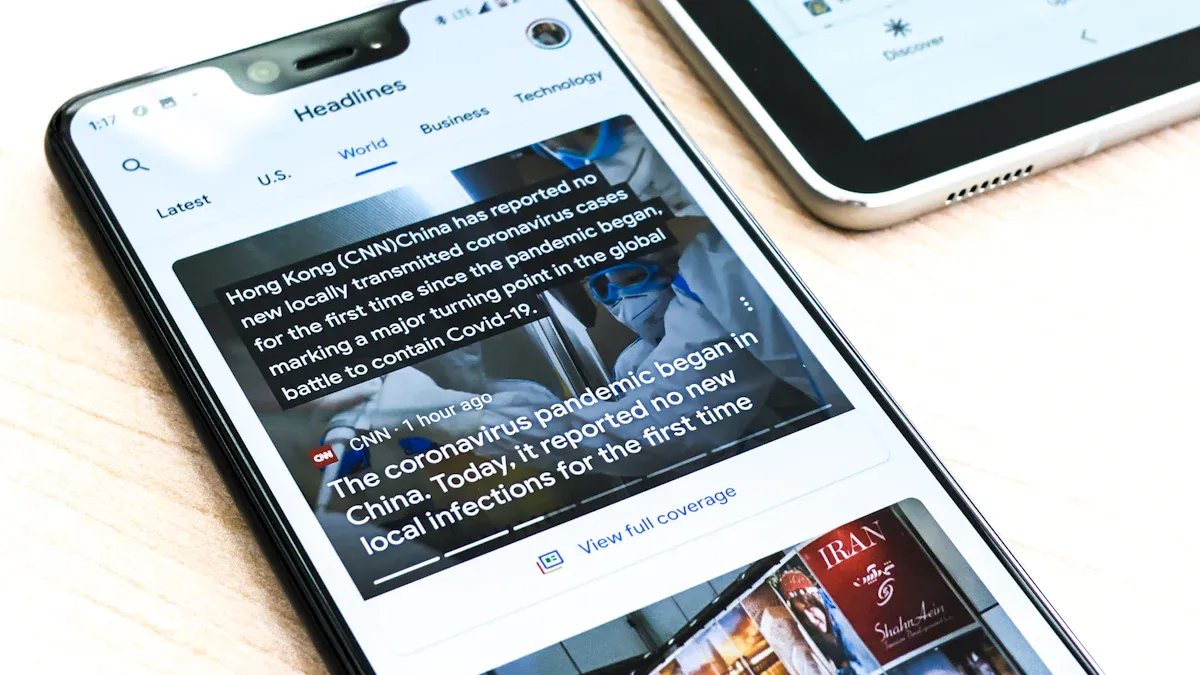
Image Source: unsplash
In today’s world, people are bombarded with massive amounts of information every day, and information anxiety has become a widespread issue.
The key to choosing a news app lies in finding the platform that best matches your personal needs, not chasing the universally “best” tool.
Research shows that nearly half of news consumers prefer personalized content recommendations. This explains why platforms like Sina News are actively combining human editors with algorithms to cater to diverse reading habits.
Key Takeaways
- When choosing a news app, the most important thing is finding the one that fits you best, not the one everyone calls the best.
- Sina News delivers professional financial information and real-time breaking news, ideal for those who need authoritative sources.
- Toutiao offers a huge variety of topics with algorithm-driven recommendations tailored to your interests, perfect for users who enjoy exploring diverse content.
- Yahoo News covers local Taiwan stories and major international events, great for people who care about daily life and global affairs.
- Understanding each app’s content focus, recommendation method, and user experience helps you pick the right one and reduce information anxiety.
When choosing the right news app, it’s equally important to stay informed about currency exchange rates or market trends. If you need real-time exchange rate information, BiyaPay offers a free Currency Converter Tool, which helps you quickly evaluate exchange rate fluctuations and make informed currency conversion decisions. Additionally, for those interested in stock or cryptocurrency investments, BiyaPay provides a trading platform where you can easily trade US stocks, Hong Kong stocks, or digital currencies, enhancing your asset management capabilities. Beyond this, BiyaPay also supports fast remittance, enabling instant cross-border payments globally, making your trading and investing more flexible and efficient.
Content Breadth vs. Depth: Authority vs. Diversity

Image Source: pexels
Content is the core consideration when selecting a news app. Some platforms excel at authoritative professional coverage, while others win with diverse interest-based content. Understanding the content strategies of these three apps helps users find the information source that best matches their needs.
Sina News: Authority and Real-Time Coverage
Sina News has long established itself as an authoritative voice in major event reporting. Its rapid response capability was already evident as early as its 1999 coverage of the U.S. bombing of the Chinese embassy in Belgrade. This real-time advantage continues today, ensuring users get critical updates the moment they happen.
In terms of depth, its dedicated “Sina Finance App” sets the standard in professional fields.
It not only provides millisecond-level real-time data directly linked to global exchanges like the NYSE but also features the exclusive Xina AI intelligent analysis that condenses lengthy earnings reports into 300-word summaries, highlighting risks and opportunities to help users move from simply viewing data to making informed decisions.
This combination of real-time delivery and professional depth makes it especially suitable for business professionals and investors who require authoritative information.
Toutiao: Diverse Vertical Content
Toutiao takes a “diversification” approach to content. Instead of aiming for absolute authority in any single field, it uses algorithms to cover a vast range of topics—from lifestyle and entertainment to niche hobbies like cooking, fishing, or programming. Users can discover virtually any interest area on the platform. This massive content pool perfectly meets the needs of younger users who enjoy exploring diverse topics and finding their own information niche.
Yahoo News: Localized Coverage with Global Perspective
Yahoo News strikes a balance between “localization” and “international vision.” It deeply covers Taiwan-centric issues, providing extensive reporting on local news, policy updates, and community events that directly affect daily life. At the same time, its editorial team curates major international stories, allowing users to stay informed about the world while focusing on local matters. This strategy suits the general public who care about both community life and efficient global awareness.
Recommendation Algorithms: Pros and Cons of Personalization
Algorithms determine what news we see every day and profoundly shape our information worldview. Each platform uses markedly different recommendation strategies, and understanding their strengths and weaknesses is a crucial step toward overcoming information anxiety.
Sina News: “Human Editors + Algorithm” Hybrid Model
Sina News employs a hybrid “human editing + algorithmic recommendation” model that seeks balance between personalization and public interest. The advantages of this approach include:
- Curated selection: A professional editorial team hand-picks daily headline stories to ensure users never miss important public issues.
- Algorithmic support: Relevant content is recommended based on reading history to satisfy individual interests.
Studies show that when users learn news is generated by AI, trust often decreases. Sina’s human-supervised model effectively mitigates this distrust, providing an extra layer of quality control and helping maintain credibility and importance of information.
Toutiao: Pure Algorithm – Benefits and Risks
Toutiao represents pure algorithmic recommendation, delivering extreme personalization and an immersive experience, but it also carries clear risks.
The primary concern is the “information cocoon” or filter bubble. A study titled “SSLE” analyzing Chinese news platforms including Toutiao found that algorithmic recommendations cause users’ reading topics to converge within about 7 days, trapping them in just a few themes—empirical evidence of the filter bubble effect.
Additionally, pure algorithms can become breeding grounds for fake news. Without human review, sensational or false content can spread widely due to high click-through rates. Related research highlights this issue:
Yahoo News: Topic Subscription System
Yahoo News offers a more transparent personalization method: topic subscriptions. Users actively choose and follow categories such as “International Politics,” “Tech Trends,” or specific company stock news. This puts content control back in users’ hands, making it clear why certain stories appear. While not as predictive as pure algorithms, it effectively prevents algorithmic narrowing and lets users independently balance personal interests with broader information exposure.
User Experience: Interface Design and Smoothness

Image Source: pexels
A great news app does more than deliver content—it provides a comfortable reading experience. Interface design, ad intrusion, and operational smoothness are the three key factors determining long-term user retention.
Interface Intuitiveness and Layout
Each platform reflects a distinct design philosophy.
Sina News uses a layout similar to traditional news websites, with major category tabs at the top and a news list below. This design lets users quickly locate specific topics with clear intent.
Toutiao adopts an immersive feed. It eliminates complex categorization, encouraging endless scrolling for discovery—an endless reading experience ideal for casual browsing. Yahoo News combines both approaches, offering category tabs alongside a “Recommended” feed so users can freely switch browsing modes.
Advertising Presentation and Reading Disruption
Ads are the main revenue source for free apps, but their presentation greatly affects user experience.
- Sina News: Ads typically appear as banners or interspersed in the list, clearly labeled with relatively low disruption.
- Toutiao: Ads blend into the feed as “native ads” that look like regular stories, sometimes causing accidental clicks.
- Yahoo News: Uses diverse ad formats (banners, interstitials, feed ads) with higher frequency that can occasionally interrupt the reading flow.
The choice depends on each user’s tolerance for ads.
Page Loading and Operational Smoothness
App responsiveness directly impacts reading mood. A good app should load pages quickly and provide smooth feedback. All three apps have been optimized multiple times and perform well under good network conditions. However, Toutiao’s heavy reliance on images and videos can demand more from network bandwidth and device performance. Users should factor in their own device specs and connection quality when deciding.
Multimedia Integration: The Battleground of Short Videos and Live Streaming
Modern news consumption goes far beyond text—video content has become the main battlefield for capturing user attention. The ability to integrate short videos and live streams directly affects an app’s appeal and stickiness.
Sina News: Leveraging Weibo’s Video Ecosystem
Sina News’s biggest video advantage comes from deep integration with Weibo. It can directly tap into Weibo’s massive video library, allowing users to watch:
- First-hand event clips from people on the scene.
- Real-time commentary videos from influencers and experts.
- Viral content tied to trending topics.
This model combines the immediacy of news with the viral power of social media, creating a rich, highly interactive multimedia environment.
Toutiao: Immersive Short-Video Experience
Toutiao maximizes algorithmic power in video. It features an immersive short-video feed—opening the video tab drops users into an endless waterfall of clips.
The algorithm continuously pushes new videos based on watch time, likes, and comments. The goal is to maximize dwell time, making users unconsciously watch one video after another—perfect for those who prefer light, fast, diverse content consumption.
Yahoo News: High-Quality Live Streams and Special Reports
Yahoo News leans toward traditional media-style polished production. Instead of flooding the app with user-generated content, it focuses on high-quality live streams and in-depth video reports. Users can watch live government press conferences, sports events, and professionally produced special reports. This approach satisfies demand for authoritative, complete multimedia content.
Added Value: Community Interaction and Unique Features
Beyond core news content, additional features and community atmosphere significantly shape daily user experience. These extras often become the deciding factor in a user’s final choice.
Comment Sections and Trending Lists – Community Atmosphere
The comment section under articles is the best window into a platform’s community vibe. Styles differ markedly.
- Sina News: Linked to Weibo, the user base is broad, discussions are lively, but comments can sometimes be sharp.
- Toutiao: Algorithms foster echo chambers, leading to more uniform viewpoints where users easily find like-minded groups.
- Yahoo News: Broader age range with more localized, everyday-life-oriented discussions.
Additionally, “trending topics” lists let users instantly see what’s capturing public attention, serving as a pulse of community sentiment.
Sina News “Listen to News” Feature
For busy commuters or situations where reading isn’t convenient, Sina News’s “Listen to News” function is a standout feature. It converts text articles into audio, letting users stay informed while driving, doing chores, or exercising—maximizing information intake in a multitasking era.
This extends news consumption from visual to auditory, perfectly meeting modern lifestyle needs.
Yahoo News Stock Integration
Yahoo News tightly integrates financial news with personalized stock tracking. Users can not only read finance articles but also build watchlists, monitor real-time price movements, and see related news—all in one place. This one-stop functionality is extremely convenient for casual investors who want both news and portfolio management in the same app.
Ending information anxiety starts with proactive choice. The best app is the one that meets your personalized needs and viewpoint alignment while being easy to use. Here’s a quick comparison table to help you decide.
Summary: Comparison of the Three Major News Apps
| Dimension | Sina News | Toutiao (今日頭條) | Yahoo News |
|---|---|---|---|
| Content Focus | Authoritative finance, real-time breaking news | Diverse interests, vertical topics | Local depth + global perspective |
| Recommendation Engine | Human-curated + algorithm | Pure algorithm | Topic subscription |
| User Experience | Traditional layout, goal-oriented | Immersive endless feed | Hybrid layout, multiple modes |
| Best For | Business professionals seeking authority | Young users exploring diverse topics | Everyday citizens caring about local life |
We recommend picking one or two apps from the table and trying them personally. Only hands-on experience will reveal the true information companion that seamlessly fits your life and helps you manage information anxiety at its source.
FAQ
What is the root cause of information anxiety?
Information anxiety mainly arises from receiving too much information too quickly without proper filtering. When the volume exceeds personal processing capacity, it creates stress and unease. Actively choosing suitable information sources is the first step to alleviating this problem.
Is a pure algorithmic recommendation always bad?
Pure algorithms aren’t entirely negative. They efficiently deliver personalized entertainment or interest-based content.
For users who want deep dives into specific areas or light content, pure algorithms still hold value. Users simply need to be aware of the “information cocoon” risk and actively seek diverse sources.
How should I make my final choice among these three apps?
Decide based on your primary needs.
- Need authoritative financial information: Prioritize Sina News.
- Enjoy exploring diverse interests: Toutiao may be the best fit.
- Care about local life issues: Yahoo News aligns more closely with those needs.
Are there other options besides these three?
Absolutely. The market offers many niche news apps focused on specific fields—international news, technology, or standalone apps from particular media outlets. Users can further explore these more targeted options based on their profession or interests.
*This article is provided for general information purposes and does not constitute legal, tax or other professional advice from BiyaPay or its subsidiaries and its affiliates, and it is not intended as a substitute for obtaining advice from a financial advisor or any other professional.
We make no representations, warranties or warranties, express or implied, as to the accuracy, completeness or timeliness of the contents of this publication.
Related Blogs of

SoFi Checking and Savings A Deep Dive Review


Why Is Canada's Country Code 1


The 18 Best Apps to Earn Real Cash This Year


What is the Dialing Code for the USA and How to Call?

Choose Country or Region to Read Local Blog
 Australia
 Austria
 Belgium
 Canada
 Cyprus
 Czech Republic
 Denmark
 Estonia
 Finland
 France
 Germany
 Greece
 Hong Kong
 India
India Indonesia
 Ireland
 Italy
Italy Japan
Japan Latvia
 Lithuania
 Luxembourg
 Malaysia
 Malta
Malta Morocco
 Nepal
Nepal Netherlands
 New Zealand
 Norway
 Pakistan
 Philippines
 Poland
 Portugal
 Romania
 Singapore
 Slovakia
 Slovenia
 South Africa
 South Korea
 Spain
Spain Sweden
 Thailand
 The United States
 Turkey
 United Arab Emirates
 United Kingdom
 Vietnam
Contact Us




BIYA GLOBAL LLC is a licensed entity registered with the U.S. Securities and Exchange Commission (SEC No.: 802-127417); a certified member of the Financial Industry Regulatory Authority (FINRA) (Central Registration Depository CRD No.: 325027); regulated by the Financial Industry Regulatory Authority (FINRA) and the U.S. Securities and Exchange Commission (SEC).
BIYA GLOBAL LLC is registered with the Financial Crimes Enforcement Network (FinCEN), an agency under the U.S. Department of the Treasury, as a Money Services Business (MSB), with registration number 31000218637349, and regulated by the Financial Crimes Enforcement Network (FinCEN).
BIYA GLOBAL LIMITED is a registered Financial Service Provider (FSP) in New Zealand, with registration number FSP1007221, and is also a registered member of the Financial Services Complaints Limited (FSCL), an independent dispute resolution scheme in New Zealand.