Must-Read 2025 Investment Guide: Sina Finance Forex Analysis on the US Dollar's Future Path




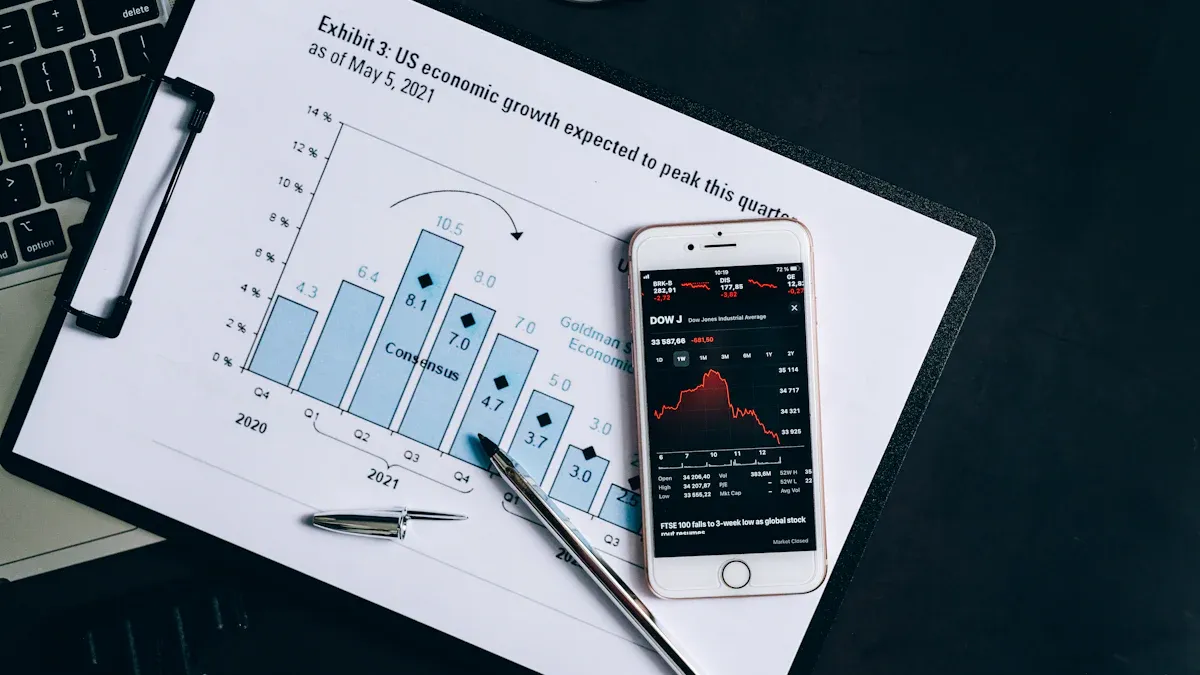
Image Source: pexels
Comprehensive analysis from Sina Finance Forex expects the US dollar index to display a pattern of “high-level consolidation followed by gradual weakening” throughout 2025.
This judgment is based on a comprehensive assessment of the Federal Reserve’s policy path, the resilience of the US economy, the AI technology wave, and global geopolitical risks.
Multiple institutions share this view. J.P. Morgan Research, for instance, holds a bearish stance on the dollar, expecting structural weakening. At the same time, the market widely anticipates the Fed will initiate a rate-cutting cycle in 2025, which will be the core variable influencing the dollar’s future direction.
Key Takeaways
- The US dollar in 2025 will first consolidate at high levels before slowly weakening. This is because the Fed may cut rates, yet global risks will still provide the dollar with a certain safe-haven role.
- Three main factors will affect the dollar’s trend: when the Fed cuts rates, US economic performance, and global political changes. These factors will make the dollar’s path complex.
- A weakening dollar will impact many investments. For example, AI tech stocks still have opportunities, the bond market will become attractive, gold will serve as an excellent hedge, and non-USD currencies will gain more room to rise.
- Investors should adjust their plans according to their risk tolerance. Conservative investors can increase bond holdings, balanced investors can diversify into markets outside the US, and aggressive investors can consider emerging markets and cutting-edge technology sectors.
- Successful investing requires continuously monitoring Fed policy, US economic data, and global risks. Investors must remain flexible to seize opportunities.
Three Key Factors Influencing the 2025 US Dollar Trend
Image Source: pexels
To accurately forecast the US dollar’s path in 2025, investors must closely watch the following three interdependent key factors. These will collectively determine whether the dollar, after high-level consolidation, will gradually weaken as expected.
Key Factor 1: Fed Rate-Cut Path and Market Expectations
The market widely expects the Fed to start cutting rates in 2025, but the exact timing and magnitude remain the biggest variables. According to the latest Federal Open Market Committee (FOMC) minutes, significant internal disagreement exists, casting uncertainty over the outlook.
- Inflation concerns: Most members worry that tariff policies could push up core goods inflation, potentially delaying rate cuts.
- Labor market: The committee observed that while the labor market has softened, it has not deteriorated sharply, providing justification for maintaining current policy.
- Technology impact: A minority of members believe that productivity gains from AI and automation could curb business costs, thereby easing inflationary pressure.
This divergence means every Fed move will be highly data-dependent, and any unexpected data release could trigger violent swings in market expectations.
Key Factor 2: Resilience and Challenges in US Economic Data
The US economy in 2025 will simultaneously demonstrate resilience and face challenges. On one hand, productivity gains driven by the AI boom provide new growth momentum. On the other, potential risks cannot be ignored.
| Institution | 2025 Real GDP Growth Forecast |
|---|---|
| Congressional Budget Office (CBO) | 1.4% |
| Federal Reserve | 1.6% |
Although the latest non-farm payrolls data (e.g., 119,000 jobs added in September) showed a rebound, prior sharp downward revisions also reveal the labor market may be more fragile than it appears. Furthermore, if the US government faces another shutdown risk in the fall of 2025, Goldman Sachs estimates each week of closure would reduce quarterly annualized GDP growth by about 0.1 percentage point, adding uncertainty to the economic outlook.
Key Factor 3: Global Risk Sentiment and Geopolitical Shifts
Geopolitics has traditionally been a key factor affecting the dollar’s safe-haven status. In 2025, the ongoing Russia-Ukraine conflict and tensions in the Middle East will continue to support the dollar’s safe-haven demand in the short term. However, a deeper structural shift is underway.
Sina Finance Forex observes that global “de-globalization” and “de-dollarization” trends are accelerating. Central banks, especially in emerging markets, have been continuously increasing gold reserves since 2022 and seeking settlement currencies other than the dollar in international trade.
Although this trend will not overturn the dollar’s dominance in the short term, over the long run it will gradually erode the dollar’s appeal as the sole safe-haven asset, providing support for alternatives like gold and exerting structural pressure on the dollar.
Impact of the Dollar Trend on Major Global Asset Classes

Image Source: pexels
The dollar’s pattern of “high-level consolidation followed by gradual weakening” will have profound effects on global asset prices in 2025. Investors need to adjust portfolios based on each asset class’s characteristics to adapt to the shifting trend.
Stock Market Impact: Structural Opportunities in US Stocks Amid the AI Wave
US stock market performance in 2025 will be highly differentiated. AI is regarded as a “multi-year investment theme” whose influence will continue to expand, creating structural opportunities. BlackRock analysts expect AI to create new business models across industries, and as winners and losers emerge, stock selection will become even more critical.
In such an environment, if investors wish to explore AI-related sectors, whether in tech stocks or digital currencies, they can leverage the BiyaPay stock query tool for precise stock selection. Additionally, BiyaPay’s US and Hong Kong stock trading services offer investors diversified asset allocation options, enabling them to fully capture global market trends. If you need to make international remittances, BiyaPay also provides efficient remittance services to ensure smooth international fund transfers.
AI’s strong performance is driven by fundamentals rather than speculation. In the first half of 2025, as much as 92% of US GDP growth is attributed to investments in AI data centers and related technologies.
Investment opportunities are primarily concentrated in:
- AI infrastructure: Semiconductors, cybersecurity, and manufacturers of power and cooling systems that support the AI revolution.
- AI application layer: Diversified US growth leaders capable of leveraging AI for innovation.
Bond Market Impact: Deployment Value After Rates Peak
Fed rate-cut expectations make the bond market attractive for positioning, though views on long-duration US Treasuries remain divided.
The bullish view holds that even after rate cuts, mid- and long-term bond yields will remain relatively high, offering appealing entry points. If AI-driven productivity gains fall short of expectations, long-duration bonds could once again become a hedge against stock market volatility.
The bearish view points out that long-duration bonds have failed to provide effective diversification in recent years. The market also faces a “buyer strike” from reduced demand by global institutional investors and quantitative tightening pressure from central banks reducing holdings.
Commodities Impact: Outlook for Gold and Energy Prices
Gold: Against the backdrop of de-dollarization trends, geopolitical tensions, and rising global debt burdens, gold’s safe-haven and store-of-value functions stand out. Central banks continue to increase gold reserves, eroding confidence in fiat currency systems. Analysts forecast gold could challenge a historic high of $4,000 per ounce in 2025.
Energy: By comparison, crude oil price prospects are more moderate. Most institutions predict the 2025 average WTI crude price will fall in the $60–$65 per barrel range. OPEC+ production policy and stable global demand are key influences, but US policy to keep oil prices low to curb inflation may exert downward pressure.
Forex Impact: Non-USD Currencies and RMB Trend Analysis
A weakening dollar will give non-USD currencies breathing room. Sina Finance Forex observes that market views on the RMB exchange rate feature “stability with volatility”. China’s economic policies, US-China trade relations, and global capital flows are all key variables affecting its path. Aggregating multiple institutional forecasts, the potential USD/CNY trading range in 2025 is 7.0–7.6.
Sina Finance Forex: 2025 Investor Coping Strategies
Facing the expected pattern of “high-level consolidation followed by gradual dollar weakening,” investors should adopt different strategies based on their risk tolerance. Below, Sina Finance Forex provides 2025 asset allocation guidance for conservative, balanced, and aggressive investors.
Conservative Strategy: Increase High-Quality Bonds and High-Dividend Assets
For conservative investors whose primary goals are capital preservation and stable cash flow, 2025 is an excellent time to increase high-quality fixed-income holdings. As Fed rate-cut expectations rise, locking in higher bond yields early becomes the core of defensive investing.
Core objective: Lock in returns after rates peak, withstand market volatility, and generate stable cash flow.
Asset classes worth watching include:
- Government bonds: The 10-year US Treasury is regarded as one of the safest investments, expected to offer around 4.5% yield by mid-2025. Treasury Inflation-Protected Securities (TIPS) also adjust principal with inflation, effectively preserving purchasing power.
- Investment-grade corporate bonds: Bonds from financially sound companies with stable cash flows offer higher yields. ETFs tracking such assets are projected to yield over 5.4% by mid-2025.
In stocks, historical data shows that during falling rate periods, dividend growth stocks often outperform pure high-yield stocks. Investors should prioritize companies that not only pay dividends but consistently raise them.
Balanced Strategy: Balanced Stock-Bond Allocation with Focus on Non-US Opportunities
Balanced investors seek equilibrium between risk and return. The key 2025 strategy is global diversification to reduce heavy reliance on the highly concentrated US market. US stock valuations are elevated, with the S&P 500’s forward P/E already above 22x — a historical high — and market cap overly concentrated in a few mega-cap tech names, increasing portfolio fragility.
Sina Finance Forex analysis notes that US tariff policies and economic challenges are prompting global investors to re-evaluate “American exceptionalism,” turning attention toward undervalued developed markets such as Europe and Japan.
| Market | 2025 Investment Highlights |
|---|---|
| Europe | Attractive banking valuations (P/E ~9–10x); policy shifting from austerity to growth, with Germany planning trillion-dollar investments in infrastructure and green energy; rising defense spending. |
| Japan | Corporate governance reforms taking effect, increased shareholder-friendly actions like buybacks; companies accelerating digital transformation and upgrading tech systems; playing a key role in the global AI supply chain. |
Through modern investment platforms, investors can conveniently allocate capital to these non-US markets, capturing structural growth opportunities while enjoying additional returns from currency appreciation in a weakening dollar environment.
Aggressive Strategy: Uncovering Emerging Market and Tech Theme Potential
For aggressive investors willing to accept higher risk for excess returns, 2025 opportunities lie in the recovery of emerging markets and the continued fermentation of cutting-edge technologies.
As the dollar weakens and the US economic halo fades, capital is flowing back into undervalued emerging markets. Countries like India and Brazil are showing strong growth potential.
- India: Government-led “Digital India” initiatives and renewable energy goals create broad prospects in fintech, online retail, and green energy.
- Brazil: The high interest rate environment offers substantial room for future rate cuts. Significant rate reductions will serve as a major catalyst for stock market gains.
However, investing in emerging markets requires vigilance against inherent risks. A stronger dollar could exacerbate emerging market USD debt burdens, while political uncertainty and sharp currency swings (e.g., Brazilian real) may erode returns.
In the technology space, beyond broad AI themes, investors can dig into more specialized tracks expected to deliver explosive growth in 2025 and beyond:
- Robotics & Artificial Intelligence (BOTZ)
- Cybersecurity (BUG)
- Fintech (FINX)
- Data Centers & Digital Infrastructure (DTCR)
- Lithium & Battery Tech (LIT)
By allocating to these targeted thematic ETFs, aggressive investors can more precisely capture the disruptive technology waves that will define the future.
Looking ahead to 2025, the dollar’s pattern of “high-level consolidation followed by gradual weakening” remains the market’s main theme. Investors should continue tracking three core variables: the Fed’s policy path, actual US economic data performance, and any global risk events capable of causing large-scale, lasting disruption.
Ultimately, successful investment strategies depend on individual risk tolerance. Investors should flexibly adjust asset allocation to seize both defensive and offensive opportunities amid the shifting dollar trend.
FAQ
Will the US dollar really weaken in 2025?
Sina Finance Forex analysis expects the dollar to exhibit a “high-level consolidation followed by gradual weakening” pattern. Fed rate-cut expectations are the primary downward pressure. However, global geopolitical risks will still provide safe-haven support, so a sharp decline is unlikely — instead, expect a gradual weakening.
If the Fed delays rate cuts, how should investment strategies be adjusted?
If the Fed delays cuts, dollar strength may persist longer, and the high-rate environment will continue.
Investors should consider the following adjustments:
- Increase short-term bonds or cash holdings to earn higher interest.
- Remain cautious on rate-sensitive growth stocks.
- Reassess risk in non-US markets.
Do AI tech stocks still have investment value in 2025?
Yes, AI remains a multi-year structural investment theme. Its value is based on strong corporate fundamentals and real productivity gains rather than short-term speculation. Opportunities extend from infrastructure (e.g., semiconductors) to AI applications across industries, making stock selection even more critical.
Besides the dollar, what other safe-haven assets are worth watching in 2025?
Gold is an important alternative safe-haven asset. Amid global de-dollarization trends, geopolitical tensions, and high government debt levels, gold’s store-of-value function stands out. Continuous central bank gold accumulation also provides long-term price support.
*This article is provided for general information purposes and does not constitute legal, tax or other professional advice from BiyaPay or its subsidiaries and its affiliates, and it is not intended as a substitute for obtaining advice from a financial advisor or any other professional.
We make no representations, warranties or warranties, express or implied, as to the accuracy, completeness or timeliness of the contents of this publication.
Related Blogs of

How AI Startups Can Quickly Open Overseas Corporate Accounts to Receive USD Funding?

From Cryptocurrency to OpenAI Bill: A 3-Minute Fiat Flash Exchange in Practice


Overseas Payment Challenges and Solutions for OpenClaw Plugin Developers


Anthropic Batch Account Ban Warning: How to Self-Check If Your API Payment Card Is on the Blacklist?

Choose Country or Region to Read Local Blog
 Australia
 Austria
 Belgium
 Canada
 Cyprus
 Czech Republic
 Denmark
 Estonia
 Finland
 France
 Germany
 Greece
 Hong Kong
 India
India Indonesia
 Ireland
 Italy
Italy Japan
Japan Latvia
 Lithuania
 Luxembourg
 Malaysia
 Malta
Malta Morocco
 Nepal
Nepal Netherlands
 New Zealand
 Norway
 Pakistan
 Philippines
 Poland
 Portugal
 Romania
 Singapore
 Slovakia
 Slovenia
 South Africa
 South Korea
 Spain
Spain Sweden
 Thailand
 The United States
 Turkey
 United Arab Emirates
 United Kingdom
 Vietnam
Contact Us




BIYA GLOBAL LLC is registered with the Financial Crimes Enforcement Network (FinCEN), an agency under the U.S. Department of the Treasury, as a Money Services Business (MSB), with registration number 31000218637349, and regulated by the Financial Crimes Enforcement Network (FinCEN).
BIYA GLOBAL LIMITED is a registered Financial Service Provider (FSP) in New Zealand, with registration number FSP1007221, and is also a registered member of the Financial Services Complaints Limited (FSCL), an independent dispute resolution scheme in New Zealand.