Unlock U.S. Pre-Market Trading: Get Ahead of the Opening Bell and Stay in Front



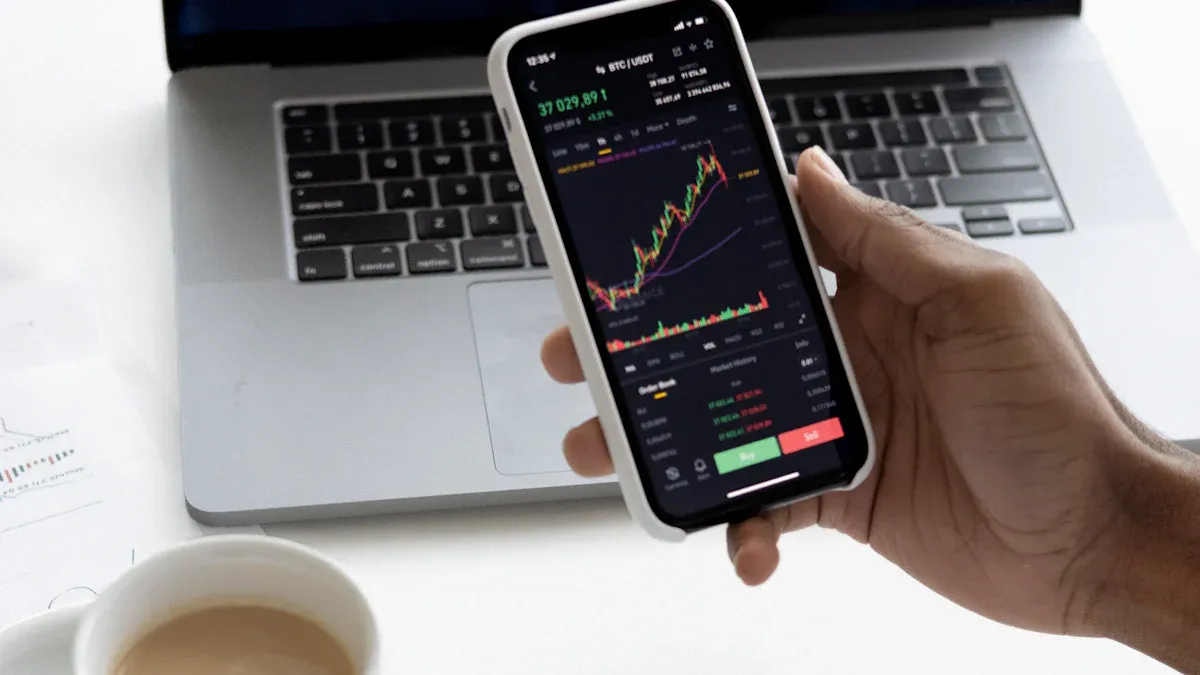
Image Source: pexels
Have you ever watched a U.S. stock skyrocket at the open because of overnight earnings news and regretted missing the move?
The solution to this problem is exactly “pre-market trading.” It gives you the chance to act before regular trading hours begin. In recent years, more and more investors have jumped into this segment, with pre-market volume now accounting for approximately 10% of total daily shares traded. This practical guide will take you from zero to mastery of U.S. pre-market trading and help you truly get ahead of the competition.
Key Takeaways
- U.S. pre-market trading allows investors to buy and sell stocks before regular hours based on major news, giving you a first-mover advantage.
- Pre-market trading offers four major advantages: instant reaction to news, gauging opening sentiment, executing strategies early, and discovering pricing inefficiencies.
- Pre-market trading carries four key risks: low liquidity, wide bid-ask spreads, extreme volatility, and information asymmetry — investors must pay special attention.
- When trading pre-market, always choose a broker that supports extended hours and use only “limit orders” to protect yourself.
- Pre-market trading is suitable for investors with high risk tolerance, strong analytical skills, and time to monitor the market — it is not recommended for all beginners.
Understanding U.S. Pre-Market Trading: Hours and Core Rules
To master pre-market trading, you must first understand its basic rules and timing. It’s just like reading the rulebook before playing a game.
Definition of Pre-Market Trading
Simply put, pre-market trading refers to stock trading that takes place before the regular U.S. market session (the main trading day) begins.
You can think of it as the market’s “warm-up period.” This window allows investors to react early to major news released before the open, such as earnings reports, M&A announcements, or important economic data.
It is not a separate market but an extension of regular trading hours.
Full U.S. Stock Market Trading Sessions
U.S. stock market hours are based on Eastern Time (ET). A complete trading day is divided into three phases: pre-market, regular hours, and after-hours. Each has specific start and end times.
| Session | Time (Eastern Time ET) | Description |
|---|---|---|
| Pre-Market | 04:00 – 09:30 | Trading session before regular open |
| Regular Hours | 09:30 – 16:00 | Most active primary trading session |
| After-Hours | 16:00 – 20:00 | Trading session after regular close |
While exact pre-market hours may vary slightly by broker, most cover the critical one to two hours before the opening bell.
Taiwan Time Conversion Table
For investors in Taiwan, the most important task is converting Eastern Time to Taiwan time. Pay special attention to U.S. Daylight Saving Time (DST), which affects the time difference.
- Daylight Saving Time: Roughly March to November, Taiwan time = ET + 12 hours.
- Standard Time: Roughly November to March, Taiwan time = ET + 13 hours.
For 2025, DST runs from March 9 to November 2. The table below provides a full conversion of U.S. pre-market and other sessions to Taiwan time:
If you’re converting pre-market hours to Taiwan time and then checking “what’s happening right now,” it helps to validate both price and tradability in one pass: use BiyaPay Stock Info to quickly review pre-market quotes and moves for a ticker, then rely on limit orders on your broker to control execution, instead of reacting only to headline percent changes while ignoring spreads and liquidity. During earnings season, you can also use the unified Trading entry to review multi-asset market moves as a cross-check.
BiyaPay is positioned as a multi-asset trading wallet covering cross-border payments, investing, trading, and fund management, with access to U.S./HK stocks and digital-asset spot/derivatives; on compliance, it operates with registrations such as U.S. MSB and New Zealand FSP. For product updates and public notices, refer to the official site or the Events page.
| Session | Daylight Saving (Taiwan Time) | Standard Time (Taiwan Time) |
|---|---|---|
| Pre-Market | 16:00 – 21:30 | 17:00 – 22:30 |
| Regular Hours | 21:30 – 04:00 (next day) | 22:30 – 05:00 (next day) |
| After-Hours | 04:00 – 08:00 | 05:00 – 09:00 |
Bookmark this table and you’ll never miss an important trading window again.
Advantages of Pre-Market Trading: Why Get in Early

Image Source: unsplash
After understanding the rules, you might ask: why enter early? Participating in pre-market trading delivers four powerful advantages that let you position ahead of the crowd.
Advantage 1: Instant Reaction to Major News
Many market-moving events — earnings releases, FDA drug approvals, or M&A deals — happen outside regular hours. Pre-market trading lets you react the moment news breaks, whether to capture upside or avoid downside.
Take biotech company AVEO Pharmaceuticals as an example — its stock experienced extreme pre-market reactions to FDA news:
- Positive news: In 2011, the company announced strong trial results for its kidney cancer drug tivozanib.
- Negative warning: A year later, the FDA raised concerns about survival rates, causing the stock to drop 27% after the announcement.
- Final outcome: In 2013, an FDA advisory panel voted against approval, wiping out nearly 50% of the company’s market cap almost instantly.
This case clearly shows that waiting for the regular open can be too late.
Advantage 2: Gauge Opening Market Sentiment
U.S. pre-market trading acts like a “weather vane” for the day’s sentiment. By watching index futures, you can predict the likely direction of the opening bell.
S&P 500 futures trade nearly 24 hours a day and are widely regarded as a “leading indicator of market sentiment.” If S&P 500 futures are rising pre-market, it usually signals optimistic investor mood and a higher opening price.
You can also use your broker’s heat maps or pre-market movers list to quickly spot which sectors or stocks are in focus.
Advantage 3: Execute Strategies Early
The pre-market session gives you calm time to plan and deploy strategies in advance. When you see news that could impact your holdings, you can set up your trade plan ahead of time. This includes:
- Setting profit targets: If the price hits your expected gain, place a sell limit order early to lock in profits.
- Setting stop-loss levels: To limit large losses, follow the “2% rule,” ensuring no single loss exceeds 2% of your portfolio, and set clear stop orders.
Planning ahead helps you avoid emotional interference and make more rational decisions.
Advantage 4: Discover Pricing Opportunities
Because fewer participants trade pre-market, temporary “mispricings” can occur due to information not yet being fully absorbed. When you spot unusual pre-market volume in a stock driven by a specific catalyst (like better-than-expected earnings), it may be an early signal of momentum about to explode, allowing you to position before the broader market reacts.
Risks of Pre-Market Trading: Traps You Must Know
Image Source: unsplash
While pre-market trading offers tempting first-mover opportunities, it is also a double-edged sword. High reward potential comes with significantly higher risks. Before committing capital, you must clearly understand and assess the following four major pitfalls — these are the challenges you are most likely to face during this “warm-up” period.
Risk 1: Low Liquidity and Execution Delays
The most prominent feature of pre-market trading is “low liquidity.” In simple terms, there are far fewer buyers and sellers than during regular hours. This directly causes two problems: your order may not fill at all, or execution may be very slow.
Pre-market trading is primarily conducted through Electronic Communication Networks (ECNs), which automatically match buy and sell orders. If the system cannot find a counterparty at your price, your trade will not execute — this is the root cause of delays or unfilled orders.
Technically, several factors can cause delays:
- Limited data sources: Your broker may only connect to specific ECNs, preventing you from seeing the full market picture.
- System congestion: When major news hits, a sudden flood of orders can slow down processing.
- Pre-open checks: Brokers and platforms perform system maintenance before the open, sometimes causing brief delays.
- Price discovery process: As information is still being digested, the market needs time to establish a fair price, affecting execution speed.
Risk 2: Widening Bid-Ask Spreads
Low liquidity directly leads to the second risk: widening “bid-ask spreads.” The bid-ask spread is the gap between the highest price a buyer is willing to pay (bid) and the lowest price a seller will accept (ask).
During pre-market hours, with fewer participants, this spread is much wider than during regular trading. This represents a direct trading cost for you.
Think of the bid-ask spread as the “entry fee” for a trade. Every time you enter or exit a position, you must cross this spread. This means every trade starts in a small loss equal to the spread. Your trade must move in your favor enough to cover this initial cost before you can profit.
For frequent traders, even seemingly small spreads can accumulate and seriously erode final returns.
Risk 3: Extreme Price Volatility
Price volatility in pre-market is typically far higher than during regular hours. This is mainly because lower volume means a single relatively large order can significantly move the price.
When a company releases better-than-expected earnings, the stock can surge 10% or more in minutes. However, such violent moves can also be a trap. Initial reactions are sometimes overly emotional; once regular trading begins and more institutional players enter, the price may quickly reverse, leaving you trapped at the high. This “whipsaw” effect is common in pre-market and extremely risky for those chasing momentum.
Risk 4: Information Asymmetry Challenge
Although pre-market lets you react to news, remember you’re not the only one watching. You’re competing against professional institutional investors with top-tier resources.
They have:
- Faster news feeds
- More powerful data analysis tools
- Sophisticated trading algorithms
This creates “information asymmetry.” While you see a public headline, institutions may have already analyzed dozens of pages of detailed reports via paid terminals and completed their positioning. Retail investors are often at a disadvantage. This information gap is especially pronounced in the low-liquidity pre-market environment, making it easier for you to become the counterparty to professional traders.
Hands-On U.S. Pre-Market Trading: From Broker Selection to Placing Orders
After understanding the advantages and risks, it’s time to put knowledge into action. This section walks you through the complete practical process — from choosing the right broker to placing your first pre-market order — so you can take your first step safely and confidently.
How to Choose a Supporting Broker
First, confirm that your broker supports “extended-hours trading,” which includes both pre-market and after-hours sessions. Not all brokers offer this, and supported hours can vary.
Most major U.S. stock brokers support pre-market trading. You can look at the following list:
- Interactive Brokers (IBKR)
- Futu (Moomoo)
- Charles Schwab
- Firstrade
- Webull
- Robinhood
- E*TRADE
How to verify your broker’s eligibility?
- Check the official website: Visit the broker’s “Trading” or “Products” page and look for details on “extended-hours trading.”
- Check platform settings: In the order entry interface, see if there’s an option to enable extended hours.
- Contact customer service: Directly ask support for the exact pre-market hours they support.
Generally, the earliest pre-market access starts at 4:00 AM ET, though 7:00 AM is more common. Beyond traditional brokers, some emerging multi-asset platforms also support pre-market trading, giving users more flexibility. Before choosing, carefully compare each broker’s hours, fees, and platform stability.
Four-Step Order Placement Process
Once you’ve selected a supporting broker, placing an order is straightforward. Here are the standard four steps to complete your setup:
- Select the stock and direction First, enter the ticker symbol and decide whether to “Buy” or “Sell.”
- Choose order type: Limit order This is the most critical step. In pre-market, you must use a “limit order.” Market orders are not allowed.
- Set price and quantity Enter the “limit price” you’re willing to accept and the number of shares.
- When buying: The limit price is your maximum acceptable price.
- When selling: The limit price is your minimum acceptable price.
- Set order duration To make your order active in pre-market, you must select an extended-hours duration. A standard “Day” order only works from 09:30–16:00. Choose options such as:
- Day + Extended Hours or similar: Valid for all sessions that day (pre-market, regular, after-hours).
- Good-Til-Canceled (GTC) + Extended Hours: Remains active across all sessions until canceled (up to several months, depending on broker rules).
After completing these four steps and submitting, your order enters the ECN to await matching.
Why Only Limit Orders Are Allowed
You might wonder why the system forces limit orders only. The answer is simple: it’s to protect you.
Pre-market has low liquidity and high volatility — using a market order would expose you to massive price risk. ECNs and exchanges disallow market orders for the following reasons:
| Risk Type | Danger of Market Orders | Protection from Limit Orders |
|---|---|---|
| Price runaway | Your order fills at the “best available” price, which in wide-spread pre-market can be far worse than expected. | You precisely control the maximum buy price and minimum sell price; execution only occurs at your price or better. |
| Slippage risk | Buying may execute far above the displayed price; selling may execute far below. | Provides full price control, minimizing unexpected fills caused by volatility. |
| Trading cost | In wide spreads, market orders unconditionally accept high hidden costs. | Lets you set a target that covers the spread and still profits, avoiding instant disadvantage. |
In short, a limit order is your most important “seatbelt” when trading pre-market. It ensures you won’t buy at the absolute high or sell at the absolute low due to temporary market chaos.
Self-Assessment: Is Pre-Market Trading Right for You?
Pre-market trading is not suitable for every investor. It’s an advanced tool best suited for active traders who fully understand the rules and risks. Before risking real money, honestly evaluate whether you possess the following traits:
1. High risk tolerance You must be mentally prepared for extreme price swings and potential losses. Many experienced traders adopt more conservative approaches pre-market:
- Reduce position size: Typically use only 25% to 50% of regular-session capital.
- Wider stop-losses: Use percentage-based stops to accommodate larger pre-market swings.
2. Strong market analysis skills You cannot trade on gut feeling alone. Successful pre-market traders can quickly interpret earnings, news, and charts and create clear plans.
3. Sufficient monitoring time Pre-market requires extra time commitment. Depending on strategy complexity, you may need:
- Strategy review & planning: About 15–20 minutes daily.
- Technical setup & order placement: About 10–15 minutes daily.
If your schedule is busy and you can’t actively monitor the market, swing trading or long-term investing may suit you better. The high risk and intensity of pre-market trading is best for those who treat trading as a serious discipline.
In summary, U.S. pre-market trading is a double-edged sword. It offers huge potential to get ahead but comes with significant risks.
As warned by FINRA, you must be cautious of:
- Low liquidity — orders may not fill.
- High volatility — prices can swing dramatically.
- Wide spreads — increasing trading costs.
Successful traders are disciplined strategists who use information wisely, not gamblers. Always treat the “limit order” as your primary line of defense. Only after fully understanding the rules and risks should you cautiously incorporate this advanced tool into your investment strategy.
FAQ
Do I have to pay extra fees for pre-market trading?
Most brokers do not charge additional commissions for pre-market trading. However, due to lower liquidity, bid-ask spreads are wider. This spread is your hidden trading cost and directly impacts profitability.
Why didn’t my limit order fill?
Pre-market has far fewer buyers and sellers, resulting in low liquidity. Your unfilled order usually has two causes:
- No counterparty is willing to accept your specified price.
- There simply isn’t enough volume in the market to match your order size.
Is the last pre-market trade the official opening price?
No. Pre-market prices have no direct relationship with the regular-session opening price.
The official U.S. stock opening price is determined by the 9:30 AM ET opening auction. Pre-market price action serves only as a sentiment reference.
Can all stocks be traded pre-market?
In theory yes, but in practice it’s not recommended. Focus only on high-volume stocks with clear news catalysts, such as large-cap tech names or companies that just reported earnings. Illiquid stocks have extremely poor pre-market liquidity and very high risk.
*This article is provided for general information purposes and does not constitute legal, tax or other professional advice from BiyaPay or its subsidiaries and its affiliates, and it is not intended as a substitute for obtaining advice from a financial advisor or any other professional.
We make no representations, warranties or warranties, express or implied, as to the accuracy, completeness or timeliness of the contents of this publication.
Related Blogs of

Why Is Canada's Country Code 1


How Safe Is Your Money With Ally Bank in 2026?


Zelle Wire Transfer or ACH? Clearing Up the Confusion

The 18 Best Apps to Earn Real Cash This Year

Choose Country or Region to Read Local Blog
 Australia
 Austria
 Belgium
 Canada
 Cyprus
 Czech Republic
 Denmark
 Estonia
 Finland
 France
 Germany
 Greece
 Hong Kong
 India
India Indonesia
 Ireland
 Italy
Italy Japan
Japan Latvia
 Lithuania
 Luxembourg
 Malaysia
 Malta
Malta Morocco
 Nepal
Nepal Netherlands
 New Zealand
 Norway
 Pakistan
 Philippines
 Poland
 Portugal
 Romania
 Singapore
 Slovakia
 Slovenia
 South Africa
 South Korea
 Spain
Spain Sweden
 Thailand
 The United States
 Turkey
 United Arab Emirates
 United Kingdom
 Vietnam
Contact Us




BIYA GLOBAL LLC is a licensed entity registered with the U.S. Securities and Exchange Commission (SEC No.: 802-127417); a certified member of the Financial Industry Regulatory Authority (FINRA) (Central Registration Depository CRD No.: 325027); regulated by the Financial Industry Regulatory Authority (FINRA) and the U.S. Securities and Exchange Commission (SEC).
BIYA GLOBAL LLC is registered with the Financial Crimes Enforcement Network (FinCEN), an agency under the U.S. Department of the Treasury, as a Money Services Business (MSB), with registration number 31000218637349, and regulated by the Financial Crimes Enforcement Network (FinCEN).
BIYA GLOBAL LIMITED is a registered Financial Service Provider (FSP) in New Zealand, with registration number FSP1007221, and is also a registered member of the Financial Services Complaints Limited (FSCL), an independent dispute resolution scheme in New Zealand.