Hong Kong Stock Market Half-Day Trading Hours: 5 Essential Tips to Avoid Costly Mistakes




Image Source: unsplash
Have you ever tried to trade Hong Kong stocks right before a holiday only to discover the trading hours are completely different?
In these special Hong Kong half-day trading sessions, market volatility can be significantly higher. If you overlook the details, it’s easy to make operational mistakes or suffer unnecessary losses.
Understanding these hidden risks and how to handle them will help you trade with peace of mind during half-day sessions and smoothly welcome the holidays.
Key Points
- Half-day sessions have much shorter trading hours, no afternoon session, and an earlier closing auction — investors must pay close attention to these time changes.
- During the closing auction of a half-day session, avoid using market orders; use at-auction limit orders instead to control execution price and prevent unexpected losses.
- On half-day sessions, banks and brokers close services early, and settlement dates may be postponed due to holidays — plan your cash needs in advance to avoid affecting holiday arrangements.
- Half-day trading hours are short and the market moves fast — adjust your strategy, reduce frequent trading, and create a clear entry/exit plan.
- Staying calm during half-day sessions is crucial — don’t be swayed by short-term volatility, focus on long-term goals, and sometimes the best move is to do nothing.
Tip 1: Master the Special Half-Day Trading Hours
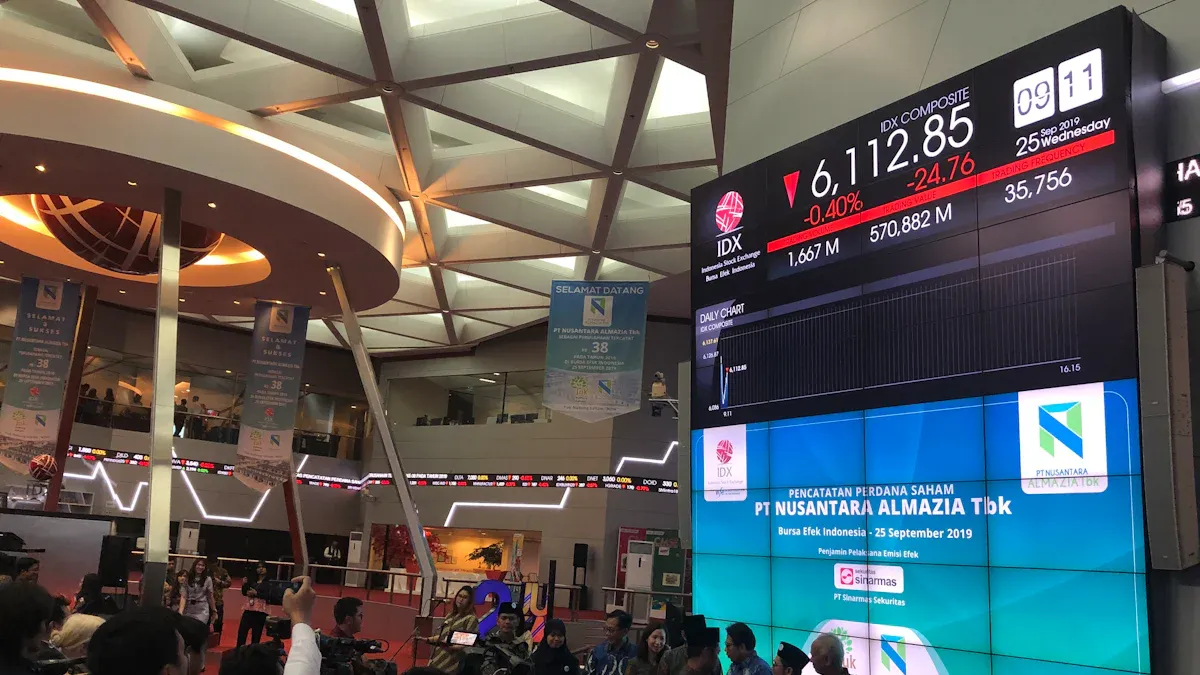
Image Source: unsplash
To trade safely in a half-day session, the first step is to fully understand all the special rules. Many trading mistakes stem from misunderstanding the schedule, so knowing the exact Hong Kong stock trading hours is critical.
Specific Dates for Half-Day Sessions
Hong Kong half-day sessions do not occur randomly — they follow a fixed pattern. The three main dates to watch are:
- Christmas Eve (December 24)
- New Year’s Eve (December 31)
- Lunar New Year’s Eve
Friendly reminder: Exact dates may shift slightly due to weekends. Always double-check the official HKEX trading calendar before the holiday to ensure accuracy.
Overview of Opening and Closing Times
The most obvious feature of half-day sessions is the drastically shortened trading time. There is no afternoon session, and all buying and selling must be completed by noon.
Refer to the table below for a quick comparison:
| Item | Full Trading Day | Half-Day Session |
|---|---|---|
| Morning Session | 09:30 – 12:00 | 09:30 – 12:00 |
| Afternoon Session | 13:00 – 16:00 | No afternoon session |
| Closing Auction | 16:00 – 16:10 | 12:00 – 12:10 |
These special Hong Kong stock trading hours mean your decision-making and execution window is severely compressed — you need to act decisively according to your plan.
T+2 Settlement Postponement Rules
This is the most overlooked cash trap in half-day trading. Hong Kong uses a T+2 settlement system, meaning funds from a sale on T-day become available for withdrawal only two trading days later (T+2).
If your plan involves “selling first, then moving cash for other uses,” it helps to budget both settlement postponement and FX friction together: use the BiyaPay fiat FX converter to compare live rate ranges across currencies, then check available delivery options and cut-off constraints via BiyaPay remittance. When you also need to verify HK stock quotes or related updates around holidays, the BiyaPay stock lookup can keep your watchlist aligned with the question of “when you sell” versus “when the funds are actually usable.”
BiyaPay is positioned as a multi-asset trading wallet spanning cross-border payments, investing, and funds management, and it operates with compliance credentials such as U.S. MSB and New Zealand FSP registration. In a holiday-shortened service window, treating it as a verification and cash-planning layer is often more practical. For a single entry point, start from the BiyaPay official site and use Sign up when account access is needed.
When a half-day session is immediately followed by a public holiday, settlement is postponed. For example, if you sell stocks on a Thursday half-day session and Friday is a public holiday, funds will only settle the following Tuesday. This postponement rule is the detail most likely to disrupt your holiday cash flow — plan ahead.
Tip 2: Pay Attention to Closing Auction Order Rules
After mastering the schedule, the next critical point is understanding the special rules for the final 10 minutes before close. This period, called the Closing Auction Session (CAS), has very different order rules from regular continuous trading and is where many investors make costly mistakes.
Understanding the Closing Auction Session (CAS)
The CAS was introduced by HKEX to create a fair closing price. In half-day sessions, it runs from 12:00 noon for approximately 8–10 minutes, with random close between 12:08 and 12:10.
In simple terms, the purpose of CAS is to:
- Collect orders from all market participants
- Calculate a consensus price that maximizes executed volume
- Execute all eligible orders at that single consensus price
This mechanism covers the vast majority of stocks and ETFs, so you must pay special attention.
Why You Should Avoid Market Orders
The biggest mistake during CAS is using market orders. Half-day sessions have shorter hours and fewer participants, resulting in potentially very thin liquidity.
A market order means “execute at any price.” If there aren’t enough counter orders, your trade could execute at an extreme, completely unexpected price.
Historically, during moments of sudden liquidity drought, market orders have been filled at absurd prices — some famous stocks traded as low as $0.01 or as high as $100,000. It’s like signing a blank check — extremely risky.
Use At-Auction Limit Orders to Control Costs
So how do you place orders safely during CAS? Use at-auction limit orders.
An at-auction limit order lets you set a maximum buy price or minimum sell price, creating a safety net. Your order will only execute at the final closing price if it is equal to or better than your specified price. This prevents you from buying too high or selling too low.
Special note for Stock Connect investors: When using at-auction limit orders via Stock Connect, your price cannot deviate more than ±5% from the prevailing reference price. This further protects against outlier orders.
Tip 3: Prepare and Arrange Funds in Advance
Executing trades is only half the battle — ensuring cash is available when you need it is equally important. Half-day sessions shorten both trading and banking service windows, which can directly affect your holiday cash needs.
Confirm Bank Service Hours
On half-day sessions, assume all financial institutions close early. This includes bank counter services, remittance cut-off times, and broker withdrawal processing.
For example, some brokers move their online withdrawal cut-off from the usual 2:00 pm to as early as 11:00 am. Miss that window and your withdrawal will only be processed after the holidays.
If you need cash, check your bank’s and broker’s exact half-day service schedule well in advance.
Estimate Actual Fund Availability After Selling
As explained in Tip 1, T+2 settlement is postponed by holidays. Funds from a half-day sale do not appear in your bank account immediately.
Carefully calculate the actual availability date. Many banks have different cut-off times for various remittance types.
| Remittance Type | Mon–Fri Cut-off | Saturday Cut-off (reference only) |
|---|---|---|
| Outward Remittance (same-day) | 18:00 | 12:00 – 13:00 |
| Inward Remittance (same-day credit) | 17:30 | 11:00 |
Even on normal days, cut-offs vary. On half-day sessions they are earlier.
Handle Currency Exchange and Withdrawals Early
To avoid being cash-strapped during holidays, the smartest move is to act early. Don’t wait until the half-day to exchange or withdraw.
Fortunately, modern tools offer flexibility.
Hong Kong’s Faster Payment System (FPS) provides 24/7 instant interbank transfers. Even on public holidays when banks are closed, you can still move money instantly via FPS.
Transfer funds from your brokerage to your bank account in advance, then use FPS for flexible holiday spending. This way, even if you miss bank cut-offs, you’ll have sufficient cash for any emergency.
Tip 4: Adjust Your Trading Strategy for the Short Session
Image Source: pexels
A half-day session lasts only about 2.5 hours — the pace is fast and variables are many. Continuing your usual full-day mindset will easily lead to rushed, wrong decisions. You must adapt your strategy to this “short-session” environment.
Shorten Decision Time — Prepare in Advance
Every minute counts from open to close. You don’t have the luxury of slow analysis or waiting for the perfect setup.
The time constraint increases psychological pressure, especially when volatility is high. You must digest information and execute quickly.
The best countermeasure is to front-load decisions. Prepare before the market opens:
- Use overnight U.S. market moves or major global news to gauge sentiment.
- Pre-plan scenarios and responses for your watchlist stocks.
This allows you to execute calmly when the market opens instead of chasing frantically.
Reduce Frequent Short-Term Trading
Shorter hours and fewer participants usually mean lower liquidity. Frequent scalping carries higher risk and cost.
When you see a stock spike, pause and analyze the reason — don’t chase blindly. Avoid panic selling on dips. In this environment, less is often more. Recommendations:
- Trade only highly liquid stocks.
- If not urgent, build positions gradually after observing direction.
- Focus on your highest-conviction setups, not every wiggle.
Create a Clear Trading Plan
In an uncertain half-day session, a written trading plan is your best protection. It replaces emotion with discipline.
A good plan is based on data and rules, not market noise or momentary feelings.
Before trading starts, your plan should include at least:
- Entry trigger: At what price or signal will you buy?
- Profit target: At what level will you take profits?
- Stop-loss: At what price will you cut losses?
This roadmap keeps you on track despite time pressure and dramatically improves success rate.
Tip 5: Stay Calm and Handle Market Volatility
The first four tips covered technical aspects. The fifth — and most important — is your mindset. In a compressed, high-variable half-day environment, staying calm is far more valuable than any fancy technique.
Understand Pre-Holiday Market Sentiment
You may notice the market feels different before holidays — this is the well-documented pre-holiday effect. Studies show returns are often significantly higher.
Reasons include:
- Optimistic investor mood before holidays.
- Short sellers covering positions to avoid holiday risk.
However, optimism doesn’t eliminate risk. Fewer participants often mean lower liquidity and larger swings.
| Holiday Type | Main Market Impact | Specific Behavior |
|---|---|---|
| Global holidays (e.g. Christmas) | Significant liquidity drop | Institutional activity drops, retail-driven, higher volatility possible |
| Regional long holidays (e.g. Lunar NY) | Cyclical fund flows | Some investors sell for cash, re-enter after holiday |
Understanding these patterns helps you view short-term moves objectively instead of being led by the crowd.
Doing Nothing Is Also a Strategy
In a short session you may feel pressure to “do something.” Yet sometimes the best action is inaction. Warren Buffett strongly advocates patience.
“Inactivity strikes us as intelligent behavior,” says Buffett. Why treat minority stakes in great companies differently from wholly-owned subsidiaries?
Buffett views the market as a wealth transfer from active to patient investors. In low-liquidity half-day sessions, frequent trading only raises error probability and costs. Filtering out noise is often the wisest choice.
Focus on Long-Term Goals
Half-day volatility is just surface waves — it rarely changes the underlying current. Instead of staring at minute-by-minute prices, use the time to review your long-term portfolio.
Treat it as a valuable portfolio health check:
- Review asset allocation — has any position grown too large?
- Reaffirm your original thesis — sell only if fundamentals have truly changed.
- Consider rebalancing if severely off-target — but as a deliberate decision, not a knee-jerk reaction.
Remember: Time in the market beats timing the market. Staying focused on quality assets’ long-term value lets you sail calmly through half-day turbulence and enjoy your holiday.
In summary, the five core tips for half-day Hong Kong stock trading are: master the schedule, watch closing auction rules, prepare cash early, adjust strategy, and stay calm.
Success in these special Hong Kong trading hours lies not in chasing short-term moves, but in avoiding mistakes.
Prepare thoroughly, trade safely, and enjoy your holiday!
FAQ
Can I trade warrants and CBBCs on half-day sessions?
Yes. Warrants, CBBCs, and other derivatives follow the same trading hours as stocks. You can trade from 09:30–12:00. However, price swings may be more violent — manage risk carefully.
What happens to my limit order if it doesn’t fill before 12:00 noon?
It will automatically carry over to the closing auction. If your price meets CAS rules and the final closing price falls within your range, it may execute. If not, the order expires after the close.
Does a Hong Kong half-day session affect U.S. pre-market trading?
No. Hong Kong’s half-day schedule does not affect U.S. trading hours. U.S. pre-market, regular, and after-hours sessions run as normal.
Why is volume usually lower on half-day sessions?
Volume is lower mainly because trading time is halved and many institutional and foreign investors start their holidays early, reducing overall participation.
This leads to lower liquidity and potentially larger price moves — be extra cautious when placing orders.
*This article is provided for general information purposes and does not constitute legal, tax or other professional advice from BiyaPay or its subsidiaries and its affiliates, and it is not intended as a substitute for obtaining advice from a financial advisor or any other professional.
We make no representations, warranties or warranties, express or implied, as to the accuracy, completeness or timeliness of the contents of this publication.
Related Blogs of
Panda Remit Transfer Failed and Returned? In-Depth Comparison of Risk Control Strictness and Channel Stability Across Different Cross-Border Remittance Apps

International Students Returning Home After Graduation: How to Most Conveniently and Cost-Effectively Bring Back the Few Thousand USD Left in Your US Bank Card?

Digital Currency Credit Card Comparison: Which Card Offers the Best POS Exchange Rate in China and Lowest Risk of Suspension?


Logic of Money Laundering Conviction: How Ordinary People Ensure Their Crypto Asset Cash-Out Activities Never Cross the Red Line
Choose Country or Region to Read Local Blog
 Australia
 Austria
 Belgium
 Canada
 Cyprus
 Czech Republic
 Denmark
 Estonia
 Finland
 France
 Germany
 Greece
 Hong Kong
 India
India Indonesia
 Ireland
 Italy
Italy Japan
Japan Latvia
 Lithuania
 Luxembourg
 Malaysia
 Malta
Malta Morocco
 Nepal
Nepal Netherlands
 New Zealand
 Norway
 Pakistan
 Philippines
 Poland
 Portugal
 Romania
 Singapore
 Slovakia
 Slovenia
 South Africa
 South Korea
 Spain
Spain Sweden
 Thailand
 The United States
 Turkey
 United Arab Emirates
 United Kingdom
 Vietnam
Contact Us




BIYA GLOBAL LLC is registered with the Financial Crimes Enforcement Network (FinCEN), an agency under the U.S. Department of the Treasury, as a Money Services Business (MSB), with registration number 31000218637349, and regulated by the Financial Crimes Enforcement Network (FinCEN).
BIYA GLOBAL LIMITED is a registered Financial Service Provider (FSP) in New Zealand, with registration number FSP1007221, and is also a registered member of the Financial Services Complaints Limited (FSCL), an independent dispute resolution scheme in New Zealand.