Dow Jones Index Closing Roundup: Energy Sector Weakness Offsets Some Tech Gains





Image Source: pexels
U.S. stocks closed mixed on Tuesday, with the three major indexes performing as follows:
- Dow Jones: Closed up 25.41 points, a gain of 0.06%.
- S&P 500: Rose 15.88 points, a gain of 0.31%.
- Nasdaq Composite: Rose 120.53 points, a gain of 0.72%.
If you want to translate “index close” into “which names drove it,” you can quickly cross-check movers and after-hours details via the BiyaPay stock lookup, then come back to this article’s energy-vs-tech split to see why the Dow’s upside was capped. Keeping the BiyaPay official site bookmarked also helps you track the same watchlist consistently.
If you prefer turning observations into a small, controlled workflow (e.g., scaling in rather than going all-in), first verify the instrument and order interface on the same-domain trading entry, and use Sign up when you need account access. BiyaPay positions itself as a multi-asset trading wallet spanning investing, trading, and funds management, and it operates with compliance registrations such as U.S. MSB and New Zealand FSP—useful as a practical verification layer as you move from reading to execution.
The market showed a tug-of-war between bulls and bears overall. Energy stocks weakened due to falling oil prices, offsetting some of the strong gains in tech stocks and limiting the broader market’s upside. Despite this, the Dow Jones maintained a slight gain.
Key Points
- Energy stocks fell due to lower oil prices, offsetting tech stock gains.
- Tech stocks performed well, especially Nvidia and Apple, which drove the market.
- Expectations for Fed policy further supported tech development.
- The market is now cautious, awaiting inflation and employment data.
- The Dow Jones’s gain was smaller due to poor energy stock performance.
Closing Performance of Major Indexes
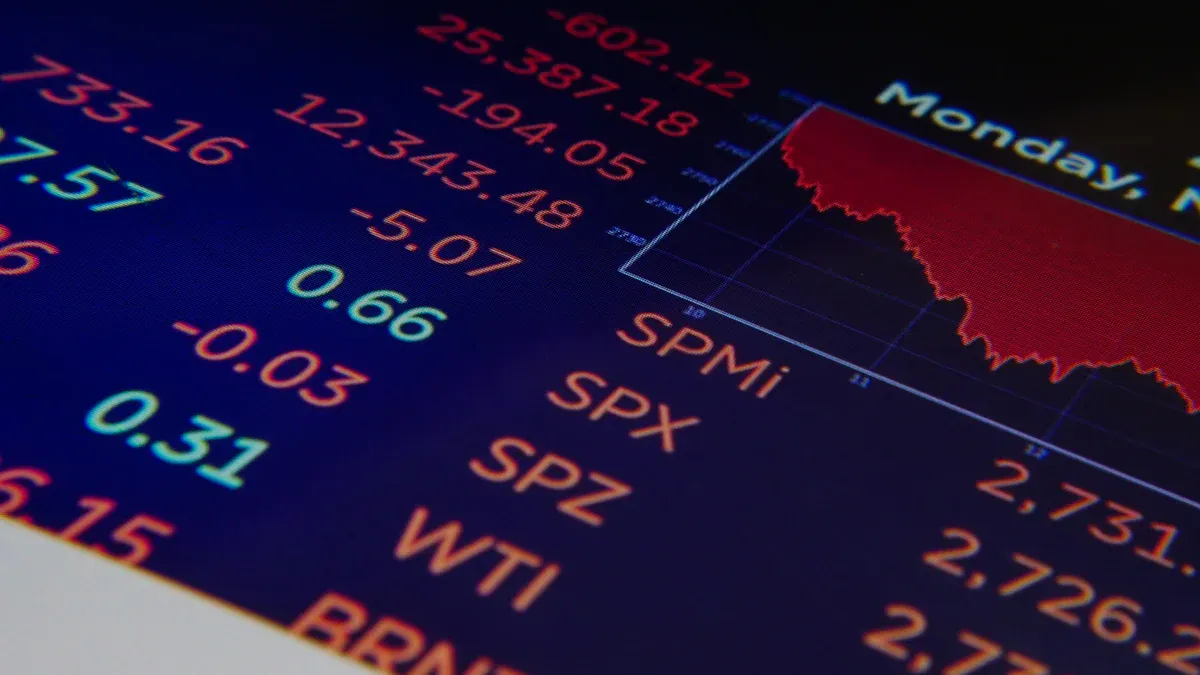
Image Source: pexels
Despite the tug-of-war, all three major indexes closed higher, but with varying gains reflecting sector battles.
Dow Jones Closing Level and Change
The Dow Jones closed at 47,474.46, up 0.39%. Intraday action showed market hesitation, with the index oscillating in a range.
Data shows the Dow’s trading range was between 47,371.62 and 47,969.64. Compared to its 52-week volatility, this indicates relatively mild intraday swings and a cautious investor stance.
S&P 500 Performance Analysis
As a broader market proxy, the S&P 500 rose 0.31%, outperforming the Dow. This highlights the market’s “split” nature: while some traditional sectors (like energy) faced pressure, strong performance in others was enough for a mild gain. Analysts attribute the S&P’s rise mainly to contributions from tech and communication services, which have heavy weighting.
Nasdaq Composite Trend
The tech-heavy Nasdaq Composite shone brightest. It rose 0.17% to close at 23,454.09. Though modest, this gain clearly shows funds continuing to flow into growth-potential tech, especially driven by AI and semiconductors, which stabilized market confidence.
| Index | Closing Price (Points) |
|---|---|
| Dow Jones Industrial Average | 47,968.11 |
| S&P 500 | 6,853.24 |
| Nasdaq Composite | 25,614.09 |
Energy Sector Pressure and Oil Price Decline
Despite tech’s momentum, the energy sector became the main drag on Tuesday. Rising concerns over crude demand led to broad weakness in energy stocks, offsetting some of the market’s gains.
Impact of Falling International Crude Prices
Crude markets have been volatile lately, with demand doubts becoming a key driver of oil prices. While geopolitical risks provide some support, downside factors are drawing more attention.
The U.S. Energy Information Administration (EIA) latest data shows U.S. crude inventories unexpectedly rose by 574,000 barrels last week. Gasoline and distillate inventories also increased. This suggests demand may not be as strong as expected, casting a shadow over oil price outlook.
Analysts note that global economic uncertainty, plus regional oversupply worries, are pressuring energy companies’ profit forecasts. This sentiment directly reflected in Tuesday’s price action.
Major Energy Company Stock Reactions
Against an unclear oil outlook, large energy firms took the brunt. As key Dow components, their declines clearly weighed on the index.
- Exxon Mobil (XOM): Fell about 1.2%, one of the main selling pressure points.
- Chevron (CVX): Also closed red, down nearly 1.0%, reflecting investor concerns over short-term profitability.
The S&P 500 Energy Sector Index (XLE), representing the broader sector, has performed well over the past six months but shows fatigue in the long term, highlighting structural challenges.
The chart shows that despite nearly 10% gains in the last six months, XLE is down 2.84% over 52 weeks. This indicates the rebound is not yet solid and is vulnerable to sentiment shifts.
Changes in Global Supply Chain Sentiment
Global supply chain data also shows complex and divided signals, adding to market confusion over the economic outlook. Shipping indexes are particularly noteworthy.
The Baltic Dry Index (BDI) has been extremely strong lately. It mainly tracks freight rates for dry bulk commodities like iron ore and coal. As of December 3, the BDI has surged for 15 straight days, with a 9.42% single-day gain hitting new highs. This is typically interpreted as a sign of robust global industrial activity and infrastructure demand.
However, another key indicator shows the opposite trend:
| Index Name | Value (Dec 4, 2025) | Monthly Change | Annual Change |
|---|---|---|---|
| Container Freight Index | 1,403.13 points | -9.52% | -37.19% |
Containers mainly transport finished goods and consumer products; the index’s continued decline may signal cooling global end-demand. This “hot industry, cold consumer” divergence makes it harder for investors to gauge future economic direction and energy demand, leading to a more conservative stance.
Tech Stocks Buck Trend to Support Market — Giant Moves
Amid broad energy weakness, tech stocks played the role of market pillar, with strong performance not only supporting the indexes but also becoming the main source of investor confidence. Especially positive news from big tech giants injected key growth momentum into the market.
Nvidia and Apple Price Drivers
The price gains in two tech giants — Nvidia and Apple — were Tuesday’s most notable highlights. Their rises were no accident but driven by specific positive news and strong market expectations.
Nvidia continues to solidify its leadership in artificial intelligence (AI).
- Strong analyst backing: Morgan Stanley recently issued a “jaw-dropping price target” for Nvidia, showcasing Wall Street’s extreme optimism about its AI prospects. Financial media like Finviz also reported Nvidia delivering amazing news for AI stock investors, further igniting market enthusiasm.
- Long-term growth potential: The market believes concerns over Nvidia’s dominance eroding are overblown. The Motley Fool predicts Nvidia will be one of the most surprising winners in 2026. Analysts expect 48% stunning growth next year.
- Technical and market edge: Nvidia’s leading GPU hardware and supporting software ecosystem perform exceptionally in the fast-evolving AI model environment. The company expects global data center capex to reach $3–4 trillion by 2030, providing a solid foundation for sustained growth over the next few years.
Apple also welcomed multiple positives. The market has high expectations for future product sales and AI strategy deployment, steadily driving its share price higher.
First, sales outlook for the iPhone 17 series is extremely optimistic. Research firm IDC forecasts Apple to ship 247.4 million iPhones in 2025, up over 6% YoY and surpassing the 2021 record. Strong demand expectations are also warming Apple’s performance in China.
Second, Apple is accelerating AI development and deployment. The company recently made major personnel changes, hiring a former Google Gemini chief engineer to lead AI work. The market expects the AI-powered new Siri to launch in early 2026. Wedbush Securities analyst Dan Ives called this “the right decision at the right time,” showing positive affirmation for Apple’s AI pivot.
Overall Semiconductor Sector Sentiment
Tech strength is not limited to Nvidia and Apple — the entire semiconductor sector shows positive sentiment, providing broad support for tech gains. The Philadelphia Semiconductor Index (SOX) rose in tandem, reflecting continued fund inflows to the space.
Beyond Nvidia, other semiconductor stocks also performed well. For example, ON Semiconductor rose 15% in just seven days, showing market confidence in the sector is broad-based rather than concentrated on one leader. This tide indicates investors are bullish on chip demand from AI to EVs and beyond.
Fed Rate Policy Expectations Impact
Macro expectations are also creating a favorable environment for tech. Market interpretation of the Federal Reserve’s future policy is shifting toward growth-friendly territory.
| Meeting/Statement Date | Key Decision & Viewpoint | Market Impact |
|---|---|---|
| October 2025 | FOMC lowers federal funds target range by 25 bps | Clear signal of monetary easing pivot |
| November 2025 | One official says policy has room to adjust toward neutral | Reinforces expectations for further cuts |
| August 2025 | Fed revises framework, redefines “maximum employment” | Allows strong job market without inflation fears, reducing rapid hike risks |
In summary, the Fed’s dovish tilt brings easing expectations. Officials’ comments suggest that even with solid economic data, the Fed won’t rush tightening. This “low rate” or “stable rate” environment significantly lowers tech companies’ financing costs and boosts future cash flow valuations. Thus, rate-sensitive tech and growth stocks become the main beneficiaries of this market anticipation.
Market Expert Views and Outlook
Image Source: pexels
Faced with the split between weak energy and strong tech, experts offer diverse views. They parse the next moves while closely watching upcoming key data.
Analyst Interpretations of the Bull-Bear Tug-of-War
Analysts generally agree the tug-of-war reflects a balance between solid fundamentals and potential risks.
- Bullish views: BlackRock Investment Institute maintains overweight on U.S. equities. They believe AI-driven strong earnings plus Fed easing expectations provide solid support. Baird Wealth’s analysis notes market indicators remain positive, with fundamentals steady.
- Cautious views: Morgan Stanley’s Mike Wilson acknowledges the new bull market but warns of overheating. He expects a 10–15% S&P 500 correction from financing pressures and trade shifts.
- Balanced views: Merrill Lynch experts point out tariffs may pressure profits short-term but could prompt trading partners toward domestic consumption, creating U.S. opportunities. Overall, global trade war threats have significantly eased.
In summary, experts broadly agree fundamentals are healthy but differ on short-term pullback risks. This divergence is why the Dow Jones and other broad indexes are consolidating.
Expectations for Key Future Economic Data
The market’s next direction will largely depend on upcoming inflation and jobs data. Investors are holding their breath for clues on Fed policy.
Inflation Data (CPI): Market expectations for future inflation remain mild, helping stabilize sentiment.
| Time Point | Expected CPI |
|---|---|
| End of quarter | 325.39 |
| 2026 | 333.85 |
| 2027 | 341.87 |
Employment Data (NFP): Non-farm payrolls are another key economic health gauge.
- October 2025: Expected job losses of 5,000.
- November 2025: Revised forecast for 45,000 job gains.
- Long-term: Projected monthly job adds of ~80,000 by 2026.
Major deviations from expectations could trigger sharp volatility.
VIX Volatility Index Analysis
The Volatility Index (VIX), often called the “fear gauge,” is a vital market sentiment tool. Changes reflect expected 30-day volatility.
VIX interpretation standards are:
- Below 20: Optimism or complacency.
- Around 20: Historical average.
- Above 40: Extreme fear.
A low current VIX means little worry of near-term drops — but that could signal complacency. If bad news hits, low-vol environments can flip quickly, sparking sell-offs. Pros thus use VIX as a contrarian gauge for risk.
Tuesday’s market showed clear division, with energy weakness offsetting tech strength in a bull-bear stalemate. This led the Dow Jones index to close flat.
Market participants have turned cautious, with global investors focusing on a series of key economic data releases, especially inflation and jobs reports. These will provide clearer guidance for the market’s next phase.
| Index | Closing Price (Points) |
|---|---|
| Dow Jones (US30) | 47,968.11 |
| S&P 500 (US500) | 6,853.24 |
| Nasdaq (US100) | 25,614.09 |
FAQ
Why did the Dow Jones lag behind the Nasdaq?
The Dow includes more traditional sectors, like the day’s declining energy stocks. The Nasdaq is tech-heavy and benefited from strong gains in Nvidia and others. Energy weakness dragged the Dow, resulting in a smaller gain than the tech-focused Nasdaq.
Why did energy stocks fall?
The main reason is declining international crude prices. Market data showed unexpected crude inventory builds, sparking investor worries over weakening future demand. This sentiment directly pressured major energy firms like Exxon Mobil and Chevron.
What drove tech stock gains?
Tech rises were fueled by multiple factors:
- Leader positives: Nvidia’s AI strength and Apple’s product hype boosted confidence.
- Rate expectations: Market anticipates Fed easing, favorable for tech valuations.
What should investors watch next?
The spotlight shifts to key economic data. Closely monitor the latest CPI inflation report and NFP jobs data. These will be crucial clues for economic direction and Fed policy, potentially guiding the market’s next move.
*This article is provided for general information purposes and does not constitute legal, tax or other professional advice from BiyaPay or its subsidiaries and its affiliates, and it is not intended as a substitute for obtaining advice from a financial advisor or any other professional.
We make no representations, warranties or warranties, express or implied, as to the accuracy, completeness or timeliness of the contents of this publication.
Related Blogs of

Logic of Money Laundering Conviction: How Ordinary People Ensure Their Crypto Asset Cash-Out Activities Never Cross the Red Line


Investing in Japanese Real Estate for Rental Yield: How to Convert JPY Rent to USD and Trade US Stocks Using the Same App?


Never Trust Any 'Acquaintance Currency Exchange': Real Cases of Crypto Assets Stolen via Acquaintance Scams During the World Cup


Digital Currency Credit Card Comparison: Which Card Offers the Best POS Exchange Rate in China and Lowest Risk of Suspension?
Choose Country or Region to Read Local Blog
 Australia
 Austria
 Belgium
 Canada
 Cyprus
 Czech Republic
 Denmark
 Estonia
 Finland
 France
 Germany
 Greece
 Hong Kong
 India
India Indonesia
 Ireland
 Italy
Italy Japan
Japan Latvia
 Lithuania
 Luxembourg
 Malaysia
 Malta
Malta Morocco
 Nepal
Nepal Netherlands
 New Zealand
 Norway
 Pakistan
 Philippines
 Poland
 Portugal
 Romania
 Singapore
 Slovakia
 Slovenia
 South Africa
 South Korea
 Spain
Spain Sweden
 Thailand
 The United States
 Turkey
 United Arab Emirates
 United Kingdom
 Vietnam
Contact Us




BIYA GLOBAL LLC is registered with the Financial Crimes Enforcement Network (FinCEN), an agency under the U.S. Department of the Treasury, as a Money Services Business (MSB), with registration number 31000218637349, and regulated by the Financial Crimes Enforcement Network (FinCEN).
BIYA GLOBAL LIMITED is a registered Financial Service Provider (FSP) in New Zealand, with registration number FSP1007221, and is also a registered member of the Financial Services Complaints Limited (FSCL), an independent dispute resolution scheme in New Zealand.