How Investors Can Navigate Dow Jones Volatility: Key Factors Analysis and Strategy Adjustment Guide




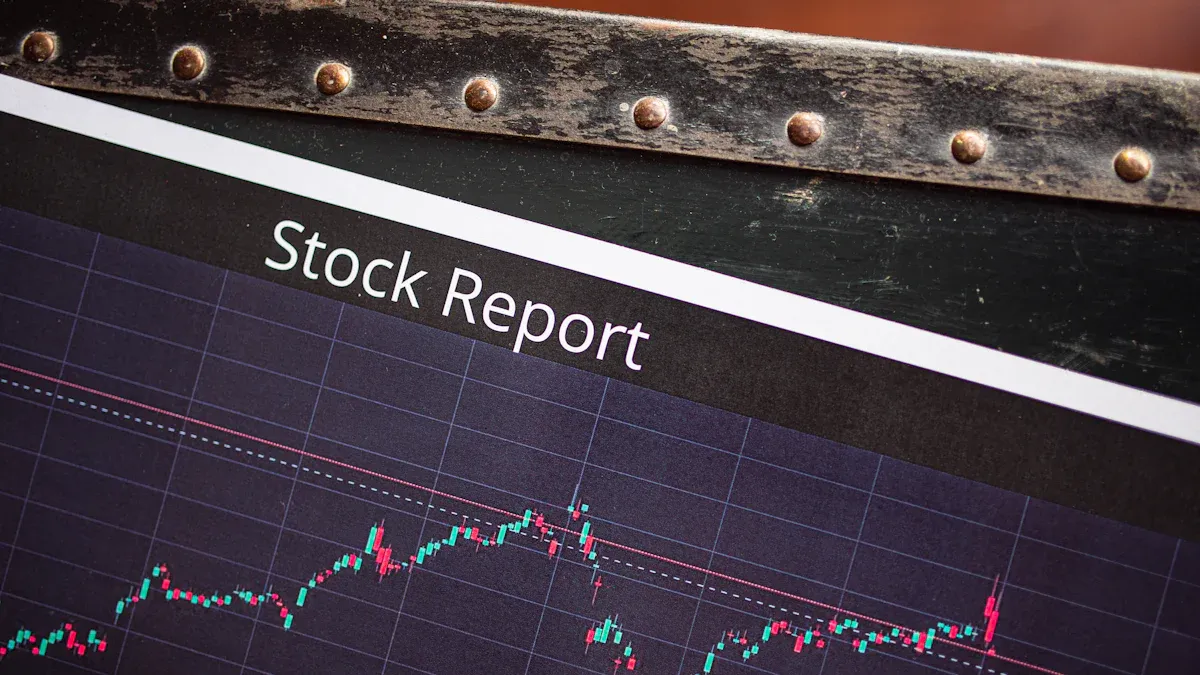
Image Source: pexels
Investors facing the daily ups and downs of the Dow Jones Industrial Average should not feel panic or confusion. The path to success rests on two core foundations: understanding the drivers behind volatility and building strategies that align with your own goals.
Market Volatility Snapshot
Recent market volatility has increased, as clearly visible in the data.
Metric Value DJIA VIX (December 2, 2025) 15.98 DJIA VIX (One Year Ago) 13.85 Change vs. One Year Ago 15.38% Average Growth Rate 80.84% This shows that expectations of future uncertainty are rising.
Establishing clear investment logic helps investors stay grounded amid market swings and make smarter decisions.
Key Takeaways
- Dow Jones volatility stems primarily from three sources: macroeconomic data, corporate earnings, and global events.
- Investors can adopt defensive strategies to reduce risk, such as diversification and focusing on stable sectors.
- Investors can also use offensive strategies to seize opportunities, such as buying quality assets during market dips.
- Long-term investing success hinges on sticking to a plan, avoiding emotional trading, and regularly reviewing the portfolio.
- Staying calm and focusing on long-term goals is the best way to achieve financial success amid market volatility.
Decoding Dow Jones Volatility: Three Critical Drivers
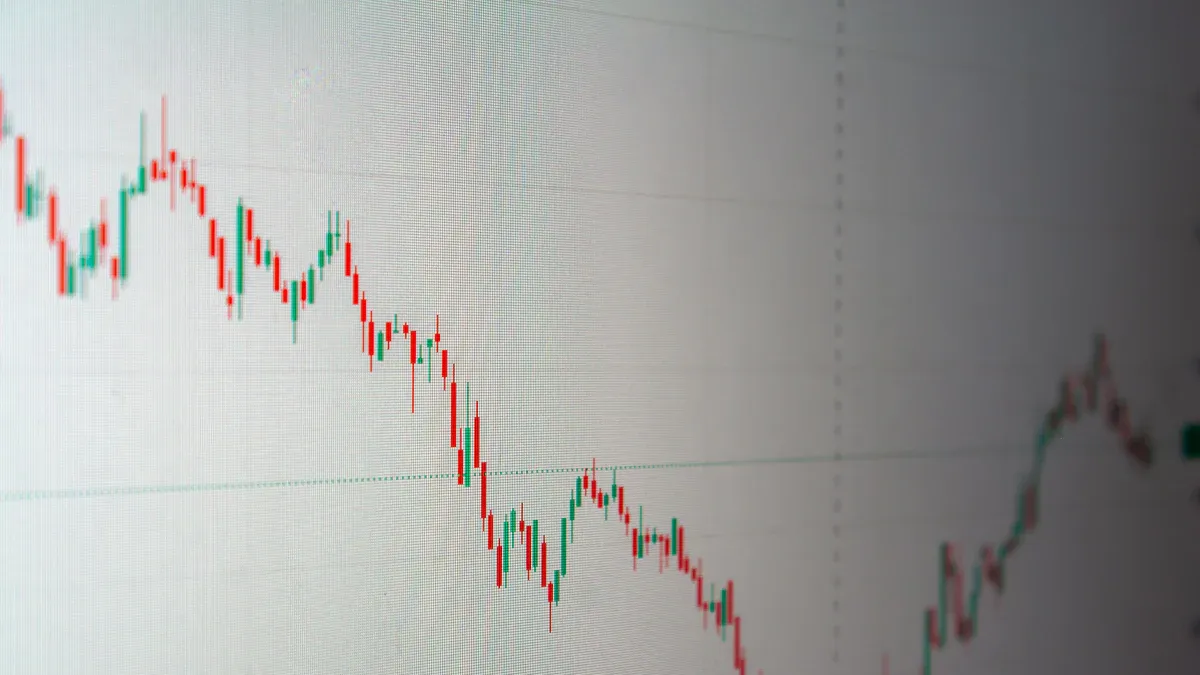
Image Source: unsplash
Market movements are not random; they are typically driven by several key factors. Understanding how these factors affect the Dow Jones allows investors to respond more calmly to changes. Below we examine the three core drivers in depth.
Macroeconomic Data: The Market’s Barometer
Macroeconomic data serves as a key gauge of economic health — essentially the market’s barometer — directly influencing investor sentiment and corporate valuations. Certain data points have an outsized impact.
- Interest Rate Policy: Federal Reserve decisions are a focal point. Rate hikes typically raise corporate borrowing costs and reduce the relative attractiveness of stocks, potentially pressuring the market. Conversely, rate cuts stimulate both the economy and equities.
One reason rate shifts “amplify” volatility is not just directionality, but whether costs and capital efficiency are being measured on the same baseline. If you track Dow components alongside USD exposure and multi-currency positions, it helps to standardize your workflow: use BiyaPay’s stock information lookup to cross-check Dow-related names and key earnings movers, then use the fiat FX converter & comparison tool to translate FX costs and drawdowns into one reference currency—so you don’t mistake FX noise for true portfolio performance.
When you move from “understanding” to “execution,” shorter and more consistent paths reduce decision slippage during fast markets: you can route execution and capital adjustments through the same-domain trading entry, and reference updates via the official site and the Events Center for notices and rule changes. BiyaPay is positioned as a multi-asset trading wallet covering investing, trading, and cash management, and operates with relevant registrations in multiple jurisdictions (including U.S. MSB and New Zealand FSP), which fits a disciplined “observe—normalize—execute” risk workflow in volatile periods.
- Inflation Data: The Consumer Price Index (CPI) is the primary inflation gauge. Historical data shows that the relationship between inflation and the Dow Jones varies over time. In some periods, high inflation triggers rate-hike expectations and hurts markets; in others, moderate inflation is viewed as a sign of healthy growth.
- Employment Reports: Strong job numbers signal economic vitality but can also spark inflation and rate-hike concerns.
Market Spotlight: Nonfarm Payrolls Report
Released by the U.S. Department of Labor on the first Friday of each month, the Nonfarm Payrolls report is one of the most closely watched data points. Based on surveys of about 141,000 businesses and government agencies, it provides detailed employment, hours worked, and wage data, exerting significant influence on stocks, bonds, and the dollar.
Corporate Earnings and Sector Trends: The Engine of Component Stocks
The Dow Jones consists of only 30 large blue-chip companies and is price-weighted — a crucial characteristic. This means higher-priced components have greater influence on the index. The performance of just a few high-priced stocks can dictate the overall direction.
For example, earnings releases from high-priced stocks like Microsoft and Apple trigger particularly strong market reactions. Even when component stocks show mixed results, a strong move in one high-priced name can lift the entire index.
| Company/Index | Impact | Specific Value |
|---|---|---|
| Microsoft | Price increase | Up 9% after hours |
| Apple | Price decline | Down 4% after hours |
| Dow Jones Industrial Average | Increase | Up 0.66% |
As the table illustrates, despite Apple’s decline, Microsoft’s powerful post-earnings rally offset the loss and drove the overall Dow higher.
Beyond individual earnings, broader sector trends are equally critical. Capital rotates between sectors in search of the next growth driver.
- Technology Sector: While artificial intelligence (AI) remains a long-term trend, short-term concerns about revenue prospects or interest rate sensitivity can push money out of high-valuation AI names and into value stocks.
- Healthcare Sector: Traditional industries with stable cash flows and value characteristics often attract inflows during periods of uncertainty, becoming a major force behind new index highs.
Global Political and Economic Events: External Shocks and Variables
In today’s globalized world, major political or economic events anywhere can trigger chain reactions that hit U.S. markets. These external variables add extra uncertainty.
Geopolitical conflicts are common sources of shocks. For instance, escalating tensions in the Middle East often drive sharp spikes in global oil prices, directly affecting energy stocks and transportation costs. Similarly, the ongoing Russia-Ukraine war continues to disrupt global energy supply chains, with sanctions and counter-sanctions creating significant price volatility. Additionally, shifts in trade policy among major economies — such as the new U.S. tariff policies announced in early April 2025 — have previously triggered steep market drops.
Beyond conflicts and trade disputes, major central bank policy shifts also command global attention. For example, the Bank of Japan ending decades of ultra-loose policy is expected to strengthen the yen. This could prompt Japanese institutional investors to repatriate capital from overseas markets like the U.S., impacting U.S. equity liquidity and pushing bond yields higher, creating a global tightening effect.
Practical Strategies to Handle Volatility

Image Source: pexels
Once the drivers are understood, investors need a clear action plan. There is no one-size-fits-all approach — the plan must be tailored to individual risk tolerance and financial goals. Below are three types of practical strategies to help investors find the best fit during volatile times.
Defensive Strategies: Reducing Portfolio Risk
When uncertainty rises, the primary goal is capital preservation and lowering overall portfolio risk. Defensive strategies prioritize stability over short-term high returns.
- Asset Allocation Diversification: This is the most fundamental and important risk-management step. The core idea is “don’t put all your eggs in one basket”. Historical data shows a well-diversified portfolio effectively smooths volatility. For example, during market downturns, a 60% stocks / 40% bonds portfolio typically falls far less than a 100% stock portfolio. Diversification should occur on two levels:
- Across asset classes: Allocate across stocks, bonds, cash, etc.
- Within asset classes: Within stocks, spread across different sectors and regions.
- Focus on Defensive Sectors: Certain industries maintain stable demand even in recessions, making them natural safe havens.
- Consumer Staples: Demand for food, beverages, and household essentials does not fluctuate with the economy.
- Healthcare: Pharmaceuticals and medical services are essential needs with revenue largely unaffected by cycles.
- Utilities: Electricity, water, and natural gas are necessities of modern life with very stable demand.
- Utilize Factor Investing: Historical analysis shows stocks with specific “factors” perform better during recessions.
As shown below, across 16 U.S. recessions from 1927 to 2022, defensive factors like “Investment,” “Quality,” and “Profitability” delivered positive returns — far outperforming the broader market.Factor Type (Defensive/Aggressive) Performance During Recession (Annualized) Performance After Recession (Annualized) Defensive Factors Investment (Conservative minus Aggressive) +8.5% (best) N/A Quality (Quality minus Junk) +6.4% +1.1% (worst) Overall Market -4.2% +27% - Incorporate High-Dividend Assets: Companies that consistently pay dividends typically have strong cash flows, providing investors with ongoing income that cushions price declines.
Stock Name Dividend Yield Consecutive Years of Dividend Payments Stability During Volatility Prudential (PRU) 5.3% 16 years Its conservative business approach enabled it to weather financial crises while maintaining industry leadership. Main Street Capital (MAIN) 5.3% 17 years Has never cut its regular dividend since first payment in 2007, demonstrating exceptional stability.
Offensive Strategies: Finding Opportunities in Volatility
Market volatility brings not only risk but also opportunity. For investors with higher risk tolerance, irrational sell-offs create chances to buy quality assets at lower prices.
Warren Buffett’s famous quote perfectly captures the essence of offensive strategies: “Be fearful when others are greedy, and greedy when others are fearful.”
- Counter-Cyclical Deployment into Growth Assets: History shows that after recessions end, previously underperforming aggressive factors like “Size” (small caps) and “Value” often deliver the strongest rebounds. Investors can gradually build positions in high-potential growth stocks during periods of pessimism.
- Uncover Resilient Emerging Technologies: Even amid broad market swings, certain areas continue to show strong growth potential.
- Resilience Tech: A new field focused on strengthening energy, industry, and infrastructure against external shocks. It includes themes like energy efficiency, supply-chain rebuilding, and climate analytics with long-term prospects.
- Artificial Intelligence (AI): AI is viewed as the ultimate engine of future innovation. Short-term pullbacks can provide entry points into leading AI companies.
- Healthcare Cybersecurity: As medical data digitizes, this area has become a strategic priority with sustained demand growth.
Long-Term Investing Mindset: Riding Through Market Cycles
Whether defensive or offensive, success ultimately rests on a solid long-term investing mindset. Emotion is the investor’s greatest enemy, while discipline is the best friend.
- Stick to the Long-Term Plan and Avoid Emotional Trading: Short-term market moves are unpredictable. According to Dalbar, Inc., emotional decisions like chasing highs and panic selling cause investors’ long-term annualized returns to lag far behind market indices. Behavioral finance research estimates emotional decisions cost 1-2% of annual returns.
- Focus on “Time in the Market,” Not “Timing the Market”: Buffett believes the stock market is designed to transfer money from active traders to the patient. Frequent trading not only risks missing key up days but also raises transaction costs. Holding high-quality businesses and letting compounding work is the true key to wealth creation.
- Regular Review and Rebalancing: Long-term holding does not mean buy-and-forget. Investors should review their portfolio periodically (e.g., annually) to ensure allocations still match original targets. If an asset class has grown overweight due to strong performance, sell a portion to take profits and buy underweight assets — this is rebalancing. It helps lock in gains while keeping risk at the intended level.
In summary, handling Dow Jones volatility comes down to building a disciplined strategy that fits your goals and staying calm and patient amid market noise.
In conclusion, navigating Dow Jones volatility is not difficult. Success rests on two pillars: thorough “analysis” and flexible “strategies.” Investors should focus on understanding the forces driving the market and adjust their action plans accordingly.
- Master the three major factors: Macroeconomic conditions, corporate earnings, and global events.
- Apply three strategy types: Defensive, offensive, and long-term holding.
Investing is a journey of continuous learning. Short-term market swings are normal, and historical data proves that frequent trading erodes returns.
Maintaining discipline, reviewing regularly, and staying true to your personal plan are the only ways to successfully navigate market cycles and achieve your financial goals.
FAQ
Does rising volatility mean my portfolio will definitely lose money?
Not necessarily. Volatility simply means larger price swings — both up and down. For long-term investors, volatility can actually provide opportunities to buy quality assets at lower prices. The key is how you use strategies to manage risk.
Should I frequently switch between defensive and offensive strategies?
Not recommended. Frequent switching is often a sign of emotional trading, which increases costs and causes missed returns. Choose a primary strategy based on your long-term goals and risk tolerance and stick with it, avoiding chasing highs and panic lows.
How often should I rebalance my portfolio?
Most experts recommend rebalancing once a year. Too-frequent adjustments can create unnecessary transaction costs. Setting a fixed review cycle — such as year-end or your birthday — helps maintain discipline and keeps the portfolio aligned with target allocations.
When the Dow Jones drops sharply, what should I do first?
First, stay calm and avoid making immediate sell decisions. Second, revisit whether your investment plan still aligns with your long-term goals. If fundamentals remain intact, market panic can actually be a disciplined investor’s chance to add to quality positions.
*This article is provided for general information purposes and does not constitute legal, tax or other professional advice from BiyaPay or its subsidiaries and its affiliates, and it is not intended as a substitute for obtaining advice from a financial advisor or any other professional.
We make no representations, warranties or warranties, express or implied, as to the accuracy, completeness or timeliness of the contents of this publication.
Related Blogs of

YouTube Video Monetization: How Overseas Creators Convert Received USD Ad Revenue to Chinese Living Expenses the Fastest Way?


Enterprise Overseas Payroll Compliance and Tax Planning: How to Use Multi-Asset Payroll Platforms to Reduce Cross-Border Employment Costs?


OpenAI Card Frequently Declined (Card Declined)? Virtual Card Tested Solutions



Choose Country or Region to Read Local Blog
 Australia
 Austria
 Belgium
 Canada
 Cyprus
 Czech Republic
 Denmark
 Estonia
 Finland
 France
 Germany
 Greece
 Hong Kong
 India
India Indonesia
 Ireland
 Italy
Italy Japan
Japan Latvia
 Lithuania
 Luxembourg
 Malaysia
 Malta
Malta Morocco
 Nepal
Nepal Netherlands
 New Zealand
 Norway
 Pakistan
 Philippines
 Poland
 Portugal
 Romania
 Singapore
 Slovakia
 Slovenia
 South Africa
 South Korea
 Spain
Spain Sweden
 Thailand
 The United States
 Turkey
 United Arab Emirates
 United Kingdom
 Vietnam
Contact Us




BIYA GLOBAL LLC is registered with the Financial Crimes Enforcement Network (FinCEN), an agency under the U.S. Department of the Treasury, as a Money Services Business (MSB), with registration number 31000218637349, and regulated by the Financial Crimes Enforcement Network (FinCEN).
BIYA GLOBAL LIMITED is a registered Financial Service Provider (FSP) in New Zealand, with registration number FSP1007221, and is also a registered member of the Financial Services Complaints Limited (FSCL), an independent dispute resolution scheme in New Zealand.