Still Waiting for Transfers? Analyzing the Five Key Factors Affecting Fund Arrival Speed in 2025




Image Source: unsplash
Why does a transfer sometimes feel like “slow mail”? Users often face the frustration of delayed fund arrivals. Data from 2024 shows that not all payments can be completed instantly, especially in the personal payment sector, where more than half of transactions cannot be settled within one hour.
This article provides an in-depth key factors analysis, revealing the behind-the-scenes drivers affecting fund flow speed. Readers will gain specific actionable advice, thereby eliminating the anxiety of waiting and taking control of fund flow.
Core Highlights
- Choosing the right payment system is crucial; modern payment platforms are faster and cheaper than traditional bank transfers.
- Real-time payment networks are becoming widespread, and transfers will become faster in the future, even arriving in seconds.
- Financial institutions conduct compliance reviews, which affect transfer speed, but completing identity information can speed up the review.
- Digital asset transfer speed depends on the blockchain network; network congestion and transaction fees affect arrival time.
- User operation habits also affect transfer speed; carefully verifying information and choosing the right timing can avoid delays.
Payment Systems and Channels: The Starting Point of Efficiency

Image Source: unsplash
The chosen payment system is fundamental to determining fund arrival speed. Different channels are like different modes of transportation, with their inherent designs determining the upper limit of efficiency. From traditional bank wire transfers to modern digital payment platforms, the differences in speed and cost are huge.
Traditional SWIFT Network vs. Modern Payment Platforms
Traditional international transfers mostly rely on the SWIFT network. Through this system, a fund typically takes 1 to 5 business days to arrive. For example, some licensed banks in Hong Kong also take several days to process international wire transfers. This mechanism is not only slow but also relatively costly. Users typically need to pay sending fees ranging from $10 to $35 and may incur additional fees charged by intermediary banks.
Advantages of Modern Payment Platforms In contrast, modern payment platforms represented by Biyapay bypass multiple intermediary links of SWIFT by establishing their own payment networks. When users initiate a transfer, funds only need to flow between local accounts within the platform, without actual cross-border movement. This model brings significant advantages:
- Speed: More than 60% of transfers can be completed instantly, with the vast majority arriving within 24 hours.
- Cost: Transparent fee structure, no hidden exchange rate markups, sending fees as low as 0.33%.
Modern payment platforms represented by BiyaPay build their own payment networks and avoid many of the intermediary steps in the traditional SWIFT chain. When a user initiates a cross-border transfer, funds can often be netted and settled between local accounts on the platform rather than travelling through several correspondent banks, which reduces both uncertainty and waiting time.
BiyaPay is designed as a multi-asset wallet rather than a single-purpose remittance tool. Within one account, users can hold and convert multiple major fiat currencies and digital assets, use the free fiat FX comparison tool to estimate real costs, and then trigger a cross-border remittance without switching between a separate FX provider and a bank wire interface. Shortening this operational chain helps reduce manual input, repeated confirmations, and timing gaps between different systems.
On the data side, BiyaPay also focuses on reducing avoidable delays caused by incomplete details. The transfer flow encourages users to provide full beneficiary bank information and offers built-in SWIFT lookup and IBAN lookup tools so that routing and format issues can be identified before submission. For users, this combination of path design and upfront validation makes it easier to achieve predictable arrival times and a higher success rate across different currencies and corridors, while still operating within a compliant and regulated framework.
Impact of the Popularization of Real-Time Payment Networks
In 2025, the popularization of real-time payment (Real-time Payments) networks will become a key catalyst for accelerating transfers. These systems support 24/7 operation and can complete clearing and settlement in seconds. Currently, India leads the world with its Unified Payments Interface (UPI), handling nearly half of the world’s real-time payment transactions, with markets like Brazil and China closely following. It is predicted that the global real-time payment market will expand at a compound annual growth rate exceeding 35% in the coming years, meaning instant arrival will gradually become the norm.
Rise of Emerging Payment Methods
Users’ payment habits are also reshaping the fund flow landscape. The rise of digital wallets is the most significant trend. By 2024, digital wallets have captured 30% of the global online payment market share, surpassing credit cards and debit cards.
| Payment Method | 2024 Global Online Market Share |
|---|---|
| Digital Wallet | 30% |
| Credit Card | 20% |
| Debit Card | 15% |
In addition, the “Buy Now, Pay Later” (BNPL) model is also expanding rapidly, with its global market size expected to reach approximately $560 billion in 2025. These emerging methods are changing users’ expectations for fund flow, pushing the entire payment industry toward greater efficiency and convenience.
Compliance Risk Control Review: The Balance Between Security and Speed
Behind every transfer, a rigorous compliance risk control system is in operation. This system is like a scale, with fund security on one end and arrival speed on the other. To combat money laundering and financial crimes, global regulators are continuously tightening policies, directly affecting the efficiency of fund flow.
Global Anti-Money Laundering Regulations and Review Processes
Financial institutions must comply with strict anti-money laundering (AML) regulations. Among them, the Financial Action Task Force (FATF)’s “Travel Rule” imposes clear requirements on virtual asset service providers (VASPs). When users make a transfer, the platform must collect and verify a large amount of information.
Information Verification Under the “Travel Rule”
According to the regulations, the initiating platform must obtain and provide the following information to the receiving platform:
- Originator Information: Name, account, address, or personal identification number.
- Beneficiary Information: Name and account number.
If the platform cannot collect complete information, the transfer is not allowed to proceed. This process aims to ensure transparency and legitimacy of fund flow, but the information verification itself takes time, potentially causing delays.
Impact of 2025 Stablecoin Regulations
As crypto assets become increasingly popular, targeted regulations are also being introduced. The European Union’s Markets in Crypto-Assets Regulation (MiCA) is a representative example. This regulation sets unified market rules for stablecoins and other crypto assets, expected to fully impact the market in 2025.
MiCA requires stablecoin issuers to:
- Ensure their tokens are backed by sufficient reserves.
- Respect the redemption rights of token holders.
- Establish robust governance and risk management frameworks.
- Regularly report to regulators and publicly release whitepapers.
These regulations enhance market transparency and security but also increase the compliance burden on issuers and trading platforms, potentially slowing down the processing speed of stablecoin-related transactions in the initial stage.
How to Accelerate Review by Improving Identity Verification
Facing strict reviews, users are not just passive waiters. Choosing platforms that adopt advanced identity verification technology is key to accelerating transfers. Modern digital identity verification systems use artificial intelligence, biometrics, and multi-dimensional data analysis to efficiently complete the Know Your Customer (KYC) process.
These systems run silently in the background, automatically comparing user information. Manual intervention is only required when the system flags suspicious activity. For the vast majority of legitimate users, the verification process can be completed seamlessly, without repeatedly entering information across multiple systems. By pre-completing personal identity information on compliant platforms, users can significantly reduce waiting time due to reviews, making the transfer process smoother.
Blockchain Network Performance: Bottleneck for Digital Asset Transfers
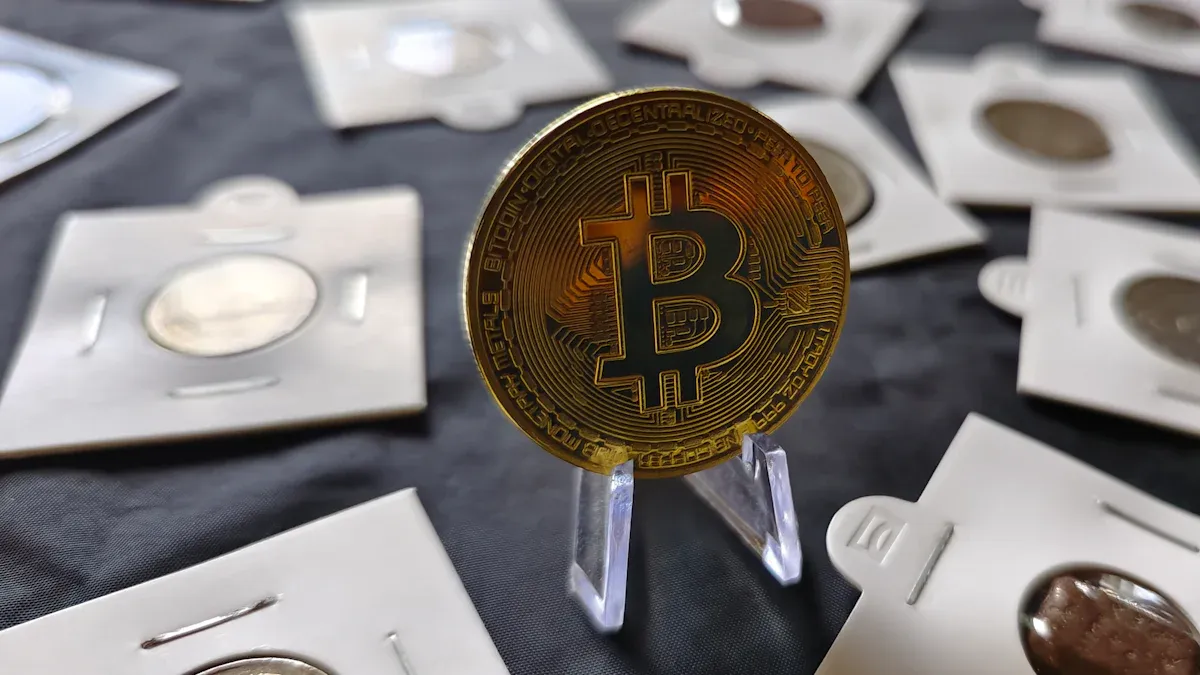
Image Source: pexels
For digital assets, their transfer speed highly depends on the performance of the underlying blockchain network. The network’s design, congestion status, and transaction fees collectively constitute the key bottlenecks determining fund arrival efficiency.
Public Chain Performance Differences: Congestion and Transaction Fees
Public chain networks (such as Ethereum) have limited transaction processing capacity. When a large number of users initiate transactions simultaneously, the network becomes congested. This is similar to traffic jams on highways, where each transaction needs to queue for miners to pack and confirm.
To stand out in this competition, users need to pay higher “Gas fees” (network fees) to incentivize miners to prioritize their transactions. When network usage surges, base fees and priority fees both rise. Therefore, high Gas fees are closely related to network congestion, causing transaction costs in USD to increase sharply, while low-fee transactions may face long delays or even failure.
Role of Gas Fees Gas fees are essentially a fee-based priority mechanism. Transactions with higher fees can jump the queue for faster confirmation. This ensures normal network operation but sacrifices the timeliness of low-cost transactions.
Speed Comparison of Mainstream Public Chains
Different blockchains have significant differences in processing speed (TPS, transactions per second), directly affecting user experience. The Bitcoin network, as the earliest blockchain, is relatively slow. Although Ethereum has a prosperous application ecosystem, its mainnet also faces performance limitations. In contrast, some emerging public chains focus more on high throughput in design.
| Blockchain | Average Processing Speed (TPS) |
|---|---|
| Solana | 1,000+ |
| Ethereum | 15 - 30 |
| Bitcoin | About 7 |
Data shows that Solana’s processing speed is more than 46 times faster than Ethereum, even reaching 1,504 TPS during peak periods. In addition, the final confirmation time of transactions is also an important indicator of speed. High-performance public chains like Avalanche can achieve about 2 seconds for final confirmation, while Solana takes less than 13 seconds, forming a stark contrast with traditional networks’ minutes or even hours of waiting.
Speed-Up Effects of Layer 2 Scaling Solutions
To solve the congestion problem of the mainnet (Layer 1), Layer 2 scaling solutions have emerged. These technologies (such as Arbitrum, Linea) offload most transactions outside the main chain to “relieve” the network.
Layer 2 solutions pack and process a large number of transactions off-chain, then submit only the summary data of the final results to the mainnet. This “batch processing” mode significantly reduces the data burden on the mainnet, bringing multiple advantages:
- Drastically reduce transaction costs: By reducing on-chain data and computation, Layer 2 lowers single-transaction fees by several orders of magnitude.
- Achieve second-level or minute-level settlement: Transactions can be quickly confirmed on the Layer 2 network without waiting for the slow block generation of the mainnet.
- Enhance network throughput: Overall transaction processing capacity is greatly increased, effectively alleviating network congestion.
By adopting Layer 2 solutions, users can enjoy the security of mainnets like Ethereum while obtaining low-cost and high-speed experiences closer to traditional payments.
Bank Clearing and Intermediary Banks: Barriers in Traditional Finance
When funds leave modern payment platforms and enter the traditional banking system, they encounter a series of inherent barriers. These barriers stem from outdated inter-bank clearing mechanisms and operational modes, collectively constituting a major cause of transfer delays.
Impact of the Number of Intermediary Banks on Speed and Cost
International wire transfers are rarely point-to-point direct journeys. Funds usually need to pass through one or more intermediary banks (Intermediary Bank) to reach the final receiving bank. Each additional intermediary bank is like an extra transfer, not only extending the total time but also increasing additional costs.
Dual Impact of Intermediary Banks
- Increase Cost: Each intermediary bank typically deducts a service fee from the transfer amount, generally between $15 and $50 USD.
- Extend Time: Funds staying and processing at each bank increase the overall transaction time.
A complex international transfer may involve two to three intermediary banks, making the final arrival amount and time unpredictable.
Bank Operating Hours and Holiday Delays
Traditional banking systems follow strict operating schedules. Most banks have a “cut-off time,” and all transfer instructions received after this time will be postponed to the next business day for processing. For example, the international wire transfer cut-off times for major U.S. banks are usually between 4 p.m. and 5 p.m.
Public holidays are another factor causing severe delays. When any bank on the transfer path is closed due to a holiday, the entire process stalls.
| Country/Region | Holiday Example | Impact on International Bank Transfer Settlement Time |
|---|---|---|
| United States | Federal Holidays | Banking systems completely shut down, USD transfers stop processing globally. |
| China | Spring Festival, National Day | Banks and related institutions close, severely reducing financial system processing capacity. |
| Europe | National Holidays | Bank closures vary by country, potentially causing delays for transfers to specific countries. |
When conducting cross-border remittances, users must carefully plan and check the holiday calendar of the receiving country/region in advance to avoid funds being “on holiday” en route.
Batch Processing Clearing vs. Real-Time Settlement Systems
The backend clearing systems of banks also directly determine processing speed. There are two main modes globally:
- Automated Clearing House (ACH): This system uses a “batch processing” mode. It groups transaction instructions received in a day and then processes them uniformly at preset times. Therefore, transfers via ACH typically take 1 to 3 business days to complete settlement.
- Real-Time Gross Settlement (RTGS): Like the U.S. Fedwire system, it processes each transaction individually and in real time. Funds can be instantly debited from the payer’s account to the payee’s account, usually completing in a few minutes.
Simply put, the RTGS system is like a private car, departing instantly and going straight to the destination; while the ACH system is like a bus, needing to gather a batch of “passengers” before departing on a fixed route and schedule. The differences in these two underlying technologies are one of the fundamental reasons for the vast differences in transfer timeliness.
User Operations and Habits: Personal Key Factors in Transfer Speed Analysis
Even with the most advanced payment systems, user operation habits are the final link determining fund arrival speed. Many unnecessary delays stem from simple operational errors. This key factors analysis will focus on users themselves, revealing how to avoid waiting through standardized operations.
Filling Errors: Address, Remarks, and Memo
Filling in information is the first step in a transfer and the most error-prone link. A tiny mistake can lead to transaction rejection, delay, or even loss of funds.
Common Transfer Information Filling Errors
- Beneficiary Name Error: Minor spelling errors usually do not hinder the transaction but may trigger additional security checks. If the name is completely wrong, the receiving bank will pause the transfer for verification, significantly extending processing time.
- Incorrect Account Number: If the filled account is valid but belongs to someone else, funds will be mistakenly deposited. Recovering such funds is complex, may take weeks, and success is not guaranteed. If the account is invalid, the transfer will be returned, but fund return also takes 3 to 14 business days.
- Missing Key Codes: Forgetting to fill in SWIFT or IBAN codes during international transfers is a common error, causing the bank to be unable to process the transaction until the user provides complete information.
How to Choose the Best Transfer Timing and Network
Choosing the right transfer timing can effectively avoid network congestion and high fees, which is also a focus of this key factors analysis. For crypto asset transfers, network fees vary significantly across different time periods.
Data shows that cryptocurrency network transaction fees are usually higher on weekdays than weekends. This is because institutional trading activity is mainly concentrated during business hours.
| Time Period | Average Fee | Remarks |
|---|---|---|
| Weekdays | $4.10 | Institutional fund flows cause slightly higher fees |
| Weekends | $3.70 | Reduced high-frequency trading, mainly retail use |
Ethereum network peak periods usually overlap with U.S. and European business hours, when decentralized application (dapp) usage is high, pushing up Gas fees. In contrast, late night and early morning in UTC time see reduced network activity, making it an ideal window for low-cost transactions.
Operation Suggestions: Small Amount Testing and Address Book Usage
Developing good operation habits is fundamental to ensuring fast and secure fund arrival. Users should take proactive measures to minimize risks.
Core Operation Suggestions
- Conduct Small Amount Testing: When transferring to a new address for the first time, always send a small amount of funds for testing first. Proceed with large transfers only after confirming successful arrival.
- Carefully Verify Address: Cryptocurrency addresses are long strings of characters; a single character error can lead to permanent fund loss. Always double-check.
3 Use Secure Networks: Avoid conducting transfer operations on public Wi-Fi or other insecure networks to prevent account information theft.- Enable Multi-Factor Authentication (2FA): Enable 2FA for your trading account, preferably using an authenticator app, to add a critical security barrier.
Through these simple habits, users can take control of transfers, effectively improving the efficiency and security of fund flow.
This key factors analysis shows that fund arrival speed in 2025 is not determined by a single factor but is a complex result of the combined effects of technological development, compliance reviews, and personal operations.
Users should become “smart transferors.” Strategically choosing the optimal solution based on fund type, urgency, and amount is crucial.
By understanding this key factors analysis, users can proactively adapt to fintech development. Completing information and standardizing operations can put transfer control in their own hands, effectively improving fund flow efficiency.
FAQ
Why do my international transfers sometimes take several days?
Traditional international transfers rely on the SWIFT network, with funds needing to be processed by multiple intermediary banks. Each bank’s processing, operating hours, and holidays extend the total time. This can result in funds being in transit for several business days.
Core Reason: The SWIFT network involves multiple intermediary links and is limited by bank business days.
Why do cryptocurrency transfer fees (Gas Fee) fluctuate?
Cryptocurrency transfer fees depend on network congestion levels. When the network is busy with high transaction volume, users need to pay higher fees for priority processing. This is similar to traffic congestion during peak hours, where demand drives up passage costs.
Key Factor: Real-time network demand determines transaction fees.
What if I fill in the wrong recipient information during a transfer?
Filling errors lead to different consequences. Name spelling errors may trigger additional reviews. Account errors may result in funds being transferred to the wrong account or returned. The recovery or refund process usually takes several business days and success is not guaranteed.
Operation Suggestion: Always carefully verify all information before transferring, especially account numbers and addresses.
Why are my transfers sometimes delayed due to “compliance review”?
To comply with global anti-money laundering (AML) regulations, financial institutions must review transactions. The system automatically flags suspicious activities for manual review. This process aims to ensure fund security but may cause temporary transfer delays.
Purpose: To ensure the legitimacy and security of fund flow.
*This article is provided for general information purposes and does not constitute legal, tax or other professional advice from BiyaPay or its subsidiaries and its affiliates, and it is not intended as a substitute for obtaining advice from a financial advisor or any other professional.
We make no representations, warranties or warranties, express or implied, as to the accuracy, completeness or timeliness of the contents of this publication.
Related Blogs of

How Safe Is Your Money With Ally Bank in 2026?


The Easiest Way to Find the Code for Calling France


How to Fill Out a CVS Money Order A 2026 Guide


Why Is Canada's Country Code 1

Choose Country or Region to Read Local Blog
 Australia
 Austria
 Belgium
 Canada
 Cyprus
 Czech Republic
 Denmark
 Estonia
 Finland
 France
 Germany
 Greece
 Hong Kong
 India
India Indonesia
 Ireland
 Italy
Italy Japan
Japan Latvia
 Lithuania
 Luxembourg
 Malaysia
 Malta
Malta Morocco
 Nepal
Nepal Netherlands
 New Zealand
 Norway
 Pakistan
 Philippines
 Poland
 Portugal
 Romania
 Singapore
 Slovakia
 Slovenia
 South Africa
 South Korea
 Spain
Spain Sweden
 Thailand
 The United States
 Turkey
 United Arab Emirates
 United Kingdom
 Vietnam
Contact Us




BIYA GLOBAL LLC is a licensed entity registered with the U.S. Securities and Exchange Commission (SEC No.: 802-127417); a certified member of the Financial Industry Regulatory Authority (FINRA) (Central Registration Depository CRD No.: 325027); regulated by the Financial Industry Regulatory Authority (FINRA) and the U.S. Securities and Exchange Commission (SEC).
BIYA GLOBAL LLC is registered with the Financial Crimes Enforcement Network (FinCEN), an agency under the U.S. Department of the Treasury, as a Money Services Business (MSB), with registration number 31000218637349, and regulated by the Financial Crimes Enforcement Network (FinCEN).
BIYA GLOBAL LIMITED is a registered Financial Service Provider (FSP) in New Zealand, with registration number FSP1007221, and is also a registered member of the Financial Services Complaints Limited (FSCL), an independent dispute resolution scheme in New Zealand.