2025 Business Low-Cost Solution: Stablecoin Payroll Payment Guide




Image Source: pexels
Are you searching for an effective business low-cost solution for high global payroll costs? Traditional cross-border payment models are facing severe challenges.
- In 2023, global business cross-border payment transaction costs exceeded $120 billion.
- Traditional bank wire transfers are not only expensive, but funds usually take several business days to arrive.
Now, by paying salaries with USDT, you can reduce high bank handling fees and exchange rate losses to almost zero. Funds arrive in minutes, greatly enhancing your capital turnover efficiency and global business flexibility.
Core Points
- Paying wages with USDT saves companies a lot of money due to very low fees and no exchange rate losses.
- USDT transfers are very fast, arriving in minutes, making company capital turnover more flexible.
- Companies need to set up secure digital wallets for themselves and employees, and choose compliant channels to purchase USDT.
- When paying USDT wages, companies must comply with local laws and tax regulations, and pay attention to risk prevention.
- Companies should first try USDT payments on a small scale and provide training and support to employees to help them accept this new payment method.
Core Cost Advantages of USDT Payroll Payments
You already understand the potential of USDT payroll payments; now let’s deeply analyze its three core cost advantages. These three advantages together form a powerful business low-cost solution, helping you reduce costs and increase efficiency in global operations.
Significantly Reduce Cross-Border Handling Fees
The cost structure of traditional bank wire transfers is complex and opaque. Every payment you make may be charged fees layer by layer by multiple banks.
According to Federal Deposit Insurance Corporation (FDIC) data, initiating an international wire transfer from one of the top 10 US banks alone averages about $38. This excludes additional fees possibly charged by intermediary and recipient banks. For a $1,000 transfer, including all links, total costs easily exceed $55.
In contrast, using USDT for payroll payments cuts this expense by over 90%. USDT transfer fees depend only on the blockchain network it runs on, unrelated to transfer amount. Taking current mainstream networks as examples:
| Network | Average Transaction Fee | Advantages |
|---|---|---|
| TRC-20 (Tron) | Usually under $2 | Extremely low cost, fast speed, preferred for payroll. |
| ERC-20 (Ethereum) | $5 - $20+ | High security, but fees heavily affected by network congestion. |
Choosing TRC-20 network for USDT transfers means total fees for paying 100 overseas employees may be less than one traditional bank wire. The cost difference is clear.
Eliminate Bank Exchange Rate Spread Losses
Besides explicit fees, the hidden “exchange rate spread” in bank currency conversion is another huge cost black hole. Bank-provided rates are usually not market real-time rates, including 1%-3% or higher profit margins.
This means:
- When you convert a $10,000 fund into another currency, you may lose $100 to $300 instantly.
- For companies paying salaries in multiple countries, this seemingly small loss accumulates rapidly, potentially devouring 5%-7% of your revenue.
USDT fundamentally solves this. As a stablecoin pegged 1:1 to USD, it theoretically eliminates currency conversion needs and losses.
You pay $5,000 USDT, and your employees receive assets worth $5,000. The entire process requires no exchange rate conversion, ensuring precise salary value transmission, especially in regions with unstable local currencies, where USDT helps employees effectively avoid purchasing power decline risks.
Achieve Near-Instant Fund Settlement
Time is money, vividly embodied in cross-border payments. Traditional wire transfers usually take 2-5 business days to arrive, during which your funds are completely locked in the bank system, unavailable for other urgent business needs.
USDT payments shorten this long wait to minutes.
Settlement Efficiency Comparison
- Traditional bank wire: 2-5 business days
- USDT (TRC-20 network): Usually less than 1 minute
This near-instant settlement capability directly optimizes your capital turnover rate. Funds are no longer occupied long-term, allowing more flexible cash flow management, such as paying suppliers on invoice receipt day or investing idle funds faster into new growth projects. Faster fund flow means higher capital efficiency, itself a significant cost saving.
Business Low-Cost Solution: USDT Payroll Distribution Practical Guide
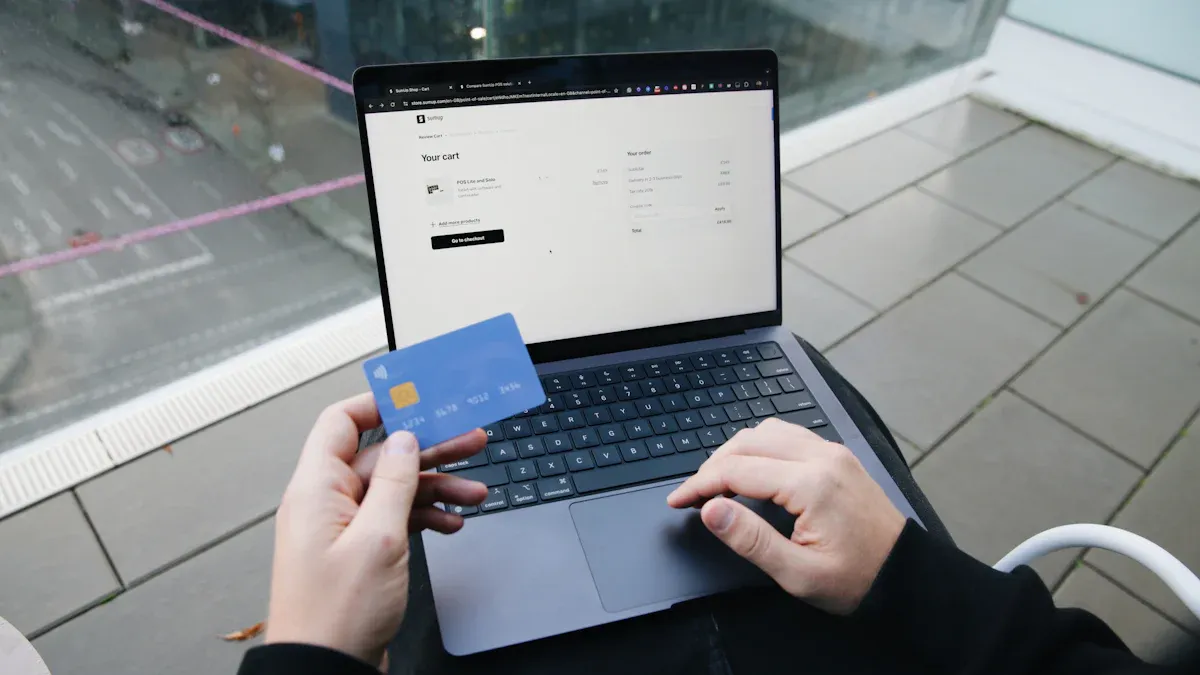
Image Source: unsplash
Theoretical advantages are convincing, but practical operation is key. Implementing USDT payroll requires following a clear, secure process. This guide provides every detail from preparation to execution, ensuring your business low-cost solution launches smoothly.
Preparation: Set Up Enterprise and Employee Wallets
Wallets are the gateway for you and employees into the crypto world. Choosing the right wallet and establishing secure management processes is the cornerstone of the entire solution.
1. Enterprise Side: Choose Enterprise-Grade Wallet or Custody Service
Your enterprise fund security is crucial; never use personal wallets for company assets. Adopt solutions designed for institutions, usually featuring multi-signature (Multi-sig) or multi-party computation (MPC) technologies to prevent single points of failure and internal risks.
- Multi-signature (Multi-sig): Requires multiple managers to jointly authorize a transaction, similar to a bank “joint account”.
- Multi-party computation (MPC): Fragments private keys, managed jointly by multiple parties, enabling collaborative signing without exposing the full private key, higher security.
Here are industry-recognized top enterprise crypto asset management platforms:
- io.finnet
- Fireblocks
- Ledger Enterprise
- Qredo
- BitGo
- Safe (formerly Gnosis Safe)
Core Security Tip: Protect Your Master Keys No matter the solution, remember: private keys and seed phrases are ultimate control of your assets.
- Hardware wallets are the gold standard: Use Ledger or Trezor hardware wallets to store key private keys offline, kept in secure physical locations like bank safes.
- Backup seed phrases: Handwrite seed phrases offline, make multiple copies, store separately in different secure locations. Never store digitally on internet-connected devices.
2. Employee Side: Guide Employees to Create Personal Wallets
Provide clear guidance to help employees create and manage non-custodial wallets. Non-custodial means employees fully control their assets.
Here are some beginner-friendly and high-security wallet choices:
| Wallet Name | Rating | USDT Support | User-Friendliness | Security | Extra Features |
|---|---|---|---|---|---|
| Exodus | 4.4/5 | Supports 130+ cryptos (including USDT) | Designed for beginners, simple interface | Strong encryption | Portfolio tracking, built-in exchange, multi-platform support |
| Coinbase Wallet | 4.3/5 | Supports ERC-20 and other USDT | Familiar UX, easy to use | Secure enclave tech | Multi-chain support, no KYC |
| Coinomi | 4.2/5 | Yes (one of best Tether wallets) | Multi-language, multi-OS | Tight security | Supports 125+ networks, built-in exchange & DApp access |
Address Collection Best Practices When guiding employees to provide wallet addresses, emphasize:
- Confirm network type: Clearly state which network (e.g., TRC-20) you’ll use for payment; employees must provide matching network address.
- Cross-verification: Have employees send addresses via two different secure channels (e.g., encrypted email and internal comms tool) for your verification.
- Security warning: Remind employees never to leak private keys or seed phrases.
Fund Acquisition: Compliant Channels to Purchase USDT
After wallets, next inject funds into enterprise wallet. Compliance is paramount here. Purchase USDT through channels complying with anti-money laundering (AML) and know-your-customer (KYC) regulations.
- Know Your Customer (KYC): Platforms verify your enterprise identity, business info, and beneficial ownership to create risk profiles.
- Anti-Money Laundering (AML): Platforms continuously monitor transactions to detect and report suspicious activities, protecting your enterprise reputation.
For large purchases (typically over $100,000), best channels are over-the-counter (OTC) platforms. They offer better liquidity and pricing.
Global mainstream OTC platforms include:
- Cumberland
- B2C2
- FalconX
- Wintermute
- Binance OTC
For regulated US entities, consider Coinbase Institutional or Kraken.
To simplify, choose one-stop payment platforms like Biyapay. Such platforms integrate compliant fiat on/off-ramps, allowing direct USDT purchase using enterprise bank accounts (e.g., transfers from Hong Kong licensed bank accounts) and deposit into your enterprise wallet, preparing for payroll. This is an efficient and compliant business low-cost solution.
For companies that already employ teams across multiple countries, it can be practical to consolidate coin purchase, payroll, and routine payouts inside a single tool. BiyaPay is designed as a multi-asset trading wallet for cross-border use, so you can hold USDT alongside multiple fiat balances and manage global payroll pools and operating float in one place.
Before running a batch, finance teams can use BiyaPay’s FX rate comparison tool to estimate the cost of settling in different currencies and then decide on an appropriate split between USDT and local money; for staff who still prefer fiat, BiyaPay’s cross-border remittance service can be used to move part of the payroll directly to specified bank accounts without adding extra systems.
Because BiyaPay operates under financial registrations such as US MSB and New Zealand FSP licences, the related flows are processed within established regulatory frameworks, which makes it easier for finance, audit, and risk teams to align a long-term stablecoin payroll programme with existing internal control standards.
Execution: Batch Payments and Security Verification
Transferring to dozens or hundreds of employees one-by-one is time-consuming and error-prone. Batch payment tools are essential for efficient payroll.
Acctual, Rise, etc., support one-time payments to multiple addresses. Upload a CSV with addresses and amounts; the system auto-executes all transfers, saving time and network fees. Solutions like Biyapay offer batch payment functions, completing purchase-to-distribution in one interface.
However, behind convenient operations lies huge security responsibility. Blockchain transfers are irreversible; any small error can cause permanent fund loss.
Strictly follow this security verification checklist:
- Establish address whitelist: In your payment platform, create verified address whitelist for each employee. This prevents payments to unauthorized addresses.
- Conduct small test transfers: Before first large payroll to new employee or address, send $1-$2 test USDT. Execute full payment after employee confirms receipt.
- Adopt dual review: Establish internal process requiring one employee to prepare batch file (e.g., CSV), another to independently cross-check each address and amount.
- Confirm address format: Ensure team recognizes correct formats. E.g., TRC-20 addresses start with “T”. Reject mismatched formats.
- Restrict system access: Authorize only core finance personnel to access payroll system. Implement duty separation, ensuring preparation, review, and approval are not by the same person.
Following these steps integrates USDT payroll securely and efficiently into operations, truly achieving a business low-cost solution in globalization.
Risk Management and Compliance Key Points

Image Source: unsplash
Adopting USDT payroll brings significant cost advantages but not without challenges. Success lies in proactively managing risks and ensuring full compliance. Ignoring these may expose your enterprise to huge legal, financial, and reputational risks.
Legal and Tax Compliance Framework
Using stablecoins for payroll requires cautious navigation in complex global legal and tax networks. Regulations vary greatly by country; develop specific compliance strategies per operating region.
Key Compliance Reminder: Per IRS rules, report crypto paid at fair market value (in USD) on payment day in employee W-2, withholding taxes accordingly. Forcing stablecoin salaries violates US Fair Labor Standards Act (FLSA); always provide USD option.
Here is an overview of regulations in major economies:
| Region/Country | Status | Key Requirements |
|---|---|---|
| United States | Allowed but complex | Must obtain written employee consent; meet federal/state minimum wage; report/withhold taxes in USD value. |
| European Union | Varies by member state | Germany, France allow but wages report in EUR for tax; Estonia etc. more friendly. |
| Singapore | Allowed, with caution | Need written agreement; salary value in SGD; crypto taxed as income. |
Operational Security Risks and Prevention Measures
Technical convenience brings new security risks, especially internal fraud. Establish strict internal controls to protect company assets.
- Implement access controls: Strictly limit and manage who accesses payroll system, using role-based authorization.
- Adopt multi-signature: Set multi-sig or MPC for enterprise wallet, requiring multiple managers to approve large transfers.
- Regular audits and reconciliation: Periodically check wallet inventory and reconcile transactions, set system alerts to track payroll data changes, detecting anomalies promptly.
- Establish written policies: Create clear wallet management and payment process policies, stating consequences and legal responsibilities for violations.
Market Volatility and Employee Acceptance Management
Though USDT aims to maintain 1:1 USD peg, history shows brief de-pegging in extreme market sentiment. More importantly, employees may worry about receiving crypto.
Main employee concerns:
- Value volatility: Fear salary value shrinks due to market fluctuations.
- Tax complexity: Unfamiliar with reporting received crypto taxes.
- Technical barrier: Unfamiliar with setting up and securely using digital wallets.
To successfully implement, actively manage employee acceptance:
- Provide choices and assurances: Allow employees to choose fiat-stablecoin salary mix ratio.
- Enhance education and support: Hold practical workshops, provide clear guides on wallet use, security practices, and tax implications.
- Establish feedback channels: Create safe space for employees to ask questions and share experiences, helping continuous process optimization.
USDT payroll provides a powerful business low-cost solution, with significant advantages in cost, efficiency, and globalization. It helps attract global talent and improve cash flow via near-instant settlement.
Key Prerequisite: Success requires full understanding of operations and compliance risks. Before launch, consult professional legal and tax advisors to ensure full compliance.
We recommend starting pilot with small scope and amounts, e.g., offering option to a few overseas contractors. Explore through practice, steadily advancing future payroll models.
FAQ
How do employees convert received USDT to local currency?
Employees can sell USDT via global crypto exchanges or OTC services, converting to needed local fiat. They can withdraw fiat to their bank accounts.
Operation Tip: Provide employees a guide recommending reputable, user-friendly platforms to smoothly complete conversion.
Is paying salaries with USDT completely legal?
Legality depends on your and employees’ countries/regions. Many allow but with strict tax and reporting requirements. Consult local legal and tax advisors to ensure full compliance.
What if I accidentally transfer salary to wrong address?
Blockchain transfers are irreversible. Once sent to wrong address, funds cannot be withdrawn.
Risk prevention is key:
- Always conduct small test transfers.
- Establish address whitelist system.
- Adopt dual review process.
Is USDT price always exactly $1?
USDT maintains 1:1 USD peg via asset reserves. In most cases, value is very stable. But under extreme market conditions, price may experience very small, brief fluctuations.
*This article is provided for general information purposes and does not constitute legal, tax or other professional advice from BiyaPay or its subsidiaries and its affiliates, and it is not intended as a substitute for obtaining advice from a financial advisor or any other professional.
We make no representations, warranties or warranties, express or implied, as to the accuracy, completeness or timeliness of the contents of this publication.
Related Blogs of

The Easiest Way to Find the Code for Calling France


What Are the Daily Limits for Chase Accounts?


Tap and Go A Beginner's Guide to Cardless ATM Withdrawals

Zelle Wire Transfer or ACH? Clearing Up the Confusion

Choose Country or Region to Read Local Blog
 Australia
 Austria
 Belgium
 Canada
 Cyprus
 Czech Republic
 Denmark
 Estonia
 Finland
 France
 Germany
 Greece
 Hong Kong
 India
India Indonesia
 Ireland
 Italy
Italy Japan
Japan Latvia
 Lithuania
 Luxembourg
 Malaysia
 Malta
Malta Morocco
 Nepal
Nepal Netherlands
 New Zealand
 Norway
 Pakistan
 Philippines
 Poland
 Portugal
 Romania
 Singapore
 Slovakia
 Slovenia
 South Africa
 South Korea
 Spain
Spain Sweden
 Thailand
 The United States
 Turkey
 United Arab Emirates
 United Kingdom
 Vietnam
Contact Us




BIYA GLOBAL LLC is a licensed entity registered with the U.S. Securities and Exchange Commission (SEC No.: 802-127417); a certified member of the Financial Industry Regulatory Authority (FINRA) (Central Registration Depository CRD No.: 325027); regulated by the Financial Industry Regulatory Authority (FINRA) and the U.S. Securities and Exchange Commission (SEC).
BIYA GLOBAL LLC is registered with the Financial Crimes Enforcement Network (FinCEN), an agency under the U.S. Department of the Treasury, as a Money Services Business (MSB), with registration number 31000218637349, and regulated by the Financial Crimes Enforcement Network (FinCEN).
BIYA GLOBAL LIMITED is a registered Financial Service Provider (FSP) in New Zealand, with registration number FSP1007221, and is also a registered member of the Financial Services Complaints Limited (FSCL), an independent dispute resolution scheme in New Zealand.