Unveiling the Best Security Practices for Crypto Remittances – Avoid Common Traps



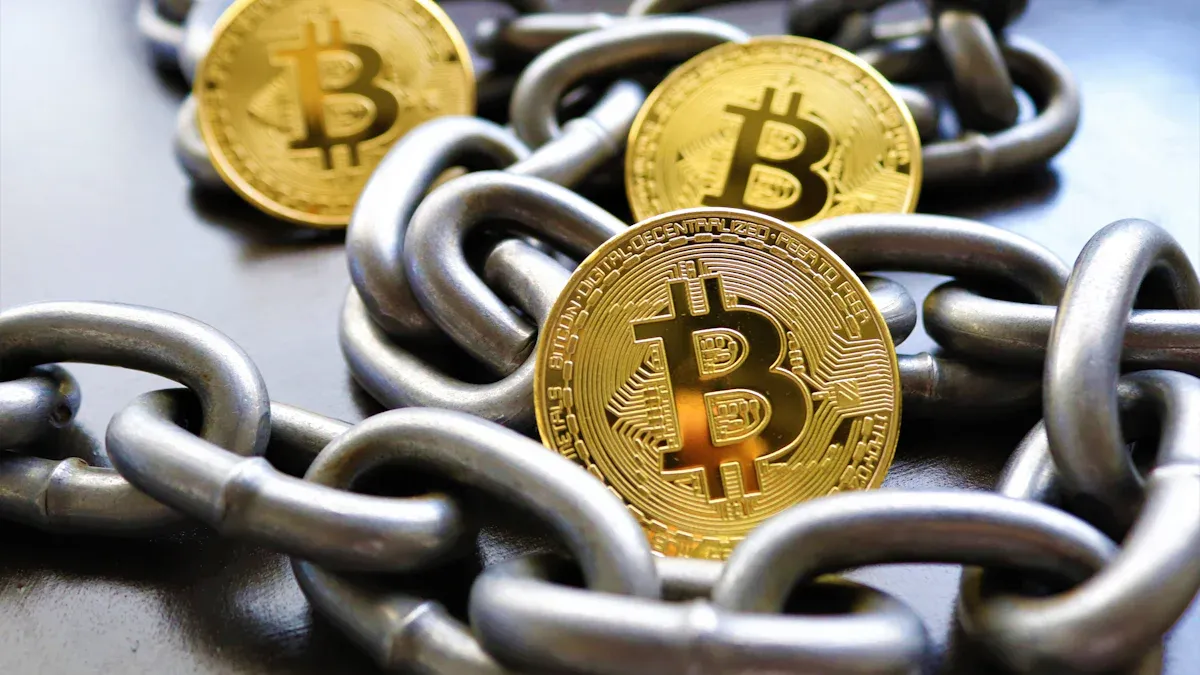
Image Source: pexels
The security core of cryptocurrency remittance is very clear: you need to verify and verify again, use trusted platforms, and protect your private keys well. Imagine your cryptocurrency remittance process as a precise bank vault transport – every step requires strict procedures. Ignoring these best security practices can have very serious consequences.
In 2024 alone, security incidents have already caused staggering losses:
- DeFi protocol hacks resulted in losses worth $500 million USD.
- Cryptocurrency fraud activities caused losses of up to $3.2 billion USD.
Core Highlights
- Choose reliable trading platforms and use hardware wallets to protect your cryptocurrency.
- Before remittance, you need to repeatedly verify the recipient address and conduct a small test transfer.
- Enable two-factor authentication and withdrawal address whitelists to enhance your account security
- Be vigilant against phishing attacks and social engineering scams; do not click unknown links.
- Understand that blockchain transactions are irreversible, so be extremely careful with every operation.
Security Foundation Before Remittance
Before initiating any transfer, you must establish a solid security foundation. This is like setting up a security command center for your fund transport mission – every link is crucial.
Choose a Trusted Trading Platform
Your first step is to select a secure and reliable trading platform. You should prioritize platforms with good reputations, regulated by authoritative bodies, and employing advanced encryption technologies. For example, platforms like Biyapay that hold compliance licenses and implement strict security measures can provide stronger protection for your assets.
Verify and Protect Your Personal Wallet
Your personal wallet is the direct vault for your assets, but it may also have security vulnerabilities. Some wallet apps have been found to have serious flaws, such as:
- Storing private keys and seed phrases in plain text in log files.
- Allowing attackers to bypass PIN authentication by simply modifying local files.
Therefore, you must take measures to protect your wallet. The most important operation is to back up your seed phrase (recovery phrase) offline. Write it down with a pen on paper and store it in at least two different secure locations, such as a fireproof safe at home and a bank safe deposit box.
Plan Remittance Currency and Fees
Cryptocurrency prices fluctuate dramatically; directly using Bitcoin or similar for remittances may cause losses due to price drops. To avoid this risk, you can prioritize stablecoins like USDT for remittances.
Stablecoins are pegged 1:1 to fiat currencies like the USD, maintaining stable value during the remittance process. This ensures the recipient receives funds with value almost identical to what you sent, while transaction speeds are reduced from days to minutes.
Additionally, you need to adjust the Gas fee (network handling fee) appropriately based on current network congestion to ensure the transaction is confirmed promptly.
Strengthen Account Security Settings
On trading platforms, you must enable all available security features. Two-factor authentication (2FA) is basic, but more critical is activating the “withdrawal address whitelist” function. This feature allows you to create a pre-approved list of withdrawal addresses. Once enabled, your account can only transfer to addresses on the list. This is a highly effective best security practice – even if your account password is stolen, hackers cannot transfer your funds to their own addresses.
Core Operational Steps During Remittance
After completing all preparations, you enter the actual remittance operation phase. This process is like performing a final system check before launch – every step directly affects whether your funds arrive safely at the destination.
Repeatedly Verify the Recipient Address
This is the step most prone to errors and the most fatal in the entire process. Blockchain transactions are irreversible; once funds are sent to the wrong address, recovery is nearly impossible. You must verify the recipient address repeatedly, like checking a lifeline.
Why do addresses go wrong? Common mistakes include:
- Copy-paste errors: You may not copy the full address or fail to verify after pasting.
- Clipboard malware: This is an insidious virus. It detects the crypto address you copy and quietly replaces it with the attacker’s address when you paste.
- Address poisoning attacks: Attackers send a tiny transaction to your wallet, making their address appear in your transaction history. This address is very similar to your frequent contact’s (e.g., differing only in the last few characters), tricking you into using it next time.
To ensure absolute safety, adopt multiple verification methods:
- Visual check: Carefully compare at least the first and last 6 characters of the recipient address.
- Use a block explorer: Paste the address into explorers like Etherscan (for Ethereum) or Blockchain.com (for Bitcoin). This helps you view the address’s transaction history and validity.
- Multi-channel verification: Have the recipient send the address via at least two different communication channels (e.g., instant messaging and email), then compare if the two addresses match exactly.
Perform a Small Test Transfer
For any first-time transaction address, you must conduct a small test transfer. This is a simple yet extremely effective risk control measure and a golden rule for crypto remittances. It confirms funds can be correctly sent to the target address and network, providing peace of mind for large transfers.
For example, before sending a large amount, first send a tiny amount, such as cryptocurrency worth $1.00 USD.
How to confirm a test transfer is successful?
You don’t need to rely solely on the recipient’s verbal confirmation. Verify it yourself:
- Obtain the transaction ID (TxID): After sending the test transfer, your wallet or exchange provides a unique TxID.
- Use a block explorer: Open the explorer for the corresponding blockchai
- Query the transaction: Paste the TxID into the search box.
- Check confirmations: You’ll see transaction details, including “confirmations.” For small transactions, 1 or more confirmations usually mean the transaction is recorded on the blockchain and funds have reached the target address.
Only after confirming the test funds arrival via the block explorer should you proceed with the large transfer.
Ensure a Clean Transaction Environment
Your operating device and network environment are the final line of defense for fund security. A contaminated environment can nullify all your previous efforts. Crypto malware is designed specifically to steal your digital assets; it can infect your computer unnoticed, stealing private keys or tampering with transaction info.
Be especially cautious about conducting transactions over public Wi-Fi. Public networks are hacker hunting grounds. Here are potential risks:
| Risk Type | Description | Potential Consequences |
|---|---|---|
| Man-in-the-Middle Attack | Hackers intercept all communication between you and the network. | Login credentials and wallet info stolen. |
| Fake Access Point | Hackers set up a fake network with the same name as a real Wi-Fi. | You’re redirected to phishing sites; private keys are tricked away. |
| Session Hijacking | Hackers steal your login session and operate your account directly. | Funds transferred without your knowledge. |
| Malware Distribution | Exploits network vulnerabilities to install viruses on your device. | All your operations are monitored and recorded long-term. |
Therefore, one of the best security practices for crypto remittances is to always use your own password-protected trusted network at home or office and ensure your device has reliable antivirus software installed.
Identify Common Remittance Traps and Scams

Image Source: pexels
Beyond technical defenses, you need to build a strong psychological barrier. Many fund losses stem not from sophisticated technical attacks but from scammers exploiting human weaknesses. Understanding these scams is a key step to protecting your assets.
Beware of Phishing Attacks and Fake Giveaways
Phishing is one of the most common threats in the crypto world. Scammers impersonate trusted institutions to send you messages.
Fraudsters often send emails that appear to come from legitimate exchanges (like Coinbase) or wallets (like MetaMask). These emails create urgency, claiming your account is at risk or needs immediate verification. Their sole purpose is to trick you into clicking fake links and entering login passwords or seed phrases on clone sites.
Any “official notification” or “surprise giveaway” demanding immediate action should be highly suspected. Always log in to your accounts via official websites or apps, never through links in emails or texts.
Prevent Social Engineering Attacks
Social engineering targets your psychology. Scammers don’t attack your device; they manipulate you directly. They spend significant time building trust, then guide you to make mistakes.
Common social engineering attacks include:
- Impersonation: Attackers pose as project teams or customer support on Telegram or Discord, tricking you into giving private keys or performing malicious operations under the guise of “help.”
- Pig butchering scams: Scammers build long-term relationships via social media (e.g., posing as lovers or investment partners). After gaining trust, they convince you to invest in a fake crypto platform and abscond with all funds.
- Malware disguise: In communities, attackers share malware disguised as airdrop tools or trading scripts. Once downloaded and run, it steals your sensitive info.
Understand the Irreversibility of Blockchain Transactions
You must deeply understand one core fact: transactions on the blockchain are irreversible. Once confirmed by the network, no one can reverse or recover the funds. This is completely different from traditional bank transfers.
This permanence stems from blockchain design:
- Cryptographic linking: Each transaction is packed into a “block,” and each block is tightly linked to the previous via cryptography, forming an untamperable chain.
- Decentralized validation: Transactions are verified by thousands of independent computers worldwide. Unless someone controls over 51% of network hash power, unilaterally altering the ledger is nearly impossible.
While transactions themselves cannot be reversed, you can use tools like multi-signature wallets for added security. These require multiple managers to approve transfers, providing an extra protection layer for large remittances.
Best Security Practices Checklist for Crypto Remittances
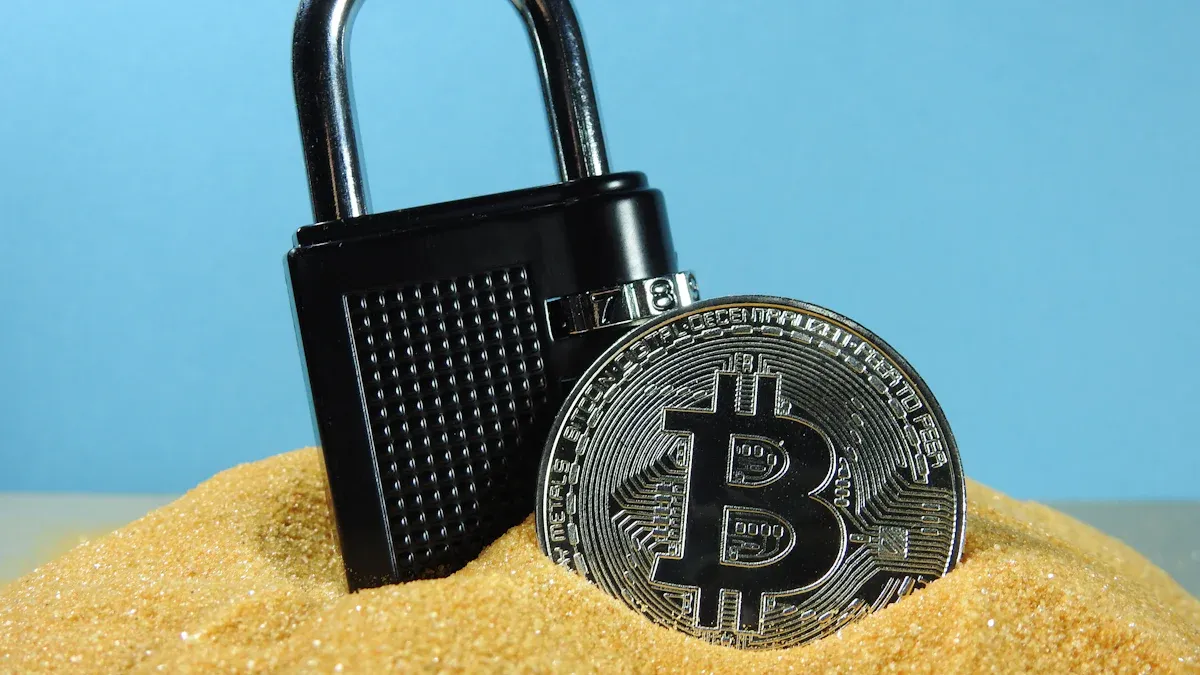
Image Source: unsplash
To turn theory into action, we’ve compiled an ultimate security checklist for you. Treat these items as your “pre-flight checklist” for navigating the crypto world – confirm each one before every remittance.
Hardware Wallets and Offline Backups
For long-term storage or large assets, your top choice should be a hardware wallet. It keeps your private keys completely offline – the ultimate best security practice for asset protection.
Hardware wallets store private keys in a secure offline chip, protecting them from online hackers, phishing, and malware. This means you have absolute control over your funds without trusting any third party.
The table below clearly shows core differences between hardware and software wallets:
| Security Aspect | Hardware Wallet (Cold Storage) | Software Wallet (Hot Storage) |
|---|---|---|
| Online Attack Risk | Low, almost unaffected by online threats | High, always exposed to network risks |
| Private Key Storage | Never leaves the device’s secure chip | Stored on a connected computer or phone |
| Transaction Verification | Physically confirmed on offline device | Confirmed on potentially infected device |
After obtaining a hardware wallet, you must immediately perform an offline backup:
- Write down the seed phrase: During wallet initialization, copy the 12 or 24-word seed phrase completely with pen and paper.
- Secure storage: Store the paper backup in at least two physically secure and isolated locations, such as a fireproof safe at home and a bank safe deposit box. Never photograph the seed phrase or store it digitally.
- Test the backup: Before depositing large funds, try restoring the wallet once with the seed phrase to ensure the backup is accurate.
Two-Factor Authentication and Address Whitelists
Two-factor authentication (2FA) is a must-have defense for your trading platform accounts. However, not all 2FA methods are equally secure.
The industry no longer recommends SMS as a 2FA method. Due to risks like SIM swapping and SMS hijacking, your account can be easily compromised.
Choose more secure 2FA methods:
- App-generated codes: Use apps like Google Authenticator or Authy to generate time-based codes.
- Hardware keys: Use physical devices like YubiKey for verification, offering the highest level of physical security.
At the same time, enable the exchange’s “withdrawal address whitelist” function. This is an extremely effective best security practice. Once enabled, your account can only transfer to pre-approved addresses. Even if hackers steal your password and 2FA, they cannot move funds to their addresses.
Small Test Transfers and Multi-Channel Verification
Before pressing the “send” button, follow these final two golden rules:
- Perform a small test: When remitting to any new or infrequently used address, always send a tiny amount first (e.g., $1.00 USD worth). Only after confirming arrival on a block explorer should you proceed with the large transfer.
- Multi-channel verification: Require the recipient to send the address via at least two different communication methods (e.g., instant messaging and email). Carefully check if both addresses match exactly to guard against clipboard malware or human error.
To ensure your fund security, internalize the following core practices as instinctive reactions.
Security is not a one-time setup but a continuous habit that must be integrated into every operation.
Your Ultimate Security Quick-Check List:
- Use a hardware wallet to store large assets.
- Back up your private key or seed phrase offline.
- Enable two-factor authentication (2FA) and withdrawal address whitelists.
- Perform small test transfers to new addresses.
- Verify recipient addresses through multiple channels.
If you don’t want to manage all of these security settings separately across multiple exchanges and wallets, you can also centralize “receiving, converting and remitting” inside a single compliant service. A solution like the BiyaPay multi-asset wallet lets you keep stablecoin balances, apply withdrawal whitelists, pass KYC and trigger cross-border remittances in one integrated flow. You still control the critical steps — checking the address, doing a small test transaction — while the platform adds an extra layer of risk and compliance checks in the background.
BiyaPay builds multiple safeguards into its KYC, address risk controls and withdrawal review processes: unusual device logins, suspicious withdrawal addresses or large transfers can be automatically flagged or routed to manual review. This doesn’t replace your own discipline in following the checklist above; instead, it forms a three-layer protection model — hardware wallet + personal security habits + platform-level controls — to make every on-chain remittance more forgiving of minor human mistakes and less likely to result in irreversible loss.
Stay vigilant and keep learning. This way, you can navigate the crypto world with ease and manage your digital assets confidently.
FAQ
What if I accidentally send cryptocurrency to the wrong address?
Blockchain transactions cannot be reversed, so funds are almost impossible to recover. This is why you must repeatedly verify the recipient address through multiple channels before remitting. This habit is the first line of defense for your fund security.
Is performing a small test transfer every time too troublesome?
This step may feel a bit troublesome, but it’s the best way to protect large funds. Think of it as buying cheap “insurance” for your fund security, effectively avoiding huge losses due to address errors.
Why are hardware wallets more secure than mobile wallets?
Hardware wallets store your private keys offline in a secure physical chip. Mobile wallet private keys are stored on connected devices, more vulnerable to online attacks and viruses. Offline storage is the core advantage of hardware wallets.
*This article is provided for general information purposes and does not constitute legal, tax or other professional advice from BiyaPay or its subsidiaries and its affiliates, and it is not intended as a substitute for obtaining advice from a financial advisor or any other professional.
We make no representations, warranties or warranties, express or implied, as to the accuracy, completeness or timeliness of the contents of this publication.
Related Blogs of
What Are the Daily Limits for Chase Accounts?


Why Is Canada's Country Code 1

Zelle Wire Transfer or ACH? Clearing Up the Confusion
The 18 Best Apps to Earn Real Cash This Year

Choose Country or Region to Read Local Blog
 Australia
 Austria
 Belgium
 Canada
 Cyprus
 Czech Republic
 Denmark
 Estonia
 Finland
 France
 Germany
 Greece
 Hong Kong
 India
India Indonesia
 Ireland
 Italy
Italy Japan
Japan Latvia
 Lithuania
 Luxembourg
 Malaysia
 Malta
Malta Morocco
 Nepal
Nepal Netherlands
 New Zealand
 Norway
 Pakistan
 Philippines
 Poland
 Portugal
 Romania
 Singapore
 Slovakia
 Slovenia
 South Africa
 South Korea
 Spain
Spain Sweden
 Thailand
 The United States
 Turkey
 United Arab Emirates
 United Kingdom
 Vietnam
Contact Us




BIYA GLOBAL LLC is a licensed entity registered with the U.S. Securities and Exchange Commission (SEC No.: 802-127417); a certified member of the Financial Industry Regulatory Authority (FINRA) (Central Registration Depository CRD No.: 325027); regulated by the Financial Industry Regulatory Authority (FINRA) and the U.S. Securities and Exchange Commission (SEC).
BIYA GLOBAL LLC is registered with the Financial Crimes Enforcement Network (FinCEN), an agency under the U.S. Department of the Treasury, as a Money Services Business (MSB), with registration number 31000218637349, and regulated by the Financial Crimes Enforcement Network (FinCEN).
BIYA GLOBAL LIMITED is a registered Financial Service Provider (FSP) in New Zealand, with registration number FSP1007221, and is also a registered member of the Financial Services Complaints Limited (FSCL), an independent dispute resolution scheme in New Zealand.