From MetaMask to Binance: Best Platforms for USDT International Transfers in 2025



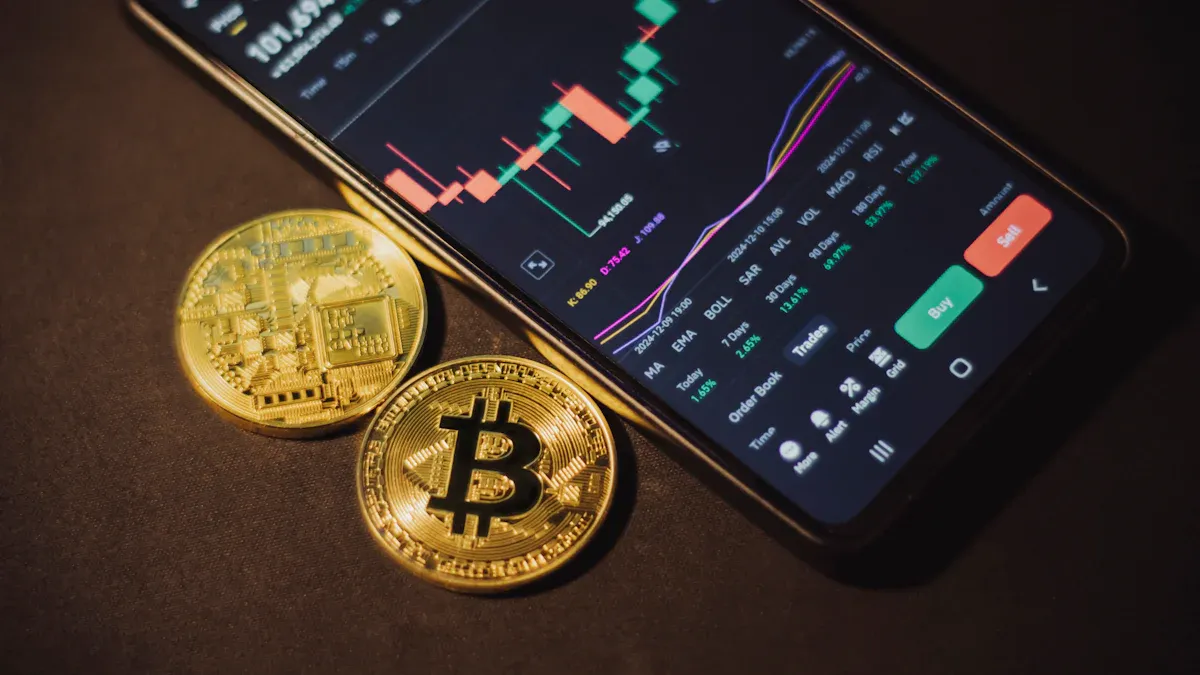
Image Source: pexels
Conducting stablecoin USDT international transfers, the current optimal solution is through large exchanges like Binance, selecting low-cost networks such as TRC20, BEP20, or Solana. This method far surpasses traditional bank channels in cost and efficiency.
Traditional wire transfers usually require 3-5 business days to process, with a single fee reaching 15 to 30 USD. In contrast, USDT transfers cost less than $1 and arrive within minutes.
USDT, as the leading stablecoin by market cap, has enormous trading volume ensuring excellent liquidity, making it a reliable choice for international payments.
| Metric | Value |
|---|---|
| Market Cap | $183.36 billion |
| 24-Hour Trading Volume | $145.16 billion |
Key Takeaways
- Using large exchanges like Binance for USDT international transfers has low fees and fast speed.
- Choosing TRC20, BEP20, or Solana networks can significantly reduce transfer fees.
- Transfers between exchanges are the most convenient and lowest cost for USDT; everyone is recommended to use this.
- Before transferring, be sure to carefully verify the address and network, and test with a small amount first to avoid fund loss.
- USDT transfers require paying network fees and exchange withdrawal fees; choosing low-fee networks and exchanges is important.
USDT Transfer Fee Structure Analysis
Image Source: pexels
To understand how to achieve the lowest cost transfers, you first need to clarify the sources of fees. The total cost of USDT transfers mainly consists of two parts: network fees and exchange withdrawal fees.
Key Cost: Network Fee (Gas Fee)
Network fees, usually called “Gas fees”, are fees users must pay to execute any operation on the blockchain. This fee is directly paid to the network’s validators (i.e., “miners”) to reward them for processing and verifying your transaction.
Gas fees are not fixed; they depend on the blockchain network you choose. Different networks have vastly different processing efficiencies and fees. Choosing a low-cost network is the first step to saving fees.
Core Tip: Gas fees are charged by the blockchain network, not the wallet or exchange. Even decentralized wallets like MetaMask must pay the corresponding network’s Gas fee when transferring.
The following is a comparison of mainstream public chain USDT transfer fees and speeds:
| Network | Approximate Fee (USD) | Estimated Time |
|---|---|---|
| Solana (SOL) | ~$0.0005 | Less than 1 minute |
| BNB Chain (BEP20) | ~$0.0033 | 1-2 minutes |
| TRON (TRC20) | ~$1.9 - $3.97 | Less than 1 minute |
| Ethereum (ERC20) | ~$0.0443 | 5-10 minutes (longer during congestion) |
As seen above, Solana and BNB Chain (BEP20) provide extremely low-cost and lightning-fast transfer experiences.
Additional Cost: Exchange Withdrawal Fee
Exchange withdrawal fees are a fixed fee charged by centralized exchanges (CEX) as service providers. This fee is independent of network Gas fees and covers the platform’s costs for maintaining its wallet system and processing withdrawals.
Important Distinction: Network Gas fees are paid to blockchain validators and fluctuate. Exchange withdrawal fees are paid to the exchange platform and are usually fixed.
Different exchanges have different withdrawal fees for the same network. Therefore, choosing an exchange with low withdrawal fees is crucial.
| Exchange | Network | Withdrawal Fee (USD) |
|---|---|---|
| Biyapay | TRC20 | 1 USD |
| Binance | TRC20 / BEP20 / SOL | 1 USD |
| OKX | TRC20 / BEP20 / SOL | 1 USD |
| Bybit | TRC20 / BEP20 / SOL | 1 USD |
Overall, total transfer cost = Network fee (Gas Fee) + Exchange withdrawal fee. To achieve the lowest cost, users need to choose both a low Gas fee network and a low withdrawal fee exchange.
Stablecoin USDT International Transfers: Cost Comparison of Three Major Paths
Image Source: pexels
After understanding the fee structure, the next step is to choose the most suitable transfer path for yourself. The user’s fund starting point (in an exchange or personal wallet) and endpoint determine the transfer path, with significant differences in cost and operational complexity among paths. The following is a detailed comparison of three mainstream paths.
Path One: CEX to CEX Transfer (Recommended)
This is currently the most cost-effective and simplest path for stablecoin USDT international transfers, especially suitable for most users. When a user’s USDT is stored in a centralized exchange (CEX), such as Binance, and they want to transfer it to another exchange, such as OKX or Biyapay, this path is the top choice.
Core Advantages:
- Fixed and Low Cost: Users only need to pay the fixed withdrawal fee charged by the exchange (usually 1 USD), without worrying about real-time fluctuations in blockchain network Gas fees.
- Simple and Intuitive Operation: The entire process is completed within the exchange App, with a user-friendly interface and clear guidance.
- Fast Speed: Transactions usually complete within minutes.
Many exchanges also provide internal transfer functions. If both parties are on the same platform (for example, both Binance users), transfers are usually free and instant because they do not go through the blockchain but are internal ledger settlements on the platform.
| Feature | On-Chain Transaction (CEX to Another CEX) | Off-Chain Transaction (Same CEX Internal Transfer) |
|---|---|---|
| Cost | Fixed withdrawal fee (e.g., 1 USD) | Free |
| Speed | Minute-level | Instant |
| Example | Transfer from Binance to OKX | Binance users transfer via Pay ID |
| Note | Fees affected by platform policy but relatively stable | Binance internal transfers free and instant |
For users whose end goal is to convert on-chain assets into fiat and credit overseas accounts, CEX-to-CEX USDT transfers can be combined with a dedicated remittance layer, turning “moving between platforms” into “reaching the final payee.” After funds arrive on the destination exchange, services such as the BiyaPay remittance channel allow you to settle USDT or other assets into local currencies, which helps avoid multiple FX conversions and the additional charges and uncertainty that come with traditional cross-border wires and intermediary banks.
BiyaPay is positioned as a multi-asset trading wallet that links stablecoins and digital assets on one side with cross-border payments and collection scenarios on the other, supporting flexible conversion between dozens of fiat currencies and multiple digital currencies. Before executing an international transfer, finance teams or individual users can also use its fiat FX converter and comparison tool to estimate net proceeds and all-in costs under different currency choices and routes, then decide which network and payout option best matches the low-fee paths outlined in this article.
From a risk and compliance perspective, BiyaPay operates under licences and registrations in jurisdictions such as the United States (MSB money services licence) and New Zealand (FSP registration), and is supervised in multiple locations. For organisations that move funds across borders frequently, a platform of this type can sit alongside bank accounts and core exchanges as part of a more resilient long-term settlement stack, helping balance cost, operational efficiency, and regulatory transparency rather than relying on a single channel.
Operation Process Example: Transfer USDT from Binance to OKX
- Obtain Deposit Address in OKX: Log in to your OKX account, go to “Assets” > “Deposit” page. Select the coin as USDT, then choose a low-cost network, such as TRC20. The system will generate a deposit address exclusive to this network; copy this address.
- Initiate Withdrawal from Binance: Log in to your Binance account, go to “Funds” > “Withdraw”. Select the withdrawal coin as USDT, paste the address just copied from OKX. In the “Network” option, be sure to choose exactly the same network as OKX (TRC20).
- Confirm and Execute: Enter the transfer amount; the system will display the fixed network fee (for example, 1 USDT). After confirming no errors, click withdraw and complete security verification (such as email and Google Authenticator verification).
- Check Arrival: Within a few minutes, log in to your OKX account to see the arrived USDT.
Security Tip: Before any stablecoin USDT international transfer, it is strongly recommended to test with a small amount of funds (such as 1-2 USDT) first to ensure the address and network selection are correct. Once wrong, funds may be permanently lost.
Path Two: Wallet to CEX Transfer
This path is suitable for users whose funds are stored in decentralized wallets (such as MetaMask, Trust Wallet) and want to transfer them to a centralized exchange (such as Binance, Biyapay) for trading or withdrawal.
A common misconception is that transferring with MetaMask is “free” because it does not charge service fees. However, users need to directly bear the blockchain network’s Gas fee, which is entirely determined by network conditions and can be very cheap or extremely expensive.
- Main Cost: Users must pay the real-time network Gas fee themselves. This fee can be below 0.1 USD when the network is idle but rises sharply during congestion.
- Cost Volatility: Gas fees are affected by network demand. When on-chain activity surges (for example, popular NFT launches), users compete by bidding to prioritize their transactions, pushing up Gas fees.
Historically, the Ethereum network experienced extreme congestion due to popular apps like CryptoKitties, causing single transfer Gas fees to soar to tens or even hundreds of USD, making small stablecoin USDT international transfers completely unprofitable.
Core Risks:
- Transaction Failure: If the wallet lacks sufficient native tokens (such as ETH, BNB) to pay Gas fees, the transaction fails directly.
- Unpredictable Cost: Before initiating a transaction, users cannot 100% determine the final cost, especially during busy network periods.
Therefore, this path is more suitable for users with some blockchain operation knowledge who can grasp low fee rate timings.
Path Three: CEX to Wallet Transfer
This path is suitable for users who want to hold assets long-term or need to use DeFi applications, thus transferring USDT from an exchange to their own controlled decentralized wallet.
The core of this path is transfer of asset ownership.
“Not your keys, not your coins.” This famous saying precisely describes the fundamental difference between exchanges and personal wallets. When funds are stored in an exchange, users technically only have an account balance, with private keys managed by the platform. After transferring assets to a personal wallet, users truly fully own and control these assets.
This full control also brings full responsibility.
| Aspect | CEX Wallet (Custodial) | Personal Wallet (Non-Custodial) |
|---|---|---|
| Private Key Control | Managed by the exchange | Held and managed by the user |
| Security Responsibility | Exchange responsible for platform security | User fully responsible for protecting private keys |
| Asset Recovery | Can recover via customer service password reset | Loss of private key/mnemonic means permanent asset loss |
| User Autonomy | Limited, need to trust the platform | Complete autonomy and privacy |
Cost Structure: Similar to Path One, users need to pay the fixed withdrawal fee charged by the exchange. For example, withdrawing USDT from Binance to a MetaMask wallet, choosing the BEP20 network, the fee is usually a fixed 1 USD.
This path is suitable for experienced users pursuing asset autonomy and capable of securely managing private keys.
Summary Comparison of Three Paths
| Path | Total Cost (Network Fee + Withdrawal Fee) | Estimated Time | Operational Complexity | Applicable Scenarios |
|---|---|---|---|---|
| 1. CEX → CEX | Extremely low (fixed withdrawal fee, about 1 USD) | Fast (1-5 minutes) | Low | Recommended! The most mainstream international transfer method. |
| 2. Wallet → CEX | Uncertain (real-time Gas fee, high volatility) | Uncertain (depends on network congestion) | Medium | Need to manage Gas fees yourself, suitable for experienced users. |
| 3. CEX → Wallet | Low (fixed withdrawal fee, about 1 USD) | Fast (1-5 minutes) | High | Pursue full asset control, need to manage private keys yourself. |
Lowest Cost USDT Transfer Operation Guide
Theoretical knowledge needs practice to consolidate. This section provides a detailed operation guide to help users safely and low-cost complete USDT transfers.
Step-by-Step Illustrated Teaching
Here, taking the most recommended path “Transfer USDT from Binance App via TRC20 network to another exchange account” as an example, specific operation steps are shown.
- Obtain Recipient Address: First, in the recipient exchange (such as OKX) App, go to the “Assets” page and select “Deposit”. Choose the coin as USDT, then select the deposit network as TRON (TRC20). The system will generate an exclusive recipient address; copy this address.
TRC20 addresses usually start with a capital letter “T”, for example
TGa9…h91x. Please verify carefully. - Initiate Withdrawal Request: Open the Binance App, go to the “Funds” page, and click “Withdraw”. Select the withdrawal coin as USDT.
- Fill in Withdrawal Information:
- In the address field, paste the TRC20 recipient address just copied.
- In the network options, be sure to select TRON (TRC20). The system usually auto-matches, but users must manually confirm.
- Enter the USDT amount you wish to transfer. Binance’s TRC20 network withdrawal minimum amount is 10 USDT.
- Confirm and Verify: Carefully check all information, especially the address and network. After confirming no errors, click “Withdraw”. Depending on account security settings, users need to enter an email verification code and Google Authenticator (2FA) code to complete verification.
- Wait for Arrival: After submission, the transaction will be processed within a few minutes. Users can log in to the recipient exchange account to check if USDT has arrived.
Core Security Rules
Blockchain transfers are irreversible. Once wrong, funds may be permanently lost. Therefore, be sure to follow the following security rules.
- Verify Address and Network: This is the most common source of errors. Sending USDT to the wrong address or choosing a mismatched network (for example, sending TRC20 USDT to a BEP20 address) will cause funds to be unrecoverable. Even if the transaction shows “completed” on the blockchain explorer, the assets will not appear in the target wallet.
- Conduct Small Amount Test: Before large transfers, it is strongly recommended to test with a small amount of funds (for example, 5 USD). After confirming the test amount arrives successfully, proceed with the full transfer. This simple step can effectively avoid major losses.
- Beware of Phishing Scams: Scammers create fake websites identical to official exchanges or wallets and trick users into clicking via emails or messages. Once users enter account passwords or private keys on these fake sites, assets will be stolen. Be sure to access exchanges only through official Apps or bookmarked links.
- Check Gas Fee Balance: If transferring from a personal wallet (such as MetaMask), ensure the wallet has sufficient native tokens (such as TRX, BNB) to pay network Gas fees. Insufficient Gas fees is a common cause of transaction failure.
For most users, the best practice for stablecoin USDT international transfers in 2025 is clear. Users should utilize large exchanges like Binance and choose low-cost networks like TRC20, BEP20, or Solana. These networks provide fees below $1 and minute-level speeds. Users should flexibly choose the most suitable transfer path based on the final recipient (exchange or personal wallet) and their own operational proficiency, referring to the comparison table in the article.
Looking ahead, the maturity of Layer 2 networks like Arbitrum and Optimism will provide more ultra-low-cost options. They process multiple transactions in batches, expected to further reduce transfer fees and improve efficiency.
FAQ
What if USDT is transferred to the wrong address or network?
Blockchain transfers are irreversible. Once funds are sent to the wrong address or mismatched network, they usually cannot be recovered. Users must carefully verify all information before transferring and conduct small amount tests.
Why hasn’t my USDT transfer arrived yet?
Transfer delays are usually caused by network congestion, leading to slower transaction confirmations. Users can query real-time status through a blockchain explorer.
Operation Tip: Enter the transaction hash (TxID) in the blockchain explorer to view transfer progress.
Why do I need TRX or BNB to transfer USDT from a wallet?
USDT is a token built on other public chains. When transferring, users need to use the public chain’s native token to pay network fees (Gas Fee). For example:
- On the TRON network, TRX is needed.
- On the BNB Chain network, BNB is needed.
Is TRC20 the only low-cost choice?
No. TRC20 is highly recommended for its low fees and high speed. But BEP20 and Solana networks also provide highly competitive low-cost solutions. Users should ensure the recipient supports the selected network.
*This article is provided for general information purposes and does not constitute legal, tax or other professional advice from BiyaPay or its subsidiaries and its affiliates, and it is not intended as a substitute for obtaining advice from a financial advisor or any other professional.
We make no representations, warranties or warranties, express or implied, as to the accuracy, completeness or timeliness of the contents of this publication.
Related Blogs of
Tap and Go A Beginner's Guide to Cardless ATM Withdrawals

How Safe Is Your Money With Ally Bank in 2026?

What Are the Daily Limits for Chase Accounts?


The Easiest Way to Find the Code for Calling France

Choose Country or Region to Read Local Blog
 Australia
 Austria
 Belgium
 Canada
 Cyprus
 Czech Republic
 Denmark
 Estonia
 Finland
 France
 Germany
 Greece
 Hong Kong
 India
India Indonesia
 Ireland
 Italy
Italy Japan
Japan Latvia
 Lithuania
 Luxembourg
 Malaysia
 Malta
Malta Morocco
 Nepal
Nepal Netherlands
 New Zealand
 Norway
 Pakistan
 Philippines
 Poland
 Portugal
 Romania
 Singapore
 Slovakia
 Slovenia
 South Africa
 South Korea
 Spain
Spain Sweden
 Thailand
 The United States
 Turkey
 United Arab Emirates
 United Kingdom
 Vietnam
Contact Us




BIYA GLOBAL LLC is a licensed entity registered with the U.S. Securities and Exchange Commission (SEC No.: 802-127417); a certified member of the Financial Industry Regulatory Authority (FINRA) (Central Registration Depository CRD No.: 325027); regulated by the Financial Industry Regulatory Authority (FINRA) and the U.S. Securities and Exchange Commission (SEC).
BIYA GLOBAL LLC is registered with the Financial Crimes Enforcement Network (FinCEN), an agency under the U.S. Department of the Treasury, as a Money Services Business (MSB), with registration number 31000218637349, and regulated by the Financial Crimes Enforcement Network (FinCEN).
BIYA GLOBAL LIMITED is a registered Financial Service Provider (FSP) in New Zealand, with registration number FSP1007221, and is also a registered member of the Financial Services Complaints Limited (FSCL), an independent dispute resolution scheme in New Zealand.