Easy Collections: Complete Guide to Cross-Border Payment Optimization Solutions



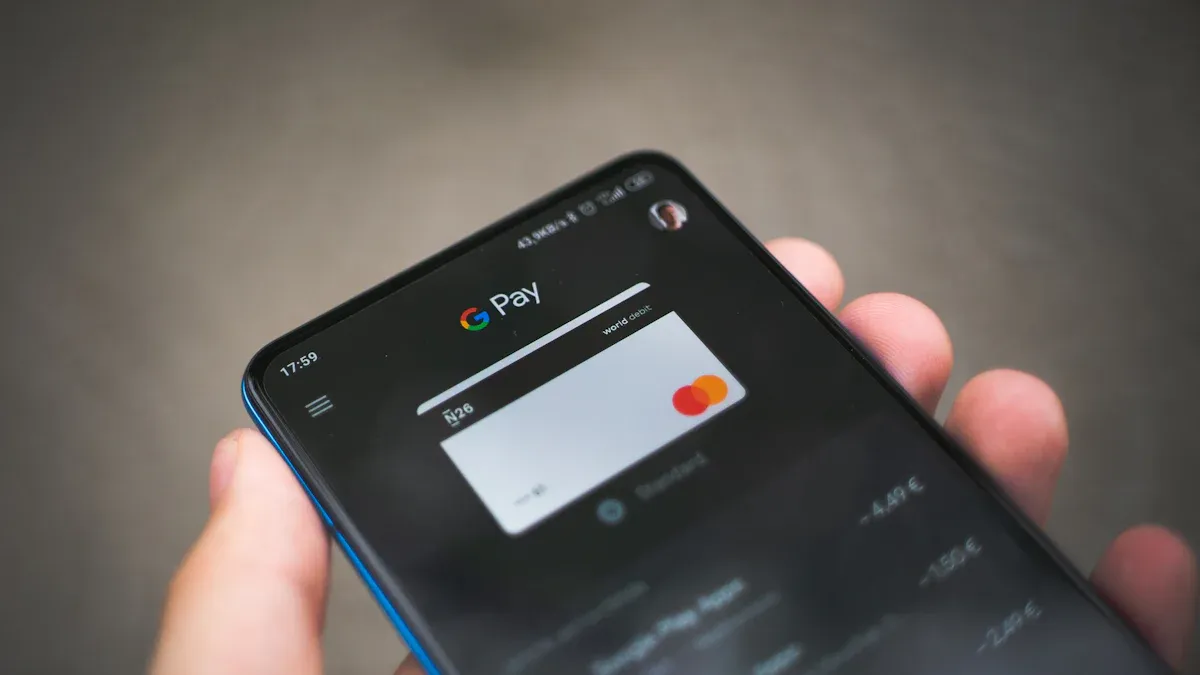
Image Source: unsplash
Are you troubled by high handling fees, long waits, and exchange rate losses? In today’s booming global freelance economy, this has become a common pain point. Data shows that the number of freelancers in some countries is growing rapidly.
Note: These payment link losses can cause you to lose up to 5% of your income.
Optimizing cross-border collections is not about finding a “perfect” platform but building a “combination strategy” for collections that best suits you. An excellent cross-border collection optimization solution will be tailored to your business model and needs.
Key Points
- Choosing the right collection tool is the first step; there is no best platform, only the one most suitable for you.
- Optimizing cross-border collections requires a combination strategy, not just one platform.
- Prioritizing settlement in the client’s local currency can speed up collections and improve customer satisfaction.
- Reasonably planning fund pooling and withdrawals can effectively reduce handling fees.
- Understand and comply with collection security and tax regulations to ensure fund safety and compliance.
Comparative Analysis of Mainstream Cross-Border Collection Platforms

Image Source: pexels
Choosing the right collection tool is the first step in an optimization solution. Platforms on the market have their strengths; there is no absolute good or bad, only suitability for your business. Below, we deeply analyze five mainstream platforms to help you make informed decisions.
Wise: Top Choice for Transparent Exchange Rates and Low Fees
Wise (formerly TransferWise) has core advantages in extreme transparency and low costs. It uses the real mid-market exchange rate—the rate you see on Google—eliminating hidden exchange losses.
Wise promises not to charge extra fees by hiding markups in exchange rates. All fees are clearly listed, making your costs predictable.
- Fee Structure: Remittance handling fees vary by currency, starting as low as 0.57%. The first two withdrawals per month under $100 USD are free.
- Arrival Speed: Relatively fast; for example, transfers to the Eurozone usually arrive within 6 hours. Transfers to mainland China accounts depend on partner channels and recipient verification speed.
- Applicable Scenarios: Especially suitable for freelancers sensitive to exchange rates who want fully transparent costs.
Payoneer: Powerful Tool for B2B and Multi-Platform Collections
Payoneer is favored by freelance platforms and B2B traders. It provides virtual bank accounts in multiple countries, making it easy to receive payments from platforms like Amazon, Upwork, Airbnb as if collecting locally.
- Fee Structure: Transfers between Payoneer users are free. Receiving from platforms usually has no incoming fees. Annual account fee is $29.95, waived if annual receipts exceed $2,000.
- Key Features: Strong platform integration and physical/virtual Mastercard for direct spending or ATM withdrawals.
- Applicable Scenarios: For those taking orders on multiple freelance platforms or frequently receiving B2B client company payments.
PayPal: Convenient Option with Global Coverage
PayPal has unmatched user coverage, almost a payment method familiar and accepted by global clients. Its operation is very convenient; create payment links or collect directly via email.
- Fee Structure: Fees are relatively complex and high. Receiving international commercial payments usually involves a “standard rate (about 3.49% + fixed fee)” + “cross-border fee (about 1.5%)” + “currency conversion fee (about 3%-4%)” combination.
- Main Drawbacks: High exchange rate markups; withdrawing to mainland China bank accounts is relatively cumbersome.
- Applicable Scenarios: Small-amount collections with broad client base, prioritizing ultimate convenience, and less sensitive to costs.
Stripe: Collection Engine for Tech Businesses
If you have a personal website or provide SaaS services, Stripe is your top choice. It offers powerful APIs that seamlessly integrate into your website or app, providing clients a smooth credit card payment experience.
- Fee Structure: Standard online collection rate is 2.9% + $0.30 per transaction. International cards add 1.5% cross-border fee and 1% currency conversion fee.
- Technical Advantages: Supports multiple programming languages like Python, Node.js, and easy integration with Shopify, WordPress.
- Applicable Scenarios: Developers and entrepreneurs with personal brand websites, e-commerce, or software services.
Remotify: Compliant Collection Solution for European Business
For freelancers mainly serving EU clients, tax compliance is a headache. Remotify focuses on solving this pain point, automatically generating invoices compliant with EU VAT regulations.
- Fee Structure: Platform fees are reasonable, but specific pricing requires quoting based on service requests.
- Core Features: Automatically handles VAT rules. If your EU client has a valid VAT number, the system automatically applies reverse charge to mark VAT as 0%, greatly simplifying tax management.
- Applicable Scenarios: Freelancers with main clients in the EU needing to solve invoice and VAT compliance issues.
Quick Overview of Platform Core Features
| Platform | Main Advantages | Fee Structure | Most Applicable Scenarios |
|---|---|---|---|
| Wise | Real exchange rates, transparent fees | Low, proportional | Cost-sensitive, prioritize transparency |
| Payoneer | High platform integration, B2B-friendly | Medium, with annual fee waiver conditions | Multi-platform orders, B2B collections |
| PayPal | Broad user coverage, convenient operation | High, complex structure | Small-amount, high-frequency, prioritize convenience |
| Stripe | Strong technical integration | Medium, suitable for online transactions | Personal website/e-commerce/SaaS collections |
| Remotify | Solves EU VAT compliance issues | Customized, requires quote | Mainly serving EU clients |
Cross-Border Collection Optimization Solutions: Practical Cost-Reduction Techniques

Image Source: unsplash
Choosing the right tool is just the first step; what truly sets you apart is how you use these tools. An excellent cross-border collection optimization solution helps you “save” real money at every link. The following four practical strategies guide you from passive collections to active cost management.
Strategy 1: Choose Payment Channels with Transparent Rates
Many payment platforms claim “free” or “low handling fees,” but real costs are hidden in opaque exchange rate markups. This “exchange loss” silently erodes your income. Therefore, choosing a fully transparent rate channel is crucial.
Professional Tip: Always beware of platforms not using mid-market rates. Your primary task is ensuring every penny’s destination is clearly visible.
Wise, for example, wins the trust of many freelancers precisely for this reason.
- Real Exchange Rates: Wise Business uses the mid-market rate you can check on Google, with no hidden markups.
- Clear Fees: All handling fees are listed clearly, making costs fully controllable.
- Multi-Currency Accounts: Hold over 40 currencies in your account and convert at the best rate.
To proactively control costs, use tools to compare providers. For example, Wise and Xompare offer real-time rate comparison. Enter amount and currency; the system clearly shows final arrival amounts across channels, exposing all hidden fees. Developing a habit of quick comparisons before each collection is the foundation of executing a cross-border collection optimization solution.
Strategy 2: Prioritize Local Currency Settlement
Do you habitually quote all clients in USD? This seems convenient but may cause you to miss opportunities to improve customer satisfaction and profits. Proactively invoicing in the client’s local currency (e.g., EUR, GBP) brings unexpected benefits.
- Speed Up Payments: When clients receive local currency invoices, they pay directly via local banking systems without cumbersome conversions, usually getting you paid faster.
- Build Customer Loyalty: You eliminate exchange rate risks and conversion hassles for clients. This thoughtful service effectively boosts brand loyalty, especially in competitive markets.
- Enhance Pricing Power: If clients pay in foreign currency, they may demand price concessions for bearing exchange risks. Quoting in local currency puts pricing control in your hands.
- Create Negotiation Leverage: Studies show suppliers willing to bear exchange risks are more likely to get 1% to 5% price discounts or longer payment terms from importers (your clients).
In summary, collecting in clients’ local currencies makes transactions smoother and more pleasant for both parties, an indispensable part of your cross-border collection optimization solution.
Strategy 3: Reasonably Plan Fund Pooling and Withdrawals
For high-frequency, small-amount collecting freelancers, withdrawing each collection separately is a common cost trap. Most platforms’ withdrawal services include “per-transaction” fixed fees. Frequent withdrawals accumulate these costs.
Research shows consolidating invoices and payments reduces per-processing costs from about $13.00 to $3.12. This principle applies to fund management. An effective strategy is “consolidate small into large”:
- Set Up Fund Pooling Account: First pool payments from Upwork, personal clients, Stripe, etc., into your core multi-currency account (e.g., Wise or Payoneer). Do not rush to withdraw every small amount.
- Plan Batch Withdrawal Cycles: Set a fixed withdrawal cycle (e.g., monthly or quarterly) based on cash flow needs. Execute one-time withdrawals when a larger amount accumulates.
The benefits are obvious:
- Dilute Fixed Costs: Single large withdrawals minimize per-income fixed handling fees.
- Utilize Free Quotas: Some platforms offer monthly free withdrawal amounts; concentrated withdrawals better leverage this policy.
Advanced Tip: If your annual receipts are large (e.g., over $100,000), do not hesitate to contact your payment provider’s account manager. Many platforms offer more competitive customized rates for large clients.
When putting these strategies into practice, it can also help to separate tools by role: some focus on “getting paid”, others on “holding and using” funds. BiyaPay works more like a treasury layer where you centralize USD, EUR and even digital asset income from different platforms into a single account instead of leaving balances scattered across multiple wallets and bank cards.
Whenever you plan to convert part of the balance back to fiat, you can first use BiyaPay’s free FX converter to see live rates and an estimated cost, then decide whether to cash out to a local account immediately or keep it in USD for a while and time conversions around your cash-flow needs.
If you regularly send part of your income home or to a reserve account, you can also trigger cross-border remittances directly from your BiyaPay wallet, paying out from the pooled balance instead of withdrawing from several intermediaries and wiring again, which helps compress total fees and settlement time.
For freelancers who expect to work with overseas clients long term, this kind of “multi-platform collection + BiyaPay pooling and settlement” setup doesn’t replace Wise or Payoneer; it sits on top of them and gives you an extra layer of fund orchestration so your collection stack looks much closer to what a small international business would use.
Strategy 4: Combined Collection Path Case Analysis
The most effective cross-border collection optimization solutions often do not rely on a single platform but build clever combined paths. Let’s analyze via a specific case.
Scenario: You are a software developer in North America providing remote services to a German company, with project payment of 5,000 EUR. Your goal is to get funds to USD for living expenses or investments (e.g., buying US stocks) with minimal costs and maximum flexibility.
Traditional Path vs. Optimized Path
| Comparison Dimension | Traditional Path (Client Wire -> North American Local Bank) | Optimized Path (Stripe -> Biyapay -> Hong Kong Licensed Bank) |
|---|---|---|
| Handling Fees | High (international wire fee + intermediary fee + incoming fee) | Medium (Stripe standard rate, flexible subsequent paths) |
| Exchange Loss | Extremely high (bank rate loss usually 2%-4%) | Low (convert at optimal timing) |
| Arrival Speed | Slow (3-7 business days) | Fast (Stripe instant, flexible subsequent operations) |
| Fund Flexibility | Poor (directly converted to CAD/USD, single use) | Extremely high (hold stablecoins for global payments or investments) |
Optimized Path Step-by-Step:
- Step 1: Efficient Collection (European Client -> Stripe) Integrate Stripe on your website and send a EUR-denominated payment link to the German client. The client pays conveniently via credit card or SEPA direct debit. The 5,000 EUR safely and quickly enters your Stripe account. Compared to traditional wires, this step provides great convenience for the client.
- Step 2: Fund Pooling and Flexible Management (Stripe -> Biyapay) Next, do not withdraw directly from Stripe to a local bank. Transfer EUR funds from Stripe to your Biyapay account. In Biyapay, convert EUR to USD stablecoins like USDT or USDC. This step is the core of the optimization solution, providing unprecedented flexibility:
- Avoid Exchange Fluctuations: Convert EUR to USD-pegged stablecoins at favorable times to lock profits and avoid future rate drop losses.
- Asset Growth and Use: Use these stablecoins directly for global payments or invest in US stocks for further growth.
- Step 3: On-Demand Withdrawal (Biyapay -> Hong Kong Licensed Bank) When needing fiat cash, convert required stablecoin amounts to USD via Biyapay and withdraw to your Hong Kong licensed bank account. As an international financial center, Hong Kong has few fund flow restrictions, fast processing, and is convenient for subsequent consumption or investments.
Through this combined path, you not only significantly reduce exchange losses but greatly enhance fund utilization efficiency and flexibility—this is the essence of advanced cross-border collection optimization solutions.
Collection Security and Tax Compliance Guide
Earning income is just the first step; ensuring fund security and regulatory compliance makes your hard work truly secure. Efficient collection strategies must be built on security and compliance foundations.
Preparation and Handling of Account Verification (KYC)
When registering any payment platform, you encounter the “Know Your Customer” (KYC) verification process. This prevents financial crimes and protects platform and user funds. Preparing materials in advance ensures smooth verification.
Typically, prepare two types of documents:
- Identity Proof: Government-issued valid photo ID, such as passport or driver’s license.
- Address Proof: Utility bills (water, electricity) or bank statements within the last three months with your name and residential address.
Professional Tip: KYC failures often stem from small mistakes. Ensure names used in registration exactly match documents, uploaded files are clear and unexpired, and do not select wrong document types or countries/regions.
Tax Handling for Personal Cross-Border Income
Cross-border income tax issues are complex; strongly recommend consulting professional tax advisors. But understanding basic principles helps better planning. Most countries (e.g., U.S.) tax residents on worldwide income. This means you must declare this income to your local tax authority regardless of client location.
Good news: Many countries have tax treaties to avoid double taxation on the same income.
Important Reminder: For the U.S., if your overseas financial account total exceeds $10,000 at any point in a year, you must file a Foreign Bank and Financial Accounts Report (FBAR) with the Treasury. Be sure to understand and comply with local regulations.
How to Identify and Avoid Collection Scams
Freelancers are high targets for collection scams. Staying vigilant is the best self-protection. Common scams include:
- Overpayment Scam: Scammers deliberately overpay, then ask you to refund the difference. But their initial payment is fake, ultimately causing you to lose the refunded amount.
- Upfront Fee Scam: They require you to pay “handling fees” or “software subscription fees” before starting work.
- Disappear After Delivery: Clients vanish after receiving your work, refusing payment.
Always sign clear contracts before projects and beware of “clients” eager to pay but uninterested in work details. Prioritize reputable platforms for transactions; they usually offer seller protection and dispute resolution processes.
We emphasize again: A perfect cross-border collection optimization solution is not finding a single platform. You need to build a strategy combination best for you. This article shows three optimization paths: choose the right tools, master techniques, ensure compliance.
To help you act quickly, refer to this “Action Decision Checklist”:
- Where is your main client base?
- Are your collections high-frequency small-amount or low-frequency large-amount?
- How high is your requirement for arrival speed?
- Do you value low handling fees or operational convenience more?
Wishing every freelancer “easy collections, focus on creation.”
FAQ
Which platform should I choose? Is there a “best” one?
There is no “best” platform. Build combinations based on your needs. For low fees and transparent rates, Wise is preferred. If taking orders on multiple platforms, Payoneer is more suitable. Optimal solutions usually combine multiple platforms.
As an individual freelancer without a company, can I collect payments?
Of course. Mainstream platforms like Wise, Payoneer, and PayPal support individual users. Use your personal identity information to complete registration and account verification (KYC), then start receiving global client payments.
What if a client insists on a payment method unfavorable to me?
Communication is key. Try these steps:
- Clearly explain to the client that the method incurs extra costs.
- Offer a small discount to encourage using your recommended channel.
- If unchangeable, consider including this cost in future quotes.
*This article is provided for general information purposes and does not constitute legal, tax or other professional advice from BiyaPay or its subsidiaries and its affiliates, and it is not intended as a substitute for obtaining advice from a financial advisor or any other professional.
We make no representations, warranties or warranties, express or implied, as to the accuracy, completeness or timeliness of the contents of this publication.
Related Blogs of

The Easiest Way to Find the Code for Calling France


How to Fill Out a CVS Money Order A 2026 Guide

Tap and Go A Beginner's Guide to Cardless ATM Withdrawals


What is the Dialing Code for the USA and How to Call?

Choose Country or Region to Read Local Blog
 Australia
 Austria
 Belgium
 Canada
 Cyprus
 Czech Republic
 Denmark
 Estonia
 Finland
 France
 Germany
 Greece
 Hong Kong
 India
India Indonesia
 Ireland
 Italy
Italy Japan
Japan Latvia
 Lithuania
 Luxembourg
 Malaysia
 Malta
Malta Morocco
 Nepal
Nepal Netherlands
 New Zealand
 Norway
 Pakistan
 Philippines
 Poland
 Portugal
 Romania
 Singapore
 Slovakia
 Slovenia
 South Africa
 South Korea
 Spain
Spain Sweden
 Thailand
 The United States
 Turkey
 United Arab Emirates
 United Kingdom
 Vietnam
Contact Us




BIYA GLOBAL LLC is a licensed entity registered with the U.S. Securities and Exchange Commission (SEC No.: 802-127417); a certified member of the Financial Industry Regulatory Authority (FINRA) (Central Registration Depository CRD No.: 325027); regulated by the Financial Industry Regulatory Authority (FINRA) and the U.S. Securities and Exchange Commission (SEC).
BIYA GLOBAL LLC is registered with the Financial Crimes Enforcement Network (FinCEN), an agency under the U.S. Department of the Treasury, as a Money Services Business (MSB), with registration number 31000218637349, and regulated by the Financial Crimes Enforcement Network (FinCEN).
BIYA GLOBAL LIMITED is a registered Financial Service Provider (FSP) in New Zealand, with registration number FSP1007221, and is also a registered member of the Financial Services Complaints Limited (FSCL), an independent dispute resolution scheme in New Zealand.