Is Depositing Cash into Your Own Account in the US a Problem? Understanding Common Transfer and Tax Questions



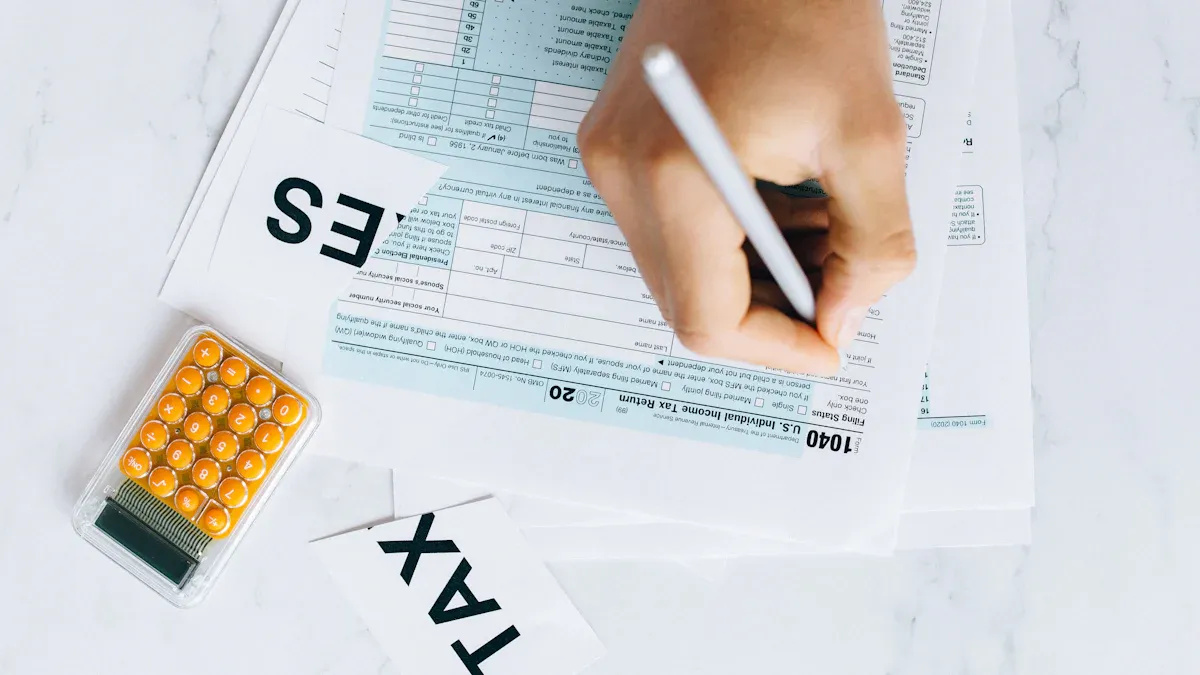
Image Source: pexels
Depositing cash into your own account in the US is completely legal. However, improper handling could indeed cause unnecessary trouble. Banks pay attention to the amount and frequency of your deposits, so you need to understand their reporting rules to avoid being mistakenly flagged for suspicious activity.
The key to success lies in the amount, frequency, and legitimacy of the funds’ source. How you communicate with the bank is equally important.
Key Points
- Depositing cash in the US is legal, but you need to understand the bank’s reporting rules.
- Banks report cash transactions exceeding $10,000 to the government, known as a Currency Transaction Report (CTR).
- Do not split large cash deposits into smaller amounts; this is called structuring and is illegal.
- When depositing large amounts of cash, deposit the full amount at once and prepare proof of the funds’ source.
- Deposits themselves are not taxable, but you must ensure all income is reported to the IRS.
Why Do Banks Care About Cash Deposits?
You might wonder why banks seem to “monitor” you when you’re just depositing your own money. In fact, banks focus on cash deposits for two main reasons: their own business needs and compliance with federal law.
From a business perspective, banks rely on deposits for their operations. Your deposits are not only a liability for the bank but also the source of funds they lend to other customers. At the same time, banks need to monitor funds to mitigate risks.
But the more significant reason is legal compliance. Banks act as “gatekeepers” in the US financial system, with a legal obligation to assist the government in combating money laundering, terrorist financing, and tax evasion.
Legal Foundation: Bank Secrecy Act
The core of this lies in a federal law called the Bank Secrecy Act (BSA). This law doesn’t mean your banking information is completely confidential; on the contrary, it requires banks to report certain customer financial activities to the government under specific circumstances.
Under the Bank Secrecy Act, banks must fulfill several key responsibilities:
- Report Large Cash Transactions: Report cash transactions exceeding $10,000.
- Report Suspicious Activities: Proactively report transactions potentially related to criminal activity.
- Verify Customer Identity: Verify your name, date of birth, address, and identification number through a Customer Identification Program (CIP) when opening an account.
- Retain Records: Keep all transaction and reporting-related documents for at least five years.
Thus, when banks ask about the source of your deposits, they are not trying to make things difficult but are fulfilling their legal obligations.
Routine Procedure: Currency Transaction Report (CTR)
When you deposit or withdraw more than $10,000 in cash in a single day at the same bank, the bank automatically generates a Currency Transaction Report (CTR) and submits it to the Financial Crimes Enforcement Network (FinCEN) under the US Department of the Treasury.
You need to understand key points about CTRs:
- This is a routine procedure: CTRs are automated, standardized reports. They do not inherently mean you’ve done anything wrong; they are simply a record. Millions of CTRs are filed annually.
- The threshold is $10,000: This amount refers to the “daily aggregate.” For example, if you deposit $6,000 in the morning and $5,000 in the afternoon, totaling $11,000, the bank must file a CTR.
- Banks are required to file: Bank employees cannot choose whether to submit this report; it’s a mandatory legal requirement.
Rest assured: As long as your funds are legitimate and you report honestly, a CTR report typically has no negative impact on you. You don’t need to feel anxious about it.
Real Alert: Suspicious Activity Report (SAR)
Unlike the routine CTR, a Suspicious Activity Report (SAR) is the real “alert” to watch out for.
SARs are not triggered automatically by a fixed amount but are filed proactively by banks when employees suspect a transaction is related to illegal activity. Banks must complete the report within 30 days of detecting suspicious behavior. The reporting threshold for suspicious transactions is typically $5,000.
What behaviors might banks consider “suspicious” and trigger an SAR?
- Attempting to evade reporting: Persuading bank staff not to file a CTR or canceling a transaction after learning it requires reporting.
- Providing false information: Refusing to provide identification or offering suspicious details.
- Structuring: This is one of the most common red flags. To avoid the $10,000 reporting threshold, you deliberately make multiple smaller deposits (e.g., $9,900 daily for several days). This behavior is illegal.
- Unusual transaction patterns: Your account activity doesn’t align with your usual habits or claimed profession. For example, a salaried worker’s account suddenly sees large cash inflows and outflows.
- Rapid fund consolidation and transfer: Depositing cash into multiple accounts, then quickly consolidating and transferring funds overseas.
In short, when depositing cash in the US, banks’ focus is not on ordinary depositors but on identifying and stopping attempts to use the financial system for illegal activities.
The Red Line to Avoid: Structuring
In all discussions about cash deposits, “structuring” is the red line you must avoid at all costs. This behavior is illegal and can lead to severe legal consequences.
What is Structuring?
Simply put, structuring is the deliberate act of breaking a large cash deposit into multiple smaller deposits to avoid the $10,000 threshold for a Currency Transaction Report (CTR). The IRS has a broad definition: regardless of the amount, whether done in one day or over multiple days, at one bank or several, if your intent is to evade reporting, it constitutes structuring.
Here’s a common example:
- You have $18,000 in cash to deposit into a bank.
- You know deposits over $10,000 trigger reporting.
- So, you deposit $9,000 on Monday and another $9,000 on Tuesday.
You might think you’re being clever, but bank systems are far more advanced than you might imagine. Modern banks widely use artificial intelligence (AI) and big data analytics to monitor transactions. These systems can easily track your cumulative transactions across different times and branches, and if they detect a pattern of deposits close to the reporting threshold, they will immediately generate an alert and may trigger a Suspicious Activity Report (SAR).
Legal Consequences of Structuring
You must understand that structuring itself is a federal crime, even if your funds are entirely legitimate. Prosecutors do not need to prove money laundering or other criminal activity—only that you intentionally evaded reporting requirements.
If convicted, you may face severe consequences:
- Criminal Penalties: Depending on the severity, you could face up to 5 to 10 years of federal imprisonment and fines up to $250,000.
- Asset Forfeiture: The government can seize all funds related to structuring, including your bank accounts, property, and vehicles.
- Civil Fines: In addition to criminal penalties, you may face substantial civil fines.
In short, never attempt to “outsmart” the system by splitting deposits. This behavior carries extremely high risks, with consequences far more severe than a routine CTR filing.
Best Practices for Depositing Cash in the US
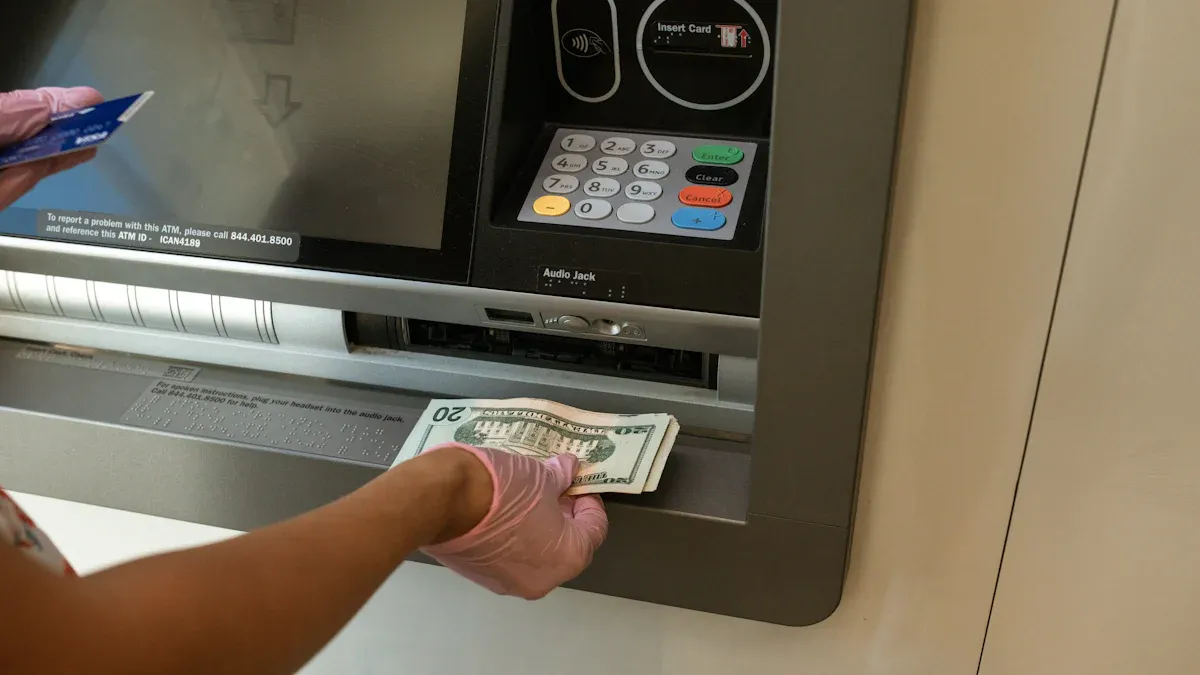
Image Source: pexels
Having understood the bank’s rules and legal red lines, you might ask, “How can I safely deposit large amounts of cash?” In fact, as long as you follow principles of transparency and honesty, the process can be very straightforward. Here are the best practices for depositing cash in the US.
Deposit Honestly and in Full
This is the most important advice: if you have a large amount of cash, deposit it all at once and willingly accept the bank’s filing of a Currency Transaction Report (CTR). Attempting to split deposits is a clear red flag and will lead to bigger problems.
When you bring over $10,000 in cash to the bank, the standard process typically involves:
- Identity Verification: The bank teller will ask for a valid ID, such as a driver’s license or passport, to verify your identity and account details.
- Fill Out a Deposit Slip: Complete a standard deposit slip as you normally would.
- Bank Files Report: After processing your deposit, the bank automatically submits a CTR to the government. You may not even notice this process.
- Funds Deposited: In most cases, your funds will be available immediately or by the next business day.
Keep in mind: Banks process millions of CTRs annually; it’s a routine operation. The vast majority of large deposits are completed smoothly. Occasionally, a bank may temporarily freeze an unusual deposit for verification due to risk controls, but this is typically a standard anti-fraud measure and is resolved within days.
To ensure a seamless process, we recommend:
- Choose Counter Deposits: For large cash amounts, go to a bank branch counter. Tellers can verify the amount on the spot and answer your questions, making it safer and more direct than using an ATM.
- Avoid Suggestive Statements: Don’t say anything to bank staff that implies you want to evade reporting, such as, “Can I deposit just $9,900?”
Prepare Reasonable Explanations and Proof
A critical aspect of depositing cash in the US is being able to prove the legitimacy of the funds’ source. This is not only to address potential bank inquiries but also to give yourself peace of mind. When bank staff ask, “Where did this money come from?” a clear answer backed by solid documentation is your best defense.
You should prepare the following types of documents in advance to prove the source of your funds:
| Source of Funds | Recommended Documentation |
|---|---|
| Asset Sales | Sales agreement for a house, car, or other valuable items; bank statements showing the transaction amount; third-party appraisal reports. |
| Employment Income | Pay stubs, employer confirmation letters, records showing bonuses or commissions, company financial statements (if you’re a business owner). |
| Gifts or Inheritance | Gift letter signed by the donor (specifying the source of funds); will or court-issued inheritance distribution documents. |
| Loans | Complete loan agreement clearly stating the lender, borrower, amount, and terms. |
| Investment Income | Investment account statements clearly showing profits from selling stocks, funds, or other investments. |
Important Note: Develop a habit of keeping records from the moment you receive cash. Note the source, amount, and date of each cash transaction. These original records will be invaluable in the future.
Be aware that not all documents qualify as valid proof of funds. For example, life insurance policies, retirement accounts, or mutual fund accounts are generally not considered valid proof of funds; you need to provide records of legitimate withdrawals or profits from these accounts.
Communicate with the Bank in Advance
For particularly large cash deposits (e.g., tens of thousands of dollars), contacting your bank branch in advance is a very wise move. While not mandatory, this step offers several benefits:
- Prepare the Bank: Large cash deposits require more time to count and process. Your advance notice allows the bank to arrange staff, avoiding long waits at the counter.
- Show Cooperation: Proactive communication demonstrates your understanding and respect for the bank’s compliance requirements, fostering a positive customer relationship.
- Reduce Unnecessary Alerts: A pre-notified transaction appears far less suspicious than a “sudden” large deposit.
Before contacting the bank, prepare the following information:
- The branch location you plan to visit.
- The estimated total deposit amount.
- The approximate number of bills by denomination (especially $100 bills).
- The depositor’s name.
While you cannot schedule an appointment for routine transactions like deposits, calling the branch or informing a teller during a prior visit is a recommended professional practice.
Cash Deposits and Tax Reporting
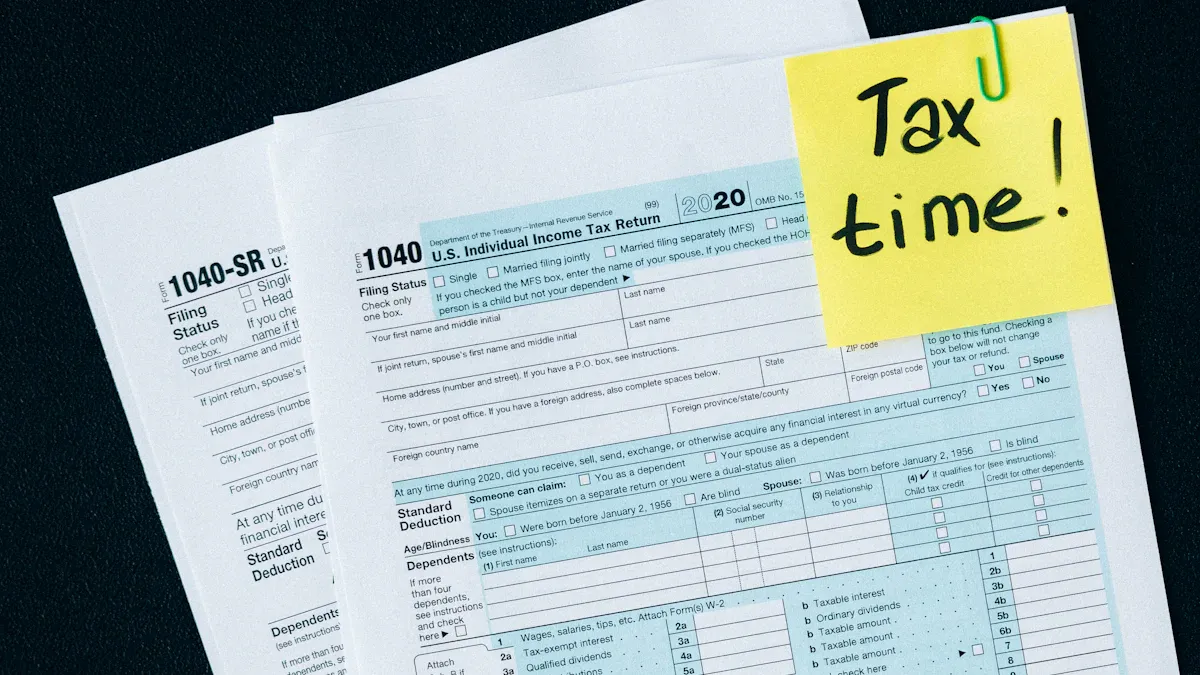
Image Source: pexels
Many people worry that depositing cash in the US will automatically trigger tax issues. This is a common misconception. You need to understand a core principle: depositing money does not equate to taxable income. Whether a deposit is taxable depends entirely on the nature of the funds.
If the funds will be used for family support or bills abroad, reducing cash handling is safer. Start with BiyaPay’s free Exchange Rate Converter & Comparison using a “total received” view.Then use BiyaPay Remittance to transfer under a compliant framework; live rates are transparent, fees can be as low as 0.5%, and same-day in/day-of delivery is supported.
As a multi-asset wallet, BiyaPay supports fiat–crypto conversions; see the homepage. It holds U.S. MSB and New Zealand FSP registrations, enhancing settlement predictability.
Are Deposits Taxable?
The answer is no. Bank deposits do not equal taxable income. The IRS is concerned with whether you have honestly reported all legitimate income, not where you deposit your money.
To better understand, you can categorize funds as follows:
- After-Tax Savings: Money you’ve already paid taxes on (e.g., salary savings) does not require additional taxation when deposited into a bank.
- Unreported Income: If the cash comes from services or sales you haven’t reported, that income is taxable.
- Gifts or Inheritance: Gifts or inherited assets received are generally not subject to income tax for the recipient.
How Does the IRS View Large Deposits?
The IRS does receive information through bank reports like CTRs and SARs, but their focus is not on the act of depositing but whether the funds suggest unreported income.
The IRS analyzes your deposit patterns for clues:
- Regularity of Deposits: Regular, fixed-amount deposits may be seen as rental or interest income.
- Type of Deposits: If you usually deposit checks but suddenly make a large cash deposit, the IRS may want to know its source.
- Relevance to Profession: Whether your deposit activity aligns with your reported profession and income level.
If your deposit patterns significantly deviate from your tax filings, the IRS may use this as a factor in considering an audit.
Business Cash Income and Form 8300
Beyond bank reports, you need to be aware of an important tax form: Form 8300. This form is separate from bank CTRs, and the reporting obligation falls on you.
Under federal law, any individual or business receiving more than $10,000 in cash in a single or related transaction in a “trade or business” must file Form 8300 with the IRS within 15 days of receiving the funds. For example, if you’re a lawyer, jeweler, or car dealer receiving a large cash payment from a client, you must fulfill this reporting obligation.
The table below clarifies the difference between Form 8300 and bank CTRs:
| Report Type | Reporting Entity | Trigger Condition |
|---|---|---|
| Currency Transaction Report (CTR) | Bank | You deposit/withdraw over $10,000 in cash in a single day at a bank |
| Form 8300 | Receiving Business or Individual | You receive over $10,000 in cash from a customer in a business transaction |
When handling cash deposits in the US, the key is honesty and transparency. Follow these golden rules:
- Absolutely avoid splitting deposits to evade reporting (structuring), as this is illegal.
- Deposit large cash amounts in full and accept the bank’s routine CTR filing.
- Keep proof of funds’ source to provide reasonable explanations to the bank.
- Ensure all taxable income is honestly reported to the IRS.
As long as your funds are legitimate and your actions are compliant, you have no reason to worry about routine cash deposits.
FAQ
Can I Deposit Large Amounts of Cash Using an ATM?
It’s not recommended. Large cash amounts are best deposited at a bank counter. Counter deposits allow tellers to verify the amount in person and address your questions, making it safer and more direct than using an ATM, which may have machine issues or deposit limits.
Will My Account Be Frozen If I Deposit Over $10,000 in Cash?
Typically, no. Filing a CTR is a routine process. As long as the funds are legitimate, your account won’t be frozen. Banks may temporarily freeze an account for verification only if they suspect fraud or illegal activity.
I Received a Cash Gift from Family in Mainland China; How Should I Deposit It?
You need to prepare a Gift Letter as proof of the funds’ source, stating the donor, amount, and purpose. Deposit the full amount at once and show this document to bank staff to make the process smoother.
How Long Should I Keep Proof of Funds Documentation?
It’s recommended to keep records for at least seven years. This aligns with the IRS’s suggested retention period for tax-related records. Store all documents securely for potential future inquiries from the bank or IRS.
*This article is provided for general information purposes and does not constitute legal, tax or other professional advice from BiyaPay or its subsidiaries and its affiliates, and it is not intended as a substitute for obtaining advice from a financial advisor or any other professional.
We make no representations, warranties or warranties, express or implied, as to the accuracy, completeness or timeliness of the contents of this publication.
Related Blogs of
What Are the Daily Limits for Chase Accounts?


The Easiest Way to Find the Code for Calling France


How to Fill Out a CVS Money Order A 2026 Guide


Tap and Go A Beginner's Guide to Cardless ATM Withdrawals

Choose Country or Region to Read Local Blog
 Australia
 Austria
 Belgium
 Canada
 Cyprus
 Czech Republic
 Denmark
 Estonia
 Finland
 France
 Germany
 Greece
 Hong Kong
 India
India Indonesia
 Ireland
 Italy
Italy Japan
Japan Latvia
 Lithuania
 Luxembourg
 Malaysia
 Malta
Malta Morocco
 Nepal
Nepal Netherlands
 New Zealand
 Norway
 Pakistan
 Philippines
 Poland
 Portugal
 Romania
 Singapore
 Slovakia
 Slovenia
 South Africa
 South Korea
 Spain
Spain Sweden
 Thailand
 The United States
 Turkey
 United Arab Emirates
 United Kingdom
 Vietnam
Contact Us




BIYA GLOBAL LLC is a licensed entity registered with the U.S. Securities and Exchange Commission (SEC No.: 802-127417); a certified member of the Financial Industry Regulatory Authority (FINRA) (Central Registration Depository CRD No.: 325027); regulated by the Financial Industry Regulatory Authority (FINRA) and the U.S. Securities and Exchange Commission (SEC).
BIYA GLOBAL LLC is registered with the Financial Crimes Enforcement Network (FinCEN), an agency under the U.S. Department of the Treasury, as a Money Services Business (MSB), with registration number 31000218637349, and regulated by the Financial Crimes Enforcement Network (FinCEN).
BIYA GLOBAL LIMITED is a registered Financial Service Provider (FSP) in New Zealand, with registration number FSP1007221, and is also a registered member of the Financial Services Complaints Limited (FSCL), an independent dispute resolution scheme in New Zealand.