How to Effectively Communicate with Your Bank to Resolve International Transfer Failures




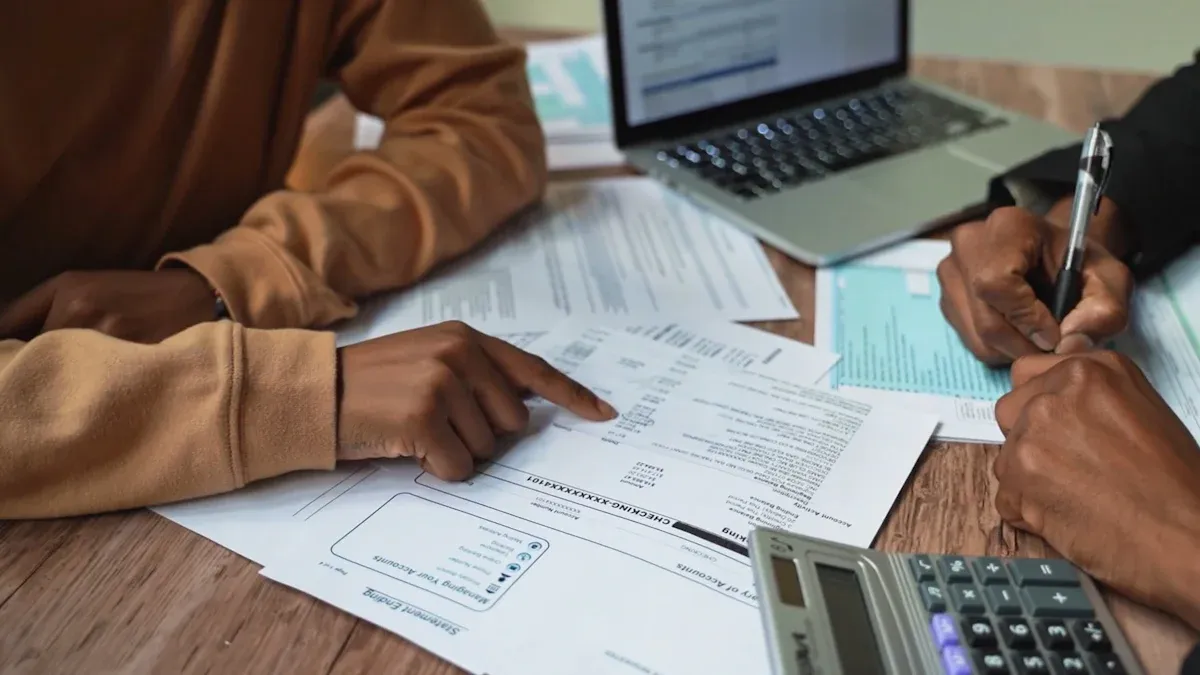
Image Source: pexels
When conducting cross-border transfers, you may encounter international transfer failures. According to the latest data from 2025, cross-border transfer failure rates exceed 30%. For instance, in Hong Kong banks’ cross-border payment services, mismatches between the recipient’s English name and account records often lead to returns. You should immediately contact bank customer service, preparing your transfer reference number, recipient details, and error messages. Proactively explaining the issue helps customer service quickly identify the cause, improving resolution efficiency.
Key Points
- When facing an international transfer failure, the first step is to prepare all relevant documents and error messages to help the bank quickly locate the issue.
- Clearly understanding the reason for the transfer failure, such as incorrect information, compliance review failures, or quota restrictions, facilitates precise communication and problem resolution.
- When communicating with the bank, express yourself clearly and concisely, proactively raising specific issues and demands to improve processing efficiency.
- Keep detailed records of each communication, and if necessary, request written responses from the bank to protect your rights.
- For complex or repeated failures, promptly seek assistance from professional institutions or third-party platforms to ensure fund safety and successful transfers.
Information Preparation
Organizing Transfer Documents
When facing an international transfer failure, your first step should be to organize all relevant transfer documents. These include ATM receipts from the transfer date, electronic transfer confirmations, bank app screenshots, etc. Organizing these materials serves several important purposes:
- Transfer documents can help you verify at a Hong Kong bank counter whether the recipient account exists and confirm if there was an input error.
- If you find the transfer was sent to the wrong account, banks generally won’t proactively assist in fund recovery. You need to promptly present transfer documents to verify and address the issue quickly.
- With complete transfer documents, you can pursue legal recourse under Article 985 of the Chinese Civil Code regarding unjust enrichment to recover funds.
- For complex cases, you can use these documents to consult a lawyer for professional legal assistance to protect your rights.
Tip: It’s recommended to take photos or scan all transfer-related documents and save digital copies for easy access and submission.
Collecting Error Messages
Every error message you encounter during the transfer process is important. You should record all system pop-ups, SMS notifications, bank emails, or customer service feedback. This has two benefits:
- You can better understand the specific reason for the transfer failure, such as mismatched recipient information, exceeding transfer limits, or failing compliance reviews.
- When communicating with a Hong Kong bank, you can directly provide error messages, helping customer service quickly locate the issue and save communication time.
It’s recommended to use a notebook or phone memo to organize all error messages and bank feedback in chronological order.
Clarifying Demands
After organizing documents and error messages, you also need to clarify your demands. You can consider the following questions in advance:
- Do you want the bank to identify the specific reason for the failure, or do you want the transfer refunded as soon as possible?
- Do you need the bank to provide a written explanation for future disputes or appeals?
- If the amount is significant (e.g., over $1,000, approximately HKD 7,300 at current exchange rates), do you need legal consultation or third-party assistance?
Clarifying your demands makes your communication with the bank more targeted, improving the efficiency of issue resolution.
Reasons for International Transfer Failures

Image Source: pexels
Incorrect Information Entry
When filling out international transfer information, even a small error can lead to failure. For example, if you misspell the recipient’s name or enter a single incorrect digit in the account number or SWIFT code, the Hong Kong bank system will reject the transfer. During communication, proactively provide all entered information and ask the bank to verify each item. You can ask: “Please confirm if the recipient’s name, account number, and SWIFT code are fully consistent?” This helps quickly pinpoint the issue.
Failure to Pass Compliance Review
Banks have strict compliance reviews for international transfers. If you cannot provide proof of fund source or the transfer purpose is unclear, the bank may block your transfer due to anti-money laundering or anti-terrorism financing risks. During communication, proactively explain the fund source, such as salary, tuition, or family support, and prepare relevant proof. You can ask: “My transfer was blocked for compliance reasons; what specific documents are missing? What additional proof is needed?” This helps the bank provide quick feedback.
Quota or Policy Restrictions
China imposes a $50,000 annual foreign exchange quota for individuals. Hong Kong banks also have different policies for various transfer purposes, such as allowing only tuition or living expenses. If you exceed the quota or the purpose doesn’t comply with policy, the transfer is likely to fail. During communication, ask clearly: “Does my transfer amount exceed the annual limit? Does the purpose comply with bank policy?” This avoids repeated errors.
Missing Documents
When processing international transfers, banks often require contracts, invoices, or authorization letters. If your submitted documents are incomplete or incorrectly formatted, the bank will return the transfer. You should prepare all documents in advance and ask during communication: “What additional documents are needed? Are there specific format requirements?” This reduces waiting time.
System or Operational Failures
Sometimes, international transfer failures are not your fault but due to bank system issues, such as online banking crashes or data transmission interruptions. In such cases, you can request the bank to provide a system failure explanation and record the communication. You can ask: “Was this transfer failure due to a system issue? How long will it take to resolve?” This helps you adjust your plans promptly.
Tip: During each communication, it’s recommended to record the bank’s responses for future tracking and appeals.
Communication Process
Image Source: unsplash
Problem Description
When facing an international transfer failure, the first step is to clearly and concisely describe the issue to Hong Kong bank customer service. You can follow this order:
- Specify the transfer date, amount (e.g., $1,000, approximately HKD 7,300 at current exchange rates), recipient details, and transfer channel (e.g., online banking, counter, or mobile app).
- Clearly state the specific issue encountered, such as a system message indicating “recipient information mismatch” or “compliance review not passed.”
- Provide all relevant documents and error message screenshots to help the bank quickly locate the issue.
It’s recommended to prepare all materials in advance to save communication time and avoid repetitive descriptions.
When describing the issue, avoid vague terms like “seems like” or “probably.” State the specific situation directly to help bank customer service understand your needs immediately.
Inquiry About Failure Reasons
After describing the issue, proactively ask the bank for detailed reasons for the transfer failure. You can ask:
- “What specific issue caused my international transfer to fail?”
- “Can you confirm if it was due to incorrect information, a compliance review failure, or a quota restriction?”
- “If additional documents are needed, please specify which files and format requirements.”
Hong Kong bank customer service typically follows this process:
- You need to bring your ID, transfer receipt, and fee voucher to the original transfer counter to initiate an inquiry, and the bank will check the transfer status immediately.
- For refunds, if the telegraphic transfer hasn’t been credited, you can request a refund with your ID, transfer receipt, and fee voucher; if credited, the recipient’s consent is required; for draft refunds, bring your ID, original draft, transfer receipt, and fee voucher.
- If the draft is lost, promptly submit a written loss report to the issuing bank with your ID and transfer receipt, and the bank will process a stop-payment.
When inquiring, note that some banks have service shortcomings, such as insufficient staff expertise, delayed communication, or lack of transparency. Directly request clear reasons for the failure and next steps to avoid repeated communication due to unclear information.
Communication Records
At every step of communication with the bank, keep detailed records. Use a notebook, phone memo, or spreadsheet to log the time, location, involved personnel, and specific content of each interaction. This offers several benefits:
- You can provide specific facts and evidence during appeals, increasing their persuasiveness and success rate.
- You can clearly track the timeline of each appeal submission, communication process, and feedback received for follow-ups.
- Detailed communication records ensure transparency and fairness in the appeal process, fostering effective communication.
- Complete records serve as critical evidence for legal recourse, supporting your appeals and rights.
Tip: After each communication with a Hong Kong bank, promptly organize the content to avoid missing key information.
Written Response
During communication, if you encounter complex issues or repeated transfer failures, proactively request a written response from the bank. The written response can include:
- A detailed explanation of the transfer failure reason
- The bank’s processing progress and next steps
- A list of required supplementary documents
- The specific process for refunds or appeals
You can request: “Please provide a written explanation of this international transfer failure for my future appeals or disputes.” This ensures you have firsthand evidence and encourages the bank to take your issue seriously.
Note: Some banks have service shortcomings, such as inadequate complaint handling, lack of clear explanations, or delayed feedback. When requesting a written response, firmly assert your reasonable demands to ensure clear and complete documentation.
Communication Tips and Precautions
Clear Expression
When communicating with a Hong Kong bank about an international transfer failure, express yourself directly and concisely. You can state the conclusion first, then provide reasons. For example, start with “My international transfer failed,” then describe the issue in detail. Use standard terms and avoid vague expressions. Proactively ask questions to show your concern and attention. Adjust your communication style based on the other party’s personality and approach to ensure the bank understands your needs quickly, improving efficiency.
Tip: Stating the conclusion first, followed by details, helps the other party grasp the key points faster.
Following Up on Progress
While waiting for the bank to address the transfer failure, you can take multiple steps to follow up:
- Call the Hong Kong bank’s customer service hotline, prepare your ID number, transfer reference number, and application date, and explain the situation patiently.
- Log into online banking to check transfer progress and use any messaging functions to request faster processing.
- If phone and online inquiries yield no results, bring relevant documents to a bank branch for face-to-face consultation, which often gets quicker feedback.
- When following up, remain polite, express demands reasonably, and respect bank staff.
Multiple follow-ups can effectively improve processing efficiency and reduce waiting time.
Information Security
During communication, pay special attention to personal information security. Hong Kong banks protect your information through encrypted transmission and access controls. Safeguard your account and password, avoiding disclosure to others. Only submit documents through official bank channels and avoid sending sensitive information via unofficial means. For remote identity verification, banks use video reviews and store related data to ensure transaction security. If you face information leakage risks, promptly contact the bank and cooperate on emergency measures.
Note: Do not share sensitive information like transfer reference numbers or account details with unidentified individuals.
Seeking Assistance
If you encounter repeated transfer failures or complex issues, proactively seek assistance from professional institutions. For example, consult a lawyer to explore legal recourse options. You can also contact third-party cross-border payment services for professional advice. For significant transfer issues (e.g., over $1,000, approximately HKD 7,300), prioritize professional support to ensure fund safety and legal rights.
To efficiently resolve international transfer issues, focus on three aspects: thorough preparation, clear expression, and proactive follow-up. For complex or repeated failures, timely third-party assistance is critical. For example:
- A Chinese parent resolved a transfer failure due to incorrect input through a third-party payment platform.
- Some users completed multiple international transfers using TransferWise, experiencing fast crediting and simple operations.
You can also follow this process:
- Analyze the failure reason and identify fund status.
- Submit accurate documents to request unfreezing or processing.
- Follow up on feedback to ensure complete resolution.
Maintaining patience and rationality, avoiding emotional actions, will help you resolve issues smoothly.
FAQ
How long does it take to receive a refund after an international transfer failure?
You typically receive a refund within 5-10 business days. Hong Kong banks process refunds relatively quickly. During holidays, the time may extend. You can contact the bank to check progress.
Will the handling fee be refunded after a transfer failure?
In most cases, banks do not refund handling fees. You can consult the Hong Kong bank for specific policies. In some special cases, banks may handle it discretionarily.
Can I use a third-party platform to retry the transfer?
You can use platforms like TransferWise to retry the transfer. Ensure the recipient information is accurate. Third-party platforms offer fast crediting and transparent fees.
Will a transfer failure affect my credit record?
International transfer failures do not affect your personal credit record. Just ensure you keep relevant documents to secure your funds.
How can I avoid transfer failures due to incorrect information?
Carefully verify the recipient’s name, account number, and SWIFT code. Ask the recipient to confirm details in advance. If unsure, consult Hong Kong bank customer service promptly.
This article provides a practical guide for users on how to communicate effectively with banks when an international remittance fails. The article elaborates on three core aspects: information preparation, failure reason analysis, and communication process. In the information preparation section, it emphasizes the importance of organizing remittance documents, collecting failure messages, and clarifying one’s own demands, laying the groundwork for subsequent communication. In the failure reason analysis section, the article systematically sorts out common causes such as incorrect information, failure to pass compliance review, and quota or policy restrictions, helping users to accurately pinpoint the problem. Finally, in the communication process section, it provides specific techniques for problem description, follow-up on failure reasons, communication logging, and requesting written replies, all aimed at improving communication efficiency and the speed of problem resolution with the bank.
However, despite the detailed content of the article, a core challenge for many Chinese investors remains: the flow of cross-border funds. Traditional funding methods, such as international bank wire transfers, are not only complex and time-consuming but also come with high fees and opaque exchange rate spreads. These issues can directly impact investment returns and increase transaction costs.
BiyaPay was created to solve these cross-border financial pain points. We offer a smoother, more cost-effective channel for your investments. We support the conversion between various fiat and digital currencies, allowing you to easily manage global assets, and provide a real-time exchange rate query feature to ensure you always get the best rates. What’s more, our remittance fees are as low as 0.5% with same-day delivery, significantly cutting down your transaction costs and time. Now, you don’t need a complex overseas account to invest in both U.S. and Hong Kong stocks on one platform. Say goodbye to the hassle of cross-border payments and start your efficient financial journey. Register with BiyaPay today to make fund management as smooth as trading.
*This article is provided for general information purposes and does not constitute legal, tax or other professional advice from BiyaPay or its subsidiaries and its affiliates, and it is not intended as a substitute for obtaining advice from a financial advisor or any other professional.
We make no representations, warranties or warranties, express or implied, as to the accuracy, completeness or timeliness of the contents of this publication.
Related Blogs of

Enterprise Overseas Payroll Compliance and Tax Planning: How to Use Multi-Asset Payroll Platforms to Reduce Cross-Border Employment Costs?


How to Write Remittance Notes to Avoid Bank Risk Control Interception? 2026 Cross-Border Remittance Compliance Guide & Sensitive Words Avoidance


Pay for Perplexity Pro Subscription with USDT: Bypass Regional Payment Restrictions

Virtual Card Binding to AWS/GCP for AI Agent Deployment Frequently Flagged by Risk Control? Compliance Card Opening Guide to Avoid Pitfalls

Choose Country or Region to Read Local Blog
 Australia
 Austria
 Belgium
 Canada
 Cyprus
 Czech Republic
 Denmark
 Estonia
 Finland
 France
 Germany
 Greece
 Hong Kong
 India
India Indonesia
 Ireland
 Italy
Italy Japan
Japan Latvia
 Lithuania
 Luxembourg
 Malaysia
 Malta
Malta Morocco
 Nepal
Nepal Netherlands
 New Zealand
 Norway
 Pakistan
 Philippines
 Poland
 Portugal
 Romania
 Singapore
 Slovakia
 Slovenia
 South Africa
 South Korea
 Spain
Spain Sweden
 Thailand
 The United States
 Turkey
 United Arab Emirates
 United Kingdom
 Vietnam
Contact Us




BIYA GLOBAL LLC is registered with the Financial Crimes Enforcement Network (FinCEN), an agency under the U.S. Department of the Treasury, as a Money Services Business (MSB), with registration number 31000218637349, and regulated by the Financial Crimes Enforcement Network (FinCEN).
BIYA GLOBAL LIMITED is a registered Financial Service Provider (FSP) in New Zealand, with registration number FSP1007221, and is also a registered member of the Financial Services Complaints Limited (FSCL), an independent dispute resolution scheme in New Zealand.