What Are the Differences Between Short-Term and Long-Term Trends in JPY to HKD Exchange Rates?




Image Source: unsplash
In 2025, the short-term fluctuations of the JPY to HKD exchange rate are significant, influenced by factors such as Japanese interest rate hikes, central bank interventions, and global risk aversion sentiment. Short-term trends often see sharp reversals, with statistical data showing an average daily fluctuation range of up to 0.5% during specific periods, accompanied by a noticeable increase in trading volume, reflecting the simultaneous influence of multiple factors.
| Time Period | Average Fluctuation | Upward Ratio | Average Upward Move | Downward Ratio | Average Downward Move |
|---|---|---|---|---|---|
| 5 Days Before Quadruple Witching | +0.50% | 69.0% | +1.58% | 31.0% | -2.06% |
| 5 Days After Quadruple Witching | -0.29% | 35.2% | +1.93% | 64.8% | -1.49% |
In the long term, economic fundamentals, interest rate differentials, and policy directions take the lead, with the market holding certain expectations for the appreciation of the JPY to HKD by year-end. Investors need to pay attention to these differences and prudently deploy their currency exchange strategies.
Key Points
- Short-term JPY to HKD exchange rate fluctuations are significant, primarily influenced by Japanese interest rate hikes, central bank policies, and global risk aversion sentiment; investors need to closely monitor real-time market news.
- Long-term trends are driven by economic fundamentals and interest rate differentials, with the market generally expecting JPY appreciation by year-end, suitable for conservative investors to hold.
- Short-term trading is flexible but comes with higher risks and costs, while long-term investing offers lower risks and more stable returns; investors should choose strategies based on their risk tolerance.
- Currency exchange strategies should combine market dynamics and personal needs; short-term trading suggests controlling transaction frequency, while long-term investing emphasizes multi-currency asset allocation to diversify risks.
- Continuously monitoring policy changes and economic data, along with regularly reviewing asset portfolios, can help enhance returns and effectively manage exchange rate risks.
Short-Term Trends
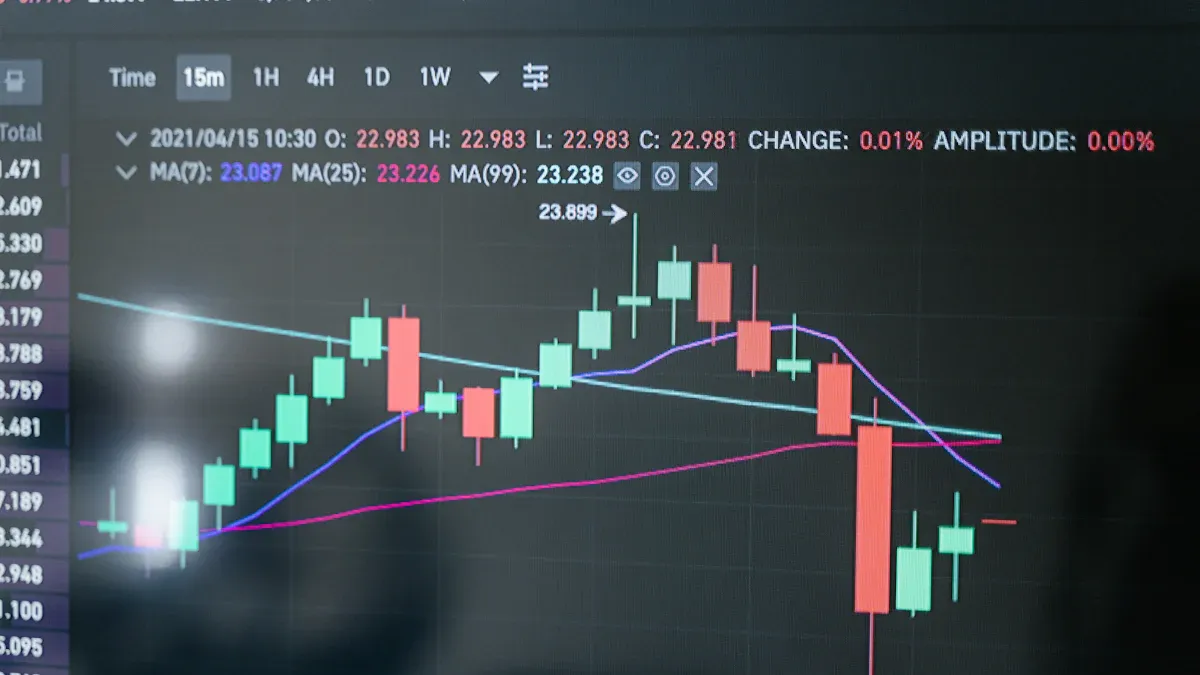
Image Source: pexels
Market Sentiment
Market sentiment had a noticeable impact on the JPY to HKD exchange rate in early 2025. Investors widely focused on the pace of Japanese interest rate hikes and global risk aversion demand. In 2024, the market exhibited a bullish pattern, but in August, due to deleveraging trades and significant unwinding of yen carry trades, short-term declines and volatility increased significantly.
- The estimated maximum drop in 2025 could reach 15%, indicating high short-term volatility.
- Large growth stocks are more affected during volatility, while small- and mid-cap stocks remain relatively stable.
- The Federal Reserve is expected to implement 2-3 rate cuts in 2025, with monetary policy leaning towards easing, and corporate profit expectations rising by approximately 10%.
These factors mean that investors trading JPY to HKD in the short term need to closely monitor changes in market sentiment, as short-term fluctuations are closely related to valuation shifts.
Policy News
Policy news has a direct impact on the short-term trend of the JPY to HKD exchange rate. The Bank of Japan maintained its benchmark interest rate at 0-0.1%, and each interest rate decision announcement triggers an immediate market reaction. For example, the USD/JPY pair surged nearly 50 pips in the short term, with a daily increase of 0.24%.
- Following an emergency meeting of the Bank of Japan, a 0.1% interest rate was used to provide 10 trillion yen in 3-month loans, with market expectations of intervention, and the USD/JPY exchange rate reached a high of 87.52.
- After the Bank of Japan adjusted its yield curve control policy in September 2022, the USD/JPY pair plummeted 5.09%, or about 700 points.
- In October 2022, central bank intervention caused the USD/JPY pair to drop approximately 640 points in a short period, followed by exchange rate fluctuations.
Additionally, statements from U.S. Federal Reserve officials, credit rating downgrades, Reserve Bank of Australia interest rate decisions, and China’s economic data all immediately affect market confidence. For example, after Powell’s remarks, the Dow Jones Industrial Average fell by more than 1,500 points, and the U.S. Dollar Index rose to 102.42. These policy news items further widened the short-term volatility of the JPY to HKD exchange rate.
JPY to HKD Volatility
In early 2025, the JPY to HKD exchange rate once hit a low of 0.0492 HKD, with a yearly fluctuation range of approximately 0.0482 to 0.0558 HKD. Short-term volatility is influenced by multiple factors, including Japanese interest rate hikes, central bank interventions, USD trends, and risk aversion sentiment.
Institutions like Citi and Monex predict that in the short term, the JPY to HKD exchange rate will continue to be driven by market sentiment and policy news, with a volatility range likely maintained between 0.048 and 0.056 HKD.
Within the short term, the exchange rate often experiences sharp reversals, with a noticeable increase in trading volume.
- After interest rate decisions are announced, the USD/JPY pair surges in the short term, and the JPY to HKD also shows synchronous fluctuations.
- Technical indicators like MACD suggest the possibility of a short-term technical rebound, and investors need to watch for short-term support and resistance levels.
In summary, the short-term trend of the JPY to HKD exchange rate heavily relies on market sentiment and policy news, with high volatility; investors should closely monitor real-time information and market dynamics.
Long-Term Trends
Image Source: unsplash
Interest Rate Differential Trends
In 2025, the Bank of Japan raised its benchmark interest rate to 0.5%. The market generally expects another rate hike before year-end. The change in the interest rate differential between the U.S. and Japan has become a core factor in the long-term trend of the JPY to HKD exchange rate. According to data released by Goldman Sachs and Bloomberg in mid-February 2025, Japan’s latest annualized quarterly GDP growth rate reached 2.8%, exceeding market expectations of 1.1%. At the same time, the core CPI annual increase rose to 3.2%, a new high since June 2023. These figures reflect strengthened economic momentum in Japan, supporting expectations of further rate hikes by the Bank of Japan. The narrowing interest rate differential pushed the JPY/USD exchange rate above 150, further influencing the long-term trend of the JPY to HKD. The market is focused on changes in the U.S.-Japan interest rate differential, as this will directly affect capital flows and exchange rate trends.
Economic Fundamentals
Economic fundamental data provides important references for the long-term trend of the JPY to HKD exchange rate. Financial analysis institutions typically make predictions based on the following aspects:
- GDP growth rate reflects the speed of economic expansion. Japan’s GDP growth in 2025 outperformed expectations, indicating strong economic recovery momentum.
- Improvements in the job market, declining unemployment rates, rising nominal wages, and enhanced consumer spending capacity help support the long-term performance of the yen.
- Persistent upward inflation trends, with core CPI hitting new highs, indicate robust domestic demand, providing a foundation for currency appreciation.
- Easing supply chain bottlenecks reduces economic uncertainty and boosts market confidence.
- Abundant short-term liquidity provides the Bank of Japan with buffer space to adjust monetary policy.
These economic fundamental factors collectively drive the long-term trend of the JPY to HKD exchange rate, leading the market to hold a cautiously optimistic attitude toward the yen’s future performance.
Appreciation Expectations
The market has clear expectations for the long-term appreciation of the JPY to HKD exchange rate. Some analyses suggest that with the Bank of Japan continuing to raise interest rates and improving economic data, the JPY to HKD could rise to 5.688 HKD by year-end. Investors generally believe that narrowing interest rate differentials and improved economic fundamentals will drive long-term yen appreciation. However, market divergence persists. Some institutions argue that if the U.S. economy remains strong, the USD will retain support, potentially limiting the extent of yen appreciation. Investors need to closely monitor economic data, policy trends, and global capital flows from both Japan and the U.S., flexibly adjusting their currency exchange strategies.
Reasons for Divergence
Influencing Factors
The divergence between short-term and long-term trends stems from multiple factors, including policy news, interest rate differential changes, economic fundamentals, and capital flows. In the short term, market liquidity changes rapidly. Foreign capital continues to flow out of U.S. equity funds, with net outflows also seen in European and Asia-Pacific equity funds, reflecting short-term market funding pressure. Non-investment-grade bonds face low short-term repayment pressure, as most maturing debts have been extended beyond 2028, with only 6.5% of outstanding debts maturing in the next two years. These bonds offer higher yields, making them attractive in the short term. On the policy front, the U.S. consumer price index (CPI) for May 2025 rose 2.4% year-on-year, with core CPI up 2.8%, both below market expectations, providing the Federal Reserve with room for rate cuts and further influencing short-term market sentiment.
Long-term trends reflect more of the economic cycle and structural adjustments. Local debt pressures persist, and economic growth momentum is insufficient. CITIC Securities notes that short-term economic growth and corporate profit growth are declining, with liquidity and risk-free rates becoming the core of valuations. Long-term investors need to focus on economic fundamentals and structural factors, maintaining a cautious approach.
The strategist team at Citigroup has observed that capital flows are concentrated in large-cap risk positions, with investors adjusting fund allocations based on policy news. When the market is optimistic about trade prospects, tech stocks attract significant capital, showing the direct impact of policy news on fund flows. The results of the U.S. three-year Treasury note auction also serve as a key indicator of whether foreign investors will reduce U.S. asset holdings, subsequently affecting USD trends.
Trend Comparison
Short-term and long-term investment strategies each have their pros and cons. The following list helps understand the main differences between the two:
- Short-term investing requires knowledge of technical and chip analysis, making it highly challenging to execute.
- Frequent short-term trading incurs higher fees and tax burdens, impacting overall profits.
- Short-term trading focuses on capital efficiency, requiring constant market monitoring and high operational pressure.
- Long-term investing relies on fundamental stock selection, saving time and effort, with lower risks and more stable returns.
- Short-term trading offers high flexibility, allowing quick portfolio adjustments, but comes with higher costs and risks.
Based on market data backtesting over the past three years, short-term trading, due to fees and increased market downtime, has a cumulative return rate about 10% lower than long-term holding. The shorter the holding period in short-term trading, the higher the chance of loss, approximately 37% for short-term versus 22% for long-term. Long-term holding reduces return rate volatility and lowers risk. Short-term trading requires quick reflexes and good luck, while long-term holding increases the probability of positive returns and reduces the risk of significant losses.
| Main Factor | Short-Term Dominant | Long-Term Dominant |
|---|---|---|
| Policy News | High Impact | Limited Impact |
| Capital Flows | Rapid Changes | Relatively Stable |
| Economic Fundamentals | Limited Impact | Significant Impact |
| Investment Costs | Higher | Lower |
| Return Volatility | Higher | Lower |
| Operational Flexibility | High | Low |
Currency Exchange Strategies
Short-Term Deployment
Short-term currency exchange strategies emphasize flexible responses to market volatility. Investors can refer to the overbought/oversold conditions of decentralized exchanges and observe large deposit or withdrawal behaviors, which help gauge the direction of major capital movements. Based on past market data, short-term trading suggestions include:
- Analyze line charts over the past six months to identify strong currency trends.
- Limit trading frequency to 3-5 times daily, controlling it within this range, to avoid overtrading.
- Regularly review trading records to optimize operational parameters.
- Focus on the market’s daily spotlight, quickly testing the effectiveness of strategies.
These methods can help improve short-term win rates but also require attention to fees and exchange rate fluctuation risks. Short-term deployment suits investors with higher risk tolerance who can closely monitor market dynamics.
Long-Term Deployment
Long-term currency exchange strategies prioritize asset allocation and risk diversification. Multi-currency allocation strategies leverage the offsetting effects of currency appreciation and depreciation to reduce the impact of exchange rate fluctuations on assets. In recent years, major currencies like the USD and JPY have appreciated, while the EUR and GBP have depreciated, demonstrating that multi-currency strategies can effectively diversify risks. Investors can choose the pricing currency suited to their risk tolerance based on historical exchange rate trends. Long-term deployment suggests regularly reviewing economic fundamentals, monitoring changes in the U.S.-Japan interest rate differential, and adjusting currency exchange proportions based on asset allocation. This strategy suits investors seeking stable returns with lower risk preferences.
JPY to HKD Recommendations
When choosing to exchange JPY to HKD, investors should formulate currency exchange strategies based on their needs and risk tolerance. Short-term deployment can seize opportunities from market volatility but requires strict control of trading frequency and costs. Long-term deployment suggests diversifying assets across multiple currencies to reduce the risk of single exchange rate fluctuations.
Experts recommend that regardless of the strategy, investors should continuously monitor market and policy changes, flexibly adjusting currency exchange timing. Regularly reviewing asset portfolios can help enhance overall returns and control risks.
In 2025, short-term exchange rates are influenced by Bank of Japan rate hikes, narrowing interest rate differentials, and capital flows, with noticeable volatility. Long-term trends are driven by economic fundamentals, policy directions, and global capital flows, with stronger appreciation expectations.
- Data from June 2025 shows a clear short-term rebound trend, with the first quarter being a good entry point.
- Long-term forecasts suggest a year-end increase of about 11.57%, and experts recommend staggered buying to capture appreciation opportunities from narrowing interest rate differentials.
- Exchange rate movements are influenced not only by policy but also by global capital flows and financial account dynamics; investors should closely monitor market and policy changes.
Currency exchange strategies should be flexibly adjusted based on individual needs and risk tolerance, with regular asset portfolio reviews to effectively respond to future market changes.
FAQ
What Factors Primarily Influence Short-Term JPY to HKD Exchange Rate Fluctuations?
Japanese central bank rate hikes, policy news, USD trends, and market risk aversion sentiment will directly influence short-term exchange rate fluctuations. Investors need to closely monitor real-time news and market dynamics.
What Are the Potential Risks of Holding JPY Against HKD in the Long Term?
- Changes in interest rate differentials.
- Japan’s economic recovery falling short of expectations.
- Reversal of global capital flows.
These factors may limit the long-term appreciation potential of the yen.
How Should Investors Choose the Best Timing for Currency Exchange?
Investors can refer to technical indicators, economic data, and policy news. Short-term trading suggests staggered entries, while long-term investing can involve regular portfolio reviews and flexible adjustments.
Is There a Minimum Amount or Fee for JPY to HKD Currency Exchange?
Hong Kong banks generally set a minimum exchange amount, starting at approximately USD100. Fees depend on the bank and transaction amount, with exchange rates based on the day’s quote.
How Can Investors Diversify Risks in JPY to HKD Exchange Rates?
Investors can adopt multi-currency asset allocation, spreading funds across USD, EUR, and other currencies to reduce the impact of single exchange rate fluctuations on overall assets.
JPY/HKD exchange rate fluctuates sharply in the short term, with high cross-border remittance fees, complex currency exchanges, and limited flexible savings options restricting fund usage. BiyaPay’s all-in-one platform enables real-time US and HK stock trading without an overseas account, simplifying global fund management. Remittance fees are as low as 0.5%, covering 190+ countries with same-day transfers. The flexible savings product yields a 5.48% annualized return, with daily interest credited automatically and withdrawals anytime, supporting 30+ fiat and 200+ cryptocurrencies, secured by KYC.
Try BiyaPay now to start your global investment journey! Join BiyaPay today at BiyaPay for efficient fund management and steady returns!
*This article is provided for general information purposes and does not constitute legal, tax or other professional advice from BiyaPay or its subsidiaries and its affiliates, and it is not intended as a substitute for obtaining advice from a financial advisor or any other professional.
We make no representations, warranties or warranties, express or implied, as to the accuracy, completeness or timeliness of the contents of this publication.
Related Blogs of
Digital Currency Credit Card Comparison: Which Card Offers the Best POS Exchange Rate in China and Lowest Risk of Suspension?


Never Trust Any 'Acquaintance Currency Exchange': Real Cases of Crypto Assets Stolen via Acquaintance Scams During the World Cup

Funds Frozen for Half a Year? Administrative Reconsideration After 'Involved Account' and Cross-Border Multi-Currency Account Backup Solutions


Logic of Money Laundering Conviction: How Ordinary People Ensure Their Crypto Asset Cash-Out Activities Never Cross the Red Line
Choose Country or Region to Read Local Blog
 Australia
 Austria
 Belgium
 Canada
 Cyprus
 Czech Republic
 Denmark
 Estonia
 Finland
 France
 Germany
 Greece
 Hong Kong
 India
India Indonesia
 Ireland
 Italy
Italy Japan
Japan Latvia
 Lithuania
 Luxembourg
 Malaysia
 Malta
Malta Morocco
 Nepal
Nepal Netherlands
 New Zealand
 Norway
 Pakistan
 Philippines
 Poland
 Portugal
 Romania
 Singapore
 Slovakia
 Slovenia
 South Africa
 South Korea
 Spain
Spain Sweden
 Thailand
 The United States
 Turkey
 United Arab Emirates
 United Kingdom
 Vietnam
Contact Us




BIYA GLOBAL LLC is registered with the Financial Crimes Enforcement Network (FinCEN), an agency under the U.S. Department of the Treasury, as a Money Services Business (MSB), with registration number 31000218637349, and regulated by the Financial Crimes Enforcement Network (FinCEN).
BIYA GLOBAL LIMITED is a registered Financial Service Provider (FSP) in New Zealand, with registration number FSP1007221, and is also a registered member of the Financial Services Complaints Limited (FSCL), an independent dispute resolution scheme in New Zealand.