
Shanghai Fudan vs. SMIC: What Is the Difference Between a Chip Design Company and a Wafer Foundry?





The biggest difference between Shanghai Fudan and SMIC is not their stock codes, listing venues, or short-term share price performance. Their positions in the semiconductor value chain are fundamentally different. Shanghai Fudan is closer to a fabless chip design company, with a focus on FPGA, non-volatile memory, security and identification chips, and smart meter chips. SMIC is a wafer foundry, with a focus on wafer manufacturing, process platforms, capacity utilization, capital expenditure, and customer orders. If you want to decide which company deserves more research, start with one basic distinction: Shanghai Fudan sells chip products, while SMIC sells manufacturing capability.
Key Takeaways
- Shanghai Fudan focuses on chip design, while SMIC focuses on wafer manufacturing.
- Shanghai Fudan depends on product definition, R&D efficiency, and customer ramp-up; SMIC depends on capacity and yield.
- The fabless model is lighter in assets, while the foundry model carries heavier capex and depreciation pressure.
- Shanghai Fudan’s key areas are FPGA, non-volatile memory, security identification, and MCU products.
- SMIC is more exposed to domestic foundry demand, capacity utilization, and geopolitical factors.
The Core Difference Between Chip Design and Wafer Foundry

Shanghai Fudan and SMIC should not simply be viewed as “two Chinese semiconductor stocks.” Shanghai Fudan mainly makes money by designing and selling chip products. SMIC mainly makes money by manufacturing wafers for customers. A chip design company focuses on product definition, architecture design, verification, tape-out, and customer adoption. A wafer foundry focuses on process platforms, equipment, yield, capacity utilization, and large-scale manufacturing. When comparing the two companies, the first step is not to ask which one has a higher gross margin, but to identify which part of the semiconductor value chain each company occupies.
Shanghai Fudan stated in its 2025 annual report that it uses the typical fabless business model of the integrated circuit design industry. The company focuses on IC design and outsources wafer manufacturing, packaging, and testing to external companies. This means Shanghai Fudan is more of a “product company”: it decides what chips to design, how performance should be defined, where the customers are, and whether the products can enter mass production.
SMIC is very different. SMIC is positioned as an integrated circuit wafer foundry, providing wafer foundry and technology services to global customers. It does not mainly generate revenue from selling its own branded chip products. Instead, it receives chip designs from fabless companies or IDMs and turns those designs into manufacturable wafers.
| Comparison Dimension | Shanghai Fudan | SMIC |
|---|---|---|
| Company type | Fabless chip design company | Wafer foundry |
| Core task | Define, design, and sell chips | Manufacture wafers for customers |
| Key resources | R&D team, IP, product lines, customer certification | Fabs, equipment, process platforms, yield |
| Main metrics | Product revenue, gross margin, R&D spending, inventory | Revenue, gross margin, capacity utilization, capex |
| Main risks | Product iteration, price competition, customer adoption | Depreciation, equipment limits, capacity cycles, yield |
The challenge for a chip design company is whether the design is right and whether the product can sell. It needs to understand downstream demand, complete IC design, integrate IP, perform EDA verification, design the layout, and tape out the chip before it goes through packaging and testing. The challenge for a wafer foundry is whether manufacturing can be stable and whether yield can improve. It needs to keep buying equipment, expanding capacity, improving processes, and ensuring that chips from different customers can be produced reliably within the same manufacturing system.
This also explains why the two companies’ financial profiles are different. A fabless company such as Shanghai Fudan is usually lighter in assets, so R&D expenses and inventory changes matter more. A foundry company such as SMIC is much heavier in assets, so fixed assets, depreciation, factories, equipment, and capacity utilization matter more. Even within the same semiconductor cycle, chip design companies are more directly affected by product prices and customer orders, while wafer foundries are more affected by capacity cycles and fixed costs.
Summary: If you want to quickly distinguish Shanghai Fudan from SMIC, ask one question first: does the company make money by designing chips or by manufacturing wafers? Shanghai Fudan is a chip design company, and its earnings leverage comes from product definition, R&D efficiency, customer adoption, and product ramp-up. SMIC is a wafer foundry, and its revenue and profit are highly dependent on capacity, yield, capex, depreciation, and order cycles. Both companies can benefit from semiconductor localization and domestic supply chain development, but they benefit in different ways. Shanghai Fudan represents the design side, while SMIC represents the manufacturing side. They should not be compared with the same set of metrics.
Business Model Comparison: Shanghai Fudan Sells Chips, SMIC Sells Manufacturing Capacity
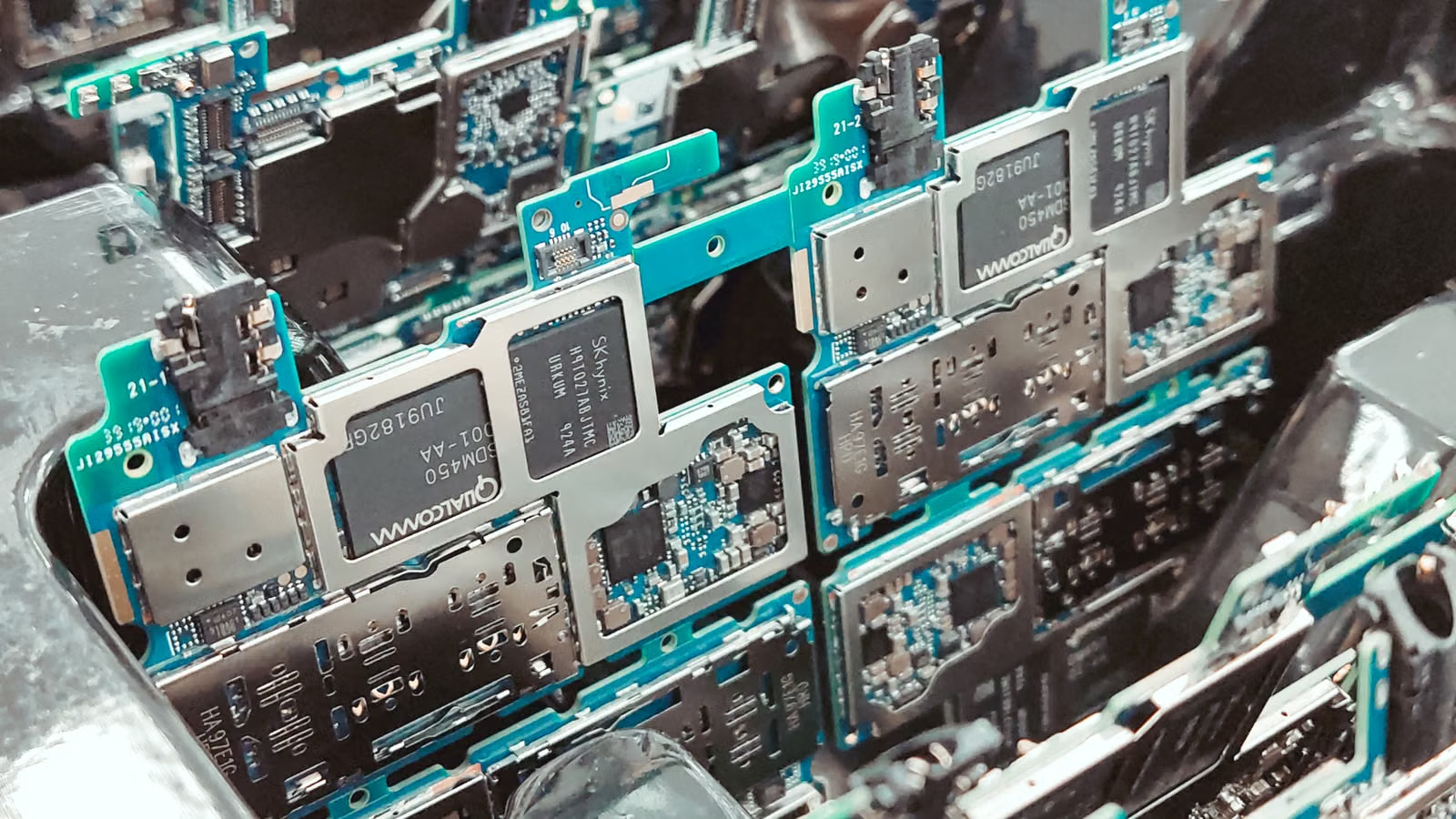
In terms of business structure, Shanghai Fudan generates revenue from multiple chip product lines, while SMIC mainly generates revenue from its wafer foundry manufacturing platform. For Shanghai Fudan, you need to track whether FPGA, non-volatile memory, security and identification chips, and smart meter chips are growing. For SMIC, you need to track customer orders, wafer shipments, 8-inch and 12-inch capacity, application mix, and capacity utilization. You can think of Shanghai Fudan as a “chip product portfolio” and SMIC as a “wafer manufacturing capacity portfolio.”
Shanghai Fudan’s business is spread across specific products. According to Shanghai Fudan’s 2026 first-quarter report, the company generated about RMB 1.032 billion in revenue in the first quarter, up about 16.23% year over year. Revenue from security and identification chips was about RMB 236 million, non-volatile memory was about RMB 293 million, smart meter chips were about RMB 123 million, and FPGA and other products were about RMB 347 million. This structure shows that Shanghai Fudan is not just an FPGA company or a memory company. It is a multi-product chip design platform.
For the full year of 2025, Shanghai Fudan’s FPGA and other products generated about RMB 1.316 billion in sales revenue. Non-volatile memory revenue was about RMB 1.042 billion, security and identification chips generated about RMB 855 million, and smart meter chips generated about RMB 518 million. The product mix itself is the key research topic: FPGA has higher technical barriers and stronger gross margin potential; non-volatile memory is more exposed to price competition; MCU and smart meter chips depend more on industry customers and application expansion.
SMIC’s revenue logic is closer to a manufacturing platform. SMIC’s 2025 annual report showed revenue of about $9.327 billion, of which IC wafer foundry revenue was about $8.796 billion. By application, consumer electronics, smartphones, computers and tablets, industrial and automotive, and connectivity and IoT were major end markets. By wafer size, 12-inch wafer revenue accounted for about 77.1%, while 8-inch wafer revenue accounted for about 22.9%.
| Business Dimension | Shanghai Fudan | SMIC |
|---|---|---|
| Revenue source | Security identification, memory, MCU, FPGA, testing services | IC wafer foundry and other services |
| Customer relationship | Sells chips to end customers or module/device makers | Provides manufacturing services to chip design companies and IDMs |
| Revenue leverage | Product pricing, customer adoption, niche market share | Wafer shipments, capacity utilization, process platforms |
| Cost structure | Raw materials, packaging/testing, R&D, inventory write-downs | Depreciation, equipment, materials, labor, factory operations |
| Core focus | FPGA, non-volatile memory, MCU | 8-inch/12-inch capacity, mature nodes, specialty processes |
A simple way to understand the difference is this: changes in Shanghai Fudan’s business usually show up in product line revenue and gross margin, while changes in SMIC’s business usually show up in wafer shipments, capacity utilization, and process platforms. If one of Shanghai Fudan’s product lines ramps up, it may directly improve the company’s margin mix. If SMIC’s capacity utilization rises, it may spread fixed costs over more output and improve gross margin.
Summary: Shanghai Fudan and SMIC are not simply a question of “which company is more advanced.” Their revenue sources are completely different. Shanghai Fudan makes money from specific chip product lines, so its product mix drives growth leverage. SMIC makes money from a manufacturing platform, so customer orders and capacity utilization drive revenue scale. Shanghai Fudan is more like a product-oriented semiconductor company, while SMIC is more like an infrastructure-style semiconductor manufacturing platform. If investors apply the same metrics to both companies, they may misread gross margin, capital expenditure, and earnings volatility. A better approach is to analyze Shanghai Fudan by product lines and SMIC by capacity lines.
Financial Metrics: How to Read Gross Margin, R&D Spending, and Capital Expenditure
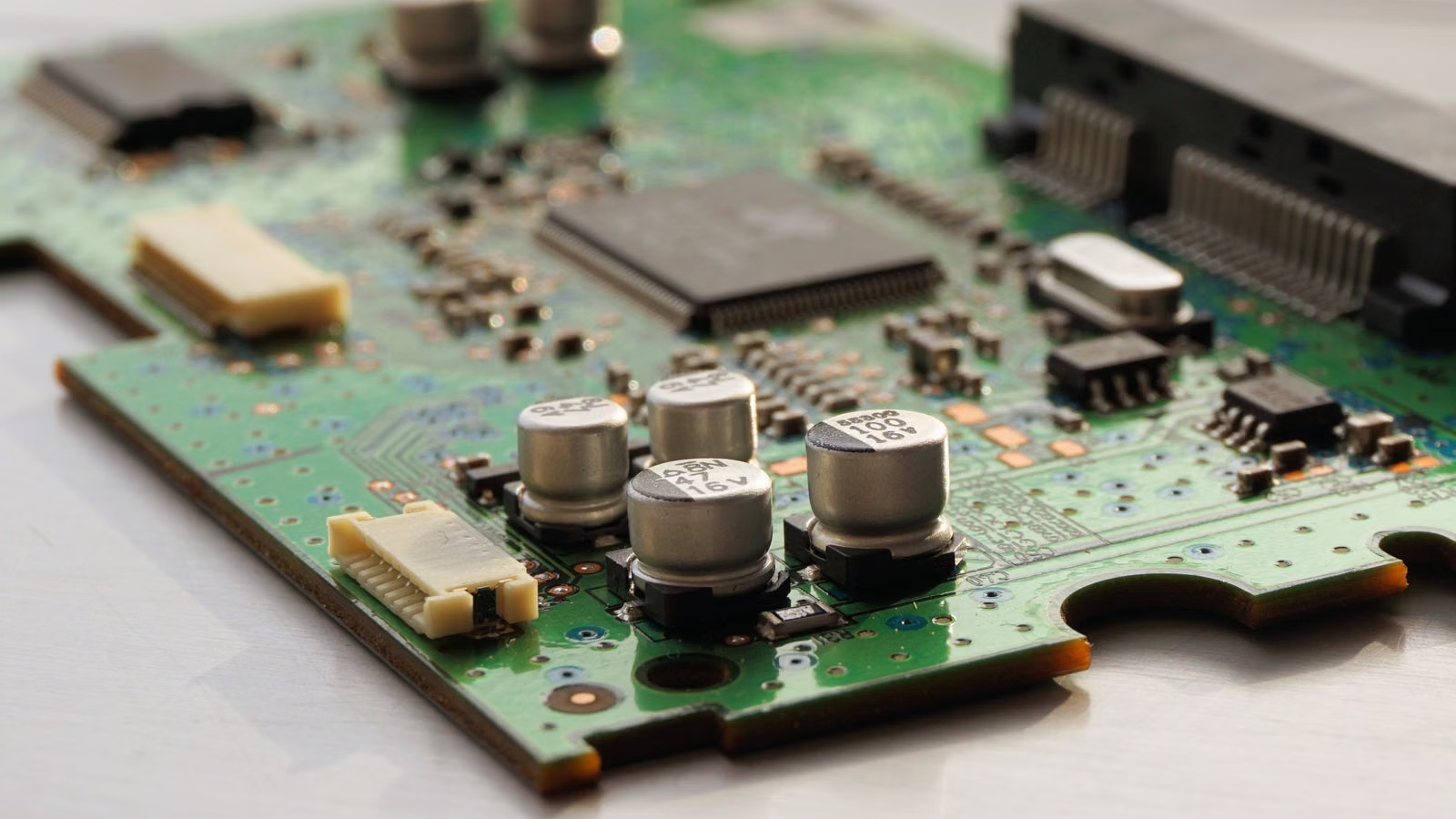
Financially, Shanghai Fudan is better analyzed through product gross margin, R&D spending, inventory write-downs, and product mix. SMIC is better analyzed through revenue scale, capital expenditure, depreciation, capacity utilization, and gross margin trends. Shanghai Fudan’s higher gross margin does not automatically mean it is “better” than SMIC. SMIC’s lower gross margin does not mean its business model is weak. The two companies have completely different cost structures: one designs products, while the other operates a wafer manufacturing platform.
Shanghai Fudan has high R&D intensity. In the first quarter of 2026, the company’s R&D spending was about RMB 316 million, accounting for about 30.65% of revenue. In 2025, Shanghai Fudan generated about RMB 3.982 billion in revenue, with an overall gross margin of 56.19%, while R&D spending accounted for about 26.88% of revenue. For a fabless company, R&D is not just an expense. It is the source of future product families, customer certification, and technical barriers.
SMIC’s financial focus is different. Under IFRS, SMIC’s 2026 first-quarter report reported sales revenue of about $2.505 billion and a gross margin of 20.1%. The company also guided for second-quarter revenue growth of 14% to 16% quarter over quarter. This type of guidance is important for a wafer foundry because revenue growth, average selling price, product mix, and capacity utilization all affect the spreading of fixed costs.
Capital expenditure is even more important. SMIC’s 2025 capex was about $8.1 billion. At year-end, its monthly capacity was equivalent to about 1.059 million 8-inch logic wafers, and average capacity utilization was about 93.5%. This shows that SMIC is carrying the role of a heavy-asset manufacturing platform. Reuters’ reporting on SMIC’s depreciation pressure also noted that continued high capex supports revenue growth but also creates depreciation pressure on gross margin.
| Metric | Shanghai Fudan | SMIC | Interpretation |
|---|---|---|---|
| Latest quarterly revenue | 2026 Q1 about RMB 1.032 billion | 2026 Q1 about $2.505 billion | SMIC has much larger scale |
| Gross margin profile | 2025 overall gross margin of 56.19% | 2026 Q1 gross margin of 20.1% | Cost structures differ, so margins are not directly comparable |
| R&D spending | 2026 Q1 R&D ratio about 30.65% | R&D is more tied to process platforms | Shanghai Fudan’s R&D intensity is more visible |
| Capital expenditure | Relatively lighter | 2025 capex about $8.1 billion | SMIC is much more asset-heavy |
| Core risk | Inventory write-downs, product pricing, R&D expenses | Depreciation, capacity utilization, equipment, yield |
Shanghai Fudan’s high margin comes from the nature of chip design products, but profit can still be affected by R&D expenses, inventory write-downs, and product price competition. In 2025, for example, the company’s net profit attributable to shareholders declined year over year, partly due to higher R&D expenses and increased asset impairment losses. SMIC is more like a manufacturing platform: it has large revenue scale, but equipment, factories, depreciation, and manufacturing expenses have a clear impact on profitability.
If you follow A-shares, Hong Kong stocks, or overseas semiconductor stocks, company fundamentals are not the only factor to consider. Actual trading costs also matter. U.S. stock trading costs usually include more than commissions; they may also include platform fees, external agency fees, and transaction activity fees. Through Biya U.S. stock trading fees, you can see that Biya charges $0 commission for U.S. stock trading, while platform fees, external agency fees, and other costs are subject to the fee center and order page. Public market research and fee structures are only decision-making references and do not constitute investment advice.
Summary: Shanghai Fudan and SMIC’s financial metrics should not be compared directly. Shanghai Fudan has a higher gross margin and more visible R&D intensity, showing that it depends more on product design capability and product mix. SMIC has lower gross margin but much larger revenue scale and higher capex, showing that it plays the role of a manufacturing platform. For investors, Shanghai Fudan should be judged by whether R&D spending can turn into product ramp-up. SMIC should be judged by whether capacity expansion can maintain high utilization and cover depreciation pressure. One is about product margin leverage; the other is about manufacturing scale efficiency.
Technology Barriers: FPGA, Non-Volatile Memory, and Wafer Processes
The technology barriers of Shanghai Fudan and SMIC are not the same. Shanghai Fudan’s challenge is whether it can design reliable, competitive, and continuously improving chips. SMIC’s challenge is whether it can manufacture customers’ designs at scale with stability and low defect rates. FPGA, non-volatile memory, and security identification chips depend on architecture, IP, verification, customer certification, and product reliability. Wafer foundry depends on process development, equipment systems, yield management, material control, and capacity ramp-up.
Shanghai Fudan’s technology barrier lies in chip product definition. FPGA is a typical example. FPGA is not just hardware; it also requires EDA tools, IP ecosystems, customer development habits, and long-term verification. Shanghai Fudan’s annual report noted that its FPGA product line covers FPGA, PSoC, FPAI, and other sub-series, while also providing dedicated EDA development tools. This means its competitiveness is not only about chip specifications, but about a combination of “chip + software tools + customer applications.”
Non-volatile memory is another important technology direction for Shanghai Fudan. The company’s non-volatile memory products cover EEPROM, NOR Flash, SLC NAND Flash, and other types. EEPROM is often used for parameter storage and small-capacity data retention. NOR Flash is commonly used for code storage. SLC NAND Flash emphasizes reliability and erase/write performance. Different memory products have different customer certification requirements, reliability standards, and pricing cycles.
SMIC’s technology barrier lies in its manufacturing platform. Wafer foundry is not only about process nodes. It is also about process stability, yield, breadth of process platforms, equipment availability, customer design-in, and large-scale manufacturing capability. SMIC’s 2025 IC wafer foundry revenue was about $8.796 billion, showing that foundry manufacturing remains its core business. The larger the scale, the more any yield, equipment, material, or scheduling issue can be amplified.
| Technology Dimension | Shanghai Fudan | SMIC |
|---|---|---|
| Core difficulty | Product design, verification, IP, customer certification | Process development, yield, equipment, capacity ramp-up |
| Representative areas | FPGA, memory, security identification, MCU | 8-inch/12-inch wafers, mature nodes, specialty processes |
| Sign of success | Product ramp-up, margin improvement, customer expansion | Capacity utilization, yield, process platform expansion |
| Failure risk | Slow product iteration, inventory write-downs, price competition | Depreciation pressure, unstable yield, equipment constraints |
| Investment focus | Whether high-margin products can keep growing | Whether capacity expansion becomes effective revenue |
Different technology barriers also create different valuation narratives. Shanghai Fudan is more likely to be analyzed under themes such as high-end FPGA, domestic substitution, non-volatile memory, and automotive-grade MCU. SMIC is more likely to be analyzed under themes such as Mainland China wafer manufacturing capability, mature nodes, domestic supply chain, and capacity expansion. The former is more about product breakthroughs; the latter is more about manufacturing capability.
Summary: Shanghai Fudan and SMIC face different kinds of technological difficulty. Shanghai Fudan needs to design competitive chips and continuously iterate through customer certification. SMIC needs to manufacture customer chips with stability, scale, and consistency. The technology barrier of a chip design company is closer to product innovation and application ecosystems. The technology barrier of a wafer foundry is closer to manufacturing systems engineering. If you care about high-end FPGA, non-volatile memory, and domestic chip products, Shanghai Fudan is more relevant. If you care about Mainland China wafer manufacturing capacity and semiconductor supply chain infrastructure, SMIC is more relevant.
Value Chain Relationship: Could Shanghai Fudan Become an SMIC Customer?
Shanghai Fudan and SMIC are not simply competitors. They occupy upstream and downstream roles in the semiconductor value chain. As a fabless company, Shanghai Fudan needs external wafer manufacturing, packaging, and testing supply chains. As a wafer foundry, SMIC serves chip design companies and IDMs. In theory, design companies like Shanghai Fudan could have supply chain relationships with foundry platforms like SMIC. However, any specific cooperation or impact depends on product process requirements, supplier structure, capacity allocation, and commercial contracts. It should not be assumed automatically.
Shanghai Fudan represents demand from the design side. It first defines the chip, designs the architecture, verifies the product, and tapes it out, before manufacturing, packaging, and testing turn it into a final product. Its annual report states that wafer manufacturing, packaging, and testing are mainly outsourced to external companies. The advantage of this model is that it is asset-light and allows the company to focus resources on R&D and product iteration. The risk is that some supply chain conditions, foundry pricing, capacity cycles, and delivery schedules may affect product supply.
SMIC represents supply from the manufacturing side. Its customers are not ordinary end consumers, but chip design companies, IDMs, and other semiconductor customers. The more stable customer demand is, the higher capacity utilization can be, and the more efficiently fixed costs can be spread. SMIC’s 2025 annual report showed that both wafer output and wafer sales increased year over year, and year-end monthly capacity exceeded 1 million 8-inch equivalent wafers. This is the scale characteristic of a manufacturing platform.
| Value Chain Stage | Role | Shanghai Fudan’s Position | SMIC’s Position |
|---|---|---|---|
| Product definition | Determines chip function and target market | Core stage | Participates in process coordination |
| Chip design | Architecture, verification, layout, tape-out | Core stage | Provides manufacturing support to customers |
| Wafer manufacturing | Manufactures wafers according to design | Outsourced | Core stage |
| Packaging and testing | Packaging, testing, reliability verification | Partly through subsidiaries and external partners | Not the main revenue core |
| End applications | Electronic IDs, smart meters, automotive, IoT | Directly affects product demand | Indirectly affects capacity demand |
However, upstream-downstream relationships do not mean earnings will move in sync. Growth in one Shanghai Fudan product line does not necessarily directly boost SMIC’s profit. SMIC’s capacity expansion does not necessarily improve Shanghai Fudan’s earnings. The reason is that the two companies have different financial drivers: design companies are more affected by product prices, inventory, and customer adoption, while foundries are more affected by overall capacity utilization, depreciation, and equipment efficiency.
Summary: Shanghai Fudan and SMIC are not simple competitors in the same lane. They are different nodes in China’s semiconductor value chain. Shanghai Fudan represents the design side, determining chip products, performance, applications, and customer adoption. SMIC represents the manufacturing side, determining wafer manufacturing capability, capacity supply, and process platforms. Strong orders at a design company do not necessarily mean a foundry’s profit will rise at the same pace. Foundry expansion does not automatically mean a design company’s profitability will improve. Investors need to separate the value chain relationship from the financial drivers.
How Investors Can Compare Shanghai Fudan and SMIC
Investors should use two different frameworks when comparing Shanghai Fudan and SMIC. Shanghai Fudan should be analyzed as a product-oriented semiconductor company, focusing on the growth, gross margin, R&D spending, and inventory trends of FPGA, non-volatile memory, MCU, and security identification chips. SMIC should be analyzed as a manufacturing platform, focusing on wafer shipments, capacity utilization, capex, depreciation pressure, process platforms, and customer orders. If you only look at the broad “semiconductor localization” theme, you may mix together two very different risk-and-return profiles.
If you focus on product leverage, Shanghai Fudan deserves closer tracking. Key questions include whether FPGA and other products can keep ramping, whether non-volatile memory pricing can improve, whether MCU and smart meter chips can maintain customer expansion, whether R&D spending can generate a new product cycle, and whether inventory write-down pressure can ease. Shanghai Fudan’s 2026 first-quarter report mentioned that rising prices for non-volatile memory led to partial reversal of inventory impairment provisions. Details like this matter for profit quality.
If you focus on semiconductor supply chain infrastructure, SMIC deserves closer tracking. Key questions include whether wafer shipments keep rising, whether capacity utilization can remain high, whether capex can turn into effective revenue, whether depreciation pressure is manageable, and whether the customer structure is stable. Reuters reported that SMIC planned to add about 40,000 12-inch equivalent wafers per month by the end of 2026. This shows that expansion remains an important theme for SMIC, but expansion also brings depreciation and equipment-related pressure.
| Your Focus | Watch Shanghai Fudan More Closely | Watch SMIC More Closely |
|---|---|---|
| Product growth | FPGA, memory, MCU, security identification | Customer product design-in and manufacturing demand |
| Domestic substitution | High-end FPGA, non-volatile memory | Domestic wafer manufacturing capability |
| Profit leverage | Product gross margin and inventory improvement | Capacity utilization and depreciation dilution |
| Cycle risk | Chip pricing, customer demand, inventory | Capex, capacity, equipment constraints |
| Technology barrier | Design capability, IP, customer certification | Process platforms, yield, manufacturing scale |
| Suitable research profile | Product-oriented semiconductor investors | Manufacturing-platform semiconductor investors |
You also need to pay attention to A-share and H-share differences. Shanghai Fudan has both A-share and Hong Kong-listed forms, and SMIC also has both A-share and Hong Kong-listed forms. Different markets have different liquidity, valuations, investor structures, and trading costs. You should not only look at the same company name. When tracking semiconductor companies, you can use Hong Kong stock search to place Shanghai Fudan, SMIC, and other Hong Kong-listed semiconductor names into the same research framework, then compare revenue mix, gross margin, R&D spending, and capital expenditure.
Summary: Shanghai Fudan and SMIC should be analyzed with two different investment frameworks. Shanghai Fudan should be judged by product-line growth, R&D spending, gross margin, inventory changes, and customer adoption. SMIC should be judged by wafer shipments, capacity utilization, capex, depreciation, and customer orders. If you only search for “semiconductor localization” beneficiaries, you may mix the two companies together. If you separate the design side from the manufacturing side, you can better understand each company’s advantages, risks, and valuation logic. Shanghai Fudan is more about product leverage, while SMIC is more about manufacturing platform value.
When comparing A-share and Hong Kong-listed semiconductor companies such as Shanghai Fudan and SMIC, you should not focus only on concept labels. It is better to put value chain position, revenue structure, gross margin, capital expenditure, R&D spending, and trading costs into the same table. Biya is a global multi-asset trading wallet that supports U.S. stocks, Hong Kong stocks, and cryptocurrency trading, as well as payments in more than 40 local currencies. Subject to local availability, identity verification, platform rules, and applicable laws and regulations, you can use Biya to follow Hong Kong-listed semiconductor companies and overseas technology stock opportunities. Availability depends on user location, platform rules, and applicable laws and regulations. Public market information, financial data, and fee structures are for research only and do not constitute investment advice. Before trading, you should understand order types, fee structures, individual stock volatility, and your own risk tolerance.
FAQ
Is Shanghai Fudan a Chip Design Company or a Wafer Fab?
Shanghai Fudan is mainly a fabless chip design company, not a wafer fab. Its core businesses include FPGA, non-volatile memory, MCU, and security and identification chips. Wafer manufacturing, packaging, and testing are mainly completed through external supply chain partners.
Is SMIC a Chip Design Company?
SMIC is not a typical chip design company. It is a wafer foundry. It provides wafer manufacturing and technology services to chip design companies and IDMs. Its key metrics include capacity, yield, process platforms, customer orders, and capital expenditure.
Which Has a Higher Gross Margin, Shanghai Fudan or SMIC?
Shanghai Fudan, as a chip design company, usually has a higher product gross margin than a wafer foundry. SMIC’s gross margin is more affected by depreciation, equipment, capacity utilization, and manufacturing costs. The two margins should not be used directly to judge which company is better.
Can SMIC Capacity Affect Shanghai Fudan’s Business?
Shanghai Fudan can be affected by the wafer manufacturing supply chain, but it should not be assumed to depend only on SMIC’s capacity. Foundry capacity, pricing, process nodes, and delivery schedules may all affect a chip design company’s supply rhythm, depending on supplier structure and product process requirements.
What Metrics Matter Most When Investing in Shanghai Fudan?
Key metrics for Shanghai Fudan include revenue from FPGA and other products, non-volatile memory revenue, gross margin, R&D spending, inventory write-downs, customer adoption, and new product ramp-up. Investors should not rely only on semiconductor themes or one quarter of share price performance.
What Metrics Matter Most When Investing in SMIC?
Key metrics for SMIC include wafer revenue, capacity utilization, capital expenditure, depreciation pressure, gross margin, customer mix, process platforms, and geopolitical risk. For trading and fees, investors should refer to platform rules, order statements, and local regulatory requirements.
*This article is provided for general information purposes and does not constitute legal, tax or other professional advice from BiyaPay or its subsidiaries and its affiliates, and it is not intended as a substitute for obtaining advice from a financial advisor or any other professional.
We make no representations, warranties or warranties, express or implied, as to the accuracy, completeness or timeliness of the contents of this publication.
Related Blogs of

Choosing a Stock Trading App: Beginner Checklist


Online Bank-to-Bank Transfers: Account Linking, Steps, and Limits




Choose Country or Region to Read Local Blog
 Australia
 Austria
 Belgium
 Canada
 Cyprus
 Czech Republic
 Denmark
 Estonia
 Finland
 France
 Germany
 Greece
 Hong Kong
 India
 Indonesia
 Ireland
 Italy
 Japan
 Latvia
 Lithuania
 Luxembourg
 Malaysia
 Malta
 Morocco
 Nepal
 Netherlands
 New Zealand
 Norway
 Pakistan
 Philippines
 Poland
 Portugal
 Romania
 Singapore
 Slovakia
 Slovenia
 South Africa
 South Korea
 Spain
 Sweden
 Thailand
 United States
 Turkey
 United Arab Emirates
 United Kingdom
 Vietnam