
Are Flight-Cancellation Prediction Contracts Legal? Kalshi’s CFTC Boundary and the FlightAware Data Dispute





Kalshi’s flight-cancellation prediction contracts should not be described as either “fully legal” or “already prohibited” in simple terms. A more accurate view is that the product has a possible path under the U.S. CFTC regulatory framework, but its continued viability depends on contract rules, settlement data, anti-manipulation controls, and regulatory response. The key questions are whether CFTC self-certification equals formal approval, whether the FlightAware data dispute undermines settlement reliability, and whether airport cancellation rates are too vulnerable to manipulation or nonpublic information.
Key Takeaways
- Kalshi is a CFTC-designated contract market, but each new product must still meet ongoing compliance standards.
- Self-certification can allow faster product listing, but it does not mean the CFTC has formally approved every detail.
- A flight-cancellation contract is closer to an event derivative than to travel insurance.
- After FlightAware objected to data use, settlement reliability became the central issue.
- Airport disruption events are sensitive because of public-safety, manipulation, and insider-information risks.
- International users still need to check platform access, local rules, and tax implications.
What Is Kalshi’s Flight-Cancellation Prediction Contract, and Has It Launched?
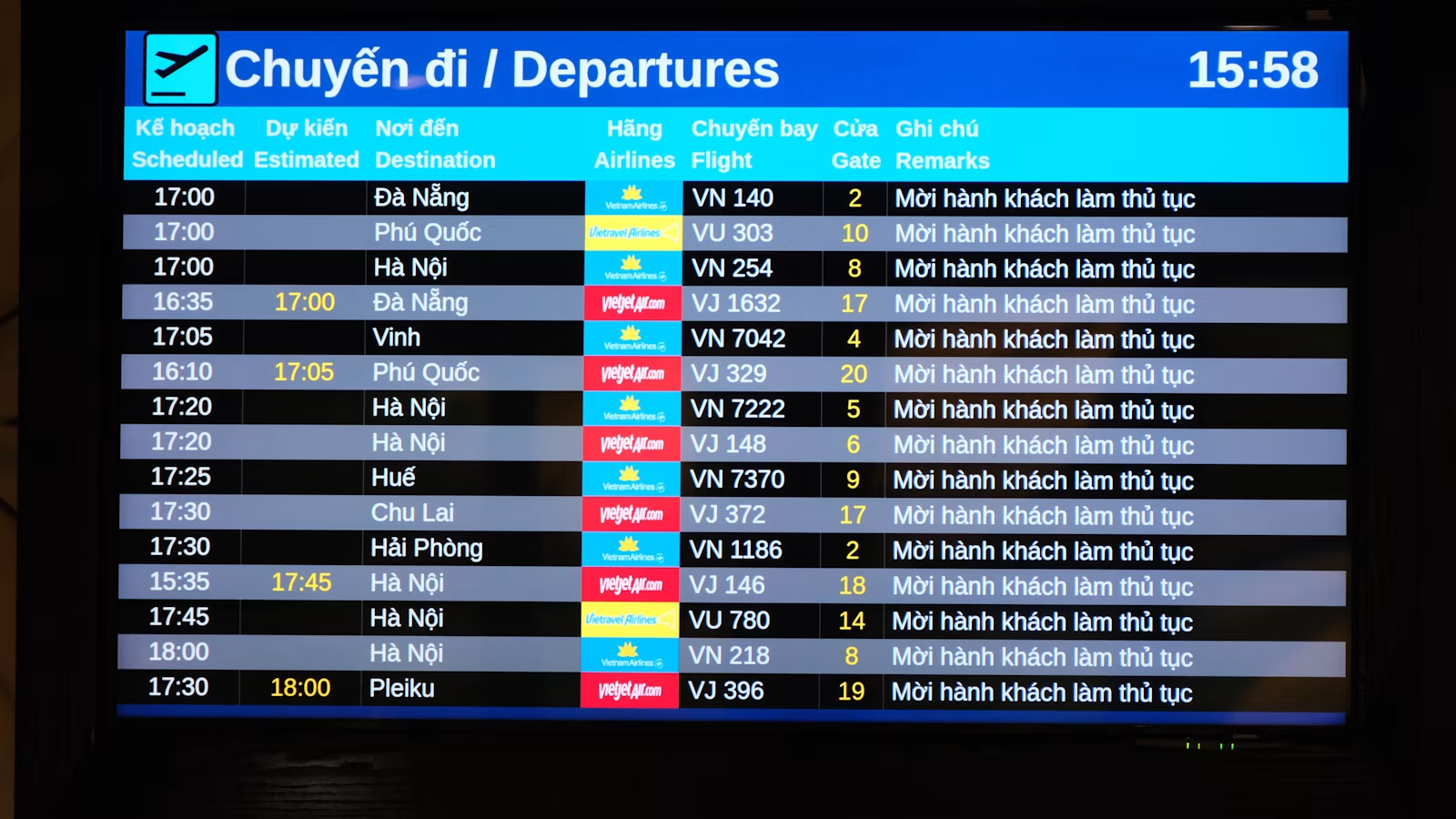
Kalshi’s flight-cancellation prediction contract is not designed to compensate you for the cancellation of your own ticket. It is a binary event contract based on whether the cancellation rate at a specific airport, during a specific time window, reaches a defined threshold. If the event condition is met, the contract settles according to its rules; if not, the contract may expire worthless or be resolved under an alternative settlement process. In that sense, it is closer to an event derivative traded on a regulated venue than to airline compensation, credit-card travel protection, or conventional travel insurance.
Kalshi disclosed the basic product design in its KalshiEX flight-cancellation contract filing, including the airport-level cancellation rate, source agency, expiration, and settlement process. Kalshi itself is listed as a CFTC-designated contract market, which places the platform within the U.S. commodity-derivatives regulatory framework. But platform-level regulation does not automatically eliminate legal or operational disputes around every new event contract.
From a trader’s perspective, the product can be understood through three layers:
| Dimension | Flight-Cancellation Prediction Contract | Travel Insurance or Flight-Delay Coverage |
|---|---|---|
| Object being measured | Airport-level cancellation rate | A specific passenger’s flight and actual loss |
| Requirement to participate | No ticket may be required | Usually tied to a policy, card benefit, or booking |
| Basis for payout | Contract price and final event result | Policy terms, ticket rules, or benefit conditions |
| Main risk | Market price risk and settlement risk | Claim eligibility and exclusions |
| Regulatory focus | Derivatives, event contracts, manipulation | Insurance, consumer protection, airline rules |
The key distinction is that the airport cancellation rate is an aggregate event. If you buy a contract that pays when cancellations at an airport exceed a certain level, your own flight being canceled does not guarantee that your contract will pay. Conversely, you may profit from a contract even if you never planned to fly. This creates basis risk: your personal travel loss and the contract’s settlement event may not match.
That is where many readers may misunderstand the product. Event contracts can theoretically help conference organizers, travel-service providers, hotels, logistics firms, or aviation-related businesses reference or hedge disruption risk. But if an ordinary traveler treats the product as a direct replacement for flight-cancellation protection, two risks are easy to miss. First, the contract price can move sharply before expiration. Second, final settlement depends on a specified data source, which may not classify “cancellation” exactly the way a passenger does.
Summary : Kalshi’s flight-cancellation prediction contract is an airport-level binary event contract, not a reimbursement mechanism for personal travel losses. It may serve a risk-transfer function in some contexts, but it can also be used for directional speculation. Whether it is “legal” cannot be judged only by the product name or by Kalshi’s status as a CFTC-regulated platform. The more important questions are whether the terms are clear, the data source is reliable, trading restrictions are enforceable, and regulators accept the product’s public-interest and market-integrity profile.
How Does the CFTC Regulate Flight-Cancellation Event Contracts?

The CFTC’s concern is not whether people can make forecasts about flights. The real question is whether this product qualifies as a derivative that can trade on a designated contract market, and whether it satisfies listing, data, settlement, anti-manipulation, and public-interest rules. If a flight-cancellation contract enters the CFTC filing system through self-certification, that means the exchange has represented that the product complies with the Commodity Exchange Act and CFTC rules. It does not necessarily mean the CFTC has formally approved every legal and operational detail.
The CFTC generally provides two product-listing paths. Under Regulation 40.2 self-certification, a designated contract market can list a product relatively quickly after filing the required materials. Under Regulation 40.3 voluntary approval, an exchange can request formal CFTC approval before or around the time a product is listed. CFTC product-listing guidance makes clear that self-certification places significant ongoing responsibility on the registered entity.
The difference can be summarized this way:
| Item | 40.2 Self-Certification | 40.3 Formal Approval |
|---|---|---|
| Primary reviewer | Exchange first | CFTC review process |
| Listing speed | Usually faster | Usually slower |
| Legal meaning | Exchange represents compliance | CFTC does not object or grants approval |
| Later regulatory risk | Still subject to review, enforcement, or revision | Still subject to ongoing compliance |
| Meaning for traders | “Certified” should not be read as dispute-free | Approval does not remove market risk |
Event contracts may also fall under 17 CFR §40.11, which focuses on contracts involving terrorism, assassination, war, gaming, unlawful activity under state or federal law, and similar activities that the CFTC determines to be contrary to the public interest. A flight cancellation is a transportation and commercial event, not inherently a sports bet or entertainment game. However, if the product design creates incentives to interfere with airport operations, the regulatory analysis changes materially.
The CFTC’s definition of event contracts also shows that such products can be based on specific occurrences, outcomes, or values, including economic indicators, corporate earnings, snowfall, or hurricane-damage estimates. Airport cancellation rates are similar in that they can be quantified. But quantification alone does not guarantee compliance. The event must be objectively settleable, reasonably resistant to manipulation, and connected to a legitimate economic purpose.
The CFTC’s 2026 prediction-market discussion points in the same direction. The 2026 prediction markets rule proposal addresses public-interest review, the scope of gaming, grouped review of similar event contracts, and the adequacy of exchange submissions. In practice, the regulatory boundary is moving beyond the narrow question of whether a topic can be turned into a contract. Exchanges increasingly need to explain why a product does not undermine market integrity.
Summary : The CFTC framework does not simply label prediction-market products as legal or illegal. It evaluates registration status, listing procedure, event-contract restrictions, public interest, and ongoing market surveillance. Kalshi’s status as a designated contract market gives it a regulatory foundation for offering event contracts. But a flight-cancellation contract must still separately show that the settlement rules are complete, the data source is reliable, the event does not fall into a prohibited or restricted category, and trading does not create unacceptable risks to aviation safety or market integrity.
Is a Flight-Cancellation Contract a Legal Derivative or Disguised Gambling?

Kalshi can argue that a flight-cancellation contract is an event derivative because airport cancellation rates affect airlines, travel platforms, hotels, conferences, and logistics businesses. Critics can still argue that the product resembles wagering because many traders do not need to prove that they have any actual travel-related exposure. The key test is not whether traders are predicting an outcome. The more important question is whether the contract’s subject, economic use, trading venue, user restrictions, and settlement design together support its financial-market character.
Supporters of the “regulated event derivative” view usually emphasize three points. First, flight cancellations create real economic consequences, not merely entertainment outcomes. Second, cancellation rates can be quantified through external data sources. Third, when the product trades on a CFTC-designated contract market, the platform must comply with rules on market surveillance, customer protection, disclosure, and anti-manipulation. In KalshiEX v. CFTC, the court’s discussion of election event contracts also distinguished the event referenced by a contract from the broader idea that people are paying money to predict an outcome.
Opponents focus on a different set of concerns:
- Weak direct hedging link: Many users may not have actual flight-cancellation exposure.
- Public-safety sensitivity: Airport operations can be affected by air-traffic control, security, maintenance, weather, and disruption events.
- Nonpublic information risk: Airline, airport, ground-service, and data-provider personnel may know cancellation decisions before the public.
- Settlement complexity: Cancellation, delay, diversion, reinstatement, cargo flights, and code-share flights may be classified differently across data systems.
The distinction from travel insurance is especially important. Travel insurance is assessed through an insured person, a covered event, actual loss, and policy exclusions. A flight-cancellation prediction contract is settled through market price and final event outcome. You may suffer a travel loss without buying the right contract, and you may profit from a contract without having any travel plan. This makes the product closer to a binary contract in financial markets than to a consumer-protection product.
Trading costs and maximum loss also matter. Event-contract prices may look simple, but the real cost of trading can include bid-ask spread, platform fees, funding costs, slippage, and losses from early exit. When comparing event contracts with stocks or ETFs, commission is not the only cost to consider. For example, Biya U.S. stock trading fees state that U.S. stock commission is $0, while platform fees, external fees, and other charges should be checked through the fee schedule and order display. Any trading product should be evaluated through its fee structure, order rules, and maximum downside before use.
| Evaluation Dimension | Supports Event-Derivative View | Supports Gambling-Concern View |
|---|---|---|
| Subject matter | Commercial transportation disruption | Not necessarily linked to personal loss |
| Economic use | Can be used for operational risk hedging | May mainly attract speculation |
| Settlement | Based on external data | Data authorization can create disputes |
| Regulation | Traded under a DCM framework | State gambling concerns may still arise |
| Main risk | Market and settlement risk | Incentive design and public-safety risk |
U.S. prediction markets also face friction between federal and state authority. In the New Mexico prediction-market dispute, the CFTC argued that state authorities should not use gaming law to interfere with event-contract trading on federally registered markets. But whether state gaming, consumer-protection, or public-safety regulators are fully displaced in every context remains a fact-specific and evolving legal question.
Summary : A flight-cancellation contract is not best understood as travel insurance, and it should not be reduced to a one-word label such as “gambling.” It sits between regulated event derivatives and speculative prediction-market activity. If the product can demonstrate genuine economic use, stable settlement rules, enforceable trader restrictions, and no incentive to interfere with airport operations, it has a plausible route under the CFTC framework. If the data source is unavailable, traders are mostly speculators without exposure, or the design increases public-safety risk, regulatory pressure will rise.
After FlightAware Refused Authorization, Is Kalshi’s Settlement Data Reliable?
The FlightAware data dispute does not automatically make a flight-cancellation contract illegal, but it directly weakens the product’s settleability. The most important asset in an event contract is not the topic being predicted. It is the verifiable settlement fact. If the primary data source refuses authorization, the fallback source is delayed, or the two sources use different classification methods, traders may not know exactly what event they are trading, and regulators may question whether the original product filing remains accurate.
Public reporting on the FlightAware data authorization dispute said Kalshi had identified FlightAware as a primary source and U.S. Department of Transportation data as a fallback source, while RTX, FlightAware’s parent company, said FlightAware would not authorize any company to use its network data for such prediction markets. Kalshi also said the relevant markets had not launched and that it was still evaluating their usefulness for travel-risk hedging.
FlightAware’s own explanation of cancellation data points to a technical issue as well. The FlightAware flight-cancellation display methodology states that a cancellation appears only after FlightAware receives formal cancellation information from an airline or upstream data provider, and airline procedures for operational changes are not uniform. In other words, even apart from commercial authorization, “canceled” is not always an instant, stable, and dispute-free label.
BTS data has the advantage of being government data, but it cannot automatically replace FlightAware. The U.S. Department of Transportation’s Airline Service Quality Performance 234 data is reported by U.S. certificated air carriers, covers domestic scheduled passenger service within defined reporting thresholds, and is provided on a monthly basis. That makes it useful for statistics, research, and after-the-fact verification, but not necessarily for fast settlement of short-duration prediction contracts.
Data-source differences can create several settlement problems:
| Scenario | Possible Consequence | What Traders Should Check |
|---|---|---|
| FlightAware becomes unavailable | Fallback data or settlement delay may be triggered | Whether replacement conditions are clearly stated |
| BTS data is delayed | Final outcome may not be quickly confirmed | Whether delayed settlement is allowed |
| Cancellation status is corrected | Early prices may diverge from final outcome | Whether results are revised retroactively |
| Code-share flights are treated differently | Numerator or denominator may change | Whether the flight universe is fixed |
| Cargo and passenger flights differ | Airport cancellation rate may be recalculated | Whether the contract covers specific flight types |
| Platform judgment is required | Trader confidence may weaken | Whether the dispute process is transparent |
For an event contract, the data source functions like the settlement court. If traders price the contract based on FlightAware methodology but final settlement uses BTS methodology, the market may no longer be pricing the same risk. Airport-operation data is also dynamic. Cancellations, delays, diversions, reinstatements, and maintenance-driven changes can all move through operational systems at different times. A short-duration contract without a fixed timestamp, fixed denominator, and fixed data methodology can easily produce disputes after expiration.
Summary : The FlightAware dispute is not merely a commercial disagreement with a data vendor. It goes to the foundation of whether a flight-cancellation event contract can create a clear and enforceable settlement obligation. A fallback source that is slower, narrower, or methodologically different cannot simply step into the primary role without consequences. If Kalshi wants to revive this type of product, it may need explicit data authorization, a more suitable official or commercial real-time data source, and revised rules for data conflicts, delayed publication, status corrections, and exceptional events.
Could Manipulation or Insider Information Make Flight-Cancellation Contracts Noncompliant?
Manipulation risk does not mean every flight-cancellation contract is inherently impossible to regulate, but airport cancellation rates are more sensitive than many ordinary market indicators. Weather, air-traffic control, security, strikes, maintenance, and network systems can all affect cancellations, and some of those inputs are controlled or known by a relatively small set of people. Regulators will focus on one question: does the contract create an economic incentive for anyone to cause, amplify, or exploit aviation disruption?
CFTC enforcement concerns in prediction markets already extend to insider trading and fraud. A CFTC prediction-market enforcement advisory warned that misuse of material nonpublic information, fraud, wash trading, noncompetitive trading, and disruptive trading may trigger enforcement risk. Applied to flight-cancellation contracts, restricted groups could include airline operations staff, airport managers, ground-handling contractors, air-traffic-related personnel, data-provider employees, and union or contractor representatives who can influence cancellation decisions.
Platforms can reduce the risk by restricting certain traders, but enforcement is difficult. Employer verification, related-account detection, household restrictions, job-change monitoring, and abnormal-trading alerts all require ongoing investment. At large airports, one person may have limited ability to move the final cancellation rate. At smaller airports or over short windows, a small number of canceled flights can materially change the result. More granular contracts improve hedging precision, but they also increase manipulation and insider-information risk.
| Risk Type | Typical Scenario | Compliance Mitigation |
|---|---|---|
| Insider information | Airline decides on batch cancellations before public notice | Restrict relevant employees and affiliates |
| Intentional disruption | False threat, drone intrusion, facility interference | Exclude abnormal events and halt trading |
| Data manipulation | Influence reporting or update timing | Use multi-source checks and audit logs |
| Small-sample distortion | Few flights determine the airport rate | Raise airport or time-window thresholds |
| Market misinformation | Social-media rumors move prices | Strengthen surveillance and risk warnings |
| Settlement dispute | Data sources conflict | Publish formula and dispute process |
Three future paths are plausible. First, Kalshi may obtain stable data authorization and revise the rules, bringing the product back as a more tightly controlled airport-level contract. Second, the product may be redesigned around large airports, longer time windows, or national cancellation-rate measures, reducing the ability of any single person to affect the result. Third, the CFTC may conduct deeper review of similar contracts and require more detailed analysis of economic purpose, settlement data, anti-manipulation controls, and public-safety risks.
For ordinary traders, the right question is not only whether the product is available. A more useful checklist includes:
- Is the event definition clear enough to be independently recalculated?
- Does the data source have legal authorization and a stable publication process?
- Do abnormal events trigger last fair-price settlement or another special rule?
- Are you, your employer, or your affiliates restricted from trading?
- Are maximum loss, fees, bid-ask spread, and liquidity acceptable?
- Does your location permit access to the platform and the product?
Summary : Airport cancellation rates can be designed as event-contract subjects, but aviation’s public-safety profile makes them more sensitive than weather data, macroeconomic indicators, or corporate earnings. A compliant market would need reliable data, fixed methodology, enforceable restricted-person rules, exceptional-event treatment that does not reward disruption, and a regulatory view that the contract serves a legitimate public-interest function. At this stage, the more cautious conclusion is that flight-cancellation contracts may have a federal regulatory path, but they remain highly dependent on rule design, data availability, and regulatory tolerance.
If you follow prediction markets, event contracts, or U.S. market opportunities, the first step is to separate product categories. A flight-cancellation contract is an event derivative. Travel insurance is consumer protection. U.S. stocks and ETFs are securities-market instruments. Their regulation, fees, settlement logic, and risk profiles are different. Users who meet the relevant service conditions in their region can use Biya to access multi-asset services covering U.S. stocks, Hong Kong stocks, and digital assets. Before trading, check the order screen and U.S. stock trading fee structure, including platform fees, external fees, fractional-share rules, and applicable restrictions. If you only want to track aviation stocks, travel-sector companies, or related U.S.-listed assets, U.S. stock information search can be a starting point for basic research. This discussion is for public-market information, trading rules, and fee-structure education only, and does not constitute investment advice. Service availability depends on your location, identity verification result, platform rules, and applicable laws and regulations.
FAQ
Can Kalshi Flight-Cancellation Contracts Replace Travel Insurance?
No. Kalshi flight-cancellation contracts settle based on event outcomes such as an airport cancellation rate, while travel insurance usually depends on policy terms, your specific flight, and actual covered loss. Your flight may be canceled without the contract paying, and a contract payout may not match your ticket, hotel, or time-related loss.
Can Kalshi Contract Prices Be Treated as Real Cancellation Probabilities?
No, not mechanically. Event-contract prices may reflect market expectations, but they can also be affected by liquidity, fees, bid-ask spread, speculative demand, and trading behavior near expiration. When volume is low or settlement data is disputed, contract prices may diverge from statistical cancellation probability.
Does the FlightAware Data Dispute Automatically Make Kalshi Contracts Illegal?
Not necessarily. The FlightAware dispute more directly affects settlement reliability and the accuracy of product filings. If the primary data source cannot be legally used, the platform needs to show that fallback data is timely, complete, auditable, and consistent with CFTC requirements for material contract changes.
What Should International Users Check Before Trading Kalshi Event Contracts?
International users should check platform access, identity verification, funding rules, local derivatives or gaming regulations, tax treatment, and foreign-exchange restrictions. A CFTC-regulated trading venue does not mean every country or region allows residents to trade the product.
How Are Flight-Cancellation Prediction Contracts Different From Airline Stocks?
The risk drivers are different. A flight-cancellation contract directly depends on a specific event outcome, while airline stocks are affected by earnings, fuel prices, load factors, debt, industry cycles, and market valuation. Event contracts rely heavily on settlement rules and data sources; airline stocks rely more on company fundamentals, liquidity, and securities-market costs.
*This article is provided for general information purposes and does not constitute legal, tax or other professional advice from BiyaPay or its subsidiaries and its affiliates, and it is not intended as a substitute for obtaining advice from a financial advisor or any other professional.
We make no representations, warranties or warranties, express or implied, as to the accuracy, completeness or timeliness of the contents of this publication.
Related Blogs of

DCA vs. Grid Trading in Crypto: Key Differences, Costs, and Risks


Buying US Stocks from Overseas: Broker Options, Funding, and Costs




Choose Country or Region to Read Local Blog
 Australia
 Austria
 Belgium
 Canada
 Cyprus
 Czech Republic
 Denmark
 Estonia
 Finland
 France
 Germany
 Greece
 Hong Kong
 India
 Indonesia
 Ireland
 Italy
 Japan
 Latvia
 Lithuania
 Luxembourg
 Malaysia
 Malta
 Morocco
 Nepal
 Netherlands
 New Zealand
 Norway
 Pakistan
 Philippines
 Poland
 Portugal
 Romania
 Singapore
 Slovakia
 Slovenia
 South Africa
 South Korea
 Spain
 Sweden
 Thailand
 United States
 Turkey
 United Arab Emirates
 United Kingdom
 Vietnam