
From Satellite Deployment to Carrier Billing: ASTS Revenue Growth Timeline





The key to ASTS stock is not whether one launch succeeds, but whether satellite deployment can turn into billable carrier services. You need to follow the full chain: BlueBird satellites in orbit, network coverage capability, regulatory authorization, carrier integration, user payment or wholesale settlement, and ASTS revenue recognition. Around 45 BlueBird satellites is the commercial milestone investors keep watching, but the company’s latest public filings have updated that target to early 2027. That means the revenue ramp, financing pressure, and valuation discount all need to be reassessed.
Key Takeaways
- ASTS revenue growth depends on satellite count, not just launch headlines.
- Around 45 BlueBird satellites is a key milestone for commercial coverage.
- 2026 revenue guidance is still driven largely by partners and government projects.
- Whether carriers charge separately will shape ASTS’s revenue upside.
- Convertible debt strengthens funding but also raises dilution and cash-burn concerns.
- ASTS stock catalysts should be judged across deployment, regulation, billing, and financials.
ASTS Revenue Growth Logic: What Stands Between Satellite Deployment and Carrier Billing?
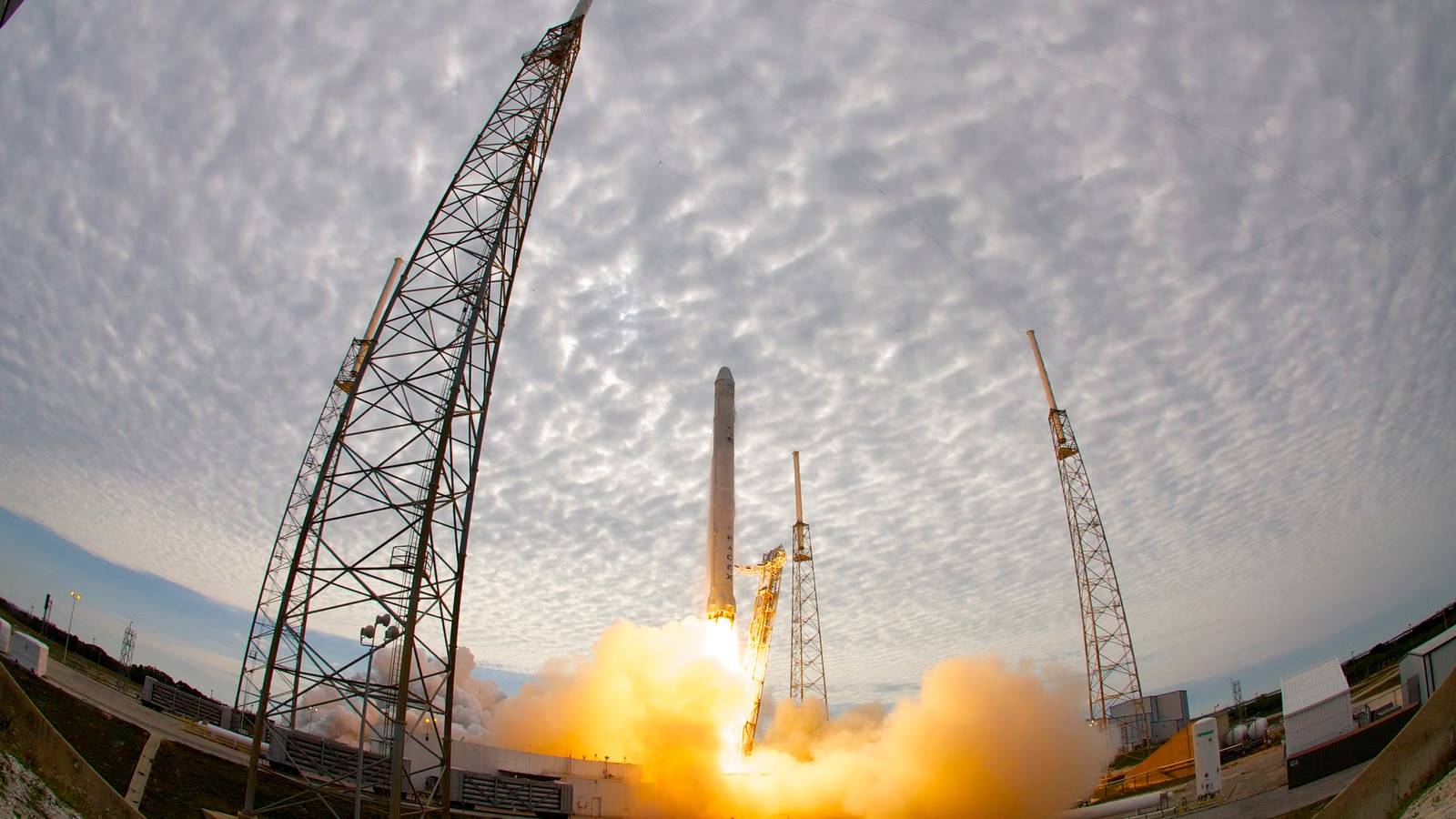
ASTS revenue growth cannot be judged simply by whether a satellite launch succeeds. The real question is whether satellites can create usable coverage, whether carriers complete network integration, whether regulators allow commercial service, whether end users begin paying, and how AST SpaceMobile recognizes revenue under its contracts. Launch is the starting point. Billing is where the story begins to show up in financial statements. Between the two sit testing, commissioning, gateway access, and carrier productization.
AST SpaceMobile is building a space-based cellular broadband network designed to connect directly to ordinary smartphones. Its commercial story is not about selling a satellite phone or asking users to buy a dedicated terminal. Instead, when terrestrial cell towers are unavailable, a regular smartphone can connect through low Earth orbit satellites to a mobile carrier’s network. The SpaceMobile Network emphasizes 4G/5G-level connectivity, which is also the foundation of ASTS’s valuation upside.
But there is a clear time gap between technical capability and revenue recognition. Completing satellite manufacturing does not mean the satellite is already in orbit. A successful launch does not mean the satellite has deployed, been commissioned, and joined the network. A carrier partnership does not mean users are immediately paying. Even after users pay, ASTS still recognizes revenue according to contract structure. For investors, ASTS is closer to a “satellite infrastructure plus carrier partnership platform” than a software company with a mature recurring subscription base.
AST SpaceMobile’s connection model can be broken into three steps: a smartphone signal is received by a BlueBird satellite, then transmitted to a ground gateway, and finally routed into the network of AT&T, Verizon, Vodafone, or another carrier. This structure means revenue is more likely to appear through carrier wholesale arrangements, revenue sharing, fixed service fees, government programs, and equipment or service delivery, rather than ASTS billing every consumer directly.
| Stage | Key Event | Revenue Implication | Stock Market Focus |
|---|---|---|---|
| Satellite manufacturing | BlueBird production, assembly, and testing | Determines deployment speed | Capacity, yield, unit cost |
| Satellite launch | Batch deployment into low Earth orbit | Establishes the coverage foundation | Launch windows, rocket availability |
| Network integration | Connection with carrier ground networks | Determines commercial readiness | Partnership scope, technical testing |
| Service activation | D2D service launch in selected markets | Determines user availability | Coverage quality, regulatory approval |
| Revenue recognition | Carrier or government payment under contract | Determines financial-statement impact | Revenue scale, margin, cash flow |
ASTS stock fluctuates around the “timeline” because the market is pricing a future revenue curve. Launch delays raise the discount rate. Financing announcements change dilution expectations. Carrier commercial packages improve revenue visibility. Quarterly revenue delivery determines whether investors continue to believe the long-term model. This is especially true when concepts such as direct-to-device, satellite-to-cellular, NTN, and low Earth orbit communications are attracting strong market attention, because the stock may move before the financial data catch up.
Summary: ASTS’s revenue growth timeline is essentially a chain of “technical deployment, commercial access, and billing recognition.” Short-term stock moves may be driven by successful launches, speed tests, or carrier announcements, but medium- to long-term valuation depends more on the roughly 45-BlueBird milestone, service activation in key markets, carrier billing models, government contract progress, and the pace of cash burn. You should not equate satellite launches with revenue acceleration, nor should you treat the number of carrier partners as a direct proxy for sustainable cash flow.
Satellite Deployment Timeline: How Many BlueBird Satellites Does ASTS Need to Support Commercial Revenue?
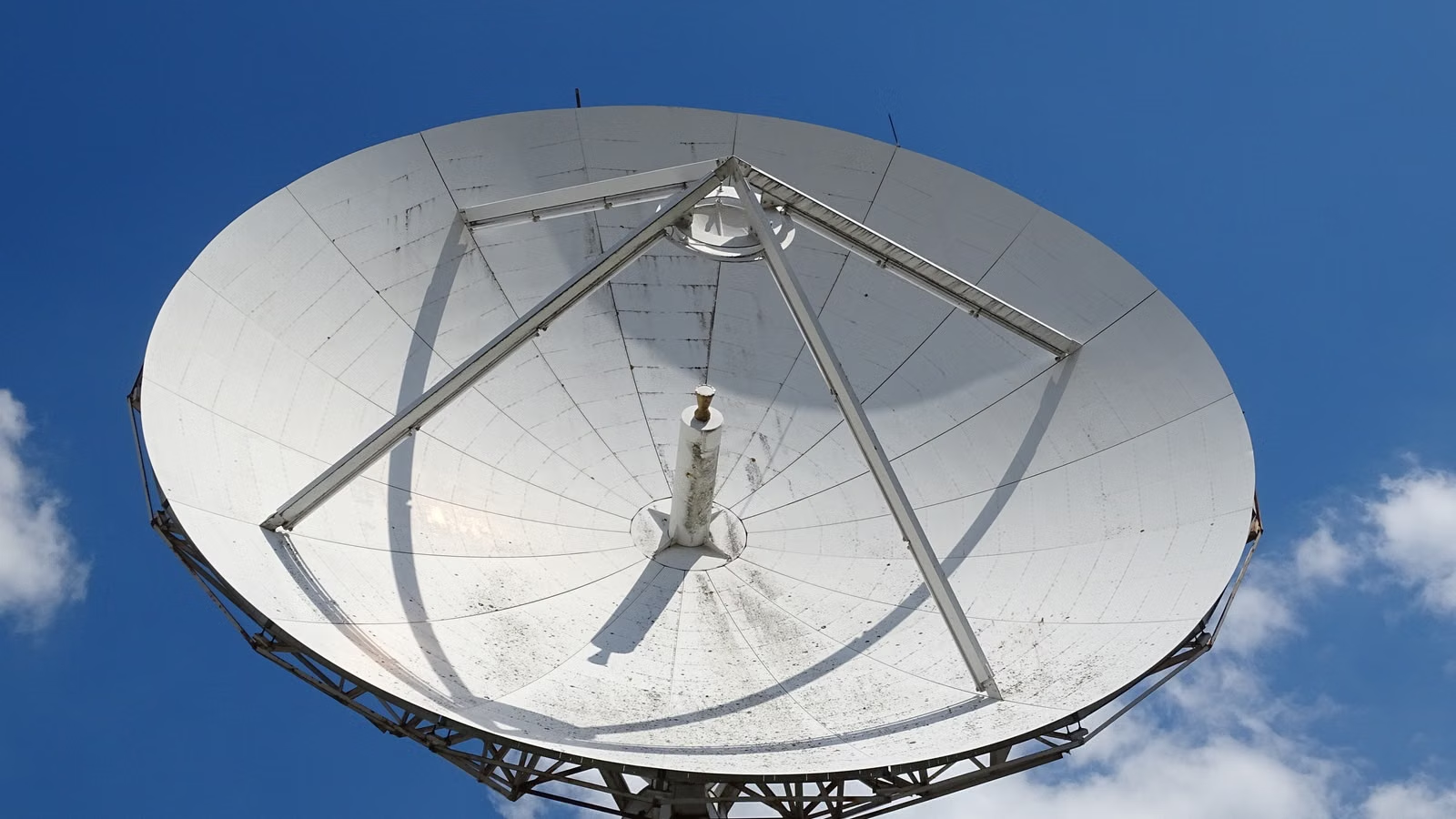
ASTS needs enough BlueBird satellites to create continuous or near-continuous coverage before revenue can gradually shift from early partner payments, government projects, and test services toward scaled carrier billing. Around 45 BlueBird satellites is the key milestone because it relates to initial commercial service capability in priority markets. But the latest public filings have moved that target to early 2027, which means the revenue timeline needs to be rescheduled.
AST SpaceMobile’s path begins with BlueWalker 3. The BlueWalker 3 prototype satellite launched in 2022, with the primary goal of proving that ordinary smartphones could connect directly to satellites. BlueBird 1–5 then moved the company into the commercial-satellite validation stage. With Block 2 BlueBird, the focus shifts toward larger arrays, higher throughput, stronger coverage, and network capabilities closer to commercial operation.
Next-Generation BlueBird materials show that the new BlueBird satellites use phased-array technology approaching 2,400 square feet, with a design target of more than 150 Mbps peak data rate per coverage cell and support for more than 2,000 active cells. AST’s Q1 2026 materials also note that the company has more than 500,000 square feet of manufacturing and operating space and is building capacity for more than 100 BlueBird satellites. This means ASTS stock is not only about whether the company can launch satellites, but whether it can produce, launch, and operate them continuously.
On June 17, 2026, BlueBird 8–10 launched aboard a Falcon 9 from Cape Canaveral, marking an important step in ASTS’s Block 2 deployment. AST SpaceMobile’s company journey also records the deployment sequence of BlueBird 6, BlueBird 7, and BlueBird 8–10. For the stock, these launches strengthen the execution signal, but they still need to be followed by orbital insertion, deployment, testing, gateway access, and carrier validation.
| Timeline | Deployment Event | Revenue Implication | Risk Reminder |
|---|---|---|---|
| Prototype stage | BlueWalker 3 test | Validates direct-to-phone satellite connectivity | Does not prove scaled commercialization |
| Block 1 stage | BlueBird 1–5 in orbit | Supports early testing and partner validation | Limited continuous coverage |
| June 2026 | BlueBird 8–10 launch | Advances Block 2 deployment | In-orbit commissioning and testing still take time |
| Early 2027 target | Around 45 BlueBird satellites in orbit | Commercial service capability becomes more realistic | Launch windows and manufacturing progress remain uncertain |
| Larger constellation | 90 or more satellites | Broader coverage and stronger revenue upside | Higher capex and competition pressure |
Why does the 45-satellite milestone matter? AST SpaceMobile’s FAQ says 45–60 BlueBird satellites are expected to support continuous coverage across key markets such as the United States, Europe, Japan, and Saudi Arabia, while around 90 satellites are expected to support global 24/7 coverage. In other words, 45 satellites is not the end state, but it is the critical intermediate threshold between the testing story and the commercial billing story.
It is also important to note the timeline change. Q1 2026 materials still referenced a target of around 45 BlueBird satellites in orbit during 2026, but the latest July 15 8-K materials updated that target to early 2027. This change does not necessarily invalidate the long-term business model, but it does affect revenue timing. If the market previously priced the second half of 2026 as a period of accelerating commercialization, the target shift naturally increases valuation discounting.
Summary: ASTS’s revenue timeline first depends on deployment pace. The BlueBird 8–10 launch strengthened the execution signal, but the roughly 45-BlueBird target has been updated to early 2027, which means carrier billing and revenue ramp expectations need to be pushed back and monitored carefully. The closer the satellite count gets to the key coverage threshold, the more realistic carrier-paid services become. Conversely, if launches, deployment, or manufacturing continue to slip, ASTS stock may move back from “commercialization expectation” to “execution-risk pricing.”
Commercialization Path: How Do Carrier Partnerships Become Real ASTS Revenue?
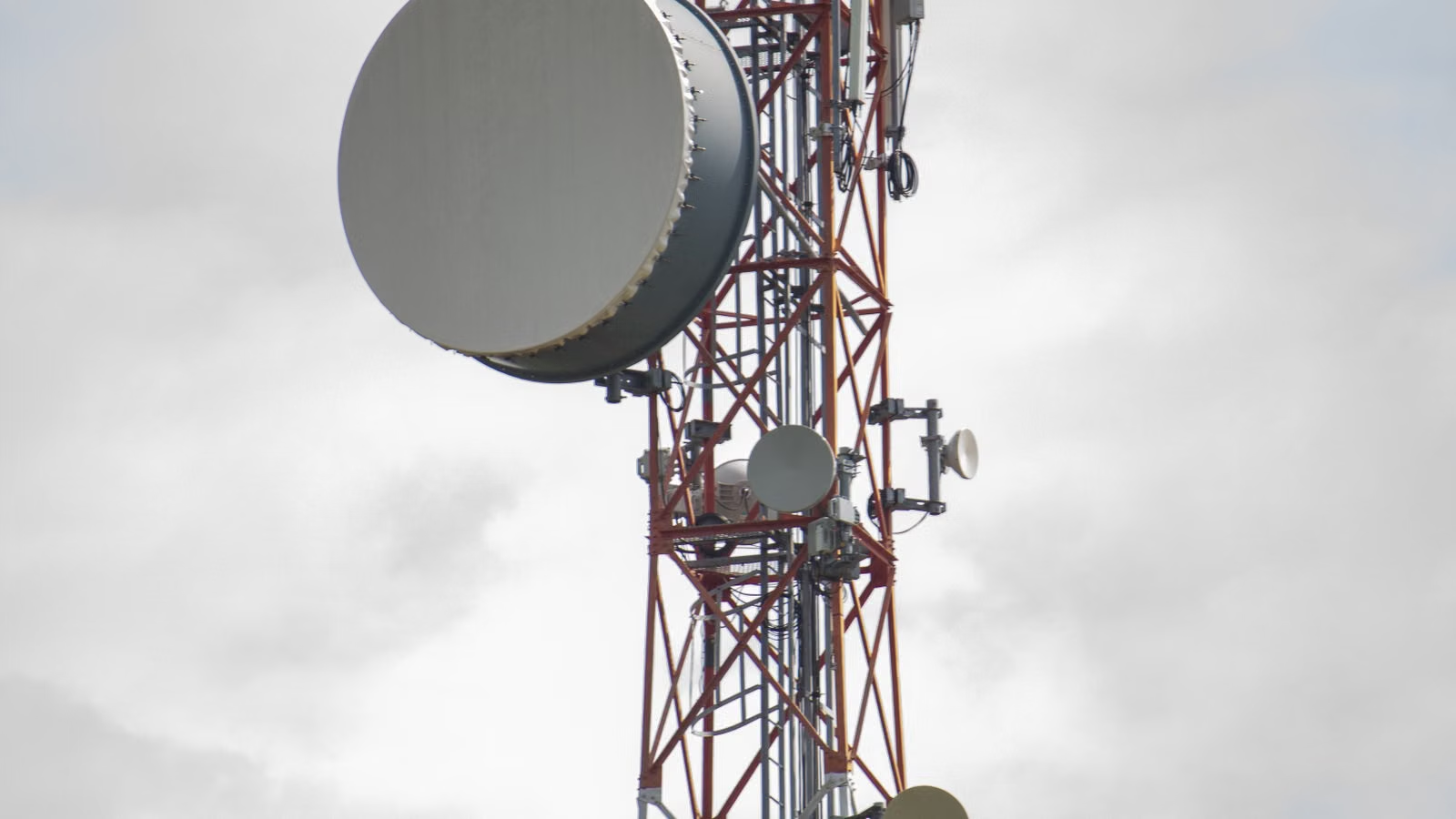
Whether ASTS carrier partnerships become real revenue depends on whether carriers include satellite-to-phone services in their plans, whether users are charged separately, whether carriers pay ASTS based on coverage area or user volume, and whether service quality is strong enough to support commercial promotion. A large partner base is a prerequisite, but not sufficient proof of revenue acceleration. The real inflection point is the launch of a billable product.
Carriers have four main reasons to work with AST SpaceMobile: expanding coverage in remote areas, improving disaster recovery capability, enhancing the experience for high-value users, and reducing capital expenditure in areas where terrestrial towers are difficult to deploy. AST SpaceMobile’s carrier partners page says the company works with nearly 60 mobile network operators, together covering more than 3 billion subscribers. That scale gives ASTS platform-like upside, but it still has to be translated into executable commercial terms.
For consumers, ASTS services will most likely appear through carrier products rather than direct ASTS subscriptions. How You Connect mentions that partner carriers may offer flexible options such as Day Passes, Monthly Add-Ons, and Standalone Plans, with pricing varying by market. This detail is important: revenue upside depends on how carriers package the service. If satellite connectivity is offered as a free bundle feature, ASTS revenue may lean toward fixed service fees or wholesale settlement. If it becomes a paid add-on, revenue upside could be higher, but user willingness to pay must still be validated.
| Billing Model | Who Bills the User | ASTS Revenue Source | Advantage | Uncertainty |
|---|---|---|---|---|
| Wholesale sharing | Carrier | Settlement based on users, traffic, or coverage | Easier to embed in existing plans | ASTS bargaining power remains unproven |
| Fixed service fee | Carrier or government | Long-term contract or service milestone | Higher revenue predictability | Growth upside may be limited |
| Paid add-on | Carrier | Revenue share after user purchase | Higher revenue elasticity | User willingness to pay is uncertain |
| Government/emergency project | Government or contractor | Project-based contract revenue | Higher unit value and strategic importance | Budget approval and acceptance cycle may be longer |
Commercialization also has to clear regulatory hurdles. AST SpaceMobile’s 10-Q states that before launching SpaceMobile Service in each jurisdiction, the company needs local regulatory approvals and commercial agreements with mobile network operators. The U.S. market has important signaling value, but Europe, Japan, Saudi Arabia, India, Brazil, and other markets may each have different requirements for regulation, spectrum, gateways, and carrier billing systems.
That is why “many partners” does not automatically mean “immediate revenue surge.” Strategic partnerships, memoranda of understanding, prepayments, commercial agreements, user plan launches, and revenue recognition all sit at different levels. Carriers still need to complete network integration, spectrum coordination, billing-system readiness, customer-service workflows, marketing, and fault handling. User experience must also be stable enough to support sales promises; otherwise, carriers may be willing to test the service but not promote it at scale.
Summary: ASTS commercialization does not follow the formula “carrier partnership equals revenue surge.” The real revenue inflection point depends on whether carriers finish network integration, whether they launch Day Passes, Monthly Add-Ons, or enterprise services, whether users are willing to pay for remote connectivity, emergency communication, or high-reliability coverage, and what terms ASTS secures across wholesale, revenue-share, fixed-fee, and government contracts. If the stock only reflects the number of partners, it may overlook three critical variables: billing model, regulatory approval, and service quality.
Financial Timeline: How Do 2026 Revenue Guidance, Cash Burn, and Convertible Debt Affect the Stock?
ASTS’s 2026 revenue growth does not mean the company has already entered mature commercialization. The company’s full-year revenue guidance is $150 million to $200 million, driven mainly by mobile network partners and the U.S. government. But satellite manufacturing, launches, ground-system buildout, and operating readiness will continue to consume cash. Therefore, ASTS stock is not just about revenue growth. It is also about revenue quality, cash-burn pace, and future financing conditions.
AST SpaceMobile’s Q1 2026 materials show quarterly revenue of $14.7 million and maintained full-year revenue guidance of $150 million to $200 million, driven mainly by mobile network partners and the U.S. government. This level of revenue shows that the company is entering a commercialization ramp, but it is not the same as a mature user-subscription revenue base. More precisely, 2026 revenue looks like front-end revenue from partners, government projects, equipment, and service delivery.
Cash reserves are equally important. Q1 2026 materials show that, as of March 31, 2026, the company had about $3.5 billion in cash, cash equivalents, and restricted cash. The July 15 8-K disclosed a preliminary estimate of about $2.723 billion in cash, cash equivalents, and restricted cash as of June 30, 2026. The cash balance remains high, but the pace of decline also reminds the market that ASTS needs continued spending on manufacturing, launches, gateways, software, regulation, and operating systems before satellite deployment can translate into commercial coverage.
The July 15, 2026 announcement of $1 billion of convertible notes due 2034 caused the market to reassess funding and dilution. Convertible debt cuts both ways: on the one hand, it strengthens ASTS’s ability to execute its deployment plan; on the other hand, it reminds investors that large amounts of capital are still required before full commercialization. The related capped call transactions may reduce potential dilution under certain conditions, but they do not eliminate concerns over debt, conversion, and capital efficiency.
| Financial Variable | Current Focus | Potential Stock Impact | How to Assess It |
|---|---|---|---|
| 2026 revenue guidance | $150 million to $200 million | Supports revenue-ramp expectations | Watch quarterly delivery |
| Cash reserves | Large balance, but faster burn | Supports deployment, but reveals capital intensity | Watch operating cash flow and capex |
| Convertible financing | $1 billion notes due 2034 | Eases funding pressure, but raises dilution concerns | Review conversion price, capped call, and use of proceeds |
| Government contracts | Defense and emergency communications demand | Improves non-consumer revenue upside | Watch project acceptance and renewal |
| Carrier backlog | Partner payments and prepayments | Improves revenue visibility | Watch whether it converts into recurring service revenue |
For ordinary investors, the story should not be reduced to “financing is bullish” or “financing is bearish.” For a capital-intensive commercial space company, financing may reduce the risk of project interruption while also weighing on the stock in the short term. Revenue guidance may strengthen commercialization signals but may not fully offset cash burn. Government projects may improve revenue certainty, but acceptance cycles and renewal timing can still create quarterly volatility.
Summary: ASTS’s financial story is not simply “revenue growth” or “financing pressure.” The 2026 revenue guidance suggests the company is entering a commercialization ramp, but the early-2027 update to the roughly 45-satellite milestone and the convertible debt financing show that capital needs remain high. When assessing ASTS stock, you need to look at revenue delivery, cash burn, financing terms, satellite deployment speed, and carrier billing models together. A more durable valuation base is more likely only when the revenue curve, cash-flow pressure, and deployment progress improve at the same time.
Stock Catalysts and Risk Layers: Which Events Can Truly Change ASTS Revenue Expectations?
The events that can change ASTS’s medium-term stock logic are not single launch headlines. They are milestones that improve revenue visibility: around 45 BlueBird satellites in orbit, official carrier-paid services, larger government projects, regulatory authorization, and repeated quarterly revenue delivery. Launch news can move short-term sentiment, but commercial service and reported revenue are what change the market’s view of valuation.
Short-term catalysts mainly come from launches, orbital insertion, satellite deployment, and test data. Each successful batch launch improves market confidence in execution. Each successful satellite deployment reduces engineering risk. Each speed test strengthens the “broadband direct-to-phone” technical narrative. But these catalysts are usually short-lived if they are not followed by ongoing service, user billing, and revenue recognition.
Medium-term catalysts matter more. If major markets such as the United States, Canada, Japan, Europe, and the Middle East see formal packages, enterprise services, government applications, or carrier billing announcements, revenue expectations could improve meaningfully. AST SpaceMobile has obtained important U.S. commercial authorization, providing a foundation for further SpaceMobile Service rollout in the U.S. market, but actual revenue still depends on satellite count, spectrum use, carrier integration, service quality, and go-to-market execution.
| Time Horizon | Key Catalyst | Metrics to Watch | Impact on Revenue Expectations |
|---|---|---|---|
| 1–3 months | New batch launches and successful deployment | Launch cadence, satellite health | Improves execution confidence |
| 3–6 months | Ground-network integration and regional testing | Carrier announcements, speed, availability | Raises commercialization probability |
| 6–12 months | Around 45 satellites in orbit and service activation | Coverage continuity, package launch | Changes the revenue timeline |
| 12+ months | Global expansion and government project scaling | Contract size, gross margin, cash flow | Supports long-term valuation |
Long-term risks also need to be layered. The first is competitive risk: Starlink direct-to-cell and other NTN solutions will affect carrier choice and investor comparisons. The second is execution risk: any delay in satellite manufacturing, rocket launches, deployment testing, or ground-station buildout can push back billing. The third is regulatory risk: D2D services involve spectrum, cross-border communications, emergency services, data transmission, and local approvals. The fourth is valuation risk: high-expectation growth stocks are sensitive to financing, delays, and changes in market risk appetite.
If you are tracking a high-volatility U.S. stock such as ASTS, you should pay attention not only to the revenue timeline but also to trading costs. U.S. stock trading costs usually include more than commission; platform fees, external institutional fees, trading activity fees, spreads, and order type can all affect actual results. Biya U.S. stock trading fees show that Biya charges $0 commission for U.S. stock trades, while platform fees, external institutional fees, and other charges should be checked through the fee schedule and the order page. For high-volatility stocks that are traded frequently, fees and execution quality directly affect realized outcomes.
Summary: The future of ASTS stock is not about whether the story exists, but whether the story can be validated by quarterly revenue, commercial services, and cash flow. Launch news creates short-term volatility, but the events that can truly change the valuation base are carrier billing, stable coverage, higher revenue guidance, and lower financing needs. If deployment continues to slip, or if revenue remains mainly dependent on one-off partner payments and government projects, the market may raise its discount rate for ASTS again.
How Can Ordinary Investors Track the ASTS Revenue Timeline Without Being Pulled Around by Stock Volatility?
Ordinary investors should not track ASTS only through social media hype or daily price moves. A better approach is to build a “deployment, partnership, revenue, and cash flow” tracking table. As long as ASTS remains in a heavy-capex commercialization ramp, stock volatility will reflect technical progress, financing pressure, and market risk appetite at the same time. The more effective method is to place every new headline back into the revenue chain.
You can start with five categories of public information. First, satellite deployment: launch batches, satellite numbers, in-orbit status, deployment success rate, and next launch windows. Second, regulatory progress: FCC approvals, overseas regulation, spectrum authorization, and market-specific permits. Third, carrier progress: formal commercial agreements, package launches, user coverage, billing models, and service areas. Fourth, financial indicators: revenue, backlog, cash, capex, convertible debt, and share dilution. Fifth, competition: Starlink, carrier-owned alternatives, and the evolution of 3GPP NTN standards.
| Tracking Dimension | Key Question | Positive Signal | Negative Signal |
|---|---|---|---|
| Satellite deployment | Is ASTS approaching the 45-satellite milestone? | Stable batch launches | Repeated launch-window delays |
| Commercialization | Are carriers starting to bill? | Package launch and service activation | Testing only, with no billing |
| Financials | Is revenue meeting guidance? | Continued revenue growth | Accelerating cash burn |
| Financing | Does funding support deployment? | Clear use of funds and manageable financing cost | High dilution and repeated financing |
| Competition | Is ASTS maintaining differentiation? | Clear broadband-level experience | Competitor reaches scale first |
You should also avoid treating a delayed timeline as automatically bearish in every scenario. A delay may indicate execution pressure, but it may also reflect a more cautious deployment path. Financing can create dilution, but it can also lower project-interruption risk. Slower carrier billing does not prove the long-term market does not exist, but it does affect the speed of valuation realization. The key is whether the delay is followed by clearer launch contracts, use of funds, partnership progress, and quarterly revenue delivery.
From a trading perspective, ASTS often carries large swings, dense news flow, and rapid expectation changes. If you track ASTS, commercial space, satellite communications, and telecom supply-chain names through U.S. stock information, you should evaluate price action, financial data, company filings, and fee structure together. Public-information analysis is not investment advice. Service availability depends on user location, identity-verification results, platform rules, and applicable laws and regulations.
Summary: ASTS is a typical growth stock with high expectations, high capital expenditure, and high execution risk. You can use the revenue timeline to filter noise: first, check whether satellites are in place; second, check whether carriers are billing; third, check whether revenue and cash flow validate the thesis. If these three steps do not improve together, a single launch or short-term stock rally is not enough to prove that commercialization is complete. Conversely, if the 45-satellite milestone, key-market packages, and repeated quarterly revenue delivery appear together, ASTS’s revenue curve may begin moving from concept stage to verifiable commercialization.
If you follow ASTS, commercial space, satellite communications, and other U.S. growth stocks, you should not only watch launch livestreams and stock-market buzz. Deployment milestones, carrier partnerships, revenue guidance, cash burn, and trading costs should be tracked in the same framework. Through Biya, you can review U.S. stocks, Hong Kong stocks, and digital-asset markets while comparing public financial filings, regulatory documents, and order-page disclosures. Biya is a global multi-asset trading wallet that supports U.S. and Hong Kong stock trading as well as digital-asset trading. Biya charges $0 commission for U.S. stock trades, while platform fees, external institutional fees, and other charges should be checked through the fee schedule and the order page.
FAQ
What Is the Most Important Timeline Milestone for ASTS Revenue Growth?
The most important milestone for ASTS revenue growth is having around 45 BlueBird satellites in orbit and supporting commercial service in key regions. Before that point, revenue is more likely to come from partners, government projects, prepayments, and early services rather than mature user subscriptions. The timeline should be checked against AST SpaceMobile’s latest SEC filings and quarterly reports.
Why Does the 45-Satellite Target Matter for ASTS Stock?
The roughly 45-satellite target matters because it is tied to ASTS’s ability to provide initial commercial coverage. If the target is delayed, the market may discount the revenue ramp further into the future. If it progresses smoothly, expectations for carrier billing may improve. Still, satellites in orbit must also deploy, test, integrate with networks, and satisfy regulatory requirements.
Does an AST SpaceMobile Carrier Partnership Guarantee Revenue?
No. A carrier partnership is only a prerequisite for revenue formation. Revenue still depends on service activation, plan design, user payment, contract terms, and accounting recognition. Investors should distinguish between strategic partnerships, prepayments, commercial agreements, and actual user billing rather than equating partner count with revenue size.
What Does ASTS Convertible Debt Financing Mean for Common Shareholders?
Convertible debt financing can strengthen ASTS’s funding base, but it can also create dilution expectations. The key factors are financing cost, conversion terms, capped call arrangements, use of proceeds, and whether the funding accelerates satellite deployment. For a capital-intensive company like ASTS, financing should not be interpreted as a purely positive or purely negative signal.
How Is ASTS Different From Starlink Direct-to-Cell?
ASTS places greater emphasis on broadband-level direct connectivity to ordinary smartphones, while Starlink direct-to-cell relies on a much larger satellite constellation and carrier partnerships to scale quickly. The two differ in satellite architecture, spectrum partnerships, coverage rollout, service quality, and commercial model. The competitive landscape will affect ASTS’s valuation discount.
How Can Retail Investors Judge Whether ASTS Stock Has Priced In Too Much Optimism?
Retail investors can compare the speed of revenue validation with the expectations implied by market value. If the stock has already priced in large-scale commercialization while deployment, billing, and cash flow remain unproven, downside risk may rise. Trading decisions should also account for fees, liquidity, volatility, and personal risk tolerance.
*This article is provided for general information purposes and does not constitute legal, tax or other professional advice from BiyaPay or its subsidiaries and its affiliates, and it is not intended as a substitute for obtaining advice from a financial advisor or any other professional.
We make no representations, warranties or warranties, express or implied, as to the accuracy, completeness or timeliness of the contents of this publication.
Related Blogs of

Best Crypto Apps for Beginners: Fees, Security, and Ease of Use


Buying US Stocks from Overseas: Broker Options, Funding, and Costs




Choose Country or Region to Read Local Blog
 Australia
 Austria
 Belgium
 Canada
 Cyprus
 Czech Republic
 Denmark
 Estonia
 Finland
 France
 Germany
 Greece
 Hong Kong
 India
 Indonesia
 Ireland
 Italy
 Japan
 Latvia
 Lithuania
 Luxembourg
 Malaysia
 Malta
 Morocco
 Nepal
 Netherlands
 New Zealand
 Norway
 Pakistan
 Philippines
 Poland
 Portugal
 Romania
 Singapore
 Slovakia
 Slovenia
 South Africa
 South Korea
 Spain
 Sweden
 Thailand
 United States
 Turkey
 United Arab Emirates
 United Kingdom
 Vietnam