
What Is Reflect Orbital? Orbital Mirror Technology, Use Cases, and Controversies Explained





Reflect Orbital is a U.S. space technology startup that aims to use deployable mirrors on low-Earth-orbit satellites to reflect sunlight toward specific areas on Earth. It is not a traditional solar company or a satellite communications company. Instead, it is trying to turn “sunlight on demand” into a space infrastructure service. If you are following Reflect Orbital, the key question is not whether a sci-fi-like concept can attract attention, but whether the Eärendil-1 demonstration satellite can validate the technology, whether regulation can keep up, and whether the commercial value can justify launch and operating costs.
Key Takeaways
- Reflect Orbital’s core business is to provide directional, schedulable “sunlight on demand” through orbital mirrors.
- The company has raised a $20 million Series A round from investors including Lux Capital, Sequoia Capital, and Starship Ventures.
- After Eärendil-1 received FCC authorization, the project moved from concept storytelling into single-satellite in-orbit validation.
- Potential use cases include solar power supplementation, disaster response, agriculture, remote operations, and special lighting.
- The main controversies involve light pollution, astronomical observation, ecological rhythms, public consent, and cross-border regulatory gaps.
What Is Reflect Orbital, and Why Is It Suddenly Getting Attention?
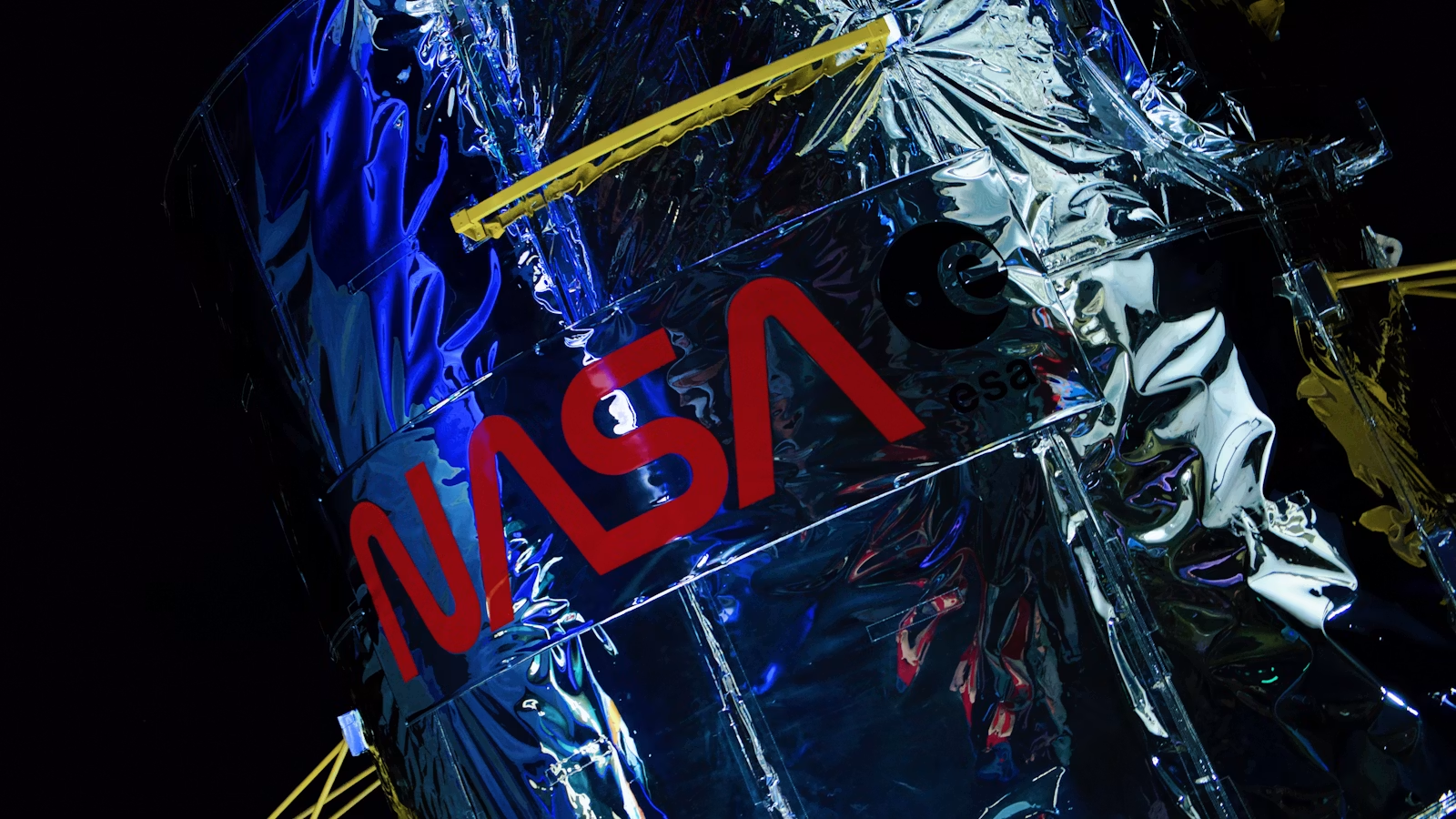
Reflect Orbital is a California-based space technology startup focused on reflecting sunlight from low Earth orbit so that designated areas on the ground can receive adjustable lighting at night. It has recently drawn attention because, after Eärendil-1 received FCC authorization, the company is no longer only showing concept videos; it is moving into the validation stage with a single demonstration satellite.
The phrase Reflect Orbital uses externally is “sunlight on demand.” According to Reflect Orbital, the reflected light is redirected natural sunlight, not artificial light generated by ground-based lamps. Its concept includes two types of services: lighting services, such as short-duration illumination for remote operations, emergency response, or urban areas; and energy services, such as supplementing solar farms with light after sunset.
Capital markets are paying attention because the company sits at the intersection of several popular themes: low-Earth-orbit commercial infrastructure, climate tech, energy resilience, satellite-as-a-service, and the space economy. In its $20 million Series A financing, Reflect Orbital was backed by Lux Capital, Sequoia Capital, and Starship Ventures, showing that some deep-tech investors are willing to bet on “orbital lighting” as a new type of space service.
DimensionKey information about Reflect OrbitalCompany typeU.S. space technology startupCore technologyLow-Earth-orbit satellites, thin-film mirrors, attitude controlCommercial conceptSunlight on demand, orbital lighting, energy supplementationCurrent stageEärendil-1 single-satellite demonstration authorizedTarget customersSolar farms, rescue agencies, industrial users, agriculture, infrastructure projectsCore controversiesNight-sky protection, astronomy, ecological impact, and regulatory responsibility
From a team perspective, Reflect Orbital’s team lists Ben Nowack as founder and CEO, while Tristan Semmelhack is also a core co-founder. The company is still a private startup, not a public company that ordinary investors can trade directly. Therefore, any discussion of Reflect Orbital is better framed around technology validation, financing capacity, customer contracts, regulatory response, and spillover opportunities across the supply chain, rather than around valuation methods used for mature energy companies.
Summary: Reflect Orbital is more accurately described as a space infrastructure company, not simply a solar company or a satellite company. What it is trying to sell is not photovoltaic modules, batteries, or communications bandwidth, but a service capability that redirects sunlight from orbit. Its current value is based more on technology validation and future commercial imagination than on a mature revenue model. Three distinctions matter: FCC authorization is a demonstration mission approval, not proof of commercialization; successful fundraising shows investor interest, not proven unit economics; and the sunlight-on-demand concept has possible applications, but it also directly touches night-sky protection, ecology, and public governance.
How Does Orbital Mirror Technology Work? From Low-Earth-Orbit Satellites to Ground Light Spots
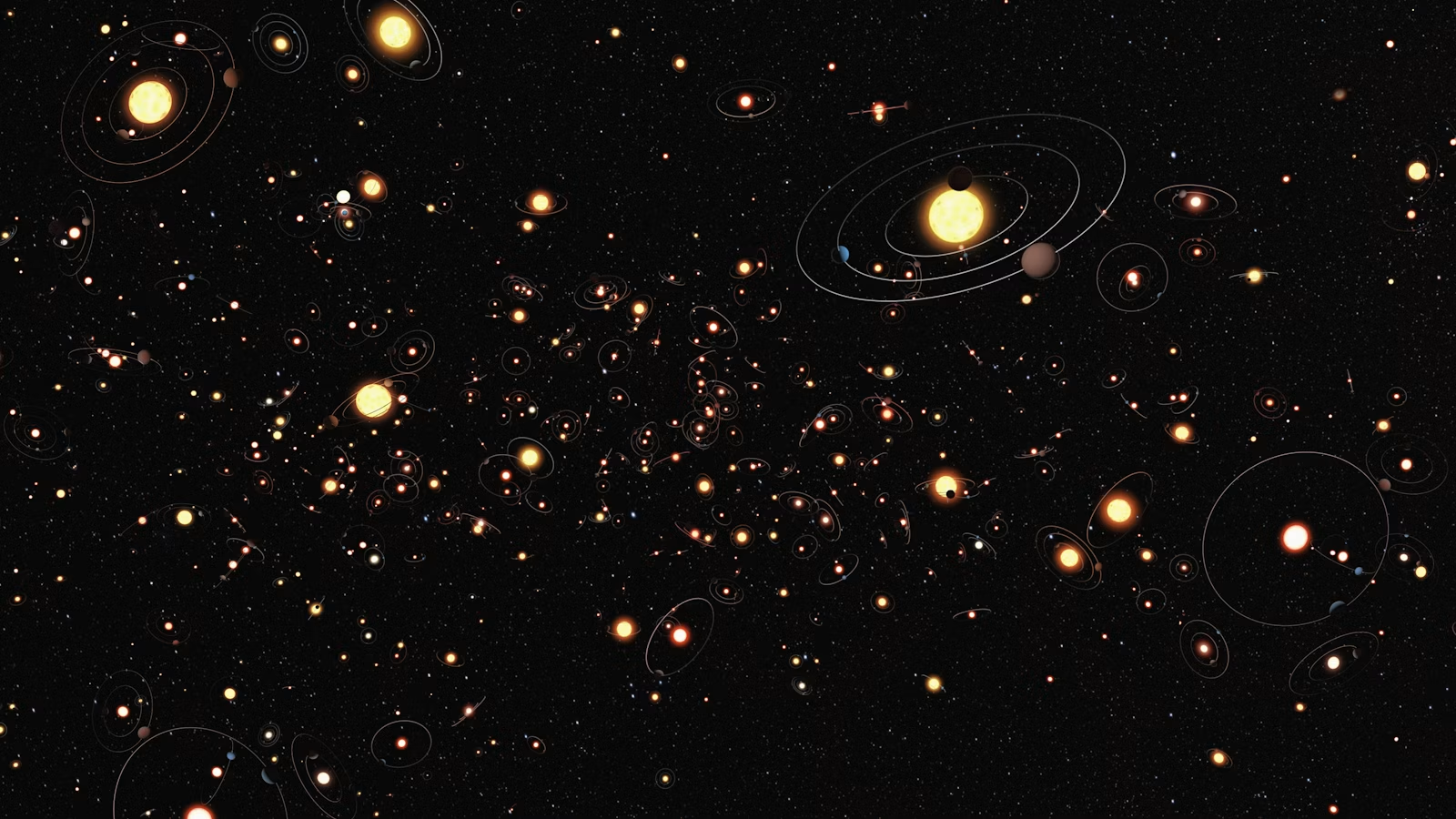
Reflect Orbital’s technology can be understood in simple terms: a satellite operates in low Earth orbit, deploys a lightweight mirror, and uses attitude control to reflect sunlight toward a designated area on the ground. The real challenge is not whether a mirror can reflect light. It is whether the system can deliver accurate light spots, adjustable brightness, schedulable timing, avoidance of sensitive areas, and safe, reliable operation at scale.
The main purpose of Eärendil-1 is to verify whether this space-based reflection chain can actually work. According to the FCC description of Eärendil-1, the satellite will use a deployable, highly specular thin-film reflector and a steerable structure so that reflected light appears only in the target area. In other words, the satellite first needs to prove that the mirror can deploy in orbit, maintain its shape, receive control commands, and direct light toward a designated region on Earth.
From the user’s perspective, the technology involves at least five stages:
Technical stageFunctionMain challengeLow-Earth-orbit satellite platformCarries the mirror and maintains orbital operationCost, lifetime, communications, orbital coordinationThin-film mirrorReflects sunlightDeployment, flatness, material degradationAttitude controlPoints the light spot toward the target areaPointing accuracy, stability, failure protectionMission schedulingArranges lighting time, location, and brightnessCustomer demand, weather, astronomy avoidanceGround safety mechanismControls the affected areaGlare, aviation, ecology, public consent
A single satellite naturally has limited service time. Low-Earth-orbit satellites travel quickly, so the window over any given location is short. One satellite cannot continuously illuminate the same place for a long period. The company’s long-term vision depends on constellation handoff, meaning more satellites would increase coverage frequency and duration. The Verge’s reporting on Eärendil-1 noted that the demonstration satellite is expected to use an approximately 18-meter reflector and could become the first step toward the company’s future vision of a constellation on the scale of 50,000 satellites.
This also explains why the technical controversy can quickly expand from one satellite to a whole constellation. A single demonstration satellite validates whether something can be done, while a commercial constellation must prove that the same service can be delivered repeatedly, reliably, safely, and at low cost. For customers, the real value is not one impressive demonstration, but predictable service at a specified time, in a specified area, and at a specified brightness.
Summary: The physics behind orbital mirror technology is not mysterious. It is essentially the redirection of sunlight from space to Earth. Reflect Orbital’s core challenge is turning that physical principle into a deployable, controllable, schedulable, and approvable commercial service system. A successful Eärendil-1 mission would only prove the first step: whether the mirror can deploy in orbit and create a controllable light spot. The company would still need to prove constellation cost, service reliability, avoidance mechanisms, customer demand, and regulatory tolerance. You should not equate a single-satellite demonstration with large-scale commercialization, but you also should not underestimate the engineering challenge just because the underlying principle sounds simple.
What Are Reflect Orbital’s Use Cases? Energy, Rescue, Agriculture, and Special Lighting
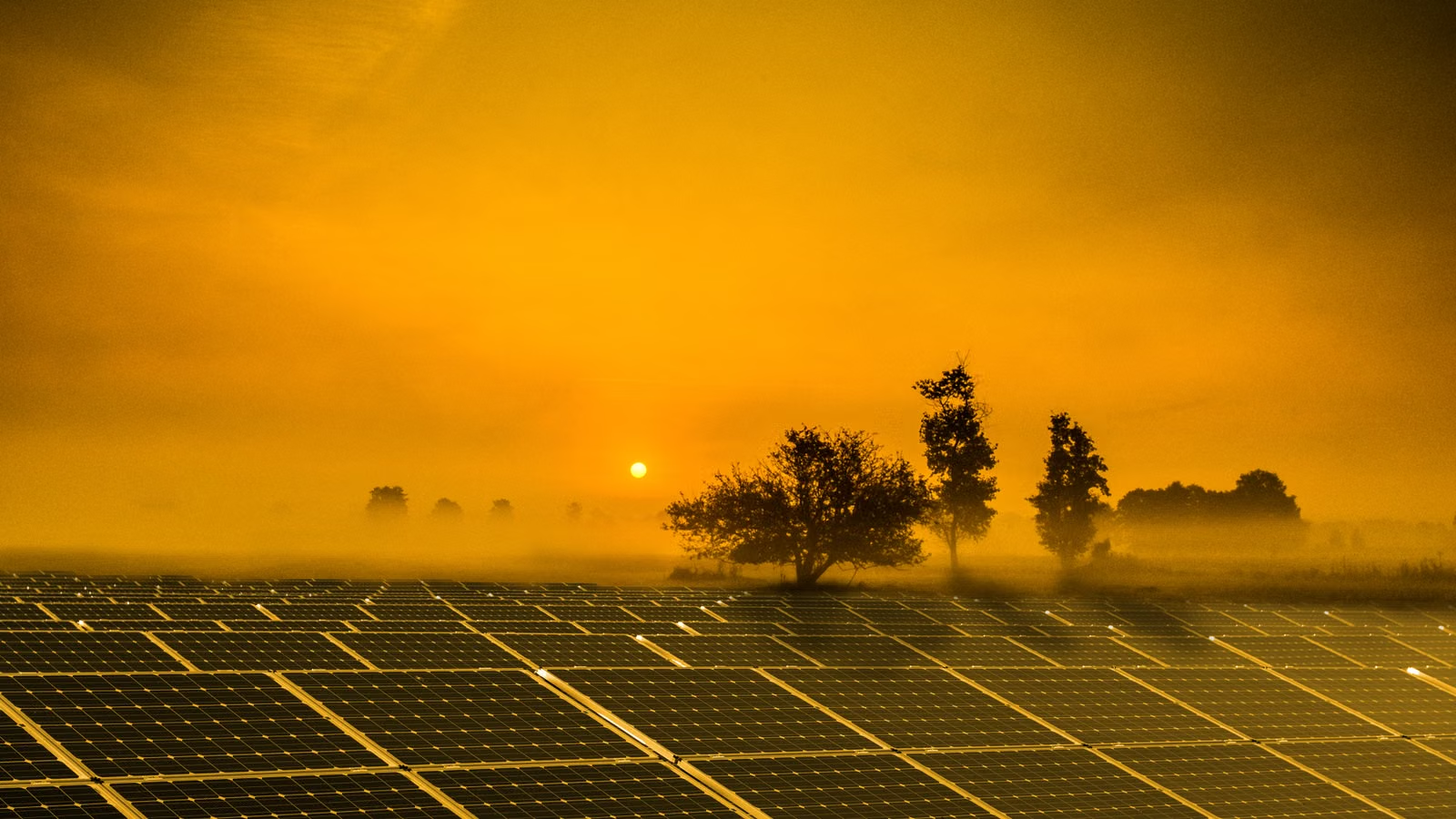
The easiest use case to understand is giving solar farms additional light after sunset. But Reflect Orbital’s potential applications go beyond energy. They also include disaster response, remote industrial operations, agricultural lighting, night construction, defense, and special events. The commercial value varies widely by scenario, so not all use cases should be treated as equally feasible.
Solar supplementation is the most imaginative and also the hardest use case to prove. One of the fundamental limits of solar power is the absence of sunlight at night, and Reflect Orbital hopes to extend the generation window by reflecting sunlight from orbit. The company’s long-term plan describes energy services that could improve the capacity factor of solar farms. But the practical questions are direct: Is the reflected light strong enough? Is the duration long enough? How much efficiency is lost to clouds and atmospheric scattering? And can the service compete economically with battery storage and grid dispatch?
Emergency response may be a more realistic early pilot scenario. Disaster areas, remote mountains, maritime accidents, and nighttime search-and-rescue operations often need short-duration, targeted light without ground infrastructure. Compared with solar power generation, emergency lighting may not require many hours of continuous, high-intensity output. It may be valuable if it improves visibility during a critical window. Still, this use case must resolve authorization, target confirmation, aviation safety, and on-site glare risks.
Agriculture and industrial operations sit between those two categories. Agricultural lighting could be used in greenhouses, for selected crops, or for light-cycle management in cold regions, but plant photoperiods and ecological rhythms are sensitive. “More light” should not automatically be viewed as positive. Industrial operations may include mines, oil and gas facilities, remote infrastructure, offshore platforms, or night construction, but customers will compare orbital lighting against mobile light towers, diesel generators, LED lighting systems, and microgrids.
Use casePotential valueMain limitationCommercialization viewSolar farmsExtends photovoltaic operating windowsLight intensity, duration, weather, storage competitionHighest imagination, hardest validationDisaster responseProvides rapid temporary lightingAuthorization, targeting accuracy, safety boundariesMore suitable for early pilotsAgricultural lightingImproves light management for selected cropsCrop differences and ecological disruptionRequires long-term testingRemote industrial workReduces dependence on ground lighting infrastructureScheduling reliability and operational safetyPossible small-scale deploymentCities and eventsStrong publicity effectLight pollution, public consent, regulatory pressureMost controversial
Reflect Orbital has said it has received large numbers of requests from many countries, which shows strong curiosity from the public and potential customers about “reserving sunlight.” But market interest is not the same as formal orders, and it is not the same as sustainable revenue. Deep-tech commercialization usually moves from demonstration to pilot, then to paid contracts, renewals, and scale expansion. At each stage, some initially attractive applications tend to fall away.
Summary: Reflect Orbital’s use cases should be divided into “short-duration lighting” and “continuous energy” scenarios. Emergency response, temporary operations, and remote infrastructure have lower requirements for brightness and continuity, so they may be better suited to early commercial pilots. Nighttime solar farm supplementation has greater imagination, but it must compete with battery storage, long-duration storage, transmission, power pricing, and grid rules. City lighting and event lighting may be highly visible, but they are also most likely to trigger public opposition. When evaluating the company, you should focus first on whether it can verify cost and reliability in real paid-use scenarios, rather than on how long the application list appears.
Can Reflect Orbital’s Business Model Work? Costs, Customers, and Scaling Barriers
Whether Reflect Orbital’s business model can work depends on whether it can manufacture, launch, and operate satellites at a low enough cost while providing stable, predictable, and approvable lighting services to paying customers. At the current stage, it looks more like a deep-tech project in demonstration validation than a mature energy services company with proven unit economics.
From a revenue-model perspective, the company is more likely to sell “service” rather than “equipment.” Customers are not buying the satellite or mirror itself. They are buying orbital lighting capacity for a specific time, region, brightness level, and purpose. This is similar to satellite imagery companies selling data services, or remote-sensing companies selling monitoring outputs. If Reflect Orbital wants to become commercially viable, the price of each lighting service must cover satellite manufacturing, launch, insurance, ground stations, mission scheduling, compliance review, collision avoidance, and deorbiting costs.
From a cost-structure perspective, a low-Earth-orbit constellation is not a one-time investment. Satellites must be manufactured and launched. Thin-film mirrors must withstand vacuum, temperature swings, radiation, and micrometeoroid impacts. Ground control systems must run continuously. Mission scheduling must avoid observatories, protected areas, aviation activity, and unauthorized regions. The larger the constellation, the stronger the theoretical service capability, but orbital traffic management, failure rates, and regulatory coordination also become more complex.
The true competitors may not be other “space mirror” companies. In energy applications, Reflect Orbital must compete with lithium-ion storage, long-duration storage, pumped hydro, demand response, grid dispatch, and gas peaker plants. In lighting applications, it must compete with LED light towers, mobile lighting vehicles, diesel generators, drone lighting, and local microgrids. Orbital lighting must prove that it is faster, more reliable, or more cost-effective than ground-based alternatives in specific scenarios before long-term demand can form.
Validation questionWhy it mattersObservable signalIs the cost per lighting session low enough?Determines whether customers will keep payingPilot pricing, contract value, renewalsIs the light stable and predictable?Determines usability for energy and industrial clientsMeasured brightness, duration, accuracyCan local authorization be obtained?Determines whether service can actually be deployedCooperation with cities, energy projects, regulatorsAre there real paying customers?Separates market curiosity from commercial ordersRevenue, contracts, customer retentionIs constellation risk controllable?Determines long-term scalabilityLaunch cadence, failure rate, deorbit plans
If you follow the space economy or frontier hard-tech themes, you also need to watch trading costs and whether related targets are accessible. Many relevant companies may not be Reflect Orbital itself, but listed companies in satellite manufacturing, launch services, energy technology, solar power, storage, and aerospace supply chains. U.S. stock trading costs usually include more than commission; they may also include platform fees, external institution fees, and trading activity fees. Biya supports multi-asset trading across U.S. stocks, Hong Kong stocks, and digital assets. Its U.S. stock trading commission is $0, while platform fees, external institution fees, and other charges are subject to the U.S. stock trading fee schedule and the order screen.
Summary: Reflect Orbital’s business model is distinctive, but the conditions for success are demanding. It must satisfy five requirements at once: usable technology, controllable cost, paying customers, regulatory permission, and public acceptance. Even if Eärendil-1 succeeds, it would only prove part of the question: that orbital reflected light can be controlled. Whether the company can generate sustainable revenue will depend on whether customers are willing to pay more for this lighting than they would for alternative solutions. For investors and technology observers, the key issue is not whether the concept is bold enough, but whether pilot data, paid contracts, and regulatory feedback can gradually turn the story into a business.
Why Is Reflect Orbital So Controversial? Light Pollution, Astronomy, and Ecological Risks
Reflect Orbital is controversial because it turns a lighting need originally tied to a limited set of ground customers into a space activity that could affect the night sky, astronomical observation, ecological rhythms, and cross-border public environments. Even if Eärendil-1 is only a single-satellite demonstration, the idea of a future constellation on the scale of 50,000 satellites has led astronomers and environmental groups to worry that the risks are being underestimated.
The astronomy controversy is the most visible. Dark skies and stable sky backgrounds are critical for long-exposure imaging, survey astronomy, and observations of faint objects. Scientific American’s coverage of the Eärendil-1 controversy noted that critics worry strong reflected light, atmospheric scattering, and satellite trails could interfere with astronomical observation. The problem is not only a single bright point passing through a telescope’s field of view. If the number of satellites grows, the overall sky background could rise.
ESO’s discussion of satellite light pollution research goes further, noting that if a large reflective constellation like Reflect Orbital’s proposed system reached 50,000 satellites, the overall brightness of the night sky could increase significantly. The related study on large or bright satellite constellations also modeled the impact of orbital mirror constellations on sky background brightness, direct trail losses, and scattered light. This type of research is why the controversy has escalated: critics are not only worried about a single satellite, but about systemic effects after large-scale deployment.
Ecology and human health are also important areas of concern. Artificial light at night can affect bird migration, insect navigation, sea turtle reproduction, mammal behavior, plant photoperiods, and human sleep rhythms. DarkSky International’s position on Reflect Orbital argues that orbital lighting systems may create risks for ecology, human health, public safety, astronomical research, and orbital debris. Its objection is not to all space technology, but to the idea that large-scale nighttime illumination from space should proceed without stricter, independent, and transparent impact assessments.
Regulation is equally complex. FCC authorization primarily covers radio frequency use, satellite communications, and space station operation; it does not amount to a full assessment of the public nature of the night sky. The American Astronomical Society’s response to the FCC approval of Eärendil-1 expressed concern about potential impacts on ground-based astronomy, the night sky, and the orbital environment. The core question is this: if a customer buys orbital lighting over a certain area, do nearby residents, observatories, protected areas, and cross-border regions have a right to participate or object?
Controversy areaCritics’ concernWhat supporters or the company need to proveAstronomical observationSatellite trails, scattered light, and increased sky brightnessPredictable, avoidable, and switchable operationLight pollutionA public night-sky resource is altered by a commercial serviceControlled light spots with limited impactEcological rhythmsAnimal migration, reproduction, and plant photoperiods may be disruptedIndependent environmental assessments and sensitive-area avoidancePublic safetyGlare may affect driving, aviation, or telescope operationsFailure protection and authorization mechanismsOrbital environmentLarge reflectors may increase collision and debris risksDeorbiting, collision avoidance, and lifetime managementRegulatory boundariesWhether the FCC is sufficient to review night-sky impactsCross-agency and international governance frameworks
Summary: The Reflect Orbital controversy is not a simple conflict between “anti-technology” and “pro-innovation” positions. Its potential value lies in creating a new kind of space-based energy and lighting service. The problem is that the night sky has a public character, and the impact may extend beyond paying customers. If the project is ever to scale, it will need to prove that the beam is controllable, the target area can be approved, sensitive regions can be avoided, observation data can be disclosed in advance, and stricter environmental, astronomical, and public-safety assessments can be accepted. For ordinary readers, the most important question is whether regulation will evolve from allowing a single satellite communication operation to fully assessing the social externalities of orbital lighting.
How Should Investors and Technology Observers View Reflect Orbital? Opportunities, Risks, and Key Indicators
Investors and technology observers should not simply treat Reflect Orbital as “the next solar revolution,” nor should they reject it outright because it is controversial. A more reasonable approach is to view it as a highly uncertain space infrastructure experiment and track whether technology validation, customer contracts, regulatory response, and public acceptance move forward together.
The opportunity comes from the intersection of several themes: SpaceTech, climate tech, orbital infrastructure, solar intermittency, satellite-as-a-service, and energy resilience. Projects like this are easy to notice because they have strong narratives, high technical barriers, large potential markets, and possible connections to government, defense, emergency response, and critical infrastructure demand. But a strong narrative is not the same as a strong business model. Hard-tech and space projects often involve long validation cycles, high failure costs, and regulatory uncertainty.
The risks can be divided into four categories. Technical risks include failed mirror deployment, insufficient pointing precision, material degradation, and shorter-than-expected satellite lifetime. Commercial risks include customer interest failing to become paid contracts, or short-duration lighting not creating enough value to cover constellation costs. Regulatory risks include constraints related to light pollution, astronomy protection, ecological assessment, and cross-border responsibility. Reputational risk may arise if the public sees the project as “privatizing the night.”
Key indicators to track include:
IndicatorWhy it mattersPossible impactEärendil-1 launch and deploymentDetermines whether the concept can enter in-orbit validationAffects financing and market attentionMeasured light-spot brightness and accuracyValidates whether the technology is usableAffects customer trustReal commercial contractsSeparates interest requests from revenueAffects business model assessmentNew regulatory conditionsDetermines whether the project can scaleAffects constellation planningAstronomy coordination mechanismsReduces controversy costAffects public acceptanceFollow-on financing capacityReflects investor confidenceAffects expansion pace
Reflect Orbital is still a private company, so ordinary investors are better off treating it as part of a broader space economy and energy technology watchlist rather than as a single directly tradable target. You can use U.S. stock information tools to track listed companies related to satellite manufacturing, launch services, energy technology, storage, and solar power, then compare them using financial reports, orders, regulatory filings, and valuation changes. Service availability depends on your location, identity verification result, platform rules, and applicable laws and regulations. Public market information and fee structure explanations do not constitute investment advice.
Summary: Reflect Orbital is worth watching because it brings space infrastructure, energy supplementation, and orbital lighting into a single new problem. But it remains in a highly uncertain validation phase. In the short term, the most important question is whether Eärendil-1 can demonstrate controlled reflection. In the medium term, the key issues are whether real customers, pilot data, and regulatory coordination emerge. In the long term, the decisive question is whether the company can balance energy value, night-sky protection, and public governance. For investors, the more prudent approach is to track the related supply chain and public-market companies, rather than treating a single private deep-tech project as a certainty too early.
If you follow frontier technology themes such as Reflect Orbital, satellite internet, commercial space, energy storage, solar power, and autonomous driving, you can place related U.S. and Hong Kong stocks into one observation framework: who provides infrastructure, who controls key hardware, whose revenue has already been validated, and who is still mainly in the concept stage. Biya can be used to follow multi-asset markets including U.S. stocks, Hong Kong stocks, and digital assets. If your location, identity verification result, and applicable laws and regulations meet the relevant service conditions, you can also download the app to keep tracking related market activity. Before trading, you should fully understand order types, fee structures, and market risks. No frontier technology narrative should replace independent analysis of a company’s financials, regulatory exposure, and commercialization progress.
FAQ
Is Reflect Orbital a Solar Company or a Satellite Company?
Reflect Orbital is more accurately described as a space infrastructure company. It uses satellites to reflect sunlight for energy supplementation and lighting applications, rather than operating as a traditional photovoltaic module, battery storage, or satellite communications company. Its value should be assessed across satellite engineering, energy use cases, and regulatory acceptance.
Will Reflect Orbital’s Orbital Mirrors Light Up an Entire City?
Reflect Orbital’s current goal is to illuminate specific target areas, not to indiscriminately light up an entire city. The actual coverage area, brightness, and duration depend on the number of satellites, orbital position, mirror size, and mission scheduling. Any large-scale urban lighting application would require stricter local authorization and public review.
Why Could Reflect Orbital Affect Astronomical Observation?
Reflect Orbital’s mirrors could increase sky brightness and create bright points, trails, or scattered light within telescope fields of view. For long-exposure imaging, survey astronomy, and faint-object observation, higher sky background reduces data quality, which is why astronomers are especially concerned about the risks of a large-scale constellation.
Can Reflect Orbital’s Sunlight on Demand Replace Energy Storage?
Reflect Orbital’s sunlight-on-demand concept is unlikely to directly replace energy storage in the near term. It may supplement specific lighting or solar-power scenarios, but it still needs to prove cost, stability, usable duration, weather resilience, and regulatory feasibility. Batteries and long-duration storage remain more mature solutions today.
What Regulatory Issues Could Reflect Orbital Create?
Reflect Orbital raises questions involving spectrum licensing, satellite safety, light pollution, environmental impact, astronomy protection, public consent, and cross-border responsibility. The core controversy is whether the existing satellite approval framework is sufficient to assess the external impact of orbital lighting on the night sky and ecological environment.
How Can Ordinary Investors Track Reflect Orbital-Related Opportunities?
Reflect Orbital is still a private company, so ordinary investors are better positioned to track its launch progress, financing, customer contracts, regulatory response, and related listed companies in commercial space, satellite manufacturing, launch services, solar power, and energy storage. Any trading decision should be based on public filings, platform rules, and personal risk tolerance.
*This article is provided for general information purposes and does not constitute legal, tax or other professional advice from BiyaPay or its subsidiaries and its affiliates, and it is not intended as a substitute for obtaining advice from a financial advisor or any other professional.
We make no representations, warranties or warranties, express or implied, as to the accuracy, completeness or timeliness of the contents of this publication.
Related Blogs of

Multi-Currency Digital Wallets Compared: Fees, Currency Support, and Cross-Border Payments


Binance Hot Wallet Outflows: User Funds, Loss Coverage, and Withdrawal Updates

Best Crypto Apps for Beginners: Fees, Security, and Ease of Use


Using a Virtual Visa Card: Online Payments, Subscriptions, and Declined Transactions

Choose Country or Region to Read Local Blog
 Australia
 Austria
 Belgium
 Canada
 Cyprus
 Czech Republic
 Denmark
 Estonia
 Finland
 France
 Germany
 Greece
 Hong Kong
 India
 Indonesia
 Ireland
 Italy
 Japan
 Latvia
 Lithuania
 Luxembourg
 Malaysia
 Malta
 Morocco
 Nepal
 Netherlands
 New Zealand
 Norway
 Pakistan
 Philippines
 Poland
 Portugal
 Romania
 Singapore
 Slovakia
 Slovenia
 South Africa
 South Korea
 Spain
 Sweden
 Thailand
 United States
 Turkey
 United Arab Emirates
 United Kingdom
 Vietnam