
Why Is ASTS Stock Getting Attention? BlueBird Satellite Launches and Commercialization Progress Explained




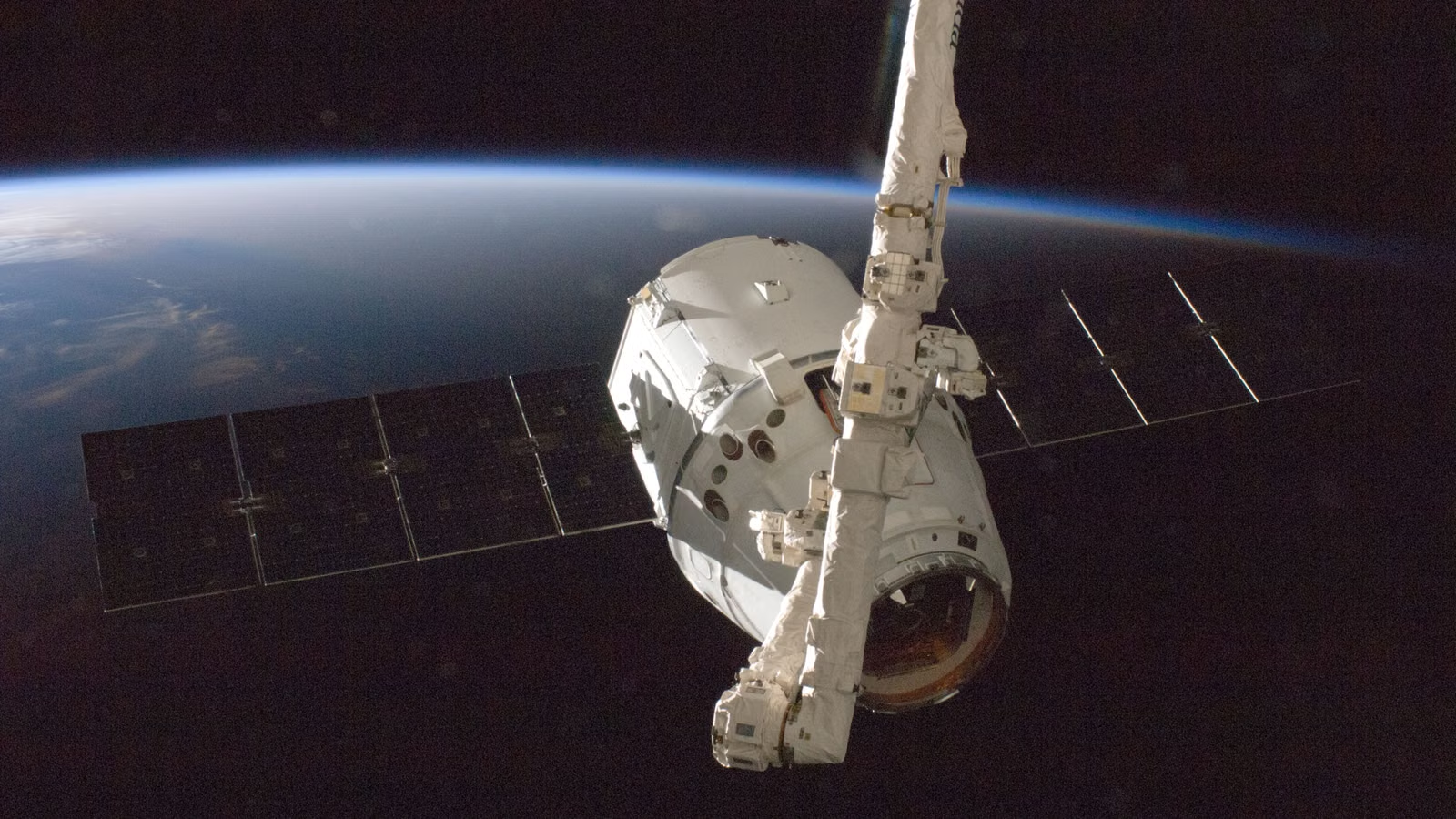
ASTS is not attracting attention simply because it is a “space stock.” The real focus is that AST SpaceMobile is moving from technical validation of direct-to-device satellite connectivity into BlueBird batch deployment, regulatory authorization, carrier integration, and commercial revenue validation. For you, analyzing ASTS should not stop at whether a launch succeeds. You also need to track whether the satellites deploy properly, enter service, support continuous coverage, generate recognizable revenue, and whether new financing creates dilution pressure. ASTS is better analyzed within the framework of high-volatility growth stocks, satellite communications, low-Earth-orbit connectivity, and the Direct-to-Device industry chain.
Key Takeaways
- ASTS is drawing attention because of its ordinary-phone-to-satellite commercialization potential.
- A successful BlueBird launch is only the first step; deployment, testing, and network integration still matter.
- FCC commercial authorization reduces U.S. market uncertainty, but global rollout still requires local approvals.
- Carrier partnerships create large distribution potential, but they do not automatically equal paying users.
- Financing improves execution capacity, but it may also create debt, dilution, and valuation pressure.
Why Is ASTS Stock Attracting Market Attention?
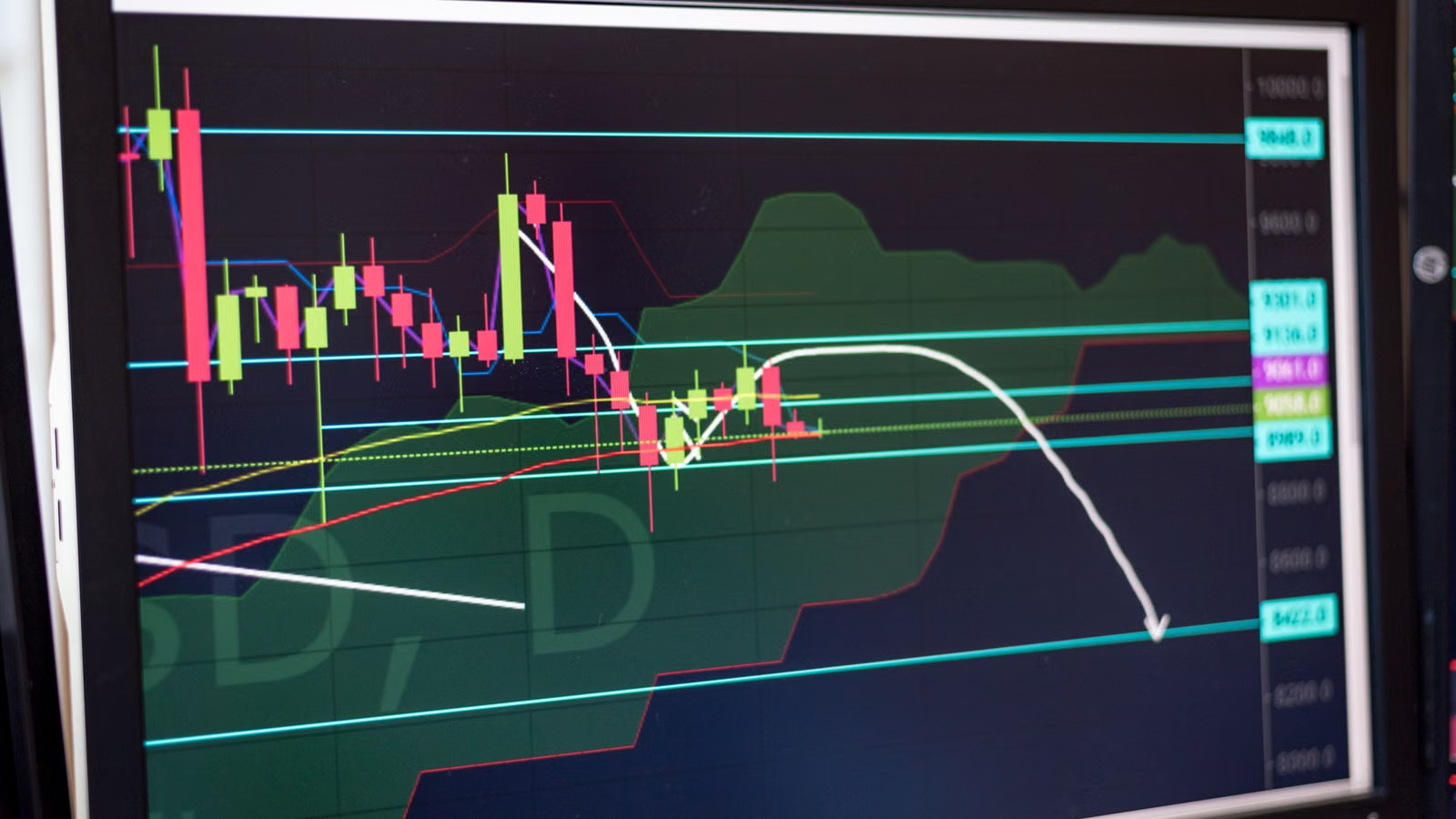
ASTS stock is attracting attention because AST SpaceMobile has moved from the question of “can ordinary phones connect directly to satellites?” to the more important question of “can the company launch satellites in batches, provide continuous coverage, integrate with mobile carriers, and generate revenue?” This is exactly the stage where stock prices tend to swing sharply. Every BlueBird launch, FCC authorization, AT&T or Verizon partnership, and financing announcement can reshape market expectations for the commercialization timeline and cash burn. You should view ASTS as a high-catalyst, capital-intensive, expectation-driven growth stock rather than valuing it only by current revenue or earnings.
AST SpaceMobile’s goal is to build a cellular broadband network that allows ordinary, unmodified mobile phones to connect directly to low-Earth-orbit satellites. In its business materials, the company emphasizes service for standard, unmodified mobile devices, which means it is trying to bypass the dedicated-terminal limitation of traditional satellite phones. From a user-experience perspective, the ideal scenario is that when a phone leaves terrestrial cell-tower coverage, it can still obtain voice, data, or video connectivity through satellite supplemental coverage.
Why does this logic matter so much to capital markets? Because it touches three demand layers at once: remote-area connectivity, disaster-response communications, and coverage-gap expansion for mobile carriers. Traditional mobile networks rely on terrestrial base stations, and it is often uneconomical to deploy them in mountains, oceans, deserts, rural highways, and other low-density areas. If direct-to-device satellite connectivity can scale, it may become a supplemental infrastructure layer for carrier networks.
The key events driving ASTS stock can be grouped as follows:
| Focus Area | Current Progress | Market Interpretation |
|---|---|---|
| Technical validation | Multiple ordinary-phone-to-satellite tests completed | Confirms technical feasibility |
| BlueBird launches | BlueBird 8, 9, and 10 have reached orbit | Batch deployment capability is under observation |
| Regulatory approval | U.S. SCS commercial authorization obtained | Reduces U.S. commercialization friction |
| Carrier partnerships | AT&T, Verizon, Vodafone, Rakuten, and others involved | Expands potential distribution channels |
| Financial resources | Multiple convertible-note and financing arrangements support network buildout | Strengthens funding capacity while raising dilution concerns |
| Commercial revenue | Early revenue comes from gateways, government work, and partners | Consumer service revenue still needs validation |
It is especially important to note that ASTS stock does not always move in the same direction as “good news.” For example, after a successful launch, if the market has already priced in that expectation, investors may shift attention to the next launch batch, cash burn, or convertible-note terms. Conversely, if a launch delay does not change the long-term network-building logic, a short-term decline does not necessarily mean the business model has failed.
The valuation challenge for ASTS is that current financial statements do not yet fully reflect the potential network value. The company is still in the buildout phase, so the market focuses more on future satellite count, coverage capability, carrier-conversion rates, and revenue per user than on current net income. When analyzing ASTS, you should not only ask, “How much money is it making now?” A better question is: “When can this low-Earth-orbit cellular network start charging reliably, how large can that revenue base become, and how much capital will be required to get there?”
From an investment-monitoring perspective, these signals are worth tracking:
- The number of BlueBird satellites launched, deployed, and formally operating;
- The launch interval and satellite count per batch for next-generation BlueBird satellites;
- Whether AT&T, Verizon, or other carriers announce user-facing service plans;
- Licensing and commercial agreement progress outside the United States;
- Changes in the revenue mix among service revenue, gateway revenue, and government revenue;
- Cash balance, capital expenditure, convertible debt, and potential dilution;
- Competitive differences versus Starlink Direct to Cell, Amazon Leo, and other industry paths.
If you usually track popular U.S. stocks through a trading platform, you can place ASTS on a watchlist covering low-Earth-orbit satellite communications, telecom infrastructure, and high-volatility growth stocks. When using a tool such as Biya, which supports multi-asset market data and trading, you should look beyond ASTS’s real-time price and review its financial results, launch schedule, volume changes, and news catalysts together. This helps reduce the risk of making decisions based only on one-day price movement.
Summary: The real reason ASTS is attracting attention is that ordinary-phone-to-satellite connectivity is moving from proof of concept toward commercial network construction. The upside narrative is significant, but so is the execution risk. When judging ASTS stock, you should not focus only on whether a single launch succeeds. Satellite count, commercial authorization, carrier partnerships, revenue recognition, cash burn, and financing structure all need to be evaluated together. Only when technical progress gradually turns into sustainable service revenue will ASTS’s valuation logic shift more clearly from a future-oriented story to commercial execution.
How Far Has the BlueBird Satellite Launch Program Progressed?
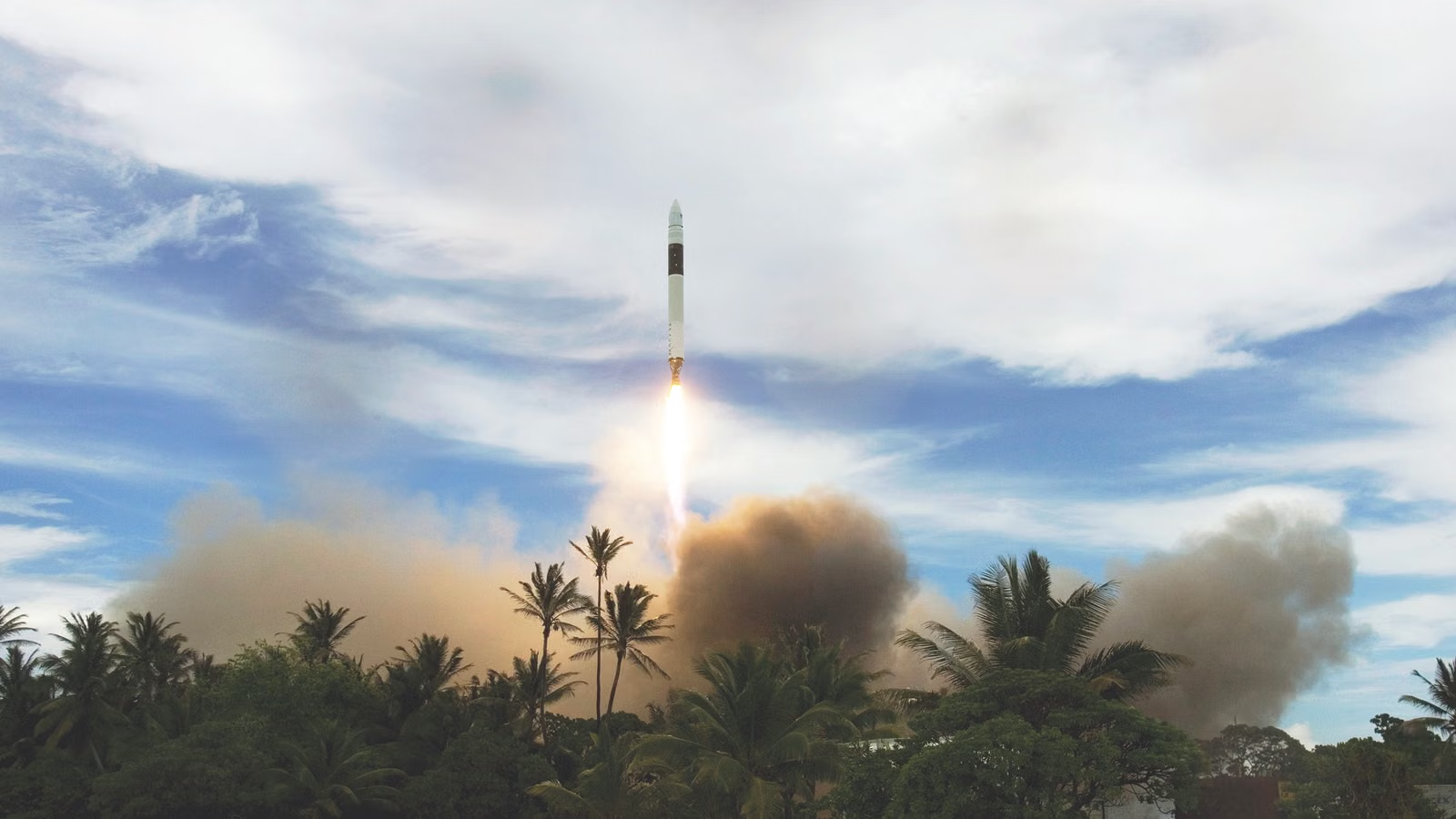
BlueBird launch progress is the most direct indicator of ASTS’s commercialization speed. As of July 2026, BlueBird 8, 9, and 10 have completed their orbital launch, while BlueBird 11, 12, and 13 are planned for launch on a Falcon 9 from Cape Canaveral in the first half of August. You need to distinguish between “successful launch,” “satellite in orbit,” “array deployed,” and “in operation.” Launch is only the beginning of the commercial-service chain; it does not mean users can immediately access stable service.
AST SpaceMobile’s satellite roadmap has evolved from BlueWalker 3 to BlueBird commercial satellites. BlueWalker 3 mainly served a technical validation role, while the later BlueBird satellites gradually moved the company toward a commercial network. In June 2026, the company disclosed that the launch window for BlueBird 8, 9, and 10 was set for June 17. Space.com’s coverage of the mission later showed that Falcon 9 delivered the three BlueBird satellites into low-Earth orbit.
The launch timeline can be viewed as follows:
| Satellite or Batch | Timing | Main Significance | Key Observation Point |
|---|---|---|---|
| BlueWalker 3 | Launched in 2022 | Validated ordinary-phone-to-satellite connectivity | Technical feasibility |
| BlueBird 1–5 | Launched in 2024 | First commercial satellites | Early network testing |
| BlueBird 6 | Launched in December 2025 | Next-generation large-array satellite | Array deployment and performance |
| BlueBird 7 | Launched in April 2026 | Continued next-generation deployment | Affected by an unexpected orbit |
| BlueBird 8–10 | Launched in June 2026 | Three-satellite batch deployment | Batch launch capability |
| BlueBird 11–13 | Planned for the first half of August 2026 | Further constellation expansion | Launch and in-orbit validation |
BlueBird 7 is a reminder that the biggest risks for low-Earth-orbit satellite companies do not only sit on the manufacturing side. Launch, orbit insertion, deployment, and testing all matter. AST SpaceMobile noted in related disclosures that BlueBird 7 entered an unintended orbit and was expected to result in an asset impairment. Such in-orbit deployment risks can ultimately affect both financial statements and investor confidence.
Next-generation BlueBird satellites matter because their communications array is much larger. The company has disclosed that the Block 2 BlueBird phased array is about 2,400 square feet, compared with about 700 square feet for early Block 1 BlueBird satellites. A larger array can help improve link budget, capacity, and coverage. In its first-quarter materials, the company also disclosed that Block 1 BlueBird had achieved a 98.9 Mbps peak data speed, but investors should not treat a peak test speed as equivalent to future sustained performance for mass-market users.
After a successful launch, at least the following steps still need to happen:
- The satellite separates from the rocket’s upper stage;
- The satellite completes attitude control and orbital adjustments;
- The large communications array deploys properly;
- In-orbit testing and link calibration are completed;
- The satellite connects with ground gateways;
- The system integrates with carrier core networks;
- User testing, billing, and service launch are completed;
- The process is replicated in more markets.
This is why ASTS launch news often captures market attention, but what truly affects commercialization is whether “launched satellites” become “operational network assets.” If a batch enters orbit smoothly but testing is delayed, the commercial-service timeline may still slip. If satellites successfully enter operation and expand coverage duration, the market is more likely to believe the revenue curve is improving.
| Stage | Common Market Misunderstanding | More Reasonable Interpretation |
|---|---|---|
| Successful launch | Commercialization is complete | It only begins in-orbit validation |
| Satellite in orbit | All users can access service | Deployment and network integration still matter |
| Peak speed test | Actual user experience is confirmed | Capacity, concurrency, and coverage time still need testing |
| Partnership announcement | Revenue has arrived | Service launch and revenue recognition still need confirmation |
| Constellation target | Completion is guaranteed | Manufacturing, launch availability, and regulation still affect timing |
Summary: BlueBird launch progress shows that AST SpaceMobile is entering a denser constellation-building phase, but you should not judge ASTS only by the number of satellites launched. A more accurate framework is: launch count determines network foundation, array deployment determines asset validity, gateways and carrier integration determine service capability, and user launch plus revenue recognition determine commercial value. The successful launch of BlueBird 8–10 was an important milestone, and the planned launch of BlueBird 11–13 will continue to test execution pace. The real question is whether these satellites can continuously expand coverage, increase service duration, and gradually convert into recognizable revenue.
How Can AST SpaceMobile Turn Its Satellite Network Into Commercial Revenue?
AST SpaceMobile’s revenue logic is not to completely replace mobile carriers. Instead, it aims to make its satellite network a supplemental layer to existing carrier cellular networks. In simple terms, AST provides satellites, gateways, and space-network capabilities, while carriers provide spectrum, customers, billing, and local distribution. When judging ASTS commercialization, you should focus on whether partnership agreements can turn into user plans, service revenue, and stable cash flow—not just on how many potential users its partners cover.
AST SpaceMobile’s business model is closer to B2B2C. End users will likely not buy satellite communication service directly from AST SpaceMobile. Instead, they may use it through mobile-carrier plans, add-on packages, or specific-scenario services. AT&T announced in 2024 that it had signed a definitive commercial agreement with AST SpaceMobile, and Verizon announced in 2025 a U.S. service partnership with AST SpaceMobile. These partnerships show that ASTS’s commercial path depends on major carriers rather than standalone consumer acquisition.
The commercialization chain can be divided into four layers:
| Layer | AST SpaceMobile’s Role | Carrier’s Role | Revenue Implication |
|---|---|---|---|
| Space network | Satellites, phased arrays, constellation deployment | Provides network-coverage demand | Determines coverage capability |
| Ground system | Gateways, network integration, testing | Local core network and spectrum coordination | Determines service availability |
| User channel | Technical capability and wholesale service | Plans, sales, customer service, billing | Determines user conversion |
| Revenue recognition | Service fees, gateways, government projects | User payments and revenue sharing | Determines commercial quality |
AST SpaceMobile already generates revenue, but the nature of that revenue matters. The company disclosed first-quarter 2026 revenue of $14.7 million, mainly from gateway delivery and U.S. government milestones. The company also maintained its full-year 2026 revenue guidance of $150 million to $200 million, but this does not mean large-scale consumer satellite broadband subscriptions have already launched.
A clearer revenue breakdown looks like this:
| Revenue Type | Current Status | Valuation Significance |
|---|---|---|
| Gateway delivery revenue | Already contributing revenue | Supports early cash flow, but may have one-time characteristics |
| Government project revenue | Milestones already achieved | Helps validate capability and use cases |
| Carrier prepayments | Related to partnership agreements | Indicates cooperation willingness, not final user revenue |
| Consumer service revenue | Still forming | Future valuation focus |
| International project revenue | Depends on local licenses and partnerships | May create regional growth curves |
AST SpaceMobile’s partnership network is also expanding. The company has disclosed nearly 60 mobile-network-operator partners covering more than 3 billion subscribers. Outside the United States, Canada, Europe, Japan, the Middle East, and Africa are also being developed. Japan is particularly worth watching because Rakuten’s potential cooperation with AST SpaceMobile is tied to low-Earth-orbit satellite communications infrastructure. Reuters reported that the Japanese government will provide up to 148 billion yen in subsidies for a Rakuten-related satellite project, though details around joint ventures, execution, and revenue sharing still need further confirmation.
For you, commercialization should not be judged only by a large number such as “3 billion potential subscribers.” More important indicators include:
- Countries and regions where commercial service has launched;
- Whether carriers include the service in formal plans;
- Whether users need to pay extra;
- The upgrade path from messaging and voice to data;
- Whether network coverage time is moving from intermittent to continuous;
- Whether service revenue becomes more visible in financial statements;
- Whether gross margin can cover satellite depreciation, launches, and operating costs.
If you are watching trading opportunities in ASTS, you also need to connect stock volatility with real trading costs. High-growth stocks can experience gaps, elevated turnover, and wide bid-ask spreads around launches, earnings, and regulatory announcements. Actual cost does not only come from commissions. It may also include platform fees, external agency fees, trading activity fees, spreads, and slippage. Biya charges $0 commission for U.S. stock trading, while platform fees, external agency fees, and other costs are subject to the U.S. stock trading fees schedule and the order page. Before trading, you should still check order type, service availability, and rules applicable to your location.
Summary: AST SpaceMobile’s commercialization logic depends on embedding its satellite network into the existing mobile-carrier ecosystem. More partners mean greater potential distribution, but that does not mean revenue has already materialized. You should focus more on whether services have launched, whether plans have been released, whether users are paying, whether revenue is being recognized consistently, and whether cash flow is improving. ASTS’s long-term value does not depend on how long its partner list is, but on whether these partnerships can turn low-Earth-orbit satellite communications into a scalable, repeatable, and profitable service.
How Far Is AST SpaceMobile From Continuous Commercial Service?
AST SpaceMobile already has technical validation, U.S. regulatory authorization, carrier partnerships, and multiple satellite deployments in place, but stable continuous commercial service is still not fully achieved. True continuous service requires enough operational satellites, proper orbital distribution, ground gateways, carrier-core-network integration, billing systems, and local regulatory approvals. When assessing ASTS progress, you should separate “successful test,” “initial service,” and “continuous coverage” rather than treating one video call or peak-speed test as full commercial service.
The U.S. market is one of the most important validation grounds for ASTS commercialization. In April 2026, AST SpaceMobile received FCC authorization to provide Supplemental Coverage from Space commercial services in the United States. The commercial authorization covers up to 248 non-geostationary satellites and coordinates with low-band spectrum used by partners such as Verizon, AT&T, and FirstNet. This reduces regulatory uncertainty in the U.S. market, but global service still requires separate handling of spectrum, landing rights, and carrier relationships in each jurisdiction.
Commercial-service progress can be divided into five stages:
| Stage | Network Status | User Experience | Revenue Significance |
|---|---|---|---|
| Technical demonstration | Single satellite or small satellite group completes connection | Available only in specific test scenarios | Proves technical feasibility |
| Intermittent testing | Service available when satellites pass overhead | Limited availability window | Validates network integration |
| Initial commercial service | Specific areas or users are opened | Available in selected time periods or locations | Begins to create service revenue |
| Continuous regional coverage | More stable coverage in key countries | Can serve as a carrier supplemental network | Revenue visibility improves |
| Global network service | Multiple regions and orbital planes coordinate | Coverage range and duration improve significantly | Platform value becomes clearer |
AST SpaceMobile previously noted in its first-quarter materials that its 2026 goal was to have about 45 BlueBird satellites in orbit. However, a July 15 8-K-related disclosure showed that, based on current launch availability, the company’s launch activity target had been updated to about 45 BlueBird satellites by early 2027. This change is important because it shows that the commercialization schedule is affected by launch availability, satellite testing, logistics, and supply-chain constraints.
Why does continuous service require so many satellites? Low-Earth-orbit satellites move around Earth at high speed, and a single satellite only covers a specific area for a limited period. If the satellite count is insufficient, users may only be able to connect when a satellite passes overhead. To make a region continuously available, more satellites need to hand off coverage from different orbital positions. AST SpaceMobile has said that roughly 45 to 60 BlueBird satellites could support continuous service in key markets such as the United States, Europe, and Japan, while about 90 could support broader global coverage. These targets still depend on actual launch, orbit insertion, and operational results.
You can use the following checklist to track whether the company is approaching continuous commercial service:
- Whether satellite count moves from the low teens toward 40–50;
- Whether operational satellites can cover key-latitude markets;
- Whether ground gateways in the United States, Canada, Europe, Japan, and other markets complete integration;
- Whether carriers open real-user testing;
- Whether service expands from test users to paying users;
- Whether users can reliably complete voice, data, and video connections;
- Whether service revenue continues to grow in financial statements.
From a stock-price perspective, the market usually tries to price in expectations before “commercial service is about to launch.” But if deployment targets are delayed, short-term valuation can compress again. The key is not whether everything launches on a single date. The better question is whether satellite count, coverage regions, service duration, carrier rollout, and revenue recognition improve together over several consecutive quarters.
| Scenario | Satellite Deployment | Commercial Service | Impact on Stock Expectations |
|---|---|---|---|
| Faster rollout | Launch cadence recovers and expands steadily | Key markets launch faster | Market may assign valuation earlier |
| Base case | Around 45 satellites reached by early 2027 | Service opens by region and carrier | Stock moves with execution milestones |
| Delayed rollout | Launch or manufacturing remains constrained | Testing period lasts longer | Financing and valuation pressure rises |
Summary: AST SpaceMobile is close to an important commercialization threshold, but it has not fully crossed it yet. Technical tests, FCC authorization, and carrier partnerships have established the foundation, but continuous coverage requires more operational satellites, ground gateways, and commercial systems working together. When assessing ASTS, it is best to separate service stages: one connection validates technology, intermittent testing validates network integration, initial commercial service validates willingness to pay, and continuous coverage truly validates the business model. The shift in the deployment target from 2026 to early 2027 is a key variable that must be included in valuation analysis.
What Are ASTS Stock’s Catalysts, Valuation Pressures, and Main Risks?
ASTS’s short-term catalysts mainly come from BlueBird launches, satellite deployment, carrier service launches, FCC and overseas approvals, revenue guidance, and financing arrangements. Its long-term valuation depends on whether the company can turn its satellite network into stable revenue. Major risks include launch delays, satellite losses, high capital expenditure, convertible-note dilution, intensifying competition, and slower-than-expected user adoption. For you, ASTS is not a simple “successful launch equals buy” story. It is a high-volatility asset that requires continuous monitoring of execution quality.
The most direct catalyst is the next batch of BlueBird launches. In June 2026, BlueBird 8, 9, and 10 completed launch. On June 23, the company announced that BlueBird 11, 12, and 13 were planned for launch in the first half of August. As long as launch cadence remains stable, the market will continue to reassess the probability that the company reaches its targets of 45, 60, and eventually 90 satellites.
The second category of catalysts comes from commercial contracts. AT&T, Verizon, Vodafone, Rakuten, stc, and other partners represent AST SpaceMobile’s potential distribution channels. If carriers later release formal plans, prices, coverage areas, or user-trial data, the market may treat that as a strong signal ahead of revenue realization.
The third category comes from financial disclosures. AST SpaceMobile is in a capital-intensive phase and needs to keep investing in manufacturing, launches, ground gateways, personnel, and R&D. The company disclosed that, as of March 31, 2026, it had cash and restricted cash of about $3.459 billion. Preliminary data disclosed in July showed cash, cash equivalents, and restricted cash of about $2.723 billion as of June 30, 2026. A strong cash position reduces short-term survival risk, but continued financing also keeps investor attention on debt and dilution.
Risks can be broken down as follows:
| Risk Type | Signal to Watch | Possible Impact |
|---|---|---|
| Launch risk | Repeated launch delays or rocket issues | Commercial timeline moves back |
| In-orbit risk | Array deployment failure or orbital anomaly | Satellite asset impairment |
| Manufacturing risk | Production ramp slower than planned | Constellation buildout slows |
| Regulatory risk | Overseas approvals progress slowly | International market launch constrained |
| Commercial risk | User plans are not released | Revenue realization delayed |
| Competition risk | Starlink, Amazon Leo, or others accelerate | Pricing and market share pressure |
| Financing risk | Further convertible debt or equity issuance | Per-share value dilution |
| Valuation risk | Stock rises far ahead of revenue | Sensitivity to negative news increases |
ASTS’s valuation pressure comes especially from the timing gap. The market is trading future satellite-network value, while financial statements reflect current construction costs. If launches, licensing, and user revenue progress smoothly, this timing gap will be viewed as growth potential. If execution is delayed, it becomes a source of cash-burn pressure and valuation drawdown.
You also need to watch competition in the Direct-to-Device industry. Academic and industry research often discusses D2C and 3GPP NTN within the broader framework of satellite-terrestrial network convergence. The difference between Direct-to-Cell and NTN is that the former emphasizes rapid coverage using existing phones and carrier spectrum, while the latter focuses more on long-term standardization and deeper network integration. AST SpaceMobile’s strengths lie in its large arrays, high-speed target, and deep carrier cooperation. Competitors may have advantages in launch resources, capital strength, existing constellation scale, or device ecosystems.
For ordinary investors, ASTS is better managed with a milestone-tracking table:
- Launch: whether the next batch lifts off as planned;
- Satellite: whether the satellite deploys properly and enters service;
- Regulation: whether key markets outside the United States obtain approvals;
- Commercialization: whether carriers launch user-facing service;
- Financials: whether revenue grows and cash burn remains manageable;
- Financing: whether new debt and potential dilution are acceptable;
- Valuation: whether the stock price has already priced in near-term milestones.
If you need to follow ASTS and other U.S. stocks over time, you can first check basic stock information through U.S. stock search, then combine company announcements, SEC filings, and earnings reports to assess catalysts. Before trading, you should also consider account funding, position concentration, and personal risk tolerance. Satellite launch news should not be treated as a direct buy signal.
Summary: ASTS’s catalysts are clear: more BlueBird launches, more satellites entering service, more carrier rollouts, and more revenue recognition. Its risks are equally clear: launch delays, satellite losses, capital expenditure, financing dilution, tougher competition, and insufficient commercial adoption. When analyzing ASTS, you should weigh long-term network value against short-term execution milestones. Only when satellite deployment, commercial service, and revenue curves improve together will ASTS’s valuation be more firmly supported by fundamentals. If the stock rises only on news while revenue and coverage do not keep pace, volatility risk will remain high.
If you are watching high-volatility U.S. stocks such as ASTS, you should not only follow BlueBird launches, FCC authorization, and partner announcements, but also define your own trading plan: is this a short-term event-driven trade, or a long-term satellite-communications commercialization watchlist position? When using Biya to follow U.S. stocks, Hong Kong stocks, crypto, and other multi-asset markets, you can evaluate ASTS by combining company information, price volatility, related news, and fee structure. Biya charges $0 commission for U.S. stock trading, while platform fees, external agency fees, and order-level costs are subject to platform rules. Service availability depends on the user’s location, identity-verification result, platform rules, and applicable laws and regulations. If you prefer tracking quotes and order information on mobile, you can also use Download App for ongoing monitoring. The information above only discusses publicly available market information, trading rules, and fee structures; it does not constitute investment advice.
FAQ
Why Does ASTS Stock Swing Sharply After BlueBird Launch News?
ASTS stock can swing sharply after BlueBird launch news because satellite count directly affects the commercial-service timeline. A successful launch usually improves market confidence, but investors still need to evaluate satellite deployment, testing, network integration, revenue realization, and financing pressure. One launch does not automatically prove profitability.
Does AST SpaceMobile’s Satellite Service Require a Special Phone?
AST SpaceMobile’s target is to connect standard, unmodified phones without requiring a dedicated satellite handset. However, actual availability still depends on carrier support, local spectrum authorization, mobile-network standards, service launch regions, and specific plan rules.
Does AST SpaceMobile’s Current Revenue Mainly Come From Consumer Subscriptions?
AST SpaceMobile’s current revenue does not mainly come from large-scale consumer subscriptions. At this stage, revenue is more closely tied to gateway delivery, government projects, and partnership-related milestones. The key long-term valuation driver is whether satellite service revenue can scale sustainably.
How Could ASTS Convertible-Note Financing Affect Common Shareholders?
ASTS convertible-note financing does not necessarily dilute common shareholders immediately, but if the notes convert into stock in the future, the share count may increase. Investors should review conversion price, interest rate, maturity, capped-call arrangements, and whether the funding effectively supports constellation deployment.
How Can Retail Investors Track ASTS Commercialization Progress?
Retail investors should prioritize satellite launches, deployed satellite count, carrier service launches, regulatory approvals, quarterly revenue, cash balance, and new financing. Compared with one-day price movement, these indicators better show whether AST SpaceMobile’s commercialization is genuinely advancing.
Is a Traditional P/E Ratio Suitable for Valuing ASTS?
A traditional P/E ratio is not suitable as the only valuation tool for ASTS at this stage because the company is still in a high-investment buildout phase, and current earnings do not fully reflect potential future network value. A more reasonable approach combines satellite deployment, revenue guidance, cash burn, capital expenditure, and potential dilution.
*This article is provided for general information purposes and does not constitute legal, tax or other professional advice from BiyaPay or its subsidiaries and its affiliates, and it is not intended as a substitute for obtaining advice from a financial advisor or any other professional.
We make no representations, warranties or warranties, express or implied, as to the accuracy, completeness or timeliness of the contents of this publication.
Related Blogs of

Online Bank-to-Bank Transfers: Account Linking, Steps, and Limits


Best Crypto Apps for Beginners: Fees, Security, and Ease of Use




Choose Country or Region to Read Local Blog
 Australia
 Austria
 Belgium
 Canada
 Cyprus
 Czech Republic
 Denmark
 Estonia
 Finland
 France
 Germany
 Greece
 Hong Kong
 India
 Indonesia
 Ireland
 Italy
 Japan
 Latvia
 Lithuania
 Luxembourg
 Malaysia
 Malta
 Morocco
 Nepal
 Netherlands
 New Zealand
 Norway
 Pakistan
 Philippines
 Poland
 Portugal
 Romania
 Singapore
 Slovakia
 Slovenia
 South Africa
 South Korea
 Spain
 Sweden
 Thailand
 United States
 Turkey
 United Arab Emirates
 United Kingdom
 Vietnam