How to Start Trading Stock Futures in 2026




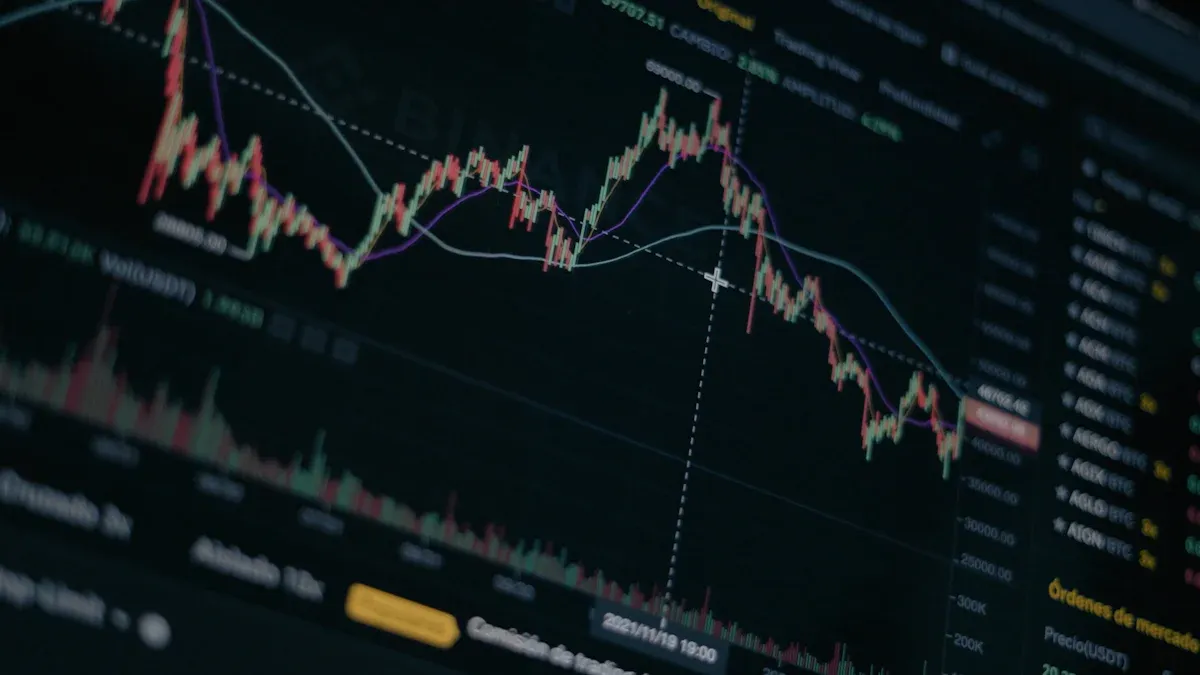
Image Source: pexels
You can start futures trading with three key items: a specialized broker, sufficient margin capital, and a solid trading plan. This guide provides a clear roadmap for futures trading. We focus on how trading actually works before you trade stock futures live. Success in trading futures requires discipline. You must learn to trade futures correctly.
Your futures trading education is the most critical asset. You cannot find shortcuts in futures trading. Success comes from your commitment to learn to trade futures and your consistent effort in trading futures.
Key Takeaways
- Start futures trading with a good broker, enough money, and a clear plan.
- Practice trading on a demo account first to learn without losing real money.
- Always use stop-loss orders to limit how much money you can lose on a trade.
- Never risk more than 1% of your total money on any single trade.
- Your trading plan is your guide; follow it to make smart choices, not emotional ones.
Understanding Stock Futures
Before you begin trading futures, you must understand the product itself. Futures contracts are very different from the stocks you may be used to. This knowledge forms the foundation for your entire futures trading journey.
What Is a Futures Contract?
A stock futures contract is a type of derivatives contract. It obligates the parties involved to buy or sell an underlying asset at a fixed future date. This transaction occurs at a predetermined price. These futures contracts are standardized and traded on futures exchanges. Single stock futures are contracts based on individual stocks. They allow you to potentially profit from the price movements of specific companies. Your goal when trading futures is to capitalize on these price changes.
Futures vs. Stocks: Key Differences
You should recognize the fundamental differences between futures contracts and stocks. Trading futures is not the same as investing in company shares. The table below highlights the key distinctions.
| Feature | Stocks | Futures Contracts |
|---|---|---|
| Ownership | You own a share of the company. | You own a contract, not the underlying asset. |
| Leverage | Limited leverage (e.g., 50% margin). | High leverage (small margin controls a large position). |
| Expiration | No expiration date; hold indefinitely. | Have a specific expiration date. |
The Basics of Leverage and Expiration
Leverage is a core concept in futures trading. It allows you to control a large market position with a fraction of the capital. For example, you might control a $100,000 futures position with only a $10,000 margin deposit. This feature amplifies potential returns but also magnifies losses. High leverage in futures trading can put your entire account at risk if a trade moves against you. You must learn to trade futures with a deep respect for leverage.
All futures contracts also have an expiration date. You must close or roll over your position before this date. This fixed timeline makes trading futures a more active endeavor than long-term stock investing.
Setting Proper Expectations for Trading
You need realistic expectations to succeed in futures trading. Many beginners make critical errors because they misunderstand the market. To learn to trade futures effectively, you must avoid common pitfalls.
Many beginners believe futures trading offers overnight success. Real success requires strategic planning and discipline. Another misconception is that high leverage guarantees high profits. You must understand that leverage amplifies both gains and losses. Trading futures without a defined plan often leads to emotional and inconsistent decisions. Your education is the key to responsible futures trading.
5 Steps to Start Futures Trading

Image Source: unsplash
With a solid understanding of the product, you are ready for the practical steps. This five-step process will guide you from choosing a platform to placing your first trade. Following these steps methodically is essential for building a strong foundation in futures trading.
Step 1: Choose a Futures Broker
Your choice of a futures broker is one of the most important decisions you will make. This partner provides the platform, tools, and support for your entire futures trading journey. In 2026, many platforms are specifically designed for beginners, but you must evaluate them carefully.
Look for a broker that excels in these key areas:
- Regulatory Compliance: Your broker must protect you. They should be registered with regulatory bodies like the Commodity Futures Trading Commission (CFTC) and the National Futures Association (NFA). Strong compliance, including the segregation of client funds, is non-negotiable. Events like the MF Global collapse in 2011 serve as a stark reminder of why strict oversight is critical to protect your capital.
- Educational Resources: The best brokers act as educators. They equip you with the resources you need to
learn to trade futures, including webinars on market strategies, real-time news feeds, and tutorials on theirfutures trading software. This combination of technology and education helps you build a disciplined approach. - User-Friendly Platform: The platform should be intuitive and stable. You need a clean interface, low commissions, and reliable customer support to navigate the markets effectively.
Step 2: Open and Fund Your Account
Once you select a broker, the next step is to open and fund your account. The process is typically straightforward and can be completed online. While each broker’s process may vary slightly, you can expect to follow these general steps:
- Complete the Application: You will fill out an online application form with your personal and financial information.
- Submit Required Documents: You must provide a copy of a government-issued ID, such as a driver’s license or passport. You will also electronically sign agreements, including a customer account agreement and various disclosures.
- Await Account Approval: The broker’s compliance team will review your application. This can take anywhere from a few hours to a few business days.
- Fund Your Account: After approval, you can deposit funds. Common methods include a wire transfer or an electronic bank transfer (ACH). You can typically initiate a wire transfer from any domestic or international bank, such as a licensed bank in Hong Kong, to your new brokerage account.
One common beginner mistake is treating funding as a one-time setup task. Futures are margin-driven, which means the real question isn’t only “Can I deposit?”—it’s “Can I mobilize capital fast and predictably when volatility spikes?” A practical way to reduce stress is to pre-plan a two-layer structure: “trading capital” inside the brokerage account, plus a separate “buffer pool” you can deploy quickly if your equity approaches maintenance margin.
To make this more mechanical, do a quick conversion and cost check before you move money. For example, the BiyaPay currency converter can help you translate the margin amount you want to top up into your funding currency and estimate the impact of FX conversion so you leave a sensible cushion for fees/spread. After the account is funded, it also helps to standardize your market-check workflow so you’re not scrambling across tabs in a time-sensitive moment—many traders keep a consistent quote reference open for quick verification, such as the BiyaPay markets page. And if you want to streamline the “watch → convert → fund” routine into a lower-friction workflow, reviewing entry points and funding paths on the BiyaPay official site is a simple way to reduce operational delays—because in leveraged products, smoother operations are part of risk control.
Step 3: Learn to Trade Futures on a Demo Account
This is the most crucial step in your journey. Before you risk a single dollar, you must learn to trade futures in a simulated environment. Practicing on a demo account is a non-negotiable requirement for any serious beginner. It is where you build skills, test strategies, and make mistakes without financial consequences.
A quality demo account should mirror the live trading experience, offering:
- Real-time market data and execution.
- A full suite of order management and risk analysis tools.
- Virtual funds (e.g., $50,000) to practice with.
Practice with Purpose: Don’t just click buttons. Use your demo account to run specific drills. For example, practice an Opening Range Breakout strategy on the Nasdaq-100 (NQ) or a Trend Pullback strategy on Crude Oil (CL). This focused practice helps you understand market behavior and refine your execution. This is how you truly
learn to trade futures.
Attach real-world consequences to your simulated trading futures. If you break a rule in your demo, impose a small personal penalty. This helps create the emotional discipline needed for trading stock futures live.
Step 4: Select a Suitable Futures Contract
Not all futures contracts are created equal, especially for beginners. Starting with the right product is key to managing risk. For new traders, Micro E-mini futures contracts are the ideal starting point.
These futures contracts are 1/10th the size of their standard E-mini counterparts. This has a massive impact on your capital requirements and risk exposure.
| Contract Type | Example Ticker | Typical Margin (Illustrative) |
|---|---|---|
| E-mini S&P 500 | ES | $12,000 |
| Micro E-mini S&P 500 | MES | $1,200 |
By starting with Micro E-mini
futures contractslike the Micro E-mini S&P 500 (MES) or Micro E-mini Nasdaq-100 (MNQ), you gain exposure to major indices with significantly less capital. This allows you tolearn to trade futuresand manage risk more effectively as you build experience infutures trading.
Step 5: Placing Your First Stock Futures Live Trade
After successfully practicing in a demo and developing a trading plan, you are ready to place your first stock futures live trade. This moment can be intimidating, so it is vital to proceed with a clear, mechanical process. Before you trade, you must understand the basic order types.
| Order Type | Definition | Best Use Case |
|---|---|---|
| Market Order | An order to buy or sell immediately at the best available current price. | When speed of execution is your top priority. |
| Limit Order | An order to buy or sell at a specific price or better. | When price is more important than immediate execution. |
| Stop Order | An order that becomes a market order once a specific price is reached. | Primarily used to limit losses (stop-loss) or enter a trade on momentum. |
When you are ready to trade stock futures live, follow your plan precisely. Double-check your order ticket to ensure you have selected the correct contract, quantity, and order type. Most importantly, always place a stop-loss order simultaneously to define your maximum risk on the trade. This disciplined approach to trading futures is fundamental to long-term survival and success in futures trading. Your first live trade is a major step in your futures trading education.
Develop Your Futures Trading Plan
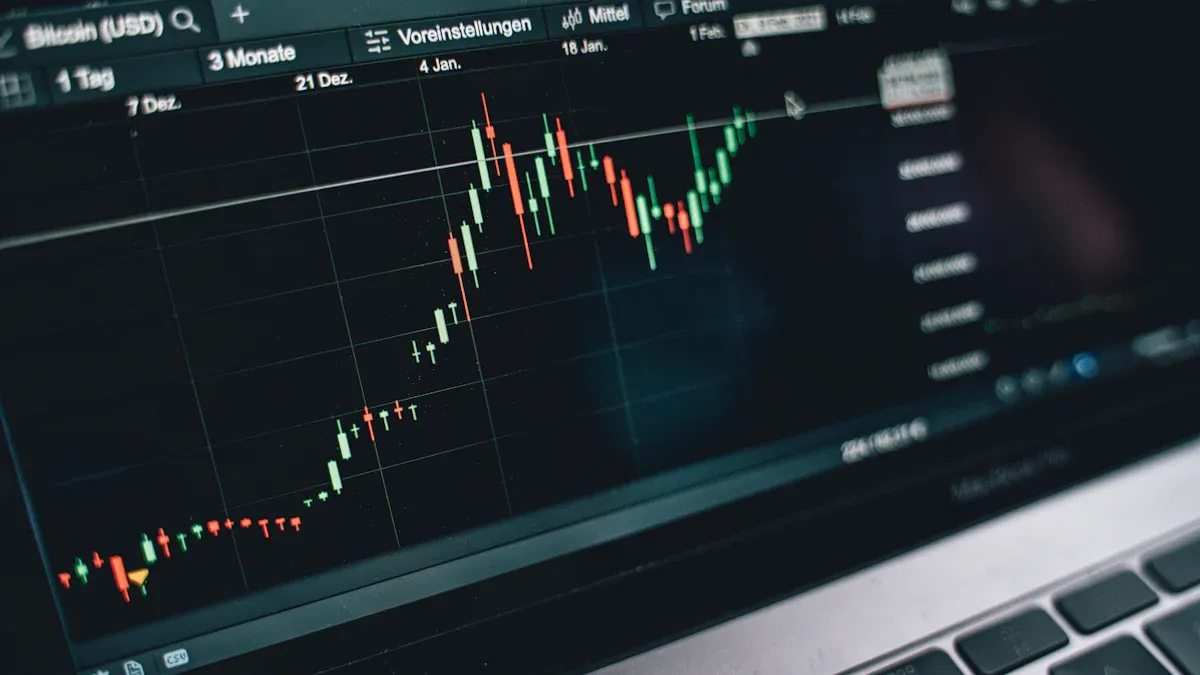
Image Source: pexels
Trading without a plan is like navigating a storm without a compass. Your trading plan is your business plan. It provides the rules and structure you need for disciplined futures trading. Statistics show that up to 90% of new traders fail, largely because they lack a formal plan.
Why You Need a Trading Plan
A trading plan is your psychological anchor in volatile markets. It helps you make strategic decisions based on analysis, not emotion. When you predefine your rules, you reduce the chance of making impulsive choices driven by fear or greed. This disciplined approach is essential for consistent futures trading. Adhering to your plan builds the emotional control needed to learn to trade futures successfully.
Define Your Futures Trading Strategies
You must select futures trading strategies that match your risk tolerance and personality. For beginners, a trend-following strategy is a great starting point. This approach involves identifying an established market direction and trading with it. You aim to capture gains from a single, strong trend.
More advanced trading strategies, like scalping, involve making many small trades to profit from minor price changes. You should be aware of scalping, but it is a high-risk strategy that requires constant attention and is not recommended when you first learn to trade futures. Your initial focus should be on simpler futures trading strategies.
Creating Your Entry and Exit Rules
Your plan must have clear, non-negotiable rules for entering and exiting trades. You can use technical indicators to create these rules for your futures trading.
- Entry Signal: Buy when the price crosses above the 50-day moving average.
- Exit Signal (Profit): Sell when the Relative Strength Index (RSI) goes above 70 (overbought).
- Exit Signal (Loss): Sell when the price drops 2% below your entry price (stop-loss).
My First Trading Plan Template
- Contract to Trade:
________________(e.g., Micro E-mini S&P 500 - MES)- My Entry Rule:
________________(e.g., Price crosses above 20-period EMA)- My Profit Target Rule:
________________(e.g., Price reaches prior resistance level)- My Stop-Loss Rule:
________________(e.g., 1% of account capital)
The Role of Hedging a Portfolio
Beyond speculation, you can use futures contracts for hedging. Hedging is a defensive strategy to protect your long-term stock portfolio from market downturns. For example, if you have a large stock portfolio, you can sell E-mini S&P 500 futures. If the market falls, the profit from your short futures position can help offset losses in your stocks. This is an advanced use of trading futures that demonstrates their versatility. Mastering basic futures trading and futures trading strategies should be your first priority before you learn to trade futures for hedging purposes.
Critical Risk Management for Trading Futures
Effective risk management is the most important skill in futures trading. It separates professional traders from gamblers. You must learn to protect your capital before you can grow it. This section covers the essential risk management techniques you need for trading futures. Proper risk management will define your success.
Understanding Margin and Margin Calls
Margin in futures trading is not a loan. It is a good-faith deposit you need to open and maintain a position. Understanding the two types of margin is fundamental to risk management.
| Feature | Initial Margin | Maintenance Margin |
|---|---|---|
| Purpose | Amount required to open a position | Amount needed to keep a position open |
| Timing | Deposited at the start of a trade | Must be maintained throughout the trade |
| Typical Amount | Generally higher | Generally lower than initial margin |
If your account equity drops below the maintenance margin level, your broker issues a margin call. This is a critical warning from your broker. It means your position has significant losses. You have a few options to resolve it:
- Deposit more cash into your account.
- Transfer additional securities into your account.
- Sell securities to cover the shortfall.
A margin call is a serious event in futures trading. If you do not meet the call quickly, your broker can liquidate your positions without your permission. This forced selling can lock in major losses. Excellent risk management helps you avoid this situation entirely when trading futures.
Using Stop-Loss Orders to Limit Losses
A stop-loss order is your primary risk management tool for every trade. It is an instruction you give your broker to automatically close your position at a specific price. This action limits your potential loss on the trade. This is a non-negotiable part of disciplined futures trading.
Using a stop-loss order provides several key benefits for your risk management strategy:
- Automatic Protection: It executes without your manual input, removing emotion from the decision.
- Loss Prevention: It caps your maximum loss, preserving your capital for future opportunities.
- Emotional Control: It prevents you from holding a losing trade too long out of hope.
This simple order is the foundation of responsible futures trading. You must use it on every trade. This is how you practice sound risk management when trading futures.
The 1% Rule for Account Protection
The 1% rule is a simple yet powerful risk management guideline. It states that you should never risk more than 1% of your total account capital on a single trade. This rule protects you from a catastrophic loss that could wipe out your account. It is a cornerstone of professional futures trading.
Here is how you apply the 1% rule to determine your position size:
- Determine Your Maximum Risk: Calculate 1% of your account. For a $20,000 account, your maximum risk per trade is $200.
- Define Your Stop-Loss Distance: Calculate the dollar risk per contract. If you buy MES at 5,305 and place a stop-loss at 5,300, your risk is 5 points.
- Calculate Position Size: Divide your maximum risk by your stop-loss distance. This tells you how many contracts you can trade.
This disciplined approach to risk management ensures that a string of losses will not destroy your account. It is essential for long-term survival in trading futures. Your commitment to risk management is what makes successful futures trading possible. You must master risk management before trading futures. This is the most important part of trading futures.
You have learned the essential steps for successful futures trading. Your path to futures trading involves understanding the product, practicing on a demo, and building a trading plan. This is the foundation of futures trading. Always manage risk with a stop-loss. Consistent execution of your strategy is the key to long-term participation in futures trading. This discipline in futures trading separates professionals from amateurs. Your futures trading success depends on this structure. Avoid common mistakes in your futures trading. Your futures trading education is paramount for trading futures and preparing to trade stock futures live.
Take the first step in your futures trading journey today. Research a futures broker and open a demo account. This begins your educational path for trading futures.
FAQ
How much money do I need for futures trading?
You can start futures trading with a few thousand dollars. Micro E-mini contracts often require around $1,200 in margin. Your total capital should cover this margin plus potential losses. A disciplined approach to futures trading is essential. Successful futures trading requires proper funding and risk management.
Can I lose more than my initial deposit in futures trading?
Yes, it is possible. The high leverage in futures trading means losses can exceed your account balance. This is why using stop-loss orders and the 1% rule is critical. Proper risk management is the most important skill in futures trading. This protects you during your futures trading journey.
What is the best time of day for futures trading?
The best time for futures trading is when the market is most active. For US stock index futures, this is typically during the main US stock market hours (9:30 AM to 4:00 PM ET). High volume provides better liquidity. This is a key concept for successful futures trading.
Is futures trading a good way to get rich quick?
No, futures trading is not a get-rich-quick scheme. It requires education, discipline, and a solid plan. Many beginners fail because they chase fast profits. Consistent effort is necessary for long-term success in futures trading. Your education is the foundation of your futures trading career.
*This article is provided for general information purposes and does not constitute legal, tax or other professional advice from BiyaPay or its subsidiaries and its affiliates, and it is not intended as a substitute for obtaining advice from a financial advisor or any other professional.
We make no representations, warranties or warranties, express or implied, as to the accuracy, completeness or timeliness of the contents of this publication.
Related Blogs of

Digital Currency Credit Card Comparison: Which Card Offers the Best POS Exchange Rate in China and Lowest Risk of Suspension?


Cross-Border Merchants' Dilemma: Received Crypto Payments Containing Gray Assets — How to Clean and Comply Through a Compliant Platform?


Cross-Border Charity and International Rescue: How Digital Assets Enable Point-to-Point Ultra-Fast Fund Delivery in Major Global Events?

Funds Frozen for Half a Year? Administrative Reconsideration After 'Involved Account' and Cross-Border Multi-Currency Account Backup Solutions

Choose Country or Region to Read Local Blog
 Australia
 Austria
 Belgium
 Canada
 Cyprus
 Czech Republic
 Denmark
 Estonia
 Finland
 France
 Germany
 Greece
 Hong Kong
 India
India Indonesia
 Ireland
 Italy
Italy Japan
Japan Latvia
 Lithuania
 Luxembourg
 Malaysia
 Malta
Malta Morocco
 Nepal
Nepal Netherlands
 New Zealand
 Norway
 Pakistan
 Philippines
 Poland
 Portugal
 Romania
 Singapore
 Slovakia
 Slovenia
 South Africa
 South Korea
 Spain
Spain Sweden
 Thailand
 The United States
 Turkey
 United Arab Emirates
 United Kingdom
 Vietnam
Contact Us




BIYA GLOBAL LLC is registered with the Financial Crimes Enforcement Network (FinCEN), an agency under the U.S. Department of the Treasury, as a Money Services Business (MSB), with registration number 31000218637349, and regulated by the Financial Crimes Enforcement Network (FinCEN).
BIYA GLOBAL LIMITED is a registered Financial Service Provider (FSP) in New Zealand, with registration number FSP1007221, and is also a registered member of the Financial Services Complaints Limited (FSCL), an independent dispute resolution scheme in New Zealand.