Navigating Mexican Peso Exchange Commissions in 2025




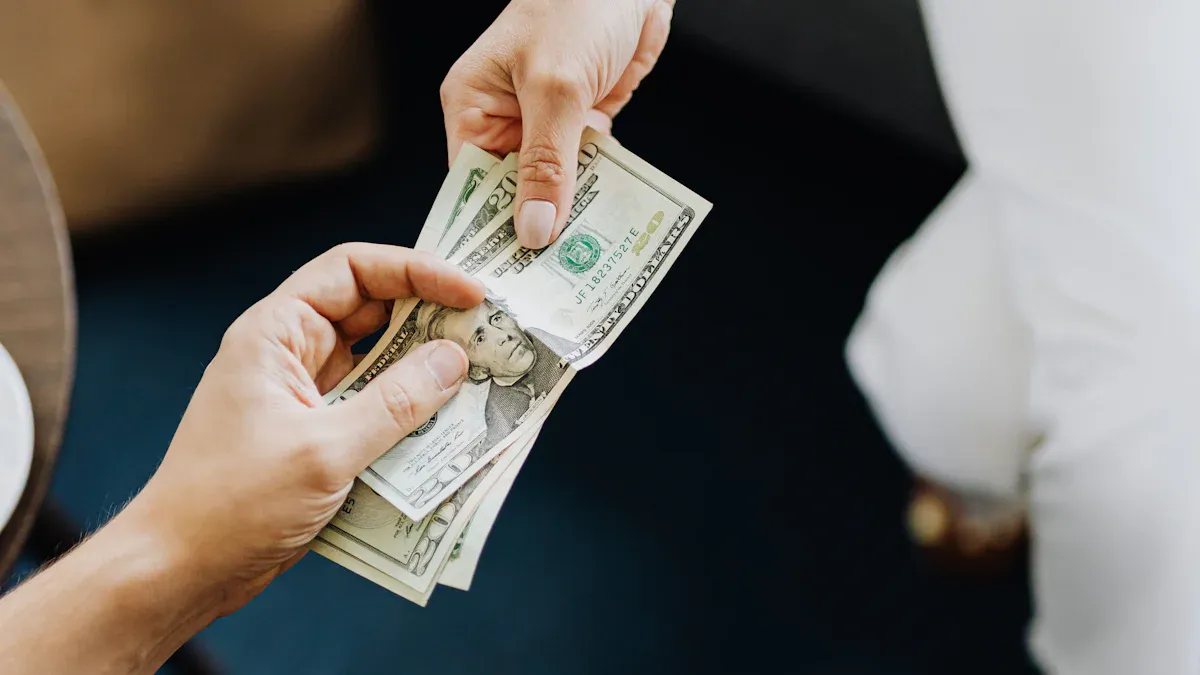
Image Source: pexels
You will see many “no commission” signs for money exchange in Mexico. The real currency exchange commission is hidden in the exchange rates. These hidden fees often cost you 3-5% more on every dollar you exchange.
Your best strategy is simple. Withdraw the Mexican peso directly from a local bank’s ATM using a debit card with low foreign transaction fees. This method easily beats airport kiosks, the worst choice for any peso exchange.
For most travelers, the biggest money leak isn’t an obvious fee—it’s how far the quoted rate is from the real mid-market price. A simple habit that works well is to check a neutral reference rate first, then judge whether an ATM, a bank counter, or a “no commission” booth is actually expensive. For example, you can quickly verify the USD/MXN range with BiyaPay’s currency converter before you exchange cash, so you have a clear benchmark when you see a posted rate.
If your trip involves multiple stops or you’re trying to keep costs tight, it also helps to separate “spending cash” from “moving money.” Use ATMs for practical, day-to-day cash needs, and plan larger amounts more deliberately to avoid making rushed exchanges at airports or tourist hotspots. You can explore related options from the BiyaPay official site and, if needed, start from the registration page to keep rate-checking and basic money planning in one place. The goal isn’t extra complexity—it’s having one reliable reference point so “0% commission” signage doesn’t quietly turn into a worse rate.
Key Takeaways
- Use a debit card with no foreign transaction fees at a Mexican bank ATM. This gives you the best exchange rate.
- Always choose to pay in Mexican Pesos (MXN) when using a card or ATM. Do not choose your home currency (USD) to avoid bad exchange rates.
- Do not trust “no commission” signs. The real cost is hidden in the exchange rate.
- Avoid exchanging money at airports, hotels, or in your home country. These places offer the worst exchange rates.
The Real Currency Exchange Commission: Rate vs. Fees
You need to understand how currency exchange providers make money. This knowledge protects your travel budget. The advertised currency exchange commission is often just a marketing trick. The real costs are built into the numbers in ways you might not notice.
The ‘No Commission’ Myth Explained
You will frequently see signs advertising “0% Commission” or “No Fees.” This is a popular marketing tactic. While you may not pay a separate service fee, the company still profits from your transaction. They build their profit directly into the exchange rates they offer you.
Financial experts explain that these services make money in several ways:
- The Exchange Rate Spread: They offer you a rate that is worse than the real, mid-market rate. The difference between their rate and the market rate is their profit.
- Hidden Fees: Some providers add extra charges. These can include per-payment fees or network fees that are not clearly advertised.
- Tiered Pricing: The final cost can depend on how much money you exchange. Some fintech services offer a small monthly allowance for free currency exchange, but they apply a markup once you exceed that limit.
This is why a “no commission” exchange can sometimes be the most expensive option.
Understanding the Exchange Rate Spread
The exchange rate spread is the most common hidden cost. It is the difference between what a money changer will pay for a currency and what they will sell it for.
You will always see two different rates on an exchange board:
- The “Sell” Price (or “Ask”): This is the rate at which they sell you a foreign currency, like the Mexican peso. This is always the higher number.
- The “Buy” Price (or “Bid”): This is the rate at which they buy a foreign currency from you. This is always the lower number.
For example, if a
currency exchange houseshows USD/MXN rates of 16.50 (Buy) / 17.50 (Sell), the spread is 1.00 peso. When you exchange $100 USD, you get 1,650 pesos. If you immediately exchanged it back, you would need 1,750 pesos to get your $100 USD. That 100-peso difference is the provider’s profit and your cost.
The Biggest Hidden Cost: Dynamic Currency Conversion (DCC)
Dynamic Currency Conversion (DCC) is a service you will encounter at ATMs and credit card terminals in Mexico. It offers to convert your transaction into your home currency (e.g., US Dollars) on the spot. It may seem helpful, but you should always reject this offer.
When you accept DCC, you are not using your bank’s competitive exchange rate. Instead, you are letting the local merchant’s or ATM’s bank perform the currency exchange. They do this at their own inflated rates, which often include high currency conversion fees. These fees can add an extra 5% to 10% to your transaction cost.
Rule #1: Always Pay in Mexican Pesos (MXN)
This brings us to the most important rule for spending money abroad: Always choose to be charged in the local currency.
When a card machine or ATM in Mexico gives you a choice between paying in USD or the Mexican peso (MXN), always select MXN.
- If you choose MXN: Your home bank (like Chase or Charles Schwab) handles the conversion. They use much better exchange rates, closer to the real market rate.
- If you choose USD (DCC): The local terminal’s bank does the conversion at a poor rate. You will pay more for the exact same item or cash withdrawal.
By always selecting the local currency, you avoid DCC and ensure you get the best possible rates for every purchase and withdrawal. This simple choice saves you a significant amount of money over your entire trip.
Best Method: Withdrawing from Mexican ATMs
Image Source: unsplash
Using a local ATM in Mexico is your most powerful strategy for getting the best exchange rate. This direct approach cuts out the middlemen who profit from poor rates at exchange counters. You get cash quickly, securely, and at a cost that is hard to beat. This is the preferred method for savvy travelers who want to maximize their spending money.
Why ATMs Offer the Best Rates
ATMs give you access to rates that are very close to the real, mid-market exchange rate. This happens because your home bank handles the currency conversion. The exchange rates are not set by the local Mexican ATM but by the payment network your card uses, like Visa or Mastercard.
These networks calculate their daily rates based on wholesale currency markets.
- Card networks like Visa and Mastercard determine “blended exchange rates” from various sources.
- These sources include wholesale currency markets or government-mandated rates.
- The networks then provide these competitive rates to your home bank.
- Your bank applies this rate to your withdrawal, which is far better than any rate you will find at a tourist-focused exchange booth.
When you use an ATM, you are tapping directly into this global financial system. This is why it is the easiest way to get the best exchange rate for your peso withdrawals.
Choosing the Right Debit Card for Travel
The debit card you use is the key to unlocking low-cost cash withdrawals. The ideal card for using money in Mexico has two main features: no foreign transaction fees and reimbursement for ATM operator fees.
Many traditional banks charge a high premium for international use. For example, major US banks often impose a standard 3% foreign transaction fee on every withdrawal or purchase you make abroad.
| Card Issuer | Standard Foreign Transaction Fee |
|---|---|
| Bank of America | 3% |
| Chase | 3% |
| Wells Fargo | 3% |
To avoid these costs, you should consider opening an account with a travel-friendly bank or financial service. For US travelers, some excellent options for 2025 include:
- Charles Schwab Bank: A popular choice that charges no foreign transaction fees and offers unlimited rebates on ATM fees charged by other banks worldwide.
- Capital One 360: This account has no foreign transaction fees, though it does not reimburse fees from other banks’ ATMs.
- Wise (formerly TransferWise): A multi-currency account that allows you to hold and spend money at the mid-market rate with very low, transparent conversion fees.
Traveler’s Tip: Before your trip, research and open an account designed for international travel. The few minutes you spend applying for the right card can save you hundreds of dollars in fees.
Avoiding Foreign Transaction and ATM Fees
You will encounter two main types of fees when using an ATM in Mexico. Knowing how to avoid them is crucial.
- Foreign Transaction Fees: Your home bank charges this fee as a percentage of your transaction. The only way to avoid this is to use a debit card that explicitly offers zero foreign transaction fees.
- Local ATM Operator Fees: The Mexican bank that owns the ATM charges this flat fee for the service. These fees typically range from $20 to over $100 MXN per withdrawal.
You can reduce or eliminate these local ATM fees in two ways:
- Use a Debit Card with ATM Fee Rebates: Cards like the one from Charles Schwab will refund any local ATM fees you pay at the end of each month.
- Use a Partner Bank ATM: Some banks are part of a network that allows for fee-free withdrawals. For example, the Global ATM Alliance is a partnership between several major banks.
Members of this alliance include:
- Bank of America (USA)
- Scotiabank (Canada, Mexico)
- Barclays (UK)
- Deutsche Bank (Germany)
- BNP Paribas (France)
If you are a Bank of America customer, you can use any Scotiabank ATM in Mexico and avoid the local ATM operator fee completely. Always check if your bank has a similar partnership before you travel.
Identifying Low-Fee Bank ATMs
If your card does not offer fee rebates and your bank has no partners in Mexico, your next best move is to find ATMs with lower fees. Avoid unbranded, standalone ATMs in convenience stores, hotels, or bars, as they have the highest charges.
Stick to ATMs located at major, reputable Mexican bank branches. They are more secure and have more transparent, often lower, fees.
| Mexican Bank | Typical ATM Fee & Notes |
|---|---|
| Scotiabank | Fee-free for Bank of America customers. A great option if you bank with a Global ATM Alliance member. |
| Banorte | Often has competitive rates and reasonable fees. Some US cards may have special agreements here. |
| Santander | A reliable option with a large network. The fee is typically around $35 MXN per withdrawal. |
| BBVA | One of the largest banks in Mexico. Its fees are generally competitive, often around $30 MXN. |
Actionable Advice: When you arrive, withdraw a larger amount of cash for several days rather than making multiple small withdrawals. This minimizes the number of times you have to pay the flat ATM operator fee, saving you money over your trip.
Good Alternative: Exchanging at Mexican Banks
If you are uncomfortable using ATMs or need to exchange a large amount of cash, visiting a bank branch in Mexico is a solid second choice. Banks offer more favorable rates than airport kiosks or casas de cambio. They are regulated institutions, providing a secure environment for your currency exchange. However, this method requires more time and paperwork than a simple ATM withdrawal.
How Bank Exchange Rates Compare
Banks provide better exchange rates than most private currency exchange services. Their rates are closer to the mid-market rate because they deal in large volumes of foreign currency. You will almost always get more peso for your dollar at a bank than you would at a tourist-focused exchange booth. The difference might seem small, but it adds up. While the rates are good, they are typically not as competitive as the rates your home bank provides through the Visa or Mastercard network at an ATM.
Required Documents: Passport and Forms
You cannot simply walk up to a teller and exchange money. Banks in Mexico have strict regulations to prevent money laundering. You must provide official identification for any transaction.
- Passport is Mandatory: You will need to present your original passport. Copies are usually not accepted.
- Tourist Permit (FMM): Some banks may also ask to see your tourist permit, which you receive upon entering the country.
- Forms: You will have to fill out a form with your personal details for the exchange.
Important Note on Limits: The Mexican government sets limits on how much cash a non-account holder can exchange. As a tourist, you should be aware of these caps.
Group Daily Limit (USD) Monthly Limit (USD) Tourists (Non-Account Holders) $300 $1,500
These limits mean you cannot exchange large sums of cash at once, making banks less practical for funding an entire vacation in one trip.
Finding a Branch and The Process
Major national banks like BBVA, Banorte, and Santander are your best bets. Look for large, established branches, as smaller ones may not offer currency exchange services. The process usually involves a few steps:
- Enter the bank and find the correct line for foreign exchange (
foreign exchange). - Wait for your turn, which can take a while during peak hours.
- Present your passport and cash to the teller.
- Fill out the required paperwork.
- Receive your Mexican peso and a receipt.
Why ATMs Are Usually Better
While exchanging at a bank is safe, it is rarely the most efficient option. ATMs are superior for three main reasons:
- Better Rates: The exchange rate offered through an ATM withdrawal is almost always the best available.
- Convenience: ATMs are available 24/7. Banks have limited hours and often have long lines.
- Simplicity: An ATM transaction takes seconds. A bank exchange can take 30 minutes or more.
Use authorized exchange offices inside banks only when you cannot access an ATM or need to exchange cash you already have.
Convenient Option: ‘Casas de Cambio’
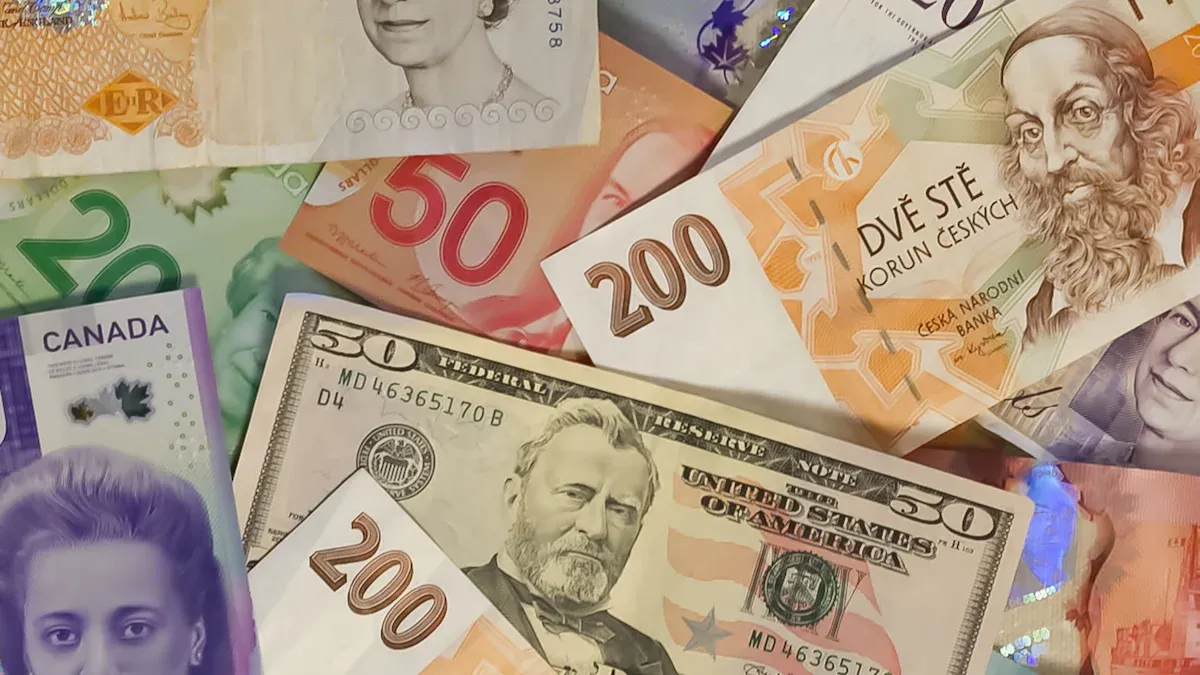
Image Source: unsplash
You will see casas de cambio, or currency exchange houses, everywhere in Mexican tourist destinations. They are a very common and accessible choice for swapping your cash. These private businesses offer a straightforward way to get peso, but their convenience often comes at the cost of less favorable rates compared to ATMs or banks. They are a practical part of the currency exchange landscape, but you should know when and how to use them wisely.
Comparing ‘currency exchange house’ Rates
The rates at an exchange house are not all the same. The location of the business heavily influences the value you receive. You will find that rates differ based on location:
- Venues in airports, hotels, or major tourist zones generally offer less favorable exchange rates.
- Banks or authorized exchange offices in city centers, away from the main tourist strips, typically provide better rates.
Always try to compare a few different places if you must use one. A short walk away from a primary tourist attraction can often save you money.
How to Read the Buy/Sell Board
The board at an exchange house displays two prices: ‘Buy’ and ‘Sell’. From your perspective as a traveler with dollars, you need to focus on the ‘Buy’ rate. This is the rate at which they buy your dollars from you.
When you exchange your dollars for peso, the exchange house is “buying” your dollars. They will always buy your currency at a lower rate (‘Buy’) and sell you currency at a higher rate (‘Sell’). The difference between these two numbers is their profit on the transaction.
The Benefit of Convenience
The main advantage of an exchange house is pure convenience. Unlike banks, they have longer hours, require minimal paperwork (usually just your passport), and have very short lines. The entire process is quick and simple. If you need a small amount of cash immediately and an ATM is not nearby, a casa de cambio is an efficient solution. This makes them a popular choice for travelers who just arrived and need some peso for a taxi or a quick meal.
When to Use an Exchange House
You should use an exchange house strategically. They are best for specific situations, not for all your cash needs. Consider using one when:
- You first arrive and need a small amount of cash before you can find a reliable bank ATM.
- You need to exchange a small amount of leftover foreign cash before leaving a country.
- The local ATMs are out of service or you are uncomfortable using them.
For the best results, look for authorized exchange offices in competitive areas where several are located near each other. This competition can lead to slightly better rates.
Worst Methods: High-Fee Exchange Traps
Some currency exchange options are designed to profit from convenience and a lack of information. You should avoid these methods whenever possible. They offer the worst value and can significantly reduce your travel budget before you even start exploring. Understanding these traps is the first step to protecting your money.
Airport and Hotel Exchange Kiosks
You will find exchange kiosks conveniently located in airports and hotel lobbies. This convenience comes with a steep price. These vendors know you need cash immediately upon arrival and charge extremely high rates. The currency exchange commission is hidden in a rate that can be 8-10% worse than the market rate. You are paying a massive premium for a service you can get for much cheaper at a bank ATM just a short walk away.
Exchanging Money in Your Home Country
You might think it is a good idea to get your us dollars to pesos exchange done before you leave home. This is almost always a bad financial move. Banks in your home country typically hold limited amounts of foreign currency and offer very poor exchange rates. They pass their own high costs for sourcing and holding Mexican pesos directly on to you. You will get far more pesos for your dollars by waiting until you arrive in Mexico and using a local ATM.
The Cost of Paying in US Dollars
Some shops and restaurants in tourist areas will accept US dollars. You should always refuse this offer. When you pay in dollars, the merchant becomes their own currency exchange service, and they will set a rate that is highly favorable to them, not you.
Even if they accept dollars or even euros, you’ll often get a poor exchange rate or your change in pesos at an unfavorable rate.
This is just another form of a high currency exchange commission. Always insist on paying in Mexican pesos to ensure you get a fair rate from your own bank.
Why These Options Drain Your Budget
Choosing these high-fee options consistently drains your spending money. The small percentages add up quickly over a trip. A high-fee exchange at an airport kiosk can cost you as much as a nice dinner for two. Unlike authorized exchange offices that face competition, these traps thrive on captive customers.
The financial impact is clear when you compare the options for a $1,000 USD budget.
| Exchange Option | Markup Percentage | Loss on $1,000 USD |
|---|---|---|
| Airport Kiosks/Hotels | 8% to 10% | $80 to $100 |
| Mexican Bank Branch | 2% to 3% | $20 to $30 |
| Difference in Your Pocket | Up to 8% | $50 to $80+ |
This table shows you could lose nearly $100 simply by choosing the wrong place to exchange your money. That is money you could have spent on experiences, food, and souvenirs.
Your best strategy for using money in mexico is clear. Use a low-fee debit card at a major bank’s ATM. Always decline the machine’s conversion offer to let your home bank handle the exchange for lower fees. This simple action ensures you get a much better rate.
For a quick reference, here is the ranking of your options from best to worst:
- Local Bank ATMs
- Mexican Bank Branches
Casas de Cambio- Airport/Hotel Kiosks
Smart money exchange means you keep more of your budget for what truly matters: enjoying your trip.
FAQ
What is the single best way to get pesos?
You should use a debit card with no foreign transaction fees at a major Mexican bank’s ATM. This method gives you the best exchange rate. Always withdraw a larger amount to minimize paying multiple flat ATM fees.
Should I exchange money before I travel?
No, you should not exchange money in your home country. The exchange rates offered by your local bank are typically very poor. You will get significantly more pesos for your dollars by waiting until you arrive.
What is DCC and why should I avoid it?
DCC stands for Dynamic Currency Conversion. It is an offer at an ATM or card machine to charge you in your home currency. You must always decline this offer. Accepting it locks you into a very poor exchange rate.
Always choose to be charged in the local currency, Mexican Pesos (MXN), to get your bank’s better rate.
Is it safe to use ATMs in Mexico?
Yes, using ATMs in mexico is generally safe. For maximum security, you should follow these simple tips:
- Use ATMs located inside bank branches or major grocery stores.
- Avoid standalone ATMs on the street.
- Cover the keypad when you enter your PIN.
*This article is provided for general information purposes and does not constitute legal, tax or other professional advice from BiyaPay or its subsidiaries and its affiliates, and it is not intended as a substitute for obtaining advice from a financial advisor or any other professional.
We make no representations, warranties or warranties, express or implied, as to the accuracy, completeness or timeliness of the contents of this publication.
Related Blogs of
Investing in Japanese Real Estate for Rental Yield: How to Convert JPY Rent to USD and Trade US Stocks Using the Same App?

Funds Frozen for Half a Year? Administrative Reconsideration After 'Involved Account' and Cross-Border Multi-Currency Account Backup Solutions

Panda Remit Transfer Failed and Returned? In-Depth Comparison of Risk Control Strictness and Channel Stability Across Different Cross-Border Remittance Apps

Digital Currency Credit Card Comparison: Which Card Offers the Best POS Exchange Rate in China and Lowest Risk of Suspension?

Choose Country or Region to Read Local Blog
 Australia
 Austria
 Belgium
 Canada
 Cyprus
 Czech Republic
 Denmark
 Estonia
 Finland
 France
 Germany
 Greece
 Hong Kong
 India
India Indonesia
 Ireland
 Italy
Italy Japan
Japan Latvia
 Lithuania
 Luxembourg
 Malaysia
 Malta
Malta Morocco
 Nepal
Nepal Netherlands
 New Zealand
 Norway
 Pakistan
 Philippines
 Poland
 Portugal
 Romania
 Singapore
 Slovakia
 Slovenia
 South Africa
 South Korea
 Spain
Spain Sweden
 Thailand
 The United States
 Turkey
 United Arab Emirates
 United Kingdom
 Vietnam
Contact Us




BIYA GLOBAL LLC is registered with the Financial Crimes Enforcement Network (FinCEN), an agency under the U.S. Department of the Treasury, as a Money Services Business (MSB), with registration number 31000218637349, and regulated by the Financial Crimes Enforcement Network (FinCEN).
BIYA GLOBAL LIMITED is a registered Financial Service Provider (FSP) in New Zealand, with registration number FSP1007221, and is also a registered member of the Financial Services Complaints Limited (FSCL), an independent dispute resolution scheme in New Zealand.