Hong Kong Stock Closing Analysis: Hang Seng Holds Above 26,000—How Will the Market Evolve Next?




Image Source: unsplash
Today’s Hong Kong stock news focuses on the performance of the Hang Seng Index. The index successfully held above the 26,000 integer level, significantly boosting short-term market sentiment.
The Hang Seng Index closed at 26,085.08 points, successfully reclaiming a key psychological position.
Historically, the 26,000 level has been an important watershed reflecting investor confidence amid geopolitical tensions. Therefore, the current hold above this level has drawn widespread market attention. The reliability of this signal, as well as the sustainability of upward momentum and potential risks, have become the core questions for investors.
Key Points
- The Hang Seng Index holding above 26,000 indicates recovering market confidence.
- Non-ferrous metals and consumer sectors deserve attention, as they have growth potential.
- Global economic slowdown and geopolitical issues are risks facing the Hong Kong stock market.
- Investors should flexibly adjust strategies based on their risk tolerance.
Today’s Hong Kong Stock News: Market Review and Interpretation
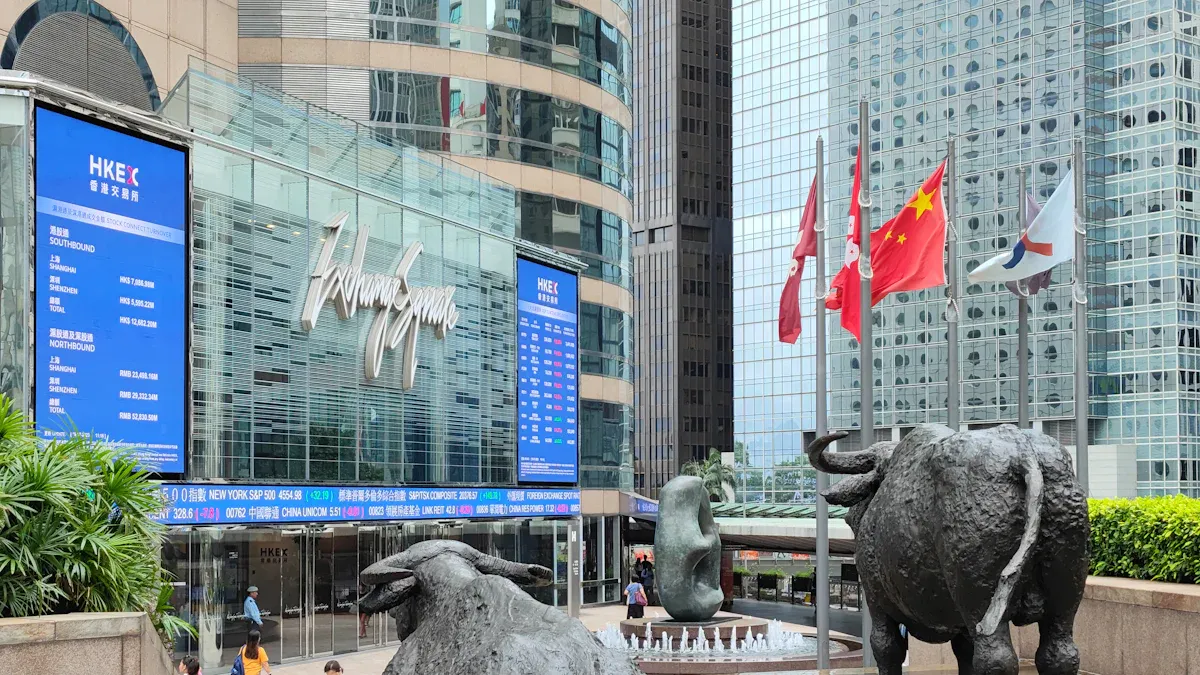
Image Source: unsplash
Today’s Hong Kong stock news revolves around the broad market rally. Major indices all recorded gains, injecting confidence into investors.
Indices All Close Higher
The overall market performed positively, with major indices closing higher across the board. The Hang Seng Index closed at 26,085.08 points, up 0.87% for the week. The Hang Seng Tech Index performed even stronger, closing at 5,662.46 points with a 1.13% daily gain, showing warming sentiment in the tech sector.
Trading atmosphere remained active. Data shows that in the first eleven months of 2025, the average daily turnover of Hong Kong stocks reached HK$255.8 billion, with ample liquidity providing a foundation for the market.
Key Sectors and Stock Movements
In terms of sectors, non-ferrous metals led gains due to positive commodity price expectations. Among blue chips, China Ping An’s strong performance provided important support to the index. In tech stocks, Hua Hong Semiconductor drew attention, closing at 79.45 HKD.
Market focus was also on several heavyweight stocks, whose intraday movements reflected different market expectations.
| Stock Code | Open (HKD) | Close (HKD) | High (HKD) | Low (HKD) |
|---|---|---|---|---|
| 0700.HK (Tencent) | 300.00 | 305.50 | 308.00 | 298.50 |
| 9988.HK (Alibaba) | 95.00 | 96.20 | 97.50 | 94.00 |
| 0005.HK (HSBC) | 60.00 | 60.80 | 61.50 | 59.50 |
The drivers behind these price movements vary from this source:
- Tencent: The company announced new game release plans, with the market reacting positively, pushing the stock higher.
- Alibaba: Latest earnings showed revenue growth exceeding market expectations, boosting investor confidence.
- HSBC: The stock fluctuated due to news of new regulatory scrutiny, highlighting policy impact on financial stocks.
Market Sentiment and Fund Flows
From fund flows, the latest Hong Kong stock news data shows net inflows via Stock Connect southbound funds today. This indicates mainland Chinese investors are positive about the outlook.
Meanwhile, observing the street positions in Hang Seng bull/bear contracts reveals that bull positions significantly outweigh bear positions. This indicator quantitatively reflects that bullish sentiment currently dominates, with a higher proportion of short-term bullish investors.
Outlook Analysis: Momentum and Risks
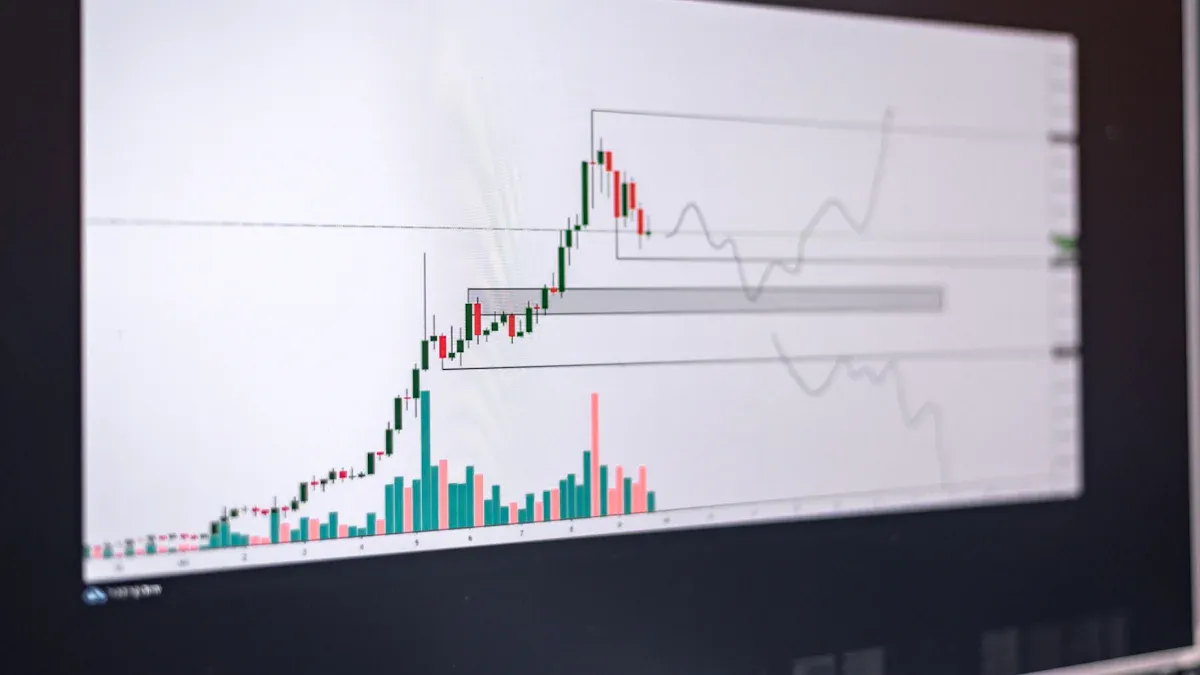
Image Source: pexels
After the Hang Seng Index holds a key level, the market’s future direction depends on the battle between bulls and bears. Investors need to comprehensively assess opportunities and challenges from technical patterns, macroeconomic momentum, and potential risks.
Technical Perspective: Key Support and Resistance
From a technical analysis viewpoint, the index is currently in a key battle zone. Short-term support and resistance levels provide important references for intraday traders.
| Level Type | Value (Points) |
|---|---|
| Short-Term Support | 25982 |
| Short-Term Resistance | 26133.21 |
These levels form the short-term trading range for the index. Breaking resistance could open new upside space, while falling below support may trigger pullback pressure.
In addition to price levels, momentum indicators provide clues about the market’s internal strength and weakness.
- Relative Strength Index (RSI): Current value is 47.59, in the neutral zone, indicating temporary balance between bulls and bears.
- Moving Average Convergence Divergence (MACD): This indicator shows negative momentum signals, suggesting the uptrend is not yet firmly established.
Technical Indicator Interpretation: RSI above 70 is generally considered overbought, potentially signaling a pullback. Below 30 is oversold, potentially strengthening bullish confidence. Investors should note that in strong one-sided trends, indicators may remain in overbought or oversold zones for extended periods.
Overall, the technical picture shows signs of stabilization but insufficient upside momentum, with short-term consolidation likely dominant.
Macroeconomic Driver Analysis
The market’s long-term trend will ultimately return to fundamentals. Currently, core drivers supporting the Hong Kong stock outlook mainly come from mainland China economic expectations, global monetary policy, and changes in industry regulatory environments.
First, mainland China’s economic data shows structural divergence.
| Indicator | Latest Value | Unit |
|---|---|---|
| Services PMI | 52.1 | Points |
| Non-Manufacturing PMI | 49.5 | Points |
| Annual GDP Growth Rate | 4.8 | Percent |
| Monthly Retail Sales Growth Rate | 0.16 | Percent |
Data shows services remain in expansion, demonstrating economic resilience. However, non-manufacturing PMI fell into contraction, indicating an unstable overall recovery foundation. This mixed data leaves the market cautiously watching future economic direction.
Second, the Federal Reserve’s policy direction is key to global liquidity. The market widely expects another rate cut in December, with the target range potentially dropping to 3.75%. However, there are internal divisions at the Fed, and Chair Powell has stated a December cut is not certain. If the Fed turns dovish, it will help ease global market funding pressures and bring external liquidity support to Hong Kong stocks.
Finally, mainland China’s regulatory policy environment is becoming clearer and more standardized.
Recent policy developments show a shift in regulatory focus from “strong rectification” to “normalized regulation” and “promoting healthy industry development.” For example, the government issued the Electronic Seal Management Measures and guidance on artificial intelligence applications, minor online protection, and other areas.
This shift helps eliminate market concerns about policy uncertainty, stabilizing long-term investor expectations for tech, platform economy, and other sectors.
Potential Risk Warnings
Despite positive factors, investors must remain vigilant about multiple risks ahead. The latest Hong Kong stock news also reflects market concerns about these risks.
Concerns Over Global Economic Slowdown: International institutions like the World Bank are cautious about the 2025 global economic outlook. Weak growth in major economies will directly impact Hong Kong’s trade-dependent and global capital flow-reliant economy, pressuring stocks.
Geopolitical Uncertainty: Geopolitical tensions remain a Damocles sword over the market. These factors continue to affect investor sentiment and have caused the Hang Seng Index to lag regional markets. Sectors like media and real estate are particularly sensitive to geopolitical risks, with related company valuations potentially under pressure.
Capital Outflows and Cooling Sentiment: The USD/HKD exchange rate hovers near 7.78, close to the weak-side convertibility undertaking level of the linked exchange rate system, reflecting certain outflow pressure. Meanwhile, frequent “high open low close” in Hong Kong’s IPO market also indirectly confirms cooling speculative sentiment, with investors becoming more cautious.
Investment Strategies and Sector Outlook
In the current market environment, clear investment strategies are crucial. The Hang Seng holding above 26,000 provides breathing room, but future uncertainties require investors to formulate differentiated plans based on risk tolerance and focus on sectors with clear growth logic.
Operation Suggestions for Different Risk Preferences
Different investors need different strategies to cope with market fluctuations. Before formulating specific plans, investors should first clarify their trading style and use charting tools to assist decision-making.
Core Trading Strategies: Investors can learn technical analysis and trading indicators to identify chart patterns, trading signals, and market trends. At the same time, setting price alerts for target assets allows quick responses when the market reaches preset conditions, seizing trading opportunities.
For investors with different risk preferences, consider the following operation ideas:
- Conservative Investors: It is recommended to remain patient and observe mainly. Before macroeconomic signals and corporate earnings prospects become clearer, avoid significantly increasing positions. Focus on high-dividend, undervalued defensive blue chips as ballast for the portfolio.
- Balanced Investors: Can adopt a phased positioning strategy. Use market pullbacks to gradually accumulate fundamentally solid quality companies. This type of investor can refer to technical support levels—for example, if the index falls back to key support areas, moderately increase allocation.
- Aggressive Investors: Can focus on short-term trading opportunities. For example, some analysis points out that when the Hang Seng Index falls near 24,850 points, long opportunities may emerge, with stop-loss at 24,800 points and short-term target at 25,100 points. Conversely, if the index rebounds near 25,150 points without effective volume amplification, consider moderate profit-taking.
For investors with global asset allocation needs, professional digital finance platforms (like Biyapay) can be used for convenient currency exchange and asset management, allocating part of funds to low-correlation U.S. markets to spread single-market risks.
If your question is “does holding above 26,000 justify staying long,” it helps to translate sentiment into trackable inputs. You can start with BiyaPay’s FX Rate Converter & Comparison to monitor USD/HKD ranges and conversion costs, then use the Stock Info Lookup to cross-check valuations, turnover, and volatility of index heavyweights—so “sentiment repair” and “funding repricing” don’t get mixed together.
Operationally, BiyaPay is positioned as a multi-asset trading wallet covering cross-border payments, investing, and fund management, with flexible conversions across multiple fiat currencies and digital assets. If you want a watchlist-ready setup or an account entry point, you can Register and refer to updates on the Official Site or the Events Center when rules or notices change.
Key Sectors to Focus On and Logic
In a structural market, choosing the right sectors is more important than predicting index levels. In the current environment, two sectors’ investment logic deserves focus.
1. Non-Ferrous Metals Sector: Benefiting from Macro Environment and Supply-Demand Patterns
The non-ferrous metals sector has performed strongly recently, with clear and sustainable investment logic. Analyst He Fangzhou believes its core drivers include:
| Driver | Specific Logic Analysis |
|---|---|
| Macro Liquidity | Market expects the Fed to enter a rate-cutting cycle, with loose liquidity directly benefiting globally priced commodities like copper and aluminum. |
| Supply-Demand Mismatch | Industrial upgrades, global smart grid construction, and manufacturing recovery continue to drive demand for non-ferrous metals. |
| USD Credit | The long-term weakening trend in USD credit is the core logic supporting gold and other precious metals, benefiting physical assets. |
| Valuation Levels | Despite some gains, static P/E and other valuation indicators remain at historically low percentiles, with safety margins. |
CICC research also points out that under U.S. real investment and potential Fed rate cuts, cyclical materials like copper and aluminum are flexible choices at this stage.
2. Major Consumer Sector: Seeking Structural Recovery Opportunities
Although the macro environment awaits full recovery, structural opportunities in consumption are emerging. China’s Ministry of Commerce has emphasized more measures to promote consumption, providing policy support for industry development.
CITIC Securities points out that investors should focus on “inflection point opportunities” driven by wealth effects and supply-side optimization, while long-term positioning new products, technologies, channels, and markets aligned with consumption structure changes.
Specifically, the following sub-sectors deserve attention:
- High-End Consumption Recovery: With travel recovery, duty-free shopping, outbound tourism, and high-end hotels are expected to see demand rebounds.
- Optimized Supply Patterns: Sectors like hog farming, dairy, and catering supply chains, due to relative supply integration, have greater profit elasticity when demand improves.
- Emerging Consumption Trends: Generation Z and new middle class bring new preferences. IP derivatives, pet economy, beauty and fragrance, outdoor sports, and healthy beverages show strong growth potential.
Bloomberg predicts that structural shifts in consumer behavior, such as fitness trends and preference for high value-for-money goods, will provide more reliable drivers for consumption growth. Platforms like Alibaba and JD.com will continue to play important roles.
New Stock Market Observation and Strategies
Hong Kong’s IPO market is an important window for observing market sentiment and fund flows. Despite some previous new stocks underperforming, the market outlook remains positive.
According to Deloitte analysis, the Hong Kong Exchange is currently processing over 230 listing applications, expecting over 80 IPOs in 2025, with total fundraising potentially reaching HK$250-280 billion.
- Main Listing Drivers: A+H dual listings will be the primary force.
- Hot Industries: Healthcare, biopharma, professional tech, and consumer goods listings will be market highlights.
- Funding Expectations: With Fed policy shifts, more funds are expected to flow into Hong Kong, potentially catalyzing multiple large IPOs and consolidating Hong Kong’s leading position in global IPOs.
For investors, participating in the new stock market requires a more prudent strategy. Focus on company fundamentals, industry prospects, and valuation levels, avoiding blind chasing highs. Choosing companies with core competitiveness in sub-sectors, clear business models, and reasonable valuations increases winning probability in volatile markets.
The Hang Seng Index successfully holding above the 26,000 level is undoubtedly a positive market signal. However, the future evolution will not be smooth, expected to seek upside opportunities amid consolidation.
Investors should maintain cautious optimism, closely watching macroeconomic data, policy developments, and peripheral market changes.
Ultimately, investors need to flexibly adjust positions and portfolios based on their risk tolerance to cope with potential market fluctuations. This is the steady path to navigating uncertainty and seizing opportunities.
FAQ
What does the Hang Seng Index holding above 26,000 mean?
This is mainly a positive psychological signal, indicating short-term recovery in market confidence.
However, it does not mean a bull market has begun. Investors still need to watch subsequent volume and macroeconomic data to confirm trend validity.
What are the main risks currently facing the Hong Kong stock market?
Investors need to be vigilant about several risks:
- Pressure from global economic growth slowdown.
- Uncertainty from geopolitical issues.
- Potential capital outflows and cooling market sentiment.
Which sectors deserve focus now?
According to analysis, two sectors have clearer investment logic:
- Non-Ferrous Metals Sector: Benefiting from global liquidity easing expectations and improved supply-demand patterns.
- Major Consumer Sector: Under mainland China’s consumption promotion policies, some sub-sectors have structural recovery opportunities.
How should investors adjust their strategies?
Investors should adjust based on risk tolerance. Conservative investors can continue observing, balanced investors can consider phased positioning in quality assets. Overall, maintain cautious optimism and flexibly adjust positions to cope with market fluctuations.
*This article is provided for general information purposes and does not constitute legal, tax or other professional advice from BiyaPay or its subsidiaries and its affiliates, and it is not intended as a substitute for obtaining advice from a financial advisor or any other professional.
We make no representations, warranties or warranties, express or implied, as to the accuracy, completeness or timeliness of the contents of this publication.
Related Blogs of

Zelle Wire Transfer or ACH? Clearing Up the Confusion


How Safe Is Your Money With Ally Bank in 2026?


What Are the Daily Limits for Chase Accounts?


How to Fill Out a CVS Money Order A 2026 Guide

Choose Country or Region to Read Local Blog
 Australia
 Austria
 Belgium
 Canada
 Cyprus
 Czech Republic
 Denmark
 Estonia
 Finland
 France
 Germany
 Greece
 Hong Kong
 India
India Indonesia
 Ireland
 Italy
Italy Japan
Japan Latvia
 Lithuania
 Luxembourg
 Malaysia
 Malta
Malta Morocco
 Nepal
Nepal Netherlands
 New Zealand
 Norway
 Pakistan
 Philippines
 Poland
 Portugal
 Romania
 Singapore
 Slovakia
 Slovenia
 South Africa
 South Korea
 Spain
Spain Sweden
 Thailand
 The United States
 Turkey
 United Arab Emirates
 United Kingdom
 Vietnam
Contact Us




BIYA GLOBAL LLC is a licensed entity registered with the U.S. Securities and Exchange Commission (SEC No.: 802-127417); a certified member of the Financial Industry Regulatory Authority (FINRA) (Central Registration Depository CRD No.: 325027); regulated by the Financial Industry Regulatory Authority (FINRA) and the U.S. Securities and Exchange Commission (SEC).
BIYA GLOBAL LLC is registered with the Financial Crimes Enforcement Network (FinCEN), an agency under the U.S. Department of the Treasury, as a Money Services Business (MSB), with registration number 31000218637349, and regulated by the Financial Crimes Enforcement Network (FinCEN).
BIYA GLOBAL LIMITED is a registered Financial Service Provider (FSP) in New Zealand, with registration number FSP1007221, and is also a registered member of the Financial Services Complaints Limited (FSCL), an independent dispute resolution scheme in New Zealand.