International Wire Transfer Fees Too High? These 5 Tips Will Help You Save Money Immediately



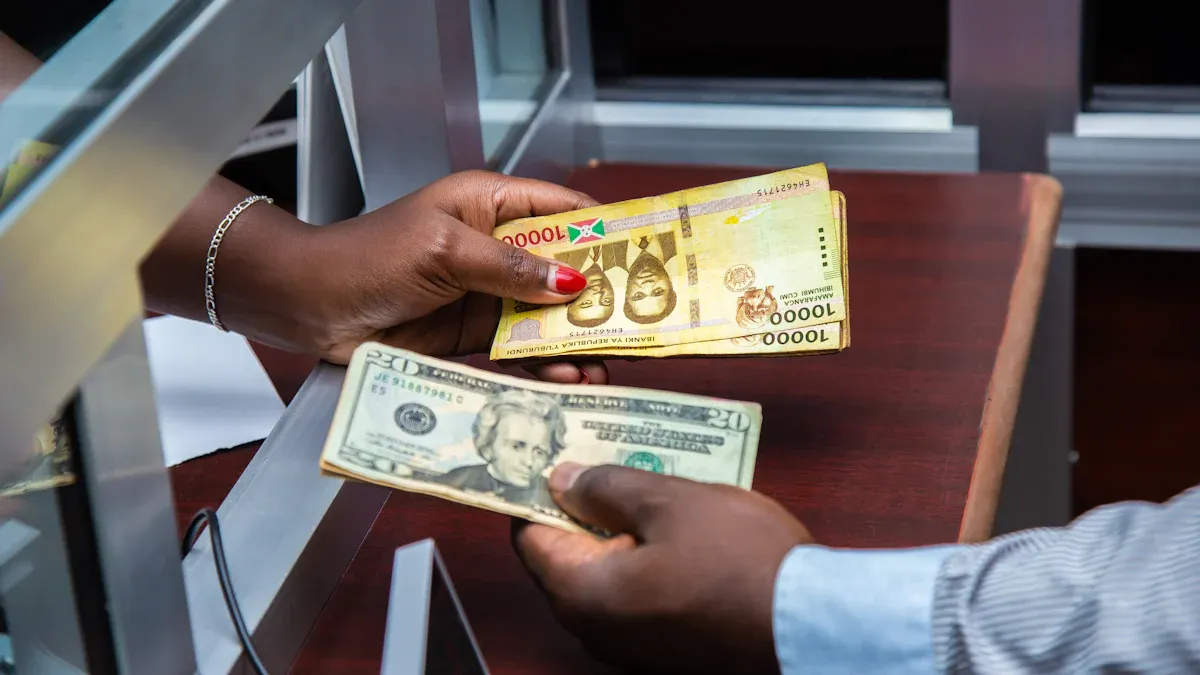
Image Source: pexels
Every time you make an international remittance, do the high fees and unfavorable exchange rates make you feel frustrated? You are not alone. In 2023, global personal remittances totaled $818 billion. Behind this enormous figure are countless instances of eroded funds.
Many banks charge an exchange rate markup of 3% to 4% on the transfer amount, which becomes a huge hidden cost.
In reality, the key to saving money lies in choosing the right tools and mastering the right timing. You can start changing the situation right now and make every penny count.
Key Points
- Choose online remittance platforms, which typically have lower fees and faster speeds than traditional banks.
- Calculate the total cost of remittances, including fees and exchange rate spreads—don’t just fall for “zero fee” advertisements.
- Remit on Tuesdays through Thursdays and avoid weekends and holidays, as exchange rates are usually better during those times.
- Use direct bank account deductions and avoid credit card payments, as credit cards may incur additional fees.
- Take advantage of new user promotions and referral rewards on platforms to further reduce remittance costs.
Tip 1: Choose Online Platforms and Say Goodbye to High Bank Fees
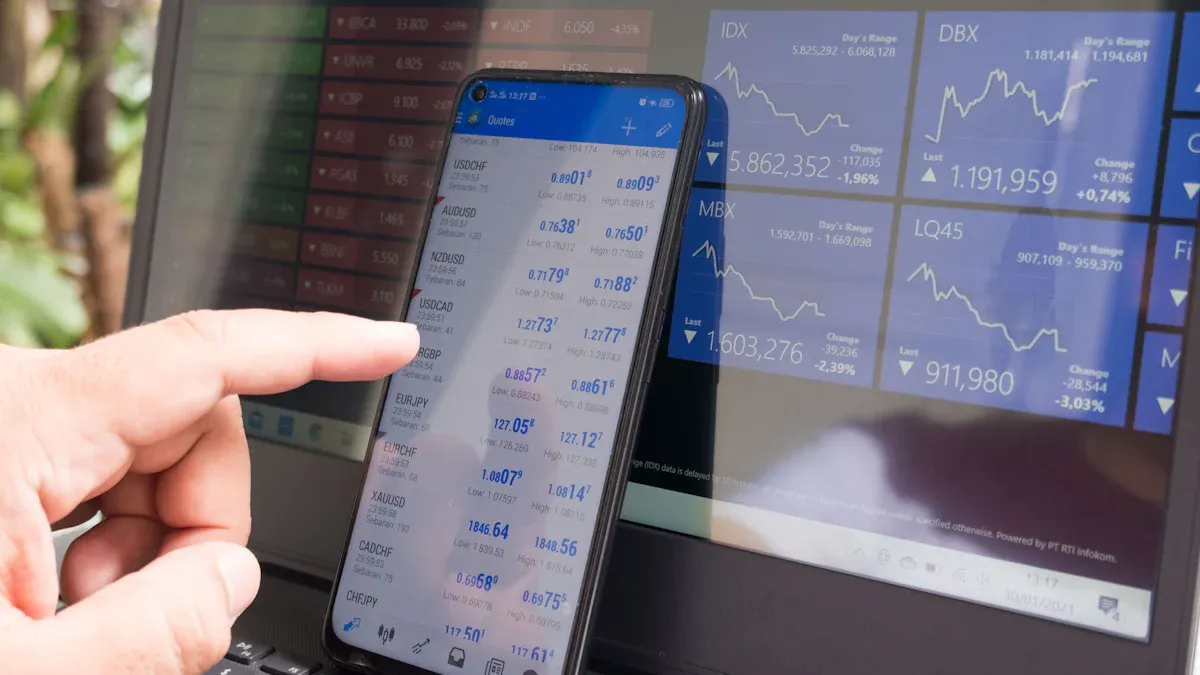
Image Source: unsplash
If you are accustomed to international remittances through traditional banks, you may be paying unnecessary fees. Now, you can opt for smarter and more economical online remittance platforms, such as Biyapay, which are transforming the way money flows across borders.
Traditional Banks vs. Online Platforms
Traditional banks rely on an outdated network system called SWIFT, with complex processes involving multiple intermediary banks, leading to high time and financial costs. In contrast, online platforms like Biyapay use innovative technology networks that bypass these complicated intermediary steps. This not only makes transfers faster but also significantly reduces operating costs, saving you money.
Fee and Exchange Rate Comparison
The total cost of a remittance consists of “public fees” and “hidden exchange rate spreads.” Bank exchange rates are usually not the real-time market rates you see online.
Traditional banks typically add a 3% to 6% markup to the real exchange rate, quietly deducting this fee from your transfer amount.
Taking some major international banks as examples, here is their fee structure:
| Provider | International Outbound Wire Transfer Fee (Online Foreign Currency) | Exchange Rate |
|---|---|---|
| Bank of America | $35 per transfer | Exchange rate + possible markup |
| Citibank | $0 per transfer (with account requirements) | Exchange rate + possible markup |
| HSBC USA | No fee | Exchange rate + possible markup |
Although some banks advertise “zero fees,” their profits are hidden in unfavorable exchange rates. Online platforms generally offer more transparent fee structures and better rates.
| Method | Transfer Fee | Exchange Rate Impact ($300 Transfer) | Total Cost |
|---|---|---|---|
| Traditional Bank | $15-50 | $10-15 loss | $25-65 |
| Online Platform (e.g., Biyapay) | $0-5 | $3-8 loss | $3-13 |
Speed and Security Considerations
You might worry about the security of online platforms. In fact, this is a misconception.
Compliant online platforms are subject to strict financial regulations, such as registration with the Financial Crimes Enforcement Network (FinCEN). They use bank-level security technologies to protect your funds and information, including:
- 256-bit encryption: Ensures your data cannot be read during transmission.
- Two-Factor Authentication (2FA): Adds an extra security barrier to your account.
At the same time, online platforms typically deliver funds much faster than banks, often in minutes or hours, while banks may take 3-5 business days.
Tip 2: Calculate the True Total Cost of International Remittances and Avoid Hidden Fees

Image Source: unsplash
You appear to pay a clear fee, but the actual amount received is always less than expected. This is because the real costs are hidden where you can’t see them. Learning to calculate the total cost is a key step to saving money.
True Cost: Fees + Exchange Rate Spread
The total cost of an international remittance can be expressed with a simple formula:
Total Cost = Public Fee + Exchange Rate Spread (Hidden Fee)
The exchange rate spread is the difference between the provider’s rate and the true mid-market rate. This is usually the largest hidden cost in the remittance process.
Many providers profit precisely by offering unfavorable exchange rates.
How to Identify and Calculate Hidden Fees
To spot these fees, you need a simple comparison. Let’s illustrate with a specific example: Suppose you want to send 1,000 USD from the US to the UK.
- Find the Mid-Market Rate: First, use exchange rate tracking tools (like XE or Google) to check the current real-time market rate. Assume it is 1 USD = 0.80 GBP.
- Compare Provider Quotes: Now, check the quotes from different providers.
| Provider | Fee | Offered Rate | Actual Amount Received (GBP) | Hidden Fee (USD) |
|---|---|---|---|---|
| Certain Bank | $25 | 1 USD = 0.77 GBP | (1000-25) x 0.77 = 750.75 | Approx. $30 |
| Online Platform | $5 | 1 USD = 0.795 GBP | (1000-5) x 0.795 = 791.02 | Approx. $5 |
From this table, you can clearly see that even a small exchange rate difference from the bank results in greater losses. In addition to the spread, watch out for intermediary bank fees, which are deducted directly from your transfer, further reducing the recipient’s amount.
To make “fees + FX spread” easier to quantify, it helps to compare a provider’s quote against a mid-market reference in the same view. For instance, you can start with BiyaPay’s free FX rate converter & comparison tool to get a realistic reference range, then compare it with the quoted rate and the final amount the recipient receives.
If your priority is the “net amount received,” you can also run a quick estimate through BiyaPay’s international remittance flow and cross-check fee disclosures on the official site. When you’re ready to proceed, use the sign-up page. BiyaPay operates with regulatory registrations including a U.S. MSB and New Zealand FSP, which helps keep cross-border cost disclosures more auditable and consistent.
Beware of “Zero Fee” Promotions
When you see “zero fee” or “no fee” advertisements, stay alert. These services are not charities—they need to profit.
They usually compensate through:
- Worse Exchange Rates: The most common method. They add profit to the exchange rate, making you pay more unknowingly.
- Cost Shifting: Some services pass processing fees as surcharges to customers using specific payment methods.
Therefore, don’t be lured by “zero fee” slogans. Always focus on the final “actual amount received”—this is the only standard for judging if a transfer is worthwhile.
Tip 3: Seize the Best Timing for Better Exchange Rates
Exchange rates fluctuate in real time like stocks, and even small changes can affect your final remittance cost. Besides choosing the right platform, catching the right timing can save you money.
Best Timing for International Remittances
Forex market activity directly impacts exchange rate quality. When trading volume is high, bid-ask spreads narrow, giving you rates closer to the mid-market price.
When is the best time to remit?
- Choose Midweek: It is recommended to operate from Tuesday to Thursday. During this period, major global financial markets are open, liquidity is highest, and rates are usually more stable and competitive.
- Avoid Weekends and Holidays: Forex markets close on weekends, and many providers widen spreads to mitigate risk. This means operations from Friday evening to Monday morning may cost more.
Thus, developing the habit of handling international remittances on weekdays is the first step to saving.
Use Tools to Track Real-Time Rates
You don’t need to stare at screens guessing the best rate. Many free tools can automate this for you.
You can use apps like Xe Currency Converter or Currency Converter Plus to track real-time rates for over 130 currencies. More importantly, you can set rate alerts.
Using the Wise app as an example, setting alerts is simple:
- Select the currency pair you want to track in the app.
- Set your desired target rate.
- The app will automatically notify you when the market rate reaches your target.
This way, you can act decisively when rates are most favorable and lock in the best cost.
Money-Saving Strategies for Large Transfers
If you need to remit a large amount (e.g., over $10,000 USD), sending it all at once is more economical than multiple small transfers. Many platforms offer fee discounts for large transactions.
This is known as “tiered fee discounts.” The larger your transfer, the lower the fee rate. For example, some platforms offer clear fee reductions for transfers over 40,000 USD.
Before large transfers, proactively check or ask the platform about relevant promotions. Even without explicit tiers, one-time processing saves multiple fixed fees.
Tip 4: Optimize Payment and Settlement to Reduce Extra Costs
The way you fund a transfer and the currency the recipient receives directly affect your total expenses. Optimizing payment and settlement can further cut costs.
Choose Low-Cost Payment Methods
When initiating a transfer, platforms offer multiple payment options with vastly different costs. Choosing the right one is the first step to saving.
Using a credit card is convenient but requires caution. Many credit card companies treat remittances as “cash advances,” charging 3% to 5% fees plus immediate high interest.
Generally, direct bank account deduction (ACH transfer) is the lowest-cost option.
| Payment Method | Fee Characteristics | Recommendation |
|---|---|---|
| Bank Account Deduction (ACH) | Extremely low fees, usually just cents or a small fixed amount. | Preferred, most economical. |
| Bank Wire Transfer | Higher fees, may involve intermediary banks with uncertain costs. | Use only when no other options. |
| Credit/Debit Card | Fast and convenient, but may trigger high cash advance fees and interest. | Only for urgent small payments; confirm fees first. |
Prefer Local Currency Settlement
When setting up a transfer, you can usually choose to settle in the sender’s currency (e.g., USD) or the recipient’s local currency (e.g., GBP). Always choose the recipient’s local currency.
The benefits are clear:
- More Transparent Costs: Lock in the rate upfront and know exactly how much the recipient gets.
- Faster Arrival: Reduces intermediary conversions, speeding up delivery.
- Avoid Hidden Fees: Effectively bypasses the “Dynamic Currency Conversion” (DCC) trap.
Beware of the DCC Trap: When paying on overseas websites or ATMs, you may see an option to pay in your home currency (e.g., USD). This is DCC. Though convenient, its rates are often very poor, sometimes with markups up to 18%. To save, always decline DCC and choose local currency.
Use No Foreign Transaction Fee Credit Cards
If making direct purchases on overseas sites rather than remittances, a no-foreign-transaction-fee credit card can save you 1% to 3%.
Many banks, like Bank of America or Capital One, offer such cards. Read terms carefully to confirm no fees on all international transactions.
However, remember this applies to purchases. Funding a remittance with such a card may still incur “cash advance fees.” Distinguishing “purchases” from “remittances” is crucial.
Tip 5: Make Full Use of Platform Rules and Promotions
Beyond choosing the right platform and timing, you can treat it like a game and leverage platform rules and promotions for real discounts. It requires no complex skills—just paying a little more attention.
Take Advantage of New User First-Time Free Offers
Many online platforms offer attractive “first transfer free” promotions to attract new customers. This is a great no-cost way to try new services.
For example, Western Union explicitly provides fee-free service for new users’ first online transfer.
This means your first transfer saves all fees. While some platforms (like Cash App) feature low or no monthly fees, targeted new-user offers maximize savings on your first try. Before registering, spend a few seconds checking for such newcomer benefits.
Look for Referral Rewards and Promotions
Even as an existing user, saving opportunities continue. Many services have referral programs benefiting both you and your friends.
- Refer Friends: With WorldRemit, for example, referring a friend who completes a transfer over $100 USD earns both of you a $20 voucher.
- Watch Seasonal Promotions: Many companies launch specials during holidays or events. Keep an eye on time-limited offers for lower fees or better rates.
Make a habit of checking platform notifications or emails—you may find pleasant surprises.
Cleverly Use Same-Bank or Partner Bank Accounts
The shorter the transfer path, the lower the fees. Leveraging bank relationships can reduce or eliminate intermediary fees.
One effective method is using the same international bank. For example, transferring from your account at a major bank (like HSBC) in the US to your own account at its overseas branch often enjoys fee-free benefits.
Additionally, some platforms partner with banks. For instance, TransferMate’s partnership with Wells Fargo offers lower fees and better rates for bank customers. Before remitting, check if the recipient’s bank has partnerships with any platforms.
Now you have mastered the five core tips for saving on international remittances. Let’s quickly review:
- Choose online platforms instead of traditional banks.
- Calculate total costs and beware of hidden fees.
- Seize the best timing for optimal rates.
- Optimize payment methods to reduce extra costs.
- Make full use of platform promotions.
Take action! Next time before an international remittance, open a comparison tool and check yourself. You’ll be surprised how much these simple tips can save you.
FAQ
Are online remittance platforms really safe?
Yes. Compliant online platforms are strictly regulated by financial authorities. They use bank-level security like 256-bit encryption and two-factor authentication to protect your funds and personal information. Your transfers are secure.
Which remittance method is the fastest?
Online platforms are usually the fastest. Funds can arrive in the recipient’s account in minutes or hours. In contrast, traditional bank wires typically take 3 to 5 business days.
How much money can I actually save with these tips?
Savings can be substantial. For a $1,000 USD transfer, choosing the right online platform may save you over $50 compared to traditional banks. This comes mainly from lower fees and better exchange rates.
Are there limits on international remittance amounts?
Yes, most services have transfer limits. Limits depend on the platform, your account verification level, and destination. You can usually increase limits by providing additional identity documents.
*This article is provided for general information purposes and does not constitute legal, tax or other professional advice from BiyaPay or its subsidiaries and its affiliates, and it is not intended as a substitute for obtaining advice from a financial advisor or any other professional.
We make no representations, warranties or warranties, express or implied, as to the accuracy, completeness or timeliness of the contents of this publication.
Related Blogs of

SoFi Checking and Savings A Deep Dive Review

Zelle Wire Transfer or ACH? Clearing Up the Confusion


How to Fill Out a CVS Money Order A 2026 Guide

The 18 Best Apps to Earn Real Cash This Year

Choose Country or Region to Read Local Blog
 Australia
 Austria
 Belgium
 Canada
 Cyprus
 Czech Republic
 Denmark
 Estonia
 Finland
 France
 Germany
 Greece
 Hong Kong
 India
India Indonesia
 Ireland
 Italy
Italy Japan
Japan Latvia
 Lithuania
 Luxembourg
 Malaysia
 Malta
Malta Morocco
 Nepal
Nepal Netherlands
 New Zealand
 Norway
 Pakistan
 Philippines
 Poland
 Portugal
 Romania
 Singapore
 Slovakia
 Slovenia
 South Africa
 South Korea
 Spain
Spain Sweden
 Thailand
 The United States
 Turkey
 United Arab Emirates
 United Kingdom
 Vietnam
Contact Us




BIYA GLOBAL LLC is a licensed entity registered with the U.S. Securities and Exchange Commission (SEC No.: 802-127417); a certified member of the Financial Industry Regulatory Authority (FINRA) (Central Registration Depository CRD No.: 325027); regulated by the Financial Industry Regulatory Authority (FINRA) and the U.S. Securities and Exchange Commission (SEC).
BIYA GLOBAL LLC is registered with the Financial Crimes Enforcement Network (FinCEN), an agency under the U.S. Department of the Treasury, as a Money Services Business (MSB), with registration number 31000218637349, and regulated by the Financial Crimes Enforcement Network (FinCEN).
BIYA GLOBAL LIMITED is a registered Financial Service Provider (FSP) in New Zealand, with registration number FSP1007221, and is also a registered member of the Financial Services Complaints Limited (FSCL), an independent dispute resolution scheme in New Zealand.