Essential Guide to Cross-Border Wire Transfers: Complete Strategy for Wiring Money from China to the US




Image Source: pexels
Are you planning to wire money from China to the US? Have you been deterred by the complicated procedures and seemingly high fees?
This guide will walk you through step by step. You can safely and cost-effectively complete the remittance using the most common bank wire transfer method. We will also provide a detailed explanation of wire transfer fees in Chinese to help you find the best option.
In just a few minutes, you can master all the key information and easily avoid common pitfalls.
Key Takeaways
- Bank wire transfer is the most common and reliable method for sending money from China to the US.
- Before remitting, carefully verify the recipient’s name, address, bank account number, SWIFT Code, and ABA/RTN.
- Each person has an annual foreign exchange purchase limit of $50,000 USD; exceeding this requires additional documentation.
- Wire transfer fees include remitting bank fees, intermediary bank fees, and receiving bank crediting fees; understanding these can help you save money.
- Remittances typically take 1 to 5 business days, and you can track the status using the transaction reference number.
Bank Wire Transfer: Process and Guide
Image Source: pexels
Bank wire transfer is the most traditional and reliable way to send money from mainland China to the US. Although it sounds complicated, as long as you prepare the materials, the entire process will be very smooth. Below, we break down the steps.
Preparing US Recipient Information
The first step to a successful remittance is preparing accurate recipient information. Even a tiny error can cause the transfer to fail or be delayed. Be sure to confirm the following details with the recipient:
- Recipient Name: Must exactly match the legal name on the bank account, using Pinyin or English.
- Recipient Address: The recipient’s full residential address in the US.
- Bank Account Number: This is the unique account number at the US bank; note that it is not the debit card number.
Key Codes: SWIFT and ABA/RTN
In addition to the basic information above, you need two crucial codes:
- SWIFT Code: This is the bank’s international identifier, consisting of 8-11 characters, used to precisely locate the receiving bank in the global banking network.
- ABA/RTN (Routing Transit Number): This is the internal routing number in the US banking system, consisting of 9 digits. It ensures funds are accurately routed from the clearing institution to the receiving bank. For international wire transfers, some US banks require a specific ABA number for wire transfers.
You can search online for “bank name + SWIFT Code,” but the most reliable way is to have the recipient log into their online banking or contact their bank customer service to obtain it.
Purchasing Foreign Exchange and Remitting from Mainland China Banks
Once the information is ready, you can go to the bank to process it. The entire procedure is divided into two steps: “foreign exchange purchase” and “remittance.”
- Foreign Exchange Purchase: Converting RMB to USD According to mainland China’s foreign exchange regulations, each person has an annual convenience quota of $50,000 USD. This quota is valid for the current year and cannot be transferred or accumulated.
- Within-quota remittance: If your amount is within $50,000 USD, you can directly handle the purchase at the bank counter or via mobile banking app with your ID.
- Above-quota remittance: If you have legitimate needs such as tuition fees or overseas medical expenses, you can provide documents like admission letters, tuition bills, or hospital proofs to the bank to apply for above-quota purchase without annual limit restrictions.
- Remittance: Filling Out the Overseas Remittance Application Form After purchasing foreign exchange, you need to fill out an “Overseas Remittance Application Form.” This document is the basis for the bank to execute the remittance.
- Use uppercase English letters to ensure all information is clear and readable.
- Accurately fill in recipient information, including name, address, account number, SWIFT Code, and ABA/RTN.
- Fill in the remittance purpose, such as “tuition,” “living expenses,” or “family support.”
- Keep the remittance receipt, which will have a transaction reference number for future tracking.
Detailed Explanation of Wire Transfer Fees in Chinese and Money-Saving Tips
Understanding the wire transfer fees in Chinese structure is key to saving money. A wire transfer from China to the US typically consists of three parts, which will be deducted from your principal or paid additionally.
Before you finalize that cost estimate, it helps to keep “FX spread + fees + arrival time” on one checklist: use the BiyaPay website FX Rate Converter to translate your planned amount into a USD reference, then cross-check likely fee ranges and delivery expectations via BiyaPay Remittance. If you want to save frequently used beneficiary details or track an order more cleanly, you’ll typically start by completing Registration.
BiyaPay positions itself as a multi-asset wallet across cross-border payments, investing, trading, and cash management, supporting conversions between multiple fiat currencies and digital assets; when the guide touches on trust and compliance, you can also refer to regulatory footprints such as U.S. MSB registration and New Zealand FSP registration, and optionally check the Event Center for relevant product-entry notes—so the process stays predictable and traceable, consistent with the workflow in this article.
A complete wire transfer fees in Chinese breakdown includes:
- Remitting Bank Fees: Charged by the mainland Chinese bank handling the remittance. It usually includes two parts:
- Handling Fee: Charged as a percentage of the remittance amount, typically around 0.1%, with minimum and maximum caps.
- Cable Charge: A fixed fee for sending the international telex, usually between $15 USD and $25 USD.
- Intermediary Bank Fees: If there is no direct relationship between the remitting and receiving banks, funds pass through one or more “intermediary banks.” Each may charge a handling fee, typically between $15 USD and $50 USD. This is the most unpredictable part of wire transfer costs.
- Receiving Bank Crediting Fee: US banks usually charge a fee when crediting international remittances, deducted directly from the incoming funds. Here are reference international incoming fees for some major US banks (actual fees may vary by account type):
| Bank Name | International Wire Incoming Fee (USD) |
|---|---|
| Bank of America | $15 USD (waivable for some premium accounts) |
| Chase | $15 USD (waivable for some premium accounts) |
| Wells Fargo | $16 USD |
Money-Saving Tips
To reduce costs, you need a clear wire transfer fees in Chinese budget. You can try the following methods:
- Choose the right bank account: Some banks’ premium accounts or specific packages waive outgoing or incoming wire fees. Ask your bank if such offers are available.
- Lump-sum large transfers: Since cable and intermediary fees are relatively fixed, sending a larger amount at once within quota limits is cheaper overall than multiple small transfers.
- Understand fee structure: Before remitting, proactively ask the bank about all fees mentioned in this wire transfer fees in Chinese guide to be fully informed.
In summary, to calculate total costs, you need to consider all fees outlined in this wire transfer fees in Chinese guide.
Remittance Timeline and Status Tracking
Bank wire transfers usually take 1-5 business days to reach the US recipient’s account. However, delays can occur due to:
- Information errors: Mistakes in recipient name, account number, or SWIFT Code are the most common causes of delays.
- Bank holidays and weekends: Transfers are affected by public holidays and weekends in both mainland China and the US. For example, weekends in the Middle East are Friday and Saturday, which can impact global fund flows.
- Compliance reviews: To comply with anti-money laundering (AML) regulations, banks may conduct additional manual reviews on some transactions, extending processing time.
How to Track Your Remittance?
After remitting, the bank will give you a receipt with a Transaction Reference Number. This number, sometimes called the “Fed Number,” is key to tracking.
If delayed, contact the remitting bank with this reference number to initiate an inquiry. For SWIFT network transfers, you can also request an MT103 document from the bank, which is like a “tracking detail” showing the full fund flow path.
Other Remittance Methods: Comparison and Choices
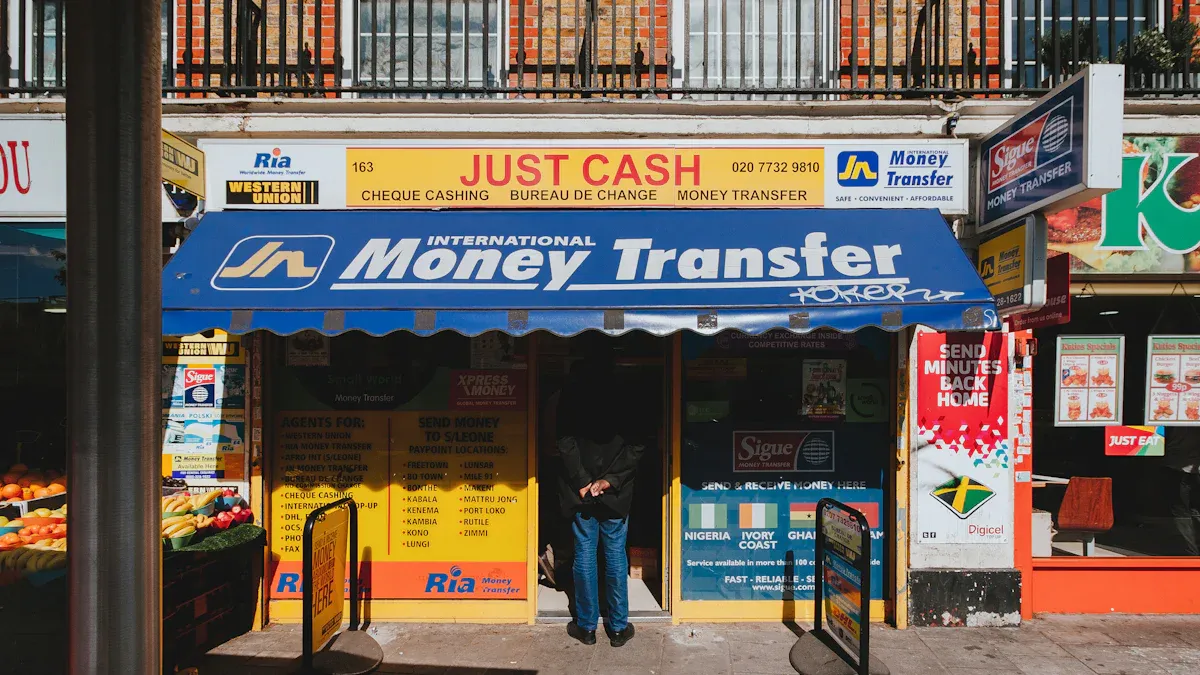
Image Source: unsplash
While bank wire transfers are reliable, they are not the only option. Depending on your amount and urgency, the following methods may be more suitable.
Non-Bank Remittance Providers
In recent years, online platforms like Wise (formerly TransferWise) and Western Union have become increasingly popular. They are convenient, especially for small amounts.
Their biggest advantage is transparent fees and exchange rates. For example, Wise uses the mid-market rate and charges only a clear service fee, while some traditional providers add hidden markups to the rate.
Remitting $1,000 USD Comparison
Provider Exchange Rate Type Fees (Estimate) Final Amount Received (Estimate) Wise Mid-market rate $18.28 USD $981.72 USD Western Union Proprietary rate (with markup) $132.99 USD $867.01 USD
- Advantages: Low fees, transparent rates, fast arrival (as quick as minutes), convenient online operation.
- Disadvantages: Usually have remittance limits; not suitable for legal transactions requiring strict bank oversight, like home purchases.
- Suitable Scenarios: Paying living expenses, small transfers to family/friends, paying small bills.
UnionPay Card Overseas ATM Withdrawal
If you need urgent small cash in the US, using a mainland China UnionPay card directly at an ATM is a quick option.
Important Limits
- Daily Limit: Equivalent to 10,000 RMB per card per day.
- Annual Limit: Equivalent to 100,000 RMB across all UnionPay cards per person per year.
Withdrawals are deducted directly from your RMB account at the market rate, with no currency conversion fee. However, you may pay two fees: one from the mainland Chinese issuing bank and possibly an additional fee from the US ATM operator.
- Advantages: Simple operation, instant cash, uses UnionPay standard rate.
- Disadvantages: Strict withdrawal limits, relatively high fees.
- Suitable Scenarios: Emergency use, small cash needs, short trips.
Traditional Bank Draft
A bank draft is a very traditional payment tool. You deposit the full amount at the bank, which issues the draft, and you mail it to the recipient.
- Advantages: Extremely secure, as funds are guaranteed by the bank with no risk of bouncing.
- Disadvantages: Cumbersome process, slow (requires international mailing), complex loss reporting if lost.
- Suitable Scenarios: Paying tuition, property deposits, or other large, important transactions requiring high security.
Internal Transfers Within Specific Banks
If both you and the recipient have premium accounts at the same multinational bank (e.g., HSBC, Citibank, etc.), you can use their global internal transfer service.
This service is usually faster and cheaper than traditional SWIFT wires.
| Feature | Internal Bank Transfer | Standard SWIFT Wire |
|---|---|---|
| Cost | Usually free or very low fees | Higher fees (multiple charges) |
| Speed | Usually instant or same-day | 1-5 business days |
- Advantages: Fast, very low or free fees, simple operation.
- Disadvantages: Requires both parties to have qualifying accounts at the same bank group.
- Suitable Scenarios: Families or individuals frequently transferring funds between mainland China and the US.
For sending money from China to the US, bank wire transfer is the preferred option balancing speed, cost, and security. You can flexibly choose the best method based on amount, urgency, and personal account situation.
Finally, the most critical step: Always double-check all information. Minor errors in recipient name spelling, SWIFT Code, or ABA/RTN are the most common causes of delays or failures.
Do you have any money-saving tips for remittances? Feel free to share in the comments!
FAQ
What if the remittance hasn’t arrived after 5 business days?
First, stay calm. Contact your remitting bank and provide the transaction reference number obtained during the transfer. The bank can initiate an inquiry for you. You can also request an MT103 document from the bank, which clearly shows the full fund flow path to help locate the issue.
How to handle exchange rate fluctuation risks?
Exchange rates change in real-time, so the final amount may differ from expectations. When you handle foreign exchange purchase and remittance at the bank, the transaction locks in the rate at that moment, avoiding uncertainty from subsequent fluctuations.
Do remittances from mainland China to the US require tax reporting?
For US recipients, if the total gifts or remittances from non-US persons exceed $100,000 USD in a year, you need to file Form 3520 with the IRS. This is informational only and may not incur taxes. For specific tax questions, consult a professional tax advisor.
*This article is provided for general information purposes and does not constitute legal, tax or other professional advice from BiyaPay or its subsidiaries and its affiliates, and it is not intended as a substitute for obtaining advice from a financial advisor or any other professional.
We make no representations, warranties or warranties, express or implied, as to the accuracy, completeness or timeliness of the contents of this publication.
Related Blogs of
Midjourney/Suno & Other AI Tools Aggregated Subscription Management: Handle It All with One Virtual Card


How AI Startups Can Quickly Open Overseas Corporate Accounts to Receive USD Funding?


Overseas Payment Challenges and Solutions for OpenClaw Plugin Developers

Don't Want to Expose Your Real Credit Card Information? 5 Privacy Payment Tips in the AI Era

Choose Country or Region to Read Local Blog
 Australia
 Austria
 Belgium
 Canada
 Cyprus
 Czech Republic
 Denmark
 Estonia
 Finland
 France
 Germany
 Greece
 Hong Kong
 India
India Indonesia
 Ireland
 Italy
Italy Japan
Japan Latvia
 Lithuania
 Luxembourg
 Malaysia
 Malta
Malta Morocco
 Nepal
Nepal Netherlands
 New Zealand
 Norway
 Pakistan
 Philippines
 Poland
 Portugal
 Romania
 Singapore
 Slovakia
 Slovenia
 South Africa
 South Korea
 Spain
Spain Sweden
 Thailand
 The United States
 Turkey
 United Arab Emirates
 United Kingdom
 Vietnam
Contact Us




BIYA GLOBAL LLC is registered with the Financial Crimes Enforcement Network (FinCEN), an agency under the U.S. Department of the Treasury, as a Money Services Business (MSB), with registration number 31000218637349, and regulated by the Financial Crimes Enforcement Network (FinCEN).
BIYA GLOBAL LIMITED is a registered Financial Service Provider (FSP) in New Zealand, with registration number FSP1007221, and is also a registered member of the Financial Services Complaints Limited (FSCL), an independent dispute resolution scheme in New Zealand.