How to Choose an S&P 500 ETF: Key Metrics You Need to Know




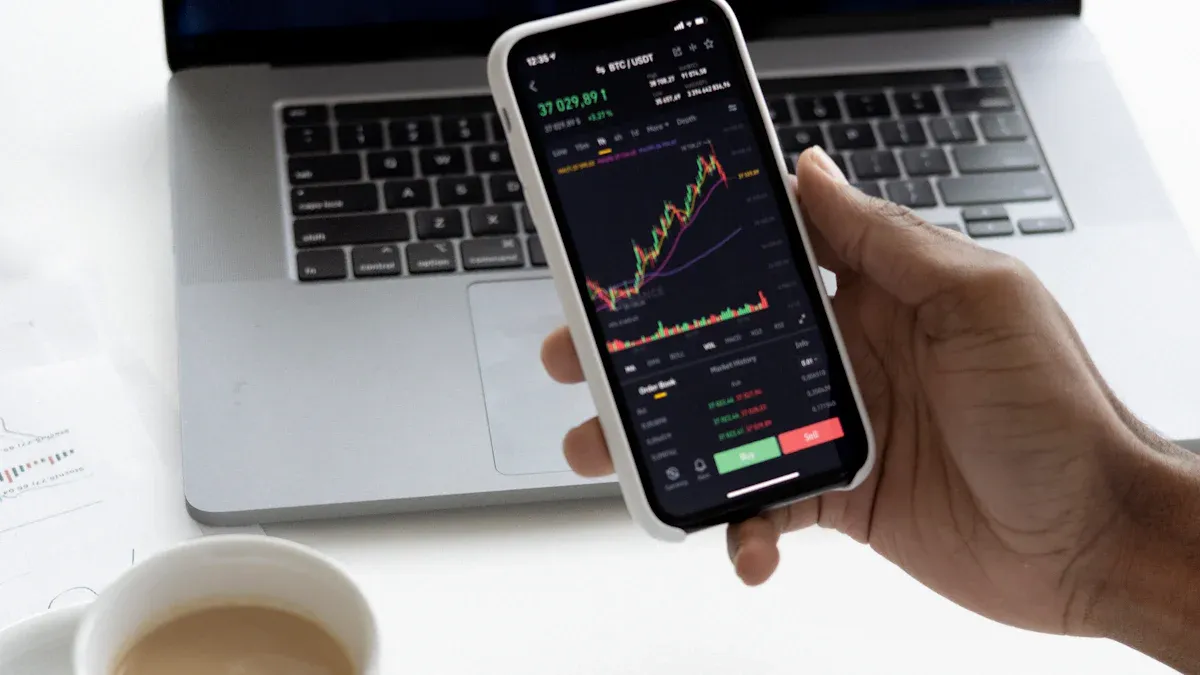
Image Source: pexels
Investing in the S&P 500 Index is an effective way to participate in U.S. economic growth. Its long-term returns are quite impressive.
| Time Period | Annualized Return (Including Dividends) |
|---|---|
| Past 10 Years | 14.662% |
| Past 5 Years | 16.099% |
Index investing also has clear advantages. Data shows that over the past decade:
- Approximately 90% of active equity funds underperformed their benchmarks.
- 81% of active fixed-income funds underperformed their benchmarks.
However, the choice is not about finding the “best” one but the ETF that is “most suitable for you.” You need to examine the expense ratio, tracking error, assets under management, holding structure, and currency risk—these key points.
Key Takeaways
- When choosing an S&P 500 ETF, the expense ratio is very important. The lower the expense, the more your long-term returns will be.
- The accuracy of an ETF tracking the index is crucial. An ETF with small tracking error performs closer to the S&P 500 Index.
- An ETF’s assets under management and trading volume are important. Larger scale and higher trading volume mean easier buying/selling and lower risk.
- The ETF’s weighting method affects risk and return. Market-cap weighted ETFs favor large companies; equal-weighted ETFs are more diversified.
- Non-U.S. investors need to consider currency risk. If your home currency may appreciate, choose a currency-hedged ETF.
Key Metric 1: Expense Ratio
The expense ratio is one of the most intuitive and important metrics when choosing an ETF. It directly relates to your investment costs and ultimately affects your long-term returns.
What Is the Expense Ratio and Why It Matters
The expense ratio is the annual fee that the fund company charges for managing and operating the ETF. It is expressed as a percentage of the fund’s total assets. You can understand it with this simple formula:
Expense Ratio (%) = Total Fund Operating Costs / Average Net Assets of the Fund
This fee is deducted daily from the fund’s net asset value—you won’t receive a separate bill. But don’t overlook it. Even tiny differences in fees, under the power of compounding, can significantly impact your returns over decades.
How to Compare Expense Ratios Across ETFs
Comparing expense ratios is very straightforward. You can easily find each ETF’s expense ratio on financial websites or investment platforms (such as Biyapay). Taking several mainstream ETFs that track the S&P 500 Index as examples, their expense differences are quite obvious:
| ETF Ticker | Expense Ratio |
|---|---|
| SPY | 0.09% |
| IVV | 0.03% |
| VOO | 0.03% |
| SPLG | 0.02% |
As shown above, SPLG has the lowest expense ratio, while SPY’s is three times that of VOO and IVV. Choosing a low-expense-ratio ETF means you keep more money in your own portfolio.
When you compare fees, it’s useful to pair the “expense ratio” with basic trade inputs—such as the ETF’s latest price, liquidity, and the currency path you’ll use to convert into USD before buying. On BiyaPay, you can first confirm the ticker details via the Stock Quote & Info page, then log a reference FX range using the FX Converter & Rate Comparison Tool, and finally check supported account currencies and routes on the official website. This keeps “fee + FX + product basics” in one place, so you’re less likely to over-weight a single percentage number.
If you want to turn the “convert—fund—hold” workflow into a reusable checklist, you can also watch for rule updates in the Event Center. For readers who care about compliance signals, BiyaPay discloses licensing information across multiple jurisdictions (including US MSB and New Zealand FSP registration) within its public site materials for reference.
Why Low Expense Is the Top Choice for Long-Term Investing
For long-term investors, low expense is an absolute advantage. Expense is one of the few certain costs in investing. Market ups and downs are unpredictable, but expenses steadily erode your returns every year.
Long-Term Investing Tip: Assuming you invest for 40 years, a 1% fee difference could reduce your final assets by more than 25%. In this long race of investing, cost control is winning at the starting line.
Historical data also proves that the vast majority of high-expense active management funds fail to outperform low-cost index funds. By choosing low-expense-ratio ETFs, you not only reduce costs but also stand on the side with a higher probability of winning.
Key Metric 2: Tracking Accuracy of the S&P 500 Index (Tracking Error)
Image Source: pexels
After selecting a low-expense-ratio ETF, the next metric to examine is its accuracy. A good index ETF should mirror the index it tracks like a reflection in a mirror. Tracking error is the core metric measuring this accuracy.
What Is Tracking Error
Simply put, tracking error measures the difference between an ETF’s return and the return of the benchmark index it tracks. You can think of the ETF as the “shadow” of the index—tracking error is how closely this shadow matches the index itself.
If an ETF’s annual return is 10.1% while the index it tracks returns 10.0% in the same year, that 0.1% difference relates to tracking error. Ideally, this error should be as small as possible.
Why Pay Attention to Tracking Error
You invest in an S&P 500 ETF to get returns nearly identical to the S&P 500 Index. If an ETF’s tracking error is too large, your investment results may deviate from expectations.
Even small tracking errors can have a significant impact over the long term:
- Performance Deviation: Over time, errors cause the ETF’s performance to noticeably outperform or underperform the index.
- Cost Considerations: Larger tracking errors may mean higher trading costs or suboptimal management strategies that erode your returns.
- Risk Assessment: An ETF with high tracking error is less reliable and may carry risks you didn’t anticipate.
Even a massive ETF like SPY has shown around 0.1% tracking error. This shows that even the most well-known funds in the market cannot achieve perfect tracking, making this metric very important to watch.
How to Find and Evaluate an ETF’s Tracking Error
You can find tracking error data directly on the fund company’s official website or in its prospectus. Usually, fund companies provide return comparisons between the ETF and its benchmark index over different time periods.
For ETFs tracking mainstream indices, a lower tracking error is typically within 0.1%. If the error is too high, be cautious. Factors like trading costs, the fund’s cash holdings, and management strategies can all amplify tracking error during sharp market moves. Choosing an ETF that is stable long-term with small error ensures your investment closely follows the index’s pace.
Key Metric 3: Assets Under Management and Liquidity
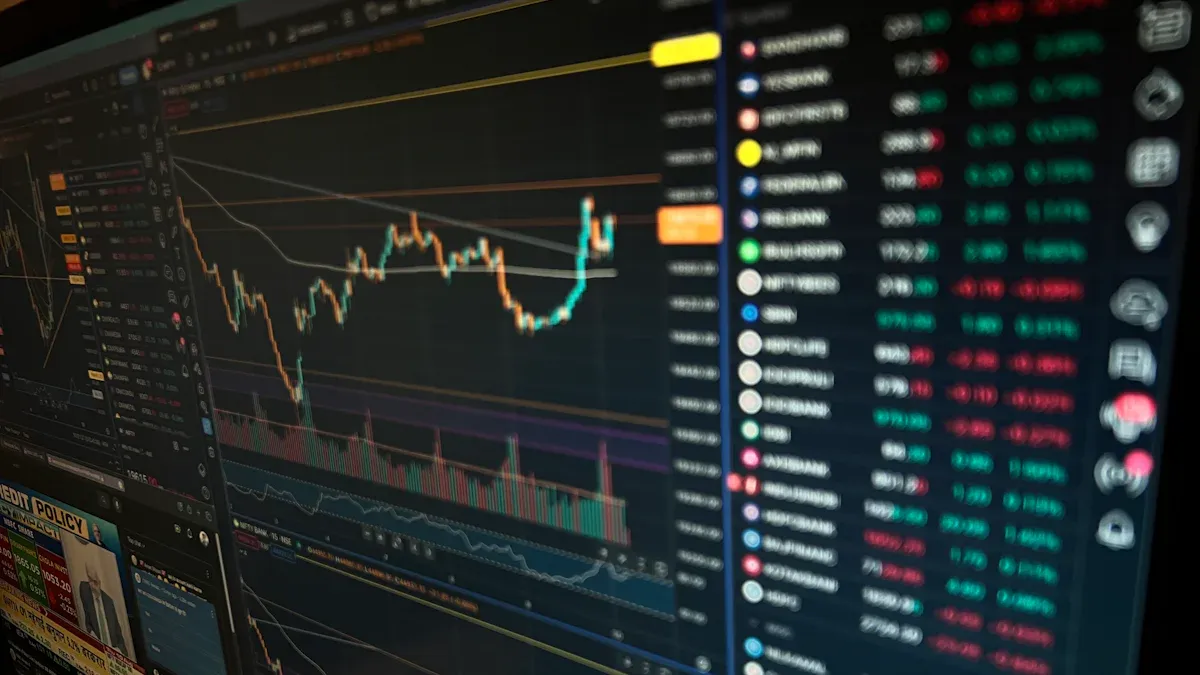
Image Source: unsplash
After examining expense and tracking error, the next thing to focus on is the ETF’s “size” and “popularity”—that is, assets under management (AUM) and liquidity. These two metrics determine your trading costs and holding stability.
How AUM and Daily Trading Volume Affect Trading
Assets under management (AUM) refers to the total asset value managed by an ETF. Daily trading volume tells you how active the ETF’s trading is each day. These two data points together affect your trading experience, especially the bid-ask spread. The bid-ask spread is the difference between the buy and sell price and is a form of hidden trading cost.
Generally, ETFs with larger AUM and higher trading activity have smaller bid-ask spreads. This means lower trading costs for you. However, trading volume correlates more strongly with spreads than AUM. Let’s look at data for several mainstream S&P 500 ETFs:
| ETF | AUM (Billions USD) | Average Daily Volume (Billions) |
|---|---|---|
| SPY | 544.8 | 51 |
| IVV | 560.4 | 4.7 |
| VOO | 571.4 | 5.5 |
Important Reminder: An ETF’s ultimate liquidity comes from the stocks it holds. Even if an ETF itself has low trading volume, as long as the stocks it holds (like Apple, Microsoft, etc.) are highly liquid, market makers can efficiently hedge, providing you with good liquidity.
Advantages of Large-Scale, High-Liquidity ETFs
Choosing a large-scale, high-liquidity ETF brings two core advantages:
- Reduce Liquidation Risk: Fund companies incur costs to operate ETFs. If an ETF’s AUM is too small and fails to grow long-term, it may face closure (liquidation). Choosing funds like VOO or IVV with AUM in the hundreds of billions means you hardly need to worry about this—you can hold with peace of mind long-term.
- Handle Market Volatility: During sharp market swings, liquidity’s value is particularly prominent. High-liquidity ETFs act like a “pressure relief valve”, allowing you to trade relatively easily even in panic markets with difficult buying/selling. This dual liquidity (from the ETF itself and its underlying stocks) provides you with valuable flexibility and security.
How to Determine If an ETF’s Liquidity Is Sufficient
To judge whether an ETF’s liquidity is enough, you can comprehensively examine the following points:
- Check AUM: For long-term investors, choosing an ETF with AUM over $10 billion is usually safe. This indicates broad market recognition.
- Focus on Daily Trading Volume: If you plan frequent trading, daily volume is more critical. Higher volume means easier execution at desired prices.
- Observe Bid-Ask Spread: When ready to trade, check the real-time bid-ask spread directly in your trading software. Smaller spreads mean better liquidity. For mainstream S&P 500 ETFs, spreads are usually just one cent.
Overall, choosing an ETF with massive AUM, active trading, and extremely low spreads makes your investment journey smoother.
Key Metric 4: Holdings and Weighting Method
Most people think all ETFs tracking the S&P 500 Index are identical, but that’s not true. One of their biggest differences is the “weighting method,” which determines the weight allocation of the 500 companies in the index, directly affecting your risk and return.
Difference Between Market-Cap Weighting and Equal Weighting
Understanding the two mainstream weighting methods is very important: market-cap weighting and equal weighting.
- Market-Cap Weighting: This is the most common method. The larger a company’s market cap, the higher its proportion in the ETF. You can imagine it as a portfolio determined by company “size.”
- Equal Weighting: This method gives every company in the index exactly the same weight. Regardless of size, each company starts with the same proportion in the ETF.
Let’s compare with specific ETFs:
| Weighting Method | Representative ETF | Characteristics |
|---|---|---|
| Market-Cap Weighting | SPY, VOO, IVV | Dominated by giants like Apple and Microsoft. |
| Equal Weighting | RSP | Apple has the same weight as the smallest company in the index. |
How Weighting Method Affects Risk and Return
Different weighting methods lead to very different investment outcomes.
Market-cap weighted ETFs’ performance heavily depends on the top few large tech companies. If their stock prices soar, your ETF returns will be impressive; but if they fall, they drag down the entire fund. This leads to higher risk concentration.
Equal-weighted ETFs are more diversified. They reduce reliance on a few giants, allowing you to participate more in mid-cap company growth. Historical data shows that in the early stages of bull markets, equal-weighted indices often outperform market-cap weighted ones, reflecting broader market recovery. For example, multiple bull market starts since 1990 have verified this pattern.
Investment Perspective: Choosing market-cap weighting is betting on “the strong stay strong”; choosing equal weighting is investing in the “average power” of the entire market.
How to Choose Weighting Method Based on Investment Strategy
Your choice should depend on your investment beliefs and risk preference.
- If you believe large tech companies will continue to lead the market and want to follow mainstream trends at the lowest cost, traditional market-cap weighted ETFs (like VOO, IVV) are your ideal choice.
- If you worry about overvaluation of tech giants and want to diversify risk while capturing broader market growth opportunities, equal-weighted ETFs (like RSP) may suit you better. However, note that equal-weighted ETFs usually have slightly higher expenses.
Ultimately, there is no absolute good or bad. Understanding the differences between these two strategies helps you build a portfolio more aligned with your personal goals.
Key Metric 5: Currency Hedging
If you are not a U.S. investor, then when investing in an S&P 500 ETF, you also need to consider an additional variable: currency. Your final return depends not only on the performance of the U.S. stock market but also on the exchange rate fluctuations between the USD and your home currency (such as AUD, EUR, or RMB).
Currency Risk for Non-U.S. Investors
When you use local currency (like AUD) to buy a USD-denominated S&P 500 ETF, you are actually holding two assets: U.S. stocks and USD. This means your investment return is directly affected by exchange rate fluctuations.
The relationship is simple:
- If your home currency appreciates against the USD (e.g., from 1 USD = 1.5 AUD to 1 USD = 1.4 AUD), you get less money back, eroding your investment return.
- If your home currency depreciates against the USD (e.g., from 1 USD = 1.5 AUD to 1 USD = 1.6 AUD), you get more money back, boosting your investment return.
Exchange rate market volatility is not to be underestimated. Major currency pairs fluctuate daily, and long-term accumulation can create huge differences.
| Currency Pair | 1-Hour Volatility (Pips) | Daily Volatility (Pips) | Monthly Volatility (Pips) |
|---|---|---|---|
| EUR/USD | 7.8 | 12.1 | 187.5 |
| USD/JPY | 24.1 | 25.2 | 507.6 |
How Currency-Hedged ETFs Work
To eliminate uncertainty from exchange rate fluctuations, currency-hedged ETFs have emerged in the market. These ETFs aim to let you bear only stock market risk without worrying about currency ups and downs.
It works like buying “insurance” for your currency risk. Fund managers use financial instruments, mainly forward contracts, to lock in future exchange rates in advance.
How It Works: The fund sells its USD exposure and buys your home currency. This way, regardless of whether the USD rises or falls, your investment value is decoupled from the exchange rate and almost only reflects the return of the S&P 500 Index itself. You can find such hedged ETF products on some platforms offering global investment services (like Biyapay).
When to Consider Currency-Hedged ETFs
Whether you need currency hedging depends on your judgment of your home currency’s future trend and your investment horizon.
Core Principle: When you expect your home currency to strengthen against the USD, currency-hedged ETFs are most beneficial for you. Because home currency appreciation erodes your USD asset returns, and hedging can offset this loss.
For example, if you are an Australian investor expecting the AUD to appreciate, choosing an AUD-hedged S&P 500 ETF (like ASX’s IHVV) is a wise move. It protects your portfolio from negative impacts of AUD strengthening.
Conversely, if you expect your home currency to weaken or plan to invest for decades and can tolerate short-term exchange rate fluctuations, not hedging may give you extra currency gains.
You have now learned about the five key metrics: expense, tracking error, liquidity, weighting method, and currency risk. To help you systematically compare, you can use this decision checklist:
- How large is the ETF’s scale?
- What is the ETF’s total expense ratio (TER)?
- How long has the ETF been established?
- How does the ETF handle profits (e.g., distribution or reinvestment)?
- Where is the ETF domiciled?
- What replication method does the ETF use?
Remember, there is no standard answer in investing. The most suitable ETF for you depends on your personal goals and risk preference. Use this knowledge to confidently make your choice.
FAQ
VOO, IVV, or SPY—Which Should I Choose?
For long-term investors, VOO and IVV are better choices. Their expense ratios are lower, maximizing your long-term returns. If you need frequent options trading, the extremely liquid SPY may suit you better.
What’s the Difference Between an S&P 500 ETF and a Mutual Fund?
ETFs trade like stocks—you can buy/sell anytime during trading hours with real-time pricing. Mutual funds have only one price per day, with lower trading flexibility. Additionally, ETFs generally have lower expenses and better tax efficiency.
How Are ETF Dividends Handled?
Dividends received by ETFs are usually distributed to investors periodically. You can choose to take the cash or reinvest it to buy more ETF shares. Some platforms support automatic dividend reinvestment plans (DRIPs) to help you achieve compounding growth.
Is There a Minimum Investment Amount for S&P 500 ETFs?
There is no strict minimum investment amount. Many brokerage platforms allow fractional shares. This means even with just tens of dollars, you can start investing in an S&P 500 ETF and gradually build your portfolio.
*This article is provided for general information purposes and does not constitute legal, tax or other professional advice from BiyaPay or its subsidiaries and its affiliates, and it is not intended as a substitute for obtaining advice from a financial advisor or any other professional.
We make no representations, warranties or warranties, express or implied, as to the accuracy, completeness or timeliness of the contents of this publication.
Related Blogs of

International Students Returning Home After Graduation: How to Most Conveniently and Cost-Effectively Bring Back the Few Thousand USD Left in Your US Bank Card?


Investing in Japanese Real Estate for Rental Yield: How to Convert JPY Rent to USD and Trade US Stocks Using the Same App?

Reasons for Cross-Border Payment Account Closure (Account Shutdown) and How to Respond: Essential Anti-Account-Ban Guide for Foreign Trade Professionals


Cross-Border Charity and International Rescue: How Digital Assets Enable Point-to-Point Ultra-Fast Fund Delivery in Major Global Events?
Choose Country or Region to Read Local Blog
 Australia
 Austria
 Belgium
 Canada
 Cyprus
 Czech Republic
 Denmark
 Estonia
 Finland
 France
 Germany
 Greece
 Hong Kong
 India
India Indonesia
 Ireland
 Italy
Italy Japan
Japan Latvia
 Lithuania
 Luxembourg
 Malaysia
 Malta
Malta Morocco
 Nepal
Nepal Netherlands
 New Zealand
 Norway
 Pakistan
 Philippines
 Poland
 Portugal
 Romania
 Singapore
 Slovakia
 Slovenia
 South Africa
 South Korea
 Spain
Spain Sweden
 Thailand
 The United States
 Turkey
 United Arab Emirates
 United Kingdom
 Vietnam
Contact Us




BIYA GLOBAL LLC is registered with the Financial Crimes Enforcement Network (FinCEN), an agency under the U.S. Department of the Treasury, as a Money Services Business (MSB), with registration number 31000218637349, and regulated by the Financial Crimes Enforcement Network (FinCEN).
BIYA GLOBAL LIMITED is a registered Financial Service Provider (FSP) in New Zealand, with registration number FSP1007221, and is also a registered member of the Financial Services Complaints Limited (FSCL), an independent dispute resolution scheme in New Zealand.