Must-Read for Trading US Stocks: How the T+0 System Allows Same-Day Stock Trading



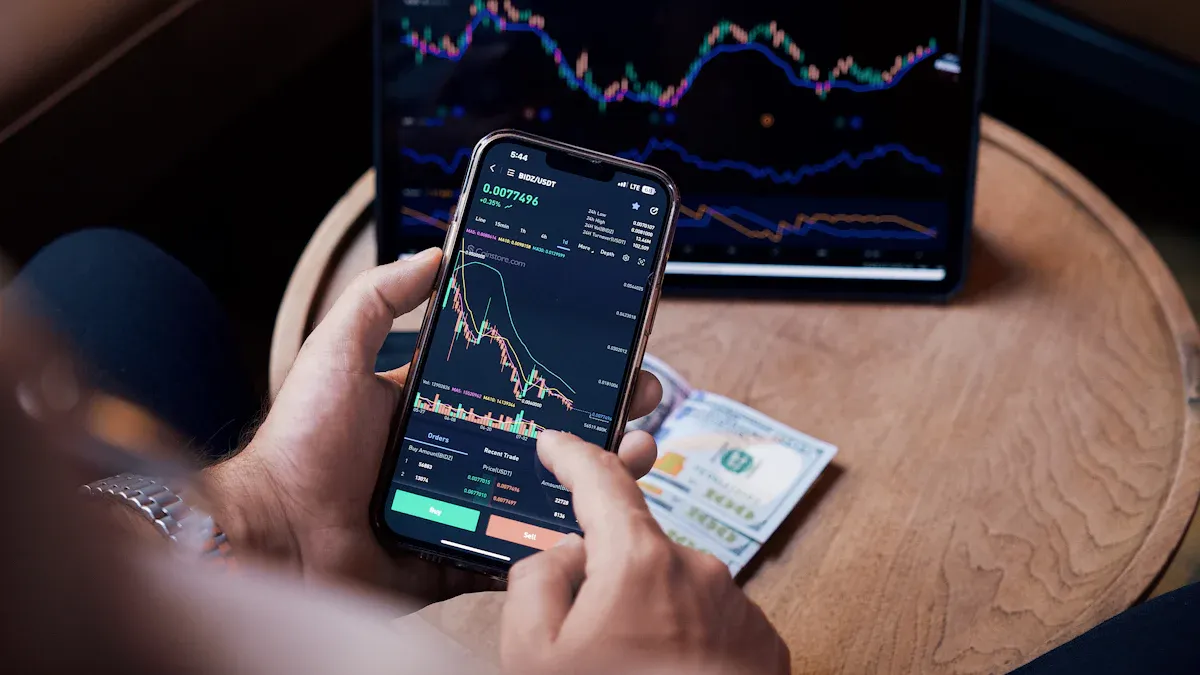
Image Source: pexels
When investors see a certain stock surging in the morning and want to sell immediately to lock in profits, in China’s mainland A-share market, they must wait until the next trading day.
In the US stock market, the situation is completely different. The T+0 system is one of the reasons many people choose to trade US stocks. The core of this system is very simple: investors can buy and sell the same stock within the same trading day. This means neither funds nor trading opportunities need to “wait overnight.”
Key Points
- The T+0 system in US stocks allows investors to buy and sell stocks on the same day, which differs from the T+1 system in A-shares.
- When conducting T+0 trades in a cash account, investors must use settled funds; otherwise, the account may be restricted for 90 days.
- When conducting T+0 trades in a margin account, frequent trading may result in the account being flagged as a Pattern Day Trader, requiring maintenance of over $25,000 in funds.
- T+0 trading offers high flexibility and capital efficiency but also comes with trading costs and significant decision-making pressure.
- Successful T+0 trading requires understanding account rules, developing a trading plan, and strictly managing risks.
T+0 System Explained: Comparison with A-Share T+1

Image Source: unsplash
To fully utilize the trading rules in the US stock market, investors first need to clearly understand the fundamental differences between the T+0 system and the T+1 system in China’s mainland A-share market.
T+0: Buy and Sell on the Same Day
The core of T+0 trading is very straightforward. It allows investors to complete both buying and selling operations on the same stock within the same trading day. This means if an investor buys a stock in the morning and the price reaches the expected level in the afternoon, they can sell it immediately for profit without waiting until the next trading day. This model provides extremely high flexibility for short-term traders.
T+1: Buy Today, Sell Tomorrow
In contrast, China’s A-share market implements T+1 trading rules. This rule has been in place since 1995, originally intended to reduce price volatility caused by excessive market speculation. Under T+1 rules, stocks bought on the same day must wait until the next trading day (T+1) to be sold.
For a clearer illustration of the differences, refer to the table below:
| Rule Type | Buy Operation | Sell Operation | Applicable Market (Example) |
|---|---|---|---|
| T+0 | Buy on Monday | Can sell as early as Monday | US Stock Market |
| T+1 | Buy on Monday | Can sell as early as Tuesday | China A-Shares |
T+0 Trading vs T+1 Settlement
There is a very important and easily confused concept here: trading and settlement are two different things. Although the US stock market allows T+0 trading, the backend fund and securities settlement is not completed in real time.
According to regulations from the U.S. Securities and Exchange Commission (SEC), starting May 28, 2024, the standard settlement cycle for the U.S. securities market was shortened from T+2 to T+1. This means that after an investor executes a trade, the actual fund deduction and transfer of stock ownership requires one business day to complete.
Key Point: T+0 refers to the investor’s trading authority, meaning you can buy and sell repeatedly on the same day. T+1 refers to the settlement cycle for funds and stocks. Understanding this distinction is crucial for planning fund usage and avoiding violations, and it is the foundation for successfully trading US stocks.
Once you separate “trading authority” from “settlement timing,” two practical checks usually matter most: whether you’ve accounted for FX costs before placing intraday orders, and whether you’ve verified the instrument’s basic trading details. You can log a reference range from your home currency into USD via BiyaPay’s FX Converter & Rate Comparison Tool, then confirm the target stock/ETF basics and quotes using Stock Quote & Info, and finally review supported fiat/digital-currency routes on the official website. The point isn’t to add friction—it’s to align “FX—instrument—cash planning” so you’re less likely to mis-handle settlement constraints that can tie up funds or trigger avoidable restrictions.
If you prefer a repeatable pre-trade checklist, you can also monitor rule updates in the Event Center. For readers who care about compliance signals, BiyaPay discloses multi-jurisdiction information (including US MSB and New Zealand FSP registration) within its public site materials for reference.
T+0 Trading Rules for Different Account Types
The true key to understanding T+0 trading lies in clarifying how different types of securities accounts apply this rule. Although the US stock market allows same-day buying and selling, an investor’s actual trading authority depends entirely on whether their account is a cash account or a margin account. This is core knowledge that investors must master for successful short-term trading, especially for efficiently trading US stocks.
Cash Account: Restricted by Fund Settlement
A cash account is the most basic account type. Its rules are very simple: investors can only use funds that have already settled in the account for trading.
According to regulations from the Financial Industry Regulatory Authority (FINRA), settled funds in a cash account refer to cash in the account or proceeds from selling fully paid securities that have completed delivery. Since US stocks use T+1 settlement, this means funds from selling stocks on Monday will not become settled until Tuesday.
If an investor uses unsettled funds to purchase new stocks, it may trigger a violation.
The Trap of “Good Faith Violation”
A good faith violation occurs when an investor uses proceeds from a sale that have not yet settled to buy another stock, then sells that newly purchased stock before the initial sale proceeds settle.
A specific example:
- Monday morning: Investor A has $5,000 in settled funds in their Biyapay cash account. They sell all held XYZ stocks, receiving $10,000. At this point, the $10,000 is unsettled funds, which will settle on Tuesday (T+1).
- Monday afternoon: Investor A sees an upward opportunity in ABC stock and uses the unsettled $10,000 to buy ABC stock.
- Before Monday close: ABC stock rises quickly, and Investor A decides to sell all ABC stock to lock in profits.
This operation constitutes one good faith violation. Because when selling ABC stock, the $10,000 used to purchase it had not yet formally settled.
What are the consequences? If an investor incurs three good faith violations within 12 months, their securities account will be restricted from trading for 90 days. During the restriction period, the account can only use fully settled funds to buy securities, meaning after each stock sale, they must wait one trading day for funds to settle before making the next purchase, effectively losing the flexibility of T+0.
Margin Account: Beware of Pattern Day Trader Rules
A margin account (also known as a margin account) provides investors with greater flexibility. It allows investors to borrow money from the broker (i.e., use leverage) to purchase stocks, which is the foundation for high-frequency day trading. However, this freedom comes with stricter regulatory rules, the most important being the “Pattern Day Trader” (Pattern Day Trader, PDT) rule.
First, it is necessary to clarify what “day trading” is.
- Definition of Day Trading: Completing a “buy then sell” or “sell then buy” operation on the same security within the same trading day counts as one day trade.
- Example: An investor buys 100 shares of AAPL on Monday morning and sells those 100 shares in the afternoon of the same day; this constitutes one day trade.
According to FINRA Rule 4210, an account will be flagged as a Pattern Day Trader account if it meets the following two conditions:
- Executes 4 or more day trades within 5 consecutive trading days.
- And these day trades account for more than 6% of the total trades during the same period.
Once an account is flagged as a Pattern Day Trader, it must comply with special requirements:
Core Requirement for Pattern Day Trader Accounts: $25,000 Fund Threshold
Accounts flagged as Pattern Day Traders must always maintain a net account value (cash + stock market value) above $25,000.
If assets are above $25,000: Investors can conduct unlimited day trades. On platforms like Biyapay, Pattern Day Trader accounts can also receive up to 4x day trading buying power, meaning with $30,000 in assets, up to $120,000 can be used for trading on that day.
If assets fall below $25,000: Day trading privileges will be frozen. The broker will issue a maintenance call, requiring the investor to add funds to reach above $25,000. During this period, if the investor forces day trades, the account will face 90-day trading restrictions, during which they can typically only sell existing positions and cannot open new ones.
The table below clearly compares the core differences between the two account types for T+0 trading:
| Feature | Cash Account | Margin Account |
|---|---|---|
| T+0 Trading | Limited to settled funds, with risk of 90-day restriction for violations | Free, but must comply with Pattern Day Trader rules |
| Fund Threshold | No specific minimum requirement | Pattern Day Trader accounts must maintain $25,000 |
| Buying Power | 1:1 (settled funds only) | Pattern Day Trader accounts up to 4x leverage |
| Suitable For | Long-term investors, infrequent traders | Active short-term traders, professional traders |
Starting to Trade US Stocks: Advantages and Risks of T+0 Trading

Image Source: unsplash
The T+0 system is a major feature of the US stock market, providing investors with tremendous convenience but also accompanying challenges. Before starting to trade US stocks, understanding its dual nature is essential.
Advantages: High Flexibility and Capital Efficiency
The most significant advantage of T+0 trading is its unparalleled flexibility. Investors can react immediately to any news or price fluctuations during the trading session.
- Seize Instant Opportunities: When positive news is released in an industry or a stock experiences an irrational temporary drop, investors can buy immediately. Once the price rebounds to the target, they can sell on the same day to lock in profits.
- Efficient Error Correction: If a buy decision turns out to be wrong, investors do not have to wait passively until the next day; they can sell immediately to stop losses in time.
Some professional day traders profit precisely by leveraging this flexibility. For example, when media recommendations cause a stock price to temporarily deviate from its true value, they will quickly conduct contrarian operations. By buying undervalued stocks or selling overvalued ones shortly after the recommendation, they not only help the market correct prices but also earn returns.
Additionally, the day trading buying power in margin accounts (typically up to 4x) further amplifies capital efficiency, allowing investors to leverage larger trades with limited capital.
Risks: Trading Costs and Decision Pressure
Behind the potential for high returns are risks that cannot be ignored.
Risk One: Accumulated Trading Costs Although many brokers offer zero-commission stock trading, high-frequency trading still incurs other fees. These costs may seem negligible per trade but accumulate to erode profits over time. Common fees include:
- Options Contract Fees: Trading options typically costs around $0.65 per contract.
- Regulatory Fees: For example, FINRA charges a very small trading activity fee, approximately $0.000166 per share.
Risk Two: Immense Decision Pressure Day trading requires processing large amounts of information and making high-risk decisions in very short time frames. Psychological research shows that this continuous decision-making process quickly depletes mental energy, leading to “decision fatigue”. Traders constantly face choices like “buy or wait?” or “take profit or hold?”, compounded by fear of losses, easily triggering anxiety and emotional exhaustion.
Academic research data also reveals a harsh reality. A 2020 FINRA report noted that up to 72% of day traders lose money after one year. Another study found that only about 3% of day traders achieve consistent profitability. This indicates that succeeding in the T+0 arena requires extremely strong discipline and psychological resilience.
The T+0 system is a major feature of US stock trading, granting investors extremely high flexibility and serving as a powerful tool for short-term trading. The prerequisite for enjoying this convenience is that investors must understand and comply with account rules. Especially for margin accounts with less than $25,000, investors need to constantly monitor day trade counts to avoid triggering Pattern Day Trader restrictions. Successful investors, when starting to trade US stocks, will develop clear trading plans and strictly implement risk management, such as setting stop-losses and controlling position sizes. With proper planning, T+0 can become a helpful ally on the investment journey rather than a trap.
FAQ
What happens if a margin account flagged as a Pattern Day Trader falls below $25,000 in assets?
The account’s day trading privileges will be immediately frozen. The investor must add funds to bring the net account value above $25,000 to resume day trading. If day trades are forced during the freeze, the account will face 90-day trading restrictions, typically allowing only sales of existing positions.
How can investors avoid having their account flagged as a Pattern Day Trader?
Investors can proactively track their trading behavior. The simplest method is to limit day trades to 3 or fewer within any 5 consecutive trading days. This way, the account will not trigger the Pattern Day Trader designation.
Does selling a stock bought the previous day count as a day trade?
No. The definition of day trading is buying and selling the same security within the same trading day. For example, buying a stock on Monday and selling it on Tuesday or later is considered an overnight trade and will not count toward Pattern Day Trader calculations.
Why can’t cash accounts conduct T+0 trading as freely as margin accounts?
Cash accounts must use settled funds for trading. Since US stocks use T+1 fund settlement, proceeds from selling stocks require one trading day to settle. Using these unsettled funds to buy and then sell constitutes a “good faith violation,” leading to account restrictions.
*This article is provided for general information purposes and does not constitute legal, tax or other professional advice from BiyaPay or its subsidiaries and its affiliates, and it is not intended as a substitute for obtaining advice from a financial advisor or any other professional.
We make no representations, warranties or warranties, express or implied, as to the accuracy, completeness or timeliness of the contents of this publication.
Related Blogs of

SoFi Checking and Savings A Deep Dive Review


What is the Dialing Code for the USA and How to Call?


The Easiest Way to Find the Code for Calling France


How to Fill Out a CVS Money Order A 2026 Guide

Choose Country or Region to Read Local Blog
 Australia
 Austria
 Belgium
 Canada
 Cyprus
 Czech Republic
 Denmark
 Estonia
 Finland
 France
 Germany
 Greece
 Hong Kong
 India
India Indonesia
 Ireland
 Italy
Italy Japan
Japan Latvia
 Lithuania
 Luxembourg
 Malaysia
 Malta
Malta Morocco
 Nepal
Nepal Netherlands
 New Zealand
 Norway
 Pakistan
 Philippines
 Poland
 Portugal
 Romania
 Singapore
 Slovakia
 Slovenia
 South Africa
 South Korea
 Spain
Spain Sweden
 Thailand
 The United States
 Turkey
 United Arab Emirates
 United Kingdom
 Vietnam
Contact Us




BIYA GLOBAL LLC is a licensed entity registered with the U.S. Securities and Exchange Commission (SEC No.: 802-127417); a certified member of the Financial Industry Regulatory Authority (FINRA) (Central Registration Depository CRD No.: 325027); regulated by the Financial Industry Regulatory Authority (FINRA) and the U.S. Securities and Exchange Commission (SEC).
BIYA GLOBAL LLC is registered with the Financial Crimes Enforcement Network (FinCEN), an agency under the U.S. Department of the Treasury, as a Money Services Business (MSB), with registration number 31000218637349, and regulated by the Financial Crimes Enforcement Network (FinCEN).
BIYA GLOBAL LIMITED is a registered Financial Service Provider (FSP) in New Zealand, with registration number FSP1007221, and is also a registered member of the Financial Services Complaints Limited (FSCL), an independent dispute resolution scheme in New Zealand.