What to See in NYC's Financial District A Visitor's Guide




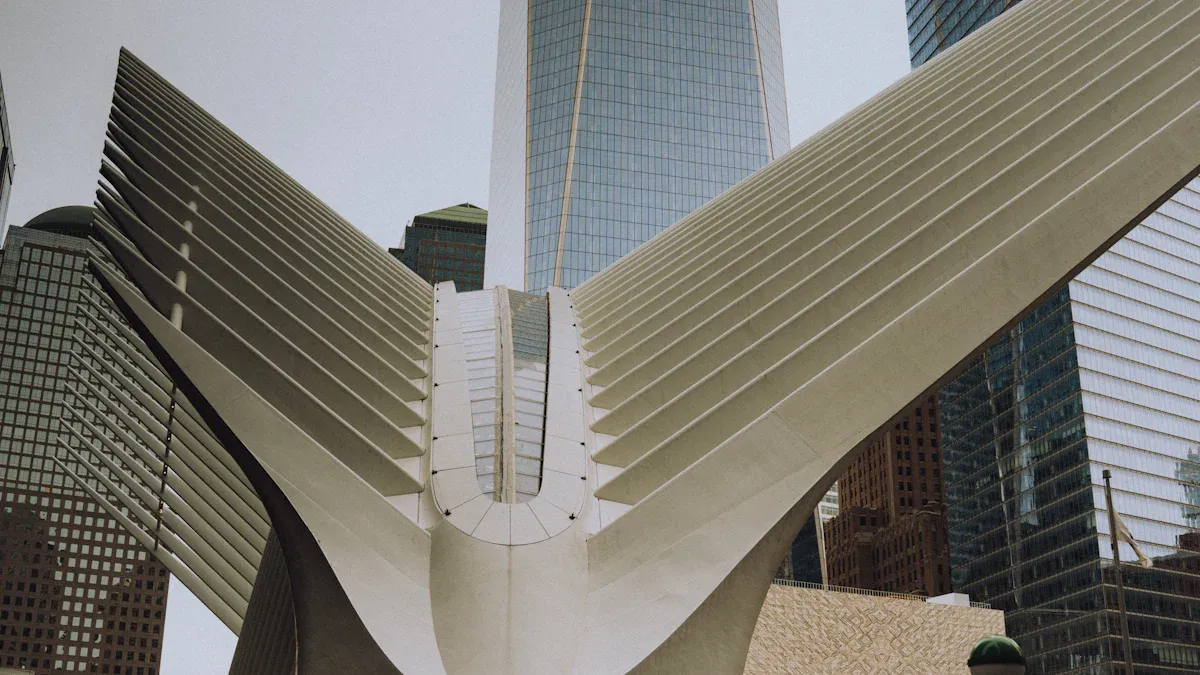
Image Source: pexels
Welcome to the Financial District, a powerful corner of New York City. This financial district guide helps you navigate this historic area. You can discover incredible sights on every street in this famous part of the city.
Key attractions include the Charging Bull, the New York Stock Exchange (nyse nyc) on Wall Street, and the stunning Oculus. The poignant 9/11 Memorial is a must-see, drawing thousands of visitors daily. This simple guide gives you a direct path to explore the wall of finance and history.
Key Takeaways
- The Financial District mixes history with modern sights. You can see the Charging Bull and the 9/11 Memorial.
- Plan your visit for weekdays to see a busy area or weekends for fewer crowds. The subway is the best way to travel.
- A walking tour helps you see many important places. These include Battery Park, Wall Street, and the World Trade Center.
- The area has many food options and museums. You can visit Stone Street or the National Museum of the American Indian.
Planning Your Financial District Visit
Good planning helps you enjoy your trip. You can make your visit to the financial district smooth and memorable. This section covers the best times to visit and how to get around the area.
Best Time to Visit
Your experience in the financial district depends on when you go.
- Weekdays: The district is full of energy. You will feel the buzz of business as workers rush through the streets. It is a great time to see the city in action.
- Weekends: The area is much quieter. You will find fewer crowds, which makes sightseeing easier for visitors.
The weather in New York City also changes with the seasons. Summer is the warmest and wettest, while winter is the coldest. You can check the average temperatures to help you pack.
| Season | Months | Average Min Temp (°F) | Average Precipitation (inches) |
|---|---|---|---|
| Winter | Dec, Jan, Feb | 27.9 | 3.51 |
| Spring | Mar, Apr, May | 44.1 | 3.99 |
| Summer | Jun, Jul, Aug | 67.0 | 4.38 |
| Autumn | Sep, Oct, Nov | 49.6 | 3.65 |
Getting There & Transportation
You can reach the financial district easily from major airports. If you arrive at JFK Airport, public transport is a great option. Take the AirTrain JFK to Jamaica station. From there, you can transfer to the subway for a direct trip to the World Trade Center stop.
Getting Around by Subway
The subway is the best way to travel around the city. The NYC subway system is fast and efficient. It takes you directly to the heart of the action.
The standard fare for a subway ride is $2.90. You can pay with a MetroCard or use the OMNY tap-to-pay system at the turnstiles.
Several subway lines serve this historic neighborhood. The 2, 3, 4, and 5 trains all have stops right on Wall Street. These lines make it simple to start your walking tour.
Your Financial District Guide: A Walking Tour
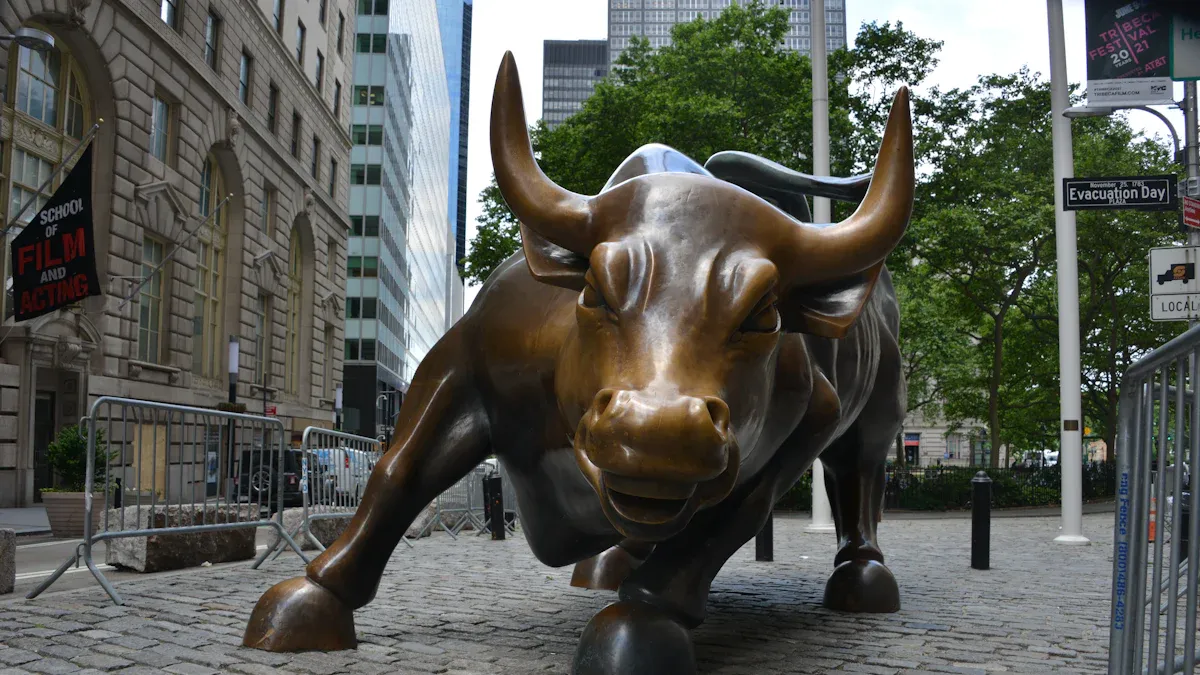
Image Source: unsplash
This walking tour is a simple path through the financial district. You can follow this guide to see the most important sights. The journey takes you from the city’s waterfront beginnings to its modern skyline.
Start at The Battery Park
Your tour begins at The Battery. This green space at the southern tip of Manhattan has a long history. It was first named for the artillery batteries that defended the city in the 17th century. Today, it is a beautiful park with gardens and monuments. You can find Castle Clinton here. This structure was once a fort, an immigration center, and even an aquarium. Now, it serves as a historic exhibit and the main place to buy tickets for ferries to the Statue of Liberty and Ellis Island.
Exploring the Battery Park & ferries to liberty/ ellis island is a great start to your day. Many memorials are inside The Battery, including the East Coast Memorial and the American Merchant Mariners’ Memorial. If you plan to visit Liberty Island or Ellis Island, this is your departure point. You can take ferries across to Liberty Island from here.
Plan Your Trip to Liberty and Ellis Island You should buy ferry tickets in advance, especially during peak season. The ferries operate on a schedule, so check the times before you go. Remember that ferry embarkation from Liberty State Park (NJ) is suspended during the winter.
Here are the general ticket prices for the ferries to Liberty Island and Ellis Island.
| Ticket | Adult Price | Child 4-12 Price | Senior 62+ Price |
|---|---|---|---|
| Ferry + Grounds | $26.25 | $16.00 | $21.00 |
| Ferry + Pedestal Access | $27.25 | $16.00 | $21.00 |
The Charging Bull & Bowling Green
Walk north from The Battery into Bowling Green. This is New York City’s oldest public park. A historic cast-iron fence from 1773 still surrounds it. The park itself is a quiet spot in a busy area.
Here you will find the famous Charging Bull statue. Sculptor Arturo Di Modica created this 7,000-pound bronze bull. He placed it illegally in front of the New York Stock Exchange in 1989 as a gift to New Yorkers. He wanted the charging bull to be a symbol of America’s strength and optimism after the 1987 stock market crash. The city moved the bull to its current home near Bowling Green, where it became an icon of the financial district. You will see many people taking photos with this powerful symbol.
Wall Street & New York Stock Exchange
From the bull, you can walk up Broadway and turn right onto Wall Street. This narrow street is the historic heart of the financial district. You will feel the power and history of this world-famous location. The main attraction on Wall Street is the New York Stock Exchange.
Important Note for Visitors: You cannot enter the New York Stock Exchange building. Security is very tight, and public tours are no longer offered.
The experience of the wall street & new york stock exchange is about admiring its grand exterior. The building has a stunning neoclassical design made of white Georgia marble. Look up at the six massive Corinthian columns. Above them is a sculpture called “Integrity Protecting the Works of Man.” This facade was designed to show financial strength and stability. Take your time to photograph the impressive exterior of the NYSE NYC. The building is a true architectural landmark of the city. The history of the NYSE NYC dates back to 1792, and this building on Wall Street has been its home since the early 1900s.
If you want the stop to feel more connected to “real markets,” it helps to pick a few NYSE-related tickers before you arrive, then compare what you’re seeing on Wall Street with the names you’ve been reading about. For a quick check on basics and price context, you can use BiyaPay’s stock info lookup and keep those notes alongside your walking route.
Travel planning also comes with constant currency math—subway fares, tickets, and day-to-day spending. Using BiyaPay’s fiat FX converter to compare rates can make budgeting easier, and if you’re moving funds across borders, you can refer to BiyaPay Send Money for the service overview.
BiyaPay is positioned as a multi-asset trading wallet covering cross-border payments, investing, trading, and fund management, with multi-jurisdiction compliance operations; for a clear view of features and entry points, see the BiyaPay website.
Federal Hall and Trinity Church
Across the street from the NYSE NYC, you will see Federal Hall National Memorial. A large statue of George Washington stands on its steps. This spot is where Washington took the oath of office as the first U.S. President in 1789. The original building served as the first Capitol of the United States. While the current structure was built later, it stands as a museum of American democracy.
Just a short walk down Wall Street toward Broadway is Trinity Church. This beautiful neo-Gothic church provides a peaceful contrast to the energy of Wall Street. Its tall spire was once the highest point in the city. You can walk through its historic churchyard. Many famous historical figures are buried here. The church offers a quiet moment for reflection in the middle of the bustling financial district.
The World Trade Center Complex
Continue west from Trinity Church to the World Trade Center (WTC) site. This area is a powerful testament to tragedy, resilience, and rebirth. The centerpiece of the 9/11 Memorial & Museum is the two reflecting pools. Named ‘Reflecting Absence,’ the pools sit in the exact footprints of the Twin Towers. Water flows down their 30-foot walls into a central void, symbolizing the loss felt on 9/11. The names of the 2,983 victims are inscribed on the bronze panels surrounding the pools.
While you are at the 9/11 Memorial, look for a special tree. The Survivor Tree is a Callery pear tree that survived the attacks. Workers found it in the rubble, burned and broken. They nursed it back to health, and it was replanted at the WTC site.
The Survivor Tree is a living reminder of resilience, survival, and rebirth. It is a symbol of hope at the WTC complex.
One World Observatory & The Oculus
Your walking tour of the financial district concludes with two modern architectural marvels: The Oculus & One WTC. One World Trade Center, also known as the Freedom Tower, is the tallest building in the Western Hemisphere. For incredible views, you can visit the One World Observatory on floors 100-102. The elevator ride itself is an experience, showing the city’s transformation over 500 years.
Here is a guide to some of the ticket options for the observatory.
| Ticket Type | Starting Price | What’s Included |
|---|---|---|
| Standard Experience | $44.00 | Access to all three observatory levels, SkyPod elevators, and more. |
| Combination Experience | $54.00 | Includes standard access plus flexible arrival and priority access. |
| All-Inclusive Experience | $64.00 | Includes combination access plus a $15 voucher. |
Next to the WTC tower is the Oculus. This stunning structure is the WTC Transportation Hub. Architect Santiago Calatrava designed the Oculus to look like a bird being released from a child’s hands. Its white steel ribs and glass exterior create a bright, open space. Inside the Oculus, you will find a major subway station, shops, and restaurants. The Oculus is both a functional transit hub and a work of art, completing the redevelopment of the WTC site. This financial district guide ends here, surrounded by symbols of the city’s past and future. The Oculus is a must-see part of any trip to the WTC.
More to See in Lower Manhattan, NYC
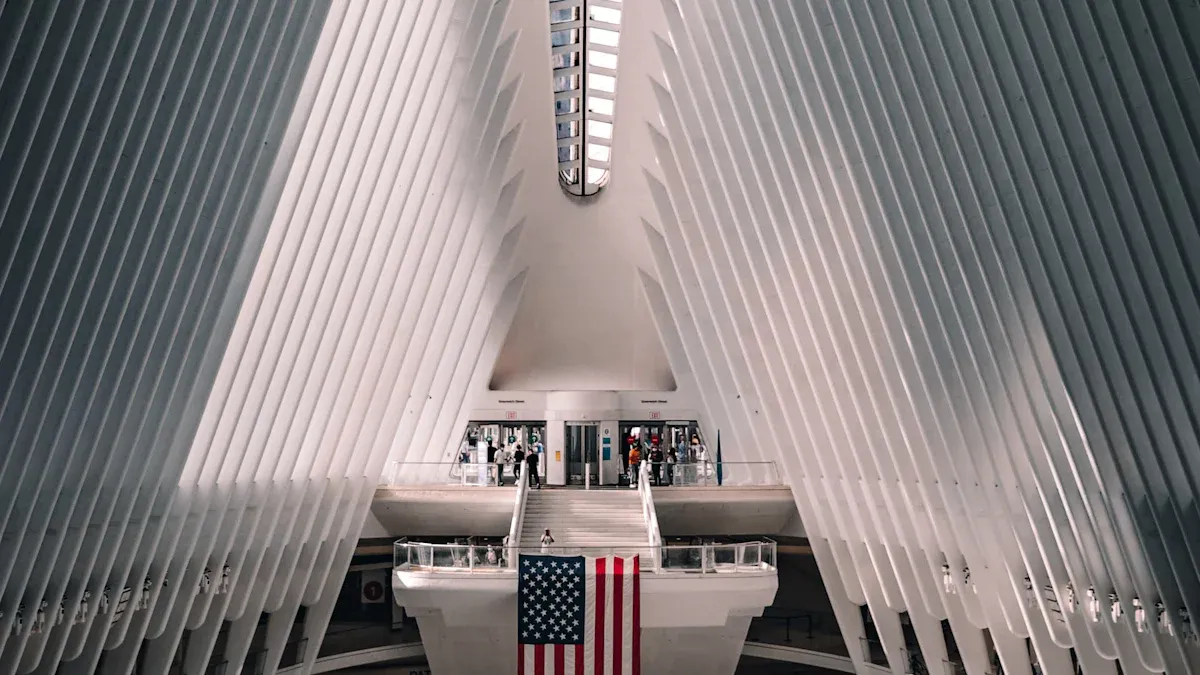
Image Source: pexels
Your tour of the historic financial district offers even more sights. You can explore colonial history, diverse cultures, and groundbreaking architecture. These additional spots provide more things to see & do just a short walk from Wall Street.
Historic Food on Stone Street
You can find a unique dining experience on Stone Street. This street is one of the oldest in New York City. The Dutch first built it, and residents paved it with cobblestones in 1658. Today, this pedestrian-only street is lined with restaurants and taverns. It is a lively spot for visitors.
Stone Street offers a wide variety of food choices. You can find everything from Mexican food to Irish pub fare. It is a great place to relax after a day of sightseeing in the city.
Here are some of the cuisines you can enjoy on this historic street:
| Restaurant Name | Cuisine Type |
|---|---|
| Mad Dog & Beans | Mexican Cantina |
| Stone Street Tavern | American Gastropub |
| Adrienne’s | Pizza Bar |
| Ulysses’ Folkhouse | Irish Pub |
Fraunces Tavern Museum
You can step back in time at Fraunces Tavern. This landmark building played a key role in the American Revolution. It served as a headquarters for George Washington. He famously gave his farewell address to his officers here in 1783. The museum is open daily from 12:00 PM to 5:00 PM. General admission is $10. This is one of the best things to see & do in the financial district for history lovers.
National Museum of the American Indian
You should visit the National Museum of the American Indian. It is part of the Smithsonian Institution. The museum is located in the impressive Alexander Hamilton U.S. Custom House. Admission is always free. Inside, you will find exhibits like Infinity of Nations and Native New York. These collections explore the history and art of Native peoples across the Americas. It is a powerful cultural experience in this part of the city.
The Woolworth Building’s Architecture
You can admire a true NYC icon, the Woolworth Building. When it opened in 1913, it was the tallest building in the world. It held that title until 1930. Its design is a stunning example of Gothic Revival architecture. People called it the “Cathedral of Commerce.” Look for its detailed exterior and grand lobby. This building helped start the race to build skyscrapers in the city. It is a must-see for anyone interested in architecture and the history of the financial district, not far from Liberty Island and Ellis Island ferry departures.
This guide shows you that the financial district offers more than just the nyse nyc. Your journey through this part of the city takes you from the powerful Charging Bull to the reflective 9/11 Memorial. You discover a unique mix of early American history, the energy of a global finance hub, and powerful remembrance. Many visitors are surprised by how much there is to see in this historic corner of NYC. Now you have a path to follow. Go explore the financial district and see what you discover for yourself.
FAQ
How much time should I spend in the Financial District?
You can see the main outdoor sights in about 2 to 3 hours. If you plan to visit museums or the One World Observatory, you should set aside at least half a day or more. Proper planning helps you see everything you want.
Is the Financial District safe for tourists?
Yes, the Financial District is a very safe area for tourists. You will see a strong police presence. Like any busy city area, you should always stay aware of your surroundings and keep your belongings secure.
Are there public restrooms available?
Public restrooms can be hard to find on the streets. You can find facilities inside major attractions and public spaces.
Tip: The National Museum of the American Indian and the Oculus at the World Trade Center have clean, accessible public restrooms.
Can I see everything on foot?
Yes, the Financial District is very walkable. The main attractions are close to each other. This guide’s walking tour connects the key sights in a logical path. Wearing comfortable shoes will make your exploration much more enjoyable.
*This article is provided for general information purposes and does not constitute legal, tax or other professional advice from BiyaPay or its subsidiaries and its affiliates, and it is not intended as a substitute for obtaining advice from a financial advisor or any other professional.
We make no representations, warranties or warranties, express or implied, as to the accuracy, completeness or timeliness of the contents of this publication.
Related Blogs of

Investing in Japanese Real Estate for Rental Yield: How to Convert JPY Rent to USD and Trade US Stocks Using the Same App?

Digital Currency Credit Card Comparison: Which Card Offers the Best POS Exchange Rate in China and Lowest Risk of Suspension?

Panda Remit Transfer Failed and Returned? In-Depth Comparison of Risk Control Strictness and Channel Stability Across Different Cross-Border Remittance Apps

Logic of Money Laundering Conviction: How Ordinary People Ensure Their Crypto Asset Cash-Out Activities Never Cross the Red Line
Choose Country or Region to Read Local Blog
 Australia
 Austria
 Belgium
 Canada
 Cyprus
 Czech Republic
 Denmark
 Estonia
 Finland
 France
 Germany
 Greece
 Hong Kong
 India
India Indonesia
 Ireland
 Italy
Italy Japan
Japan Latvia
 Lithuania
 Luxembourg
 Malaysia
 Malta
Malta Morocco
 Nepal
Nepal Netherlands
 New Zealand
 Norway
 Pakistan
 Philippines
 Poland
 Portugal
 Romania
 Singapore
 Slovakia
 Slovenia
 South Africa
 South Korea
 Spain
Spain Sweden
 Thailand
 The United States
 Turkey
 United Arab Emirates
 United Kingdom
 Vietnam
Contact Us




BIYA GLOBAL LLC is registered with the Financial Crimes Enforcement Network (FinCEN), an agency under the U.S. Department of the Treasury, as a Money Services Business (MSB), with registration number 31000218637349, and regulated by the Financial Crimes Enforcement Network (FinCEN).
BIYA GLOBAL LIMITED is a registered Financial Service Provider (FSP) in New Zealand, with registration number FSP1007221, and is also a registered member of the Financial Services Complaints Limited (FSCL), an independent dispute resolution scheme in New Zealand.