Master US Stock Pre-Market and After-Hours Trading Rules: 7 Key Points to Avoid Costly Mistakes





Image Source: unsplash
Have you ever wondered why some company stocks surge or plummet before the market opens the moment earnings are released? This is the power of pre-market and after-hours trading. Many major announcements are released after US stocks regular trading hours, triggering dramatic price movements.
For example:
This session is an extension of regular trading hours, but it comes with core risks of low liquidity and wide bid-ask spreads. One careless move can easily lead to unexpected losses.
Key Takeaways
- Pre-market and after-hours trading hours differ from regular sessions. Investors should confirm the exact times offered by their broker and note the switch between Daylight Saving Time (DST) and Standard Time.
- Liquidity is low and spreads are wide during extended hours, which can increase trading costs. Investors must be aware of this risk.
- Major news is often released after the close, potentially causing violent price swings and gaps. Stay calm and avoid blindly chasing highs or cutting lows.
- Only limit orders are allowed during extended hours — market orders are prohibited. Always set reasonable limit prices to protect your execution price.
- Orders must be set to “Extended Hours” or “GTC+EXT” to be valid in pre-market and after-hours sessions. Also confirm whether the stock you want to trade supports extended-hours trading.
Key 1: Master the Trading Hours and Rules
To participate in extended-hours trading, the first step is to memorize the schedule. Unlike Taiwan’s straightforward market hours, US trading is divided into three sessions — pre-market, regular hours, and after-hours — and the times shift with Daylight Saving Time and Standard Time.
US Pre-Market and After-Hours Trading Sessions
First, you need to know the official extended-hours schedule of the two major US exchanges — the New York Stock Exchange (NYSE) and Nasdaq.
- Pre-Market Trading: Eastern Time (ET) 4:00 AM – 9:30 AM
- After-Hours Trading: Eastern Time (ET) 4:00 PM – 8:00 PM
However, these are only the maximum ranges allowed by the exchanges. In practice, each broker offers different windows. Some brokers even provide nearly 24-hour trading. For example, Biyapay offers pre-market from 8:00 AM to 9:25 AM ET and after-hours from 4:05 PM to 5:25 PM ET. Therefore, always follow the specific announcements from your own broker.
If your broker supports extended hours, verify “which tickers” actually have actionable pre-/after-hours quotes before you trade; a quick check via stock info lookup helps you confirm whether the name is active in extended sessions.
For execution, it’s usually safer to place small test orders using limit prices in the trading entry to observe spread and depth; if you also need to estimate funding/FX cost ranges first, use the FX rate converter & comparison so you don’t mistake a wide spread for true price movement.
BiyaPay is positioned as a multi-asset trading wallet covering cross-border fund movement and investing workflows; its compliance disclosures are based on registrations such as U.S. MSB and New Zealand FSP, and you can navigate from the official site or event hub when you need the latest entry points.
Key Market Open and Close Times
For investors in Taiwan, the most important thing is converting to Taiwan time. Because of Daylight Saving Time in the US, the time difference changes by exactly one hour.
Refer to the comparison table below to quickly grasp the opening and closing times:
| Session | US Eastern Time (ET) | Taiwan Time (DST) | Taiwan Time (Standard) |
|---|---|---|---|
| Pre-Market | 4:00 - 9:30 | 16:00 - 21:30 | 17:00 - 22:30 |
| Regular Hours | 9:30 - 16:00 | 21:30 - next day 4:00 | 22:30 - next day 5:00 |
| After-Hours | 16:00 - 20:00 | 4:00 - 8:00 | 5:00 - 9:00 |
Taiwan Time Conversion for Daylight Saving vs Standard Time
You might ask: When is Daylight Saving Time and when is Standard Time?
US Daylight Saving Time runs from the second Sunday in March to the first Sunday in November. For example, DST in 2025 starts on March 9. During this period, the time difference between Taiwan and the US East Coast is 12 hours; the rest of the year is Standard Time with a 13-hour difference.
Friendly Reminder The exact switch dates change every year. When trading in March or November, pay special attention to that year’s transition dates. Mixing up DST and Standard Time can cause you to miss important closing bells or after-hours opportunities.
Key 2: Understand the Core Risks — Low Liquidity and Wide Spreads
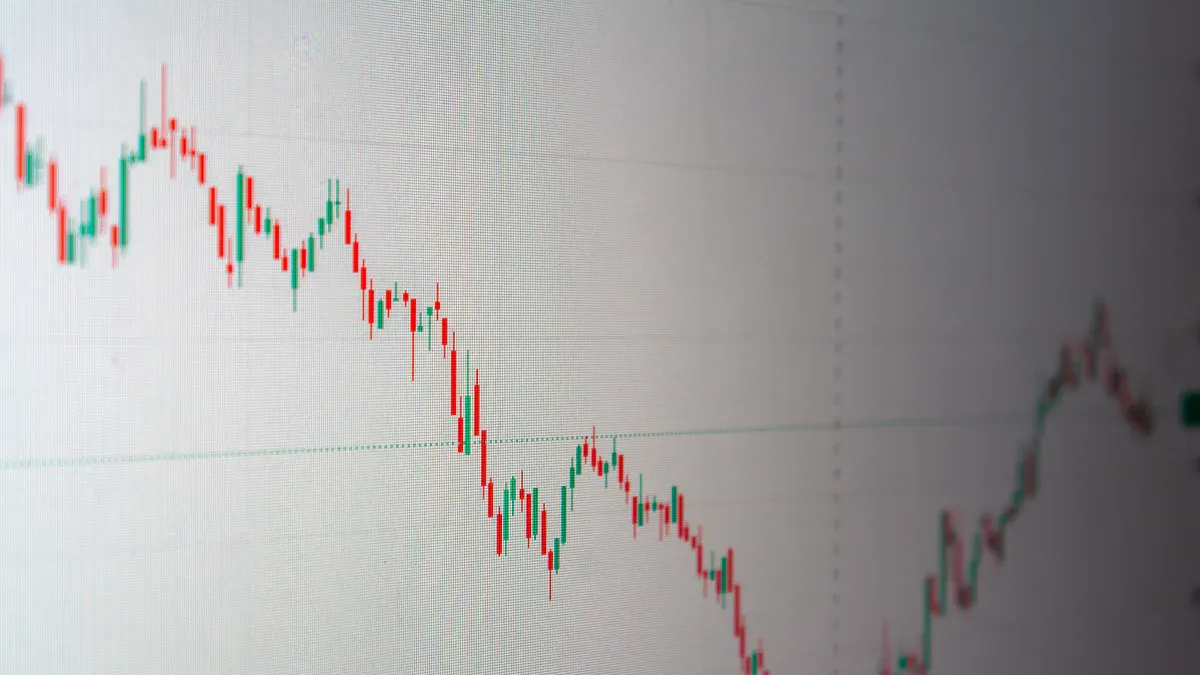
Image Source: pexels
After understanding the schedule, the next step is to recognize the biggest risks of extended-hours trading: low liquidity and wide bid-ask spreads. These two factors are closely linked and must be fully understood before placing orders; otherwise, you can easily overpay when buying or undersell when selling.
Why Spreads Are Especially Wide in Extended Hours
Simply put, there are far fewer participants. Regular hours are like a bustling wet market with many buyers and sellers competing fiercely; extended hours are like early morning or late evening when only a few vendors and customers remain.
This reduced participation directly causes several problems:
- Limited participants: Extended-hours trading occurs mainly through Electronic Communication Networks (ECNs). Only a small number of institutional investors and active retail traders participate — unlike regular hours with the full market order book.
- Lack of traditional market mechanisms: Regular open and close use call auctions to efficiently match orders and find a fair price. Extended hours lack this, making price discovery more difficult.
- Lower quote transparency: The quotes you see may come from only a few ECNs and do not represent the whole market. Prices can differ significantly from the next day’s opening price.
How Spreads Affect Your Trading Costs
The spread (bid-ask spread) is the gap between the highest bid and lowest ask. In low-liquidity extended hours, this gap widens dramatically.
Think of it as a “hidden transaction cost”. When you buy, you pay the lowest available ask price; when you sell, you receive the highest available bid price. The wider the spread, the higher the cost for a round-trip trade.
| Factor | Extended-Hours Situation |
|---|---|
| Trading Volume | Lower liquidity → wider spreads |
| Price Volatility | Higher volatility, harder to predict market moves |
Real Example: How Spreads Eat Your Profits
Let’s use a simple example. Suppose you want to trade a stock around $150 in after-hours, but due to low liquidity the quotes are:
- Highest Bid: $149.50
- Lowest Ask: $150.50
That’s a $1.00 spread.
Real-World Simulation: Instant Loss Caused by Spread
If you place a market order to buy 100 shares, you will be filled at $150.50, costing $15,050.
If you immediately change your mind and sell, you can only sell at the highest bid of $149.50, receiving $14,950.
Even if the stock price hasn’t moved at all, you instantly lose $100 ($15,050 - $14,950). That $100 is eaten entirely by the spread.
This trap is especially dangerous right after volatile earnings releases. Therefore, you must stay highly alert to spreads before trading in extended hours.
Key 3: Handling Violent Volatility and Gap Risk
Besides wide spreads, the other major enemy in extended hours is extreme volatility. With low volume, even a moderately sized order can cause wild price swings — far more than during regular hours.
Why Major News Is Often Released After the Close
You may wonder why big companies like Nvidia and Apple prefer to release earnings after the close. This is actually an industry convention with several reasons:
- Give the market breathing room: After-hours releases give investors and analysts time to digest complex financial data without triggering panic trading during regular hours.
- Operational and regulatory needs: Large multinational companies need to coordinate across time zones and obtain board and auditor approvals. After-hours releases are logistically smoother.
- In-depth communication: Tech and complex-business companies often hold detailed earnings calls. After-hours allows for longer Q&A sessions.
Although well-intentioned, this practice causes dramatic after-hours price movements.
Price Gaps and Execution Difficulties
The most common phenomenon after major news is a price gap. This appears as a visible empty space on the chart where no trades occurred at certain price levels.
What is a gap? Imagine a stock closed at $150 yesterday, but due to better-than-expected news released after hours, the first trade the next morning opens directly at $160. The range from $150 to $160 forms an upward gap.
In low-liquidity extended hours, gaps are extremely common. This means even if you place a limit order, if the price jumps over your limit, your order may never fill — causing you to miss an opportunity or fail to stop a loss.
Pre-Market Surge: Opportunity or Trap?
When you see a stock soaring pre-market, your first instinct might be to chase it — but be very careful; this can be a trap. In technical analysis, there is a pattern called an “exhaustion gap”.
Take Qualcomm (QCOM) during the 1999 dot-com bubble as an example. After weeks of strong gains, a huge upward gap appeared pre-market one day. Many investors chased thinking it was the start of a new leg up, only to see the price reverse sharply after the open. Such gaps at the end of a long uptrend are often not opportunities but the final burst of buying exhaustion, signaling a potential reversal.
Therefore, whether facing a big pre-market rise or fall, stay calm, analyze the underlying reason first, and do not blindly follow price action.
Key 4: Must Use Limit Orders — Market Orders Will Be Rejected

Image Source: pexels
When you try to place an order during extended hours, you’ll discover a critical restriction: you can only use limit orders — market orders are not allowed. This is not a system error but an important protective mechanism. Understanding the difference between the two is fundamental for trading in this high-volatility environment.
Core Difference Between Limit and Market Orders
Use a real-life analogy:
- Market Order: Like walking into a market and telling the vendor “I’ll take that apple” no matter the price. You’re guaranteed to get it, but you have no control over the cost.
- Limit Order: Like saying “I’ll buy that apple only if it’s $1 or less”. You specify the maximum (or minimum) price you’re willing to accept.
According to the U.S. Securities and Exchange Commission (SEC), market orders prioritize immediate execution, while limit orders let you control the price. In the chaotic extended-hours market, controlling price is far more important than instant execution.
Why Limit Orders Are Mandatory — A Protective Mechanism
Why do brokers force limit orders? To protect you from “disastrous fills”.
In low-volume extended hours, using a market order could result in execution at a price far away from your expectation — this is called slippage. To prevent investors from buying at absurd highs or selling at absurd lows due to lack of liquidity, major exchanges and brokers prohibit market orders and stop orders in ECNs during extended hours.
This is a safety lock Forcing limit orders ensures your trade only executes at your specified price or better, effectively preventing accidental losses in chaotic markets.
How to Set a Reasonable Limit Price
Since you can only use limit orders, how do you set a sensible price? Here are three steps:
- Check real-time quotes: Before placing an order, look at the current Bid and Ask. The difference between them is the spread.
- Place your limit within the spread range:
- If buying: Set your limit near or slightly above the current Bid to increase fill probability.
- If selling: Set your limit near or slightly below the current Ask.
- Stay flexible and patient: In high volatility, price can jump past your limit instantly. If your order doesn’t fill immediately, decide whether to adjust slightly or wait for price to return to your target zone. Never set a limit too far from the market just to get filled — that defeats the purpose and leads to buying high or selling low.
Key 5: Ensure Your Order Is Valid — Don’t Miss Opportunities
After setting a limit order, there’s one often-overlooked detail: the order’s duration. If you place a pre-market order but forget to adjust this setting, your order may never execute and you’ll miss the move.
Understanding “Day Order” vs “Extended Hours / GTC+EXT” Orders
When placing an order, brokers let you choose how long it remains active. For extended-hours trading, you must know these two basic options:
- Day Order: The default setting. Valid only during regular hours (9:30 AM – 4:00 PM ET). Any unfilled Day orders are automatically canceled at the close.
- Extended Hours / GTC+EXT: This is the key setting for extended-hours trading. Your order remains active in pre-market, regular hours, and after-hours until filled, canceled, or expired (usually 90 days).
In short, to trade in extended hours, you must manually change the order duration to “Extended Hours” or “GTC+EXT”.
How to Set It Correctly When Placing an Order
This setting is usually found in the “Time in Force” or “Duration” field. It’s very simple to change, but forgetting it has serious consequences.
Practical Reminder In the Biyapay app, after entering shares and price, find the “Time in Force” option. Be sure to change the default “Day” to “Extended Hours” so your limit order can trigger in pre-market or after-hours.
This small step determines whether your strategy actually executes at the critical moment.
Extended-Hours Rules for Taiwan Brokerage “Complex Orders”
Many Taiwanese investors using “complex order” (複委託) services through local brokers need to pay special attention.
The vast majority of Taiwan brokers’ complex order services do not support extended-hours trading for risk control and operational simplicity. Your orders will only be sent during regular US market hours.
| Trading Method | Extended-Hours Support | Notes |
|---|---|---|
| Overseas Brokers | Generally supported | Simply select Extended Hours in the app |
| Taiwan Complex Order | Generally NOT supported | Orders only valid during regular hours |
Therefore, if you want to fully utilize extended-hours opportunities, opening an account directly with an overseas broker is far more straightforward and efficient.
Key 6: Confirm Stock Eligibility — Not All Stocks Are Tradable
Before you jump in, there’s one more crucial prerequisite: not every stock can be traded in extended hours. Just like not every store is open 24 hours, extended trading is only available for specific “VIP” stocks.
Which Stocks Support Extended-Hours Trading
Generally, stocks eligible for extended-hours trading have the following characteristics:
- Large-cap and popular stocks: High market cap and high volume companies such as Apple (AAPL), Nvidia (NVDA), Tesla (TSLA), etc., attract enough participants even outside regular hours.
- Listed on major exchanges: Stocks listed on NYSE or Nasdaq almost always qualify.
Conversely, low-volume small-cap or penny stocks are usually excluded because liquidity is too poor and brokers want to protect investors.
How to Check a Stock’s Extended-Hours Eligibility
The quickest ways are:
- Check your broker’s app directly: During pre-market or after-hours, open the app. If the stock shows live moving quotes instead of the previous close, it is active in extended hours.
- Use financial websites: Many sites (e.g., Yahoo Finance) display pre-market and after-hours quotes. Active quotes are a good indicator.
Good habit Spend a few seconds confirming eligibility before placing an order to avoid the embarrassment of a perfect plan that cannot be executed.
Trading Restrictions for ETFs and Small-Cap Stocks
Restrictions are even clearer for index ETFs and small caps:
- Small-cap stocks: As mentioned, almost all are excluded due to extremely low liquidity.
- ETFs: Major ETFs, especially SPY (S&P 500 ETF) and QQQ (Nasdaq-100 ETF), are popular extended-hours instruments. Their liquidity is lower than regular hours but still better than most individual stocks.
The table below compares major ETFs and large-cap stocks in extended hours:
| Feature/Restriction | SPY/QQQ (Major ETFs) | Individual Large-Cap Stocks |
|---|---|---|
| Liquidity | Reduced after hours but still decent | Significantly reduced, some may be hard to trade |
| Bid-Ask Spread | Wider after hours | Usually even wider |
| Volatility | Can be higher after hours | Can be higher after hours |
| Order Types | Limit only + Extended Hours required | Limit only + Extended Hours required |
In summary, even highly liquid ETFs like SPY and QQQ still face wider spreads and higher volatility in extended hours — trade with caution.
Key 7: Safe Starting Strategy for Beginners
After learning all the rules and risks, you’re probably eager to try. But before risking real money, please follow this beginner-safe approach. It helps you protect capital in this high-risk environment and learn from real experience instead of paying expensive “tuition”.
Observe First, Trade Later — Get Familiar with Price Patterns
Before becoming a trader, first become an observer. Extended-hours price action has unique patterns; jumping in blindly is like swimming in unfamiliar currents — very dangerous. Observe these key indicators to learn the rhythm:
- Pre-market percentage change: Pay attention to stocks moving more than ±2% — usually driven by major news.
- Price gaps: Watch for gaps and try to identify the cause (earnings, news, etc.).
- Pre-market volume: Volume reveals sentiment. If pre-market volume reaches >10% of the 20-day average daily volume, interest is extremely high.
Essential for beginners Interpret price moves cautiously. In extremely low volume, a huge swing can be caused by a single trade and may not be meaningful. A move accompanied by high volume is far more representative of true market direction.
Practice Strategies with a Paper Trading Account
Reading about trading is never enough — the best way to learn is in a zero-risk environment. Many brokers offer paper trading accounts with virtual funds that behave like real markets.
Use a paper account from a broker like Biyapay to practice placing limit orders in extended hours, watch price jumps and spread changes, and experience real volatility. This builds familiarity with the interface and trains your psychological resilience.
Start Small and Set Mental Stop-Losses
Once you gain confidence through observation and paper trading, start with a small amount of real capital — money you can afford to lose completely. Platforms like Biyapay that support small-lot trading lower the entry barrier.
Most importantly, decide your stop-loss level before entering. Since automatic stop-loss orders are not allowed in extended hours, you must enforce a mental stop. Pre-determine a price at which you will manually exit, no matter what. This discipline limits damage when you’re wrong.
In summary, remember these seven keys to extended-hours trading:
- Get the time right
- Beware of spreads
- Watch out account for volatility
- Always use limit orders
- Set the correct duration
- Confirm stock eligibility
- Beginners: paper trade first
Extended-hours trading is a double-edged sword full of both opportunity and risk — especially after the US market close. It is best suited for investors with deep fundamental knowledge of companies.
Better to understand first and act later than to blindly chase highs or panic sell lows.
FAQ
Why do pre-market/after-hours quotes sometimes disappear?
This usually happens because liquidity is extremely low. For certain quiet periods or specific stocks, if no bids or asks are posted, quotes temporarily vanish. It means there are currently no counterparties — you need to wait patiently for new quotes.
Do profits from extended-hours trading need to be taxed?
Yes. For Taiwanese investors, capital gains from extended-hours trading are treated the same as regular-hours gains — they count as overseas income. You must include them in your Minimum Tax calculation and declare according to Taiwan tax regulations.
Are extended-hours trading fees more expensive?
Trading commissions are generally the same as regular hours. Most overseas brokers do not charge extra for extended hours — your main costs come from commissions and spreads. Still, check your broker’s fee schedule for any special rules.
Do all brokers support extended-hours trading?
No. Most US brokers support it, but available hours vary. Taiwan complex order services generally do not support it. Before trading, confirm whether your broker offers the service and what exact hours are provided.
*This article is provided for general information purposes and does not constitute legal, tax or other professional advice from BiyaPay or its subsidiaries and its affiliates, and it is not intended as a substitute for obtaining advice from a financial advisor or any other professional.
We make no representations, warranties or warranties, express or implied, as to the accuracy, completeness or timeliness of the contents of this publication.
Related Blogs of

Why Outbound Transfers Must Use SWIFT or Local Clearing Networks: Say Goodbye to Peer-to-Peer Fund Transfers


Don't Want to Expose Your Real Credit Card Information? 5 Privacy Payment Tips in the AI Era


Anthropic Batch Account Ban Warning: How to Self-Check If Your API Payment Card Is on the Blacklist?


How to Convert Cryptocurrency Donations Received by AI Open-Source Projects into Fiat Currency as Development Funds Without Loss?
Choose Country or Region to Read Local Blog
 Australia
 Austria
 Belgium
 Canada
 Cyprus
 Czech Republic
 Denmark
 Estonia
 Finland
 France
 Germany
 Greece
 Hong Kong
 India
India Indonesia
 Ireland
 Italy
Italy Japan
Japan Latvia
 Lithuania
 Luxembourg
 Malaysia
 Malta
Malta Morocco
 Nepal
Nepal Netherlands
 New Zealand
 Norway
 Pakistan
 Philippines
 Poland
 Portugal
 Romania
 Singapore
 Slovakia
 Slovenia
 South Africa
 South Korea
 Spain
Spain Sweden
 Thailand
 The United States
 Turkey
 United Arab Emirates
 United Kingdom
 Vietnam
Contact Us




BIYA GLOBAL LLC is registered with the Financial Crimes Enforcement Network (FinCEN), an agency under the U.S. Department of the Treasury, as a Money Services Business (MSB), with registration number 31000218637349, and regulated by the Financial Crimes Enforcement Network (FinCEN).
BIYA GLOBAL LIMITED is a registered Financial Service Provider (FSP) in New Zealand, with registration number FSP1007221, and is also a registered member of the Financial Services Complaints Limited (FSCL), an independent dispute resolution scheme in New Zealand.