Exploring the History of the S&P 500 Index: A Financial Journey Across Decades




Image Source: unsplash
If there were a mirror that could reflect America’s economic booms and busts and social changes over the past decades, what would it look like?
That mirror is the S&P 500 Index. It is not just a fluctuating number but a condensed epic of U.S. economic history. This index covers approximately 70% to 80% of total U.S. market capitalization, representing a massive economy worth tens of trillions of dollars. This financial time-travel journey will take readers back to explore the key moments that shaped today’s markets.
When you read this “long-term uptrend, short-term shocks” history, a common next step is to anchor the narrative to real companies and price points: which mega-caps recovered first after each crisis, and which sectors dragged the index down. For that kind of verification, the BiyaPay stock lookup is a practical way to pull up U.S. equities and use them as a data cross-check while revisiting past milestones. If your allocation also involves USD funding or multi-currency cash planning, pair it with the BiyaPay fiat FX converter to estimate exchange-cost ranges, and—when timing matters—use BiyaPay remittance to sanity-check delivery cadence and cash availability so research and funding don’t fall out of sync.
BiyaPay is positioned as a multi-asset trading wallet spanning cross-border payments, investing, trading, and funds management, and it operates with compliance credentials such as U.S. MSB and New Zealand FSP registration. Used as a “quotes–FX–cash” layer, it fits the article’s historical, analytical workflow without changing the narrative.
Key Takeaways
- The S&P 500 Index was born in 1957. It uses the market cap of 500 major companies to reflect changes in the U.S. economy.
- In the 1980s, U.S. stocks soared but also suffered the 1987 “Black Monday” crash. Tech companies like Microsoft began to rise.
- In 2008, the financial crisis cut the S&P 500 in half. The U.S. government used “quantitative easing” to rescue the economy, launching the longest bull market in history.
- In 2020, the COVID pandemic caused a rapid market drop, but government support led to a swift rebound. Now, artificial intelligence (AI) is the new force driving market growth.
- The history of the S&P 500 tells us that while markets experience short-term volatility, they trend upward over the long term. Understanding the past helps us face future investments.
The Birth of the S&P 500 Index: 1957 and Early Development

Image Source: unsplash
Our time journey begins in the mid-20th century. After World War II ended, the U.S. economy entered an unprecedented expansion period. To more accurately capture the economic pulse of this era, a brand-new index was born.
From Weighted to 500 Strong: The Innovation
On March 5, 1957, Standard & Poor’s officially launched the S&P 500 Index, replacing the original S&P 90 Index. This upgrade brought two key innovations. First, the number of constituents expanded dramatically from 90 to 500 companies, more comprehensively covering America’s leading enterprises. Second, it pioneered the use of a “market-cap weighted” calculation method.
This change was revolutionary. It made the index calculation closer to real market dynamics. The larger the company’s market cap, the greater its influence on the index. This design allowed the index not only to reflect individual stock performance but also to capture structural changes in the overall economy. When launched, the index stood at about 45 points, opening the curtain on decades of astonishing growth.
Driving Force of Post-War Economic Expansion
The early S&P 500 Index faithfully reflected the U.S. economic landscape of the time. Industry was the absolute economic pillar, accounting for up to one-third of the index by the late 1960s. The giants of that era were not today’s tech companies but enterprises symbolizing the golden age of American manufacturing.
Iconic Companies of the 1950s-60s
- American Telephone & Telegraph (AT&T)
- General Motors
- IBM
- Standard Oil
- General Electric
In 1957, AT&T became the largest company in the index with a $11.2 billion market cap. IBM and others also long ranked in the top 10. The rise and fall of these companies directly moved every beat of the index and offered investors a window to observe post-war American industrial strength.
The Roaring Years: 1980s Prosperity and the Dot-Com Bubble
The time machine arrives in the 1980s — an era full of contradictions and opportunities. After experiencing stagflation in the 1970s, the U.S. economy entered a nearly two-decade super bull market, accompanied by one of history’s most famous crashes.
Black Monday and the Rise of Tech Stocks
Driven by Reaganomics, the market welcomed a powerful bull run. From 1982 to 1987, the index surged an astonishing 282%. Yet the peak of prosperity often comes with huge risks.
On October 19, 1987 — “Black Monday” — the market suffered a heavy blow, with the S&P 500 plunging 20.4% in a single day, setting a historical record. This crash made global investors experience the fragility of modern financial markets.
Despite the violent shock, a new economic engine had already started. Some companies that would later change the world began to emerge.
- Microsoft: Went public in 1986 and entered the top 10 of the index in less than a decade.
- Apple: Although listed as early as 1984, it truly became an index giant only in the following decades.
The rise of these companies foreshadowed the shift of the economic structure from traditional industry to a new era dominated by information technology.
Globalization and the Internet Revolution
In the 1990s, globalization and the internet revolution became the two major drivers pushing the market higher. Policies like the North American Free Trade Agreement (NAFTA) allowed large U.S. companies to extend supply chains globally.
Research shows that since 1990, S&P 500 companies’ profit margins have risen sharply, with about 30% of the increase attributable to lower labor costs and efficient supply chains brought by globalization. This force greatly boosted corporate profit growth and became a key foundation supporting the bull market. From the 1982 bull market start to the 2000 dot-com peak, long-term performance was outstanding.
| Start Date | End Date | Annualized Return |
|---|---|---|
| August 12, 1982 | March 23, 2000 | 16.6% |
This roaring era ultimately ended with the bursting of the 2000 dot-com bubble, setting the stage for the next phase of market reshaping.
Crisis and Rebirth: The 2008 Financial Crisis
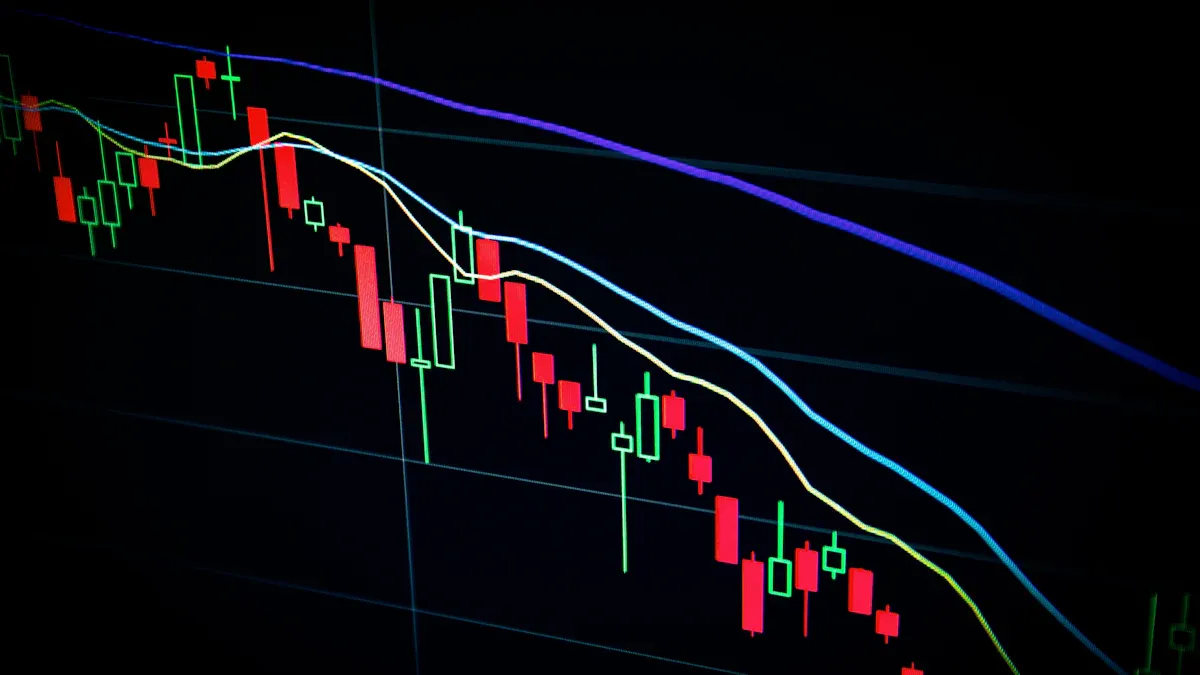
Image Source: unsplash
The bursting of the dot-com bubble was merely a prelude — a larger, more far-reaching storm was brewing. In 2008, the subprime crisis triggered by the U.S. real estate market evolved into a global financial tsunami, pushing the S&P 500 Index into the abyss.
Index Halved and the Longest Bull Market in History
In October 2007, the market was still immersed in prosperity, with the index hitting a historical high of 1,576 points. However, the shadow of crisis quickly enveloped Wall Street. Financial products packaged from high-risk subprime mortgages suffered massive defaults, triggering a chain reaction.
On September 15, 2008, investment bank Lehman Brothers — with 158 years of history — was forced to file for bankruptcy protection after carrying over $600 billion in massive debt. This landmark event completely shattered market confidence, spreading panic globally.
The market collapse was swift and brutal. From peak to trough, the index plunged over 57% in less than 18 months, evaporating trillions in market value. In March 2009, the index once hit a low of 666 points — a number that seemed to symbolize the market’s despair at the time. Yet it was on these ruins that the longest bull market in history quietly began.
Subprime Storm and Quantitative Easing (QE)
The root of this crisis lay in the unregulated real estate lending market. Many financial institutions offered “subprime loans” to borrowers with poor credit and packaged these high-risk loans into complex financial derivatives sold to global investors. When the housing bubble burst and borrowers could not repay, the entire financial system collapsed.
To rescue the collapsing economy, the U.S. Federal Reserve took unprecedented action — quantitative easing (QE). Simply put, this is the central bank directly injecting massive funds into the market to stimulate economic activity.
The Fed purchased trillions of dollars in assets through multiple QE rounds, providing critical liquidity to the market.
| QE Phase | Total Asset Purchases (approx.) |
|---|---|
| QE1 (2008-2010) | $1.75 trillion |
| QE2 (2010-2011) | $600 billion |
| QE3 (2012-2014) | $85 billion per month (no cap) |
These funds lowered interest rates, encouraged corporate and personal borrowing and investment, successfully pulling the economy back from the brink and laying the foundation for the bull market lasting over a decade.
New Century Challenges: Pandemic Shock and the AI Wave
After the long bull market following the financial crisis, the market faced new challenges in the 2020s. A sudden global pandemic hit the global economy and financial markets at unprecedented speed while also giving birth to a new technological revolution.
The Fastest Bear Market in History and V-Shaped Rebound
In early 2020, the COVID-19 pandemic spread rapidly, abruptly ending the bull market that had lasted over a decade. The market reaction was extremely fast and violent, triggering the fastest bear market in history.
From February 19 to March 23, 2020, the index plunged from 3,386.1 to 2,237.4 points in just over a month — a 33.9% drop. This crash was even faster than the Great Depression of 1929 and the 2008 financial crisis.
Yet the rebound after the plunge was equally astonishing. Governments and central banks worldwide quickly launched massive fiscal stimulus and monetary easing, injecting a strong shot into the market. With powerful policy support, the market formed a steep “V-shaped reversal” curve and recovered lost ground by August of the same year, hitting new highs and demonstrating the astonishing resilience of modern markets.
Pandemic Economy and AI Technology Explosion
The pandemic completely changed people’s lives and work patterns. “Work from home” and “online services” became the new normal, giving birth to a huge “pandemic economy.” This trend greatly boosted tech companies’ business growth, making their position in the index even more pivotal.
Entering the post-pandemic era, an even stronger technological wave swept in — artificial intelligence (AI). From large language models to generative AI applications, this technological revolution became the core driver pushing the market higher.
- Weight Shift: The technology sector’s weight in the index climbed to about one-third (36%), reflecting its dominant position in the U.S. economy.
- Market Focus: AI-related investments became the market’s hot pursuit, driving related company stock prices skyward.
However, the market has not been smooth sailing. Recently, investors have begun scrutinizing AI-related investments more closely, putting some pressure on tech stocks. This shows the market is continuously seeking a new balance between enthusiasm for new technology and rational evaluation.
This financial time journey clearly demonstrates the market’s core characteristic of “long-term upward, short-term volatile.” From Black Monday to the financial crisis to the pandemic shock, every crisis in history ultimately became the starting point for new growth.
History does not simply repeat itself, but it often rhymes surprisingly. Understanding past crises and booms helps investors build a more robust perspective and strategy when facing future uncertainty.
The end of this time journey is the starting point of your future investment path.
FAQ
How are S&P 500 constituents determined?
A dedicated committee is responsible for selecting constituents. Companies must meet multiple criteria to be included in the index.
Main Inclusion Criteria
- Headquartered in the United States.
- Market cap reaches a certain size.
- Possesses good liquidity.
- Positive total earnings in the most recent quarter and over the past four quarters combined.
What is the difference between the S&P 500 and the Dow Jones Index?
Both are the most important U.S. market indices but differ in calculation method and representativeness.
| Index | Calculation Method | Number of Constituents | Representativeness |
|---|---|---|---|
| S&P 500 | Market-cap weighted | 500 companies | Broad coverage, better reflects overall market trends. |
| Dow Jones Industrial Average | Price-weighted | 30 companies | Long history but more easily influenced by high-priced stocks. |
How can individual investors invest in the S&P 500 Index?
Individual investors cannot directly purchase the index itself. The most common way is through buying ETFs (exchange-traded funds) or mutual funds that track the S&P 500 Index. These financial products allow investors to easily participate in the growth of 500 companies with a single investment.
Why is the technology sector’s weight in the index so high?
The S&P 500 uses market-cap weighting. In recent years, tech companies have grown rapidly, with market caps far surpassing companies in other industries. Therefore, their influence and weight in the index have also risen, directly reflecting their dominant position in the current U.S. economy.
*This article is provided for general information purposes and does not constitute legal, tax or other professional advice from BiyaPay or its subsidiaries and its affiliates, and it is not intended as a substitute for obtaining advice from a financial advisor or any other professional.
We make no representations, warranties or warranties, express or implied, as to the accuracy, completeness or timeliness of the contents of this publication.
Related Blogs of

The Easiest Way to Find the Code for Calling France

Zelle Wire Transfer or ACH? Clearing Up the Confusion


How to Fill Out a CVS Money Order A 2026 Guide


What Are the Daily Limits for Chase Accounts?

Choose Country or Region to Read Local Blog
 Australia
 Austria
 Belgium
 Canada
 Cyprus
 Czech Republic
 Denmark
 Estonia
 Finland
 France
 Germany
 Greece
 Hong Kong
 India
India Indonesia
 Ireland
 Italy
Italy Japan
Japan Latvia
 Lithuania
 Luxembourg
 Malaysia
 Malta
Malta Morocco
 Nepal
Nepal Netherlands
 New Zealand
 Norway
 Pakistan
 Philippines
 Poland
 Portugal
 Romania
 Singapore
 Slovakia
 Slovenia
 South Africa
 South Korea
 Spain
Spain Sweden
 Thailand
 The United States
 Turkey
 United Arab Emirates
 United Kingdom
 Vietnam
Contact Us




BIYA GLOBAL LLC is a licensed entity registered with the U.S. Securities and Exchange Commission (SEC No.: 802-127417); a certified member of the Financial Industry Regulatory Authority (FINRA) (Central Registration Depository CRD No.: 325027); regulated by the Financial Industry Regulatory Authority (FINRA) and the U.S. Securities and Exchange Commission (SEC).
BIYA GLOBAL LLC is registered with the Financial Crimes Enforcement Network (FinCEN), an agency under the U.S. Department of the Treasury, as a Money Services Business (MSB), with registration number 31000218637349, and regulated by the Financial Crimes Enforcement Network (FinCEN).
BIYA GLOBAL LIMITED is a registered Financial Service Provider (FSP) in New Zealand, with registration number FSP1007221, and is also a registered member of the Financial Services Complaints Limited (FSCL), an independent dispute resolution scheme in New Zealand.