2025 USDT Trading Must-Read: Avoid These Common Scam Traps



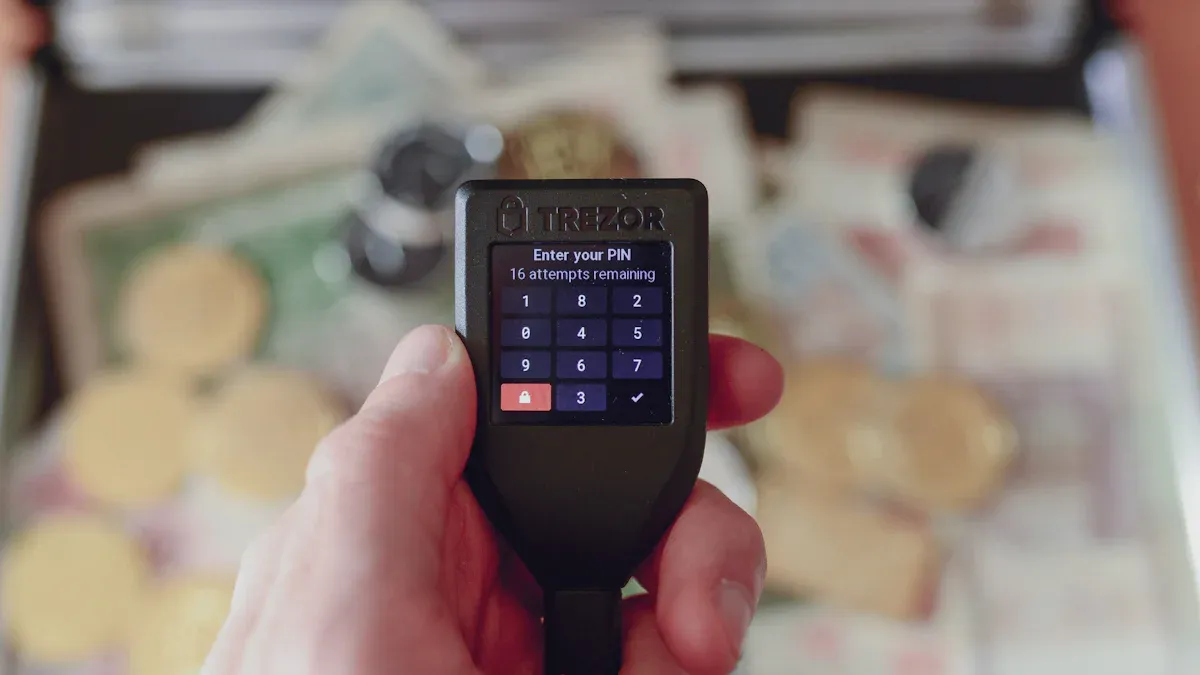
Image Source: unsplash
First, you need to establish a core understanding: USDT itself is not a scam, but its trading characteristics make it a common tool for scammers.
Currently, two types of scams are the most rampant: “fake platforms” that lure investments, and “wallet authorization phishing” that directly steals assets. Actively identifying these traps is your first step to successfully avoiding scams and the key to safeguarding your personal digital wallet.
Core Highlights
- USDT trading involves multiple scams, such as fake platforms and phishing websites. You need to actively identify these scams.
- Protect your private keys and seed phrases. Do not enter them on any website or authorize them casually.
- When transferring, you need to carefully verify the network and address. Conduct small-amount tests first to avoid “address poisoning” scams.
- Strengthen account security. You should use more secure two-factor authentication methods, such as authenticator apps or hardware security keys.
- When conducting OTC trading, you need to use platform escrow services. You also need to be aware of bank risk controls to avoid account freezes.
USDT External Scams: Identification and Prevention

Image Source: pexels
External scams are the most direct threats to your assets. Scammers exploit human weaknesses and technical complexity to design endless traps. Understanding how these scams operate is your first line of defense in successfully avoiding fraud.
Trap One: Fake Platforms and Fraudulent Wallets
This is one of the most common scams. Scammers create a website or app that closely resembles a well-known exchange or wallet application, luring you to deposit USDT. Once your funds are in, you can never withdraw them.
Typical characteristics of these fake platforms:
- Highly imitated interface design: They copy the UI of legitimate platforms, including using the same background images, icons, and button designs, making it visually difficult for you to distinguish authenticity.
- Promises of unrealistic high returns: The platform promises stable daily returns of 1%-5% or even higher under names like “quantitative trading,” “smart mining,” or “high-frequency arbitrage.” Remember, any return promise far exceeding normal market levels is a danger signal.
- Spread through unofficial channels: Scammers usually do not list on official app stores but share download links or QR codes via social media groups (such as Telegram, WhatsApp), forums, or private messages.
- Similar but incorrect domain names: These websites’ domain names are very close to the official ones but have slight differences. For example, recently exposed scam platform domains include
tesla-usdt[.]comandone-usdt[.]net, which disguise themselves using well-known brands or the “USDT” keyword.
Real Case Warning After PayPal launched its stablecoin PYUSD in 2023, scammers created nearly 30 fake tokens with the same name within hours. One fake token reached a trading volume of $2.6 million in just a few minutes. This shows that scammers react quickly and are adept at exploiting market hotspots to create scams.
How to prevent fake platforms and wallets?
You need to develop a strict verification habit, examining every detail like a detective.
- Download only through official channels: Be sure to download apps from official websites (carefully verify the URL) or officially designated app stores (Google Play Store, Apple App Store).
- Verify website URL: Before entering any information, check the domain in the browser address bar character by character. Ensure it uses a secure
httpsconnection and watch for spelling errors or extra characters. - Research developers and reviews: Before downloading an app, check its download count, user reviews, and developer information. A legitimate wallet app usually has a large number of downloads, active community discussions, and a reputable development team.
- Test with small amounts first: After completing all checks, transfer a very small amount of USDT (e.g., 1-5 USDT) for testing. Try to see if deposits and withdrawals work normally. If any issues arise during withdrawal or you are asked to “pay a deposit to unlock,” stop using it immediately.
Trap Two: Phishing Websites and Authorization Scams
This type of scam does not require you to deposit USDT into a platform but directly steals assets from your personal wallet through technical means. It usually comes in two forms: stealing private keys/seed phrases or inducing malicious authorizations.
How the scam operates:
Scammers send you an enticing message via SMS, email, or social media.
Common script examples “Congratulations! Your address has been selected to participate in the USDT airdrop event, click the link to claim 500 USDT for free!” “Security alert: Your wallet is at risk, please click the link to verify immediately, or your assets will be frozen.”
After clicking the link, you enter a carefully forged phishing website. The site will ask you to perform one of the following two actions:
- Enter private key or seed phrase: The site will ask you to input your private key or seed phrase under the guise of “wallet recovery,” “security verification,” or “claiming airdrop.” Once submitted, scammers gain full control of your wallet.
- Perform wallet authorization (Approve): This is a more covert method. The site requests you to “connect wallet” and sign a transaction. The transaction appears normal, but you are actually signing a malicious smart contract authorization. This authorization (usually unlimited) allows the scammer’s address to transfer specific tokens (like USDT) from your wallet at any time.
How to prevent phishing and authorization scams?
Protecting your private keys and authorizations is the most important survival rule in the crypto world.
- Never disclose private keys/seed phrases: Your private key and seed phrase are the highest authority of your wallet. Never enter them on any website or send them to anyone over the network under any circumstances.
- Be wary of unknown links: Maintain high vigilance against any links sent through unofficial channels. Even if the sender appears to be a trusted platform, verify by accessing the official site via bookmarks or search engines.
- Use hardware wallets: For large assets, strongly recommend using hardware wallets (such as Ledger or Trezor) for storage. Hardware wallets keep private keys offline, so even if your computer is infected, scammers cannot steal your assets.
- Regularly check and revoke authorizations: You should regularly use professional tools to check your wallet’s authorizations.
| Tool Name | Features |
|---|---|
| Revoke.cash | The most popular authorization management tool, supports over 100 networks, user-friendly interface. |
| Etherscan (and similar block explorers) | Built-in block explorer function, view and revoke authorizations on the “Token Approvals” page. |
If you find any suspicious or unused authorizations, revoke them (Revoke) immediately to effectively prevent scams.
Trap Three: Over-the-Counter (OTC) Trust Scams
Over-the-Counter (OTC) trading refers to buying and selling USDT directly with individuals or merchants without going through centralized exchanges. While it offers flexibility, it is also full of trust traps.
Typical danger signals:
- Exchange rates far exceeding market prices: Scammers offer highly tempting rates to attract you, such as selling USDT at far below market price or buying your USDT at far above market price.
- Demand “coin first, payment later” or “payment first, coin later”: Without reliable third-party guarantees, scammers insist you transfer funds or coins first, and once they receive your assets, they disappear immediately.
How to safely conduct OTC trading?
To conduct safe OTC trading, the key is to introduce a trustworthy “middleman” to eliminate trust risks.
Core Strategy: Use platformescrow services
Insist on choosing reputable C2C (Customer-to-Customer) platforms for trading. These platforms provide escrow protection functions:
- When you buy USDT, the seller’s USDT is locked by the platform.
- You pay fiat currency to the seller.
- After the seller confirms receipt of payment, the platform releases the locked USDT to your wallet.
Throughout the process, the platform acts as a neutral guarantor, ensuring “payment for goods,” effectively preventing scams.
USDT Secure Operations: How to Effectively Avoid Scams

Image Source: unsplash
Identifying external scams is defense, while mastering correct secure operation habits is proactive offense. Many asset losses are not due to sophisticated scams but negligence during operations. Developing rigorous operation habits is fundamental to long-term survival in the crypto world. This section provides a core operation guide to help you effectively avoid scams and accidental losses.
Key One: Transfer Network and Address Verification
This is the most error-prone part of cryptocurrency transfers; once mistaken, your assets may be permanently lost. You must treat every USDT transfer with the same or greater caution as a bank remittance.
Core Reminder: Cryptocurrency transactions are irreversible. Once a transfer is sent and confirmed on the blockchain, no one can reverse it. The only hope is if the recipient is willing to return it, but if the address is wrong, this possibility is minimal.
1. Choose the correct transfer network
USDT exists on multiple blockchain networks, such as Ethereum (ERC20), Tron (TRC20), Binance Smart Chain (BEP20), etc. Choosing the wrong network is one of the most common causes of fund loss.
When transferring, you must ensure that the withdrawal and deposit parties select exactly the same network. The following are common user errors:
- Confusing network types. This is like putting a letter addressed to city A into a mailbox for city B.
- Wallet incompatibility: Failing to confirm whether the receiving wallet supports the network you are sending. For example, some platforms mainly support ERC20; if you deposit TRC20 USDT, the funds will not be credited.
- Improper platform selection: Not researching the networks supported by the platform before trading, leading to subsequent withdrawal issues.
2. Beware of “address poisoning” scams
This is a new and highly deceptive scam. Scammers exploit people’s habit of copying addresses from transaction records.
- The scammer creates a fake address that “matches the beginning and end” of your frequently used counterpart’s address. For example:
- Your real receiving address:
0xAb...1234 - Scammer’s poisoning address:
0xAb...5678(note the middle part is completely different)
- Your real receiving address:
- The scammer sends a very small amount of USDT (e.g., 0.001 USDT) or a worthless fakegre token to your wallet using this fake address.
- This transaction appears in your wallet’s transaction history.
- When you prepare to transfer to the real recipient next time, if you habitually copy the address from transaction history, you may copy the scammer’s address by only checking the beginning and end. Once the transfer is complete, the funds go directly to the scammer’s pocket.
How to correctly verify addresses? To ensure absolute safety, develop the following verification habits:
- Conduct small-amount tests: For any new receiving address, send a very small amount (e.g., 1 USDT) for testing first. Proceed with large transfers only after the other party confirms receipt.
- Multi-channel verification: Confirm the address accuracy with the recipient through different channels (such as phone, video call); do not fully trust addresses sent via social software.
- Fully verify addresses: Do not just check the beginning and end characters of the address. It is best to verify character by character or in segments. You can also use the address book function to save commonly used and verified addresses.
Key Two: Strengthen Account Two-Factor Authentication (2FA)
If the private key is the “key” to your wallet, then 2FA (Two-Factor Authentication) is the “security guard” for your exchange account. It requires a second verification beyond your password, greatly enhancing account security.
However, not all 2FA methods are equally secure. According to Coinbase research data, the risk of account theft varies significantly with different 2FA methods.
Data shows that up to 95% of account takeover attacks occur on users who only use SMS 2FA. This is because SMS verification codes are easily intercepted through SIM swap attacks, SMS hijacking, etc.
Choose more secure 2FA methods
To protect your assets, you should choose higher-level 2FA methods. The following is a comparison of the pros and cons of different methods:
| Verification Method | Advantages | Disadvantages | Security Level |
|---|---|---|---|
| SMS/Email Code | Easy to set up, no additional app needed | Vulnerable to SIM swap, email hacking, etc. | Low |
| Authenticator App (TOTP) | Much more secure than SMS, codes generated offline and refreshed periodically | Requires app installation, may be phished for codes | High |
| Hardware Security Key | Physically isolated, extremely hard to steal remotely, anti-phishing | Purchase and setup cost, device loss may lock account | Highest |
Operation Suggestions
- Immediately disable SMS 2FA: Check the settings of all your exchange and wallet platforms and switch 2FA from SMS verification to an authenticator app (such as Google Authenticator).
- Use hardware keys: For accounts storing large assets, strongly recommend investing in a hardware security key (such as YubiKey) as the ultimate security guarantee.
Key Three: Deposit/Withdrawal Operations and Bank Risk Controls
When you convert USDT to fiat currency through C2C trading and deposit it into a bank account, it may trigger the bank’s risk control system, leading to temporary account freezes. This is usually not because USDT itself is problematic but because the fund flow path and transaction behavior patterns alert the bank’s anti-money laundering (AML) system.
Especially in regions like Hong Kong with mature financial regulatory systems, licensed banks have very strict compliance requirements for fund sources. The following behavior patterns are likely to trigger risk controls:
- High-frequency rapid in-and-out: Frequent large-amount fund deposits and transfers in a short time.
- Complex fund paths: Funds flow through multiple personal accounts without clear commercial transaction background.
- Association with suspicious accounts: The source account of the funds you receive was involved in illegal activities, implicating your account.
- Sensitive transaction remarks: Remarks like
USDT,BTCduring transfers directly trigger bank monitoring alerts.
How to safely conduct deposits/withdrawals?
To achieve smooth deposits/withdrawals and avoid bank risk controls, the key is to ensure a clean and compliant fund chain.
- Choosereputable C2C merchants: On the platform, select merchants with strict certification, long trading history, and high positive review rates.
- Use dedicated bank cards: Separate bank cards used for cryptocurrency deposits/withdrawals from those for daily expenses to avoid affecting your main fund accounts.
- Avoid small-amount high-frequency transactions: Consolidate your withdrawal needs to avoid numerous small transactions in one day.
- Use compliant deposit/withdrawal channels: Consider using platforms like Biyapay that provide compliance solutions. Such platforms usually cooperate with licensed financial institutions, providing you with clear fund chains and transaction proofs, safely converting digital assets to fiat currency, better meeting bank risk control requirements—this is an effective strategy to proactively avoid scams and compliance risks.
To reduce risk flags from rapid in/out flows or unclear sources, complete key checks and recordkeeping inside BiyaPay before moving funds.
As a multi-asset wallet operating under multi-jurisdictional compliance, BiyaPay lets you convert digital assets to multiple fiats at real-time rates and generate receipts suitable for reconciliation. In practice, start with the free Rate Converter & Comparator to estimate costs and spreads; when filling beneficiary details, verify accounts via SWIFT Lookup or IBAN Lookup to reduce mis-entries and returns; for fiat settlement, prefer the Compliant Remittance channel and keep bank-grade proofs for due-diligence requests.
This aligns with the article’s safety flow: verify first, test with a small transfer, then retain evidence—mitigating both transactional and compliance risks.
(Learn more: Website)
By following these secure operations, you can significantly reduce the risk of encountering scams or accidental losses in USDT trading, truly taking control of your digital wealth.
Macro Risks: Potential Threats Beyond Trading
In addition to direct scams, you need to understand some macro-level risks. These risks do not come directly from scammers but may affect the value and usability of your USDT assets.
Threat One: Stablecoin Liquidity and Depeg Risk
USDT aims to maintain a 1:1 peg with the USD, but this is not an absolute guarantee. When market panic occurs or issues arise with Tether’s reserves, USDT’s price may fall below 1 USD—this is “depeg” risk. Therefore, you must be concerned about whether Tether’s reserves are truly “sufficient and secure.”
According to the latest reports, Tether is working to enhance the transparency and robustness of its reserves to maintain market confidence.
- Massive Treasury holdings: As of 2025, Tether’s total U.S. Treasury exposure exceeds $127 billion, making it one of the largest U.S. Treasury holders globally, forming the core of its reserves.
- Excess reserves: Tether holds approximately $6.8 billion in excess reserves. This means its total reserve assets exceed the total value of circulating USDT, providing a buffer against market fluctuations.
- Reserve diversification: In addition to U.S. Treasuries, its reserves include gold (about $12.9 billion) and Bitcoin (about $9.9 billion) to spread risk.
- Improved audit transparency: Tether is partnering with one of the Big Four accounting firms to conduct comprehensive financial audits in response to market transparency demands.
Although depeg risk theoretically always exists, understanding its reserve composition can help you more rationally assess its stability.
Threat Two: Legal and Compliance Requirements in Various Regions
Where you use USDT, you must comply with local laws. Major global economies are accelerating stablecoin regulation, directly affecting your trading behavior. Non-compliance may lead to asset freezes or legal risks.
The following is an overview of regulatory frameworks in major global regions:
| Region | Legal Framework | Main Requirements |
|---|---|---|
| United States | GENIUS Act | Issuers must hold audited reserves; merchants must comply with anti-money laundering (AML) rules. |
| European Union | MiCA Framework | Only licensed companies can provide stablecoin services; mandatory reserve audits and consumer protection. |
| Asia | Varies by country | Singapore, Japan, etc., require issuers or exchanges to obtain licenses and register. |
You need to remember: Regardless of location, anti-money laundering (AML) and know-your-customer (KYC) are becoming global standards. This means the era of anonymous transactions is ending. Using USDT compliantly is a long-term strategy to protect your asset security.
Emergency Plan: How to Recover After Asset Theft
Discovering asset theft is undoubtedly a panic-inducing experience. But at this time, you must stay calm because the “golden hour” after theft is crucial. Swift and correct actions are your only hope of recovering assets.
Golden Hour: Tracking and Freezing
Your primary goal is to track the fund flow and attempt to freeze them before the scammer launders them. Immediately follow these steps:
- Collect key information: Organize all evidence immediately. You need to note the scammer’s wallet address, the exact stolen amount, and most importantly the transaction hash (Transaction Hash/TxID).
- Track fund flow: Use block explorers (such as Etherscan, Tronscan) to input the transaction hash and track where your USDT was transferred.
- Contact centralized platforms: If you find the funds flowed into a centralized exchange (such as Coinbase, Binance), immediately contact the platform’s customer service team. Provide all evidence collected and request an emergency freeze of the involved account.
Seek professional help If you are unfamiliar with the tracking process, consider contacting professional blockchain analysis companies.
- Chainalysis: Provides professional cryptocurrency investigation solutions, has assisted law enforcement in freezing tens of millions of dollars in stolen funds globally.
- SlowMist: Its MistTrack platform is dedicated to anti-money laundering tracking and has successful cases of recovering large stolen assets.
Post-Incident Handling: Revoke Authorizations and Report to Police
After completing emergency tracking, you need to take immediate measures to prevent further losses and initiate formal recovery processes.
1. Immediately revoke wallet authorizations
If your assets were stolen due to malicious authorization, the scammer may transfer other tokens from your wallet at any time.
- Use tools to revoke: You must immediately use authorization management tools like
[Revoke.cash](https://blog.matcha.xyz/article/revoke-permissions-token-allowances)or wallet built-in functions (such as MetaMask’s “spending cap”) to check and revoke all suspicious smart contract authorizations. - Stay vigilant: Note that scammers may also create fake authorization management websites for phishing. Always access these tools from official channels.
2. Report to police promptly and retain evidence
Reporting to law enforcement is a key step, not only as the legal basis for asset recovery but also to help combat crime.
How to report to law enforcement? (Using U.S. FBI as an example) You can submit a report through the FBI’s Internet Crime Complaint Center (IC3) website. When reporting, be sure to provide the following information:
- Transaction details: Transaction hash, involved addresses, stolen token type, and amount.
- Communication records: Screenshots of all communications with the scammer, website domains or phone numbers used by the other party.
After submitting the report, keep the case number. Although the recovery success rate is not 100%, a formal police report is a necessary prerequisite for subsequent legal actions.
In the decentralized world, your own security awareness is the irreplaceable first line of defense. To effectively avoid scams, integrate the following three core security principles into every transaction:
- Verify everything: Be skeptical of any platform, link, or high-return promise; trust only official channels.
- Guard permissions: Your private keys and authorizations are the lifeblood of your assets; never disclose or grant them casually.
- Operate cautiously: Carefully verify addresses before transfers, regularly check and revoke unnecessary authorizations, and develop secure habits.
Internalize these principles, and you can more confidently navigate the world of digital assets.
FAQ
If I transfer USDT to the wrong address, can I recover it?
Blockchain transactions cannot be reversed. If the address is valid, the funds will be permanently lost. The only hope is if the address belongs to an exchange; you can contact platform customer service with the transaction hash and request assistance. But the success rate is extremely low.
Is it safe to store USDT long-term on an exchange?
Exchanges are suitable for trading and short-term storage but carry risks of platform hacking or closure. For large assets, the safest way is to transfer them to a hardware wallet you control, ensuring “private key in hand, assets mine.”
In C2C trading, how to judge if a merchant is trustworthy?
You can check several key indicators of the merchant:
- High completion rate (usually > 98%)
- Large number of completed orders
- User positive review rate
- Platform certification mark (such as “certified merchant”) Prioritize merchants meeting these conditions.
*This article is provided for general information purposes and does not constitute legal, tax or other professional advice from BiyaPay or its subsidiaries and its affiliates, and it is not intended as a substitute for obtaining advice from a financial advisor or any other professional.
We make no representations, warranties or warranties, express or implied, as to the accuracy, completeness or timeliness of the contents of this publication.
Related Blogs of
How Safe Is Your Money With Ally Bank in 2026?

Zelle Wire Transfer or ACH? Clearing Up the Confusion

What is the Dialing Code for the USA and How to Call?


The Easiest Way to Find the Code for Calling France

Choose Country or Region to Read Local Blog
 Australia
 Austria
 Belgium
 Canada
 Cyprus
 Czech Republic
 Denmark
 Estonia
 Finland
 France
 Germany
 Greece
 Hong Kong
 India
India Indonesia
 Ireland
 Italy
Italy Japan
Japan Latvia
 Lithuania
 Luxembourg
 Malaysia
 Malta
Malta Morocco
 Nepal
Nepal Netherlands
 New Zealand
 Norway
 Pakistan
 Philippines
 Poland
 Portugal
 Romania
 Singapore
 Slovakia
 Slovenia
 South Africa
 South Korea
 Spain
Spain Sweden
 Thailand
 The United States
 Turkey
 United Arab Emirates
 United Kingdom
 Vietnam
Contact Us




BIYA GLOBAL LLC is a licensed entity registered with the U.S. Securities and Exchange Commission (SEC No.: 802-127417); a certified member of the Financial Industry Regulatory Authority (FINRA) (Central Registration Depository CRD No.: 325027); regulated by the Financial Industry Regulatory Authority (FINRA) and the U.S. Securities and Exchange Commission (SEC).
BIYA GLOBAL LLC is registered with the Financial Crimes Enforcement Network (FinCEN), an agency under the U.S. Department of the Treasury, as a Money Services Business (MSB), with registration number 31000218637349, and regulated by the Financial Crimes Enforcement Network (FinCEN).
BIYA GLOBAL LIMITED is a registered Financial Service Provider (FSP) in New Zealand, with registration number FSP1007221, and is also a registered member of the Financial Services Complaints Limited (FSCL), an independent dispute resolution scheme in New Zealand.