How to Speed Up Cross-Border Transfers: Remember These 3 Key Steps




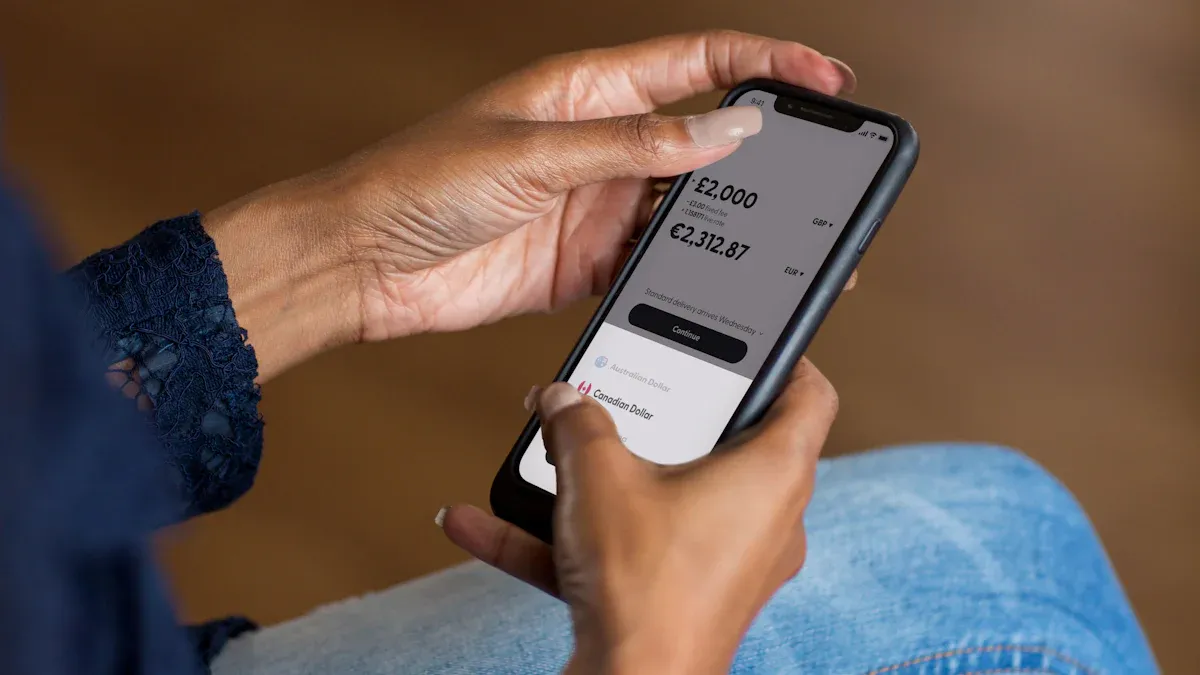
Image Source: unsplash
Have you ever felt anxious because a critical cross-border remittance was delayed in arriving? In fact, improving cross-border transfer speed is not complicated. The key is to break the entire process into three controllable stages: precise preparation before the transfer, path optimization during the transfer, and active tracking after the transfer. Mastering this clear and actionable method allows you to effectively control the timing of fund flows.
Core Points
- Carefully verify recipient information and prepare compliant documents before the transfer to avoid delays.
- Select efficient transfer channels, use major currencies, and avoid peak transaction periods to speed up transfers.
- Actively track fund status after the transfer, using tools like SWIFT gpi, and communicate any anomalies promptly.
- Mastering these three key steps can help you better control the flow time of cross-border funds.
Step 1: Precise Preparation to Eliminate Delays from the Source
Cross-border transfers are like a relay race, where any mistake in one segment can cause overall delays. Therefore, conducting meticulous preparation before initiating the transfer is the first step to successfully speeding up cross-border transfers. You only need to focus on the following three core points to lay a solid foundation for the smooth flow of funds.
Verify Recipient Information: Ensure Zero Errors
This is the most basic yet most error-prone step. A tiny mistake can cause the transfer to be returned or funds to enter an unclaimed “pending” state. Before submission, please be sure to double-check the following information:
- Is the recipient’s name exactly the same as the bank account name?
- Is the recipient’s account number accurate?
- Is the full name of the recipient bank correct?
- Is the bank’s SWIFT/BIC code provided?
Special Tip: Pay extra attention to the accuracy of the recipient’s name. In some countries (such as mainland China), even slight differences in name spelling can cause the bank to reject the deposit.
Provide Local Account: Accelerate Receipt in Specific Markets
If you are receiving payments from mainstream markets like Europe or the US, proactively provide local account information to the payer. This allows them to complete the payment through their domestic clearing system (such as ACH), which is much faster than traditional international wire transfers.
The table below lists key information required for local transfers in some major countries and regions:
| Country/Region | Required Key Information |
|---|---|
| United States | ABA number (for ACH transfers) |
| Most European countries | IBAN (for SEPA transfers) |
| United Kingdom | SORT code |
| Mainland China | Recipient’s phone number (required by some channels) |
| Ukraine | Tax ID |
Prepare Compliance Documents: Speed Up Bank Review
To comply with global anti-money laundering (AML) regulations, banks review every cross-border transfer for compliance. You can prepare documents proving the transaction’s legitimacy in advance to accelerate this process.
Prepare clear contracts, invoices, or relevant order screenshots. When filling in the transfer purpose, use concise and clear descriptions, such as “Payment for goods (Invoice XXX)” or “Consulting service fee,” and avoid vague terms like “payment” or “transfer.” Clear materials and purpose descriptions help bank reviewers make quick judgments, allowing your funds to pass smoothly.
Step 2: Optimize the Path to Improve Cross-Border Transfer Speed

Image Source: unsplash
After completing precise preparation, the next step is to choose the fastest and most cost-effective path for your funds. Optimizing the transfer path is the core link in effectively improving cross-border transfer speed. By selecting efficient channels, major currencies, and the best timing, you can significantly shorten the in-transit time for funds.
Choose Efficient Transfer Channels
Different transfer channels vary significantly in speed, fees, and transparency.
- Traditional Banks: Banks like HSBC and Standard Chartered with strong global networks, or some Hong Kong-licensed banks, have rich experience in handling large transactions and compliance, making them safe and reliable. However, their processes usually involve multiple correspondent banks, resulting in slower speeds and higher fees.
- Modern Fintech Platforms: These platforms use innovative technology to bypass traditional complex correspondent bank systems, typically offering faster speeds and lower fees.
When choosing a channel, reputation is the top priority. A reputable fintech platform not only ensures fund security but also provides clear fee structures and real-time tracking functions. The table below compares features of some mainstream platforms:
| Platform Name | Fee Features | Speed Features |
|---|---|---|
| Wise | Transparent fees, no exchange rate markup | Fast transfer speeds |
| Revolut | Low cost, some free transfers | Instant transfers (within platform) |
| TransferGo | Offers fast transfer options | Fast transfers in as little as 30 minutes |
| Paysend | Fixed fees (e.g., $2) | Verification failures may cause delays |
When choosing a channel, reputation is the top priority. A reputable fintech platform not only ensures fund security but also provides clear fee structures and real-time tracking functions. For users who care about both speed and compliance, a tool-oriented platform like the BiyaPay website can be a practical option. Before sending a transfer, you can first use its free fiat exchange rate comparison tool to estimate the real cost between currencies, and then initiate a cross-border remittance within the same account, reducing the time spent switching between different providers and repeatedly confirming fees.
Because BiyaPay is positioned as a multi-asset trading wallet, the same account can hold and convert multiple major fiat currencies and digital assets. This allows users who need to handle trade settlements, investment proceeds, or family support payments to complete the full flow—from conversion to outbound transfer—inside one environment, rather than juggling a separate remittance tool, investment account, and FX provider. In cross-time-zone scenarios, this path simplification often translates into fewer handovers, fewer manual checks, and more predictable arrival times.
At the same time, accuracy of beneficiary details remains critical for speed. BiyaPay’s transfer flow guides users to provide complete bank information and offers built-in SWIFT lookup and IBAN lookup utilities so that formatting or clearing details can be verified before submission. This lowers the chance of manual review and returns from intermediary banks, helping transfers move faster while still meeting regulatory and security requirements.
Prefer Major Settlement Currencies
Choosing highly liquid major currencies for settlement is another secret to accelerating transfers. Currencies like the US dollar (USD), euro (EUR), Japanese yen (JPY), and British pound (GBP) have more mature and efficient clearing networks due to their massive transaction volumes.
Why prefer USD? The US dollar is the world’s primary reserve currency, with over half of global international trade settled in USD. Using USD for transfers reduces currency conversion times and intermediary links, avoiding delays and extra costs due to insufficient liquidity in minor currencies.
In contrast, trading in exotic currencies requires banks and institutions to find counterparties through more complex paths, which not only increases exchange rate spread costs but also significantly extends processing time.
Avoid Transaction Peaks: Choose the Best Transfer Timing
The timing of initiating the transfer is equally critical. Banks and payment systems face immense pressure during specific periods.
To avoid congestion, it is recommended to operate on weekday mornings. At this time, bank processing volumes are relatively stable, and staff are sufficient.
Also, be sure to check public holidays in both the remitting and receiving locations. If any bank along the transfer path is closed due to a holiday, your funds will be held until the bank resumes operations. For example, during China’s National Day Golden Week or US bank holidays, clearing for related currencies is completely suspended. Planning ahead and avoiding these peak periods is key to ensuring smooth fund flow.
Step 3: Active Tracking to Control Fund Dynamics

Image Source: pexels
After the remittance is sent, your work is not over. Switching from passive waiting to active tracking is the final barrier to ensuring fund security and improving cross-border transfer speed. This step allows you to know the fund’s location in real time and intervene quickly when anomalies occur, minimizing potential delays.
Make Good Use of Tracking Tools: Master Progress in Real Time
In the past, cross-border transfers were like a “black box,” with funds hard to track once sent. Now, the situation has greatly improved. Many banks and financial institutions have adopted advanced tracking technologies, allowing you to clearly see every node in the fund flow.
The most representative tool is SWIFT gpi (Global Payments Innovation). This service, launched by SWIFT, has been adopted by over 4,000 banks worldwide. If your bank supports gpi, you will gain unprecedented transparency and control.
Core Advantages of SWIFT gpi:
- High-Speed Arrival: Nearly 50% of gpi payments arrive within 30 minutes, and almost 100% within 24 hours.
- Real-Time Tracking: You can check the remittance processing status and location in real time, just like tracking a package.
- Fee Transparency: Processing fees, exchange rate costs, and other information are fully transparent, eliminating hidden charges.
You can proactively request the unique end-to-end transaction reference code (UETR) for this remittance from your bank and track it through the bank’s channels. For small payments, SWIFT has also launched the SWIFT Go service, aimed at helping individuals and SMEs achieve fast remittances at lower costs.
Communicate Anomalies Promptly: Prevent Issues from Escalating
Even with thorough preparation, unexpected situations may arise during the transfer, such as incorrect recipient information causing interception by an intermediary bank or the need for additional materials due to compliance issues. When you discover through tracking tools that funds have been stagnant at a certain link for a long time, do not wait.
Take immediate action and contact your remitting bank or payment platform. When communicating, prepare the following key information to help customer service quickly locate the issue:
- Transaction reference number or serial number
- Specific date and amount of the remittance initiation
- Details of the recipient and payer
- Any error messages or statuses you see during tracking
Timely communication helps the bank quickly initiate an investigation, contact intermediary or receiving banks to resolve the issue, and prevent minor troubles from becoming major problems that lead to transaction failure. Remember, the more proactive you are, the faster the funds can escape the predicament and arrive at their destination smoothly.
As you can see, improving cross-border transfer speed is not complicated. The key is to break the entire process into three clear stages: precise preparation before the transfer, path optimization during the transfer, and active tracking after the transfer. When you internalize this method into your operational habits, you can say goodbye to long waits and make every global fund flow more efficient and reassuring.
Starting today, keep every cross-border fund under your control.
FAQ
Which transfer method is the cheapest?
Fintech platforms are usually cheaper than traditional banks because they offer better exchange rates and transparent fees. However, for ultra-large transactions, some banks may provide competitive solutions. You need to compare based on the specific amount and needs.
Can my remittance arrive instantly?
Some fintech platforms offer near-instant transfer services. Using major currencies and local clearing networks (such as SEPA) can also greatly speed things up. But “instant” depends on multiple factors, including bank processing time and public holidays.
What should I do if the transfer is delayed?
Step 1: Use SWIFT gpi or platform tracking tools to confirm the current location of the funds. Step 2: Prepare the transaction reference number and immediately contact your remitting bank or platform customer service. Proactive communication is the fastest way to solve the problem.
Do I need to provide a contract or invoice for every transfer?
Not necessarily; it depends on the bank’s compliance requirements and transfer amount. But preparing contracts or invoices in advance for commercial payments can effectively avoid delays due to reviews. Clear transaction proof is the best way to accelerate bank compliance reviews.
*This article is provided for general information purposes and does not constitute legal, tax or other professional advice from BiyaPay or its subsidiaries and its affiliates, and it is not intended as a substitute for obtaining advice from a financial advisor or any other professional.
We make no representations, warranties or warranties, express or implied, as to the accuracy, completeness or timeliness of the contents of this publication.
Related Blogs of
Investing in Japanese Real Estate for Rental Yield: How to Convert JPY Rent to USD and Trade US Stocks Using the Same App?


Never Trust Any 'Acquaintance Currency Exchange': Real Cases of Crypto Assets Stolen via Acquaintance Scams During the World Cup


Logic of Money Laundering Conviction: How Ordinary People Ensure Their Crypto Asset Cash-Out Activities Never Cross the Red Line


Cross-Border Charity and International Rescue: How Digital Assets Enable Point-to-Point Ultra-Fast Fund Delivery in Major Global Events?

Choose Country or Region to Read Local Blog
 Australia
 Austria
 Belgium
 Canada
 Cyprus
 Czech Republic
 Denmark
 Estonia
 Finland
 France
 Germany
 Greece
 Hong Kong
 India
India Indonesia
 Ireland
 Italy
Italy Japan
Japan Latvia
 Lithuania
 Luxembourg
 Malaysia
 Malta
Malta Morocco
 Nepal
Nepal Netherlands
 New Zealand
 Norway
 Pakistan
 Philippines
 Poland
 Portugal
 Romania
 Singapore
 Slovakia
 Slovenia
 South Africa
 South Korea
 Spain
Spain Sweden
 Thailand
 The United States
 Turkey
 United Arab Emirates
 United Kingdom
 Vietnam
Contact Us




BIYA GLOBAL LLC is registered with the Financial Crimes Enforcement Network (FinCEN), an agency under the U.S. Department of the Treasury, as a Money Services Business (MSB), with registration number 31000218637349, and regulated by the Financial Crimes Enforcement Network (FinCEN).
BIYA GLOBAL LIMITED is a registered Financial Service Provider (FSP) in New Zealand, with registration number FSP1007221, and is also a registered member of the Financial Services Complaints Limited (FSCL), an independent dispute resolution scheme in New Zealand.