2025 International Remittance New Trends: Say Goodbye to the Era of High Fees



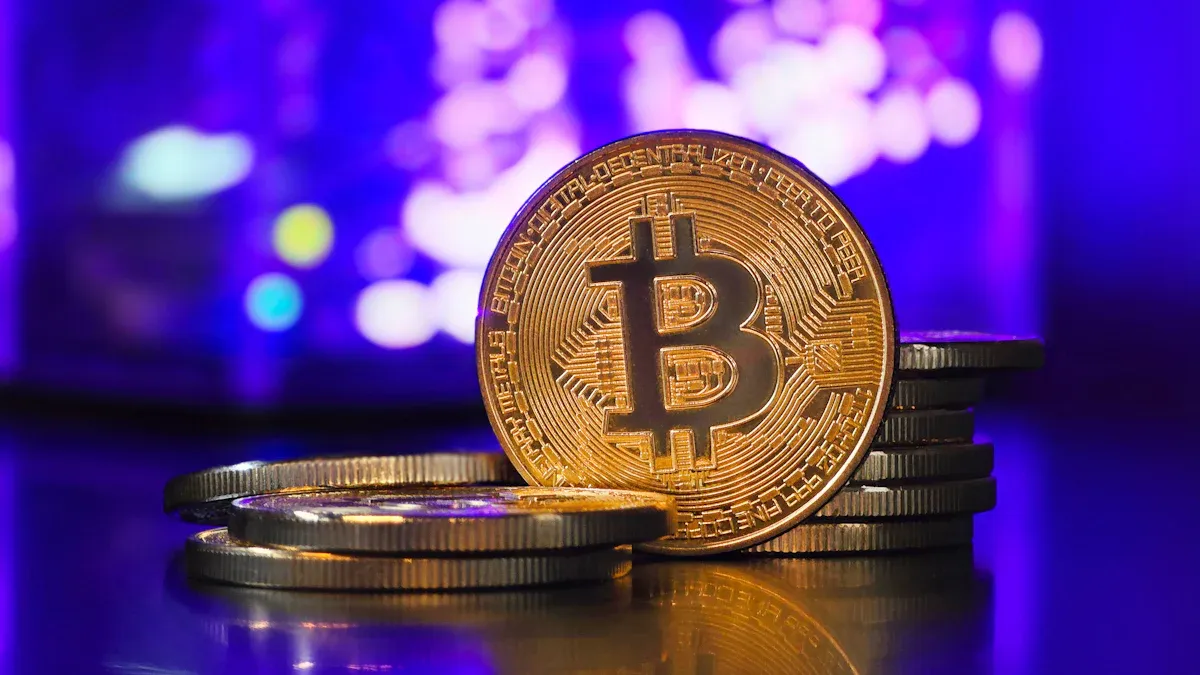
Image Source: unsplash
Are you still troubled by high international remittance handling fees?
Traditional bank transfers not only may devour up to 6% in fees, but funds usually take one to five business days to arrive.
Now, a brand-new method is changing everything. You can use USDT to complete remittances, with handling fees reduced to under $1, and funds reaching globally in minutes. USDT leverages blockchain technology to achieve peer-to-peer transactions, bypassing layers of traditional bank intermediaries, greatly improving efficiency and reducing costs.
Key Points
- USDT remittance has low fees and fast speeds. It is much cheaper than traditional bank transfers and arrives in minutes.
- Using USDT for remittance requires first exchanging local currency for USDT. Choosing a reliable trading platform is important.
- When transferring, be sure to select the TRC-20 network. It has low fees, fast speeds, and is suitable for daily remittances.
- Before sending USDT, carefully verify the receiving address. Once the address is wrong, funds cannot be recovered.
- USDT remittance has price fluctuation and platform security risks. Choose reputable platforms and complete transactions quickly.
Prepare USDT: From Fiat to Stablecoin
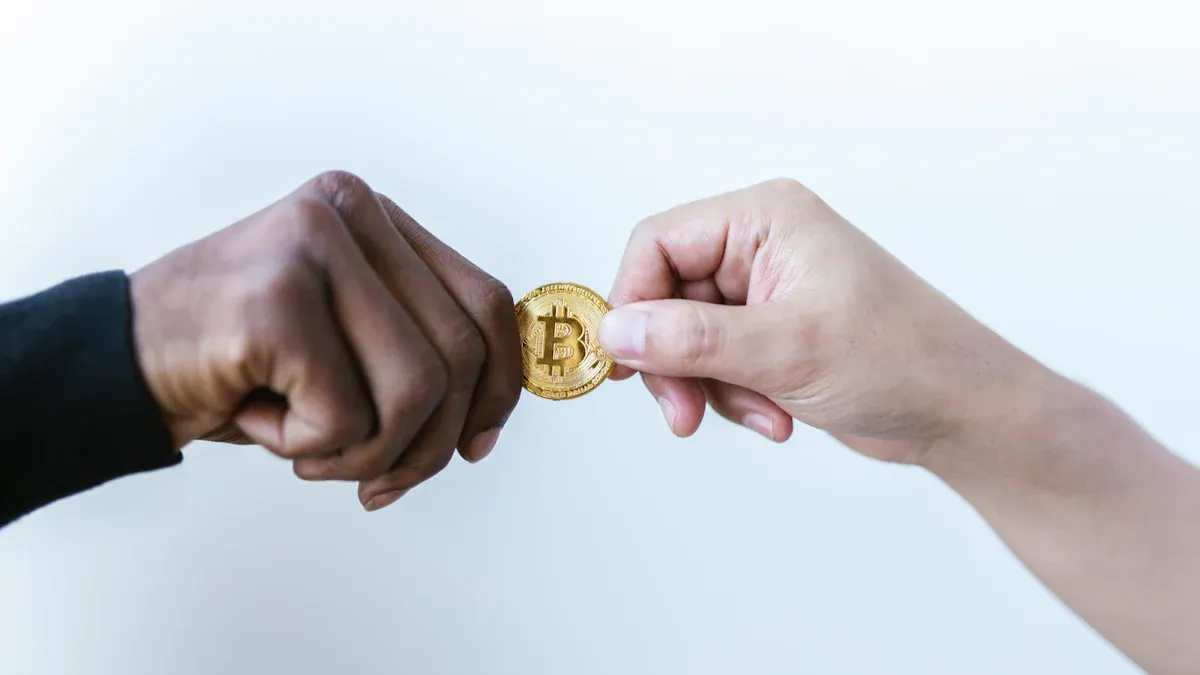
Image Source: pexels
To use USDT for remittance, your first step is to exchange your local currency (fiat) for USDT. This process is very simple, mainly involving two links: choosing a reliable trading platform, then completing the purchase operation.
Choose a Compliant P2P Exchange
You need a platform to connect you with USDT sellers. Peer-to-peer (P2P) exchanges serve as this marketplace. Here, you can trade directly with other users, using familiar local payment methods to buy USDT.
There are many mature P2P platforms available, such as Bybit, OKX, and Paxful. They usually support hundreds of payment methods, including bank transfers and e-wallets, making transactions very flexible. When choosing a platform, prioritize those with large user bases, good reputations, and enforced identity verification (KYC) policies, providing a foundation for your fund security.
Selection Tip
Besides centralized platforms, you can also learn about decentralized exchanges like Uniswap. They allow trading without mandatory KYC, but to comply with future regulations, this may change.
Complete USDT Purchase Operation
After selecting a platform, the USDT purchase process is usually highly standardized. Although interfaces vary slightly across platforms, the core steps are basically the same:
- Register and Complete Verification: Visit the platform’s official website to create an account. Depending on platform requirements, you may need to complete identity verification (KYC), usually requiring upload of ID documents. After verification, you can trade.
- Screen Sellers: In the P2P trading area, filter suitable sellers by price, payment method, and transaction amount. Be sure to choose sellers with good trading history and high positive ratings.
- Place Order and Pay: Enter the USDT amount you wish to buy; the platform automatically calculates the fiat amount to pay. After ordering, you receive the seller’s payment information. Complete payment within the specified time.
- Confirm Receipt: After payment, click the “I have paid” button on the platform. Once the seller confirms receipt of funds, the platform-escrowed USDT is automatically released to your account wallet.
Security First
Throughout the transaction, always communicate via the platform’s built-in chat system and use platform-provided escrow services. Enabling two-factor authentication (2FA) adds an extra security layer to your account.
Execute Transfer: Send USDT Globally
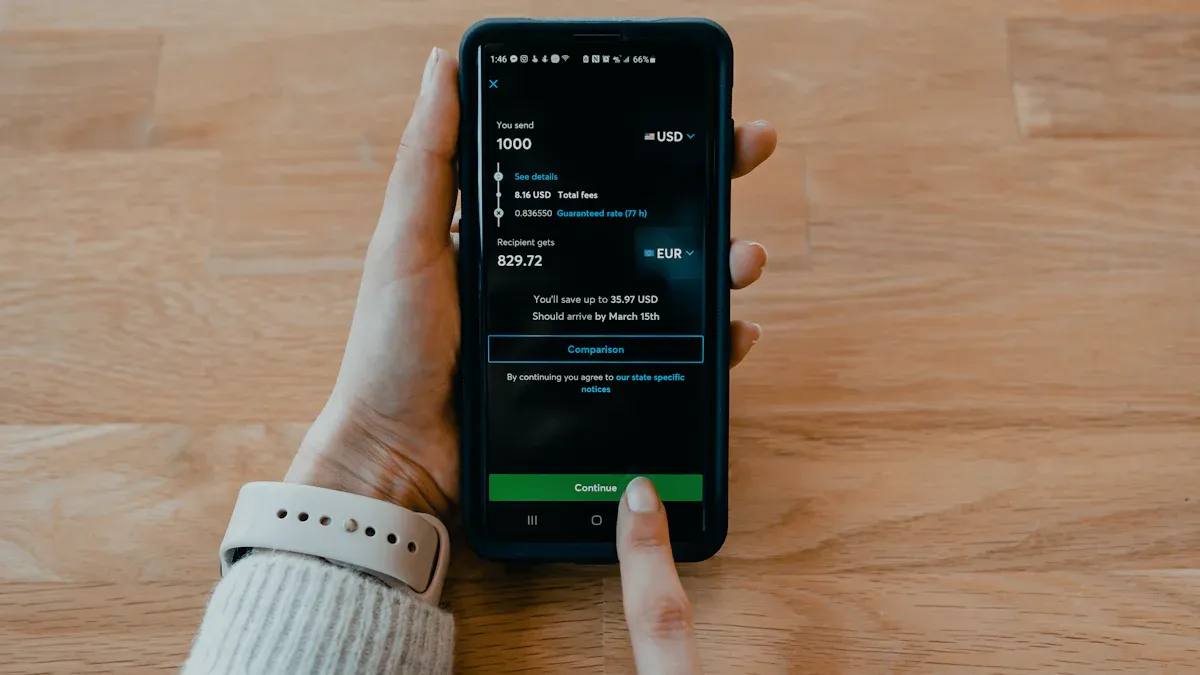
Image Source: unsplash
After successfully exchanging fiat for USDT, the next step is to send these digital assets to the recipient. This process is as simple as sending an email, but you need to focus on two key links: choosing the correct transfer network and confirming the absolute accuracy of the receiving address.
Choose an Efficient Transfer Network
USDT exists on multiple blockchain networks; your chosen network directly determines transfer speed and fees. The two most common options are ERC-20 and TRC-20.
- ERC-20 (Ethereum Network): This is one of the oldest and most widely used USDT networks. However, its transaction fees (Gas Fee) are relatively high and volatile. During network congestion, a single transfer fee may reach several dollars. Although currently lower, historical data shows its instability.
- TRC-20 (TRON Network): This is the ideal choice for small or frequent transfers. The TRC-20 network is known for extremely low fees and lightning-fast speeds. Transactions usually confirm in 3-5 seconds, with fees as low as $0.00025 per transaction.
Selection Advice
For most daily international remittance scenarios, we explicitly recommend using the TRC-20 network. It combines cost and efficiency advantages, maximizing USDT remittance value. When withdrawing, ensure you and the recipient select the same network.
Secure Withdrawal and Address Confirmation
This is the step requiring your utmost attention in the entire process. Blockchain transactions are irreversible.
❗️ Important Warning: Once the address is wrong, assets cannot be recovered.
Unlike bank transfers, there is no customer service to help recover funds. Therefore, before clicking “send,” you must be 100% sure of the address accuracy.
Follow these best practices to ensure fund security:
- Copy and Paste Address: Directly copy from the recipient’s provided address to avoid manual input errors.
- Carefully Verify Address: After pasting, carefully check the first and last few characters of the address. A safer way is to have the recipient provide a QR code for the address, which you scan to input.
- Conduct Small Test: If making a large transfer, strongly recommend sending a tiny amount (e.g., 1 USDT) first for testing. After the recipient confirms receipt, send the remaining bulk.
- UseVerification Tools: Some address verification tools on the market can check address format validity, adding an extra security check to your operation.
Complete Receipt: From USDT to Local Currency
When your friend or family receives the USDT you remitted, they are just one step away from getting local currency. This process is like when you initially bought USDT, just in reverse. The recipient needs to sell USDT on a P2P trading platform to exchange for their local fiat currency.
Recipient Sells USDT
The recipient needs to act as a “seller” on a platform supporting P2P trading (such as Bybit, OKX, or Biyapay). The entire process is very intuitive and can be broken down into the following steps:
- Enter P2P Trading Area: Log into the trading platform account and select the “Sell” USDT option.
- Screen Buyers: You will see a buyer list. Select a reliable buyer based on their accepted payment methods (e.g., bank transfer), reputation score, and transaction completion rate.
- Create Sell Order: Enter the USDT amount you wish to sell. The platform automatically calculates the fiat amount you will receive.
- Wait for Buyer Payment: After order creation, your USDT is temporarily escrowed by the platform. Wait for the buyer to pay you via your provided payment method.
- Confirm Receipt and Release: After confirming full payment in your bank account or e-wallet, return to the platform and click “Confirm Receipt and Release Assets.” The platform releases the escrowed USDT to the buyer.
For users who prefer not to juggle multiple apps, it can also be practical to handle “receive, convert, and send again” inside one wallet. With a multi-asset wallet like BiyaPay, the recipient can open an account on the official website, complete KYC, and manage both USDT and several fiat currencies under the same login instead of moving funds across different exchanges.
After USDT arrives, they can first use BiyaPay’s online converter to check real-time FX rates, then trigger a cross-border remittance to their local bank account in just a few taps. The app shows expected arrival amounts and fee details clearly, which helps families plan cash flow for tuition, living costs, or supplier payments.
For people with recurring remittance needs, such as monthly salaries or regular family support, it is also worth checking BiyaPay’s event center or announcements for periodic fee adjustments or route optimizations, so that cost, compliance, and stability can be managed in one place.
Safe Trading Tip
- Receive First, Release Later: Before releasing your USDT, log into your bank or payment app to visually confirm funds have arrived. Do not trust any payment screenshots sent by the buyer.
- Beginners Start Small: If this is your first P2P transaction, start with a small amount to familiarize yourself with the process.
Confirm Receipt and Withdraw
After successfully exchanging USDT for local currency, this money usually enters the receiving account you selected on the P2P platform, such as your bank account. In the withdrawal link, pay attention to the following to ensure compliance and security.
First, almost all compliant trading platforms enforce identity verification (KYC) policies. This means you need to operate with a real-name verified account. Platforms do this to comply with anti-money laundering regulations and protect all users’ fund security.
Withdrawal Core Principle
To prevent fraud risks, platforms usually require withdrawing funds to a bank account in the same name as your KYC information. Attempting to transfer to a third-party account may result in the transaction being flagged or failed.
Fund arrival time depends on bank processing speed. Although the P2P transaction itself may complete in minutes, inter-bank transfers (such as ACH) may take 1 to 5 business days to finally appear in your bank account balance.
USDT International Remittance: Full Cost and Risk Analysis
You have learned the USDT remittance operation process, but is it really as perfect as it sounds? To make an informed decision, you need a comprehensive understanding of its cost advantages and potential risks.
Quantified Remittance Cost Comparison
Let’s use a specific example for quantified comparison. Assume you need to make a $10,000 international remittance; we compare costs between traditional banks and USDT methods.
| Cost Comparison | Traditional Bank Wire (SWIFT) | USDT Remittance (Using TRC-20 Network) |
|---|---|---|
| Core Fees | • Wire Fee: $35 - $65• Intermediary Bank Fee: $10 - $20 (possibly multiple)• Currency Exchange Markup: 1% - 4% ($100 - $400) | • P2P Purchase Fee: 0.1% - 1.5% ($10 - $150)• Network Transfer Fee: Approx. $0.315 (negligible)• P2P Sell Fee: 0.1% - 1.5% ($10 - $150) |
| Total Estimated Cost | $245 - $600 (2.5% - 6% of total) | $20 - $300 (0.2% - 3% of total) |
| Final Result | High cost, opaque process | Low cost, clear fees |
Conclusion: Save Over 50%
From the table, you can clearly see that traditional bank total fees may reach $600. In contrast, even including both ends of P2P transaction fees, USDT remittance total cost is far lower than traditional methods, saving you over 50% at maximum.
Potential Risks and Coping Strategies
Although USDT has huge advantages in cost and efficiency, it is not without risks. Understanding these risks and learning how to cope is key to safely using this new tool.
1. Price Fluctuation Risk
Although USDT is a stablecoin designed to peg 1:1 to the USD, it has experienced minor price fluctuations historically. Data shows that under extreme market conditions, its price may float between $0.98 and $1.02.
Coping Strategy: Shorten Holding Time
The best avoidance method is “quick in, quick out.” After purchasing USDT, execute the transfer immediately. Similarly, after receiving USDT, the recipient should sell it for local currency as soon as possible. Controlling the entire international remittance process within a few hours minimizes the impact of price fluctuations.
2. Platform Security Risk
Cryptocurrency exchanges store large amounts of user assets, making them primary targets for hacker attacks. Common risks include:
- Phishing: Scammers create fake websites or emails to trick you into revealing account passwords or private keys.
- Platform Hacked: Hackers exploit smart contract vulnerabilities or system weaknesses to steal funds directly from exchanges.
- Malware: Your computer or phone is infected with viruses, leading to wallet information theft.
Coping Strategy: Strengthen Personal Security Precautions
- Choose Reputable Platforms: Prioritize exchanges with long operation times, large user bases, and good security records.
- Enable Two-Factor Authentication (2FA): Add an extra security barrier to your account.
- UseIndependent Wallets: For large assets, do not store long-term on exchanges. Transfer them to self-controlled “cold wallets” (offline storage) or “hot wallets” (online apps) to effectively isolate platform risks.
3. Operational Error Risk
This is the most common and heartbreaking risk. In the blockchain world, there is no “undo” button.
- Sent to Wrong Address: If you send USDT to a wrong address, the assets are permanently lost.
- Wrong Network Selected: If you choose a network mismatched with the recipient during withdrawal (e.g., you send via TRC-20, but the recipient provides an ERC-20 address), assets are also lost.
Coping Strategy: Repeated Confirmation, Small Test
- Copy-Paste, Don’t Type: Always copy the recipient’s provided address.
- Check First and Last Characters: After pasting, carefully verify the beginning and end match exactly.
- Conduct Small Test: Before large transfers, send a tiny amount (e.g., 1 USDT) for testing. After the recipient confirms, send the remainder.
4. Regulatory Policy Risks in Various Countries
Countries have vastly different attitudes toward cryptocurrency, with relevant laws and regulations constantly changing.
- United States: Allows compliant third-party platforms to handle cryptocurrency business.
- Mainland China: Completely bans cryptocurrency trading.
- India: Policy swings, cautious attitude.
- Philippines: Cryptocurrency widely used for remittances, but legal status unclear.
Coping Strategy: Understand and Comply with Local Regulations
Before conducting USDT international remittance, take time to understand the latest legal provisions in the sending and receiving countries or regions. Ensuring your operations are compliant locally avoids unnecessary legal risks.
USDT remittance is reshaping the future of global fund flows with its low costs, high efficiency, and 7x24-hour availability. As experts predict, near-instant settlement is becoming reality.
Take Your First Step
Despite huge advantages, you still need to understand operational risks. Now, you can start by choosing a reputable platform like OKX or Bybit, conduct a small test, and personally experience the convenience of the new generation of international remittances. You will join over 20 million global users in saying goodbye to high fees.
FAQ
Is USDT remittance legal?
Policies vary by country. For example, the US allows compliant platform operations, while mainland China bans trading. You must understand the legal provisions in the sending and receiving locations before use to ensure compliant operations.
How long does the entire remittance process take?
USDT network transfer itself takes only minutes. Including P2P buying and selling, the entire process usually takes 15 to 60 minutes. Specific time depends on you and your counterparty’s response speed.
What if I don’t have a cryptocurrency account?
You need to register an account first. Choose a reputable P2P exchange, follow platform guidance to complete registration and identity verification. This is the first step to start all operations, and the process is very simple.
Why not directly use Bitcoin (BTC) for remittance?
Bitcoin prices fluctuate dramatically; losses may occur due to price drops during remittance.
USDT is a stablecoin pegged to the USD with relatively constant value. This ensures the recipient receives basically the same amount as you sent, effectively avoiding market risks.
*This article is provided for general information purposes and does not constitute legal, tax or other professional advice from BiyaPay or its subsidiaries and its affiliates, and it is not intended as a substitute for obtaining advice from a financial advisor or any other professional.
We make no representations, warranties or warranties, express or implied, as to the accuracy, completeness or timeliness of the contents of this publication.
Related Blogs of

How to Fill Out a CVS Money Order A 2026 Guide

How Safe Is Your Money With Ally Bank in 2026?

What Are the Daily Limits for Chase Accounts?

The 18 Best Apps to Earn Real Cash This Year

Choose Country or Region to Read Local Blog
 Australia
 Austria
 Belgium
 Canada
 Cyprus
 Czech Republic
 Denmark
 Estonia
 Finland
 France
 Germany
 Greece
 Hong Kong
 India
India Indonesia
 Ireland
 Italy
Italy Japan
Japan Latvia
 Lithuania
 Luxembourg
 Malaysia
 Malta
Malta Morocco
 Nepal
Nepal Netherlands
 New Zealand
 Norway
 Pakistan
 Philippines
 Poland
 Portugal
 Romania
 Singapore
 Slovakia
 Slovenia
 South Africa
 South Korea
 Spain
Spain Sweden
 Thailand
 The United States
 Turkey
 United Arab Emirates
 United Kingdom
 Vietnam
Contact Us




BIYA GLOBAL LLC is a licensed entity registered with the U.S. Securities and Exchange Commission (SEC No.: 802-127417); a certified member of the Financial Industry Regulatory Authority (FINRA) (Central Registration Depository CRD No.: 325027); regulated by the Financial Industry Regulatory Authority (FINRA) and the U.S. Securities and Exchange Commission (SEC).
BIYA GLOBAL LLC is registered with the Financial Crimes Enforcement Network (FinCEN), an agency under the U.S. Department of the Treasury, as a Money Services Business (MSB), with registration number 31000218637349, and regulated by the Financial Crimes Enforcement Network (FinCEN).
BIYA GLOBAL LIMITED is a registered Financial Service Provider (FSP) in New Zealand, with registration number FSP1007221, and is also a registered member of the Financial Services Complaints Limited (FSCL), an independent dispute resolution scheme in New Zealand.