Save Money Easily: Quick Guide to Remitting to Vietnam with Stablecoins




Image Source: pexels
Still worried about traditional wire transfer fees of tens of dollars? Now, using stablecoins to remit money to Vietnam, your cost can even be under $1. The core method is very simple: You just need to use the P2P function of a cryptocurrency exchange to directly sell USDT to local Vietnamese buyers, and you can exchange for Vietnamese Dong (VND) with instant arrival.
This method has three core advantages:
- Extremely Low Cost: Thanks to networks like TRC20, transfer costs are extremely low.
- Minute-Level Speed: Say goodbye to the long wait of 1-3 business days for traditional bank wires.
- Better Exchange Rates: Usually able to get more competitive rates than banks.
Key Takeaways
- Using stablecoins (USDT) to remit money to Vietnam has low fees, fast speed, and good exchange rates.
- You need to purchase USDT on a cryptocurrency exchange and transfer it to your funding account.
- In the P2P trading area, you select reputable Vietnamese buyers and then sell USDT.
- After the buyer pays, you must personally confirm that the money has arrived before releasing USDT.
- Choosing the TRC20 network can save fees, and be alert to common trading scams.
Why USDT is the Better Choice?
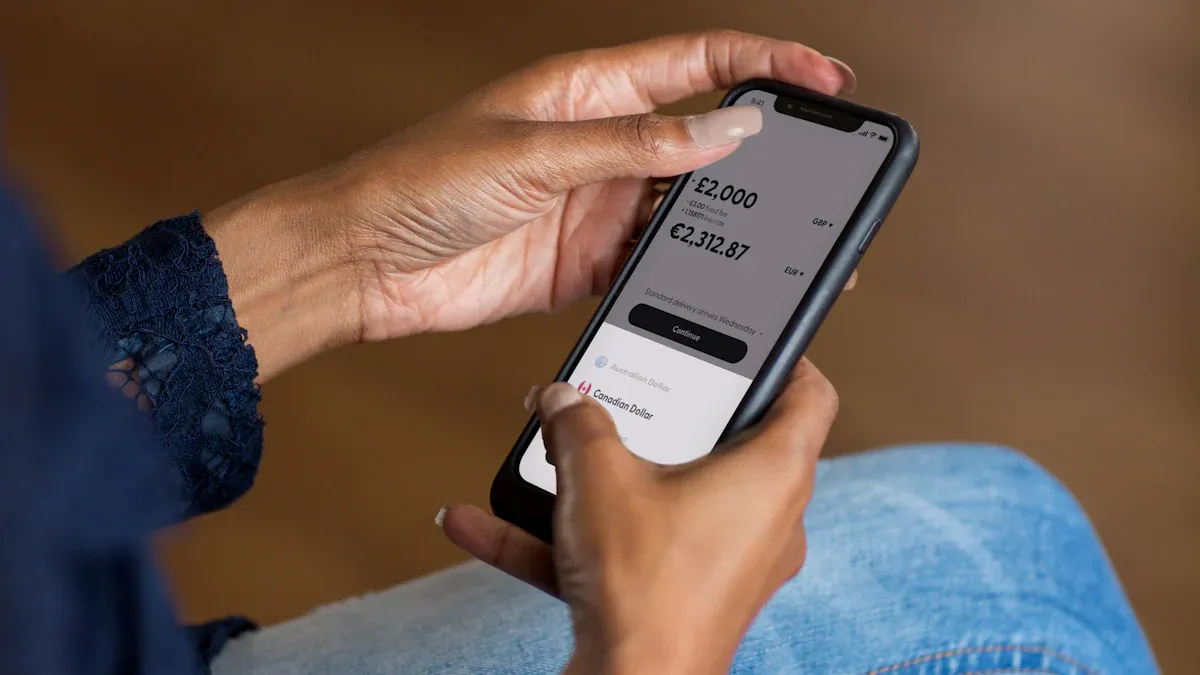
Image Source: unsplash
When considering remittance, cost, speed, and security are the three core elements. Traditional bank wires often fall short in these areas. USDT (a stablecoin pegged to the USD) provides a near-perfect solution through the P2P trading model. Let’s see why it is the better choice.
Say Goodbye to High Fees
One of the biggest pain points of traditional remittance methods is the high and opaque fees. For a cross-border remittance, you may need to pay telegraph fees, intermediary bank handling fees, and currency conversion fees, with total costs easily reaching tens of dollars.
In contrast, remitting to Vietnam with stablecoins through mainstream exchange P2P platforms can compress costs to the extreme. Traditional remittance services (such as SWIFT or Western Union) may charge up to 5% to 7% of the remittance amount, while P2P trading is almost free.
Specifically, the fee structure of P2P trading is as follows:
- Taker: As the seller, you sell USDT through existing ads on the platform, with fees usually zero.
- Maker: If you choose to post your own ad to sell USDT, the fee is only between 0% and 0.35%, depending on platform policy.
This means your remittance cost is almost only the tiny spread that may occur when exchanging local currency for USDT.
Minute-Level Arrival Speed
Forget the long wait of 1-3 business days for traditional wires. P2P trading is direct person-to-person trading. Once you find a suitable Vietnamese buyer on the platform and place an order, the other party will directly transfer Vietnamese Dong to your recipient through a local Vietnamese bank or e-wallet (such as MoMo). The entire process is usually completed within 15 minutes. You just need to confirm receipt and release your USDT. This minute-level arrival speed is especially important in urgent situations.
Hedge Against VND Inflation Risk
In addition to cost and speed, USDT provides an extra financial advantage. USDT is widely regarded as “digital dollars”, with its value pegged 1:1 to the USD. When you hold USDT, you are essentially holding USD assets.
This can help your funds effectively avoid the risk of depreciation of the Vietnamese Dong (VND). Keeping funds in USDT form is equivalent to building a value firewall to protect your assets from exchange rate fluctuations. When you need to remit, exchange it back to Vietnamese Dong to maximize the value of your funds.
Pre-Remittance Preparation: Obtain USDT and Recipient Information
Before experiencing the convenience of minute-level arrival, some simple preparations are essential. This is like preparing ingredients before cooking to make the whole process smoother. You need to prepare two things: USDT for remittance and accurate account information for the Vietnamese recipient.
Prepare Your USDT
USDT is a stablecoin pegged 1:1 to the USD and is the core “currency” for this operation. There are many ways to obtain USDT, and you can choose according to your preferences.
A convenient way is to use a compliant digital asset platform like Biyapay. You can deposit USD through a Hong Kong licensed bank account and then directly exchange for USDT within the platform. This method has a clear process and is suitable for users who prefer bank operations.
Of course, you can also obtain it on mainstream cryptocurrency exchanges (such as Binance, OKX). The operation steps are usually as follows:
- First, you need to create an account on the exchange website or App and complete identity verification.
- Then, enter the “Quick Buy Crypto” or “P2P Trading” area.
- Enter the amount of USDT you want to buy, and the system will automatically calculate the fiat amount needed.
- Choose a convenient payment method (such as bank card, P2P, etc.) and complete the payment.
Important Tip: Transfer Funds No matter which method you use to purchase, USDT is usually first stored in your “Spot Wallet”. To conduct P2P trading, you must manually transfer (Transfer) this USDT to the “Funding Wallet” or “C2C Account”. This step is free but must be done, otherwise you won’t see the available balance in the P2P market.
To maximize cost savings, it is recommended to prioritize USDT based on the TRC20 network when purchasing or transferring. Its network transfer fee is extremely low, usually under $1.
Confirm Vietnamese Recipient Account
This is the key step to ensure funds arrive safely. Incorrect information may lead to transfer failure or loss of funds. Before starting to remit to Vietnam with stablecoins, be sure to double-check the following information with your recipient:
- If receiving via bank card:
- Recipient Name (Ho tên người nhận): Must exactly match the bank account opening name.
- Bank Account Number (Số tài khoản): Ensure every digit is accurate.
- Bank Name (Tên ngân hàng): For example, Vietcombank, Techcombank, etc.
- If receiving via e-wallet:
- Wallet Type: Clearly specify MoMo, ZaloPay, or ViettelPay.
- Registered Phone Number: Usually the phone number bound to the e-wallet account.
- Recipient Name: Ensure it matches the real-name authentication information of the e-wallet.
It is strongly recommended that you have the recipient copy and paste the information to you in text form to avoid errors during manual input.
If you frequently handle cross-border payments, or need to remit not only to Vietnam but also to other countries and regions, it can be more efficient to keep “buying crypto, converting currencies, and sending money” inside a single environment. A multi-asset wallet such as BiyaPay can be used for this purpose: on one side it connects major fiat currencies and leading digital assets, and on the other it provides global remittance services, so you can buy USDT, check rates, and complete payouts from the same account instead of switching between multiple tools.
Before deciding the final amount to send, you may also run a quick check with BiyaPay’s online FX rate converter to estimate real-time exchange rates and overall costs, then decide whether a P2P stablecoin route like the one in this guide is appropriate, or whether it should be combined with more traditional bank transfers for specific cases. When a bank account is still involved on the receiving side, BiyaPay additionally offers SWIFT lookup and IBAN lookup tools to help verify account details and reduce delays or returns due to format issues. BiyaPay operates under financial licences in jurisdictions including the United States and New Zealand, and can serve as a practical base layer when you plan cross-border fund flows, balancing speed, cost and regulatory reliability.
How to Remit to Vietnam with Stablecoins: P2P Practical Guide

Image Source: unsplash
With preparations complete, we come to the core practical part. This guide will use the App interface of mainstream exchanges as an example to break down step-by-step how to complete the transaction safely and quickly. The entire process is as simple as selling something on an e-commerce platform. Follow the steps below to easily complete remitting to Vietnam with stablecoins.
Enter the P2P Trading Area
First, you need to find the P2P trading function within the exchange. P2P stands for “Peer-to-Peer”, meaning person-to-person trading. Here you will directly sell USDT to Vietnamese local buyers who need it.
The entrance locations vary slightly across exchanges but are generally similar. Usually, you can find it on the App homepage or in the “Buy Crypto” menu.
- On Binance App: Usually visible on the homepage as a “C2C Trading” or “P2P Trading” quick entry.
- On OKX App:
- Open the OKX app (Pro mode).
- Click the menu in the top left corner.
- Select “Buy Crypto”, then enter “P2P Trading”.
After entering the P2P trading area, please make the following settings:
- Switch to “Sell” mode: There are usually “Buy” and “Sell” options at the top of the page; ensure you select “Sell”.
- Select fiat as “VND”: In the top right or filter bar, switch the currency to Vietnamese Dong (VND).
- Select cryptocurrency as “USDT”: Ensure the cryptocurrency you are trading is USDT.
After completing these settings, you will see a list full of ads from Vietnamese buyers seeking to purchase USDT.
Screen VND Buyers
This is the most critical step to ensure transaction safety. The buyers in the list vary in quality, and you need to carefully screen them like selecting reliable business partners. Focus on the following indicators:
| Indicator | Description | Safety Advice |
|---|---|---|
| Verified Merchant | Marked with a yellow “✔” or diamond icon, indicating they have passed strict platform review and paid a deposit. | Strongly recommend prioritizing verified merchants; they are usually more professional and process faster. |
| Completion Rate | Shows the percentage of orders the user completed in the past 30 days. | Choose buyers with a completion rate above 95%. Low rates mean they may often cancel orders without reason. |
| Positive Feedback Rate | Reviews left by other users after trading with them. | Choose buyers with a positive feedback rate above 98%. Take a few seconds to click in and check negative review content to understand if there is malicious behavior. |
| Registration Time/Total Orders | Shows the user’s trading experience. | Prioritize users with long registration time and high total completed orders, such as over 1000 orders. |
Safety Tip: Don’t just look at the price! The highest quote isn’t necessarily the best choice. A verified merchant with 99% completion rate and thousands of orders is far more trustworthy than a new user with a slightly higher quote but only 80% completion rate.
Place Order and Wait for Payment
Once you have screened a satisfactory buyer, you can start placing the order.
- Click “Sell”: On the selected buyer’s ad entry, click the “Sell” button on the right.
- Enter Sell Amount: You can choose “By Quantity” (enter the number of USDT to sell) or “By Amount” (enter the VND amount you want to receive).
- Select Payment Method: The system will prompt you to choose a receiving account. If you haven’t added one before, add your Vietnamese recipient’s bank card or e-wallet information here.
- Confirm Order: After checking all information is correct, click “Sell USDT”.
After successfully placing the order, the page will jump to the order details and start a countdown (usually 15-30 minutes). Now, all you need to do is wait patiently. The buyer will transfer Vietnamese Dong to your designated receiving account through their chosen payment method within this time.
Confirm Receipt and Release USDT
This is the final step of the entire process and the one where you need to stay most vigilant.
When the buyer completes payment, they will click the “I have paid” button on the platform. At this point, the “Confirm Receipt and Release” button on your App will light up.
Ultimate Safety Rule: Verify First, Then Release! Before clicking the “I have received payment and release” button, you must personally perform the following steps:
- Log in to the receiving account: Open the online banking App or MoMo, ZaloPay, etc., e-wallet App corresponding to your recipient.
- Check account balance: Visually confirm that a payment exactly matching the order amount has “arrived” and that the total account balance has indeed increased.
- Do not trust any screenshots: Never confirm receipt based on any transfer screenshots or SMS notifications sent by the buyer. Screenshots can be forged.
Only after you are 100% sure the money has arrived can you return to the exchange App and click the “I have received payment and release” button. The platform will release your escrowed USDT to the buyer. At this point, a safe, fast, low-cost remittance is fully completed.
Trading Safety and Best Practices
After mastering the operation process, you also need to understand some safety guidelines and practical tips. This will help you maximize the protection of your funds while enjoying convenience and achieve the best remittance results.
Select Reliable Trading Counterparts
In the P2P market, choosing a trustworthy buyer is the first step to a successful transaction. The platform’s “Verified Merchants” are your top choice. They have undergone strict exchange review, usually with an official badge next to their nickname (such as a yellow “✔”), representing higher credibility and more professional handling capabilities.
In addition to looking for verified merchants, you should comprehensively evaluate the following key indicators, which together form the trading counterpart’s “credit file”:
- High Completion Rate: Choose buyers with a completion rate above 95%, indicating they rarely cancel orders without reason.
- High Positive Feedback Rate: Prioritize users with positive feedback above 98%, representing most people had good trading experiences.
- Rich Experience: Users with many total orders and long registration time are usually more reliable.
Identify Common Trading Scams
Scammers will exploit your negligence to steal funds. You must stay vigilant and identify and prevent the following common scams:
- Forged Payment Proof: This is the most common scam. Scammers send a forged bank transfer screenshot or even a fake bank receipt SMS to urge you to release USDT.
- Refund Scam: Some payment methods allow reversal. After you release USDT, the scammer immediately contacts the bank or payment platform to initiate a refund and withdraw the money.
Core Anti-Scam Rule: Under no circumstances rely on screenshots or SMS notifications sent by the buyer. You must personally log in to the receiving bank or e-wallet App and confirm the account balance has increased before releasing your USDT. The platform’s escrow service will protect your cryptocurrency until you confirm receipt, so ignore the scammer’s urging.
Cost Control and Exchange Rate Tips
To make every penny count, pay attention to the following two points:
- Choose Low-Cost Network: When preparing USDT, always prioritize the TRC20 network. Its transfer fee is extremely low, usually under $1, effectively reducing your fixed costs.
- Seize Trading Timing: P2P market exchange rates fluctuate in real time. Usually during active market periods, such as Vietnamese local business hours, trading volume is higher and liquidity is better. At this time, you are more likely to find competitively priced buyers for better exchange rates.
You will find that remitting to Vietnam with stablecoins via P2P is indeed a new choice that combines low cost, high efficiency, and operational convenience. We encourage you to start with small transactions to personally experience the process and dispel concerns about new things.
Disclaimer: Please note that cryptocurrency and P2P trading involve inherent risks, including market volatility and fraud risks. Transactions are usually irreversible, and you bear decision-making responsibility yourself while ensuring all actions comply with local laws and regulations.
FAQ
Is P2P Trading Legal in Vietnam?
You need to understand and comply with local Vietnamese laws yourself. Currently, Vietnam has specific regulations on cryptocurrency trading. Person-to-person P2P trading is widely used in practice, but you are still responsible for ensuring your actions are legal.
What If the Buyer Marks Paid But I Didn’t Receive the Money?
The platform will escrow your USDT. If the buyer does not pay within the specified time or you do not receive the funds, you can file an appeal.
Remember: Before personally logging into online banking or e-wallet to confirm funds have arrived, absolutely do not click the “Release” button. Your assets are safe until you confirm.
Can I Remit Large Amounts?
P2P trading has per-order limits, depending on the buyer’s settings. For large remittances, you can split into multiple transactions or find verified merchants specializing in large orders. They usually have higher trading limits and more experience.
Are There Other Hidden Costs Besides Network Fees?
When selling USDT via P2P, the platform usually does not charge you. Your main costs are the possible spread when initially purchasing USDT and the extremely low TRC20 network transfer fee (usually under 1 USD), with no other hidden fees.
*This article is provided for general information purposes and does not constitute legal, tax or other professional advice from BiyaPay or its subsidiaries and its affiliates, and it is not intended as a substitute for obtaining advice from a financial advisor or any other professional.
We make no representations, warranties or warranties, express or implied, as to the accuracy, completeness or timeliness of the contents of this publication.
Related Blogs of
How Safe Is Your Money With Ally Bank in 2026?

Zelle Wire Transfer or ACH? Clearing Up the Confusion

What Are the Daily Limits for Chase Accounts?

What is the Dialing Code for the USA and How to Call?
Choose Country or Region to Read Local Blog
 Australia
 Austria
 Belgium
 Canada
 Cyprus
 Czech Republic
 Denmark
 Estonia
 Finland
 France
 Germany
 Greece
 Hong Kong
 India
India Indonesia
 Ireland
 Italy
Italy Japan
Japan Latvia
 Lithuania
 Luxembourg
 Malaysia
 Malta
Malta Morocco
 Nepal
Nepal Netherlands
 New Zealand
 Norway
 Pakistan
 Philippines
 Poland
 Portugal
 Romania
 Singapore
 Slovakia
 Slovenia
 South Africa
 South Korea
 Spain
Spain Sweden
 Thailand
 The United States
 Turkey
 United Arab Emirates
 United Kingdom
 Vietnam
Contact Us




BIYA GLOBAL LLC is a licensed entity registered with the U.S. Securities and Exchange Commission (SEC No.: 802-127417); a certified member of the Financial Industry Regulatory Authority (FINRA) (Central Registration Depository CRD No.: 325027); regulated by the Financial Industry Regulatory Authority (FINRA) and the U.S. Securities and Exchange Commission (SEC).
BIYA GLOBAL LLC is registered with the Financial Crimes Enforcement Network (FinCEN), an agency under the U.S. Department of the Treasury, as a Money Services Business (MSB), with registration number 31000218637349, and regulated by the Financial Crimes Enforcement Network (FinCEN).
BIYA GLOBAL LIMITED is a registered Financial Service Provider (FSP) in New Zealand, with registration number FSP1007221, and is also a registered member of the Financial Services Complaints Limited (FSCL), an independent dispute resolution scheme in New Zealand.