Remitting from China to the US: Is Using USDT Stablecoin Really Cheaper?



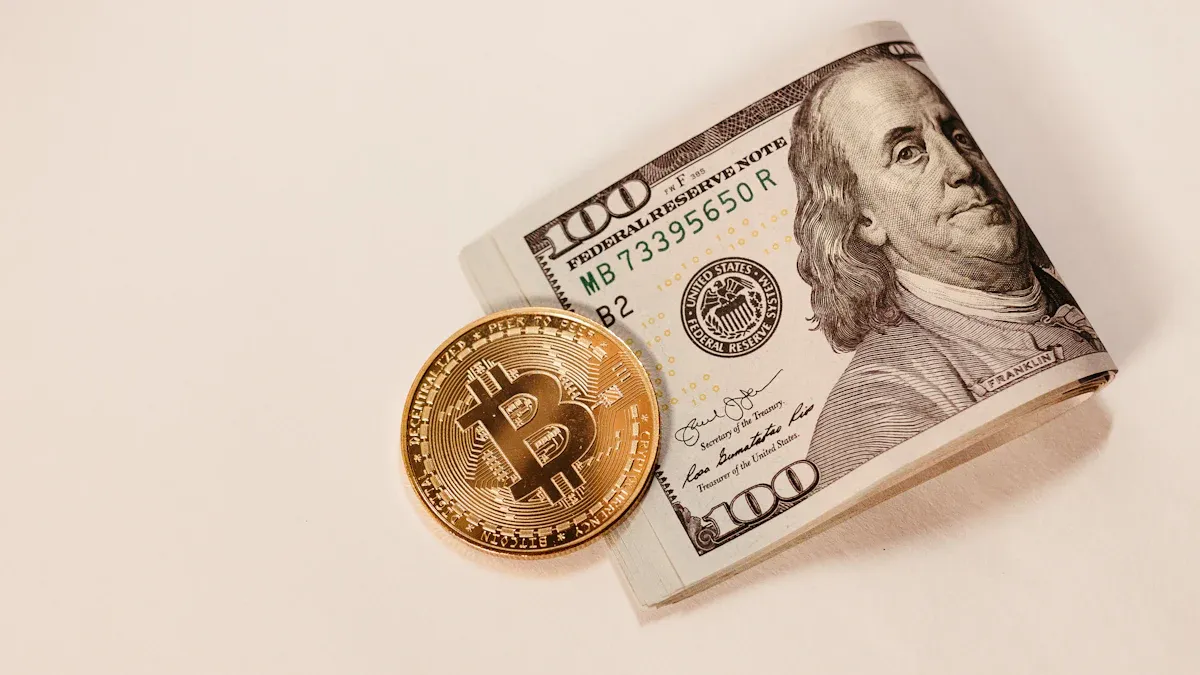
Image Source: pexels
Using stablecoins to remit to the US may have a lower total cost for small payments than traditional bank wire transfers. But this is not an absolute money-saving secret. This method is more complex to operate and comes with specific platform, operational, and compliance risks.
When you see advertisements claiming “network fee only $1,” have you ever thought about the hidden additional costs behind it? To save a few dozen dollars, is it worth taking on potential fund risks?
Key Points
- For small remittances, USDT may be cheaper than traditional bank wire transfers, but for large remittances, traditional wire transfers are more cost-effective.
- USDT remittance operations are complex, involving C2C transactions, platform transfers, and withdrawals, with risks at every step.
- Using USDT for remittance has three major risks: platforms may prevent withdrawals, operational errors may lead to fund loss, and there may be regulatory violations and tax issues.
- To reduce risks, choose large and reliable trading platforms, carefully verify transfer information, and keep all transaction records.
- For most people, traditional bank wire transfers are safer and more reliable, especially for larger remittance amounts.
Cost Comparison: USDT Remittance vs. Traditional Wire Transfer
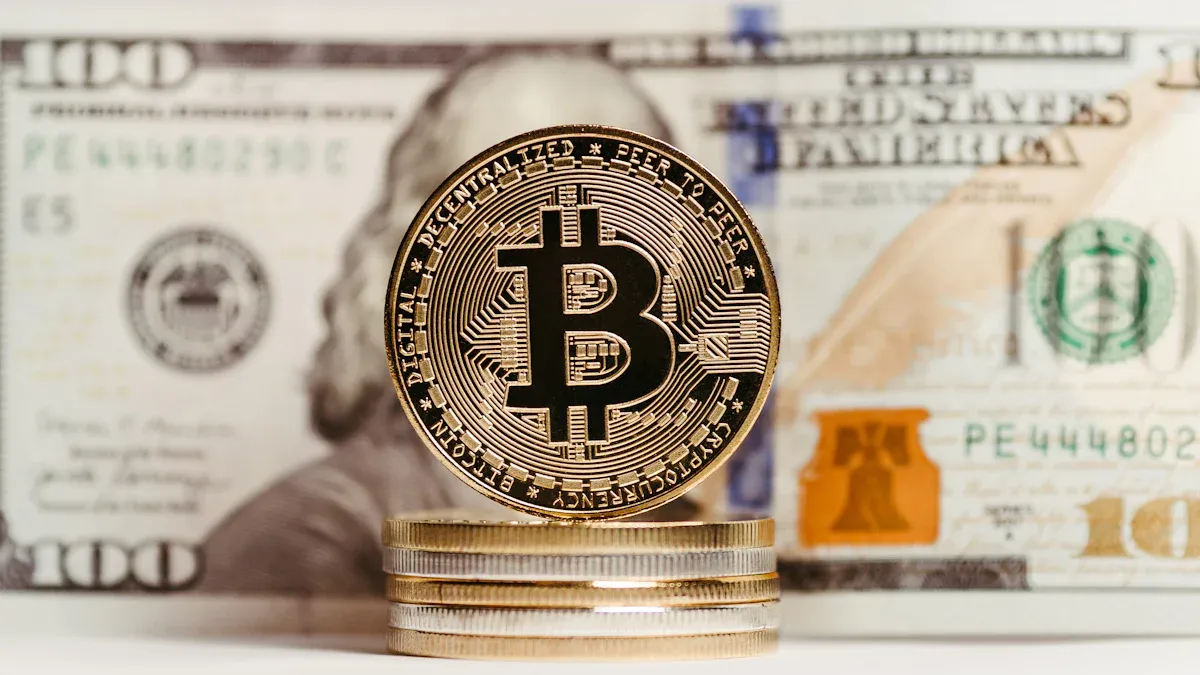
Image Source: pexels
To figure out which method saves more money, you need to first understand the fees for each link in the two remittance paths. We will use a remittance of $5,000 as an example to break down all costs for you.
Cost Structure of Traditional Wire Transfer
When you wire transfer from a bank in mainland China to a US bank account, you pay far more than just the handling fee shown at the counter. The total cost usually consists of the following four parts:
- Bank Handling Fee: This is the service fee charged by the remitting bank. It is usually calculated as a percentage of the remittance amount, with minimum and maximum charge standards. Generally between $15 and $30.
- Cable Fee: Regardless of the remittance amount, the bank charges a fixed cable communication fee for sending the remittance instruction. This fee is usually around $15.
- Intermediary Bank Fee: If there is no direct business relationship between your remitting bank and the receiving bank, the funds need to be routed through one or more “intermediary” banks. Each intermediary bank deducts a fee, which you cannot predict, usually between $15 and $40.
- Exchange Rate Loss: This is the most easily overlooked hidden cost. The exchange rate provided by the bank for purchasing foreign currency (RMB to USD) is usually worse than the real-time market rate. Even a 0.5% difference means an additional $25 cost for a $5,000 remittance.
Case Calculation: Total Cost of Wiring $5,000 Assuming handling fee $20 + cable fee $15 + intermediary bank fee $25 + exchange rate loss $25, the total cost to remit $5,000 is approximately $85. The final amount received may only be $4,915.
Full-Chain Cost of USDT Remittance
The process of remitting to the US using stablecoins is more like a “triple jump,” with corresponding costs at each step. We will also analyze with $5,000 as an example.
Step 1: Buying USDT with RMB (Deposit Cost)
You cannot directly buy USDT with RMB on mainstream cryptocurrency exchanges. You need to go through the C2C (Customer-to-Customer) market to find individual merchants willing to sell USDT, then pay RMB to them via bank transfer or Alipay.
- C2C Premium Cost: Due to transaction risks and inconvenience, merchants sell USDT at a price usually higher than the real-time USD exchange rate, this difference is called the “premium.” The premium rate is usually between 1% and 3%.
- Cost Calculation: Assuming a 1.5% premium, the premium cost to purchase USDT worth $5,000 is $5,000 * 1.5% = $75.
Step 2: Transferring USDT from Exchange to Withdrawal Platform (Network Fee)
After purchasing USDT, you need to withdraw it from the exchange wallet and transfer it to a platform that can convert it to USD (such as Coinbase or BiyaPay). This process incurs a “network fee” (Gas Fee).
💡 Tip: Choosing the right network is crucial TRON (TRC-20) and Solana networks are currently the lowest-cost options for transferring USDT. Fees are usually around $1, far lower than the dozens of dollars on the Ethereum (ERC-20) network.
Network USDT Token Standard (Protocol) Fee Amount TRON TRC-20 Approx. $0.3 - $2 Solana SOL Approx. $0.004
Therefore, the cost of this step can be controlled at around $1.
Step 3: Converting USDT to USD and Withdrawing to US Bank Account (Withdrawal Cost)
This is the final and most complex step in cost structure. Taking apps like BiyaPay that support cryptocurrency withdrawals as an example, the costs mainly consist of two parts:
- Trading Fee: Selling USDT for USD. This rate varies by your trading volume tier, usually between 0.5% and 1.5%. For small users, the rate may be close to 1%.
- Cost Calculation: At a 1% rate, $5,000 USDT incurs a trading fee of $5,000 * 1% = $50.
- Withdrawal Fee: Withdrawing USD from the platform account to your US bank account.
- ACH Transfer: Free, but usually takes 1-3 business days to arrive.
- Wire Transfer: Fee around $25, faster.
In practice, you can treat BiyaPay as a “cost hub” in the whole journey: upstream platforms only need to deliver USDT safely into your BiyaPay wallet, and then the “sell → convert → remit to a US bank account” flow is completed in one place. Instead of juggling multiple exchanges and payout providers, you see the full path inside a single dashboard. With BiyaPay’s FX calculator, you can preview the indicative route from USDT to USD and, together with the remittance page, estimate the all-in cost before you click send – including spread, platform fee, and expected arrival time for your US bank.
On the regulatory side, BiyaPay is positioned as a multi-asset trading wallet: on one end it accepts USDT and other digital assets, and on the other it can initiate compliant payouts to US bank accounts under a framework that includes a US MSB license and New Zealand FSP registration. For users who remit frequently in small to medium ticket sizes, this “use USDT to cross the border, then rely on a regulated channel to land funds in the US” pattern can offer a more balanced trade-off between cost, speed, and compliance compared with either pure bank wires or pure C2C routes.
Case Calculation: Total Cost of USDT Remittance for $5,000 Assuming C2C premium $75 + network fee $1 + BiyaPay trading fee $50 + ACH free withdrawal, total cost is approximately $126.
Cost Break-Even Point: How Much Remittance Makes Sense?
From the $5,000 case comparison above, you will find that USDT remittance (cost $126) is actually more expensive than traditional wire transfer (cost $85). Why is that?
The key lies in the different cost structures:
- Traditional Wire Transfer: High fixed costs (handling fee, cable fee), but low proportional variable costs (exchange rate difference).
- USDT Remittance: Extremely low fixed costs (network fee), but high variable costs (C2C premium, withdrawal trading fee).
This means that for very small remittance amounts, the high fixed fees of traditional wire transfers become very uneconomical. As the remittance amount increases, the percentage-based fees of USDT quickly accumulate, making its total cost exceed traditional wire transfer.
Estimated Cost Comparison for Different Amounts
| Remittance Amount | Traditional Wire Estimated Cost | USDT Remittance Estimated Cost | Conclusion |
|---|---|---|---|
| $500 | ~$65 (fixed fees dominate) | ~$26 (1.5% premium + 1% withdrawal) | USDT cheaper |
| $2,000 | ~$75 | ~$51 | USDT cheaper |
| $5,000 | ~$85 | ~$126 | Traditional wire cheaper |
| $10,000 | ~$120 | ~$251 | Traditional wire cheaper |
Note: The above table is a simplified estimation model; actual costs vary by platform, exchange rate, and fee policies.
From the model, you can clearly see that the cost “break-even point” is approximately in the $2,000 to $3,000 range. For small remittances below this amount, USDT does have a cost advantage. Once exceeding this amount, the cost advantage of traditional wire transfer becomes apparent.
Before you decide which side of that break-even range to sit on, it helps to turn the idea into numbers instead of relying on slogans. With the BiyaPay website and its FX converter, you can quickly compare mid-market quotes, typical bank rates, and platform prices, then sketch a simple table of “amount vs. effective fee rate” for both USDT and wires.
If you also need ongoing USD management or cross-border investing, a multi-asset wallet like BiyaPay that offers remittance rails alongside USDT–fiat conversion and stock access lets you treat “wire + stablecoin” as one toolkit: lean on USDT routes for smaller, flexible payments and keep larger tickets on the regulated wire side. The goal is not to chase the lowest single fee, but to balance cost, compliance, and capital safety across your real use cases.
Remitting to the US with Stablecoins: Process and Risk Analysis
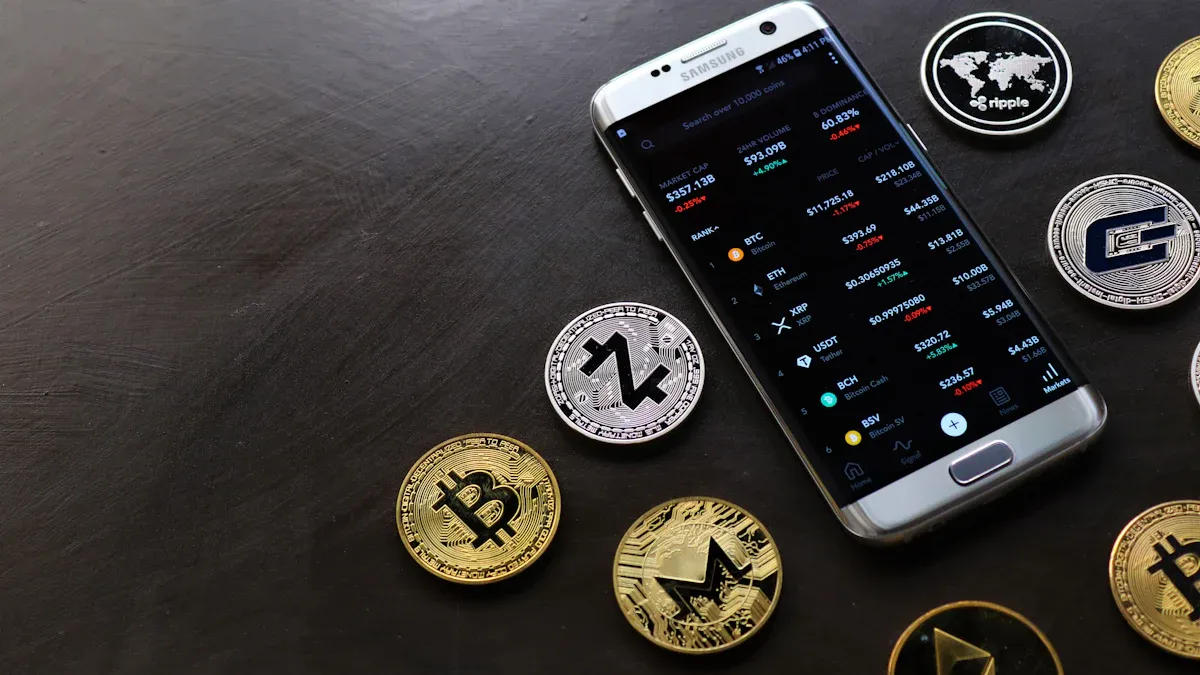
Image Source: pexels
After understanding the costs, you may be curious about the operational process of USDT remittance. This process is far more complex than bank wire transfers, and every step comes with risks that require your high vigilance. This section will detail the operational steps for you and deeply analyze the major hidden risks.
Operational Steps for USDT Remittance
The complete path of remitting to the US with stablecoins can be broken down into four core steps. We will use operations on mainstream exchanges (such as OKX) and final withdrawal through apps like BiyaPay as an example to show you the full process.
Step 1: Register Exchange Account and Complete Identity Verification (KYC)
You cannot anonymously purchase cryptocurrencies. All compliant trading platforms require users to complete the “Know Your Customer” (KYC) process to prevent money laundering and financial fraud.
- Prepare Materials: You need to prepare your ID documents (such as passport or ID card), a valid email address, and a smartphone.
- Register Account: Visit the exchange’s official website and register an account using your email. You will receive a verification code to confirm the email’s validity.
- Complete Identity Verification: This is the most critical step. You need to follow the platform’s guidance, upload clear photos of your ID documents, and complete facial recognition scanning. Some platforms, to enable C2C trading permissions, may even require video verification, answering “yes” in the video to confirm you are aware of related risks.
Note: Only after completing identity verification can you conduct C2C transactions, that is, buy USDT with RMB. This process usually takes a few minutes to several hours for review.
Step 2: Buy USDT with RMB via C2C Transaction
After verification, you can enter the platform’s C2C market. Here, you will see many USDT sell ads posted by individual merchants.
- Select Merchant: Look for merchants with high transaction volume, high positive ratings, and good reputation.
- Place Order: Enter the amount you wish to purchase (e.g., USDT equivalent to $5,000), and the platform will lock the price and quantity for you.
- Pay RMB: According to the payment method provided by the merchant (usually bank card transfer or Alipay), pay the corresponding RMB amount to them within the specified time.
- Confirm Receipt: After payment, click “I have paid” on the platform. Once the merchant confirms receipt of RMB, the platform will automatically release the corresponding USDT to your exchange account.
Step 3: Withdraw USDT from Exchange to Withdrawal Platform
Now, USDT is in your exchange account. You need to transfer it to a platform that can convert cryptocurrency to USD and withdraw to a US bank account, such as Coinbase or BiyaPay.
- Obtain Receiving Address: In your withdrawal platform (e.g., BiyaPay), find the USDT deposit entrance, select a transfer network (e.g., TRC-20), and copy your receiving address.
- Withdraw on Exchange: Return to your exchange, enter the “Withdraw” function, and select USDT.
- Fill Withdrawal Information: Paste the receiving address you just copied, be sure to select the exact same transfer network (TRC-20), then enter the withdrawal amount.
- Security Verification and Confirmation: After entering the transaction password, email verification code, and mobile verification code, submit the withdrawal request. Within a few minutes, this USDT will appear in your withdrawal platform account.
Step 4: Convert USDT to USD and Withdraw on the Withdrawal Platform
This is the final step to complete the remittance. You need to sell the received USDT for USD on a platform like BiyaPay, then withdraw to your bound US bank account. We will detail this step in the case analysis below.
Key Risks: Platform, Operational, and Compliance
Although the process seems clear, every step of remitting to the US with stablecoins hides risks. Once these risks occur, they may lead to permanent loss of your funds.
1. Platform Risk: Withdrawal Blocks and Platform Absconding
The reliability of the withdrawal platform you choose directly determines your fund security. Some small or unknown platforms may pose huge risks.
According to multiple user reports online, some platforms (including BiyaPay) face withdrawal fraud allegations. Users report that when attempting to withdraw large amounts, the platform delays with excuses like “account review” or “system maintenance” and requires payment of additional “taxes” or “service fees” to release funds. However, even if users pay these fees, they ultimately cannot retrieve their money. These are clear warning signs of risky platforms.
2. Operational Risk: Account Freezing and Fund Loss
- C2C Transactions Leading to Bank Account Freezing: This is the most common and tricky risk. Although Chinese law does not prohibit personal cryptocurrency transactions, due to their anonymity, they are often used for illegal fund flows. If the merchant funds you receive in a C2C transaction, or the funds you pay to the merchant, are unfortunately linked to cases like telecom fraud or online gambling, your bank account may be frozen by judicial authorities.
- There is a recorded real case where an investor’s bank account was frozen due to virtual currency transactions, involving an amount over 2 million RMB, with the freeze lasting nearly 7 months.
- Freezing usually happens suddenly; you may only discover the issue when trying to withdraw, and it’s hard to directly contact the enforcing officers.
- Wrong Network Selection Leading to Permanent Fund Loss: When withdrawing and transferring, you must ensure the network types of the sending and receiving addresses are exactly the same.
Severe Warning: If you mistakenly send USDT based on the TRC-20 network to an address based on the ERC-20 network (Ethereum), the funds will be permanently lost, and no one can help you recover them. This simple operational error could cost you the entire remittance.
3. Compliance Risk: Regulatory Violations and Tax Reporting
- Violating Mainland China Financial Regulations: According to notices issued by the People’s Bank of China and other departments, all commercial activities related to cryptocurrencies are illegal. Financial institutions are prohibited from providing any services related to virtual currencies, and digital assets cannot be used for cross-border payments. This means your behavior of purchasing USDT via C2C for remittance is itself in a legal gray area.
- US Tax Reporting Obligations: When you successfully convert USDT to USD in the US, you trigger a US tax event. The IRS treats digital assets as property.
- You must answer questions about digital asset transactions when filing annual taxes.
- Converting USDT to USD is considered a sale, and you need to calculate capital gains or losses and report using Form 8949 and Schedule D (Form 1040).
- Failure to report correctly may lead to fines or more serious legal consequences.
Case Analysis: BiyaPay Withdrawal Path
BiyaPay, as an app supporting cryptocurrency and fiat exchange, is often used as a channel for USDT withdrawal. Below is its officially promoted operational path, but please review it in conjunction with the risks mentioned above.
- Register, Verify, and Bind Bank Account: First, register an account on BiyaPay, complete real-name verification, and bind your US bank account information.
- Deposit USDT: As described earlier, deposit the USDT you purchased on the exchange (recommended using TRC-20 network) to your BiyaPay wallet address.
- Convert to USD: Within the BiyaPay app, use the “Instant Exchange” function to sell your USDT and convert to USD. This process incurs a trading fee.
- Withdraw to Bank Account: Go to the withdrawal page, select your bound US bank account, enter the USD amount you wish to withdraw, and submit the request. BiyaPay claims funds usually arrive within 24 hours.
Reality Check: Although BiyaPay’s official blog claims its transfers are “very fast” and can even achieve “same-day arrival”. But as mentioned in the “Platform Risk” section, numerous negative user reviews indicate that the withdrawal process may be blocked. Therefore, when considering such platforms, you must factor these potential withdrawal failure risks into your decision.
Safe Operation Guide: How to Reduce Remittance Risks
Although using stablecoins to remit to the US can be cheaper in some cases, the risks cannot be ignored. By following the safety guidelines below, you can maximize the protection of your fund security.
Choose Reliable Trading Platforms and Wallets
Your first line of defense is choosing the right tools.
- Trading Platform: Prioritize global top exchanges, such as Binance or OKX. These platforms have extremely high trading liquidity and strong security systems, providing a foundation for your C2C transactions.
- Wallet Type: You need to understand the difference between custodial and non-custodial wallets.
| Feature | Custodial Wallet (e.g., platform-built wallet) | Non-Custodial Wallet (user-controlled) |
|---|---|---|
| Private Key Management | Platform manages private key for you | You fully control the private key |
| Security | Depends on platform security measures | You bear full responsibility for security |
| Recovery Ability | Forgotten password usually recoverable | Lost seed phrase means permanent fund loss |
For beginners, using a custodial wallet built into a large exchange is more convenient. But you must understand that this means handing control of your funds to the platform.
Key Safety Precautions for C2C Transactions
C2C transactions are the riskiest link; you need to stay vigilant like a detective.
- Screen High-Quality Merchants: Only trade with merchants who have high transaction volume, high positive ratings (99%+), and have passed platform advanced certification.
- UtilizePlatform Escrow Service: The platform’s escrow service is your safety net. After you pay, the platform will lock the seller’s USDT. Only after you confirm receipt of USDT will the platform release your payment to the seller, effectively preventing fraud.
- Verify Payment Information: Before payment, confirm that the recipient’s account real-name information matches the platform certification information.
- Keep Transaction Records: Keep all transaction screenshots, chat records, and transfer vouchers, as evidence in case of disputes.
Important Tip: To avoid bank account freezing, never include sensitive words like “USDT” or “Bitcoin” in transfer remarks.
Best Practices for Withdrawal Transfers
Operational errors can lead to permanent loss of your funds. Strictly follow these steps:
- Network Matching is the First Principle: Ensure the withdrawal network you choose (e.g., TRC-20) exactly matches the deposit network of the receiving platform. If you send TRC-20 USDT to an ERC-20 address, the funds will be lost.
- Double-Check Address: After copying and pasting the address, carefully verify the first and last few characters to ensure accuracy.
- Conduct Small Test Transfer: For the first transfer to a new address, send a small amount (e.g., $5) to test. Only after confirming receipt proceed with large transfers.
- Enable Address Whitelisting: Many exchanges offer a “withdrawal address whitelist” feature. Once enabled, your account can only withdraw to pre-set and verified addresses. This effectively prevents funds from being transferred to a hacker’s address if your account is compromised.
USDT remittance does have a cost advantage in small-amount scenarios, but the operations are complex and carry significant risks.
- For those familiar with cryptocurrencies and willing to take risks: You can consider USDT, but be sure to choose reputable large platforms and conduct small test transfers first.
- For most ordinary users, especially for large remittances like tuition: We strongly recommend traditional bank wire transfers. Although more expensive, their safety and reliability are “insurance” for your fund security.
The US Financial Crimes Enforcement Network (FinCEN) regulations state that individuals using virtual currencies for remittances are generally not considered regulated “money transmission services”.
Nevertheless, after factoring in operational and platform risks, for most people, the “cheaper” USDT is not the “better choice.” Safety is always the first priority in cross-border remittances.
FAQ
Is it legal to buy USDT with RMB in mainland China?
Mainland Chinese law does not prohibit individuals from holding or trading cryptocurrencies. But financial institutions are prohibited from providing related services. Your C2C transaction behavior is in a legal gray area, with certain policy and compliance risks.
What to do if a C2C transaction leads to a frozen bank account?
You should immediately contact the bank to obtain information about the enforcing authority for the frozen account. Then, proactively cooperate with the investigation, provide transaction records and other evidence to prove the legitimacy of the fund source. This process can be lengthy and complex.
How long does the entire USDT remittance process take?
The entire process takes from a few hours to several days.
- Account Verification: Takes several hours
- C2C Transaction and Withdrawal: Usually completed within 30 minutes
- Withdrawal to US Bank: Generally takes 1-3 business days
Besides USDT, can I use other stablecoins?
Yes. USDC is another common USD stablecoin known for its high transparency and compliance. But in the C2C market, USDT’s trading volume and liquidity are usually much higher than USDC, making it easier to buy and sell.
*This article is provided for general information purposes and does not constitute legal, tax or other professional advice from BiyaPay or its subsidiaries and its affiliates, and it is not intended as a substitute for obtaining advice from a financial advisor or any other professional.
We make no representations, warranties or warranties, express or implied, as to the accuracy, completeness or timeliness of the contents of this publication.
Related Blogs of

The Easiest Way to Find the Code for Calling France

What Are the Daily Limits for Chase Accounts?

What is the Dialing Code for the USA and How to Call?
The 18 Best Apps to Earn Real Cash This Year
Choose Country or Region to Read Local Blog
 Australia
 Austria
 Belgium
 Canada
 Cyprus
 Czech Republic
 Denmark
 Estonia
 Finland
 France
 Germany
 Greece
 Hong Kong
 India
India Indonesia
 Ireland
 Italy
Italy Japan
Japan Latvia
 Lithuania
 Luxembourg
 Malaysia
 Malta
Malta Morocco
 Nepal
Nepal Netherlands
 New Zealand
 Norway
 Pakistan
 Philippines
 Poland
 Portugal
 Romania
 Singapore
 Slovakia
 Slovenia
 South Africa
 South Korea
 Spain
Spain Sweden
 Thailand
 The United States
 Turkey
 United Arab Emirates
 United Kingdom
 Vietnam
Contact Us




BIYA GLOBAL LLC is a licensed entity registered with the U.S. Securities and Exchange Commission (SEC No.: 802-127417); a certified member of the Financial Industry Regulatory Authority (FINRA) (Central Registration Depository CRD No.: 325027); regulated by the Financial Industry Regulatory Authority (FINRA) and the U.S. Securities and Exchange Commission (SEC).
BIYA GLOBAL LLC is registered with the Financial Crimes Enforcement Network (FinCEN), an agency under the U.S. Department of the Treasury, as a Money Services Business (MSB), with registration number 31000218637349, and regulated by the Financial Crimes Enforcement Network (FinCEN).
BIYA GLOBAL LIMITED is a registered Financial Service Provider (FSP) in New Zealand, with registration number FSP1007221, and is also a registered member of the Financial Services Complaints Limited (FSCL), an independent dispute resolution scheme in New Zealand.