Is Stablecoin Remittance Really Cheaper? Comprehensive Cost Comparison of USDT vs. Traditional Wire Transfers




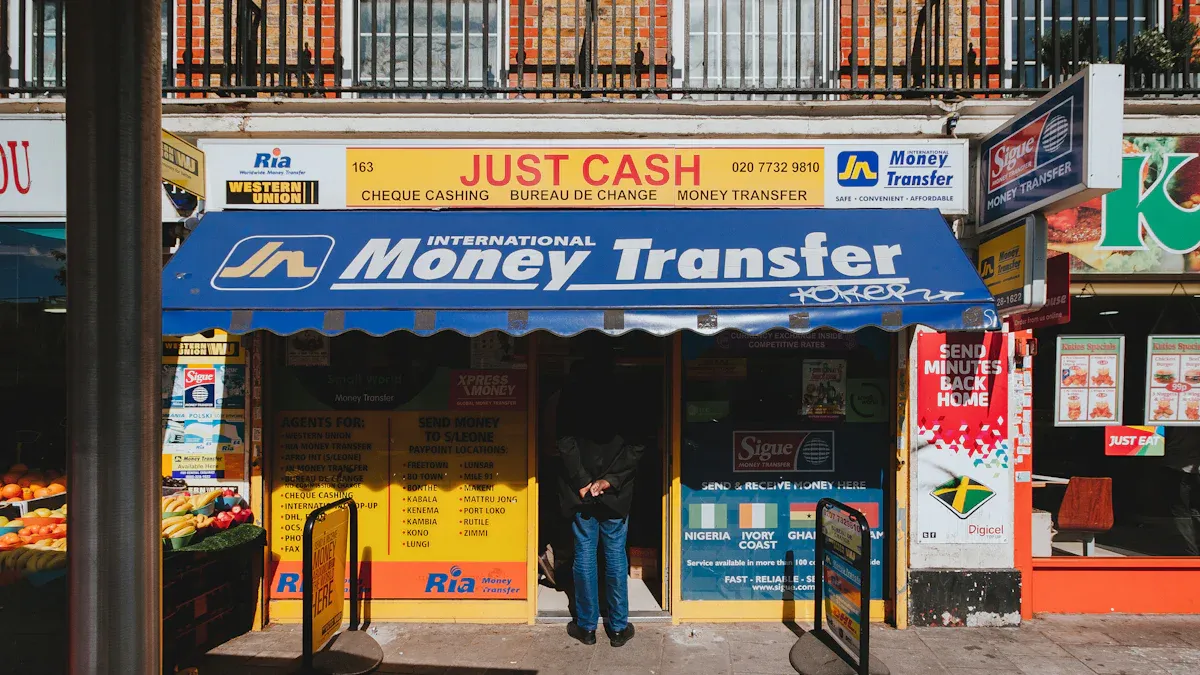
Image Source: unsplash
In most small-to-medium remittance scenarios, the total cost of stablecoin USDT is usually lower than traditional wire transfers.
The World Bank report shows that the global average cost of traditional remittances is about 6.49%. For small transfers, bank wire fees can even reach up to 18%. U.S. Census Bureau data indicates that over half of individual remittances are below $1,000. In these scenarios, conducting a stablecoin (USDT) remittance cost analysis is particularly important. However, USDT’s cost advantage is not fixed; it depends on trading platforms, blockchain networks, market premiums, and other factors.
Key Points
- USDT remittances are usually cheaper than traditional wire transfers, especially for small amounts.
- Traditional wire transfers have multiple fees, including handling fees, intermediary fees, and exchange rate spreads, with longer arrival times.
- USDT remittances are fast, arriving in minutes, but carry operational risks.
- USDT remittances have operational risks, counterparty risks, and technical security risks.
- Using USDT for remittances in mainland China may be illegal; users must comply with local laws.
Traditional Wire Transfer Cost Breakdown: Visible and Invisible Fees
The cost structure of traditional bank wire transfers is far more complex than a simple handling fee. It includes a series of explicit fees and hidden costs embedded in exchange rates. The total amount users ultimately pay is often far higher than initially expected.
Bank Outgoing Fee
This is the most straightforward fee. When the sender initiates an international wire transfer, the sending bank charges a transaction processing fee. This fee is usually fixed, such as $20 to $40 per transaction, or a percentage of the remittance amount.
Intermediary Bank Fees
International wire transfers are not point-to-point direct. Funds often need to pass through one or more “intermediary banks” for clearing on the way from the sending bank to the receiving bank.
Each intermediary bank deducts a pass-through fee. This fee is usually between $15 and $50. If the remittance path involves two intermediary banks, this cost alone can reach $100.
Exchange Rate Spread Cost
This is the largest and most hidden cost in traditional wire transfers. The “foreign exchange quoted rate” provided by banks to customers is not the market’s real-time rate. Banks and remittance services usually add a hidden markup to the mid-market rate. This spread is the main source of bank profits, on average, customers may lose up to 5% of funds as a result. For large remittances, this exchange rate loss can reach hundreds or even thousands of dollars.
Receiving Bank Incoming Fee
After funds arrive at the destination, the receiving bank usually charges an incoming fee. This fee is for processing and depositing the received funds.
| Bank/Fee Type | International Incoming Wire Fee | Notes |
|---|---|---|
| Major U.S. Banks (e.g., Chase, BoA) | About $15 | Fees may vary by account type |
| Fintech Companies (e.g., Wise) | Usually lower or free | Relies on its own network |
Case Calculation: Total Cost Summary
Assume a user needs to remit $10,000 from a bank in Hong Kong, China, to a U.S. bank account.
- Outgoing Fee: $25 (bank fixed fee)
- Intermediary Bank Fee: $30 (assuming one intermediary bank)
- Exchange Rate Spread Cost: Assuming the bank rate is 1% higher than the mid-market rate, cost is $10,000 * 1% = $100
- Receiving Bank Incoming Fee: $15
- Total Cost = $25 + $30 + $100 + $15 = $170
- Final Arrival Amount = $10,000 - $170 = $9,830
- Total Fee Rate = $170 / $10,000 = 1.7%
In this relatively ideal case, the total fee rate reaches 1.7%. In actual operations, due to uncertainties in exchange rate spreads and the number of intermediary banks, this rate can easily climb above 3%.
Stablecoin (USDT) Remittance Cost Analysis
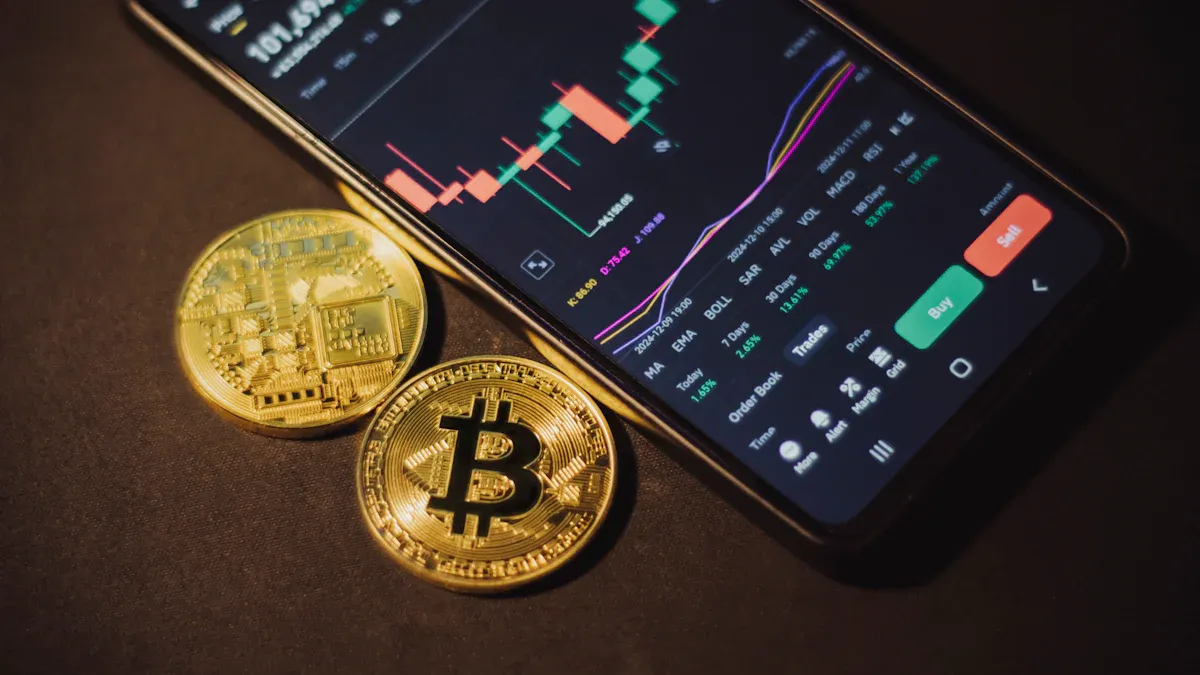
Image Source: pexels
Unlike traditional wire transfers, stablecoin (USDT) remittance cost chains are entirely built in the digital world. Conducting a complete stablecoin (USDT) remittance cost analysis requires users to understand every link from purchasing USDT with fiat (deposit) to finally exchanging USDT back to fiat (withdrawal). In ideal cases, the total cost can be controlled below 1%.
Deposit Cost: C2C Transaction Premium
Users first need to purchase USDT with fiat, usually on platforms supporting C2C (Customer-to-Customer) trading (such as Biyapay). In such transactions, the price users pay for USDT is usually slightly higher than the real-time USD rate; this difference is called the “premium.” This premium is the profit for C2C merchants providing services, usually between 0.1% and 0.5%.
On-Chain Transfer Fee: Gas Fee
After purchasing USDT, users need to transfer it from one address to another, such as from a trading platform to the recipient’s wallet. This process occurs on the blockchain and requires paying a network fee, known as the “Gas Fee.” This fee is remuneration to blockchain network maintainers.
Gas Fee costs depend on the chosen blockchain network.
- TRC-20 (Tron Network): One of the most popular choices, transfer fees usually below $2.
- ERC-20 (Ethereum Network): Due to network congestion, fees are much higher, usually fluctuating between $5 and $50.
For cost-conscious users, choosing the TRC-20 network is key to reducing fees in stablecoin (USDT) remittance cost analysis.
Exchange Withdrawal Fee
If the user’s USDT is stored on a centralized exchange, withdrawing it to an external wallet incurs a fixed withdrawal fee from the platform. This fee also varies by network. For example, mainstream exchanges’ TRC-20 network withdrawal fees are usually around $1, while ERC-20 network fees are much higher.
Withdrawal Cost: C2C Transaction Discount
After the recipient receives USDT, they need to sell it to exchange for local fiat. This “withdrawal” process is the opposite of deposit. The price at which users sell USDT is usually slightly lower than the real-time rate; this difference is called the “discount.” The discount is also C2C merchants’ profit, with a rate similar to the deposit premium.
Case Calculation: Total Cost Summary
We continue with the example of transferring assets worth $10,000, conducting a complete stablecoin (USDT) remittance cost analysis. Assume the user chooses the lowest-cost TRC-20 network and completes C2C transactions on platforms like Biyapay.
| Fee Type | Calculation Method | Cost Estimate |
|---|---|---|
| Deposit Cost (Premium) | $10,000 * 0.2% | $20 |
| On-Chain Transfer/Withdrawal Fee | TRC-20 network fixed fee | $1 |
| Withdrawal Cost (Discount) | $10,000 * 0.2% | $20 |
- Total Cost = $20 + $1 + $20 = $41
- Final Arrival Amount = $10,000 - $41 = $9,959
- Total Fee Rate = $41 / $10,000 = 0.41%
Through this case, it is clear that after optimizing the operation path, USDT remittance’s total fee rate is far lower than traditional wire transfers.
In practice, many users will first build a simple “cost sheet” and simulate both the bank wire path and the USDT route under the same amount and FX assumptions. At this stage, using a tool like BiyaPay, which supports both fiat and digital assets, can be more straightforward than manual calculations: you can rely on its free FX comparison tool to check real-time quotes across currencies, while estimating the all-in fee rate of on-chain transfers and cross-border remittances under different routes.
BiyaPay positions itself as a multi-asset trading wallet that brings cross-border transfers, fiat conversion, and both spot and derivatives trading into a single account, reducing the friction of switching between multiple apps. It operates under licenses such as the U.S. MSB and New Zealand FSP, using a multi-jurisdictional compliance framework to support fund flows. When comparing remittance options, treating such a platform both as a “calculator” and as an execution rail helps you see the full fee structure and regulatory constraints more clearly, instead of focusing on a single cost element in isolation.
Comprehensive Comparison: Cost, Speed, and Risk

Image Source: pexels
After separately breaking down the cost structures of the two remittance methods, we can now compare them side by side, quantifying and qualitatively from the three dimensions of cost, efficiency, and risk. This helps users more clearly see the pros and cons of each to make wiser decisions.
Total Cost Quantitative Comparison
Putting the calculation results from the two cases earlier together, the differences are clear. For transferring assets worth $10,000, the final costs and arrival amounts of the two methods differ significantly.
| Comparison Item | Traditional Wire Transfer | USDT Remittance (TRC-20) |
|---|---|---|
| Total Cost | $170 | $41 |
| Total Fee Rate | 1.7% | 0.41% |
| Final Arrival | $9,830 | $9,959 |
From the data, USDT remittance’s cost advantage is very obvious, with total fees only about one-fourth of traditional wire transfers. This advantage is particularly prominent in small-to-medium remittances because traditional wire transfers’ fixed handling fees and intermediary fees do not decrease with smaller amounts, leading to extremely high fee rates for small remittances.
Efficiency Comparison: Minutes vs. Business Days
Time cost is another core difference. Traditional international wire transfers rely on bank clearing systems (such as SWIFT), with the entire process usually taking 1 to 5 business days. If weekends or public holidays are encountered, processing time extends further.
In contrast, blockchain-based USDT transfers are almost 24/7 real-time. Once the user completes the purchase on the C2C platform, the on-chain transfer link is extremely fast.
For example, on the low-cost TRC-20 network, a transaction confirmation time is usually around 20 seconds, meaning funds can almost instantly reach from one wallet address to another.
Even including C2C transaction matching and final withdrawal time, the entire process can usually be completed in hours or even tens of minutes, completely free from business day restrictions.
Key Influencing Factors
The cost and efficiency of the two methods are not set in stone; they are affected by various dynamic factors.
- Traditional Wire Transfers: The greatest uncertainty comes from intermediary bank fees and exchange rate spreads. Users cannot precisely know how many intermediary banks the funds will pass through before remitting, nor lock in the optimal rate.
- USDT Remittances: Cost fluctuations are mainly related to crypto market characteristics.
- C2C Market Liquidity: When conducting C2C transactions, platform liquidity, merchant quotes, and payment method flexibility affect the final premium or discount. C2C markets allow buyers and sellers to freely set prices and support bank transfers, electronic payments, and other channels, providing users with choices but also bringing price fluctuations.
- Market Price Fluctuations: Although the crypto market is known for high volatility, stablecoins are designed to solve this issue. USDT maintains value stability by pegging to the USD, ensuring recipients receive the expected amount, enjoying crypto’s low fees and high efficiency while avoiding price fluctuation risks.
Risk Cost Assessment
Behind low costs and high efficiency, USDT remittances also come with specific risks not present in traditional methods. These “risk costs” are parts that must not be ignored in a complete stablecoin (USDT) remittance cost analysis.
- Operational Risk Blockchain transactions are irreversible. Once users send USDT to the wrong address, funds are permanently lost with almost no recovery possibility. This places extremely high demands on the operator’s carefulness.
- Counterparty Risk C2C transactions involve direct interaction with unknown merchants, posing counterparty risks. For example, user Marry had her bank account frozen due to the other party using a non-real-name account for payment. User Tom fell victim to a “pig butchering” scam, lured by merchants to invest on external platforms and losing everything. To address such risks, some mainstream platforms (like OKX C2C) have launched “freeze compensation” mechanisms, providing certain compensation for users whose accounts are frozen due to merchant payments.
- Technical Security Risk Users need to manage private keys and wallets themselves, bringing technical security challenges.
- Smart Contract Vulnerabilities: Attackers may exploit smart contract code defects (such as reentrancy attacks) to steal funds.
- Phishing and Scams: Scammers create fake trading platforms or wallet apps to trick users into authorizing malicious transactions, stealing entire wallet assets.
- Improper Private Key Management: Private keys are the sole credential for assets. Users must take strict security measures, such as using hardware security modules (HSM) to store private keys, setting multi-signature access, and manually approving all dApp operations, to prevent theft.
- Legal and Compliance Risk This is the most severe potential cost. Regulatory policies for cryptocurrencies vary greatly across countries and regions. In regions like mainland China, using USDT and other virtual currencies for illegal forex exchange is illegal. Cases show that individuals involved in large illegal USDT transactions have been sentenced, indicating regulatory authorities’ strong crackdown on such activities. Users must fully understand and comply with local laws before any operation, or face huge risks of account freezing, fund loss, or even legal sanctions.
For small-to-medium remittances pursuing low cost and high efficiency, USDT is usually the better choice.
User Profiles and Recommendations
- USDT Remittances: Suitable for cost-sensitive individuals or small business owners. In the global remittance market worth up to $818 billion, they can achieve lower fees and faster speeds via USDT.
- Traditional Wire Transfers: Suitable for large remittances and users prioritizing compliance. They need to follow FATF Travel Rule and other regulations, complying with regional annual limits (such as 50,000 USD in mainland China).
The final decision should comprehensively evaluate cost, speed, security, and operational convenience to choose the most suitable solution.
FAQ
Is using USDT for remittances legal in mainland China?
According to relevant regulations in mainland China, using virtual currencies for fiat exchange and cross-border remittances is illegal financial activity. Participants may face risks of account freezing, fund loss, or even legal sanctions. Users must understand and comply with local laws before operating.
Will USDT’s value fluctuate drastically like Bitcoin?
USDT is a stablecoin pegged 1:1 to the USD, designed to maintain value stability. Although there are minor price fluctuations in the market, it will not experience drastic fluctuations like Bitcoin. This ensures the remittance amount’s value remains basically unchanged during transfer.
Is operating USDT remittances difficult for beginners?
Operating USDT remittances does require a learning process. Beginners need to master basic skills like choosing trading platforms, managing wallet addresses, and distinguishing different blockchain networks (such as TRC-20). It is recommended to start with small test amounts to familiarize yourself with the entire process and reduce operational risks.
*This article is provided for general information purposes and does not constitute legal, tax or other professional advice from BiyaPay or its subsidiaries and its affiliates, and it is not intended as a substitute for obtaining advice from a financial advisor or any other professional.
We make no representations, warranties or warranties, express or implied, as to the accuracy, completeness or timeliness of the contents of this publication.
Related Blogs of

How to Pay for a ChatGPT Plus Web Subscription: Card Setup, Renewals, and Failed Payment Troubleshooting


How to Fix Claude Payment Failures: A Troubleshooting Guide for Card Declines, Address Mismatches, and 3D Secure Verification Errors


How to Pay for Claude Pro: Payment Methods, Subscription Steps, Renewals, and Troubleshooting


OpenAI / ChatGPT Payment Declined: A Card Declined Troubleshooting Guide

Choose Country or Region to Read Local Blog
 Australia
 Austria
 Belgium
 Canada
 Cyprus
 Czech Republic
 Denmark
 Estonia
 Finland
 France
 Germany
 Greece
 Hong Kong
 India
India Indonesia
 Ireland
 Italy
Italy Japan
Japan Latvia
 Lithuania
 Luxembourg
 Malaysia
 Malta
Malta Morocco
 Nepal
Nepal Netherlands
 New Zealand
 Norway
 Pakistan
 Philippines
 Poland
 Portugal
 Romania
 Singapore
 Slovakia
 Slovenia
 South Africa
 South Korea
 Spain
Spain Sweden
 Thailand
 The United States
 Turkey
 United Arab Emirates
 United Kingdom
 Vietnam
Contact Us




BIYA GLOBAL LLC is registered with the Financial Crimes Enforcement Network (FinCEN), an agency under the U.S. Department of the Treasury, as a Money Services Business (MSB), with registration number 31000218637349, and regulated by the Financial Crimes Enforcement Network (FinCEN).
BIYA GLOBAL LIMITED is a registered Financial Service Provider (FSP) in New Zealand, with registration number FSP1007221, and is also a registered member of the Financial Services Complaints Limited (FSCL), an independent dispute resolution scheme in New Zealand.